
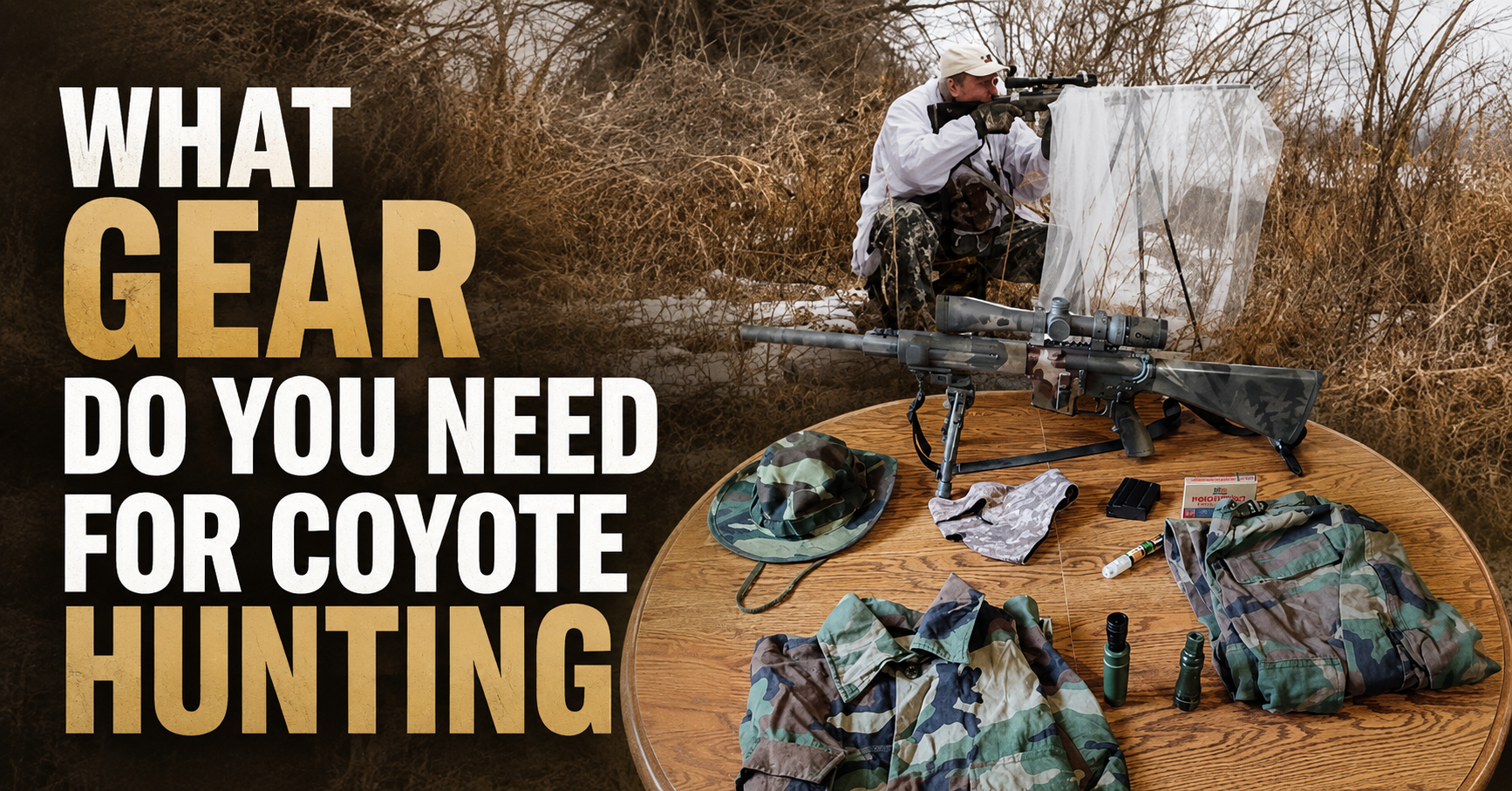

If you are asking what gear do you need for coyote hunting, start with legal documentation, a safe and familiar hunting implement, reliable observation and calling tools, weather-appropriate clothing, navigation, emergency supplies, and a lawful recovery kit. The ideal loadout changes with daytime or nighttime hunting, open country or thick cover, distance from the vehicle, weather, and local regulations. This guide separates true essentials from useful upgrades so beginners can pack deliberately instead of carrying every predator-hunting accessory they see.
Quick Answer: What Gear Do You Need for Coyote Hunting?
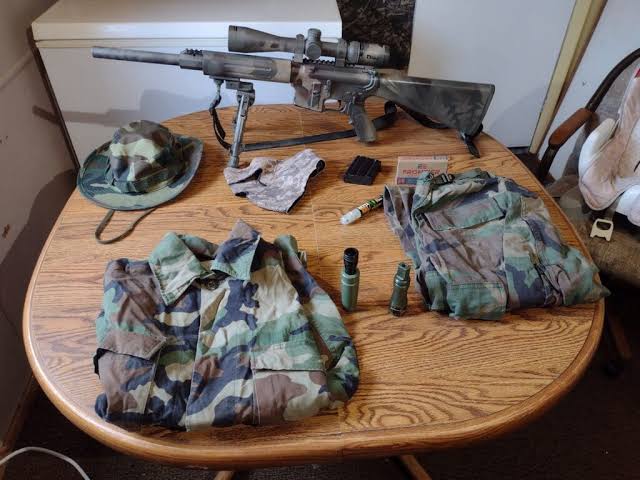
Carry every required license, permit, tag, land-access document, and current regulation; a legal firearm or archery setup with compatible ammunition or arrows; eye and hearing protection; binoculars; a lawful call; quiet layers and boots; navigation; communication; first aid; water; a headlamp; and recovery supplies. A decoy, rangefinder, shooting tripod or sticks, electronic caller, seat pad, wind indicator, and spare batteries can improve a specific setup but are not universal necessities. Night optics, artificial lights, bait, dogs, drones, and electronic calls can be restricted by species, season, hour, weapon, or property. Verify the current wildlife-agency and land-management rules immediately before hunting.
Important Safety and Legal Notice
Legal information checked August 27, 2026. Coyote seasons, hunting hours, licenses, legal weapons, ammunition, hunter-orange rules, calls, bait, decoys, dogs, lights, thermal or night-vision devices, tagging, reporting, and public-land rules vary by jurisdiction and may change. The U.S. Fish and Wildlife Service state-license directory explains that every state has its own hunting requirements. A national wildlife refuge or other managed property can add site-specific permits and restrictions.
The differences are not minor. Massachusetts’ official coyote rules allow several calling methods during much of the season but prohibit artificial light and add restrictions during the shotgun deer season. Kentucky’s official furbearer page allows calls and dogs while applying specific nighttime dates, equipment rules, and area closures. These examples are not permission to copy either state’s methods elsewhere; they demonstrate why the hunter must verify the exact species, date, hour, weapon, county or unit, and property.
Official regulations override this general guide. Complete hunter education and practice before the hunt. The International Hunter Education Association links to state hunter-education requirements and courses.
Coyote Hunting Gear at a Glance
| Category | Item | Priority | What to Check |
|---|---|---|---|
| Legal documents | License, permits, tags, identification, written permission, current regulations | Required as applicable | Species, unit, dates, hours, methods, reporting, transport, and property rules |
| Hunting implement | Legal firearm or bow, compatible ammunition or arrows, secure case | Essential | Legal category, manufacturer instructions, fit, function, zero or tune, and proven accuracy |
| Personal protection | Hearing protection, eye protection, required hunter orange | Essential or legally required | Fit, visibility rules, comfort, and compatibility with the shooting position |
| Observation | Binoculars, legal sighting optic, optional rangefinder | Essential to useful | Field of view, image clarity, eye relief, weather resistance, and secure mounting |
| Calling | Hand call or legal electronic caller; optional decoy | Useful; method-dependent | Call and decoy legality, controls, volume, batteries, weather protection, and practice |
| Stability | Shooting sticks, bipod, tripod, or practiced natural rest | Useful | Terrain, firing position, weight, deployment noise, and muzzle control |
| Clothing | Quiet layers, weather shell, gloves, hat, boots, optional gaiters | Essential | Forecast, wind, insulation, moisture, traction, fabric noise, and hunter orange |
| Navigation | Offline map, compass, GPS or phone, property map | Essential | Boundaries, offline access, battery, exits, roads, and ability to use the tools |
| Emergency | First aid, headlamp, water, food, fire starter, repair kit, emergency shelter | Essential; scale to trip | Weather, medical needs, remoteness, duration, and expiration dates |
| Recovery | Disposable gloves, maintained knife, tag fastener, marking tool, clean transport container | Essential if harvest is possible | Tagging, reporting, transport, possession, pelt use, and waste rules |
| Electronics | Spare batteries or power bank; optional legal light or night optic | Optional | Local law, weather resistance, battery life, identification limits, and backstop visibility |
Start With the Legal and Safety Layer
License, permission, and current regulations
Save or print the current coyote regulations for the place and date you will hunt. Confirm the open area, legal hours, license or permit, legal implement, ammunition restrictions, hunter-orange requirement, bag or possession limit, reporting procedure, and rules for electronic calls, dogs, bait, lights, and night optics. Carry written landowner permission when required and load accurate property boundaries into an offline map.
Coyote regulations may change when another season is open. A general coyote method that is lawful in summer may be restricted during a deer firearm season, on a wildlife management area, or after dark. Check overlapping seasons and emergency orders rather than reading only a short species summary.
If the hunt is on federal or other managed public land, check that site’s rules in addition to the state regulation. The U.S. Fish and Wildlife Service refuge-hunting guidance notes that appropriate state licenses are required and individual refuge opportunities operate under location-specific conditions.
A legal and familiar hunting implement
Use a firearm or archery setup that is legal for coyotes in the jurisdiction and season, fits the hunter, functions reliably, and can be used accurately from realistic field positions. Rifles, shotguns, handguns, muzzleloaders, bows, and crossbows may be treated differently by state, time, and property. Do not select a caliber, gauge, projectile, or broadhead from a generic gear list. Read the regulation and manufacturer’s manual, then practice until you can make a controlled, ethical shot within your demonstrated ability.
Carry only the correct compatible ammunition or arrows and protect them from moisture and damage. Inspect the bore, action, sling, sight, mounting screws, stock or grip, and safety equipment. Transport the implement unloaded and cased as required by law.
Eye, hearing, and visibility protection
Properly fitted hearing protection and impact-rated eye protection are small essentials. Electronic hearing protection may help preserve awareness of partners and surroundings, but it still requires correct fit and battery checks. Wear hunter orange wherever required and consider visible clothing during travel on shared land even when concealment is permitted.
The four firearm-safety rules
- Treat every firearm as if it is loaded.
- Keep the muzzle pointed in a safe direction.
- Keep your finger outside the trigger guard until you are ready to shoot.
- Be certain of the target and what is beyond it.
A mechanical safety never replaces safe handling. Before calling, identify roads, trails, buildings, vehicles, livestock, neighboring property, hard surfaces, skyline angles, and directions without a dependable backstop. Never shoot at sound, movement, eyeshine, or a heat source that has not been positively identified as a legal coyote.
Calls, Decoys, and Wind Tools
Hand calls
A hand or mouth-operated call is compact, light, and independent of batteries. It requires practice to control sound, volume, and unwanted noise. Carry it where it can be reached without excessive movement, and use a lanyard that will not interfere with the firearm, bowstring, or safe handling.
Electronic callers
An electronic caller can provide remote sound placement, consistent playback, and access to multiple lawful sounds. It also adds batteries, controls, weather exposure, and a legal question. Choose a unit for dependable operation, readable controls, glove-friendly buttons, adjustable volume, available batteries, and weather resistance rather than for the largest sound library.
Practice the controls before hunting and carry a hand call as a backup if calling is central to the plan. Electronic calls do not guarantee a response. Wind, terrain, cover, hunting pressure, season, individual behavior, and the quality of the setup all influence what happens.
Decoy
A compact visual or movement decoy can focus an approaching coyote’s attention away from the hunter. It is optional and may be restricted. Use it only where legal and where it will not lead another hunter or member of the public to mistake the setup for live wildlife. The decoy must not draw the hunter toward an unsafe firing direction or obscure the background.
Wind indicator
A simple wind indicator can help the hunter understand changing airflow at the stand. Use a lawful, non-littering option and avoid presenting any scent product as a guarantee. Wind awareness helps with stand selection, but it does not compensate for unsafe access, poor concealment, or an unsuitable backstop.
Optics and Shooting Support
Binoculars
Binoculars are the correct tool for scanning field edges, brush, slopes, and distant shapes. They help the hunter identify wildlife without pointing a firearm. Choose a pair that can be held steadily, focuses easily with gloves, has comfortable eye cups, and can be protected from dust and precipitation.
Sighting optic
The sight should suit the expected terrain and distance. Open agricultural country may benefit from different magnification and field-of-view priorities than thick woods. More magnification is not automatically better. Look for a clear image, comfortable eye relief, secure mounting, intuitive reticle, and controls that can be used without losing a stable position.
Confirm zero before the season and after any hard impact. A rangefinder can reduce distance-estimation errors, but it does not make a shot ethical if wind, visibility, stability, target angle, background, or the hunter’s ability is inadequate.
Bipod, shooting sticks, or tripod
A practiced support improves stability and reduces fatigue. A bipod may suit prone or low seated positions, sticks pack lightly, and a tripod can provide flexible height at the cost of more weight and setup time. Select the system by terrain and the position you can use safely, not by trend. Practice deploying it quietly while maintaining muzzle control.
Clothing and Concealment
Build a quiet, adjustable layering system:
- Base layer: manages perspiration during the walk in.
- Insulation: keeps the hunter warm during low-activity calling stands.
- Weather shell: blocks wind, rain, or snow without excessive fabric noise.
- Boots: match walking distance, ground conditions, traction, and temperature.
- Gloves and hat: protect exposed skin while permitting safe equipment operation.
- Hunter orange: is worn whenever required; concealment never overrides visibility law.
Camouflage can break up the human outline, but quiet entry, stillness, shade, and a natural backdrop often matter more than a specific pattern. Test whether the jacket scrapes against brush, the hood blocks hearing, the face covering fogs eyewear, or the gloves interfere with the trigger guard, safety, call, or bow release.
Grass, brush, and woodland travel may expose hunters to ticks. The CDC’s current prevention guidance recommends EPA-registered repellent, long clothing, clothing or gear pretreated with 0.5% permethrin, and checks of the body, clothing, gear, and pets after outdoor activity. Follow every product label; clothing-treatment products are not automatically suitable for application to skin.
Navigation, Communication, and Emergency Gear
A calling session near a road can become a longer recovery, an unexpected weather delay, or a nighttime navigation problem. Scale supplies to remoteness and duration, but do not omit them because the vehicle appears close. The National Park Service Ten Essentials include navigation, sun protection, insulation, illumination, first aid, fire, repair tools, food, hydration, and emergency shelter.
- Offline map showing boundaries, roads, structures, water, and exit routes
- Compass and the skill to use it
- Charged phone or GPS; optional satellite communicator for remote terrain
- Headlamp with spare batteries; preserve phone power for communication
- First-aid kit, personal medication, and trauma supplies appropriate to training
- Water, food, insulation, rain protection, and emergency shelter
- Whistle, repair items, and lawful fire-starting supplies where appropriate
- Trip plan shared with a responsible person
A trip plan should name the parking place, hunting area, companions, expected return, and time to call for help. Do not rely on cellular service. Turn around when weather, darkness, injury, fatigue, fire conditions, or navigation uncertainty makes continuing unsafe.
Recovery and Handling Kit
Carry disposable gloves, a maintained knife in a sheath, clean wipes, marking ribbon or digital waypoint capability, the required tag or reporting information, a pen, and a clean game or pelt bag or other transport container suited to the planned use. Add a drag aid only if it is appropriate to terrain, distance, local rules, and the hunter’s physical ability.
After a shot, maintain safe firearm control, observe the animal’s direction, mark the shot location, and follow local recovery guidance. Make every reasonable lawful recovery effort without trespassing or entering hazardous terrain unprepared. Complete tagging, reporting, possession, and transport requirements exactly as the wildlife agency directs.
Wear gloves when handling blood or body fluids. Do not handle an animal that appears sick or behaves abnormally until you have contacted the wildlife agency. Clean hands, tools, and transport equipment, and keep contaminated items away from food and water.
Build a Kit for the Actual Hunt
| Hunt Type | Core Kit | Useful Additions | Main Concern |
|---|---|---|---|
| Short daytime calling hunt | Documents, legal implement, PPE, binoculars, call, layers, boots, map, first aid, water, headlamp, recovery kit | Seat pad, shooting sticks, compact decoy, rangefinder | Boundaries, overlapping seasons, safe background, and changing wind |
| Open-country hunt | Complete core kit | Stable tripod or sticks, rangefinder, binocular harness, wind protection, sun protection | Long sight lines can hide roads, buildings, livestock, or skyline shots |
| Thick-cover hunt | Complete core kit | Wide-field optic, compact support, quiet clothing, gaiters, close-range practice | Positive identification and backstop visibility can be limited |
| Remote or winter hunt | Complete core kit | Extra insulation, emergency shelter, satellite communication, traction aids, more food and water, protected spare power | Cold, battery loss, fatigue, weather, and difficult recovery |
| Legal nighttime hunt | Complete core kit and exact nighttime regulation | Lawful light or night optic, backup light, spare batteries, stable support, reflective emergency marker | Target identification, background assessment, hour restrictions, and property rules |
| Two-person calling hunt | Each hunter’s safety gear and an agreed plan | Radios where legal, shared caller, clearly assigned observation and firing sectors | Muzzle control, crossfire, movement, and miscommunication |
Night-Hunting Gear: Legal Does Not Mean Automatic
Before packing an artificial light, thermal imager, digital night-vision device, illuminated sight, or electronic caller, confirm that the exact equipment is legal for coyotes during the exact dates and hours, with the implement you will carry, and on that property. Some jurisdictions allow a device only during a special season, ban it during big-game seasons, restrict it on public land, or prohibit connection to a vehicle.
If the device is legal, evaluate field of view, image clarity, weather resistance, mounting security, power source, backup batteries, controls, and identification limits. Thermal equipment detects heat, not legal status, species identity, property boundaries, or a safe backstop. Never shoot solely at a heat signature or eyeshine.
How to Spend the Gear Budget Wisely
You do not need the most expensive equipment to hunt responsibly. Choose gear based on the species, terrain, weather, local regulations, fit, safety, reliability, maintenance requirements, and your actual experience.
- Fund legal compliance and training first. Licenses, hunter education, practice, and permission are not optional accessories.
- Buy the safety layer next. Eye and hearing protection, boots, clothing, navigation, first aid, water, and lighting protect every hunt.
- Use dependable observation and support. Binoculars and a stable position may add more practical value than another electronic gadget.
- Add a caller you can operate. A simple hand call can be effective when lawful and practiced; complexity is not a requirement.
- Add specialized technology last. Buy night or remote equipment only after verifying legality and identifying a real need.
- Test the complete system. Wear the layers, sit behind the support, operate the call, access emergency supplies, and move safely before the hunt.
Printable-Style Coyote Hunting Checklist
Documents and rules
- Current license, permits, tags, and identification
- Current coyote regulations saved offline or printed
- Landowner permission and property-specific rules
- Dates, hours, overlapping seasons, limits, weapon, orange, calls, bait, dogs, night equipment, and reporting verified
Hunting and safety gear
- Legal implement inspected, securely transported, and zeroed or tuned
- Correct compatible ammunition or arrows
- Eye protection, hearing protection, and required hunter orange
- Binoculars and clean, secure sighting optic
- Lawful hand or electronic call
- Optional legal decoy, rangefinder, wind indicator, and shooting support
Clothing and field support
- Quiet base, insulation, and weather layers
- Boots, gloves, hat, and optional gaiters
- Offline map, compass, charged navigation device, and accurate boundaries
- First aid, water, food, headlamp, emergency shelter, and repair items
- Recovery kit, tags, clean transport container, and disposable gloves
- Trip plan left with a responsible person
Common Gear Mistakes and Better Fixes
| Mistake | Why It Causes Trouble | Better Fix |
|---|---|---|
| Assuming coyotes are unregulated | A year-round season or no bag limit does not erase license, method, night, land, or reporting rules | Read the complete current species and property regulations |
| Buying night optics before checking law | Use can depend on dates, weapon, property, and overlapping seasons | Obtain a clear official answer before purchase or field use |
| Using the riflescope as binoculars | It points a firearm at unidentified objects | Scan and identify with binoculars |
| Overpacking calls and decoys | Excess gear adds noise, time, and fatigue | Carry one practiced primary system and a simple backup |
| Ignoring the shooting position | A perfect zero from a bench may not transfer to a hurried field position | Practice safely from the support and posture used on the hunt |
| Relying only on a phone | Cold, impact, water, or poor service can disable maps, light, and communication together | Carry offline maps, a compass, headlamp, and appropriate backup power |
| Failing to define partner sectors | Unexpected movement can create muzzle or crossfire risk | Agree on positions, safe directions, and communication before loading |
| Forgetting recovery and reporting supplies | A lawful harvest may create immediate documentation and handling duties | Pack a dedicated kit and know the process before hunting |
What Not to Bring or Do
- Do not use calls, bait, dogs, lights, drones, thermal devices, or night vision unless the exact method is legal.
- Do not carry incompatible ammunition or arrows or rely on memory for compatibility.
- Do not point a firearm-mounted optic at anything not already identified as a legal target.
- Do not fire at sound, movement, eyeshine, or a heat source without positive identification and a safe backstop.
- Do not take skyline shots, shoot across roads or trails, or fire toward buildings, livestock, vehicles, or neighboring property.
- Do not rely on a mechanical safety, a phone, or one battery-powered device as the only protection against failure.
- Do not take a shot beyond your practiced ability or through cover that hides the target and background.
- Do not mix trapping equipment or trapping rules into a hunting plan; trapping is separately regulated.
- Do not continue when weather, fire danger, injury, fatigue, darkness, or navigation uncertainty makes the hunt unsafe.
After-Hunt Gear Care
Unload and secure the firearm according to its manual and local transport law before leaving the field. Account for every round, shell, arrow, knife, battery, tag, and personal item. Clean and dry optics, calls, boots, clothing, and metal equipment using manufacturer-approved methods.
Replace used first-aid items, recharge electronics, inspect cables and battery compartments, sharpen or service recovery tools, and record which gear was noisy, heavy, cold, unstable, or difficult to access. Check yourself, clothing, pack, and dogs for ticks. Complete every harvest-reporting, tagging, or transport requirement and clean containers before their next use.
FAQs
1. What is the minimum gear for a daytime coyote hunt?
Carry required documents, a legal and familiar implement, compatible ammunition or arrows, eye and hearing protection, binoculars, a lawful call, weather layers, boots, navigation, first aid, water, a headlamp, communication, and recovery supplies. Add gear for remoteness, weather, terrain, and the planned method.
2. Do you need a hunting license for coyotes?
Usually some form of hunting authority is required, but the exact license, exemption, or permit varies. A landowner exemption or year-round season in one place does not apply elsewhere. Check the state wildlife agency and property rules.
3. Do coyotes have a season or bag limit?
Some jurisdictions allow broad seasons or no numerical limit, while others set dates, hours, areas, or special conditions. Even without a bag limit, license, method, transport, and reporting rules can remain in force.
4. What firearm do you need for coyote hunting?
Choose a firearm category that is legal for the location, season, hour, and property, fits the hunter, operates reliably, and can be used accurately from field positions. Regulations may treat rifles, shotguns, handguns, and muzzleloaders differently.
5. Can you hunt coyotes with a bow or crossbow?
Where current regulations allow it. Verify equipment specifications, legal seasons, and crossbow rules. Use compatible arrows and broadheads, follow the manufacturer’s instructions, tune the system, and stay within a practiced ethical range.
6. What ammunition should you use?
Use only ammunition that matches the exact firearm and is lawful and suitable for the hunting context. Verify firearm markings, the manual, packaging, projectile restrictions, and property rules. Do not mix incompatible cartridges or shells.
7. Do you need a scope?
No particular scope is universally required. The sighting system should be legal, secure, zeroed, and appropriate to the terrain and expected distance. Thick cover often favors a wide field of view; open ground may place more emphasis on precise aiming and stable support.
8. Are binoculars necessary if you have a riflescope?
Binoculars are strongly recommended. They allow safe scanning and identification without pointing a firearm. Never use a riflescope as a general observation tool.
9. Is a rangefinder necessary?
It is optional but useful where distance is difficult to judge. It does not extend ethical range beyond the hunter’s demonstrated accuracy or solve unsafe wind, target-angle, background, or stability problems.
10. What kind of call is best for a beginner?
A simple lawful hand call is light and inexpensive, while an electronic caller can be easier to place away from the hunter. The better choice is the one the beginner can operate quietly, legally, and consistently after practice.
11. Are electronic calls legal for coyotes?
They are permitted in many places but restricted by species, date, land, or overlapping season in others. Check the exact current regulation before carrying or using one.
12. Do you need a decoy?
No. A decoy may focus an approaching animal’s attention, but it adds weight, movement, setup time, and a legal consideration. Use one only where lawful and safe for other land users.
13. Is scent control gear necessary?
No product is a substitute for wind awareness and a careful setup. Clean, quiet clothing and attention to airflow are practical. Do not assume a scent spray makes the hunter undetectable or guarantees success.
14. What camouflage works best?
Use quiet clothing that blends reasonably with local vegetation, soil, snow, or shade while complying with hunter-orange rules. Stillness, backdrop, entry route, and fabric noise often matter more than a specific commercial pattern.
15. Do coyote hunters need hunter orange?
The answer depends on jurisdiction, land, and overlapping seasons. Orange may become mandatory during a deer or other firearm season even when the coyote page seems permissive. Check all concurrent rules.
16. What boots are best for coyote hunting?
Choose boots by fit, traction, distance, ground, moisture, and temperature. Break them in before hunting. Add gaiters, traction devices, or spare dry socks when weather and terrain justify them.
17. Do you need shooting sticks or a tripod?
No, but a stable practiced support can improve control and reduce fatigue. Choose one that fits the terrain and expected position, then practice deploying it without unsafe muzzle movement.
18. Is a seat pad worth carrying?
It can improve comfort, insulation, and stillness for little weight. A low stool may help on flat ground but can be unstable on slopes. The seat should not restrict visibility or safe firearm handling.
19. What should be in a coyote hunting backpack?
Pack legal documents, spare layers, water, food, first aid, navigation, communication, headlamp, emergency shelter, calls, binoculars, spare power, and recovery supplies. Keep emergency and frequently used items accessible.
20. How large should the pack be?
Use the smallest pack that safely holds the trip’s weather, emergency, and recovery equipment. A compact daypack can suit short access-based hunts; remote winter hunts require more space for insulation, food, shelter, and power.
21. Do you need a GPS?
A standalone GPS is optional, but dependable navigation is essential. Offline phone maps help, while a compass and map knowledge provide a backup. Verify boundaries before leaving home.
22. Should you carry a headlamp during a daytime hunt?
Yes. A delayed return or recovery can extend into darkness. Carry a dedicated light and spare batteries so phone power remains available for navigation and communication.
23. What first-aid gear should you carry?
Carry supplies for cuts, blisters, sprains, and environmental exposure, personal medication, and trauma supplies appropriate to your training. Replace expired items and obtain instruction rather than carrying equipment you cannot use.
24. Do you need a satellite communicator?
It is optional but useful where cellular coverage is unreliable or rescue would be delayed. Test the device, keep any required service active, and combine it with a shared trip plan.
25. Can you hunt coyotes at night?
Only where current regulations permit it. Night rules can specify dates, counties, land, licenses, calls, weapon types, lights, optics, dogs, vehicles, and overlapping-season closures.
26. Are thermal scopes legal for coyote hunting?
Thermal equipment may be legal, restricted, or prohibited depending on the jurisdiction, dates, weapon, and property. Verify the official wording. When legal, it still cannot replace positive species identification and a safe-backstop assessment.
27. Are artificial lights or spotlights legal?
Rules may control the light type, dates, attachment, vehicle use, public-road use, species, and land. Ask the wildlife agency if the regulation is unclear before carrying or using a light for hunting.
28. Can dogs be used to hunt coyotes?
Some jurisdictions permit dogs under specific conditions; others prohibit them by season, hour, or property. Where legal, dogs need identification, tracking, conditioning, water, first aid, protective gear, parasite prevention, and veterinary care.
29. Is bait legal for coyote hunting?
Baiting may be allowed, prohibited, or closely defined. Placement, land type, distance, carcass use, disease orders, and reporting can matter. Check the current official definition and property rules before placing attractants.
30. What gear is needed for hunting with a partner?
Each hunter needs personal safety and emergency equipment. Agree on positions, identification procedures, firing sectors, movement signals, and who controls the caller. Radios may help where lawful, but they do not replace a clear plan.
31. What recovery tools are needed?
Carry disposable gloves, a maintained knife, a marking or waypoint tool, any required tag and fastener, a pen, and a clean transport container. Add a drag aid only when appropriate to terrain and regulations.
32. Do harvested coyotes have to be tagged or reported?
Some jurisdictions require reporting, registration, tagging, sealing, or documentation for possession, transfer, or sale. Read the post-harvest rules before hunting so you know the deadline and method.
33. How do you keep electronics working in cold weather?
Start with charged manufacturer-approved batteries, protect spares from moisture, and keep them insulated when practical. Test the caller, optic, rangefinder, navigation device, and lights before departure. Keep non-electronic backups for critical functions.
34. What gear can a beginner skip?
A beginner can usually skip multiple decoys, a large sound library, premium night optics, redundant rangefinders, and elaborate scent products. Invest first in training, legal compliance, clothing, boots, PPE, binoculars, navigation, first aid, and practice.
35. Is coyote hunting gear the same as trapping gear?
No. Hunting and trapping use different equipment and may have separate licenses, seasons, training, checking intervals, tagging, and reporting rules. Consult the dedicated official trapping regulations rather than applying a hunting checklist.
Final Answer
The practical answer to what gear do you need for coyote hunting is a four-layer system: legal documents and compliant equipment; a safe, familiar implement with eye and hearing protection; observation, calling, clothing, and support suited to the terrain; and navigation, emergency, and recovery supplies. A lawful call, binoculars, quiet layers, boots, offline map, first aid, water, headlamp, gloves, and a practiced shooting support form a dependable core. Decoys, electronic callers, rangefinders, dog equipment, artificial lights, thermal devices, and night vision are optional and legal only in some places or times.
Pack for positive identification, a safe backstop, and a humane, recoverable shot rather than for maximum gadget count. Practice before hunting, maintain muzzle control, respect property boundaries, coordinate clearly with partners, and stop when conditions become unsafe. Recheck the wildlife agency and property regulations immediately before every hunt because official rules—not a general gear list—determine what equipment may be carried and used.
Read more: