
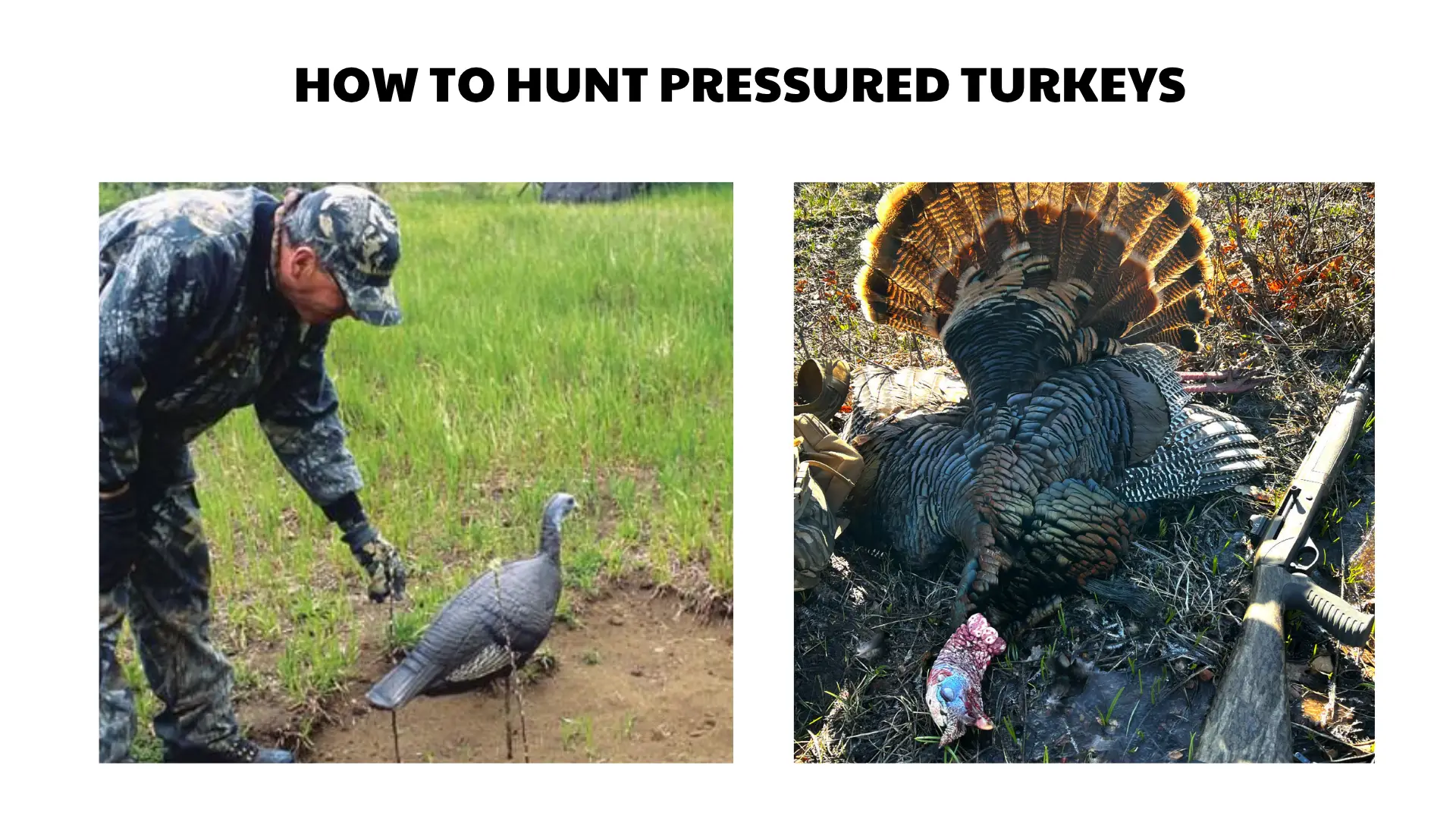

Learning how to hunt pressured turkeys is different from hunting birds that have not seen many hunters. Pressured turkeys may go quiet after fly-down, avoid obvious calling, change travel routes, hang up out of range, or slip away when they detect movement. The solution is not louder calling or rushing the setup. It is better scouting, cleaner access, safer decisions, and more patience.
This guide is for beginners and improving turkey hunters who are dealing with public land pressure, crowded access points, call-shy gobblers, wary hens, and birds that have already been bumped by other hunters. You will learn how to prepare legally, scout without educating birds, choose safer setups, call less but better, use terrain, read turkey behavior, and handle the hunt responsibly.
There is no guaranteed way to harvest a pressured gobbler. Hunting success depends on season timing, weather, local regulations, hunting pressure, habitat, turkey behavior, access, skill level, patience, and ethical decision-making. Your first goals should always be legal hunting, safe firearm or bow handling, respect for wildlife, and clean decision-making in the field.
Quick Answer
To learn how to hunt pressured turkeys, scout quietly before the hunt, avoid overcalling, set up where turkeys naturally want to travel, and approach from routes other hunters are less likely to use. Pressured birds often respond better to soft yelps, clucks, scratching leaves, long pauses, and patient setups than to loud, repeated calling. Always check current hunting regulations, identify your target and what is beyond it, and take only a safe, legal, ethical shot opportunity within your practiced ability.
Important Legal and Safety Notice Before You Hunt
Hunting regulations vary by country, state, province, county, season, land type, species, and weapon type. Before hunting wild turkeys, verify current rules with your official wildlife agency. Check license, permit, tag, season, weapon, ammunition, legal hunting hours, bag limit, land access, reporting, tagging, transport, and safety clothing requirements. Do not rely on general online advice as a substitute for local regulations.
- Hunting license and permits: Confirm that you have the correct license, turkey permit, stamp, or tag required for your location.
- Tags or harvest reporting: Know whether you must tag the bird immediately, report the harvest online, call a check station, or keep proof of harvest.
- Legal season and legal hours: Spring and fall turkey seasons can have different dates, sex restrictions, shooting hours, and bag limits.
- Legal weapons and ammunition: Verify allowed shotgun gauges, shot sizes, archery equipment, muzzleloaders, airguns, or other legal methods in your area.
- Public land or private land access: Confirm boundaries, parking, access roads, closed areas, and written permission where required.
- Required clothing or visibility rules: Some areas require hunter orange during certain seasons or when moving, even for turkey hunting.
- Safe firearm or bow handling: Keep the muzzle pointed in a safe direction, keep your finger off the trigger until ready, and identify the target and background before any shot.
- Weather, navigation, and emergency planning: Carry a map, compass or GPS, first aid kit, water, communication device, and a plan for returning safely.
Understanding the Game Species and Its Habitat
The target species is the wild turkey. Wild turkeys are alert birds with sharp eyesight, strong hearing, and a habit of noticing movement quickly. They use roost trees at night, fly down around daylight, feed through open woods, fields, logging roads, field edges, creek bottoms, ridges, and mast-producing areas, and often travel along predictable terrain features.
In spring, many hunters focus on gobblers because of breeding behavior. Gobblers may sound off on the roost, move with hens after fly-down, strut in openings, and travel through known feeding or loafing areas. In heavily hunted areas, however, gobblers may stop gobbling once they hit the ground, circle silently, avoid open roads, or use cover and terrain to approach without being seen.
Pressured turkeys are not magical or impossible. They are simply birds that have learned to associate certain sounds, setups, roads, decoys, and movement with danger. A beginner should learn to recognize tracks, droppings, feathers, scratching, dusting bowls, roost trees, strut marks, wing drag marks, feeding sign, and repeated travel routes. The more you understand where turkeys want to be without your calling, the less you need to force the hunt.
What You Need Before You Start
- Valid hunting license, turkey permit, tags, and current regulation knowledge
- Legal turkey hunting weapon or method allowed in your area
- Hunter education certification if required or strongly recommended
- Shotgun, bow, muzzleloader, or other legal equipment that you have practiced with safely
- Turkey calls such as a box call, slate call, diaphragm call, or push-button call
- Basic calling knowledge: yelp, cluck, purr, cutt, and silence
- Camouflage or concealment suited to the terrain and regulations
- Hunter orange or required visibility clothing if applicable, especially while moving or carrying a bird
- Comfortable boots and weather-appropriate clothing
- Seat cushion, low-profile chair, or safe ground setup option
- Binoculars for safe observation, where legal and practical
- Map, compass, GPS, or hunting app with land boundaries downloaded offline
- First aid kit, water, snacks, emergency communication, and a headlamp
- Game bags, gloves, cooler, and basic meat care supplies if you harvest a bird
How To Hunt Pressured Turkeys: Step-by-Step Guide
Step 1: Check Local Hunting Laws First
Start with your official wildlife agency, not social media or old advice. Confirm season dates, legal hunting hours, license and tag requirements, turkey sex restrictions, allowed weapons, shot size rules, decoy rules, baiting rules, public land restrictions, harvest reporting, and transport requirements. Some areas have different rules for spring versus fall, youth seasons, wildlife management areas, and private land.
Step 2: Learn the Turkey’s Patterns
Pressured turkeys often use predictable routes but avoid obvious hunter pressure. Learn where birds roost, where they fly down, where they feed, where hens travel, where gobblers strut, and where they go when disturbed. Pay attention to ridgelines, benches, logging roads, field corners, creek crossings, fence gaps, saddles, and quiet openings. A good setup is usually based on turkey travel, not just a gobble.
Step 3: Choose a Legal Hunting Area
Use official maps, public land apps, agency websites, and posted signs to confirm legal access. On private land, get permission before entering and respect gates, livestock, crops, roads, and property boundaries. On public land, identify multiple access points so you are not forced to hunt the same parking lot as everyone else.
Step 4: Scout Before the Hunt
Scout quietly. Listen from a distance at dawn or dusk, glass fields from legal roads or public vantage points, check tracks in soft mud, look for scratching in leaves, and mark roost areas without walking under the birds. Avoid calling during scouting unless local ethics and conditions make it appropriate; repeated calling can educate pressured turkeys before the season or before your hunt begins.
Step 5: Prepare Your Gear Safely
Pattern your shotgun or practice with your legal hunting method before the season. Know your personal effective range and stay within it. Check that calls work, optics are clean, clothing is quiet, boots are broken in, batteries are charged, and your navigation tools are ready. Do not make unsafe firearm modifications or use equipment that violates local rules or manufacturer instructions.
Step 6: Plan for Wind, Weather, and Entry Route
Turkeys do not rely on scent like deer, but wind still matters because it affects sound, movement, comfort, and safety. Wind can make calling harder to hear and can hide small noises as you move. Rain may push birds toward openings, while clear calm mornings may make them more vocal. Plan a quiet entry route that avoids walking through roost areas, open fields, and likely turkey travel lanes.
Step 7: Set Up Carefully
Choose a setup before the bird is too close. Sit against a tree wider than your shoulders when legal and practical, keep a safe shooting lane, avoid skylining yourself, and reduce unnecessary movement. Do not set up where you may shoot toward roads, homes, livestock, trails, vehicles, buildings, property lines, or other hunters. On pressured public land, assume another hunter could be nearby.
Step 8: Stay Patient and Observe
Pressured turkeys may approach silently. After calling, wait longer than you think you need to wait. Watch for movement, listen for drumming, footsteps, wingbeats, scratching, and soft clucks. Many beginners leave too early because a gobbler stopped answering. Sometimes silence means the bird is coming in cautiously.
Step 9: Take Only a Safe, Legal, and Ethical Shot Opportunity
Only act when the turkey is clearly identified, legal to harvest, within your practiced ability, and positioned with a safe background. Never shoot at sound, movement, color, or an unclear shape. Do not shoot toward another hunter, decoy, road, home, vehicle, livestock, trail, or property line. Passing on an uncertain shot is part of ethical hunting.
Step 10: Follow Legal Recovery and Reporting Rules
After a successful shot, follow your local tagging, reporting, and possession rules. Keep your firearm or bow safe, confirm the area is clear, and handle the bird respectfully. If the bird is not immediately recovered, follow legal recovery practices and ask an experienced mentor or wildlife officer for guidance when needed.
Step 11: Handle the Game Responsibly
Use clean tools, gloves, and a cooler plan. Keep the bird clean, cool the meat promptly, follow transport rules, and use the harvest respectfully. If you are new to meat care, learn from an official hunter education course, experienced mentor, local conservation group, processor, or wildlife agency resource before the hunt.
Best Time, Place, and Conditions for This Hunt
The best time to hunt pressured turkeys is often when you can be quieter, more patient, and less predictable than other hunters. Early morning can be useful because birds may gobble from the roost, but heavily hunted birds may attract several hunters at daylight. Midmorning can be productive when hens leave gobblers, other hunters leave the woods, and pressured birds begin moving quietly.
The best places are not always the loudest places. Look for secondary travel routes, subtle benches, ridges away from parking areas, field corners with cover, creek crossings, open hardwoods, quiet logging roads, and places where turkeys can move without exposing themselves. Public land birds may shift away from obvious road access, while private land birds may pattern around farm activity, livestock, and human routines.
Conditions matter. Calm mornings help you hear distant gobbles. Windy days can make birds quieter and calling less effective. Light rain may move turkeys into open areas where they can see better. Always follow legal hunting hours and leave enough time to return safely.
Helpful Tips for Better Results
- Use softer calling first; pressured birds often distrust loud, repeated calling.
- Wait longer between calling sequences so the setup sounds more natural.
- Scout without calling whenever possible so you do not educate birds.
- Hunt where turkeys already want to go instead of trying to pull them across pressure zones.
- Use terrain to approach quietly, but never crawl or sneak toward another hunter’s calling.
- Arrive early enough to avoid noisy rushing, but do not walk directly under roosted birds.
- Carry a small amount of hunter orange for walking in and out if required or recommended.
- Avoid fan or reaping tactics on crowded public land because other hunters may mistake movement for a bird.
- Mark multiple setups so you can adapt if another vehicle is already parked at your first choice.
- Stop calling when a bird is clearly closing distance unless you need a small final adjustment.
Common Mistakes to Avoid
Pressured turkey hunting punishes impatience. Many hunters fail because they do what every other hunter has already done: park in the same spot, hoot from the same ridge, call loudly from the same field edge, and leave when the bird stops gobbling.
- Not checking current regulations: Turkey rules can change by season, zone, weapon, and land type. Verify before every hunt.
- Hunting without proper permission: Never cross private land or unclear boundaries without permission.
- Overcalling: Loud, repeated yelping can make pressured birds suspicious or attract other hunters.
- Moving too soon: Pressured gobblers may take a long time to close distance silently.
- Setting up too exposed: Turkeys notice small movement. Break up your outline and limit motion.
- Ignoring other hunters: On public land, avoid crowding, calling aggressively near another setup, or moving toward calling.
- Using unsafe decoy tactics: Full-strut decoys, fans, or crawling approaches can be dangerous in crowded areas.
- Taking uncertain shots: Never shoot at sound, movement, or an unclear target.
- Forgetting recovery and meat care: Plan tagging, reporting, cooling, and transport before the hunt.
Troubleshooting Common Problems
| Problem | Possible Cause | What to Do |
|---|---|---|
| You hear gobbling on the roost but nothing after fly-down | Gobblers joined hens, felt pressure, or moved away from common hunter setups | Scout fly-down direction, set up along natural travel routes, and try quieter midmorning setups. |
| Birds answer but never come closer | They may be henned up, blocked by terrain, suspicious of calling, or waiting for the hen to come to them | Call less, reposition only when safe and legal, and set up closer to where they already want to travel. |
| You are not seeing any turkeys | Poor location, wrong timing, heavy pressure, limited scouting, or birds using different habitat | Scout tracks, scratching, roosts, droppings, and quiet travel corridors; try a different legal access point. |
| Turkeys keep detecting you | Too much movement, exposed setup, noisy entry, or birds seeing you before you sit down | Move slower, enter earlier, choose better cover, and keep calls and gear within easy reach. |
| Other hunters are already at your spot | The access point is obvious or heavily used | Leave respectfully, avoid crowding, and use a backup area you scouted in advance. |
| You are unsure about property boundaries | Maps are unclear, signs are missing, or parcels are mixed public and private | Do not guess. Check official maps, contact the land manager, or choose a clearly legal area. |
| Wind makes calling hard to hear | Wind is carrying sound away or masking turkey sounds | Use terrain breaks, call slightly louder only when needed, and rely more on known travel routes. |
| Your call sounds unnatural | Lack of practice, wet call surface, or too much volume | Practice before the hunt, carry a backup call, and use simple soft clucks and yelps. |
| You feel nervous when a bird approaches | Beginner excitement, poor preparation, or uncertainty about range | Breathe, stay still, confirm legality and background, and pass if the shot is not safe or ethical. |
| You are unsure after a shot | Limited experience with recovery or uncertainty about what happened | Keep safety first, mark the location mentally, follow legal recovery rules, and seek experienced guidance if needed. |
Ethical Hunting and Conservation
Ethical turkey hunting means respecting the bird, the land, other hunters, and the law. It means knowing the regulations, practicing before the season, identifying your target clearly, passing unsafe or uncertain opportunities, and using the harvest responsibly.
Respect other hunters by avoiding crowding, not cutting off someone already working a bird, and not moving toward another person’s calling. Respect landowners by closing gates, avoiding crops and livestock, staying within agreed boundaries, and leaving no trash. Respect wildlife by obeying seasons and bag limits, avoiding waste, and supporting conservation through license purchases, habitat work, and responsible participation.
When to Get More Training or Professional Guidance
Beginners should seek more training before hunting pressured turkeys if they are unsure about firearm safety, bow safety, calling, legal rules, land boundaries, range limits, recovery, or meat care. A mentor can help you avoid unsafe setups and learn how to read turkey behavior without rushing decisions.
- Take an official hunter education course if you have not already completed one.
- Practice firearm or bow handling with a certified instructor or experienced ethical mentor.
- Ask your state or provincial wildlife agency about current turkey hunting rules.
- Work with a reputable hunting club, conservation organization, or turkey hunting mentor.
- Ask a land manager or wildlife officer when land access, reporting, or recovery rules are unclear.
- Learn meat care from a trusted processor, mentor, hunter education resource, or agency publication.
After the Hunt: Follow-Up, Gear Care, and Learning
After the hunt, make notes while the details are fresh. Record where you parked, where birds gobbled, where they traveled, where other hunters entered, what calls worked, what calls failed, wind direction, weather, time of day, and how turkeys reacted.
Clean and store your firearm or bow according to manufacturer instructions. Dry wet calls and clothing, check boots and packs, recharge batteries, update maps, and restock first aid and meat care supplies. If you harvested a bird, complete all tagging, reporting, transport, cooling, and processing steps required in your area.
The best pressured turkey hunters improve because they review each hunt honestly. A quiet morning is still useful if it teaches you where turkeys are not, where hunters are entering, or which route lets you approach without being seen.
Recommended Hunting Gear and Tools to Consider
You do not always need expensive gear to hunt responsibly. Choose gear based on your local laws, hunting method, species, terrain, weather, safety needs, skill level, and budget.
- Legal turkey hunting weapon or method allowed in your area
- Turkey loads, arrows, broadheads, or other legal equipment matched to your method and regulations
- Patterning target or practice range access before the season
- Simple turkey calls such as a box call, slate call, or diaphragm call
- Comfortable seat cushion or low-profile chair for long sits
- Quality boots for quiet walking and changing spring conditions
- Weather-appropriate clothing and required visibility gear
- Binoculars for safe observation
- Navigation tools such as a map, compass, GPS, or hunting app
- First aid kit and emergency communication
- Headlamp or small flashlight for legal pre-dawn access
- Game bags, gloves, cooler, and meat care supplies if relevant
Final Thoughts
Learning how to hunt pressured turkeys is mostly about becoming quieter, more observant, more patient, and more prepared than the average hunter. Scout without educating birds, avoid obvious pressure, use soft and realistic calling, set up where turkeys already want to travel, and wait long enough for silent birds to appear.
Always hunt legally, safely, and ethically. Check current regulations, respect land access, practice with your equipment, identify your target and background, and pass on uncertain opportunities. Pressured turkeys are challenging, but careful preparation and responsible decisions can make you a better hunter even when the woods stay quiet.
FAQs
1. How long does it take to learn how to hunt pressured turkeys?
Most hunters need several seasons to become confident with pressured turkeys. You can learn the basics quickly, but reading subtle turkey behavior, choosing quiet setups, and knowing when not to call take field experience.
2. What does pressured turkey mean?
A pressured turkey is a bird that has been exposed to hunters, calling, vehicles, decoys, shots, or repeated human disturbance. These birds may become quieter, more cautious, and less responsive to obvious tactics.
3. Are pressured turkeys impossible to hunt?
No. They are harder, but not impossible. Better scouting, quieter movement, softer calling, less predictable access, and patience can help.
4. Do I need a hunting license to hunt pressured turkeys?
Yes, in most regulated hunting areas you need the proper hunting license and turkey permit or tag. Check your official wildlife agency before hunting.
5. Do turkey hunting rules change by state?
Yes. Season dates, bag limits, legal weapons, shooting hours, tagging, reporting, and land rules can vary widely by location.
6. What is the best time of day to hunt pressured turkeys?
Early morning can help you locate gobbling birds, but midmorning can be excellent when hens move away and other hunters leave. Always follow legal hunting hours.
7. Where do pressured turkeys go after fly-down?
They may follow hens, move to feeding areas, use terrain cover, or shift away from hunter access. Scout tracks, scratching, and travel routes to learn local patterns.
8. Why do gobblers stop gobbling after fly-down?
They may join hens, feel hunting pressure, avoid predators, or approach silently. Silence does not always mean the bird left.
9. Should I call less to pressured turkeys?
Often, yes. Soft yelps, clucks, purrs, and long pauses can sound more natural than loud, repeated calling.
10. Can overcalling ruin a turkey hunt?
Yes. Overcalling can make pressured birds suspicious and may also attract other hunters to your setup.
11. What calls work best on pressured turkeys?
Soft hen yelps, clucks, purrs, leaf scratching, and realistic silence often work better than constant loud calling. The best call depends on the bird’s mood and distance.
12. Should I use locator calls on pressured turkeys?
Locator calls can help, but repeated loud locator calling can alert birds and hunters. Use them sparingly and follow local rules and ethics.
13. Should I scout with turkey calls?
It is usually better to scout quietly with listening, glassing, and sign reading. Calling while scouting can educate turkeys before you hunt them.
14. What turkey sign should beginners look for?
Look for tracks, droppings, feathers, scratching in leaves, dusting bowls, roost trees, wing drag marks, and repeated travel routes.
15. How do I find turkey roosts?
Listen at dawn or dusk from a distance, look for droppings and feathers under large trees, and avoid walking directly under roosted birds.
16. Should I hunt close to the roost?
Sometimes, but getting too close can spook birds. Set up where you can intercept natural travel without disturbing the roost.
17. Are decoys useful for pressured turkeys?
They can be useful, but pressured birds may avoid unrealistic setups. On public land, decoys and fan-style tactics can create safety concerns, so use caution and follow local rules.
18. Is turkey reaping safe on public land?
It can be dangerous in crowded areas because other hunters may see movement and mistake it for a bird. Many hunters avoid it on public land for safety reasons, and some areas restrict it.
19. What is the safest public land turkey setup?
Choose a setup with a solid background, safe shooting lanes, clear visibility, and no shooting direction toward roads, trails, homes, vehicles, livestock, or other hunters.
20. Should I wear hunter orange while turkey hunting?
Requirements vary. Some hunters carry orange for walking in and out or when carrying a bird, even where full camouflage is used during the setup. Check local rules.
21. What weapon is best for pressured turkeys?
The best legal method is the one you can use safely, accurately, and ethically within your local rules. Shotguns and bows are common, but regulations vary.
22. Do I need to pattern my shotgun?
Yes. Patterning helps you understand your effective range and whether your gun, choke, and legal ammunition perform safely and consistently.
23. Can beginners bowhunt pressured turkeys?
Yes, but bowhunting turkeys requires practice, concealment, patience, and strict shot discipline. Know your personal effective range before hunting.
24. What is an ethical shot opportunity on a turkey?
An ethical opportunity is legal, safe, clearly identified, within your practiced range, and supported by a safe background. Pass when uncertain.
25. Should I shoot at a turkey sound?
No. Never shoot at sound, movement, color, or an unclear shape. Identify the target and what is beyond it before any shot.
26. How do I avoid other hunters on public land?
Use multiple access plans, avoid crowded parking areas, do not crowd calling, and leave respectfully if someone is already working a bird.
27. Should I go deeper than other hunters?
Sometimes deeper access reduces pressure, but it is not always necessary. A quieter overlooked area near access can be better than a long walk through turkey habitat.
28. Is private land better for pressured turkeys?
Private land may have less pressure, but only if access is controlled. You must have permission and follow all regulations.
29. Can pressured turkeys learn from hunters?
Turkeys can become wary of repeated disturbance, unnatural calling, obvious setups, and human movement. That is why quiet scouting and realistic calling matter.
30. What should I do if a gobbler hangs up?
Stay patient. Call less, scratch leaves, wait, or reposition only if it is safe, legal, and unlikely to spook the bird or interfere with another hunter.
31. What if hens pull the gobbler away?
You can wait for the hens to leave, set up along the group’s travel route, or try to call softly to the hens. Do not rush or chase the flock.
32. Do pressured turkeys respond to aggressive calling?
Sometimes, but aggressive calling can also hurt your chances. Start soft and increase only when the bird’s behavior supports it.
33. What weather is best for pressured turkey hunting?
Calm mornings help with listening. Light rain may push birds into openings. Wind can reduce gobbling and make calling harder, but birds still move.
34. Does wind direction matter for turkeys?
Turkeys do not rely heavily on scent like deer, but wind affects sound, movement, comfort, and safety. Plan calling and setup with wind in mind.
35. How important is camouflage?
Camouflage helps, but stillness is more important. Turkeys notice movement quickly, even when clothing blends into the background.
36. Should I use a blind for pressured turkeys?
A blind can help with concealment, especially for bowhunters or youth hunters. It can also limit mobility, so choose it based on terrain and bird patterns.
37. Can I hunt pressured turkeys without decoys?
Yes. Many pressured birds are taken without decoys by setting up along natural travel routes and using subtle calling.
38. How early should I arrive?
Arrive early enough to set up quietly before legal hunting time, but do not rush into roosted birds or unsafe terrain in the dark.
39. What should I do if I bump a turkey?
Stop, mark what happened, and avoid pushing the bird farther. You may need to wait, adjust setups, or return another day.
40. How long should I sit in one setup?
On pressured birds, longer sits can pay off. If the sign is good and the setup is safe, waiting one to two hours or more may be better than moving constantly.
41. What is the biggest mistake in pressured turkey hunting?
The biggest mistake is usually impatience: too much calling, too much movement, and leaving before a silent bird arrives.
42. How much does turkey hunting cost?
Costs vary by license, permit, weapon, ammunition, calls, clothing, travel, and land access. Beginners can start with basic legal gear and upgrade slowly.
43. Do I need expensive turkey calls?
No. A simple call that you can use naturally is better than an expensive call used poorly. Practice matters more than price.
44. What should I pack for a pressured turkey hunt?
Bring license, tag, legal weapon, calls, map, compass or GPS, water, snacks, first aid kit, seat, weather gear, emergency communication, and meat care supplies.
45. Should I hunt alone as a beginner?
It is safer to hunt with an experienced ethical mentor when possible. If you hunt alone, leave a plan with someone and carry reliable navigation and communication.
46. What should I tell someone before I hunt?
Tell a trusted person where you will park, where you plan to hunt, when you expect to return, and what to do if you do not check in.
47. What if my gear fails?
Stay safe first. Carry simple backups for navigation, light, calls, and weather. Do not continue with unsafe weapon or equipment problems.
48. How do I handle a harvested turkey?
Follow tagging and reporting rules, keep the bird clean and cool, transport it legally, and use the meat responsibly. Learn meat care before the hunt.
49. Do I have to report a turkey harvest?
Many places require reporting or tagging, but rules vary. Check your official wildlife agency before hunting.
50. What should I do if I cannot recover a turkey?
Follow legal recovery rules, mark the last known location, avoid unsafe actions, and seek guidance from an experienced mentor or wildlife officer when needed.
51. How do I respect other turkey hunters?
Do not crowd setups, do not move toward calling, avoid cutting off another hunter, park respectfully, and communicate calmly if you meet someone.
52. Can I hunt pressured turkeys from a tree stand?
Turkey hunting is usually done from the ground, but if you use an elevated stand where legal, use a full-body harness and follow tree stand safety rules.
53. What conservation role do turkey hunters play?
Legal hunters support conservation through license purchases, habitat work, harvest reporting, volunteer work, and responsible participation in wildlife management.
54. When should I ask for professional help?
Ask for help if you are unsure about laws, firearm or bow safety, land boundaries, recovery, meat care, or hunting unfamiliar terrain.
55. What is the best beginner tip for pressured turkeys?
Scout more than you call. Find where turkeys naturally travel, set up quietly, call softly, wait longer, and pass any unsafe or uncertain opportunity.
Read more: How to Hunt Public Land Turkeys: Safe Beginner Steps