
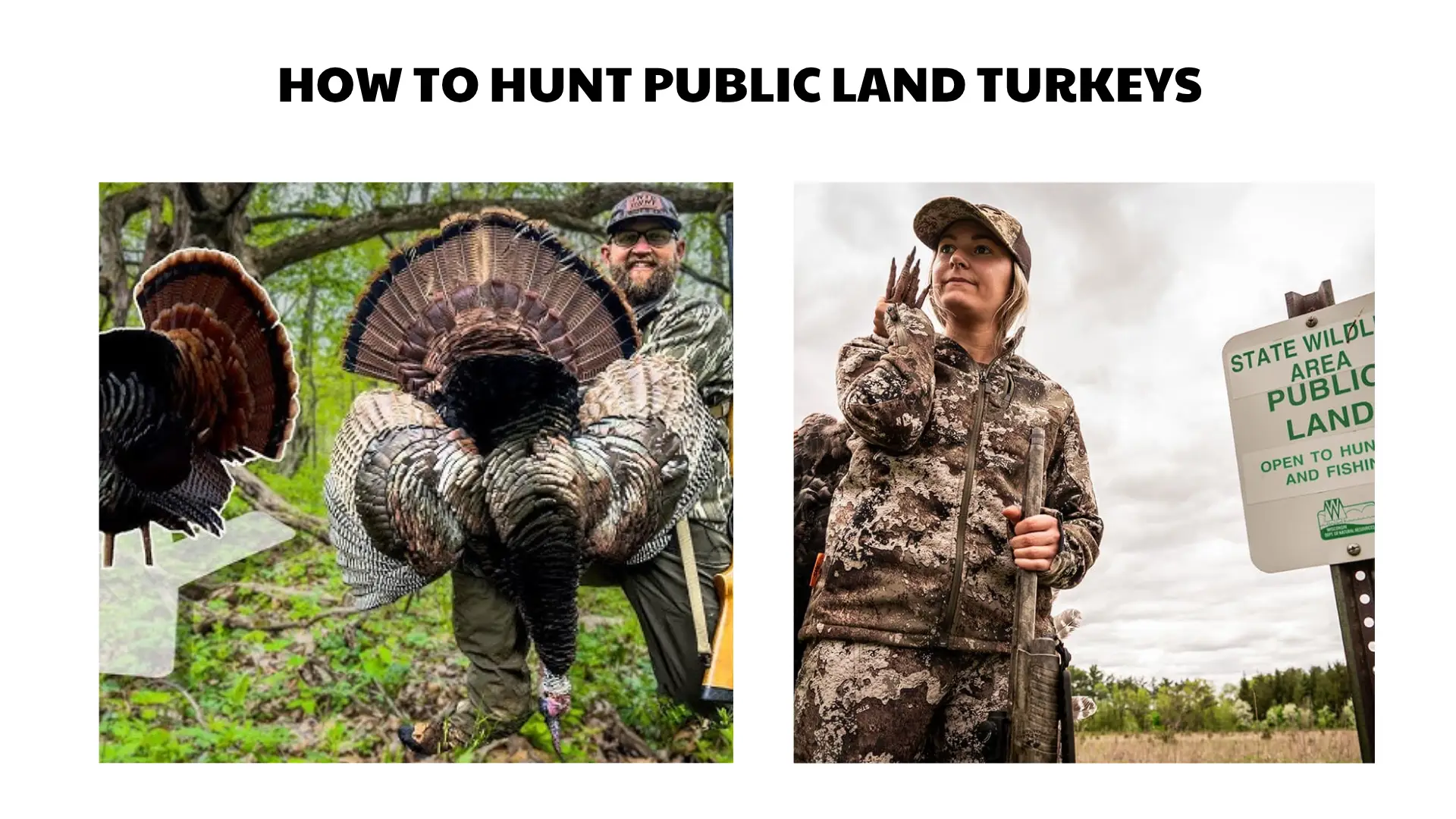

Learning how to hunt public land turkeys can feel confusing at first because you are dealing with wild birds, shared access, changing regulations, other hunters, and unfamiliar terrain. This guide explains the basics in a calm, practical way so a beginner can prepare legally, scout smarter, set up safely, and make better decisions in the field.
Public land turkey hunting is not about rushing through the woods or trying to force a quick result. It is about understanding wild turkey behavior, respecting other public land users, knowing your legal boundaries, and staying patient when birds do not respond the way you expect.
This article is for new hunters, adult-onset hunters, youth hunters hunting with a mentor, and anyone who wants a safer and more organized approach to turkey hunting on public ground. With careful preparation, realistic expectations, and ethical decision-making, you can improve your chances while still respecting wildlife, the land, and the hunting tradition.
Quick Answer
To learn how to hunt public land turkeys, start by checking your current hunting license, turkey tag, season dates, legal hours, weapon rules, and public land access regulations. Then scout for roosting areas, tracks, droppings, scratching, feeding zones, and travel routes before choosing a safe setup with a wide view and a solid tree or cover behind you. Move quietly, call sparingly, avoid unsafe colors, identify your target and what is beyond it, and only take a legal, ethical shot opportunity within your practiced ability. With patience and repeated scouting, a beginner can build useful field skills even if the first few hunts do not produce a harvest.
Search Intent Behind how to hunt public land turkeys
Someone searching for how to hunt public land turkeys usually wants more than a simple list of calls or gear. The reader likely wants to know where to start, how to find birds on pressured land, how to stay legal, how to avoid other hunters, what gear matters, and how to make safe decisions when a turkey finally responds. This guide focuses on the full beginner process: legal preparation, scouting, access planning, public land etiquette, turkey behavior, setup choices, safety, ethics, and after-hunt responsibilities.
Important Legal and Safety Notice Before You Hunt
Hunting regulations vary by country, state, province, county, season, land type, species, sex of bird, weapon type, and public land unit. Before hunting, always verify current rules with your official wildlife agency, the public land manager, and any unit-specific regulation booklet. Do not rely on old blog posts, social media comments, or last year’s season dates.
- Hunting license and permits: Confirm that you have the correct hunting license, turkey permit, public land permit, or special access authorization if required.
- Tags or harvest reporting: Know whether you must tag, check in, report, validate, or register a harvested turkey.
- Legal season and legal hours: Verify spring or fall season dates, youth dates, daily legal hours, and any closed days.
- Legal weapons and ammunition: Confirm allowed shotguns, archery equipment, muzzleloaders, shot size, broadheads, non-toxic shot requirements, and magazine or equipment restrictions where applicable.
- Public land or private land access: Use official maps and signage to confirm boundaries, open areas, closed areas, parking, camping, and entry rules.
- Required clothing or visibility rules: Check whether blaze orange is required while moving, during certain seasons, or when transporting game.
- Safe firearm or bow handling: Keep the muzzle pointed in a safe direction, keep your finger off the trigger until ready, and identify the target and what is beyond it.
- Weather, navigation, and emergency planning: Carry a map, compass, GPS or app, first aid kit, water, headlamp, and a way to contact someone if plans change.
Useful starting points include your state or provincial wildlife agency, official hunter education materials, and public land manager websites such as U.S. Fish & Wildlife Service hunting access information.
Understanding the Game Species and Its Habitat
The target species for this topic is the wild turkey. Wild turkeys are alert birds with strong eyesight, sharp hearing, and a habit of noticing movement quickly. They spend much of their time walking, feeding, calling, loafing, dusting, and moving between roosting cover and daytime activity areas.
In many areas, turkeys roost in trees overnight, often near mature timber, ridges, creek bottoms, field edges, or protected cover. At daylight they may fly down, feed, interact with other birds, and travel through openings, logging roads, oak flats, field corners, creek crossings, old burns, pine edges, or mixed hardwoods depending on the region.
Beginner hunters should learn to recognize turkey sign rather than relying only on gobbling. Useful signs include tracks in mud, droppings, feathers, dusting bowls, scratching in leaf litter, strut marks, wing drag marks in soft soil, and regular travel paths between roosting and feeding areas.
Spring turkey hunting often centers on breeding behavior, gobbling, hen sounds, and toms moving between hens and strut zones. Fall turkey hunting, where legal, may involve different flock behavior and different regulations. Always match your strategy to the season, local rules, and local bird behavior.
What You Need Before You Start
- Valid hunting license, turkey permits, tags, public land access permits, and current regulation knowledge
- Legal hunting weapon or method allowed in your area, such as a shotgun, bow, crossbow, or muzzleloader where permitted
- Hunter orange or required visibility clothing if applicable, especially while walking or carrying gear
- Weather-appropriate camouflage or earth-tone hunting clothing, quiet layers, rain gear, gloves, face covering, and comfortable boots
- Navigation tools such as a paper map, compass, GPS, or hunting app with downloaded offline maps
- First aid kit, water, snacks, headlamp, extra batteries, emergency whistle, and emergency communication
- Binoculars or optics for safe observation and identifying birds at a distance
- Turkey calls such as a box call, pot call, diaphragm call, or push-button call, used safely and responsibly
- Seat cushion, turkey vest, or lightweight ground seat for quiet comfort during long sits
- Optional turkey decoys if legal and safe for your public land situation
- Game bags, gloves, cooler, and basic meat care supplies if you harvest a bird
How To Hunt Public Land Turkeys: Step-by-Step Guide
Step 1: Check Local Hunting Laws First
Before choosing a spot, verify your license, turkey permit, season dates, legal shooting hours, bag limits, allowed weapons, ammunition rules, tagging requirements, reporting rules, and public land access regulations. Public land can have special rules that are different from statewide rules, including closed zones, quota hunts, sign-in systems, parking limits, non-toxic shot requirements, or restrictions on decoys and blinds.
Save or print the regulations for the exact unit you plan to hunt. If a rule is unclear, contact the wildlife agency or land manager before going into the field.
Step 2: Learn the Animal’s Patterns
Study wild turkey behavior before the season. Learn where birds roost, where they feed, how they use ridges and creek bottoms, and how they move between openings and cover. On public land, birds may become cautious after pressure, so fresh sign and quiet observation matter more than simply walking toward the loudest gobble.
Look for repeated patterns. A single track may not mean much, but several mornings of gobbling from the same ridge or fresh scratching near the same field edge can point to a useful hunting area.
Step 3: Choose a Legal Hunting Area
Use official public land maps, wildlife agency maps, refuge or forest maps, and property boundary tools to confirm that turkey hunting is allowed. Check access roads, parking areas, closed zones, safety zones, trails, nearby private property, and any special permits required.
Do not cross private property without permission, even if the public land is close on the other side. Public land hunting requires careful boundary awareness and respect for gates, signs, fences, roads, homes, livestock, hikers, and other hunters.
Step 4: Scout Before the Hunt
Scout from a distance when possible. Listen at dawn or near dusk for gobbling, note where birds enter fields, and look for tracks, droppings, feathers, scratching, dust bowls, and strut sign. Mark possible roost areas, feeding areas, and travel corridors on a map.
On pressured public land, also scout people. Notice parking areas, boot tracks, trailheads, easy access points, and places where other hunters are likely to go. Sometimes a less obvious access route or a quieter mid-morning setup can be better than joining a crowd near the closest gobbling bird.
Step 5: Prepare Your Gear Safely
Practice with your legal hunting method before the season. Pattern your shotgun with legal turkey loads at appropriate distances, or practice with your bow or crossbow until you know your personal effective range. Follow all manufacturer instructions and official hunter education guidance.
Pack only what you can carry quietly. Check calls, seat, headlamp, map, batteries, first aid kit, water, rain gear, license, permits, and tagging materials. If using decoys, carry them in a bag and be extra cautious on public land because other hunters may be nearby.
Step 6: Plan for Wind, Weather, and Entry Route
Turkeys rely more on eyesight and hearing than scent, but wind and weather still matter. Wind can make calling harder to hear, rain can push birds toward openings, and dry leaves can make walking noisy. Choose an entry route that lets you arrive quietly without walking through likely roosting or feeding areas.
Plan where you will park, how long the walk will take, what landmarks you will use in the dark, and how you will leave if another hunter is already in the area.
Step 7: Set Up Carefully
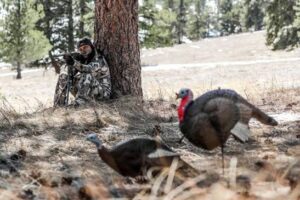
Choose a setup where you can see safely, sit still, and avoid being silhouetted. Many turkey hunters sit with their back against a tree wider than their shoulders, but always confirm that this is safe and legal for your area. Avoid sitting directly on trails, roads, field edges with no back cover, or places where other hunters may approach unseen.
If using a blind, set it in a legal location and follow public land rules for temporary equipment. If using decoys, place them where you can safely monitor the area and where they will not create confusion near roads, trails, or other hunters.
Step 8: Stay Patient and Observe
Public land turkeys may go quiet when pressured. Do not assume a silent woods means no birds are nearby. Sit still, listen for scratching, watch openings, and call only as much as needed. Too much calling can attract other hunters or make educated birds cautious.
If a bird answers, resist the urge to rush. Let the setup work. If the bird leaves or hangs up, take notes and use that information on the next hunt.
Step 9: Take Only a Safe, Legal, and Ethical Shot Opportunity
Only act when the turkey is clearly identified, legal to harvest, within your practiced ability, and positioned with a safe background. Never shoot at sound, movement, color, brush movement, or an unclear shape. Do not shoot toward roads, homes, livestock, vehicles, trails, people, or unknown backgrounds.
Passing on an uncertain opportunity is part of ethical hunting. A safe decision is always better than a rushed decision.
Step 10: Follow Legal Recovery and Reporting Rules
After a successful legal shot, follow your agency’s tagging, validation, check-in, or harvest reporting rules. Some areas require immediate tagging, online reporting, physical check stations, or proof of sex or species during transport. Know these rules before the hunt.
If recovery becomes uncertain, stay calm, mark the location, follow legal recovery procedures, and ask an experienced mentor or wildlife officer for guidance when needed.
Step 11: Handle the Game Responsibly
Use clean tools, gloves, a cooler, and proper cooling practices. Keep the bird clean, shaded, and cool as soon as practical. Follow transport rules, retain required evidence of sex or species if your regulations require it, and use the meat respectfully.
Responsible game handling is part of the hunt. It honors the animal, reduces waste, and supports the conservation-minded purpose of regulated hunting.
Best Time, Place, and Conditions for This Hunt
The best time to hunt public land turkeys depends on your legal season, local flock behavior, hunting pressure, weather, and terrain. In many spring seasons, early morning listening near roost areas can help locate birds, while mid-morning can be productive after other hunters leave and gobblers separate from hens. In fall seasons, where legal, flock movement and feeding patterns may matter more than spring breeding behavior.
Good places often include legal public land edges where mature timber meets openings, ridge systems, creek bottoms, oak flats, field corners, logging roads, burns, old clearings, and travel routes between roosting and feeding areas. However, the best place is not always the easiest place to reach. Public land pressure can push birds away from obvious access points.
Weather can change turkey movement. Calm mornings can make gobbling easier to hear. Windy days can reduce hearing distance and make movement harder to detect. Rain may encourage birds to use open fields or roadsides after showers. Always prioritize safety when weather, flooding, lightning, heat, or cold becomes a concern.
Public land differs from private land because access is shared. Respect parking areas, avoid crowding another hunter, keep a safe distance from other setups, and have backup locations ready.
Helpful Tips for Better Results
- Scout several public land areas before the season so you are not dependent on one crowded parking lot.
- Use official maps and downloaded offline layers to avoid trespassing or entering closed areas.
- Listen more than you call, especially on pressured public land where birds and hunters may react to aggressive calling.
- Avoid wearing red, white, or blue outer clothing while turkey hunting because those colors can resemble parts of a gobbler’s head.
- Arrive early enough to settle in quietly, but do not walk under birds that may be roosted nearby.
- Have two or three backup setups planned in case another hunter is already in your first location.
- Leave the area cleaner than you found it and treat other hunters with patience and respect.
Common Mistakes to Avoid
Beginner turkey hunters often struggle because they focus only on calling and forget the bigger picture. Public land success is usually built on legal access, scouting, safe setups, patience, and the ability to adapt.
- Not checking current regulations: Season dates, weapon rules, tags, and public land rules can change.
- Ignoring public land boundaries: Do not trust vague map lines or assumptions. Confirm access before entering.
- Calling too much: Overcalling can alert pressured birds and attract other hunters.
- Moving too quickly: Turkeys can spot movement easily, especially in open timber or field edges.
- Crowding another hunter: If someone is already working a bird, leave the area and use a backup plan.
- Using unsafe colors or decoy handling: Avoid red, white, and blue outerwear, and carry decoys in a safe bag.
- Shooting at sound or movement: Never act unless the target is fully identified and the background is safe.
- Forgetting weather and navigation: A simple morning hunt can become risky if fog, storms, heat, cold, or darkness catches you unprepared.
- Not planning after-hunt steps: Know tagging, reporting, transport, and meat care rules before the season opens.
Troubleshooting Common Problems
| Problem | Possible Cause | What to Do |
|---|---|---|
| You are not seeing any turkeys | Poor location, limited scouting, wrong timing, or birds using another part of the property | Scout fresh sign, listen from different access points, and adjust to feeding, roosting, and travel patterns. |
| Birds stop gobbling after fly-down | They may be with hens, pressured, or moving away from your setup | Stay patient, call lightly, note the direction of travel, and return with a better setup later. |
| Other hunters are already near your spot | The area is easy to access or well-known | Leave safely, avoid crowding, and use a backup area with less obvious access. |
| A turkey seems to detect you | Too much movement, poor cover, shiny gear, or a bad setup angle | Sit still, improve back cover, reduce unnecessary movement, and set up before birds are close. |
| Wind makes calling difficult | Calls do not carry well and natural sounds are harder to hear | Use protected terrain, call slightly louder but less often, and focus on visible travel routes. |
| You are unsure about a boundary | Map data, signs, or property lines are unclear | Do not hunt there until you confirm the boundary with official maps or the land manager. |
| Your gear is noisy | Loose items, stiff fabric, metal clips, or untested equipment | Test gear at home, tape or secure noisy parts, and pack fewer items. |
| Visibility is poor | Fog, brush, darkness, rain, or thick cover | Wait for clear identification and never shoot at shapes, sound, or movement. |
| You feel nervous when a bird approaches | Beginner excitement, lack of practice, or uncertainty | Breathe slowly, keep safety first, and pass if anything is unclear or outside your ability. |
| You are worried about recovery | Unclear impact, poor landmarking, or thick cover | Mark the location, follow legal recovery procedures, and ask a mentor or official contact for help if needed. |
Ethical Hunting and Conservation
Ethical turkey hunting begins before the season. It includes learning the law, practicing with your equipment, respecting other hunters, avoiding trespass, using restraint, and caring for the harvest responsibly.
Regulated hunting supports conservation through license sales, excise taxes, habitat programs, public land funding, and hunter participation in wildlife management. That support only remains strong when hunters act responsibly and show respect for wildlife and the public.
- Respect wildlife by taking only legal and ethical opportunities.
- Respect landowners, gates, signs, roads, parking areas, livestock, and property boundaries.
- Obey seasons, bag limits, reporting rules, and public land closures.
- Avoid waste and use the meat responsibly.
- Practice before hunting and know your realistic limits.
- Pass on unsafe, rushed, or uncertain opportunities.
- Leave the land cleaner than you found it.
When to Get More Training or Professional Guidance
Beginners should seek more training before hunting alone if they have never handled a firearm or bow, have not completed hunter education, do not understand local laws, are unsure about public land boundaries, or are not confident in safe shooting decisions.
More guidance is also wise when hunting unfamiliar terrain, using a new legal weapon type, learning turkey calling, handling a first harvest, or dealing with uncertain recovery. Good sources include official hunter education courses, state or provincial wildlife agencies, certified instructors, experienced ethical mentors, local conservation organizations, and reputable hunting clubs.
After the Hunt: Follow-Up, Gear Care, and Learning
After the hunt, unload and store firearms or bows safely according to law and manufacturer guidance. Clean mud from boots, dry wet clothing, air out calls and vest pockets, check batteries, and replace used first aid or emergency items.
Keep a simple hunt journal. Record the date, weather, wind, gobbling activity, sign, other hunter pressure, setup location, bird movement, and what you would change next time. These notes help you learn faster than memory alone.
If you harvest a turkey, complete required tagging or reporting, follow transport rules, cool the meat, and process or store it responsibly. If you did not harvest, the hunt can still be successful if you learned a new access route, found fresh sign, or identified a better setup for the next trip.
Recommended Hunting Gear and Tools to Consider
You do not always need expensive gear to hunt responsibly. Choose gear based on your local laws, hunting method, species, terrain, weather, safety needs, skill level, and budget.
- Legal hunting weapon or method allowed in your area
- Quality boots for your terrain and weather
- Weather-appropriate clothing and required visibility gear
- Turkey calls that you can use confidently without overcalling
- Binoculars or optics for safe observation
- Navigation tools such as a map, compass, GPS, or hunting app
- First aid kit and emergency communication
- Seat cushion, turkey vest, or ground seat for quiet sitting
- Game bags, gloves, cooler, and meat care supplies if relevant
Final Thoughts
Learning how to hunt public land turkeys takes more than buying a call and walking toward a gobble. Start with the law, choose legal access carefully, scout before the season, prepare safe gear, plan quiet entry routes, set up with safety in mind, and stay patient when pressured birds do not cooperate.
The best public land hunters are not reckless or rushed. They are observant, respectful, prepared, and willing to pass on anything unsafe or uncertain. Choose your methods and gear based on local laws, terrain, skill level, and conservation responsibilities, and treat every hunt as a chance to become safer and more knowledgeable.
FAQs
1. How long does it take to learn how to hunt public land turkeys?
You can learn the basics before your first season, but becoming consistent may take several seasons. Public land turkeys are often pressured, so scouting, patience, and safe decision-making improve with experience.
2. Do I need a hunting license to hunt public land turkeys?
In most places, yes. You usually need a hunting license and a turkey permit, tag, stamp, or harvest authorization. Check your official wildlife agency before hunting.
3. Do public land turkey rules differ from private land rules?
They can. Public land may have unit-specific seasons, access permits, closed areas, parking rules, sign-in requirements, camping restrictions, or equipment rules.
4. What is the best time of day to hunt public land turkeys?
Many hunters start before sunrise to listen near roost areas, but mid-morning can also be productive when other hunters leave and birds begin moving again. Legal hunting hours vary, so verify them first.
5. Where should a beginner look for turkeys on public land?
Look for legal areas with roosting trees, field edges, creek bottoms, ridges, open timber, scratching, tracks, droppings, and travel routes. Avoid relying only on easy-access spots.
6. How do I scout public land turkeys before season?
Listen at dawn or dusk, glass field edges where legal and safe, look for tracks and scratching, and mark sign on a map. Scout without disturbing likely roost areas.
7. What does turkey scratching look like?
Turkey scratching often looks like leaves or debris kicked backward as birds search for food. Fresh scratching may show exposed soil, turned leaves, and multiple feeding marks in one area.
8. What do turkey tracks look like?
Turkey tracks usually show three forward toes and sometimes a rear toe. Tracks in mud, sand, field edges, creek crossings, and logging roads can help reveal travel routes.
9. Do I need turkey calls?
Calls can help, but they are not magic. A box call, pot call, push-button call, or diaphragm call can work if you practice and avoid overcalling.
10. What is the easiest turkey call for beginners?
Many beginners find a box call or push-button call easier to use than a diaphragm call. Choose one you can operate quietly and confidently.
11. Can I use decoys on public land?
Sometimes, but rules vary. Decoys can also create safety concerns on pressured public land, so verify legality and use them only where they do not create confusion for other hunters.
12. Is camouflage necessary for turkey hunting?
Camouflage or earth-tone clothing can help reduce visibility, but staying still is even more important. Always follow required visibility clothing rules when they apply.
13. Should I wear blaze orange while turkey hunting?
Follow your local law. Even where not required at all times, many hunters use orange while walking, entering, leaving, or carrying gear for better visibility to other hunters.
14. Why should turkey hunters avoid red, white, and blue?
Those colors can resemble parts of a gobbler’s head. Avoiding them reduces the risk of being mistaken for a turkey by another hunter.
15. What firearm safety rules matter most?
Keep the muzzle in a safe direction, treat every firearm as loaded, keep your finger off the trigger until ready, and identify your target and what is beyond it.
16. Can I shoot at a gobble or movement in the brush?
No. Never shoot at sound, movement, color, or an unclear shape. You must clearly identify a legal turkey and confirm a safe background.
17. How close should I set up to a roost?
That depends on terrain, legal access, light, and bird behavior. Set up close enough to hear and observe but not so close that you disturb birds or create unsafe movement in the dark.
18. What should I do if another hunter is already there?
Do not crowd them or try to cut them off. Leave quietly and use a backup location. Public land etiquette helps everyone stay safer.
19. How much should I call on public land?
Usually less than you think. Light, realistic calling can be better than loud, constant calling, especially where birds have heard many hunters.
20. Why do turkeys stop gobbling?
They may be with hens, pressured, alarmed, moving quietly, or affected by weather. Silence does not always mean birds are gone.
21. What should I do when a gobbler hangs up?
Stay patient, reduce calling, and avoid unnecessary movement. If the bird will not approach, note the location and use the information for a later setup.
22. Is wind direction important for turkey hunting?
Wind is less about scent for turkeys and more about sound, movement, and hearing. Strong wind can reduce gobbling distance and make calling less effective.
23. Is rainy weather good for turkey hunting?
Rain can change turkey movement. Birds may use openings, fields, or roads during or after rain, but safety and local conditions should guide your plan.
24. What should I pack for a public land turkey hunt?
Pack your license, permits, map, compass or GPS, headlamp, water, first aid kit, legal weapon, calls, seat, clothing layers, and tagging materials. Keep it simple and quiet.
25. Do I need a hunting blind?
No, but a blind can help in some legal situations, especially for archery or youth hunters. Public land blind rules vary, so check regulations first.
26. Are tree stands used for turkey hunting?
Turkey hunters usually hunt from the ground, but if any elevated stand is used where legal, use a full-body safety harness and follow all stand safety rules.
27. Is bowhunting turkeys harder than using a shotgun?
Bowhunting often requires more practice, movement control, and close-range discipline. Know your personal effective range and pass on shots outside your ability.
28. What legal weapon should a beginner use?
Use a weapon that is legal in your area and that you can handle safely and accurately. Get instruction, practice, and follow official hunter education guidance.
29. How do I avoid trespassing while hunting public land?
Use official maps, posted signs, GPS or app boundaries, and land manager information. If you are unsure, do not cross the line.
30. Can I cross private land to reach public land?
Only with legal permission from the landowner or a legal public access route. Public land nearby does not give you permission to cross private property.
31. How early should I arrive?
Arrive early enough to park legally, walk safely, and settle quietly before birds are active. Use a headlamp where appropriate and be aware of other hunters.
32. What if I get lost on public land?
Stop, stay calm, use your map, compass, GPS, or app, and contact help if needed. Tell someone your plan before hunting and carry emergency communication.
33. Is public land turkey hunting dangerous?
It can be safe when hunters follow firearm safety, identify targets clearly, avoid unsafe colors, communicate carefully, and respect other hunters. Never assume you are alone.
34. Should I hunt near roads or trails?
Be very cautious and follow all safety zones and local rules. Never shoot toward roads, trails, homes, vehicles, livestock, or people.
35. What should I do if I hear another hunter calling?
Do not stalk the calling. Back out or choose another area. A call may be another hunter, not a turkey.
36. Can I stalk turkeys on public land?
Stalking turkeys on public land can create serious safety risks because other hunters may be present. A safer approach is to set up, call responsibly, and wait.
37. How do I know if a turkey is legal?
Legal definitions vary by season and location. Learn the rules for sex, age class, beard requirements, and bag limits before hunting.
38. What is an ethical shot opportunity?
It is a legal, safe opportunity where the bird is clearly identified, the background is safe, and the shot is within your practiced ability. If unsure, pass.
39. What should I do immediately after a successful hunt?
Follow your legal tagging, validation, reporting, and transport requirements. Then cool and handle the bird responsibly.
40. Do I have to report a harvested turkey?
Many places require harvest reporting, but rules vary. Check whether reporting is required online, by phone, through an app, or at a check station.
41. How do I care for turkey meat?
Keep tools clean, use gloves if desired, cool the bird promptly, and follow food safety practices. Avoid waste and use the meat respectfully.
42. What if I miss a turkey?
Stay safe, keep the muzzle controlled, and do not rush a follow-up. Review what happened later and practice before the next hunt.
43. What if I wound a turkey and cannot find it?
Follow legal recovery rules, mark the location, search carefully and safely, and seek help from an experienced mentor or local authority if needed.
44. How much does public land turkey hunting cost?
Costs vary by license, permits, gear, fuel, and travel. Beginners can often start with basic legal gear, safety equipment, and careful planning rather than expensive extras.
45. Do expensive turkey calls make a big difference?
Not always. A simple call used well is better than an expensive call used poorly. Practice realistic rhythm, volume, and restraint.
46. What is the biggest public land turkey hunting mistake?
One of the biggest mistakes is hunting without enough scouting and backup plans. Another is ignoring safety because of excitement.
47. Can I hunt public land turkeys alone as a beginner?
It may be legal, but beginners are safer with an experienced mentor. If alone, tell someone your plan, carry navigation tools, and keep safety conservative.
48. Should I take a hunter education course?
Yes. Hunter education is required in many places and strongly recommended for all beginners because it teaches laws, safety, ethics, and responsible field behavior.
49. How do I choose a safe setup tree or cover?
Choose cover that breaks your outline, protects your back from unseen approach, and gives you a safe field of view. Avoid unsafe backgrounds and crowded areas.
50. What if turkeys are on private land next to public land?
Do not cross the boundary or pressure birds onto land you cannot access. Hunt legally from public land or ask the landowner for permission in advance.
51. How do I hunt pressured public land turkeys?
Scout away from obvious access points, call less, move quietly, avoid crowding, and be willing to hunt mid-morning or overlooked areas.
52. Are turkey populations the same everywhere?
No. Turkey numbers, habitat, pressure, and seasons vary by region. Local wildlife agency reports and scouting are more useful than general assumptions.
53. How can hunters support turkey conservation?
Buy required licenses, follow regulations, report harvest accurately, support habitat programs, respect limits, and participate responsibly in conservation organizations.
54. When should I ask for help from a wildlife officer or agency?
Ask when regulations, boundaries, reporting, access, or recovery rules are unclear. It is better to confirm before acting than to guess.
55. What is the safest mindset for a new turkey hunter?
Stay patient, cautious, legal, and respectful. No turkey is worth an unsafe shot, a trespass violation, or a rushed decision.
Read more: How to Hunt Pressured Turkeys: Smart Tips for Tough Birds