
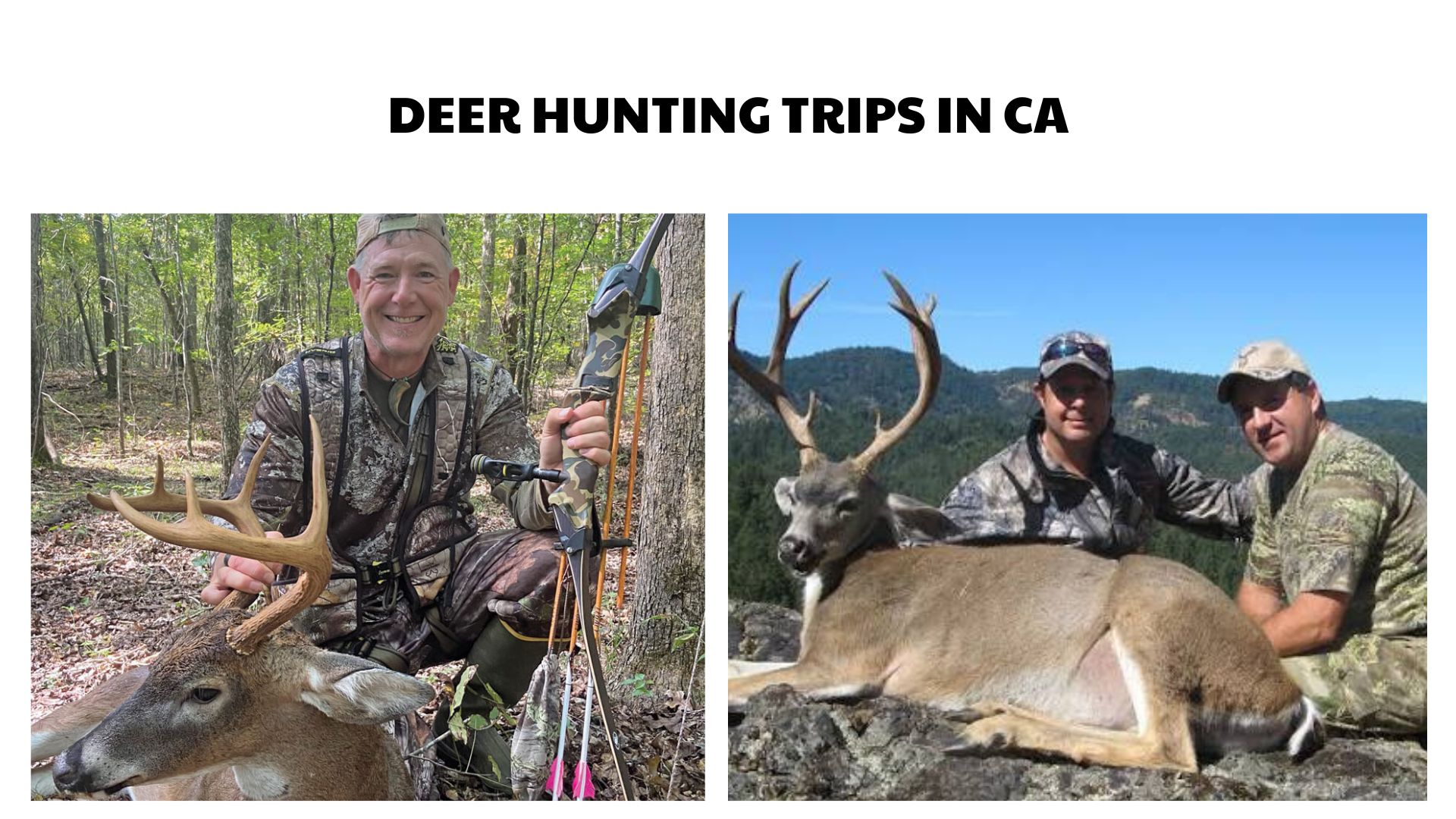

Planning deer hunting trips in CA means planning a California deer hunt. California deer hunting can be very different from hunting whitetails in the Midwest or Southeast. The state has large hunt zones, varied terrain, changing weather, complex access, tag requirements, nonlead ammunition rules, public land considerations, private land permission issues, and region-specific deer behavior.
This guide is written for hunters who want to plan a legal, safe, ethical, and realistic California deer hunting trip. It is useful for resident hunters, nonresident hunters, beginners, public land hunters, private land guests, and anyone comparing guided deer hunts or deer hunting outfitters in California.
California deer hunting rewards preparation. You may be hunting black-tailed deer in coastal or northern habitat, mule deer in open country or mountain terrain, or deer that move through brush, oak woodland, chaparral, timber, foothills, agricultural edges, desert transition country, or alpine basins depending on the zone. Your best trip plan should begin with official California Department of Fish and Wildlife information, not old forum posts or outdated season summaries.
Quick Answer
The best way to plan deer hunting trips in CA is to start with the California Department of Fish and Wildlife, confirm your hunting license, deer tag, hunt zone, season dates, legal method, nonlead ammunition rules, reporting requirements, and access rules before traveling. California deer hunters should choose a zone and hunt type that matches their skill level, terrain comfort, physical ability, scouting time, and legal tag options. Public land hunters need strong map skills, backup areas, wind planning, water planning, and respect for other users. A safe and ethical California deer hunt depends on legal preparation, realistic expectations, practiced shooting, responsible recovery, and conservation-minded decisions.
What Hunters Want to Know Before Planning a California Deer Hunt
Most people searching for deer hunting trips in CA are trying to answer several planning questions at once. They may want to know where to hunt, how California deer zones work, whether public land is available, whether guided hunts are worth considering, what licenses and deer tags are required, and how to prepare for California’s terrain and regulations.
This guide helps answer questions such as:
- How do I start planning a California deer hunting trip?
- What official California deer hunting rules should I verify first?
- Do I need a California hunting license and deer tag?
- How do California deer zones affect trip planning?
- What deer species or deer types are commonly hunted in California?
- Can I hunt deer on California public land?
- What terrain should I expect in different parts of California?
- How do I choose between public land, private land, and guided deer hunts?
- What gear should I pack for California deer hunting?
- What should I do after harvesting a deer in California?
Important California Deer Hunting Rules to Verify Before Your Trip
California hunting regulations vary by license year, species, deer zone, tag type, season, weapon method, public land unit, private property access, and local restrictions. Do not rely only on old articles, social media, forum comments, outfitter summaries, or another hunter’s memory. Always verify current rules through the California Department of Fish and Wildlife before buying tags, booking travel, hiring a guide, or hunting.
The California Department of Fish and Wildlife states that a California hunting license is required for any person taking birds or mammals. CDFW also explains that big game hunters need tags in addition to an annual hunting license for big game species such as deer. California also requires nonlead ammunition when taking wildlife with a firearm anywhere in the state. Review these official pages before planning your trip: CDFW hunting license information, CDFW big game hunting tags, CDFW deer hunting information, and CDFW nonlead ammunition requirements.
- California hunting license: Confirm whether you need a resident or nonresident California hunting license.
- Hunter education: Verify California hunter education requirements before purchasing a license.
- Deer tags: Confirm which deer tag, hunt zone, application, drawing, or available tag applies to your planned hunt.
- Season dates: Check the current season dates for your exact deer zone, tag, and hunting method.
- Legal hunting hours: Verify legal hunting hours for deer before your hunt.
- Weapon rules: Confirm legal firearms, archery equipment, muzzleloaders, ammunition, broadheads, and method-specific rules.
- Nonlead ammunition: If hunting with a firearm, verify current certified nonlead ammunition requirements before traveling.
- Public land rules: Check rules for national forests, Bureau of Land Management land, CDFW lands, wildlife areas, ecological reserves, military lands, or other public access areas.
- Private land permission: Get clear permission before hunting private land, leases, ranches, or guided properties.
- Visibility clothing: Confirm current hunter orange or visibility recommendations and legal requirements for your area and hunt type.
- Tree stand and blind safety: Use fall protection if hunting from an elevated stand and follow all equipment instructions.
- Harvest reporting and tag return: Learn current deer tag reporting, tag return, validation, possession, and transport rules before hunting.
- Fire and weather restrictions: California trips may be affected by wildfire risk, road closures, land closures, smoke, heat, snow, or emergency restrictions.
Planning Deer Hunting Trips in CA
California is a large and varied state. A good trip plan should start with the deer zone and tag, then move into terrain, access, travel, lodging, gear, scouting, weather, fire conditions, and meat care.
Step 1: Choose the Kind of California Deer Hunt
California deer hunting trips may include public land hunts, private ranch hunts, guided deer hunts, archery hunts, rifle hunts where legal, wilderness-style hunts, foothill hunts, coastal hunts, or high-country mule deer hunts. Each option has different rules, difficulty, access, gear, and scouting needs.
Step 2: Start With the CDFW Deer Page
Use the official CDFW deer hunting page to find deer season dates, deer hunt zones, regulations, license information, tag information, tag returns, harvest statistics, and the Big Game Hunting Digest. This should be your first planning source.
Step 3: Understand California Deer Zones
California deer hunting is organized by zones and tag types. Your tag is connected to where and when you can hunt. Do not buy travel, book lodging, or hire an outfitter until you understand which zone, tag, and season apply to your plan.
Step 4: Match the Trip to Your Physical Ability
Some California deer trips can involve steep terrain, heat, long hikes, high elevation, thick brush, remote roads, or limited water. Choose a hunt that matches your fitness, experience, navigation ability, and recovery plan.
Step 5: Build a Backup Plan
California hunters may deal with closed roads, wildfire restrictions, smoke, weather changes, heavy public land pressure, wrong wind, or limited access. Have backup hunt areas, alternate glassing points, different elevation options, and extra travel flexibility.
California Deer Habitat and Movement Patterns
California deer behavior changes by region, elevation, weather, pressure, food, cover, and season. In some areas, hunters may focus on black-tailed deer in coastal timber, oak woodland, and brush. In other areas, hunters may focus on mule deer in mountain, foothill, sagebrush, or open-country habitat. Always match your strategy to the zone and deer type you are hunting.
Coastal Brush and Timber
Coastal and northern California habitat may include timber, brush, oak woodland, clearings, ridges, creek bottoms, and thick cover. Deer may use edges, shaded bedding areas, brushy travel routes, and small openings rather than large visible fields.
Oak Woodland and Foothills
Oak woodland, foothills, and mixed brush can provide acorns, browse, bedding cover, and travel corridors. Deer may move along ridges, draws, saddles, creek lines, and shaded benches depending on pressure and weather.
Chaparral and Brush Country
Chaparral can be difficult to hunt because visibility may be limited. Hunters should focus on openings, burns where legal access is open, edges, ridgelines, saddles, water sources, and safe glassing points. Shot discipline is important because thick cover can make target identification and recovery more difficult.
Mountain and High-Country Terrain
Some California mule deer hunts involve elevation changes, glassing basins, timber edges, alpine or subalpine terrain, migration routes, and weather shifts. Physical preparation, optics, navigation, and weather planning become especially important.
Desert Transition and Dry Country
Dry zones may require careful water planning, heat awareness, and glassing strategy. Deer may use shade, water, washes, ridges, escape cover, and elevation changes. Hunters should not underestimate distance, heat, or recovery difficulty.
Agricultural Edges and Private Land
Where legal permission exists, agricultural edges and ranch country can influence deer movement. Deer may use field corners, fence gaps, creek lines, oak cover, brushy draws, and downwind routes near food sources.
Hunting Pressure
California public land can receive strong pressure in accessible areas. Deer may avoid roads, popular trailheads, obvious glassing spots, and easy drainages. Study where people go, then look for legal areas deer may use to avoid disturbance.
Public Land, Private Land, and Guided Deer Hunt Options in California
California deer hunters can consider several types of access. The best choice depends on your tag, zone, budget, skill level, scouting time, physical ability, and comfort with public land maps.
| Hunt Option | Best For | What to Verify |
|---|---|---|
| CDFW wildlife areas and ecological reserves | Hunters looking for official state-managed access opportunities | Property rules, open hunting areas, access dates, permits, method restrictions, and closures. |
| National forest land | Hunters comfortable with maps, roads, elevation, pressure, and dispersed terrain | Forest orders, fire restrictions, roads, camping rules, legal hunt zones, and access conditions. |
| BLM land | Hunters looking for open-country, foothill, desert, or mixed public land opportunities | Public access, legal roads, private inholdings, fire rules, shooting restrictions, and boundaries. |
| Private ranch permission | Hunters with landowner contacts or paid access | Written permission, boundaries, guest rules, roads, livestock, stand locations, and recovery rules. |
| Guided deer hunts | Traveling hunters who want local knowledge, lodging, private access, or support | License and tag responsibilities, outfitter credentials, land access, safety rules, included services, and realistic expectations. |
California Public Land Planning
California has public land deer hunting opportunities, but access can be complicated. Some public land is easy to reach, some is heavily pressured, some may be affected by fire closures, and some public parcels may be difficult or impossible to access legally without crossing private land.
The CDFW Lands Viewer provides geospatial information about CDFW lands and facilities and can help hunters explore wildlife areas and ecological reserves. Use it along with official CDFW regulations, national forest information, BLM maps, county maps, and current closure notices. CDFW Lands Viewer
Public Land Trip Tips for California
- Confirm that your deer tag is valid for the zone you plan to hunt.
- Download offline maps before traveling into remote areas.
- Check road closures, wildfire closures, smoke conditions, and land agency restrictions.
- Study public-private boundaries carefully to avoid trespass.
- Do not assume every public-looking road is legal to use.
- Carry more water than you think you need in hot or dry zones.
- Have backup areas at different elevations if weather or pressure changes.
- Respect hikers, campers, other hunters, land managers, and nearby communities.
- Leave no trash, remove temporary markers where required, and avoid habitat damage.
Choosing a California Deer Hunting Outfitter or Guided Hunt
Guided deer hunts in California can help hunters who want local knowledge, private land access, lodging, scouting support, or help understanding terrain. However, a guided hunt does not remove your responsibility to follow California hunting laws.
Be cautious of any outfitter who promises guaranteed deer, avoids license questions, gives vague access information, or does not discuss safety. A reputable guide should help you understand what is included while directing you to official CDFW rules for licenses, tags, seasons, nonlead ammunition, reporting, and transport.
| Question to Ask | Why It Matters | What a Responsible Answer Should Include |
|---|---|---|
| What California license and deer tag do I need? | The hunter is responsible for being legal | The outfitter should direct you to CDFW and explain which zone or tag applies. |
| Is this hunt on private land, public land, or both? | Access affects legality, pressure, and expectations | The answer should clearly explain land type, permission, boundaries, and access limits. |
| What is included in the hunt? | Packages vary widely | Lodging, meals, transportation, guide support, field assistance, and meat care should be clear. |
| What safety rules do you require? | Safety culture matters | Look for clear rules on firearm or bow handling, communication, terrain, and emergency plans. |
| Do I need nonlead ammunition? | California has statewide nonlead requirements for firearm hunting | The outfitter should tell you to verify CDFW-certified nonlead ammunition requirements. |
| What is a realistic deer expectation? | No ethical guide can guarantee a harvest | A trustworthy outfitter explains weather, terrain, pressure, deer density, and realistic opportunity. |
| How is recovery and meat care handled? | Traveling hunters need a plan | Ask about tracking, boundaries, cooling, processors, packing out, and transport rules. |
California Deer Hunting Trip Planning Checklist
| Trip Planning Item | Why It Matters | What to Check |
|---|---|---|
| Hunting license and deer tag | You must be legal before hunting | Check CDFW license, big game tag, drawing, available tag, and zone information. |
| Zone and season | California deer hunting is zone-specific | Verify current season dates, legal methods, and tag validity for your exact zone. |
| Nonlead ammunition | California requires nonlead ammunition for taking wildlife with a firearm | Use CDFW-certified nonlead ammunition and confirm current requirements. |
| Public or private land access | Access controls where you can legally hunt | Confirm maps, public boundaries, private permission, roads, closures, and land agency rules. |
| Guided hunt details | Services and responsibilities vary | Ask what is included, what you must provide, and how legal compliance is handled. |
| Weather and fire conditions | California trips can be affected by heat, snow, smoke, wildfire, and closures | Check forecasts, road conditions, forest orders, and emergency restrictions. |
| Water and physical preparation | Many California hunts involve heat, elevation, or long hikes | Plan hydration, fitness, shade, navigation, and realistic recovery routes. |
| Meat care | Warm weather and long pack-outs can create challenges | Plan coolers, ice, game bags, processor access, and transport requirements. |
| Emergency plan | Remote terrain can delay help | Tell someone your location, carry first aid, communication, and backup navigation. |
Best Planning Factors for Deer Hunting Trips in CA
Season and Tag Timing
California deer season timing depends on zone, tag, method, and year. Do not rely on general deer season summaries. Check the current CDFW Big Game Hunting Digest and approved deer seasons before selecting travel dates.
Region and Terrain
California deer hunting terrain can vary from coastal brush to oak foothills, from timbered mountains to high-country basins, and from dry desert transition zones to mixed public-private ranch country. Pick a zone that matches your experience and gear.
Water and Heat
Some California deer hunts can be hot and dry. Water planning is not optional. Carry enough water, understand refill options, and avoid overextending yourself in remote terrain.
Elevation and Weather
Mountain hunts may involve elevation, steep climbs, afternoon storms, early snow, or temperature swings. Pack layers and know when to turn back.
Food Sources
California deer may use acorns, browse, grasses, forbs, shrubs, agricultural edges, burns where open and legal, and seasonal vegetation depending on region. Food patterns can change with drought, weather, elevation, and pressure.
Bedding and Security Cover
Deer often bed where cover, wind, shade, and visibility help them avoid danger. Look for shaded slopes, brushy pockets, timber edges, benches, ridges, and areas with low human pressure.
Wind Direction
Wind should influence glassing locations, stalks, stand placement, entry routes, and exit routes. If the wind carries your scent toward deer bedding or feeding routes, adjust your plan.
Public Land Pressure
Accessible California public land can receive pressure. Study roads, trails, gates, campgrounds, and common parking areas. Then look for legal overlooked cover, harder access, different elevations, or quieter travel routes.
Practical California Deer Hunting Trip Tips
1. Start With CDFW Before Anything Else
Use CDFW for deer zones, season dates, regulations, licenses, big game tags, nonlead ammunition, and tag reporting. Official rules should guide every trip decision.
2. Choose a Zone Before Choosing Lodging
California is large, and deer zones matter. Pick your zone and confirm tag validity before booking hotels, campsites, flights, or outfitter dates.
3. Treat Access as a Major Planning Step
Public land access in California can be complex. Check legal roads, closures, private boundaries, landlocked parcels, fire restrictions, and agency rules before driving into a hunt area.
4. Pack for Heat, Cold, and Wind
Some areas may be hot in the afternoon and cold in the morning. Mountain zones may change quickly. Layer clothing and pack rain or wind protection when appropriate.
5. Carry Certified Nonlead Ammunition for Firearm Hunts
California requires nonlead ammunition when taking wildlife with a firearm anywhere in the state. Confirm your ammunition is CDFW-certified before traveling.
6. Use Optics Where Terrain Allows
In open country, foothills, burns, ridges, and mountain basins, binoculars or a spotting scope can help you find deer without walking through bedding areas.
7. Plan the Pack-Out Before the Shot
Some California hunts involve steep terrain, heat, or long distances. Before taking a shot, think about recovery, legal access, meat cooling, daylight, and physical ability.
8. Ask Outfitters About Zone, Tag, and Land Access
A guided hunt should clearly match the correct deer tag and legal hunting area. Ask direct questions before paying deposits or making travel plans.
9. Watch Fire Restrictions and Closures
California hunting trips can be affected by wildfire, smoke, road closures, national forest orders, or emergency restrictions. Check before and during your trip.
10. Keep Notes for Future Tags
Record deer sign, elevation, weather, wind, pressure, water, access, glassing points, and deer movement. California deer hunting often improves as you build zone-specific knowledge over time.
Common Mistakes to Avoid on California Deer Hunting Trips
- Not checking current CDFW rules: Always verify license, tag, season, zone, legal method, nonlead ammunition, reporting, and transport requirements.
- Buying travel before understanding the tag: Your deer tag controls where and when you can hunt.
- Assuming CA means one simple statewide season: California deer hunting is zone-based and rule-specific.
- Forgetting nonlead ammunition: Firearm hunters must verify certified nonlead ammunition requirements before hunting.
- Underestimating terrain: Steep hills, brush, heat, altitude, and long pack-outs can be demanding.
- Ignoring water needs: Hot and dry conditions can create safety risks quickly.
- Not checking fire closures: Wildfire restrictions can change access plans.
- Relying only on road access: Some roads may be closed, rough, gated, private, or seasonally restricted.
- Crossing unclear property lines: Use official maps and avoid trespassing.
- Taking unsafe shots in brush: Always identify the deer and what is beyond it.
- Failing to plan meat care: Warm weather and long pack-outs require preparation.
- Booking an outfitter without asking tag questions: Make sure the hunt matches your legal tag and zone.
- Overpacking for steep terrain: Carry essentials without becoming unsafe or exhausted.
- Expecting guaranteed success: California deer hunting can be challenging and requires patience.
Troubleshooting California Deer Hunting Trip Problems
| Problem | Possible Cause | What to Do |
|---|---|---|
| You are unsure what tag to buy | California zones, drawings, available tags, and hunt types can be confusing | Review CDFW big game tag information and deer zone details before purchasing. |
| Your public land area is crowded | Easy access areas often attract pressure | Use backup areas, different elevations, legal overlooked cover, and quieter access routes. |
| You are not seeing deer | Wrong elevation, old sign, pressure, heat, poor glassing, or bad wind | Review fresh sign, water, bedding cover, wind, shade, and pressure patterns. |
| The wind is wrong | Terrain, thermals, weather, or elevation can shift scent movement | Change glassing angle, stalk direction, stand location, or hunt area. |
| Your planned access road is closed | Fire restrictions, gates, weather, land agency orders, or private roads | Check official land agency updates and use a legal backup route or area. |
| You cannot confirm public-private boundaries | Checkerboard ownership or unclear maps | Do not guess. Use official maps, land agency resources, and legal access information. |
| You forgot nonlead ammunition | California rules may differ from your home state | Do not hunt with illegal ammunition. Find CDFW-certified nonlead ammunition before hunting. |
| Heat makes the hunt unsafe | High temperature, dry terrain, long hikes, or limited water | Stop, hydrate, seek shade, shorten the hunt, and prioritize safety. |
| You are unsure about tag reporting | California tag reporting rules may be unfamiliar | Learn CDFW tag reporting and return requirements before hunting. |
| Recovery would cross private land | Deer movement and property boundaries can create legal issues | Stop, follow California law, get permission where required, and do not trespass. |
Ethical Deer Hunting and Conservation in California
Ethical California deer hunting means following the law, respecting deer, respecting landowners and public land users, preventing waste, practicing before the trip, and making safe decisions in difficult terrain.
Responsible hunters should:
- Obey California deer seasons, tag rules, zone rules, license rules, nonlead ammunition requirements, public land rules, and reporting requirements.
- Practice with the legal firearm, bow, crossbow, or muzzleloader before hunting.
- Pass unsafe, rushed, or uncertain shots.
- Identify the deer and what is beyond it before shooting.
- Respect private land boundaries and public land users.
- Use legal and ethical recovery practices.
- Care for meat responsibly, especially in warm weather or long pack-outs.
- Leave public or private land cleaner than you found it.
- Support conservation through legal licenses, tags, habitat respect, and responsible participation.
When to Get More Training, a Mentor, or a Guide
California deer hunting trips can involve steep terrain, confusing zones, remote public land, nonlead ammunition rules, fire closures, private boundaries, and physically demanding recovery. A mentor, instructor, or reputable guide can help new hunters avoid unsafe mistakes.
Get more training or support if:
- You have never handled a firearm, bow, crossbow, or muzzleloader.
- You have not completed hunter education.
- You are unsure about California deer tags, zones, or regulations.
- You do not understand public land boundaries or legal access.
- You are not confident in safe shooting.
- You are hunting steep, remote, hot, or high-elevation terrain.
- You need help with deer recovery, meat care, tag reporting, or transport rules.
- You are a nonresident planning your first California deer hunting trip.
Good learning sources include CDFW hunter education, CDFW deer hunting resources, certified instructors, ethical mentors, conservation organizations, reputable hunting clubs, and licensed guides or outfitters where appropriate.
After a California Deer Hunt: Tag Reporting, Meat Care, Gear Care, and Learning
After a California deer hunt, follow all tag validation, tag reporting, possession, transport, and meat care rules. CDFW provides tag return and online tag reporting resources for deer hunters. Learn the process before your trip so you are prepared after a harvest or after an unsuccessful hunt.
- Follow tag validation and possession rules exactly as required.
- Complete deer tag reporting or tag return requirements according to current CDFW rules.
- Keep confirmation numbers, legal records, tags, and receipts where required.
- Follow carcass, disease-related, transport, and processing requirements.
- Cool meat quickly and responsibly, especially during warm weather.
- Use game bags, shade, airflow, ice, and a processor plan where appropriate.
- Clean and safely store firearms, bows, knives, optics, packs, stands, and blinds.
- Dry wet boots, clothing, straps, and safety gear.
- Review what worked and what did not.
- Record elevation, temperature, wind, food sources, sign, deer movement, pressure, access, and glassing points.
Recommended Deer Hunting Gear and Tools to Consider
You do not need the most expensive gear to hunt deer responsibly in California. Choose gear based on CDFW rules, your hunting method, deer zone, terrain, weather, safety needs, physical ability, and budget.
- Legal hunting weapon or method allowed for your California season and zone
- Valid California hunting license, deer tag, and current regulation knowledge
- CDFW-certified nonlead ammunition for firearm hunts
- Weather-appropriate clothing for heat, cold, wind, rain, snow, or elevation changes
- Durable boots for steep slopes, rocks, brush, mud, snow, or long hikes
- Binoculars and spotting scope where terrain supports glassing
- Tree stand safety harness if using an elevated stand
- Ground blind, natural setup, saddle, or stand where legal and appropriate
- Navigation tools such as maps, compass, GPS, or hunting app
- Offline maps, backup battery, and emergency communication
- First aid kit, headlamp, water, water filter where appropriate, and snacks
- Sun protection, rain protection, and emergency insulation
- Coolers, ice plan, gloves, game bags, and basic meat care supplies
- Travel documents, lodging confirmation, processor contacts, and land access notes
Final Thoughts
Planning deer hunting trips in CA requires more than choosing a scenic mountain or public land area. A responsible California deer hunting trip begins with CDFW rules, the correct hunting license, the correct deer tag, current zone information, legal season dates, nonlead ammunition compliance, access research, safety planning, and realistic expectations.
California offers diverse deer habitat, from coastal brush and oak foothills to mountains, timber, chaparral, desert transition country, and private ranch edges. Each setting requires different scouting, wind use, gear, navigation, water planning, and recovery preparation.
Whether you choose public land, private land, a guided hunt, or a self-planned California deer trip, choose your method and gear based on current laws, terrain, weather, skill level, and conservation responsibilities. Hunt legally, safely, patiently, and ethically.
FAQs About Deer Hunting Trips in CA
1. What are the best deer hunting trips in CA?
The best California deer hunting trips are legal, well-planned, and matched to your tag, zone, experience level, terrain comfort, physical ability, and access plan. Options may include public land, private land, guided hunts, archery hunts, rifle hunts where legal, and high-country or foothill trips.
2. Does CA mean California for deer hunting trips?
Yes. In the phrase deer hunting trips in CA, CA normally means California. Hunters should use California Department of Fish and Wildlife resources for official rules.
3. Is California a good state for deer hunting trips?
California can offer challenging and rewarding deer hunting, especially for hunters who enjoy varied terrain, map work, glassing, physical preparation, and zone-specific planning.
4. What types of deer can hunters pursue in California?
California deer hunting commonly involves mule deer and black-tailed deer depending on region and zone. Always verify current species, tag, zone, and season details with CDFW.
5. Do I need a California hunting license for deer hunting?
Yes, California requires a hunting license for taking birds or mammals. Deer hunters also need the correct deer tag or authorization for the hunt.
6. Do nonresident hunters need a California deer tag?
Nonresident hunters must follow California license, tag, and application rules. Check CDFW before applying, buying tags, or booking travel.
7. How do California deer tags work?
California deer tags are tied to specific hunt opportunities, zones, seasons, or tag types. Review CDFW big game tag information before planning a trip.
8. Where should I check California deer hunting regulations?
Use the official California Department of Fish and Wildlife website for deer hunting, licensing, big game tags, deer zones, nonlead ammunition, and tag reporting information.
9. When is deer hunting season in California?
California deer season dates vary by zone, tag, year, and hunting method. Check the current CDFW Big Game Hunting Digest and approved season information before choosing dates.
10. Are California deer seasons the same statewide?
No. California deer hunting is zone-specific, and dates, tags, and methods can vary. Always check the exact zone and tag rules.
11. Can I hunt deer on California public land?
Yes, California has public land hunting opportunities, but access and rules vary by agency, zone, road status, land closure, and property boundary. Always confirm legal access.
12. What public lands can California deer hunters use?
Hunters may consider national forests, BLM lands, CDFW lands, wildlife areas, and other public access areas where hunting is legal. Verify agency rules before hunting.
13. What is the CDFW Lands Viewer?
The CDFW Lands Viewer is an official mapping tool that provides information about CDFW lands and facilities. It can help hunters explore wildlife areas and ecological reserves.
14. Are California public land deer hunts crowded?
Some accessible public areas can be crowded, especially near roads and popular trailheads. Study maps, pressure, access, and backup areas before hunting.
15. Can I hunt private land in California?
Yes, if you have legal permission and the correct license, tag, season, and method. Get clear permission and respect landowner rules.
16. Are guided deer hunts in California worth it?
A guided hunt may help hunters with local terrain, private access, lodging, or scouting support. Choose reputable guides and avoid anyone promising guaranteed results.
17. What should I ask a California deer hunting outfitter?
Ask about licenses, deer tags, zones, land access, nonlead ammunition, included services, lodging, safety rules, recovery help, meat care, and realistic expectations.
18. Do I need nonlead ammunition for California deer hunting?
Yes, California requires nonlead ammunition when taking wildlife with a firearm anywhere in the state. Verify certified ammunition through CDFW before hunting.
19. Can I use lead ammunition for deer hunting in California?
Do not use lead ammunition for firearm hunting in California. Check CDFW-certified nonlead ammunition requirements before your trip.
20. What terrain should I expect on California deer hunts?
Terrain may include coastal brush, oak woodland, foothills, chaparral, mountains, timber, high-country basins, desert transition areas, agricultural edges, and private ranch country.
21. What is good deer habitat in California?
Good habitat connects food, bedding cover, water, shade, travel corridors, and security. Productive areas vary by zone, elevation, season, weather, and pressure.
22. How important is water on California deer hunts?
Water can be very important in dry areas, but deer also use cover, shade, food, and terrain. Hunters also need serious hydration planning for safety.
23. How important is wind direction in California deer hunting?
Wind direction is very important. Deer rely heavily on scent, and terrain can shift wind and thermals. Plan glassing, stalks, stands, and entry routes around wind.
24. What are good California deer scouting signs?
Look for tracks, droppings, beds, trails, rubs, browsing, water use, shaded bedding areas, ridge movement, saddle crossings, and travel routes between cover and food.
25. Are rubs useful for California deer hunting?
Rubs can show buck activity, but they should be interpreted with fresh sign, terrain, bedding cover, wind, and pressure. A rub alone is not enough to choose a setup.
26. Are scrapes important in California deer hunting?
Scrapes may be useful in some deer behavior contexts, but terrain, water, cover, food, fresh tracks, and bedding routes are often more important for trip planning.
27. What is the best time of day to hunt deer in California?
Morning and evening are common movement periods, but weather, heat, elevation, pressure, food, and rut activity can change deer behavior. Follow legal hunting hours.
28. What weather should I expect on deer hunting trips in CA?
Weather depends on region and elevation. You may face heat, cold mornings, wind, rain, snow, smoke, or fast-changing mountain conditions.
29. Do I need hunter orange in California?
Check current California visibility clothing rules and recommendations before hunting. Even where not required for a specific hunt, visibility can be an important safety choice around other users.
30. Can I use a tree stand in California?
Tree stands may be useful in some habitats where legal and appropriate. Use a full-body safety harness and follow land agency or private property rules.
31. Are ground blinds useful for California deer hunting?
Ground blinds can help in certain foothill, oak, field-edge, or brush setups, but they must be legal, placed safely, and used with wind direction and shooting lanes in mind.
32. Can I use trail cameras in California?
Trail camera rules can vary by land type and current regulations. Always check CDFW, public land agency, and property rules before placing cameras.
33. What gear should I pack for deer hunting trips in CA?
Pack your license, deer tag, legal equipment, nonlead ammunition for firearm hunts, navigation, water, layers, boots, optics, first aid, emergency communication, headlamp, game bags, and meat care supplies.
34. Do I need a cooler for a California deer hunting trip?
Yes, a cooler and ice plan are strongly recommended, especially in warm weather or when traveling. Plan meat care before the hunt.
35. How should I plan lodging for a California deer hunt?
Book lodging or camping near your legal hunt zone, confirm road access, check fire restrictions, and allow time for scouting, elevation changes, and travel delays.
36. Can I camp during a California deer hunting trip?
Camping rules depend on the land agency, fire restrictions, season, location, and property. Check national forest, BLM, CDFW, campground, or private land rules first.
37. What should nonresident hunters know before traveling to California?
Nonresident hunters should verify license rules, tag options, deer zones, season dates, nonlead ammunition, public land access, tag reporting, transport rules, lodging, and meat care plans.
38. Are California deer hunting trips expensive?
Costs vary by license, tag, travel, lodging, public or private land access, guide fees, fuel, gear, meat processing, and trip length. Plan a realistic budget before booking.
39. Should beginners book a guided California deer hunt?
A guided hunt can help beginners with local terrain and legal access, but hunter education, safety practice, legal preparation, and ethical shot discipline are still essential.
40. What is the safest advice for California deer hunting trips?
Check current laws, use legal nonlead ammunition where required, follow safe weapon handling, know your target and what is beyond it, carry water and navigation, and pass unsafe shots.
41. What should I do if I am unsure whether a deer is legal?
Do not shoot. If you cannot confirm the deer is legal under your tag, zone, season, and method, pass the opportunity.
42. What is an ethical shot opportunity?
An ethical shot is legal, safe, within your practiced ability, at a clearly identified deer, with a safe background, and likely to result in a responsible harvest.
43. What should I do after harvesting a deer in California?
Follow California tag validation, reporting, possession, transport, and meat care rules. Review CDFW requirements before hunting.
44. Do California deer hunters need to report tags?
California has deer tag reporting and return requirements. Check current CDFW rules for successful and unsuccessful tag reporting before your trip.
45. Can I transport deer meat out of California?
Transport rules can involve documentation, carcass movement, disease-related restrictions, and destination-state requirements. Check California and destination-state rules before traveling.
46. What if a deer crosses onto private land after the shot?
Do not trespass. Follow California law and get landowner permission where required before entering private property for recovery.
47. How do I prepare for California public land pressure?
Study maps, avoid obvious access, find overlooked terrain, use backup areas, hunt the wind, and respect other hunters and public land users.
48. Are California deer mostly in mountains?
Some California deer hunts occur in mountains, but deer also use coastal brush, foothills, oak woodland, chaparral, ranch edges, desert transition areas, and timber depending on zone.
49. What is the best California deer hunting trip for public land hunters?
The best public land trip is based on the correct tag, legal access, current closures, fresh scouting, pressure awareness, wind discipline, water planning, and backup areas.
50. Can I combine a California deer hunt with other hunting?
Possibly, but only if seasons, licenses, tags, species rules, weapon rules, ammunition rules, and land regulations allow it. Check CDFW before planning multi-species hunts.
51. How early should I plan a California deer hunting trip?
Start planning several months ahead when possible. This gives you time to review tags, drawings, seasons, maps, lodging, outfitters, gear, nonlead ammunition, and meat care.
52. What should I avoid when booking California deer hunting outfitters?
Avoid vague land access, unrealistic trophy promises, unclear tag guidance, no safety discussion, poor communication, and any outfitter unwilling to point you to official CDFW rules.
53. What records should I keep after a California deer hunt?
Keep license records, deer tag information, reporting confirmation, outfitter paperwork, processor receipts, and notes about weather, wind, terrain, sign, and deer movement.
54. How can I improve after a California deer hunting trip?
Review your zone, elevation, scouting, glassing locations, wind choices, access, weather, deer movement, pressure, gear, and recovery plan. Keep notes for future tag planning.
55. Where can I learn official California deer hunting rules?
Use the California Department of Fish and Wildlife website for deer hunting, licenses, big game tags, nonlead ammunition, regulations, public lands, and tag reporting information.
Read more: