
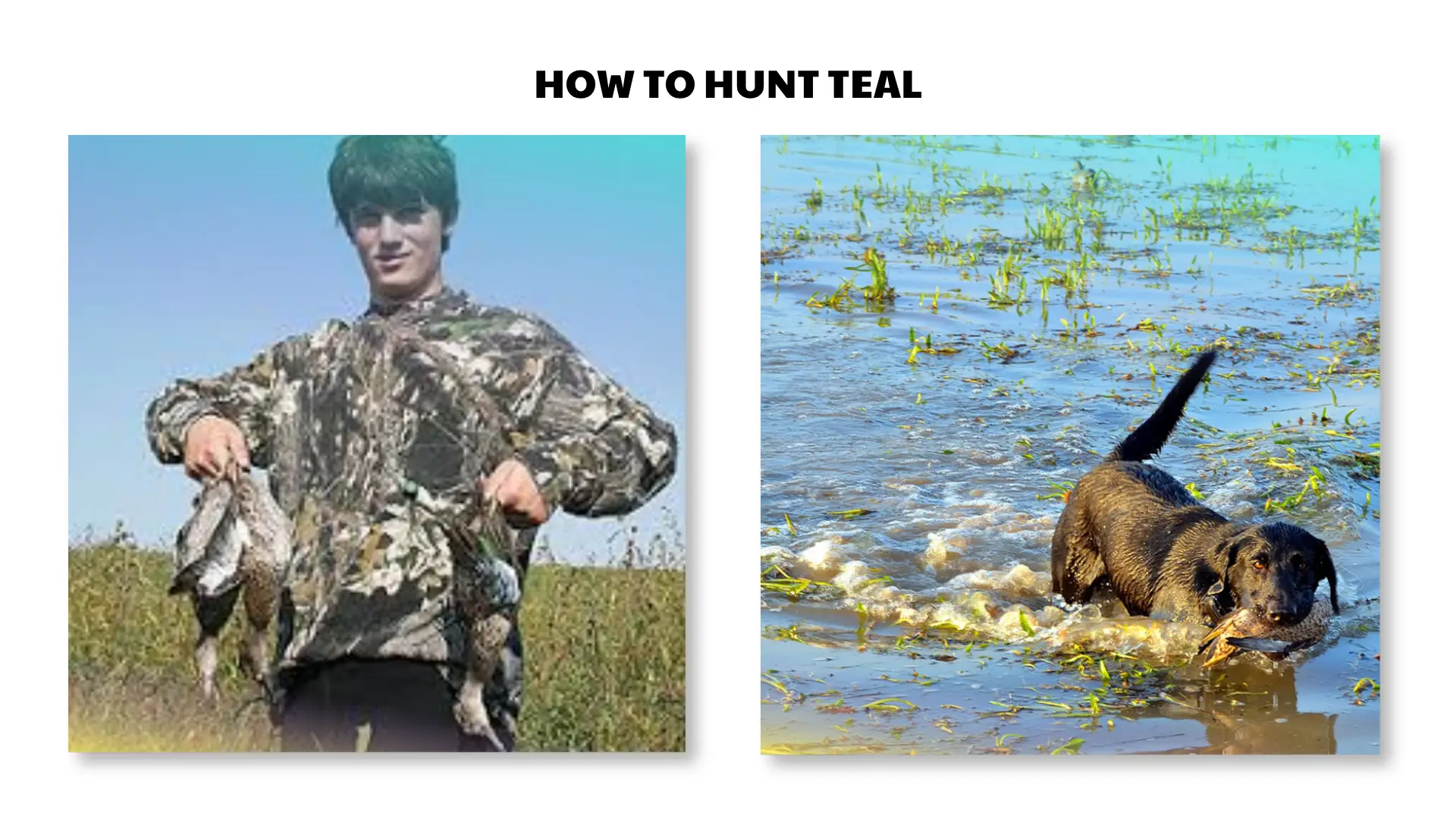

Quick Answer
To hunt teal responsibly, first verify all current license, stamp, HIP, season, limit, ammunition, access, and reporting rules with the official wildlife agency. Scout shallow wetlands, mudflat edges, moist-soil units, and sheltered backwaters, then set a small visible decoy spread with a safe landing pocket. Identify every bird before acting, especially during a teal-only season, and take only a legal opportunity within your practiced range. Plan water safety, heat management, and recovery before the hunt begins.
Important Legal and Safety Notice Before You Hunt
Hunting laws vary by country, state, province, county, flyway, zone, refuge, land type, date, species, and method. The U.S. Fish and Wildlife Service migratory-bird regulations page explains the federal framework, but hunters must also check current state, provincial, tribal, refuge, and property-specific rules.
- Licenses and permits: Verify the hunting license, migratory-bird validation, HIP registration or equivalent, and any wildlife-area permit.
- Duck Stamp: In the United States, most waterfowl hunters age 16 or older need a current Federal Duck Stamp or valid E-Stamp.
- Season type: Confirm whether the date is a teal-only special season or the regular duck season.
- Limits: Confirm legal shooting hours, daily bag limit, possession limit, and species restrictions.
- Ammunition: U.S. waterfowl hunting requires approved nontoxic shot. Check the current approved list.
- Firearm rules: Confirm gauge, shotgun capacity, transport, casing, boat, refuge, and shell-limit rules.
- Methods: Verify baiting, electronic calls, motorized devices, dogs, blinds, boats, and agricultural practices.
- Access: Confirm public boundaries or obtain clear private-land permission, including retrieval access.
- Visibility: Follow blaze-orange or other visibility rules during access and mixed hunting seasons.
- Emergency planning: Prepare for heat, lightning, storms, fog, deep mud, current, boat trouble, and poor cell coverage.
Teal are fast, but safe decisions must remain slow and deliberate. Never shoot toward roads, homes, livestock, vehicles, trails, boats, partners, dogs, neighboring blinds, or unclear movement. Never fire at an unidentified flock or a bird hidden by glare, fog, vegetation, or low light.
Understanding Teal Species and Habitat
Blue-Winged Teal
The U.S. Fish and Wildlife Service identifies blue-winged teal as small dabbling ducks that favor shallow wetlands and mudflats during migration. Their powder-blue upperwing patch is an important flight mark, but early-season males and juveniles may lack familiar breeding colors.
Green-Winged Teal
Green-winged teal are among North America’s smallest dabbling ducks. They use shallow freshwater and brackish wetlands, marsh edges, mudflats, flooded vegetation, and protected water. Adult breeding drakes have a chestnut head with a green eye patch, but hunters must also learn female and immature identification.
Cinnamon Teal
Cinnamon teal occur mainly in western North America. Adult breeding drakes are rich reddish-cinnamon, but females can resemble female blue-winged teal. Geographic range, wing pattern, body shape, and careful observation all matter.
Feeding and Water Depth
Teal feed on seeds, aquatic vegetation, and small invertebrates in shallow water and along mudflat edges. Small changes in water depth can move birds from one wetland to another.
Migration
Blue-winged and cinnamon teal often migrate south earlier than many other ducks, while green-winged teal can remain later in colder conditions. Local timing still depends on habitat, weather, wetland conditions, and hunting pressure.
Identification Responsibility
Use multiple features: size, wing patch, bill shape, flock behavior, voice, range, and plumage. Study the blue-winged teal, green-winged teal, and cinnamon teal identification guides before hunting.
What You Need Before You Start
- Current hunting license and permits
- HIP registration or local equivalent
- Required stamps
- Current regulation booklet
- Legal shotgun and approved nontoxic ammunition
- Eye and hearing protection
- Weather-appropriate layered clothing
- Sun and insect protection when needed
- Waterproof boots or suitable waders
- PFD for boats and hazardous water
- Small teal or dabbling-duck decoy spread
- Legal hand-operated call if desired
- Low-profile blind or legal natural cover
- Offline map, compass, GPS, or hunting app
- Headlamp used before legal shooting time
- First aid and emergency signaling
- Plenty of drinking water
- Dry backup clothing
- Communication device and trip plan
- Clean gloves and game-care supplies
How to Hunt Teal: Step-by-Step Guide
Step 1: Check Current Teal Hunting Laws
Use the official wildlife agency for the exact country, state or province, flyway, zone, wildlife area, and date. Verify the hunting license, migratory-bird validation, HIP registration or equivalent, Federal Duck Stamp where applicable, special teal-season rules, regular duck-season rules, legal shooting hours, daily and possession limits, approved nontoxic ammunition, shotgun capacity, baiting rules, electronic-call restrictions, land access, reporting, and transport. Special teal seasons in some U.S. jurisdictions may have different dates or species rules, so never rely on an old season chart.
Step 2: Complete Hunter Education and Practice
Complete required hunter education and seek an experienced ethical waterfowl mentor. Practice safe loading and unloading, muzzle control, patterning, target identification, and shooting from realistic but controlled positions. Teal are small and fast, but speed never justifies rushed firearm handling or a low-confidence shot.
Step 3: Learn Teal Species Identification
Study blue-winged, green-winged, and cinnamon teal, along with juvenile and eclipse plumage. Early in the season, males may not show their most familiar breeding colors. Learn body size, wing patches, bill shape, flock behavior, calls, and similar ducks. During a teal-only season, positive identification before the shot is essential.
Step 4: Choose a Legal Hunting Area
Use official public-land maps or obtain clear private-land permission. Confirm boundaries, refuge closures, drawings, check stations, assigned blinds, launch rules, parking, retrieval rights, nearby roads, homes, trails, livestock, and other hunters. Do not cross private property or closed habitat to hunt or retrieve a bird.
Step 5: Scout Shallow Feeding Water
Teal often use shallow wetlands, mudflats, flooded vegetation, rice fields where legal, moist-soil impoundments, marsh edges, ponds, and sheltered backwaters. Observe from a distance and record water depth, exposed mud, food, flock size, flight direction, timing, wind, weather, hunting pressure, and safe access. Never add grain or hunt where baiting legality is uncertain.
Step 6: Prepare a Light, Safe Gear System
Carry licenses, legal nontoxic ammunition, a safe fitted shotgun, eye and hearing protection, weather-appropriate layers, sun and insect protection when relevant, boots or waders, a PFD for boats or hazardous water, a small decoy spread, a legal hand call if desired, low concealment, navigation, first aid, drinking water, communication, and game-care supplies. Early teal weather can still be hot, so plan for heat as carefully as storms and cold water.
Step 7: Plan Wind, Sun, Weather, Entry, and Exit
Teal commonly use wind to control their approach, but terrain and existing flight lines also matter. Place the landing pocket so the expected approach remains inside a safe shooting direction. Avoid looking directly into low sun when identification is difficult. Plan a quiet entry route that avoids deep mud, current, unstable banks, lightning exposure, and another hunting party.
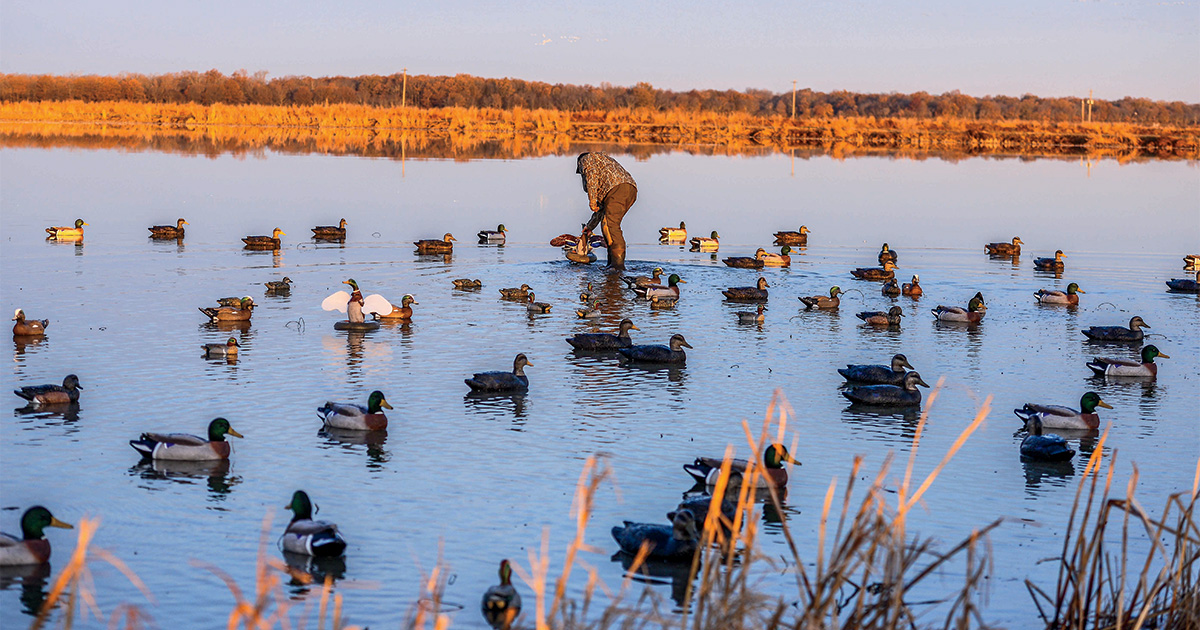
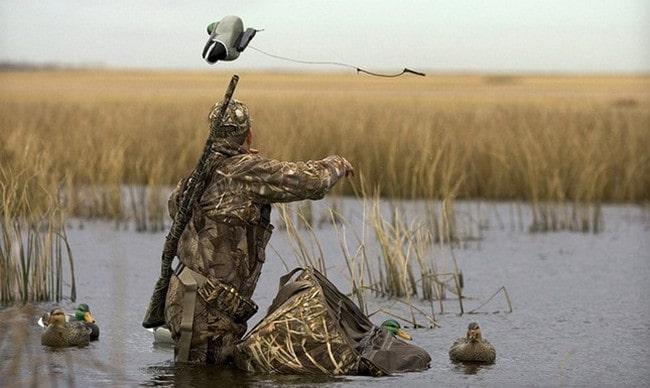
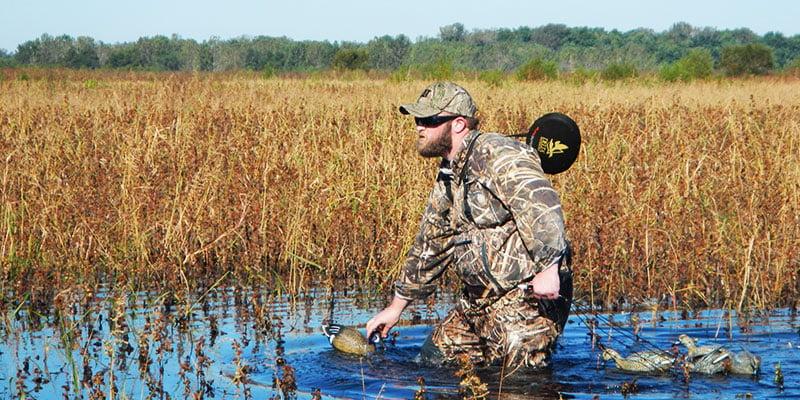
Step 8: Set a Small, Visible Decoy Spread
A modest spread is often enough on small teal water. Place teal or small dabbling-duck decoys where approaching birds can see them and leave a clear landing pocket inside your practiced range. Keep partners, dogs, boats, roads, buildings, trails, and neighboring blinds outside every intended shooting lane.
Step 9: Stay Still and Call Sparingly
Teal can arrive low and quickly. Keep the firearm controlled while scanning the entire flock and background. A legal hand call may help, but location, concealment, and stillness usually matter more than constant calling. Stop calling when birds are committed or reacting negatively.
Step 10: Take Only a Safe, Legal, Ethical Opportunity
Act only after positive species identification, confirmation that the bird is legal for the current season, a clear background, a defined shooting lane, and confidence that the opportunity is within your practiced ability. Do not shoot at sound, silhouettes, uncertain flocks, birds mixed with protected species, or low angles toward people, dogs, roads, buildings, boats, or livestock.
Step 11: Recover, Report, and Care for the Harvest
Plan recovery before the shot. Use a trained dog, safe boat, or legal wading route without entering dangerous current, deep mud, heat stress, cold water, or private land. Complete required reporting, refuge check-out, or tagging. Keep the harvest clean and cool promptly, maintain required species and possession information, and use the meat responsibly.
Best Time, Place, and Conditions for Teal Hunting
Time of Day
Morning and evening feeding movements are common, but local scouting is more reliable than a universal clock. Special teal seasons may have property-specific access and shooting-hour rules.
Seasonal Timing
Blue-winged and cinnamon teal may move early with late-summer and early-fall weather changes. Green-winged teal can remain into colder periods. Check agency reports and recent observations rather than assuming the same dates every year.
Best Habitat
Look for shallow marshes, mudflat edges, moist-soil impoundments, flooded vegetation, farm wetlands where hunting is legal, rice habitat, ponds, sheltered backwaters, and coastal marshes. Water depth and food availability matter more than the size of the wetland.
Wind and Sun
A manageable wind can create decoy movement and a more predictable approach. Low sun can make identification difficult, so select a position that does not force you to identify birds through glare.
Weather and Heat
Early teal seasons can be warm. Carry water, monitor dogs, and avoid heat illness. Lightning, heavy rain, floodwater, fog, high wind, and unsafe boat conditions are reasons to stop.
Public Versus Private Land
Public wetlands may use drawings, check stations, assigned areas, shell limits, or restricted entry times. Private wetlands require permission, boundary knowledge, respectful parking, gate care, and retrieval agreements.
Hunting Pressure
Pressure can push teal toward quieter water, closed refuges, private wetlands, or different travel times. Avoid repeatedly disturbing resting birds.
Helpful Tips for Better Results
- Scout water depth and mud conditions before carrying equipment into a wetland.
- Learn identification in eclipse and juvenile plumage, not only breeding plumage.
- Use a small decoy spread that can be retrieved safely and quickly.
- Leave an open landing pocket with a safe background.
- Hide faces, hands, and shiny equipment before legal shooting time.
- Pattern the legal shotgun and approved nontoxic load before the season.
- Use a PFD in boats and when water conditions create a drowning risk.
- Carry more drinking water than expected during warm early-season hunts.
- Treat lightning, heat illness, flooding, and fog as reasons to leave early.
- Agree on shooting lanes and commands with partners before birds arrive.
- Call less when teal are already using the area naturally.
- Plan recovery before every safe opportunity.
Common Mistakes to Avoid
- Using an old season chart or confusing a special teal season with the regular duck season.
- Failing to complete licenses, HIP, stamps, permits, or check-in.
- Assuming every small fast duck is a teal.
- Relying only on bright breeding plumage for identification.
- Hunting near grain or feed without confirming baiting legality.
- Carrying unapproved ammunition or an unlawful shotgun configuration.
- Setting the blind where low sun prevents positive identification.
- Using more decoys than can be retrieved safely.
- Calling constantly instead of watching bird behavior.
- Swinging outside assigned shooting lanes.
- Taking long, rushed, or low-confidence opportunities.
- Ignoring heat, lightning, fog, deep mud, current, or boat limits.
- Crossing private property or refuge boundaries.
- Failing to report, identify, cool, or transport the harvest legally.
Troubleshooting Common Problems
| Problem | Possible Cause | What to Do |
|---|---|---|
| You are not seeing teal | Water is too deep, food conditions changed, migration moved, pressure increased, or scouting was limited | Check shallow mudflat edges, moist-soil wetlands, sheltered backwaters, and another legal area at different times. |
| Teal pass without slowing | The setup is outside their flight line, the pocket is unclear, or the blind is exposed | Move only when safe, simplify the spread, open a visible pocket, and improve concealment. |
| Birds flare close to the blind | Movement, bright faces, shiny gear, dogs, unnatural cover, or excessive calling | Freeze movement, cover shine, lower the blind profile, and reduce calling. |
| Flocks arrive too fast to identify | Poor light, low sun, mixed species, or confined visibility | Keep the firearm controlled and pass until every bird and the background are clear. |
| The decoys do not move | Calm conditions, tangled lines, or protected water | Use legal non-electronic movement where permitted or deploy fewer naturally spaced decoys. |
| Decoys drift into the shooting lane | Weak anchors, current, rising wind, or excess line | Stop and retrieve them only when safe, then improve the anchor system for the conditions. |
| Another group sets up nearby | Crowded public access or unclear local spacing | Communicate calmly, protect safe arcs, follow property rules, and move when separation is inadequate. |
| The boundary is unclear | Flooding, poor maps, changing shorelines, or private inholdings | Do not enter or shoot across it. Confirm the boundary through official maps or the managing agency. |
| Heat is affecting the hunters or dog | Warm weather, humidity, direct sun, inadequate water, or overexertion | Stop hunting, move to shade, cool gradually, hydrate, and seek medical or veterinary help when symptoms are concerning. |
| Fog or glare prevents identification | Weather, sunrise angle, or reflective water | Stop hunting until visibility improves or reposition so identification and background are reliable. |
| A bird is down in unsafe water | Deep mud, current, vegetation, heat, cold water, or private access | Do not risk a life or trespass. Mark the location and use a safer legal retrieval method. |
| You are unsure whether the season is teal-only | Confusing special-season and regular-season rules | Do not hunt until the official wildlife agency or property staff confirms the current rule. |
Ethical Hunting and Conservation
Ethical teal hunting requires patience even when birds appear suddenly. A legal opportunity can still be unsafe, poorly identified, beyond the hunter’s ability, or difficult to recover.
- Obey seasons, limits, legal hours, and species rules.
- Learn eclipse, juvenile, and female identification.
- Practice enough to know your personal effective range.
- Pass when glare, fog, speed, mixed flocks, or distance creates uncertainty.
- Plan legal recovery before acting.
- Avoid waste and use the harvest responsibly.
- Respect landowners, other hunters, anglers, birdwatchers, and boaters.
- Do not enter closed resting habitat or disturb birds unnecessarily.
- Pack out shells, line, food wrappers, and blind material.
- Support wetland conservation through licenses, stamps, habitat programs, and responsible participation.
Follow the broader U.S. Fish and Wildlife Service hunter responsibilities and the ethical guidance of the wildlife agency where you hunt.
When to Get More Training or Professional Guidance
Seek help before hunting independently when you have not completed hunter education, have limited shotgun experience, cannot identify common ducks in eclipse plumage, are new to boats or waders, do not understand land boundaries, or are uncertain about recovery and game care.
After the Hunt: Follow-Up, Gear Care, and Learning
- Unload and transport firearms according to law and manufacturer instructions.
- Clean and dry the shotgun after exposure to water, mud, dust, or vegetation.
- Dry waders, PFDs, boots, decoys, lines, calls, and blind material before storage.
- Inspect boats, plugs, motors, batteries, lights, anchors, and emergency equipment.
- Complete required check-out, reporting, band reporting, and possession records.
- Keep the harvest clean and cool and follow food-safety guidance.
- Record water depth, mudflat conditions, wind, weather, flock size, species, and pressure.
- Review identification decisions and every uncertain moment before the next hunt.
- Replace damaged safety equipment rather than improvising repairs.
- Thank landowners and leave the wetland cleaner than you found it.
Recommended Hunting Gear and Tools to Consider
You do not need expensive equipment to hunt responsibly. Choose gear based on local law, species, water depth, mud, heat, weather, access, safety needs, skill, and budget.
- A legal shotgun that fits and can be controlled safely
- Approved nontoxic ammunition patterned with that shotgun
- Eye and hearing protection
- A properly fitted PFD
- Weatherproof layers plus sun protection
- Waders or boots suited to water and temperature
- A small teal or dabbling-duck decoy spread
- A simple legal hand-operated teal call
- Low-profile concealment appropriate to the wetland
- Offline maps, compass, GPS, and property information
- First aid, whistle, light, and emergency communication
- Extra drinking water and cooling supplies
- Clean game-care gloves, bags, and cooler
Final Thoughts
Learning how to hunt teal is a process of legal preparation, accurate species identification, shallow-water scouting, conservative firearm and water safety, heat awareness, simple decoy placement, controlled observation, ethical shot discipline, and responsible recovery.
Success depends on migration, wetland conditions, weather, pressure, regulations, skill, patience, and restraint. A safe hunt with no harvest is always better than an unlawful, unidentified, or unrecoverable opportunity.
Frequently Asked Questions
1. How long does it take to learn how to hunt teal?
A beginner can learn the legal and safety basics through hunter education and several mentored outings. Species identification, shallow-water scouting, shot discipline, and recovery planning improve with repeated practice.
2. What species are called teal in North America?
The main North American teal are blue-winged teal, green-winged teal, and cinnamon teal. Their ranges and seasonal abundance differ.
3. Do I need a hunting license to hunt teal?
Yes in most jurisdictions. Verify the current hunting license, migratory-bird validation, permits, stamps, and exemptions with the official wildlife agency.
4. Do I need a Federal Duck Stamp?
In the United States, most waterfowl hunters age 16 or older must possess a current Federal Duck Stamp or valid electronic equivalent.
5. What is HIP registration?
The Harvest Information Program identifies U.S. migratory-bird hunters for harvest surveys. Complete the current state procedure before hunting.
6. Do teal require individual tags?
Many places do not use an individual carcass tag for each duck, but licensing, limits, reporting, identification, possession, and transport rules still apply.
7. When is teal hunting season?
Dates vary by country, state or province, flyway, zone, and year. Some U.S. jurisdictions have special early teal seasons; use the current official regulations.
8. What is a special teal season?
It is a limited season authorized in some jurisdictions before or apart from the regular duck season. Legal species, dates, hours, and limits must be checked carefully.
9. Can I shoot other ducks during a teal-only season?
No unless the official regulation explicitly allows them. During a teal-only season, positive identification before the shot is essential.
10. What is the teal bag limit?
The daily and possession limits vary by location and season and can change annually. Check the official current table.
11. What are legal shooting hours?
Hours are set by regulation and often relate to local sunrise or sunset. Special teal seasons can have specific rules, so verify the exact property and date.
12. What ammunition is legal for teal?
In the United States, approved nontoxic shot is required for waterfowl hunting. Other regions have their own approved-ammunition rules.
13. Can I use lead shot for teal?
Do not assume lead is legal. It is prohibited for U.S. waterfowl hunting and restricted in many other jurisdictions.
14. What shotgun gauge is best for beginners?
Use a legal shotgun that fits properly, can be controlled safely, and has been patterned with approved ammunition. Fit and practice matter more than maximum power.
15. How many shells can a waterfowl shotgun hold?
U.S. federal migratory-bird rules generally limit a shotgun to three shells total unless a specific exception applies. Verify current federal and local rules.
16. Can I use an electronic call?
Recorded or electronically amplified calls are commonly prohibited for migratory-game-bird hunting. Confirm the exact jurisdiction.
17. Can I hunt teal over bait?
Waterfowl hunting over bait is prohibited in the United States and illegal in many other places. Leave when the legality of food or grain is uncertain.
18. Can I hunt teal on public land?
Yes where permitted, but drawings, check stations, assigned areas, shell limits, launch rules, and access times may apply.
19. Can I hunt teal on private land?
Only with clear landowner permission and legal access. Confirm boundaries, parking, livestock concerns, and retrieval rights.
20. Where do blue-winged teal live?
They use shallow freshwater wetlands, mudflats, flooded fields, marshes, ponds, and coastal wetlands during different parts of the year.
21. Where do green-winged teal live?
They commonly use shallow freshwater and brackish wetlands, marsh edges, mudflats, flooded vegetation, and protected coastal or inland water.
22. Where do cinnamon teal live?
They are most strongly associated with western North America and use shallow marshes, ponds, and wetlands with emergent vegetation.
23. What do teal eat?
Teal consume seeds, aquatic vegetation, small aquatic invertebrates, and other foods available in shallow wetlands.
24. Why do teal prefer shallow water?
Shallow water and mudflat edges make seeds and invertebrates accessible to these small dabbling ducks.
25. When are teal most active?
Movement often increases around morning and evening feeding transitions, but migration, weather, water, and pressure can change the pattern.
26. Do teal migrate early?
Blue-winged and cinnamon teal are known for relatively early southward migration, while green-winged teal may remain later in colder conditions.
27. How do I identify blue-winged teal?
Look for small size and a powder-blue upperwing patch visible in flight. Adult drakes in breeding plumage also show a bold white facial crescent.
28. How do I identify green-winged teal?
They are very small. Adult drakes in breeding plumage show a chestnut head with a green eye patch, while the wings lack the broad blue patch of blue-winged and cinnamon teal.
29. How do I identify cinnamon teal?
Adult drakes in breeding plumage are rich reddish-cinnamon with a red eye. Females resemble female blue-winged teal and require careful range and wing-pattern identification.
30. Why is eclipse-plumage identification important?
Early-season males and juveniles may lack bright breeding colors. Hunters must use multiple features rather than expecting a colorful adult drake.
31. What other ducks can be confused with teal?
Northern shovelers, gadwalls, mallards, wood ducks, pintails, and other small or juvenile ducks can be confused in poor light or fast flocks.
32. What gear does a beginner need?
Bring all licenses, legal ammunition, a safe fitted shotgun, eye and hearing protection, weather layers, boots or waders, PFD where needed, navigation, first aid, communication, decoys, and game-care supplies.
33. Do I need waders?
Not always. Bank blinds, dry access, and boats may avoid wading. When waders are used, understand mud, current, depth, temperature, and emergency risks.
34. Should I wear a PFD?
Wear an appropriate PFD in boats and whenever regulations or conditions require it. Shallow wetlands can still have channels, current, soft mud, and drop-offs.
35. How do I prepare for hot early-season weather?
Carry ample water, use breathable sun-protective clothing, monitor humidity, take breaks, protect dogs from overheating, and leave when heat symptoms appear.
36. Do I need camouflage?
Camouflage helps, but stillness, a low profile, covered faces and hands, and matching local vegetation are more important.
37. How many decoys should I use?
A small spread can be enough. Use only the number you can set and retrieve safely for the water, mud, and weather.
38. How should I arrange teal decoys?
Place them in a visible natural group and leave an open landing pocket within your practiced range and safe shooting direction.
39. Do teal land into the wind?
They often prefer to approach into the wind, but existing flight lines, sun, shoreline shape, and pressure can alter the approach.
40. Do I need a teal call?
No. Scouting and concealment matter more. A legal hand call used sparingly can help in some situations.
41. What call should a beginner learn?
Learn a simple teal whistle or species-appropriate sound from a reputable instructor or mentor, and avoid continuous calling.
42. How early should I arrive?
Arrive with enough time to navigate, confirm the boundary, set equipment, and settle before legal time without rushing.
43. How do I scout teal?
Observe shallow wetlands from a distance, note mudflats, feeding activity, flock size, timing, wind, water depth, flight routes, and legal access.
44. What signs should I look for?
Repeated low flights, feeding flocks, tracks, feathers, droppings, shallow disturbed water, and regular use of mudflat edges can indicate teal activity.
45. How does hunting pressure affect teal?
Pressure can move birds to quieter wetlands, closed refuges, private property, or different travel times.
46. What weather is best for teal hunting?
No weather guarantees success. Manageable wind and changing fronts may increase movement, but lightning, extreme heat, fog, flooding, and high wind are hazards.
47. Is rain good for teal hunting?
Light rain may change movement, but heavy rain, lightning, flooding, poor visibility, and cold exposure can make hunting unsafe.
48. Can I hunt in fog?
Only when visibility allows positive identification and a safe background. Stop when birds, partners, boats, or neighboring areas cannot be seen clearly.
49. How should firearms be handled in a blind?
Keep the muzzle controlled, action open until ready, finger off the trigger, and assign safe shooting zones that do not cross partners, dogs, or boats.
50. How far should I shoot?
Use only the distance where you can identify the species, confirm the background, and perform consistently with your patterned equipment.
51. How do I recover a teal?
Plan recovery before shooting and use a trained dog, safe boat, or legal wading route without risking deep mud, current, heat illness, cold water, or trespass.
52. What should I do after a successful hunt?
Complete required reporting or check-out, maintain legal possession information, cool the bird promptly, transport it lawfully, and use the meat responsibly.
53. How should teal meat be cared for?
Keep the harvest clean and cool as soon as practical, use clean gloves and tools, prevent cross-contamination, and follow official food-safety guidance.
54. What is the biggest beginner mistake?
The most serious mistake is acting before confirming the species, legality, safe background, and recovery plan. Fast birds do not justify a rushed decision.
55. When should I seek a mentor?
Get help when new to firearms, watercraft, waders, species identification, public-land rules, special teal seasons, recovery, or game care.
Read more: How to Hunt Wood Ducks: A Beginner-Friendly Guide