
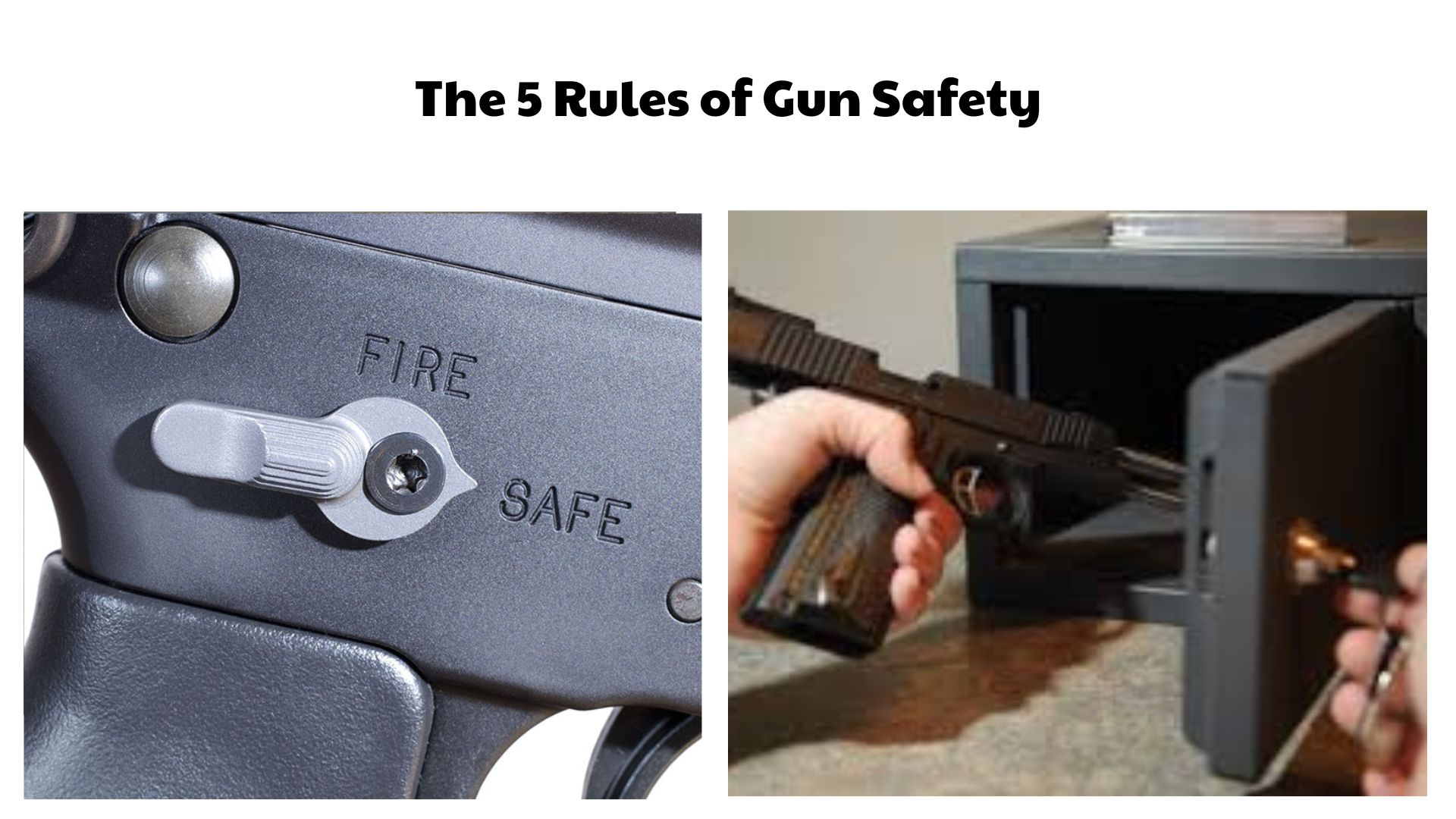

Firearm safety is essential in every shooting environment, whether at home, on the range, during hunting activities, or while carrying for personal protection. Regardless of experience level, safe handling practices remain the foundation of responsible gun ownership. A single mistake can lead to serious consequences, which is why consistent attention to safety is non-negotiable.
Standardized safety rules exist across all firearm training systems because they provide a universal framework that works in any situation. Whether you are a beginner learning basic handling or an experienced shooter under stress, these rules ensure that safe habits remain consistent. They are designed to reduce confusion, eliminate guesswork, and create automatic safe behavior under pressure.
Beyond technical knowledge, discipline and mindset play a critical role in preventing accidents. Firearms do not cause incidents on their own—most problems arise from human behavior, not mechanical failure. A disciplined shooter who consistently follows safety principles significantly reduces risk, even in unpredictable environments.
In fact, one of the most important truths in firearm safety is that most incidents are caused by user error rather than equipment malfunction. Negligence, distraction, or lack of training are far more common causes of accidents than mechanical issues with the firearm itself.
This guide will cover the five core rules of gun safety in detail, including clear explanations, real-world applications, and practical training considerations. By understanding not only what the rules are but also why they matter, shooters can build stronger habits and improve overall safety in every situation involving firearms.
What Are the 5 Rules of Gun Safety?
Universal Safety Principles Used in Firearm Training
The five rules of gun safety are widely recognized principles used in firearm training programs around the world. They are taught by professional instructors, law enforcement agencies, military personnel, and civilian training organizations. While the wording may vary slightly between sources, the core ideas remain consistent across all disciplines.
These rules are designed to build reliable habits that function under stress. In real-life situations, especially those involving time pressure or high emotion, people do not rely on complex thinking. Instead, they depend on trained behavior. The five safety rules simplify decision-making and ensure that safe actions become automatic.
Their primary purpose is to reduce negligent discharges and prevent injuries. By following these principles consistently, shooters create multiple layers of protection that significantly lower the risk of accidents during handling, storage, transport, and use of firearms.
Rule 1 – Always Treat Every Firearm as If It Is Loaded
Why This Rule Matters
The first rule establishes the foundation of all firearm safety practices. Treating every firearm as if it is loaded eliminates assumptions that often lead to careless behavior. Many firearm accidents occur because someone believed a weapon was unloaded when it was not.
This rule helps prevent complacency, which is one of the most dangerous habits in firearm handling. When a person assumes a firearm is safe, they may relax their attention to muzzle direction, trigger discipline, or handling procedures. Maintaining a consistent mindset that every firearm is loaded encourages caution at all times.
Importantly, this rule applies even when you are confident that the firearm is empty. Mechanical verification and safe handling procedures must always come before assumption. This mindset builds a safety-first culture that reduces risk in every situation.
Practical Application
In practical terms, this rule requires you to always verify the condition of a firearm yourself. Never rely on someone else’s word that a gun is unloaded. Even if a trusted individual confirms it, you should still perform your own safety check before handling it.
It also means that any firearm you encounter—whether at home, on the range, or in storage—should be treated as if it is loaded until you personally confirm otherwise. This includes firearms that have been stored for long periods or recently handled by others.
When applied consistently, this rule becomes a mental habit that automatically reinforces safe behavior. Over time, it reduces risk and ensures that every interaction with a firearm begins with caution and responsibility.
Rule 2 – Always Keep the Muzzle Pointed in a Safe Direction
Definition of a Safe Direction
A safe direction refers to any direction where, in the unlikely event of an accidental discharge, no injury or damage would occur. This concept is not fixed—it changes depending on the environment you are in. What is considered safe at a shooting range may be different from what is safe at home or in an outdoor field setting.
For example, at a shooting range, a safe direction is typically downrange toward the target area. At home, it may be toward the floor or a reinforced wall that has been identified as safe. In outdoor environments, it may be toward the ground where there is no risk of hitting people, animals, or property.
The key idea is awareness. A safe direction is always defined by understanding what lies beyond the firearm’s muzzle at all times.
Importance of Muzzle Control
Muzzle control is one of the most important habits in firearm safety because it directly reduces the risk of injury, even in the case of accidental discharge. If a firearm is unintentionally fired, proper muzzle direction ensures that no harm occurs to the shooter or others nearby.
Maintaining control of the muzzle requires constant awareness during every stage of firearm handling. This includes when loading, unloading, transporting, cleaning, or simply moving with a firearm in hand. It is not a temporary action but a continuous discipline.
Good muzzle control becomes especially important in dynamic environments where distractions or stress may be present. Consistently directing the firearm in a safe direction ensures that even human error does not result in injury.
Rule 3 – Keep Your Finger Off the Trigger Until Ready to Shoot
Trigger Discipline Explained
Trigger discipline refers to the practice of keeping your finger outside the trigger guard until you have made a conscious decision to fire. In proper firearm handling, the finger should rest along the frame or receiver of the firearm, not inside the trigger area.
This rule is essential because it prevents unintentional firing caused by sudden movement, surprise, or stress. In real-world situations, people may react instinctively to noise, movement, or unexpected events. Without proper trigger discipline, these reactions can lead to accidental discharge.
By keeping the finger off the trigger, the shooter creates a deliberate pause between intention and action. This pause is critical for maintaining control and ensuring that firing only occurs when it is truly intended.
Common Beginner Mistakes
One of the most common mistakes among beginners is resting the finger inside the trigger guard while handling the firearm. This often happens due to lack of awareness or improper training habits. Even if no pressure is applied, this position increases the risk of accidental firing.
Another frequent mistake is reacting to sudden movement or noise by instinctively tightening grip on the firearm, which can result in an unintentional trigger pull. This is especially dangerous in unfamiliar or high-stress environments.
Developing proper trigger discipline early is essential. With consistent practice, it becomes a natural habit that significantly reduces the risk of negligent discharge in any situation.
Rule 4 – Be Sure of Your Target and What Is Beyond It
Target Identification Importance
Before any trigger press, it is essential to clearly identify the target. This means confirming exactly what you are aiming at and ensuring it is a valid and intended target. In both hunting and defensive situations, misidentification is one of the most dangerous errors a shooter can make.
In hunting environments, this rule helps prevent accidents involving people, protected wildlife, or unintended animals. In defensive scenarios, it ensures that stress or low visibility does not lead to mistaken identity. A responsible shooter takes the time to confirm the target even in fast-moving situations.
Proper target identification is not just about seeing a shape or movement—it involves understanding context, background, and certainty before making a decision to fire.
Understanding Bullet Travel
A critical part of this rule is understanding that bullets do not stop immediately after hitting a target. They can pass through soft targets or miss entirely and continue traveling for a significant distance.
This means that whatever is behind the target must also be considered before firing. Objects, structures, or people beyond the target can still be affected by a bullet’s trajectory.
Maintaining awareness of the full environment is essential for safe shooting. A responsible shooter always evaluates not only the target but also what lies beyond it to reduce the risk of unintended harm.
Rule 5 – Keep Firearm Unloaded Until Ready to Use
Safe Storage and Handling Practice
A firearm should remain unloaded whenever it is not actively being prepared for controlled use. This applies to storage, transport, cleaning, and general handling situations where immediate firing is not intended.
Loading a firearm should only occur when there is a clear and immediate need for its use, such as at a shooting range or in a controlled defensive scenario. This practice significantly reduces the chance of accidental discharge.
Keeping firearms unloaded during non-use creates a safer environment in homes, vehicles, and storage areas, especially where multiple people may be present.
Why This Rule Reduces Risk
The primary purpose of this rule is to prevent accidental discharge during handling. Many firearm incidents occur when individuals assume a firearm is unloaded or forget that it is already chambered.
By maintaining an unloaded condition during storage and transport, the risk of unintended firing is greatly reduced. This is especially important in home environments where children or untrained individuals may be present.
It also improves overall control during routine handling, ensuring that firearms are only made ready when there is a deliberate and conscious decision to do so.
Additional Safety Principles Commonly Included
Use Proper Ammunition
Using the correct ammunition is essential for both safety and firearm performance. Every firearm is designed for a specific caliber and ammunition type, and using the wrong combination can lead to malfunction or catastrophic failure.
Always verify that the ammunition matches the firearm’s specifications exactly. Even small differences in caliber or load type can create dangerous pressure levels or improper operation.
Know Your Firearm
Understanding how your firearm operates is a key part of safe handling. This includes knowing how to load, unload, engage safety mechanisms, and identify key controls.
Training and familiarity reduce mistakes caused by confusion or improper handling. The more comfortable you are with your firearm, the more safely you can operate it under different conditions.
Maintain Situational Awareness
Situational awareness means being conscious of your surroundings at all times when handling a firearm. This includes awareness of people, animals, obstacles, and environmental conditions.
Safety does not depend only on the firearm itself but also on the shooter’s ability to observe and react responsibly to their environment. A responsible shooter constantly evaluates what is happening around them, not just in front of the muzzle.
Why the 5 Rules Work Together
Layered Safety System
The five rules of gun safety are designed to function as a layered system rather than independent guidelines. Each rule reinforces the others and helps compensate for potential human error. When one rule is momentarily overlooked, the remaining rules still provide a level of protection that reduces the chance of an accident.
For example, even if a shooter mistakenly believes a firearm is unloaded, proper muzzle discipline and trigger control can still prevent injury. This redundancy is intentional and reflects how real-world firearm safety must account for human imperfection.
When all five rules are followed consistently, they create a strong safety framework that significantly reduces risk in every handling situation. This layered approach is one of the reasons these rules are universally taught in firearm training programs.
Real-World Effectiveness
In real-world scenarios, most firearm incidents occur when more than one safety rule is violated at the same time. Rarely does a single mistake alone cause an accident. Instead, accidents typically involve a combination of errors such as poor muzzle control, lack of trigger discipline, and incorrect assumptions about firearm status.
This is why consistent adherence to all five rules is so effective. When each rule is applied together, the likelihood of multiple simultaneous failures drops significantly, greatly improving overall safety.
Common Mistakes That Break Gun Safety Rules
Even experienced firearm users can develop habits that weaken safety practices over time. Understanding common mistakes helps reinforce proper behavior and prevent complacency.
One of the most frequent errors is assuming a firearm is unloaded without personally verifying it. This violates the first rule and often leads to unsafe handling situations.
Another common mistake is ignoring muzzle direction under stress or distraction. In dynamic environments, shooters may unintentionally point a firearm in an unsafe direction without realizing it.
Placing a finger on the trigger too early is another critical violation. This often happens during handling or movement and can result in unintentional discharge if combined with sudden motion or surprise.
Failing to check what is beyond the target is also a serious oversight, particularly in hunting or low-visibility environments. This mistake can lead to unintended consequences even if the target itself is correctly identified.
Finally, overconfidence based on experience without maintaining discipline can lead to shortcuts in safety behavior. Experience should reinforce caution, not reduce it.
Expert Insight Summary
The five rules of gun safety form the foundation of modern firearm training systems. They are not optional guidelines but essential principles that apply to all firearm users, regardless of experience level or environment.
Firearm safety depends more on human behavior than on the equipment itself. Even the most advanced firearm cannot compensate for poor handling or lack of discipline. Consistent behavior is what ensures safe outcomes.
Most firearm accidents are preventable when proper discipline and awareness are maintained. This reinforces the importance of practicing these rules until they become automatic habits rather than conscious reminders.
Regular training helps transform safety rules into instinctive actions. Over time, safe behavior becomes second nature, reducing the likelihood of mistakes during stressful or unexpected situations.
These rules apply universally in every firearm-related situation, whether at home, on the range, during transport, or in the field. There are no exceptions where safety principles should be ignored.
Conclusion
The five rules of gun safety are simple in concept but extremely powerful when applied consistently. They provide a clear and reliable framework that helps prevent accidents and promotes responsible firearm use in all environments.
These rules apply universally to all firearms, users, and situations. Whether a person is a beginner or an experienced shooter, the same principles remain essential for safe handling.
Safe firearm handling is ultimately a mindset, not just a set of instructions. It requires constant awareness, discipline, and respect for the potential risks involved.
Consistency is far more important than experience level. Even experienced shooters must continuously reinforce safe habits to avoid complacency.
Final takeaway: mastering and consistently applying the five rules of gun safety is the true foundation of responsible gun ownership and safe firearm use in any context.
Frequently Asked Questions (50+ FAQs on Gun Safety Rules)
1. Why are the 5 rules of gun safety so important?
The 5 rules of gun safety are important because they create a universal framework that reduces the risk of accidents during firearm handling. They are designed to work in all environments, from shooting ranges to home defense situations. By following them consistently, shooters reduce the chances of negligent discharge, misidentification of targets, and unsafe handling practices. These rules are not optional—they are the foundation of responsible firearm ownership and training.
2. Do experienced shooters still need to follow the 5 rules?
Yes, absolutely. Experience does not eliminate risk. In fact, many firearm accidents happen due to overconfidence. Experienced shooters may become complacent and skip basic steps, which increases danger. The 5 rules are designed to be followed every time, regardless of skill level, because safety depends on discipline, not experience.
3. Are gun safety rules the same worldwide?
While wording may vary between countries and training organizations, the core principles are nearly identical worldwide. Muzzle control, trigger discipline, safe target identification, and treating every firearm as loaded are universal concepts in firearm safety training. This consistency exists because these rules are based on physics and human behavior, not regional laws.
4. What is the most important gun safety rule?
All five rules are equally important, but many instructors emphasize “always keep the muzzle pointed in a safe direction” as the most critical. Even if other mistakes occur, proper muzzle direction can prevent injury or death in the event of an accidental discharge. However, relying on only one rule is not enough—safety comes from all rules working together.
5. Why is trigger discipline so emphasized?
Trigger discipline is essential because the trigger is the final mechanical step before a firearm discharges. Many accidents occur when the finger is placed on or near the trigger too early. Proper discipline ensures that firing only happens intentionally, reducing the risk of stress-induced or accidental discharge.
6. Can a firearm fire without touching the trigger?
In modern firearms, this is extremely rare. Most firearms are designed with multiple internal safeties to prevent accidental discharge. However, mechanical failure or improper modification can increase risk. This is why proper maintenance and safe handling practices remain essential.
7. What does “safe direction” really mean?
A safe direction is any direction where an accidental discharge would not cause injury or damage. This varies depending on environment. At a range, it is typically downrange; at home, it may be toward a reinforced surface; outdoors, it may be toward the ground. The key is always understanding what lies beyond the muzzle.
8. Why should every firearm be treated as loaded?
This rule prevents assumptions, which are a major cause of firearm accidents. Even if a firearm is believed to be unloaded, human error or oversight can occur. Treating every firearm as loaded ensures consistent caution and prevents careless handling behavior.
9. What is negligent discharge?
A negligent discharge occurs when a firearm fires due to user error, such as pulling the trigger unintentionally or improper handling. It is the most common cause of accidental firearm discharge and is preventable through proper training and discipline.
10. What is accidental discharge?
An accidental discharge is caused by mechanical failure, such as a broken firing pin or internal malfunction. These incidents are rare in modern firearms but can still occur, especially in poorly maintained or modified weapons.
11. Why is target identification so important?
Proper target identification ensures that the shooter knows exactly what they are aiming at before firing. This is critical in preventing accidental harm to unintended targets, especially in hunting or self-defense situations where visibility may be limited.
12. What happens if you ignore muzzle discipline?
Ignoring muzzle discipline significantly increases the risk of injury or death in the event of an accidental discharge. Even a brief lapse in awareness can direct a firearm toward unsafe areas or people, which is why constant attention to muzzle direction is essential.
13. Is it safe to rely on a firearm’s safety switch?
No. Mechanical safeties are helpful but not foolproof. They are designed as backup systems, not replacements for safe handling. Relying solely on a safety switch can create false confidence and increase risk.
14. Why is awareness of surroundings important?
Situational awareness ensures that shooters understand what is happening around them, including people, obstacles, and environmental risks. This helps prevent accidental harm and improves decision-making during firearm use.
15. Can stress affect firearm safety?
Yes. Stress can cause reduced awareness, poor decision-making, and instinctive reactions such as grabbing the trigger too early. This is why training focuses on building automatic safety habits that remain effective under pressure.
16. What is the safest way to store a firearm?
The safest method is to store firearms unloaded in a locked safe or secure container, with ammunition stored separately. This reduces the risk of unauthorized access and accidental discharge.
17. Why should ammunition be stored separately?
Separating ammunition from firearms adds an additional layer of safety by preventing immediate use. Even if someone gains access to a firearm, they cannot fire it without also accessing ammunition.
18. Do gun safety rules apply to airguns?
Yes. Even though airguns may not use traditional gunpowder, they can still cause injury. The same safety principles apply because they involve projectiles and potential harm.
19. What is the biggest beginner mistake?
One of the biggest mistakes is failing to maintain trigger discipline, especially when handling unfamiliar firearms. Beginners may unintentionally place their finger on the trigger due to lack of training or awareness.
20. Can training eliminate firearm accidents completely?
Training greatly reduces risk but cannot eliminate it entirely. Human error is always possible, which is why consistent adherence to safety rules is necessary even for experienced shooters.
21. How often should I review the 5 rules of gun safety?
You should review the 5 rules regularly, especially before handling a firearm after a break or before training sessions. Many instructors recommend mentally rehearsing them every time you pick up a firearm. Repetition helps turn these rules into automatic habits, which is essential for safe behavior under stress.
22. Can the 5 rules prevent all firearm accidents?
The 5 rules significantly reduce the risk of accidents, but no system can eliminate risk entirely. They are designed to minimize human error, which is the primary cause of most firearm incidents. Consistent application makes accidents extremely unlikely but not impossible.
23. Why do most firearm accidents involve human error?
Most firearm accidents occur because of mistakes such as improper handling, ignoring safety rules, or complacency. Mechanical failures are rare in modern firearms, so the majority of incidents come from user behavior rather than equipment malfunction.
24. Is it safe to handle a firearm without training?
No. Handling a firearm without proper training increases the risk of accidents. Training teaches essential skills such as trigger discipline, muzzle control, and safe loading/unloading procedures, which are critical for preventing injury.
25. What is the safest way to pass a firearm to another person?
The firearm should be unloaded, with the action open if possible, and the muzzle pointed in a safe direction. Always ensure the other person visually confirms that it is safe before transferring control.
26. Why is complacency dangerous in firearm handling?
Complacency leads to shortcuts in safety procedures, such as skipping checks or relaxing trigger discipline. These small mistakes can quickly escalate into serious accidents, especially when handling loaded firearms.
27. Can I trust firearm safeties completely?
No. Mechanical safeties are helpful but not infallible. They are designed to reduce risk, not replace safe handling practices. Relying solely on them can create a false sense of security.
28. What should I do if I forget whether a firearm is loaded?
Always assume it is loaded and perform a full safety check. Never rely on memory. This is one of the core principles of firearm safety and helps prevent accidental discharge.
29. Why is muzzle awareness so difficult for beginners?
Beginners often focus on the firearm itself and forget about direction awareness. With practice, muzzle control becomes a natural habit, but early training must emphasize constant attention to direction at all times.
30. How does stress affect trigger discipline?
Stress can cause instinctive reactions, such as tightening grip or placing a finger on the trigger too early. Proper training helps build muscle memory so that safe habits remain even under pressure.
31. Can clothing or gear affect firearm safety?
Yes. Loose clothing, holsters, or equipment can interfere with trigger discipline or handling. Proper gear selection is important to maintain safe control of the firearm at all times.
32. What is the safest way to inspect a firearm?
Always point the firearm in a safe direction, remove the magazine if applicable, and visually and physically check the chamber. Treat the firearm as loaded until you personally confirm it is empty.
33. Why is safe direction not always “downrange”?
Safe direction depends on environment. While downrange is common at shooting ranges, other environments may require different directions. The key is ensuring no harm would occur if discharge happens.
34. Is it safe to dry fire a firearm?
Dry firing can be safe for many modern firearms if done correctly, but always ensure the firearm is unloaded and pointed in a safe direction. Manufacturer guidelines should always be followed.
35. Why is overconfidence risky?
Overconfidence can lead to ignoring safety procedures or assuming nothing will go wrong. This mindset increases the likelihood of mistakes, even for experienced shooters.
36. What role does repetition play in firearm safety?
Repetition builds muscle memory. When safety rules are practiced consistently, they become automatic, reducing the chance of error during real handling situations.
37. Can distractions lead to firearm accidents?
Yes. Distractions reduce awareness and increase the likelihood of breaking safety rules, such as poor muzzle control or trigger discipline errors.
38. Should beginners handle loaded firearms?
Beginners should only handle loaded firearms under supervision and in controlled training environments. Safety fundamentals must be well understood before introducing live ammunition.
39. Why is checking the chamber important?
The chamber is where a round may remain even if the magazine is removed. Failing to check it is a common cause of accidental discharge incidents.
40. What is the safest mindset for firearm handling?
The safest mindset is one of constant caution and respect. Every firearm should be treated as potentially dangerous until proven otherwise through proper checks.
41. Can environmental conditions affect safety?
Yes. Low light, noise, or crowded environments can increase the risk of mistakes. Awareness and slower, deliberate actions help maintain safety.
42. Why is safe storage important even for experienced users?
Safe storage prevents unauthorized access and accidental handling. Experience does not eliminate risk from children, guests, or unexpected access situations.
43. How can I build better safety habits?
Consistent training, repetition of safety rules, and slow deliberate practice help build strong habits over time. Habits are more reliable than memory under stress.
44. Is it safe to rely on memory for firearm status?
No. Memory can be unreliable, especially under distraction or stress. Always physically verify the firearm’s condition.
45. Why is consistent training important?
Consistent training reinforces safe behavior and ensures that skills remain sharp. It also helps correct bad habits before they become dangerous.
46. What should I do if I see unsafe handling?
If you observe unsafe behavior, you should calmly correct it if appropriate or remove yourself from the situation. Safety should always be prioritized.
47. Can firearms discharge from dropping them?
Modern firearms include drop safety features that greatly reduce this risk, but no system is completely risk-free. Proper handling still matters most.
48. Why is awareness more important than equipment?
Equipment can fail, but awareness and discipline are always under user control. Human behavior is the most important factor in preventing accidents.
49. What is the final responsibility of a firearm owner?
The final responsibility is safe handling at all times. Owners must ensure that every interaction with a firearm follows established safety rules.
50. What is the key takeaway from the 5 rules?
The key takeaway is that firearm safety depends on consistent discipline, awareness, and behavior. The 5 rules provide a simple but powerful system that, when followed, prevents most accidents and ensures responsible firearm use.
Read more: