

Proper pistol aiming is a fundamental skill that directly impacts accuracy, whether you are practicing at the range, engaging in shooting sports, or learning the basics of personal defense. A well-aimed shot is not the result of luck—it comes from consistent technique, controlled movement, and a clear understanding of how the firearm behaves. Developing this skill early helps build confidence and improves overall shooting performance.
Many beginners assume that aiming a pistol is simply a matter of pointing it at a target and pulling the trigger. In reality, accurate shooting involves a combination of precise sight alignment, steady grip, controlled breathing, and smooth trigger press. Each of these elements must work together in a coordinated way. Ignoring even one of them can significantly reduce accuracy.
Common beginner mistakes often include poor sight alignment, where the front and rear sights are not properly lined up, jerking the trigger instead of pressing it smoothly, and using an inconsistent or weak grip. These issues may seem minor, but they can cause shots to miss the intended target or group inconsistently.
This guide will walk you through the essential components of aiming a pistol effectively. It covers proper shooting stance, correct grip techniques, sight alignment and sight picture, trigger control, and other key shooting fundamentals. By understanding and practicing these basics, you can build a solid foundation for accurate and consistent shooting.
Understanding the Fundamentals of Aiming a Pistol
The Core Elements of Accuracy
Accurate pistol shooting is built on four core elements: grip, sight alignment, sight picture, and trigger control. These fundamentals form the foundation of every consistent and precise shot. While each element can be practiced individually, true accuracy comes from how well they work together as a system.
Grip is what stabilizes the firearm and controls recoil. A proper grip ensures the pistol returns to the same position after each shot. Sight alignment and sight picture determine where the firearm is aimed, while trigger control dictates whether that aim is maintained during the moment the shot breaks.
If one element is weak, it affects the entire process. For example, perfect sight alignment can still result in a missed shot if the trigger is jerked. Likewise, smooth trigger control cannot compensate for poor alignment. Consistency across all four elements is what produces tight shot groupings and reliable accuracy over time.
Sight Alignment vs Sight Picture
Sight alignment and sight picture are often confused, but they represent two distinct steps in aiming a pistol. Understanding the difference is critical for improving shooting precision.
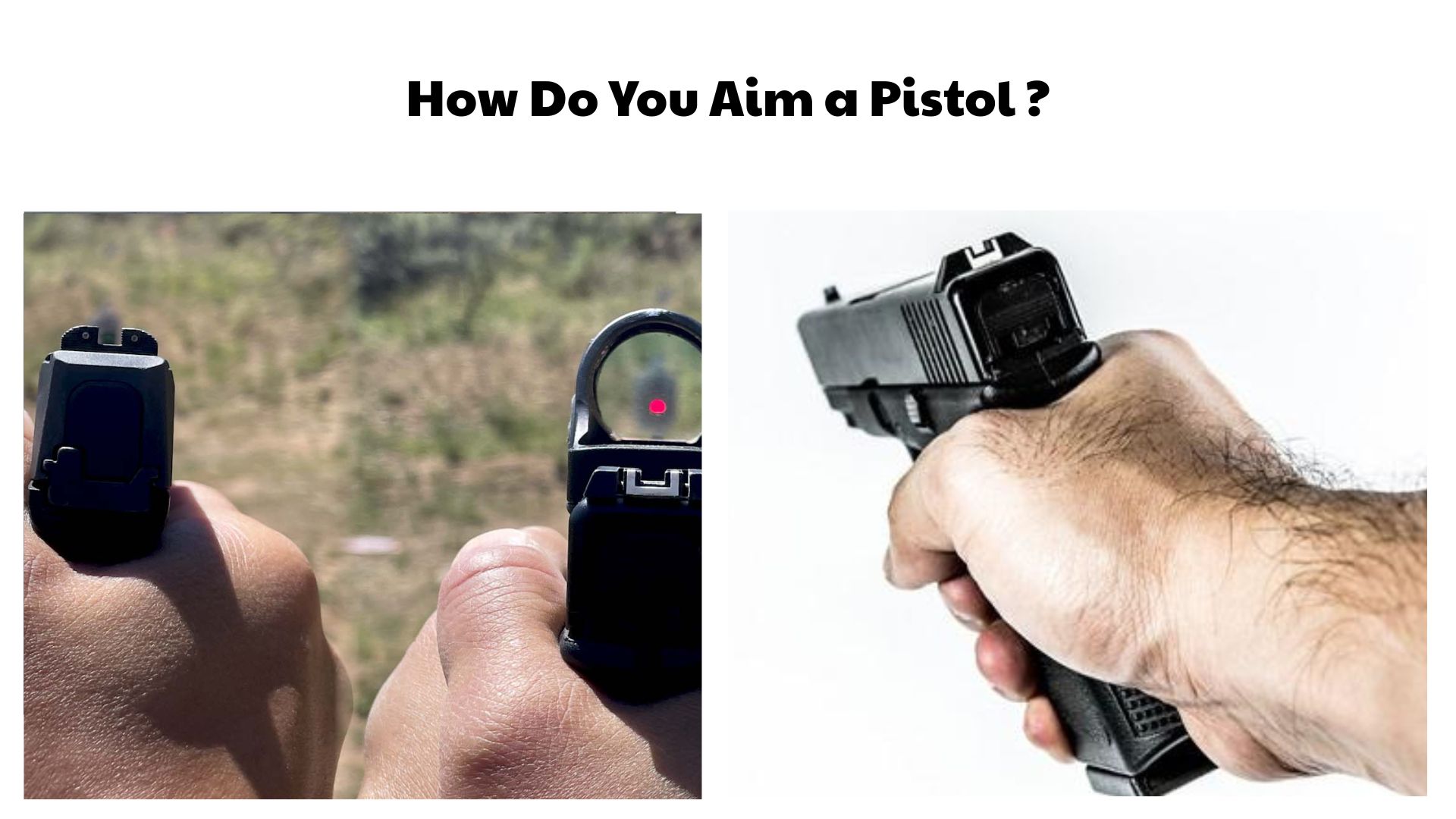
Sight alignment refers to the relationship between the front sight and the rear sight. The front sight should be centered horizontally in the rear notch, with equal spacing on both sides, and level across the top. This alignment ensures the firearm is pointed in the correct direction.
Sight picture, on the other hand, is what you see when the aligned sights are placed on the target. It involves positioning the properly aligned sights over the exact point where you want the bullet to impact. In most cases, the front sight should be in sharp focus, while the target appears slightly blurred.
Both concepts are essential because they work together. Sight alignment ensures directional accuracy, while sight picture ensures correct placement on the target. Neglecting either one can result in missed or inconsistent shots, especially at longer distances.
Proper Shooting Stance
Balanced and Stable Position
A proper shooting stance provides the foundation for all other shooting fundamentals. Without a stable base, it becomes difficult to maintain consistent aim and control recoil effectively. The most common approach is to stand with feet approximately shoulder-width apart, creating a balanced and natural position.
A slight forward lean from the hips helps position the body behind the firearm, allowing better control during recoil. The knees should remain slightly bent rather than locked, which improves balance and responsiveness. Weight should be distributed slightly forward onto the balls of the feet, helping the shooter stay stable during firing.
This balanced stance allows the upper body to remain steady while supporting the pistol, making it easier to maintain sight alignment and recover quickly between shots.
Importance of Stability
Stability is essential for consistent accuracy. Even small movements in the body can translate into noticeable deviations at the target, especially as distance increases. A stable stance minimizes unnecessary motion and creates a reliable platform for aiming.
By reducing body sway and maintaining consistent positioning, shooters can focus more on sight alignment and trigger control without compensating for instability. This is particularly important during multiple shots, where maintaining consistency between shots directly impacts grouping.
A strong, stable stance also helps manage recoil more effectively. Instead of being pushed off balance, the shooter absorbs recoil and quickly returns to the original aiming position. Over time, this consistency leads to improved accuracy and confidence in handling the pistol.
How to Grip a Pistol Correctly
Two-Handed Grip Technique
A proper grip is one of the most important factors in controlling a pistol and maintaining accuracy. The most widely used method is the two-handed grip, which provides stability, recoil control, and consistency between shots. This technique allows the shooter to manage the firearm more effectively than using one hand alone.
The dominant hand should be placed as high as possible on the backstrap of the pistol. This high grip reduces muzzle rise during recoil and improves overall control. The web of the hand should be firmly seated under the beavertail or rear portion of the slide, ensuring maximum contact with the firearm.
The support hand then wraps around the dominant hand, filling any open space on the grip. The fingers of the support hand should rest over the fingers of the dominant hand, while the thumb typically points forward along the frame. This creates a unified grip that stabilizes the pistol and minimizes movement during firing.
Both hands should work together as a single unit. A proper two-handed grip not only improves accuracy but also helps the shooter maintain better control during rapid or follow-up shots.
Grip Pressure and Control
Grip pressure plays a crucial role in maintaining control without introducing unnecessary tension. The goal is to hold the pistol firmly enough to manage recoil, but not so tightly that it causes shaking or fatigue.
A common guideline is to apply firm pressure with both hands, with slightly more emphasis from the support hand. This allows the dominant hand to remain relaxed enough to operate the trigger smoothly. Over-gripping with the dominant hand can interfere with trigger control and cause the muzzle to shift during firing.
Maintaining consistent grip pressure is key. If the grip changes between shots, it can lead to inconsistent results on the target. A stable, controlled grip ensures that the pistol returns to the same position after each shot, improving accuracy and shot grouping over time.
How Do You Aim a Pistol (Step-by-Step) ?
Step 1 – Align the Sights
The first step in aiming a pistol is proper sight alignment. This involves positioning the front sight so that it is centered within the rear sight notch. There should be equal spacing on both sides of the front sight, and the top of the front sight should be level with the top of the rear sight.
This alignment ensures that the pistol is pointed in the correct direction. Even small errors in alignment can result in noticeable deviations at the target, especially as distance increases. Taking the time to establish proper alignment is essential for accuracy.
Step 2 – Establish Sight Picture
Once the sights are aligned, the next step is to place that aligned sight system onto the target. This is known as the sight picture. The shooter should position the sights so that the front sight is aimed at the exact point where the bullet is intended to impact.
Consistency is important here. The same sight picture should be used for each shot to ensure predictable results. Whether aiming at the center of a target or a specific point, maintaining a repeatable sight picture helps improve accuracy over time.
Step 3 – Focus on the Front Sight
Proper visual focus is critical when aiming a pistol. The shooter should concentrate on the front sight, keeping it sharp and clear, while the rear sight and target remain slightly blurred. This may feel unnatural at first, but it is essential for precise shooting.
Focusing on the front sight allows the shooter to maintain proper alignment during the trigger press. If the eyes shift focus to the target, sight alignment may be compromised, leading to inaccurate shots.
With practice, maintaining front sight focus becomes more natural. This technique significantly improves consistency and helps produce tighter shot groupings, especially at longer distances.
Trigger Control – The Key to Accuracy
Smooth Trigger Press
Trigger control is often considered the most critical factor in accurate pistol shooting. Even with perfect grip and sight alignment, poor trigger technique can cause shots to miss the intended target. The goal is to press the trigger smoothly and consistently without disturbing the alignment of the sights.
A proper trigger press involves applying steady, even pressure straight to the rear. The movement should be controlled and deliberate, not rushed or forced. Jerking or slapping the trigger introduces sudden movement, which shifts the muzzle and causes inaccurate shots.
Many beginners struggle with anticipation, where they subconsciously react to the expected recoil. This often results in pushing the firearm downward or tightening the grip at the moment of firing. Developing a smooth trigger press helps eliminate this reaction and improves shot consistency over time.
Maintaining Sight Alignment During Trigger Pull
One of the biggest challenges in shooting is maintaining sight alignment while pressing the trigger. The act of pulling the trigger should not affect the position of the sights. If the sights move during the trigger press, the shot will likely miss the intended point of impact.
This requires coordination between grip and trigger finger movement. The trigger finger should move independently, without causing the rest of the hand to tighten or shift. A stable grip combined with controlled trigger movement ensures that the sights remain aligned throughout the entire firing process.
Trigger control should feel continuous and smooth from start to finish. There should be no sudden breaks or interruptions in pressure. With practice, this becomes a natural motion that allows for precise and repeatable shooting.
Eye Focus and Target Acquisition
Front Sight Focus Technique
Proper eye focus is essential for accurate pistol aiming. The shooter should focus clearly on the front sight while allowing the rear sight and target to appear slightly blurred. This may seem counterintuitive at first, but it is necessary for maintaining precise alignment.
The human eye can only focus sharply on one distance at a time. By prioritizing the front sight, the shooter ensures that the most critical aiming reference remains clear. This improves alignment and reduces the chance of aiming errors.
Shifting focus back and forth between the sights and the target can disrupt consistency and lead to inaccurate shots. Maintaining a steady focus on the front sight helps create repeatable results and tighter shot groupings.
One Eye vs Both Eyes Open
Shooters often choose between aiming with one eye closed or both eyes open. Each method has advantages and is suited to different situations and skill levels.
Closing one eye can help beginners concentrate on sight alignment without distraction. It simplifies the visual field and makes it easier to focus on the front sight. However, it reduces peripheral awareness, which may be a disadvantage in dynamic or defensive scenarios.
Keeping both eyes open allows for better situational awareness and depth perception. This method is often preferred by experienced shooters and is commonly used in defensive or tactical shooting. It may take practice to become comfortable with this approach, but it offers greater awareness of the environment.
Ultimately, the choice depends on the shooter’s experience and intended use. Both methods can be effective when applied correctly.
Breathing and Body Control
Natural Breathing Technique
Breathing plays a subtle but important role in shooting accuracy. As you breathe, your body naturally moves, which can affect sight alignment. Learning to control breathing helps minimize this movement during the moment of firing.
The most effective technique is to fire during the natural pause that occurs after exhaling. At this point, the body is relatively still, providing a stable moment for an accurate shot. There is no need to force or hold your breath for extended periods, as this can create tension and reduce control.
Keeping breathing relaxed and natural helps maintain overall stability and prevents fatigue during longer shooting sessions.
Minimizing Movement
Reducing unnecessary movement is essential for consistent accuracy. Even small shifts in posture or muscle tension can cause the sights to move off target. Maintaining a stable stance and controlled body position helps keep the firearm steady.
Body sway should be minimized by maintaining proper balance and posture. The shooter should avoid sudden movements or adjustments while aiming, as these can disrupt alignment and timing.
Consistency is the key factor. By maintaining the same posture, grip, and breathing pattern for each shot, shooters can develop repeatable habits that lead to improved accuracy over time.
Follow-Through Technique
What Happens After the Shot
Many shooters focus entirely on the moment the shot breaks and overlook what happens immediately afterward. This phase, known as follow-through, is just as important as the aiming and trigger press. Proper follow-through ensures that the shot is completed cleanly without introducing last-second movement that can affect accuracy.
After the firearm discharges, you should maintain your sight picture instead of immediately lowering the pistol. Keeping the sights aligned on the target allows you to confirm where the shot landed and helps reinforce consistent shooting habits.
Dropping the firearm too quickly or relaxing your grip right after firing can lead to inconsistent results. Maintaining focus through the entire shot process—including after the trigger break—helps improve control and shot grouping over time.
Reset and Prepare for Next Shot
After firing, the next step is to reset the trigger and prepare for a follow-up shot. Most modern pistols have a trigger reset point, which is the position where the trigger can be released just enough to engage again without fully resetting forward.
Understanding and feeling this reset point allows for faster and more controlled follow-up shots. Instead of releasing the trigger completely, the shooter can maintain partial contact and prepare for the next press more efficiently.
At the same time, the shooter should quickly reacquire the target by bringing the sights back into alignment. A consistent grip and stable stance help the firearm return naturally to the original aiming position, making follow-up shots more accurate and controlled.
Common Mistakes When Aiming a Pistol
One of the most common mistakes is focusing on the target instead of the front sight. While it may feel natural to look directly at the target, doing so often results in poor sight alignment and reduced accuracy. Keeping the front sight in sharp focus is essential.
Jerking the trigger is another frequent issue. Instead of pressing the trigger smoothly, some shooters apply sudden force, which moves the firearm at the moment of discharge. This typically causes shots to land off target.
A poor or inconsistent grip can also lead to movement during firing. If the pistol is not held securely, recoil can cause it to shift unpredictably, affecting accuracy and follow-up shots.
Incorrect sight alignment is a fundamental error that leads to missed shots. Even small misalignments between the front and rear sights can result in noticeable deviations, especially at longer distances.
Anticipating recoil, often called flinching, is another major issue. Shooters may subconsciously push the firearm down or tense up just before the shot breaks. This reaction disrupts alignment and causes inaccurate shots.
Tips to Improve Pistol Accuracy
Dry Fire Practice
Dry fire practice is one of the most effective ways to improve shooting skills without using live ammunition. It allows shooters to focus on trigger control, sight alignment, and grip without the distraction of recoil or noise.
By practicing regularly, shooters can develop muscle memory and refine their technique. This leads to smoother trigger presses and more consistent aiming when transitioning to live fire.
Start at Close Range
Beginning at a close distance helps build confidence and establish consistent shooting fundamentals. At shorter ranges, it is easier to identify and correct mistakes such as poor alignment or improper trigger control.
As accuracy improves, the shooter can gradually increase the distance. This step-by-step approach allows skills to develop naturally without becoming overwhelmed by long-range challenges.
Consistency Over Speed
Many shooters make the mistake of trying to shoot quickly before mastering accuracy. Speed should always come after consistency. Focusing on controlled, accurate shots builds a solid foundation for future improvement.
By prioritizing consistency, shooters develop reliable habits that can later be adapted to faster shooting scenarios. Accuracy is the foundation, and speed is built on top of it—not the other way around.
Expert Insight Summary
One of the most important insights in pistol shooting is that sight alignment often has a greater impact on accuracy than trigger control alone. Even a perfectly smooth trigger press cannot compensate for misaligned sights. If the sights are not properly aligned, the shot will not land where intended, regardless of how well the trigger is pressed.
At the same time, accuracy is never the result of a single factor. It depends on multiple fundamentals working together in a coordinated way. Grip, stance, sight alignment, sight picture, trigger control, and follow-through all contribute to the final result. Weakness in any one area can affect overall performance.
In practical shooting scenarios, most errors come from shooter technique rather than equipment limitations. Modern pistols are generally capable of high levels of accuracy, but inconsistent handling, poor trigger control, or improper sight focus often prevent shooters from achieving their full potential.
Consistent practice is the key to improvement. Repetition builds muscle memory, reinforces proper habits, and increases confidence. Over time, these fundamentals become automatic, allowing the shooter to focus more on situational awareness and less on basic mechanics.
Conclusion
Aiming a pistol correctly requires mastering several core fundamentals. It is not a single skill but a combination of techniques that must be applied consistently. Proper sight alignment, controlled trigger press, and a stable grip are among the most critical elements for achieving accuracy.
Improvement does not happen instantly. It comes through regular practice, attention to detail, and a willingness to correct mistakes. Each training session builds on previous experience, gradually developing more precise and consistent shooting ability.
Rather than focusing on speed or advanced techniques too early, shooters should prioritize building a strong foundation. Mastering the basics ensures that future progress is stable and reliable.
Final recommendation: focus on fundamentals first, practice consistently, and allow speed and advanced skills to develop naturally over time. Accuracy is built step by step, and a solid foundation is what makes long-term improvement possible.
Frequently Asked Questions (50+ FAQs on How to Aim a Pistol)
1. What is the most important factor in aiming a pistol?
The most important factor is proper sight alignment. While grip, stance, and trigger control all matter, if the sights are not aligned correctly, the shot will not hit the intended target. Sight alignment ensures the pistol is pointed in the correct direction before the trigger is pressed.
2. What is the difference between sight alignment and sight picture?
Sight alignment refers to how the front and rear sights are positioned relative to each other. Sight picture is how those aligned sights are placed on the target. Both must be correct to achieve accurate shooting.
3. Should I focus on the target or the front sight?
You should focus on the front sight. The front sight should appear sharp and clear, while the target is slightly blurred. This helps maintain proper alignment and improves accuracy.
4. Why do my shots go low and left (for right-handed shooters)?
This is often caused by jerking the trigger or anticipating recoil. The shooter may push the gun downward or tighten their grip just before the shot breaks, causing the bullet to deviate.
5. How tight should I grip a pistol?
The grip should be firm but not overly tense. Too loose, and the gun moves excessively; too tight, and your hands may shake or interfere with trigger control. Balance is key.
6. Is a two-handed grip better than one-handed?
Yes, for most situations. A two-handed grip provides better stability, recoil control, and accuracy. One-handed shooting is typically used in specific training or competition scenarios.
7. What is trigger control?
Trigger control is the ability to press the trigger smoothly and straight to the rear without disturbing sight alignment. It is one of the most critical skills for accurate shooting.
8. Why do I flinch when shooting?
Flinching is a natural reaction to recoil and noise. It can be reduced through practice, especially dry fire training, which helps build confidence and proper trigger habits.
9. Should I shoot with one eye closed?
Beginners often close one eye to focus on the sights more easily. However, experienced shooters often keep both eyes open to maintain better awareness and depth perception.
10. What is the best stance for pistol shooting?
A balanced stance with feet shoulder-width apart and a slight forward lean is ideal. This position improves stability and helps control recoil effectively.
11. How does breathing affect accuracy?
Breathing causes natural body movement. Shooting during the natural pause after exhaling helps minimize this movement and improves stability.
12. What is follow-through in shooting?
Follow-through is maintaining sight alignment and focus after the shot is fired. It ensures the shot is completed properly and helps improve consistency.
13. Why is my grouping inconsistent?
Inconsistent grouping is usually caused by variations in grip, trigger control, or sight alignment. Consistency in technique is key to improving shot grouping.
14. How can I improve my aim quickly?
Regular practice, especially dry fire drills, helps improve aim. Focus on fundamentals rather than speed, and build consistency over time.
15. What distance should beginners start at?
Beginners should start at close distances, such as 3–5 meters, to build confidence and focus on technique before moving to longer ranges.
16. What causes shots to go right?
For right-handed shooters, shots going right may result from too much trigger finger or pushing the gun during the trigger press.
17. Is speed important in pistol shooting?
Speed is important in some contexts, but accuracy should always come first. Speed should be developed only after mastering basic fundamentals.
18. Can poor grip affect accuracy?
Yes. A poor grip allows the pistol to move during firing, which affects both accuracy and recoil control.
19. What is dry fire practice?
Dry fire practice involves practicing shooting techniques without live ammunition. It is effective for improving trigger control and sight alignment.
20. How often should I practice?
Regular practice is essential. Even short, consistent sessions are more effective than infrequent long sessions.
21. Why is consistency important in shooting?
Consistency ensures that each shot is performed the same way. This leads to predictable results and tighter groupings.
22. Can equipment affect my aim?
Yes, but technique is usually more important. Even high-quality equipment cannot compensate for poor fundamentals.
23. What is recoil management?
Recoil management involves controlling the movement of the firearm after firing. A proper grip and stance help reduce recoil effects.
24. Why do I miss at longer distances?
Small errors in alignment or trigger control become more noticeable at longer distances, making precision more important.
25. Should I practice with live ammo only?
No. Dry fire practice is highly valuable and helps build skills without the cost or distraction of live ammunition.
26. How do I know if my sights are aligned correctly?
The front sight should be centered in the rear sight with equal spacing and level alignment across the top.
27. What is trigger reset?
Trigger reset is the point where the trigger can be released enough to fire again without fully returning forward. Learning it improves speed and control.
28. Can fatigue affect accuracy?
Yes. Fatigue can reduce stability, focus, and control, leading to decreased accuracy.
29. Why is my front sight blurry?
This happens when your eyes focus on the target instead of the front sight. Adjust your focus to keep the front sight sharp.
30. How do I reduce hand shaking?
Improve grip technique, relax unnecessary tension, and build strength through practice.
30. How do I reduce hand shaking?
Hand shaking can come from muscle fatigue, excessive tension, or lack of familiarity with the firearm. To reduce it, focus on maintaining a firm but relaxed grip, avoid over-gripping with your dominant hand, and build endurance through regular practice. Strength training for the hands and forearms can also help improve stability over time.
31. How can I improve accuracy under stress?
Improving accuracy under stress requires training that simulates real conditions. Practicing regularly, using timed drills, and building strong fundamentals helps create muscle memory. When fundamentals become automatic, they remain effective even when stress levels increase.
32. What is the best way to practice trigger control?
Dry fire practice is one of the best methods. Focus on pressing the trigger smoothly while keeping the sights aligned. Watching for movement in the front sight during the trigger press helps identify errors and improve control.
33. Why do my shots spread out instead of grouping tightly?
Wide shot groups are usually caused by inconsistent technique. Variations in grip pressure, sight alignment, or trigger control can cause each shot to land in a different place. Consistency is key to tightening groups.
34. How important is follow-through for beginners?
Follow-through is very important because it reinforces proper habits. Maintaining sight alignment after the shot helps ensure that the trigger press did not disturb the aim and prepares the shooter for consistent follow-up shots.
35. Can poor posture affect aiming?
Yes. Poor posture can lead to instability and inconsistent recoil control. A balanced stance with a slight forward lean provides a solid foundation for accurate shooting.
36. What is target acquisition?
Target acquisition is the process of quickly locating and aligning your sights on a target. It involves both visual focus and proper firearm alignment, and it becomes faster with practice.
37. How do I transition between multiple targets?
Use your eyes to move to the next target first, then bring the firearm into alignment. Avoid swinging the gun wildly. Controlled, deliberate movements help maintain accuracy during transitions.
38. Why do I anticipate recoil?
Anticipation is a natural reaction to noise and recoil. It often causes the shooter to push the firearm down or tense up before the shot. Practicing with dry fire and focusing on smooth trigger control helps reduce this habit.
39. What is the best way to improve consistency?
Consistency comes from repeating the same technique for every shot. Focus on maintaining the same grip, stance, sight alignment, and trigger press each time you shoot.
40. Should I adjust my grip between shots?
Ideally, no. Your grip should remain consistent throughout a shooting session. Adjusting your grip between shots can lead to inconsistent results and poor grouping.
41. How can I tell if my grip is correct?
A correct grip feels stable and allows the firearm to return naturally to the same position after each shot. If the gun shifts excessively or feels unstable, your grip may need adjustment.
42. What role does the support hand play?
The support hand provides most of the stability in a two-handed grip. It helps control recoil and keeps the firearm steady during aiming and firing.
43. Can eye dominance affect aiming?
Yes. Your dominant eye plays a key role in sight alignment. Using your dominant eye to aim helps improve accuracy and consistency.
44. How do I find my dominant eye?
A simple way is to extend your arms and form a small opening with your hands, then focus on a distant object. Close one eye at a time—the eye that keeps the object centered is your dominant eye.
45. What is the biggest mistake intermediate shooters make?
Intermediate shooters often rush their shots in an attempt to increase speed. This can lead to neglecting fundamentals such as sight alignment and trigger control, reducing accuracy.
46. How do I improve accuracy at longer distances?
Focus on refining fundamentals, especially sight alignment and trigger control. Small errors become more noticeable at longer distances, so precision is critical.
47. Is it normal to struggle at first?
Yes. Learning to aim a pistol accurately takes time and practice. Initial struggles are part of the learning process and improve with consistent training.
48. How long does it take to become accurate?
It varies depending on practice frequency and dedication. With consistent training, noticeable improvements can occur within weeks, but mastery takes ongoing practice.
49. Can dry fire practice replace live fire?
Dry fire is extremely useful for building fundamentals, but live fire is still necessary to experience recoil and real shooting conditions. Both should be used together for best results.
50. What is the key takeaway for aiming a pistol?
The key takeaway is that accuracy comes from mastering fundamentals and applying them consistently. Focus on sight alignment, trigger control, and grip, and practice regularly to build confidence and precision.
Read more: