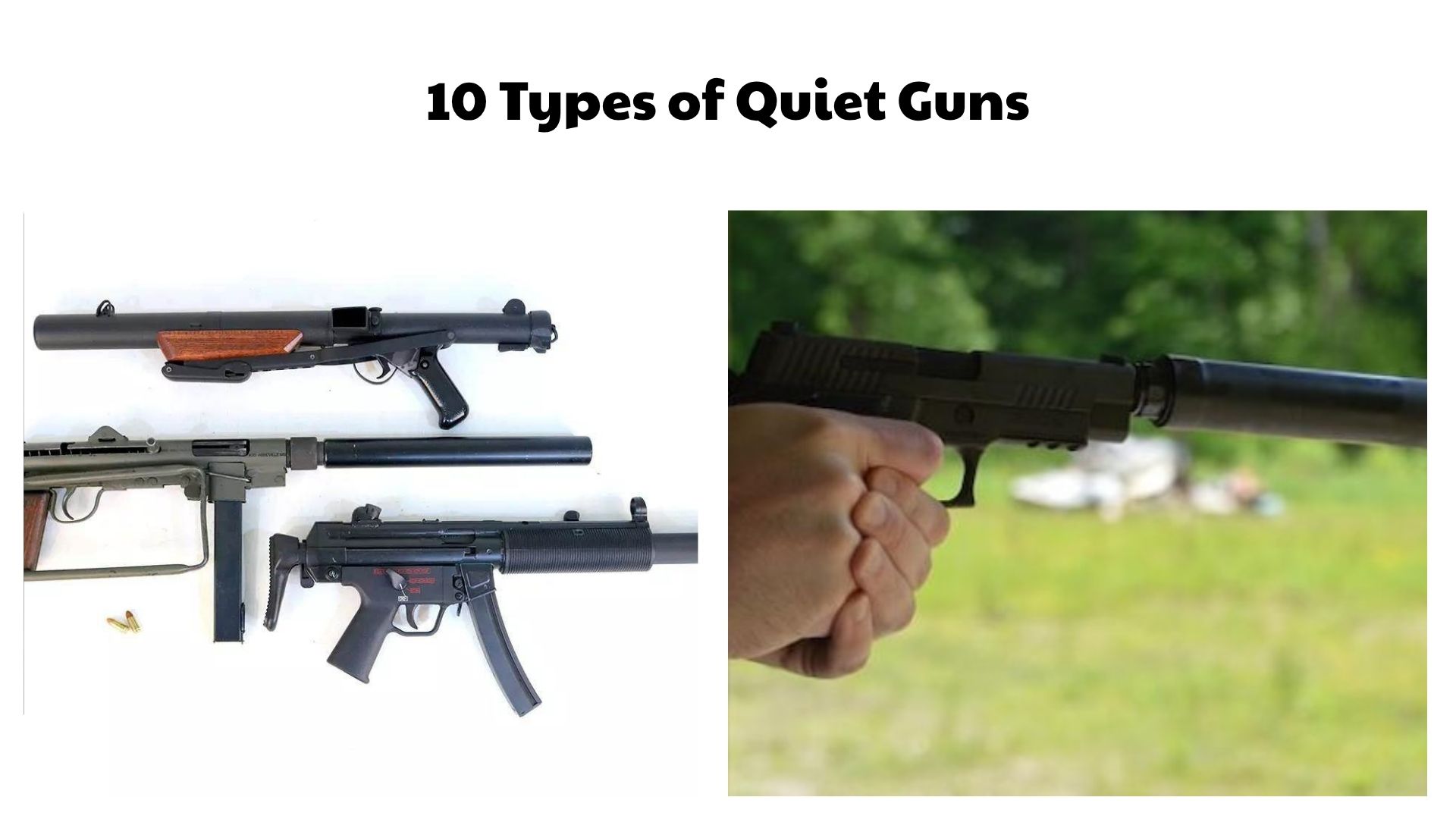

When people search for types of quiet guns, they are usually looking for firearms or air-powered options that produce less noise without relying on suppressors. Quiet guns are popular for backyard shooting, pest control, training new shooters, and situations where noise reduction is important. While no firearm is completely silent, certain designs and technologies significantly reduce sound by limiting explosive force, lowering velocity, or minimizing mechanical noise.
This guide explores different quiet guns that stand out for their reduced sound signature and practical use. Instead of focusing only on raw power, we will look at how each type performs in real-world scenarios, including ease of use, shooting comfort, and typical applications. The goal is simple: help you understand which quiet option fits your needs without unnecessary complexity.
Below are the first five carefully selected types. Each one represents a unique approach to reducing noise, from air-powered systems to specialized firearm configurations.
10 Types of Quiet Guns
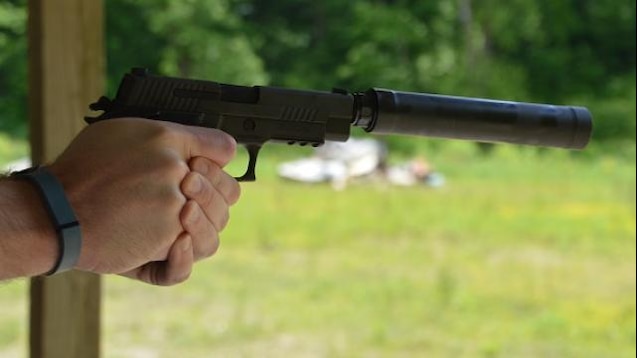
1. Pre-Charged Pneumatic (PCP) Air Rifles
Pre-Charged Pneumatic (PCP) air rifles are widely considered one of the quietest shooting options available today. Instead of using gunpowder, these rifles rely on compressed air stored in a high-pressure reservoir. When the trigger is pulled, a controlled burst of air propels the pellet forward, producing very little sound compared to traditional firearms. This fundamental design is what makes PCP rifles a top choice for anyone researching types of quiet guns.
One of the main advantages of PCP air rifles is their consistency and smooth shooting cycle. Because there is no combustion involved, there is no loud explosion—just a soft release of air. In many cases, the sound produced is comparable to a quick “pop” or even quieter depending on the model. This makes them ideal for backyard shooting, target practice, and pest control in areas where noise must be kept to a minimum.
Another benefit is accuracy. PCP rifles often deliver excellent precision due to their stable firing mechanism and lack of recoil. This makes them suitable not only for casual shooting but also for more serious applications such as small game hunting. While they are not as powerful as traditional firearms, modern PCP rifles can still be highly effective within appropriate ranges.
Overall, PCP air rifles represent a modern and efficient solution for quiet shooting. They combine low noise, high accuracy, and user-friendly operation, making them one of the most practical options in this category.
2. Break-Barrel Spring-Piston Air Rifles
Break-barrel spring-piston air rifles are one of the most traditional and widely recognized types of quiet guns. These rifles operate using a coiled spring and piston system. When the barrel is “broken” downward, the spring is compressed. Pulling the trigger releases the spring, driving the piston forward and pushing air behind the pellet.
While not as quiet as PCP rifles, spring-piston air rifles are still significantly quieter than firearms. The sound produced is more mechanical than explosive, often described as a quick “snap” rather than a loud bang. This makes them suitable for residential areas where excessive noise could be a concern.
One of the biggest advantages of this type is simplicity. Break-barrel rifles do not require external air tanks or CO₂ cartridges. Everything needed to fire is built into the rifle itself. This makes them highly reliable and easy to maintain, especially for beginners or casual shooters.
In terms of performance, these rifles are well-suited for target shooting and small pest control. They offer a good balance between affordability, durability, and noise reduction, making them a popular entry point into the world of quiet guns.
3. CO₂-Powered Airguns
CO₂-powered airguns are another common option among quiet guns. These guns use small CO₂ cartridges to generate the pressure needed to fire pellets or BBs. The result is a relatively soft shooting experience with minimal noise compared to traditional firearms.
The sound signature of CO₂ airguns is typically low and consistent. Instead of a loud report, shooters hear a short burst of gas release. This makes them ideal for indoor ranges, backyard practice, or training environments where noise control is important.
One of the standout features of CO₂ airguns is convenience. They are easy to use, require minimal setup, and are widely available in both pistol and rifle formats. Many models also allow for semi-automatic firing, adding to their versatility.
However, CO₂ systems can be sensitive to temperature changes, which may affect performance. Despite this limitation, they remain a practical and accessible choice for those looking for quiet shooting solutions without the complexity of high-pressure air systems.
4. Subsonic .22 LR Bolt-Action Rifles
Subsonic .22 LR bolt-action rifles are a classic example of how traditional firearms can be made quieter through ammunition choice and design. By using subsonic rounds—bullets that travel below the speed of sound—these rifles eliminate the loud “crack” associated with supersonic projectiles.
The bolt-action mechanism also plays a key role in noise reduction. Unlike semi-automatic firearms, bolt-action rifles do not cycle automatically after each shot. This reduces mechanical noise and results in a quieter overall shooting experience.
While still louder than airguns, subsonic .22 LR rifles are noticeably quieter than most centerfire firearms. They are commonly used for small game hunting, target shooting, and training due to their low recoil and manageable noise level.
This combination of subsonic ammunition and manual operation makes them one of the more practical firearm-based options when discussing types of quiet guns.
5. Lever-Action .22 Rimfire Rifles (Subsonic Loads)
Lever-action .22 rimfire rifles offer a unique blend of traditional design and quiet shooting capability. When paired with subsonic ammunition, these rifles produce relatively low noise levels compared to more powerful firearms.
The lever-action mechanism is smooth and user-controlled, meaning there is no loud cycling noise from automatic parts. This contributes to a quieter shooting experience, especially in calm outdoor environments.
These rifles are often favored for their reliability and classic feel. They are easy to operate and provide a satisfying shooting rhythm without excessive noise. In practical terms, they are well-suited for small game hunting and recreational shooting.
While they do not match the near-silent performance of airguns, lever-action .22 rifles remain a solid option for those who want a traditional firearm with reduced noise output.
6. Single-Shot Rifles (Manual Action)
Single-shot rifles represent one of the simplest and often overlooked types of quiet guns. Their defining feature is exactly what the name suggests: they fire one round at a time and require manual reloading after each shot. This simplicity plays a significant role in reducing overall noise, particularly mechanical noise that is commonly found in semi-automatic firearms.
Unlike repeating rifles, single-shot systems have no cycling action after firing. There are no bolts slamming back automatically, no springs resetting under pressure, and no magazine feeding rounds into the chamber. This results in a cleaner, quieter shooting experience where the only sound comes from the discharge itself. When paired with low-velocity or subsonic ammunition, the overall sound profile can be noticeably reduced compared to more complex firearm systems.
Another advantage of single-shot rifles is control. Shooters must deliberately load each round, which encourages slower, more focused shooting. This makes them particularly useful for training, teaching proper shooting fundamentals, and maintaining safety awareness. For hunters, this also promotes careful shot placement, which is more important than rapid follow-up shots in most scenarios.
In terms of practical use, single-shot rifles are commonly used for small game hunting, pest control, and target practice. They are reliable, easy to maintain, and often more affordable than multi-shot systems. While they may not be the fastest option in the field, their quiet operation and simplicity make them a valuable addition to any list of quiet guns.
7. Bolt-Action Rifles with Heavy Barrels
Bolt-action rifles with heavy barrels are another effective option when exploring quiet guns. While they are still traditional firearms, certain design elements help reduce perceived noise and improve shooting control. The bolt-action mechanism itself is already quieter than semi-automatic systems because it eliminates automatic cycling noise.
The addition of a heavy barrel further enhances this effect. Heavier barrels tend to absorb more vibration and reduce the sharpness of the sound produced when firing. This does not make the rifle silent, but it does create a more controlled and less abrupt noise signature. Combined with subsonic or low-velocity ammunition, this setup can significantly lower the overall shooting noise compared to lighter, faster configurations.
Another benefit of heavy-barrel bolt-action rifles is stability. The added weight reduces recoil and helps maintain accuracy, especially during longer shooting sessions. This makes them popular among precision shooters and hunters who prioritize consistent performance over rapid firing capability.
In practical terms, these rifles are often used for target shooting, small to medium game hunting, and controlled shooting environments where noise reduction is beneficial. While they are not as quiet as air-powered options, they provide a good balance between traditional firearm performance and reduced sound output.
8. Air Pistols (Multi-Pump or PCP)
Air pistols, particularly multi-pump and PCP (Pre-Charged Pneumatic) models, are among the most compact and quiet types of quiet guns. These pistols operate using compressed air rather than gunpowder, which naturally results in a much lower noise level. The sound is typically a soft pop, making them suitable for indoor or backyard use where discretion is important.
Multi-pump air pistols allow the user to control power by adjusting the number of pumps before firing. Fewer pumps result in lower velocity and even quieter shots, while more pumps increase power at the cost of slightly more noise. PCP air pistols, on the other hand, offer consistent performance with minimal effort, using pre-filled air reservoirs for each shot.
One of the biggest advantages of air pistols is accessibility. They are lightweight, easy to handle, and require minimal setup. This makes them ideal for beginners, casual shooters, or anyone looking for a low-noise training tool. They are also commonly used for target practice and small pest control in controlled environments.
Although they are not designed for large game hunting, air pistols play an important role in the broader category of quiet guns. Their combination of portability, ease of use, and low noise makes them one of the most practical options for everyday shooting activities.
9. Integrally Moderated Air Rifles
Integrally moderated air rifles take quiet performance to another level. These rifles are specifically engineered with built-in sound-dampening systems that reduce noise at the source. Unlike external suppressors, the moderation system is integrated directly into the barrel design, making the rifle inherently quieter without additional attachments.
Because these rifles are air-powered, they already produce less noise than traditional firearms. The integrated moderation system further reduces the sound of escaping air, often resulting in an extremely soft shooting experience. In many cases, the loudest sound is the impact of the pellet hitting the target rather than the shot itself.
This level of quiet performance makes integrally moderated air rifles highly desirable for discreet shooting applications. They are commonly used for backyard practice, pest control, and situations where maintaining a low acoustic profile is essential.
While they may come at a higher price point compared to standard air rifles, the combination of advanced engineering and near-silent operation makes them one of the most refined options among modern quiet guns.
10. Low-Velocity Rimfire Carbines
Low-velocity rimfire carbines are another practical entry in the list of types of quiet guns. These firearms typically use .22 LR or similar rimfire cartridges loaded with low-velocity or subsonic ammunition. By keeping bullet speed below the speed of sound, they avoid the sharp sonic crack that makes many firearms loud.
Carbines, with their longer barrels, help maximize efficiency and reduce noise compared to shorter firearms. The combination of low-velocity ammunition and a stable platform results in a softer, more controlled sound profile. While still louder than airguns, they are noticeably quieter than standard high-velocity firearm setups.
These carbines are widely used for small game hunting, training, and recreational shooting. They offer a familiar firearm experience while keeping noise levels relatively low, making them suitable for environments where excessive sound is not desirable.
In summary, low-velocity rimfire carbines provide a balanced option for shooters who want the feel and function of a traditional firearm without the full noise impact. They complete the spectrum of quiet guns by bridging the gap between air-powered systems and standard firearms.
Conclusion
Exploring different types of quiet guns shows that reducing noise is not about a single solution, but rather a combination of design, power source, and intended use. From air-powered systems like PCP rifles and CO₂ airguns to traditional firearms using subsonic ammunition, each option offers a unique balance between sound level, performance, and practicality. There is no completely silent firearm, but there are many effective ways to significantly lower noise depending on your needs.
For shooters who prioritize the quietest possible experience, air rifles and air pistols clearly stand out. They offer minimal sound, low recoil, and excellent control, making them ideal for backyard practice, training, and small pest control. On the other hand, firearm-based options like bolt-action rifles and rimfire carbines provide more traditional performance while still maintaining reduced noise when paired with the right ammunition.
The key takeaway is that choosing the right quiet guns depends on how and where you plan to use them. Beginners may benefit from low-recoil air systems, while experienced shooters might prefer the familiarity of rifles with subsonic loads. Each category has its strengths, and understanding those differences helps you make a practical and informed decision.
In the end, quiet shooting is about control, comfort, and awareness of your environment. With the right setup, you can enjoy effective performance without unnecessary noise—making your shooting experience more enjoyable, more accessible, and better suited to real-world conditions.
FAQ: Types of Quiet Guns
1. What are quiet guns?
Quiet guns are firearms or air-powered guns designed to produce less noise compared to standard firearms. They achieve this through lower velocity, alternative propulsion systems like compressed air, or reduced mechanical action. While no gun is completely silent, certain designs significantly reduce sound levels for safer and more discreet shooting.
2. Are any guns completely silent?
No gun is truly silent. Even the quietest options produce some level of sound, whether from air release, mechanical movement, or bullet impact. However, some air rifles and subsonic setups can be quiet enough to minimize disturbance in controlled environments.
3. What makes a gun quieter than others?
Several factors affect noise level, including the type of propulsion (air vs gunpowder), bullet velocity, barrel length, and action type. Guns that avoid explosive combustion and supersonic speeds tend to be quieter.
4. Are air rifles quieter than firearms?
Yes, air rifles are generally much quieter than firearms because they use compressed air instead of gunpowder. This eliminates the loud explosion typically associated with firing a gun.
5. What is the quietest type of gun?
Pre-Charged Pneumatic (PCP) air rifles are among the quietest options available. Some models are so quiet that the sound of the pellet hitting the target is louder than the shot itself.
6. Are .22 rifles considered quiet guns?
.22 rifles can be relatively quiet, especially when using subsonic ammunition. However, they are still louder than most airguns and should not be considered silent.
7. What is subsonic ammunition?
Subsonic ammunition travels below the speed of sound, which prevents the loud sonic crack that occurs with faster bullets. This significantly reduces overall noise.
8. Why are bolt-action rifles quieter than semi-automatics?
Bolt-action rifles do not cycle automatically, which eliminates mechanical noise from moving parts during firing. This makes them quieter overall.
9. Are CO₂ airguns loud?
CO₂ airguns are relatively quiet. They produce a short burst of gas sound rather than an explosion, making them suitable for low-noise environments.
10. Can quiet guns be used for hunting?
Yes, many quiet guns are suitable for hunting, especially for small game and pest control. Some options like the 350 Legend or subsonic .22 rifles can also be used for deer hunting within proper ranges.
11. Are quiet guns legal everywhere?
Laws vary by location. While most airguns are widely legal, firearm regulations differ depending on country and region. Always check local laws before use.
12. Do quiet guns have less recoil?
Yes, many quiet guns—especially airguns—have very low recoil. This makes them easier to control and more comfortable for beginners.
13. Are quiet guns good for beginners?
Absolutely. Their low recoil and reduced noise make them ideal for new shooters learning proper technique and safety.
14. What is the difference between PCP and spring air rifles?
PCP rifles use compressed air tanks for consistent shots, while spring-piston rifles use a mechanical spring system. PCP rifles are generally quieter and more accurate.
15. Are air pistols quieter than air rifles?
Yes, air pistols are typically quieter due to their lower power and shorter barrels.
16. Can quiet guns be used indoors?
Some airguns can be safely used indoors with proper backstops and safety precautions. Firearms should not be used indoors unless in a controlled shooting range.
17. What is an integrally moderated air rifle?
It is an air rifle with a built-in sound reduction system that minimizes noise without needing external attachments.
18. Do heavier barrels reduce noise?
Heavier barrels can help reduce vibration and slightly soften the sound, but they do not eliminate noise completely.
19. Are lever-action rifles quiet?
They can be relatively quiet when paired with subsonic ammunition, especially compared to semi-automatic rifles.
20. Is the 350 Legend a quiet gun?
It is quieter than many high-powered rifles, especially with proper ammunition, but it is not as quiet as airguns.
21. What is the best quiet gun for backyard shooting?
PCP air rifles or CO₂ airguns are ideal for backyard use due to their low noise and safety profile.
22. Are single-shot rifles quieter?
Yes, they produce less mechanical noise because they do not cycle automatically.
23. Do longer barrels make guns quieter?
Longer barrels can slightly reduce noise by allowing gases to expand more gradually, but the effect is limited.
24. Are quiet guns less powerful?
Generally, quieter guns produce less power, but modern designs can still deliver effective performance for specific tasks.
25. Can quiet guns be used for self-defense?
Some can, but most are not designed for that purpose. Traditional firearms are more commonly used for defense.
26. What is the quietest firearm without a suppressor?
Bolt-action .22 rifles with subsonic ammunition are among the quietest firearm options.
27. Are airguns safe for kids?
With proper supervision and training, low-power airguns can be safe for older children learning shooting basics.
28. Do quiet guns require maintenance?
Yes, like all guns, they require regular cleaning and maintenance to ensure safe and reliable operation.
29. Are quiet guns expensive?
Prices vary widely. Some airguns are affordable, while high-end PCP rifles can be more expensive.
30. What is the best quiet gun for pest control?
Air rifles, especially PCP models, are highly effective and quiet for pest control tasks.
31. Do quiet guns lose accuracy?
No, many quiet guns are highly accurate, especially air rifles designed for precision shooting.
32. Can you hunt deer with quiet guns?
Yes, certain quiet firearms like subsonic rifles or cartridges like 350 Legend can be used for deer hunting within proper range.
33. Are rimfire guns quieter than centerfire?
Yes, rimfire cartridges like .22 LR are generally quieter than centerfire rounds.
34. What is the role of velocity in noise?
Higher velocity increases noise, especially when exceeding the speed of sound, which creates a loud crack.
35. Are quiet guns good for training?
Yes, they are excellent for training due to reduced noise and recoil, allowing shooters to focus on technique.
36. Do quiet guns still require hearing protection?
Yes, hearing protection is recommended even with quieter guns to ensure long-term hearing safety.
37. Are airguns affected by weather?
Yes, temperature can affect CO₂ guns and air pressure systems, which may impact performance.
38. What is the lifespan of an air rifle?
With proper care, air rifles can last many years and maintain consistent performance.
39. Are quiet guns good for urban environments?
Yes, especially airguns, which are commonly used in controlled urban or suburban settings.
40. Can quiet guns be customized?
Yes, many models allow for optics, grips, and other accessories depending on the platform.
41. Are quiet guns used in competitions?
Yes, air rifles and air pistols are widely used in competitive shooting sports.
42. What is the difference between noise and recoil?
Noise is the sound produced during firing, while recoil is the backward force felt by the shooter.
43. Are quiet guns environmentally friendly?
Airguns can be more environmentally friendly since they do not use gunpowder or produce combustion gases.
44. Can beginners easily learn to use quiet guns?
Yes, their simple operation and low recoil make them ideal for learning basic shooting skills.
45. Are quiet guns reliable?
Yes, especially well-maintained airguns and bolt-action rifles, which are known for reliability.
46. What is the best quiet gun for target shooting?
PCP air rifles and air pistols are excellent for target shooting due to their precision and low noise.
47. Do quiet guns require special storage?
They should be stored safely like any firearm, following local laws and safety practices.
48. Are quiet guns good for long sessions?
Yes, low recoil and reduced noise make them comfortable for extended shooting sessions.
49. Can quiet guns replace traditional firearms?
Not entirely, but they serve specific roles where low noise and control are priorities.
50. What is the main advantage of quiet guns?
Their main advantage is reduced noise, which improves comfort, safety, and usability in controlled environments.
51. Who should consider using quiet guns?
Beginners, recreational shooters, hunters in controlled areas, and anyone seeking a low-noise shooting experience should consider quiet guns.
Read more: