
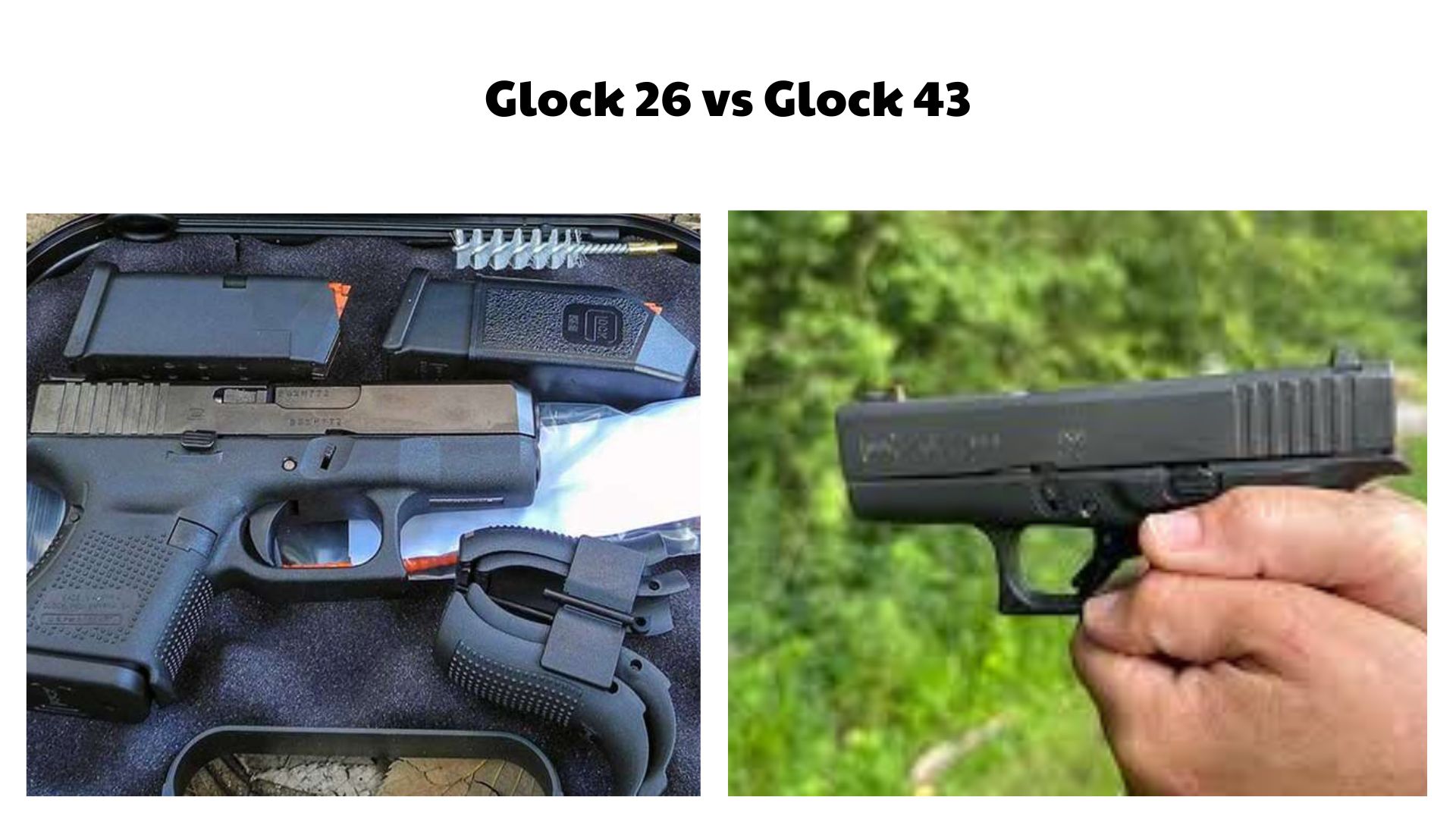

The Glock 26 and Glock 43 are two of the most recognized subcompact 9mm pistols in the concealed carry world. Both are built by Glock, a manufacturer known for reliability, simplicity, and widespread law enforcement adoption. While they share the same defensive purpose, they take very different approaches to achieving it.
The Glock 26 is often referred to as the “Baby Glock” because it is a shortened version of Glock’s full-size duty pistols. It uses a double-stack magazine design, giving it higher capacity in a compact frame. The Glock 43, on the other hand, represents Glock’s entry into the slimline single-stack category, focusing heavily on concealability and minimal printing.
Both pistols are designed for concealed carry (CCW), everyday defensive use, and backup roles. However, they appeal to slightly different types of users. The Glock 26 prioritizes firepower and versatility, while the Glock 43 focuses on slim profile and comfort for deep concealment.
This comparison is important because it highlights a classic trade-off in concealed carry handguns: capacity versus concealability. Some users prefer having more rounds available in a defensive situation, while others prioritize a pistol that is easier to hide under light clothing or carry all day without discomfort.
Within Glock’s lineup, the Glock 26 and Glock 43 represent two distinct design philosophies. The G26 is a compact “mini duty gun” with double-stack capacity, while the G43 is a true slimline micro-compact built for minimal footprint. Understanding these differences helps shooters choose the right balance for their personal carry needs.
Key Specifications Comparison
Glock 26 Specifications
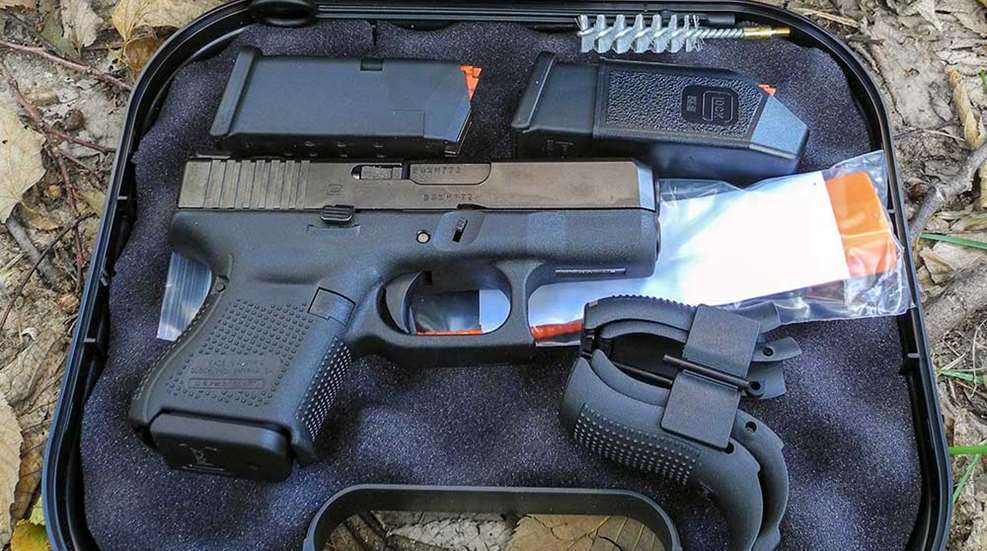
The Glock 26 is a subcompact 9mm pistol designed around a double-stack magazine system. It has earned a reputation for reliability and versatility since its introduction in the 1990s. Over multiple generations, it has remained a consistent choice for both civilian concealed carriers and law enforcement officers seeking a backup firearm.
One of its defining features is its standard 10+1 capacity. Despite its small size, the Glock 26 can also accept larger Glock magazines, including those from the Glock 19 and Glock 17. This flexibility allows users to carry a compact firearm with extended capacity options when needed.
In terms of size, the Glock 26 is thicker and slightly heavier than single-stack micro pistols. This added bulk comes from its double-stack magazine design, but it also contributes to better recoil control and shooting stability.
The Glock 26 has been released in multiple generations, each improving ergonomics, reliability, and accessory compatibility. Its long-standing presence in the market has also resulted in strong aftermarket support, making it highly customizable for carry and defensive use.
Glock 43 Specifications
The Glock 43 is a slim single-stack 9mm pistol designed specifically for maximum concealability. It was Glock’s first entry into the single-stack micro-compact market and quickly became one of the most popular deep concealment pistols available.
It features a standard 6+1 capacity, which is lower than the Glock 26 but consistent with its ultra-slim design philosophy. The reduced magazine size allows for a significantly thinner grip, making it easier to conceal under light clothing or carry discreetly in warmer environments.
The Glock 43 is noticeably lighter and thinner than the Glock 26. This makes it more comfortable for all-day carry, especially for users who prioritize minimal weight and reduced printing. It is designed to disappear easily inside waistband holsters or even in certain pocket carry setups with proper holsters.
While it sacrifices capacity compared to the Glock 26, the Glock 43 excels in concealability and simplicity. It is often chosen by users who value discretion above all else and want a reliable defensive pistol that is easy to carry in almost any situation.
Overall, the Glock 43 represents Glock’s commitment to the slimline concealed carry market, while the Glock 26 maintains its role as a compact, higher-capacity defensive option. Both pistols remain highly relevant, but they serve different priorities within the concealed carry spectrum.
Design & Size Differences
Frame and Thickness
One of the most noticeable differences between the Glock 26 and Glock 43 is the frame design, especially in terms of thickness. The Glock 26 uses a double-stack magazine system, which naturally results in a wider grip and overall thicker frame. This added width gives it a more substantial feel in the hand, but it also makes it slightly harder to conceal under tight clothing compared to slimmer pistols.
In contrast, the Glock 43 is built around a single-stack magazine design. This allows the grip and frame to be significantly slimmer. The reduced thickness is one of its biggest advantages for concealed carry, especially for users who prioritize deep concealment or carry in lightweight clothing environments. The slimmer profile also reduces printing, making it easier to hide under minimal layers.
In practical terms, the Glock 26 feels more like a compact duty pistol scaled down, while the Glock 43 feels like a purpose-built micro-compact designed specifically for concealment. Both approaches are valid, but they cater to different carry priorities.
Weight and Dimensions
Weight plays an important role in everyday carry comfort, and this is another area where the Glock 43 has a clear advantage. The Glock 43 is lighter by several ounces compared to the Glock 26, which makes a noticeable difference during all-day concealed carry. This reduced weight helps minimize fatigue and makes it more comfortable for users who carry for extended periods.
The Glock 26, while slightly heavier and bulkier, benefits from that added mass in terms of shooting stability. The extra weight helps absorb recoil and provides a more planted feel during rapid follow-up shots. However, the trade-off is that it is slightly less comfortable to carry discreetly, especially in lightweight or summer clothing setups.
Dimensionally, both pistols are compact, but the Glock 26 is thicker and slightly more robust overall, while the Glock 43 is designed to be as slim and minimal as possible without sacrificing reliability.
Ergonomics
Ergonomics is another key factor that separates these two pistols. The Glock 26 offers a fuller grip due to its double-stack magazine. This makes it more comfortable for shooters with medium to larger hands, as it provides more surface area for a secure hold. The increased grip size also improves control during recoil, especially in fast shooting scenarios.
The Glock 43, on the other hand, has a much slimmer grip that prioritizes concealability over hand comfort. While it is easy to hide and carry, some users—especially those with larger hands—may find it less comfortable to shoot for extended sessions. The smaller grip can also make recoil feel slightly more pronounced compared to the Glock 26.
In short, the Glock 26 favors shootability and control, while the Glock 43 favors concealment and ease of carry. Ergonomic preference often becomes one of the deciding factors between the two models.
Magazine Capacity & Firepower
Glock 26 Capacity Advantage
The Glock 26 holds a clear advantage when it comes to magazine capacity. It ships with a standard 10+1 configuration, giving users a higher round count right out of the box compared to many subcompact pistols. This extra capacity can provide added confidence in defensive situations where every round matters.
Another major benefit is magazine compatibility. The Glock 26 can accept larger magazines from the Glock 19 and Glock 17 platforms. This means users can carry a flush-fit 10-round magazine for concealment and still have access to extended magazines with 15 or 17 rounds for home defense or backup use. This versatility is one of the Glock 26’s strongest selling points.
Glock 43 Capacity Trade-Off
The Glock 43, by comparison, offers a standard 6+1 capacity. This lower round count is a direct result of its slim single-stack design. While it does reduce firepower compared to the Glock 26, it significantly improves concealability and comfort during carry.
For many users, this trade-off is acceptable because the Glock 43 is intended for deep concealment and everyday discreet carry. It prioritizes ease of concealment over maximum ammunition capacity, making it ideal for situations where a larger firearm may not be practical or comfortable.
Capacity vs Concealment Balance
When comparing the two pistols, the core decision often comes down to capacity versus concealment. The Glock 26 is clearly better suited for users who prioritize firepower, magazine flexibility, and a more stable shooting platform. It offers a higher round count and greater versatility through magazine compatibility.
The Glock 43, on the other hand, is designed for minimal carry setups where discretion is the primary goal. It is easier to conceal, lighter to carry, and more comfortable for users who want a pistol that disappears under clothing with minimal effort.
Ultimately, both pistols serve important roles in concealed carry. The Glock 26 leans toward performance and capacity, while the Glock 43 leans toward simplicity and concealability. The right choice depends on how each user balances these priorities in their daily carry needs.
Shooting Performance
Accuracy
In terms of practical accuracy, both the Glock 26 and Glock 43 perform very similarly at typical defensive distances, which are usually within 7 to 15 yards. At these ranges, mechanical differences between the two pistols become less important than shooter fundamentals such as grip, trigger control, and sight alignment.
Both pistols are capable of producing consistent center-mass hits when handled properly. The Glock 26 may feel slightly more stable due to its wider grip and increased mass, but in real-world defensive scenarios, the difference in accuracy is minimal for most shooters.
Ultimately, accuracy is far more dependent on training and familiarity with the platform than on the design differences between these two Glock models.
Recoil & Control
Recoil management is one of the areas where the Glock 26 has a noticeable advantage. Its double-stack frame provides more weight and a fuller grip, both of which help absorb recoil energy. This results in a more controlled shooting experience, especially during rapid follow-up shots.
The Glock 43, being lighter and thinner, produces slightly more perceived recoil, often described as “snappier.” The reduced weight and narrower grip mean less surface area to distribute recoil forces, which can make it feel more lively in the hand.
However, both pistols remain very manageable in 9mm. With proper grip technique and practice, most shooters can control either platform effectively. The difference is more about comfort and shootability over extended range sessions rather than basic defensive capability.
Concealed Carry Comparison
Glock 43 for Deep Concealment
The Glock 43 is specifically designed for deep concealment. Its slim single-stack profile allows it to disappear under light clothing, making it ideal for warm climates or situations where minimal printing is essential.
Its lightweight design also makes it comfortable for all-day carry. Many users find it easier to carry in pocket holsters or slim inside-the-waistband (IWB) setups without feeling weighed down. For users prioritizing discretion above all else, the Glock 43 is often the preferred choice.
Glock 26 for Versatility
The Glock 26 is slightly bulkier, but it offers more versatility in real-world carry use. While it is not as easy to conceal as the Glock 43, it remains compact enough for most inside-the-waistband and appendix carry setups.
In return for the slightly increased size, users gain improved shootability and higher capacity. This makes the Glock 26 a strong option for those who want a balance between concealment and performance, rather than maximum concealability alone.
Carry Comfort Factors
Comfort in concealed carry is influenced by multiple factors beyond just pistol size. Thickness plays a major role in how easily a firearm can be concealed, especially under fitted clothing. The Glock 43 benefits from its slim profile, while the Glock 26 requires a bit more effort to conceal effectively.
Grip length also affects concealment, as it can increase printing when bending or reaching. The Glock 43’s shorter grip reduces this issue, while the Glock 26’s fuller grip may require more attention to holster selection and positioning.
Holster choice, clothing style, and carry position all significantly impact comfort and concealment for both pistols. A well-designed holster can reduce the size disadvantage of the Glock 26, while poor setup can make even the Glock 43 uncomfortable.
Reliability & Durability
Both the Glock 26 and Glock 43 share Glock’s well-known Safe Action system, which has been proven in military, law enforcement, and civilian use around the world. This system is designed for simplicity, consistency, and reliability under a wide range of conditions.
In terms of real-world performance, both pistols are known for their strong reliability records. They function well with a variety of quality ammunition types and are capable of withstanding high round counts with minimal maintenance.
Durability is another shared strength. Both models are built with Glock’s polymer frame and steel slide construction, which provides resistance to wear, corrosion, and environmental stress.
Aftermarket support is also strong for both pistols, with a wide range of holsters, sights, and upgrade components available. This ensures that users can customize either platform to better suit their carry preferences and shooting style.
Pros and Cons Overview
Glock 26 Pros & Cons
Pros: The Glock 26 offers higher magazine capacity, better recoil control due to its increased weight, and compatibility with larger Glock magazines such as those from the Glock 19 and Glock 17 platforms. This makes it highly versatile for both concealed carry and home defense roles.
Cons: Its main drawbacks are its thicker frame and slightly heavier weight, which can make it harder to conceal compared to slimmer pistols. Some users may also find it less comfortable for deep concealment in lightweight clothing.
Glock 43 Pros & Cons
Pros: The Glock 43 excels in concealability due to its slim single-stack design. It is lightweight, easy to carry all day, and ideal for users who prioritize minimal printing and maximum discretion.
Cons: The main trade-offs include lower magazine capacity and increased perceived recoil. It also offers less versatility compared to double-stack subcompact pistols like the Glock 26.
Best Use Cases
Glock 26
The Glock 26 is best suited for users who want a balance between concealed carry capability and higher firepower. Its 10+1 standard capacity, combined with compatibility with larger Glock magazines, makes it a strong option for those who value versatility in a defensive handgun.
One of its most practical use cases is as a higher-capacity concealed carry pistol. It provides more rounds on board compared to many subcompact single-stack pistols, which can be an important factor in defensive scenarios where capacity matters.
The Glock 26 also performs well as a backup firearm. Its ability to accept Glock 19 and Glock 17 magazines allows users to standardize their magazine system across multiple pistols, which is especially useful for law enforcement or armed professionals.
In addition, the Glock 26 is often preferred by users with larger hands. The thicker grip and fuller frame provide better control and a more secure shooting platform, especially during extended range sessions or rapid-fire drills.
Glock 43
The Glock 43 is designed primarily for deep concealment and minimalist carry. Its slim single-stack profile makes it one of the easiest Glock pistols to conceal under light clothing, making it ideal for users who prioritize discretion above all else.
It is especially well-suited for lightweight everyday carry. Many users choose the Glock 43 for warm-weather carry, office environments, or situations where a larger firearm may be difficult to conceal comfortably.
The Glock 43 is also a strong option for users who prioritize comfort and minimal printing. Its reduced weight and slim profile make it less intrusive during all-day carry, especially when paired with a quality inside-the-waistband (IWB) or appendix holster.
Final Verdict
The Glock 26 and Glock 43 are both excellent subcompact concealed carry pistols, but they serve different priorities within the same category.
The Glock 26 is best for users who value capacity, versatility, and improved shootability. Its double-stack design, higher round count, and better recoil control make it a strong all-around defensive handgun with added flexibility through magazine compatibility.
The Glock 43 is best for users who prioritize concealability and lightweight carry. Its slim profile and reduced weight make it easier to hide and more comfortable for extended daily carry, especially in restrictive clothing environments.
Ultimately, the final recommendation depends on user priorities. Those who value firepower and shooting performance tend to prefer the Glock 26, while those who prioritize comfort and concealment often choose the Glock 43.
Both pistols remain top-tier options in the subcompact concealed carry market and continue to be widely trusted for personal defense due to Glock’s proven reliability and simple operating system.
50+ FAQ – Glock 26 vs Glock 43 (Detailed Answers)
1. What is the main difference between Glock 26 and Glock 43?
The primary difference is magazine design. The Glock 26 uses a double-stack magazine, giving it higher capacity and a thicker grip. The Glock 43 uses a single-stack magazine, making it slimmer and easier to conceal but with lower capacity. This single design choice affects nearly every aspect of performance, from concealability to recoil control.
2. Which pistol is better for concealed carry?
Both are excellent for concealed carry, but they serve different needs. The Glock 43 is better for deep concealment due to its slim profile, while the Glock 26 is better for users who want more capacity and shootability. The “better” option depends on whether concealment or performance is more important.
3. Which has higher capacity?
The Glock 26 has a clear advantage with a standard 10+1 capacity, and it can use larger magazines from Glock 19 and 17. The Glock 43 only holds 6+1 rounds in its standard configuration, making it lower in capacity but slimmer in design.
4. Is the Glock 26 harder to conceal than the Glock 43?
Yes. The Glock 26 is thicker due to its double-stack magazine, which makes it slightly harder to conceal under tight clothing. The Glock 43 is noticeably slimmer and easier to conceal in a wider range of clothing styles.
5. Which has better recoil control?
The Glock 26 has better recoil control because of its added weight and wider grip. The Glock 43 is lighter and thinner, which makes it feel snappier during firing, especially with rapid follow-up shots.
6. Is the Glock 43 good for beginners?
Yes, but with some considerations. The Glock 43 is simple and reliable, but its smaller grip and snappier recoil may be slightly less forgiving for complete beginners compared to the Glock 26.
7. Which is more comfortable for all-day carry?
The Glock 43 is generally more comfortable for all-day carry because it is lighter and thinner. The Glock 26, while still compact, may feel bulkier after extended wear.
8. Can the Glock 26 use Glock 17 magazines?
Yes. One of the biggest advantages of the Glock 26 is its compatibility with larger Glock magazines, including those from the Glock 19 and Glock 17, increasing its versatility significantly.
9. Which pistol has better aftermarket support?
Both have strong aftermarket support, but the Glock 26 has a slight advantage due to its longer presence in the market and compatibility with more Glock platforms.
10. Which is easier to shoot accurately?
The Glock 26 is generally easier to shoot accurately due to its fuller grip and better recoil control. However, both pistols are capable of excellent accuracy at typical defensive distances.
11. Is the Glock 43 too small for large hands?
It can be. Shooters with larger hands may find the Glock 43’s grip too short or narrow, which can affect comfort and control during extended shooting sessions.
12. Does the Glock 26 print more when concealed?
Yes. The thicker grip of the Glock 26 can increase printing under tight clothing compared to the slimmer Glock 43.
13. Which is better for appendix carry?
Both work well, but the Glock 43 is often preferred for appendix carry due to its slim profile. The Glock 26 can also be carried appendix with a proper holster.
14. Which is better for home defense?
The Glock 26 is generally better for home defense due to its higher capacity and improved recoil control, making it more effective in extended engagements.
15. Are both pistols reliable?
Yes. Both the Glock 26 and Glock 43 use Glock’s Safe Action system and are known for extreme reliability under a wide range of conditions.
16. Which is lighter?
The Glock 43 is lighter due to its single-stack design and reduced frame width.
17. Which is thicker?
The Glock 26 is thicker because it uses a double-stack magazine system.
18. Can both pistols be used for duty carry?
Yes, but the Glock 26 is more commonly used in duty or backup roles due to its higher capacity and compatibility with larger magazines.
19. Which has better resale value?
Both maintain strong resale value due to Glock’s reputation, but the Glock 26 often benefits slightly from broader use in professional environments.
20. Is the Glock 43 snappy to shoot?
Yes, the Glock 43 can feel snappy because of its lightweight frame and slim grip, especially during rapid fire.
21. Does the Glock 26 feel bulky?
It can feel slightly bulkier than single-stack pistols, but many shooters appreciate the added grip size and control.
22. Which is better for pocket carry?
The Glock 43 is closer to being pocket-carry capable, but neither is ideal for true pocket carry compared to smaller revolvers or micro pistols.
23. Which is better for summer carry?
The Glock 43 is better for summer carry due to its slim profile and reduced printing under light clothing.
24. Which has a better trigger?
Both use Glock’s Safe Action trigger system. The feel is very similar, though perception may vary slightly due to frame size and recoil differences.
25. Which is more forgiving to shoot?
The Glock 26 is more forgiving because it offers better grip stability and recoil control.
26. Can Glock 43 handle +P ammo?
Yes, both pistols can handle quality +P ammunition when used according to manufacturer guidelines, but regular training ammo is recommended for practice.
27. Which is better for low-recoil shooting?
The Glock 26 provides a smoother shooting experience due to its weight and grip size.
28. Are holsters widely available for both?
Yes, both models have extensive holster availability due to their popularity.
29. Which is more popular?
Both are very popular, but the Glock 43 has become extremely popular for deep concealment, while the Glock 26 remains popular for versatility.
30. Which is better for off-body carry?
Both can be used in off-body carry setups, but compact holsters are still recommended for safety and accessibility.
31. Which is better for new concealed carriers?
The Glock 26 is often better for beginners due to its more forgiving grip and recoil control.
32. Which is easier to shoot fast?
The Glock 26 is generally easier for fast shooting due to reduced recoil and better stability.
33. Does grip size affect performance?
Yes. A larger grip improves control and recoil management, which benefits the Glock 26, while the Glock 43 prioritizes concealment.
34. Which is better for female shooters?
Both are suitable, but many prefer the Glock 43 for its lighter weight and slimmer grip, depending on hand size and comfort.
35. Which is better for travel carry?
The Glock 43 is often preferred for travel due to its ease of concealment and lightweight design.
36. Do both pistols use the same caliber?
Yes, both are chambered in 9mm Luger.
37. Which is easier to maintain?
Both are equally easy to maintain due to Glock’s simple design and minimal maintenance requirements.
38. Which is better for backup gun use?
The Glock 26 is often preferred as a backup due to higher capacity and magazine compatibility.
39. Which is better for deep concealment?
The Glock 43 is clearly better for deep concealment due to its slim profile.
40. Can both be modified easily?
Yes, but the Glock 26 has a larger aftermarket ecosystem for upgrades and customization.
41. Which is better for extended shooting sessions?
The Glock 26 is better suited for longer shooting sessions due to improved comfort and recoil management.
42. Which is more beginner-friendly?
The Glock 26 is slightly more beginner-friendly because it is more stable and easier to control.
43. Which is better for tactical use?
The Glock 26 is more suitable for tactical or duty use due to higher capacity and versatility.
44. Do both pistols have safety systems?
Yes, both use Glock’s Safe Action internal safety system with no manual external safety.
45. Which is better for concealed carry comfort?
The Glock 43 is better for comfort due to its reduced weight and slim frame.
46. Which is better for versatility?
The Glock 26 is more versatile because of its magazine compatibility and balanced design.
47. Which is better for concealed carry in hot climates?
The Glock 43 is better for hot climates due to its lightweight and minimal printing.
48. Which is better for defensive use?
Both are effective, but the Glock 26 offers more firepower, while the Glock 43 offers easier concealment.
49. Can both pistols be used for everyday carry?
Yes, both are designed specifically for everyday concealed carry, but they suit different preferences.
50. Which should I choose overall?
If you prioritize capacity and shooting comfort, choose the Glock 26. If you prioritize concealment and lightweight carry, choose the Glock 43. The best choice depends on your lifestyle, clothing, and defensive needs.
Read more: