
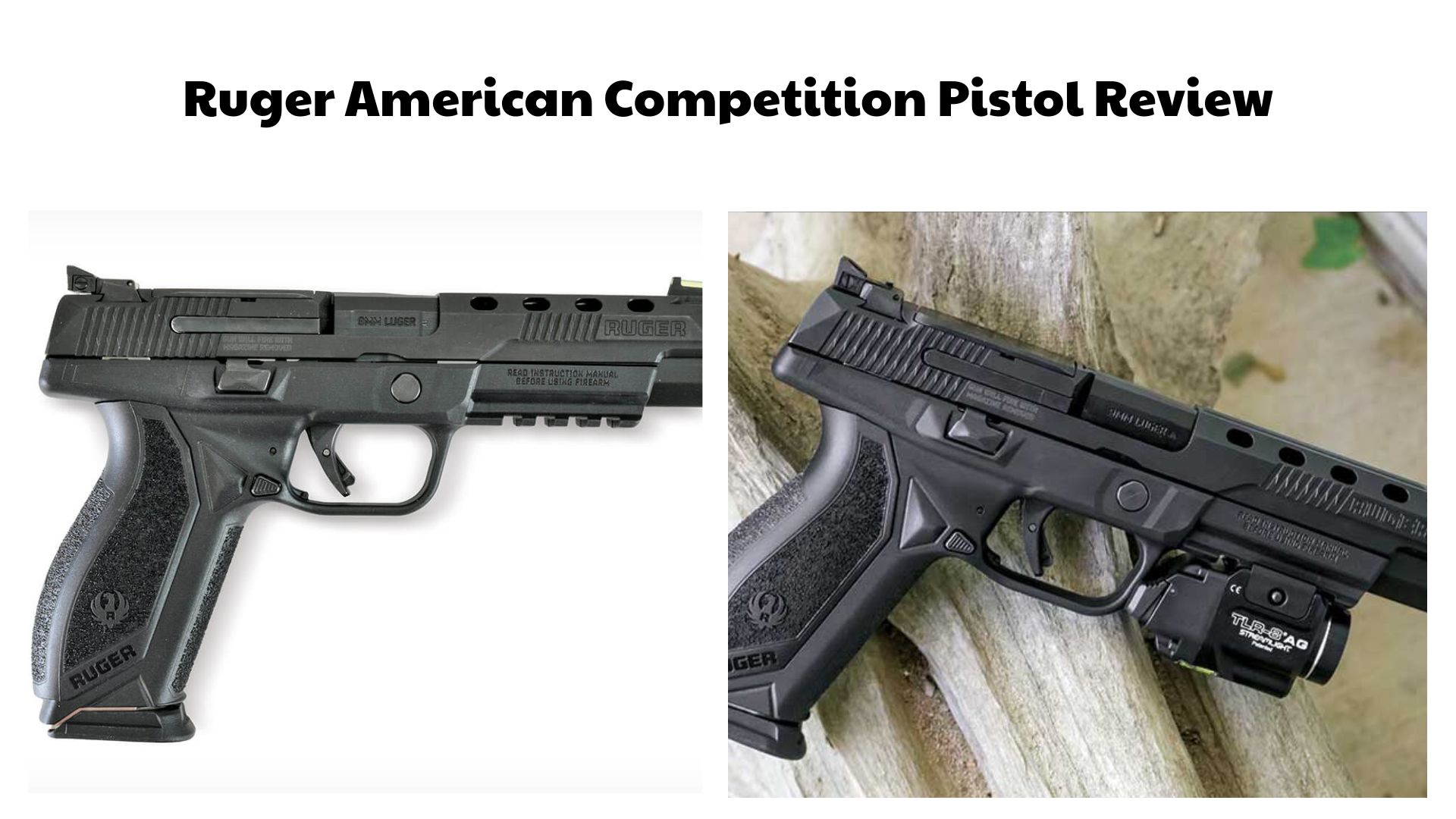

The Ruger American Competition Pistol is a purpose-built evolution of Ruger’s original American Pistol platform, designed specifically for competitive shooting disciplines such as USPSA, IDPA, and general range performance use. Unlike standard duty pistols, this model focuses on speed, accuracy, and recoil control, offering enhancements that make it more suitable for rapid-fire stages and precision shooting at distance.
In this Ruger American Competition Pistol Review, the goal is to understand how Ruger has adapted its proven polymer-framed design into a competition-ready handgun. The result is a pistol that balances affordability with performance-driven features, making it an appealing option for shooters entering the competitive shooting world without investing in high-end custom platforms.
Introduction to the Ruger American Competition Pistol
The Ruger American Competition Pistol is essentially a refined version of the standard Ruger American Pistol, upgraded with competition-oriented features such as a longer slide, fiber optic sights, and optics-ready capability. These enhancements are designed to improve sight acquisition speed, reduce recoil impulse, and increase overall shooting efficiency.
It is chambered in 9mm, which is the dominant caliber in modern competitive shooting due to its manageable recoil, high capacity, and cost efficiency. Ruger designed this pistol to meet the needs of shooters who want a factory-ready competition gun without the need for extensive aftermarket modifications.
The platform is built around practicality, offering a balance between out-of-the-box performance and affordability. It is not a high-end custom race gun, but rather a functional and accessible entry point into competitive pistol shooting.
Development of Ruger’s American Pistol Platform
The Ruger American Competition Pistol is based on the original Ruger American Pistol, which was introduced as Ruger’s entry into the striker-fired duty pistol market. The original platform focused on durability, reliability, and ergonomic versatility for law enforcement and civilian defensive use.
Over time, Ruger identified a demand for a more performance-focused variant suitable for competitive shooting. This led to the development of the Competition model, which incorporates a longer slide for improved sight radius and reduced muzzle flip, along with enhancements tailored to faster shooting dynamics.
The evolution reflects Ruger’s strategy of leveraging an existing proven platform and adapting it for specialized use cases, rather than designing an entirely new firearm from scratch.
Purpose-Built Design for Competition and Range Use
The Ruger American Competition Pistol is not intended as a concealed carry or general duty handgun. Instead, it is purpose-built for range performance and competition environments where speed and accuracy are prioritized.
The longer 5-inch slide helps stabilize the pistol during rapid fire, while the optics-ready system allows shooters to mount red dot sights for faster target transitions. These features collectively enhance performance in timed shooting stages and dynamic target engagements.
Additionally, the pistol’s polymer frame keeps weight manageable, even with the extended slide, ensuring that it remains controllable during extended shooting sessions.
This design philosophy places it firmly in the competition category, competing with other entry-level race-ready pistols in the same price segment.
Who Is the Ruger American Competition Designed For?
The Ruger American Competition Pistol is designed for a specific type of shooter: those who are interested in competitive shooting but do not want to invest in high-end custom-built pistols.
It is particularly well-suited for beginners entering disciplines such as USPSA Production or IDPA, where reliability and consistency are more important than extreme customization or ultra-light triggers.
It also appeals to recreational shooters who want a high-performance range pistol with modern features like optics readiness and improved recoil control.
However, it may not be ideal for concealed carry users or those looking for a compact defensive firearm. Its size, weight, and configuration are optimized for competition rather than everyday portability.
Key Specifications of the Ruger American Competition
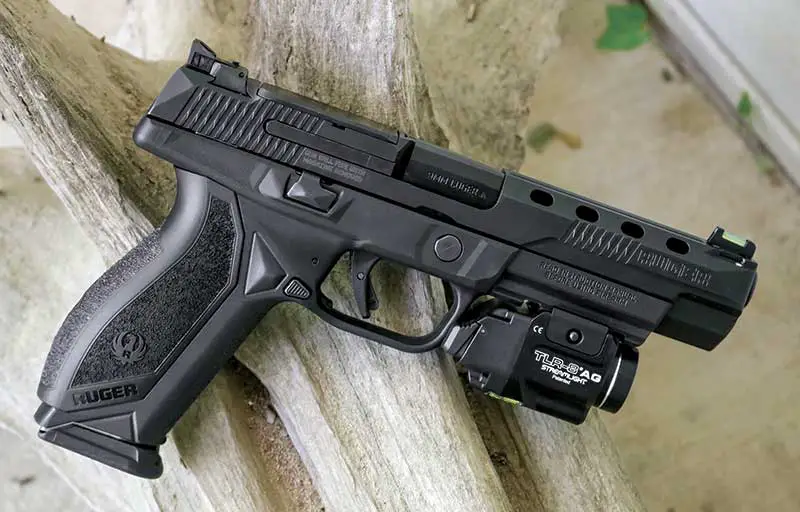
Understanding the specifications of the Ruger American Competition Pistol is essential to evaluating its performance potential. Each design choice reflects its intended role as a competition-focused handgun, prioritizing speed, accuracy, and control over compactness or concealability.
Caliber and Capacity (9mm, 17+1 Magazine)
The Ruger American Competition Pistol is chambered in 9mm, which is the most widely used caliber in modern competitive shooting sports. This caliber provides an ideal balance of low recoil, high magazine capacity, and cost-effective training.
The standard magazine capacity is 17+1 rounds, giving shooters a competitive advantage in stages that require multiple target engagements. High-capacity magazines reduce the need for frequent reloads, which is critical in timed competition environments.
This capacity places the pistol in line with other modern competition-oriented striker-fired pistols, making it suitable for both beginners and experienced competitors.
Barrel Length and Slide Design (5-Inch Long Slide Configuration)
One of the most important features of the Ruger American Competition Pistol is its 5-inch barrel and extended slide design. This longer configuration increases sight radius, which directly improves aiming precision.
The added slide length also helps reduce muzzle flip by distributing weight forward. This makes it easier to keep the sights on target during rapid follow-up shots, a critical factor in competitive shooting performance.
While the longer slide slightly increases overall weight and size, the trade-off is improved stability and control during dynamic shooting sequences.
Weight and Balance Characteristics (Nose-Heavy Competition Setup)
The Ruger American Competition Pistol is designed with a slightly nose-heavy balance due to its extended slide. This forward weight distribution plays an important role in controlling recoil and improving shot recovery speed.
Although the frame is polymer-based, the steel internal chassis and long slide contribute to a solid, stable shooting platform. This balance helps reduce muzzle rise and allows shooters to maintain faster target transitions.
For competition use, this weight distribution is generally considered beneficial, even if it feels slightly different from compact defensive pistols.
Frame Construction (Polymer Frame with Stainless Steel Chassis)
The pistol features a polymer frame reinforced with a stainless steel chassis system. This hybrid construction provides both durability and weight reduction, allowing the pistol to remain strong without becoming excessively heavy.
The internal steel chassis ensures structural integrity during high-round-count use, while the polymer exterior helps absorb recoil and improve handling comfort.
This combination is common in modern striker-fired pistols and is particularly effective in balancing performance and durability in competition environments.
Finish and Corrosion Resistance (Nitride-Coated Components)
The Ruger American Competition Pistol uses nitride-coated components for enhanced corrosion resistance and durability. Nitride finishing improves surface hardness and helps protect critical parts from wear and environmental exposure.
This type of finish also reduces friction between moving parts, contributing to smoother cycling and improved long-term reliability.
In practical use, this means the pistol is well-suited for high-volume shooting sessions, where heat, friction, and environmental conditions can otherwise accelerate wear.
Design and Build Quality
The design and build quality of the Ruger American Competition Pistol reflect its purpose-driven engineering. Rather than focusing on aesthetics or luxury finishes, Ruger emphasizes functional enhancements that improve real-world shooting performance.
Competition-Oriented Slide Design and Lightening Cuts
The slide features lightening cuts designed to reduce overall reciprocating mass. This helps the slide cycle faster, improving follow-up shot speed and reducing felt recoil.
These cuts also contribute to better balance between the slide and frame, allowing for smoother operation during rapid firing sequences.
The design is practical rather than decorative, reinforcing the pistol’s focus on performance over appearance.
Fiber Optic Front Sight and Adjustable Rear Sight System
The Ruger American Competition Pistol is equipped with a fiber optic front sight paired with an adjustable rear sight. This combination is designed to improve sight acquisition speed and accuracy under various lighting conditions.
The fiber optic front sight enhances visibility during daylight shooting, making it easier to quickly align the sights on target. The adjustable rear sight allows shooters to fine-tune elevation and windage for improved precision.
This setup is particularly useful in competition environments where speed and accuracy must be balanced effectively.
Optics-Ready Slide and Red Dot Compatibility
One of the modern enhancements of the Competition model is its optics-ready slide. This allows shooters to mount red dot sights, which significantly improve target acquisition speed and tracking during rapid fire.
Red dot compatibility is increasingly important in modern competition shooting, as it allows for faster transitions between targets and improved performance under pressure.
This feature brings the Ruger American Competition Pistol in line with current competitive shooting trends.
Grip Texture and Aggressive Competition Ergonomics
The grip texture on the Ruger American Competition Pistol is intentionally aggressive to ensure a secure hold during rapid firing. This helps prevent slippage, especially when hands become sweaty during extended shooting sessions.
The ergonomic design also supports a high grip position, which helps reduce muzzle rise and improves recoil control.
Overall, the grip design prioritizes function and control over comfort alone, which is appropriate for a competition-focused firearm.
Durability and Field Reliability Under Heavy Use
Durability is a key consideration in the design of the Ruger American Competition Pistol. It is built to withstand high round counts and extended use in training and competition environments.
The combination of polymer frame, steel chassis, and nitride-coated components ensures that the pistol remains reliable even under heavy use conditions.
This makes it a practical choice for shooters who train frequently and require consistent performance over time.
Ergonomics and Handling
The ergonomics and handling characteristics of the Ruger American Competition Pistol are designed to support fast, controlled shooting. While it is larger than standard duty pistols, its design prioritizes performance in competitive environments.
Grip Module System (Small, Medium, Large Options)
The pistol features interchangeable grip modules in small, medium, and large sizes. This allows shooters to customize the grip to fit their hand size more effectively.
A proper grip fit is essential in competition shooting, as it directly affects recoil control and shooting consistency. The modular system helps ensure that a wide range of shooters can achieve a comfortable and stable grip.
High Grip Angle and Recoil Control Design
The Ruger American Competition Pistol uses a high grip angle designed to bring the shooter’s hand closer to the bore axis. This helps reduce muzzle rise during firing and improves recoil management.
Lower bore axis designs generally result in faster follow-up shots, which is a critical advantage in competitive shooting environments.
Ambidextrous Controls and User Accessibility
The pistol includes ambidextrous controls, making it accessible to both right-handed and left-handed shooters. This includes features such as ambidextrous slide releases and reversible magazine releases.
This level of accessibility is important in modern pistol design, especially in competition settings where shooters may need to operate the firearm under various conditions.
Balance, Weight Distribution, and Target Transitions
The weight distribution of the Ruger American Competition Pistol plays a significant role in its handling characteristics. The forward-biased balance helps stabilize the pistol during firing, reducing muzzle movement.
This stability allows for smoother and faster target transitions, which is essential in timed shooting stages where efficiency matters.
While it may feel slightly front-heavy compared to compact pistols, this design choice enhances overall competition performance.
Trigger Performance
The trigger system is one of the most important performance factors in any competition pistol, and the Ruger American Competition Pistol delivers a functional, duty-style striker-fired trigger tuned for practical speed and control rather than extreme lightness. While it is not a custom match trigger, it is designed to support consistent shooting under competition pressure.
Striker-Fired Trigger Characteristics (Approx. 6–6.5 lb Pull)
The trigger pull weight on the Ruger American Competition Pistol typically falls in the 6 to 6.5 pound range. This is fairly standard for striker-fired pistols, especially those designed with reliability and safety in mind rather than ultra-light competition tuning.
The trigger has a predictable take-up, followed by a defined wall and a clean break. While it may not feel as refined as high-end aftermarket competition triggers, it offers consistency, which is often more important in real competition environments.
This weight range also helps reduce the risk of unintentional discharges during fast-paced movement stages, making it a balanced choice between safety and performance.
Short Reset and Fast Follow-Up Shot Capability
One of the strengths of the trigger system is its relatively short reset. After firing, the trigger resets quickly enough to allow controlled rapid-fire sequences without excessive finger travel.
This short reset is especially important in competition shooting, where fractions of a second matter. Shooters can maintain trigger contact and execute fast follow-up shots with improved rhythm and control.
While not the shortest reset in the competition pistol market, it is efficient enough for most entry-level and intermediate competitive shooters.
Trigger Feel Compared to Other Competition Pistols
Compared to higher-end competition pistols, the Ruger American Competition trigger feels more utilitarian. It lacks the ultra-light pull or glass-like break found in custom-tuned race guns.
However, when compared to standard duty pistols or entry-level striker-fired handguns, it performs competitively. It sits in a middle ground where reliability and predictability are prioritized over extreme refinement.
This makes it suitable for shooters transitioning from defensive pistols into competition shooting without needing a specialized setup.
Shooting Performance and Range Evaluation
The Ruger American Competition Pistol is designed to perform in dynamic shooting environments where speed, accuracy, and consistency are all equally important. Its performance characteristics reflect its purpose-built competition design.
Accuracy at 15–25 Yard Competition Distances
At standard competition distances of 15 to 25 yards, the Ruger American Competition Pistol demonstrates solid accuracy potential. The longer 5-inch barrel and extended sight radius contribute to improved precision compared to compact pistols.
When paired with quality ammunition, shooters can achieve consistent groupings suitable for USPSA and IDPA scoring zones. The fiber optic front sight also enhances target alignment speed, which helps maintain accuracy under time pressure.
While it may not match the precision of high-end match-grade pistols, it is more than capable for competitive scoring and recreational precision shooting.
Recoil Management and Muzzle Flip Reduction
Recoil management is one of the strongest performance aspects of this pistol. The combination of a longer slide, forward weight distribution, and polymer frame helps reduce felt recoil significantly.
The muzzle flip is controlled and predictable, allowing shooters to maintain sight picture between shots. This is particularly beneficial during rapid-fire strings where recoil recovery speed directly impacts performance.
In 9mm configuration, recoil is already manageable, and the competition-oriented design further enhances stability during firing sequences.
Speed Shooting and Target Transition Performance
Speed shooting is where the Ruger American Competition Pistol shows its design intent. The balance, grip texture, and sight system all contribute to faster target transitions.
Shooters can move between multiple targets efficiently without losing sight alignment or grip control. The fiber optic sight plays a key role in maintaining fast visual tracking during movement.
While not as fast as elite competition race guns, it performs very well in its price category and is suitable for most entry-level and intermediate competition stages.
Reliability Under Rapid Fire Conditions
Reliability remains consistent even under rapid-fire conditions. The pistol is engineered to handle high round counts and repeated cycling without significant malfunctions when properly maintained.
During extended shooting sessions, it maintains consistent feeding and ejection patterns, especially with quality 9mm ammunition.
This reliability is critical in competition environments, where a single malfunction can impact scoring and performance significantly.
Reliability and Durability
The Ruger American Competition Pistol is designed to endure frequent use, making reliability and durability key aspects of its engineering. It is built to function consistently under both training and competition stress conditions.
Performance with Various 9mm Ammunition Types
The pistol generally performs well with a wide range of 9mm ammunition types, including FMJ practice rounds and defensive hollow points. FMJ ammunition tends to provide the most consistent cycling during training sessions.
Some hollow point loads may require testing to ensure optimal feeding reliability, which is common in many semi-automatic pistols. Once a compatible load is identified, performance tends to stabilize.
This flexibility allows shooters to train affordably while still maintaining defensive readiness when needed.
Long-Term Durability and High Round Count Testing
The Ruger American Competition Pistol is built to withstand high round counts over time. Its stainless steel internal chassis and nitride-coated components contribute to long-term wear resistance.
With proper maintenance, the pistol can handle thousands of rounds without significant degradation in performance. This makes it suitable for frequent training schedules and competitive use.
The polymer frame also helps absorb stress over time, reducing fatigue on metal components.
Slide Cycling and Ejection Consistency
Slide cycling is generally smooth and consistent, aided by the internal design and quality of machining. Ejection patterns are reliable, with spent casings typically clearing the firearm without issue.
This consistency is important in competition shooting, where interruptions or malfunctions can affect timing and scoring.
Overall, the cycling system is tuned for dependable performance rather than ultra-light race gun speed, which enhances reliability.
Reported Issues and Break-In Behavior
Like many striker-fired pistols, the Ruger American Competition Pistol may exhibit a short break-in period. During initial use, minor cycling inconsistencies or stiffness in controls may be observed.
These issues typically resolve after a few hundred rounds as internal components wear in and smooth out naturally.
Long-term users generally report improved reliability after this initial phase, especially when the pistol is properly cleaned and lubricated.
Competition Features and Innovations
The Ruger American Competition Pistol incorporates several design features specifically intended to enhance competitive shooting performance. These innovations help differentiate it from standard duty pistols.
Long Slide Design for Improved Sight Radius
The 5-inch long slide significantly improves sight radius, which enhances accuracy and target alignment. A longer sight radius reduces angular error, making it easier to maintain precision at distance.
This design is particularly beneficial in competition environments where small aiming errors can affect scoring outcomes.
Ported Slide and Weight Reduction Engineering
Lightening cuts in the slide help reduce reciprocating mass, allowing for faster cycling and reduced muzzle rise. This engineering choice improves shot-to-shot speed and overall handling.
The reduced weight in the slide also contributes to better balance between the frame and upper assembly.
Barrel Twist Rate Optimized for Lighter Match Ammo
The barrel is designed with a twist rate optimized for standard 9mm match ammunition. This helps stabilize lighter bullets commonly used in competition shooting.
Proper stabilization improves accuracy and consistency, especially during longer-range engagements.
Red Dot Optics Integration System
The optics-ready system allows direct mounting of red dot sights, which is a major advantage in modern competition shooting. Red dots significantly improve target acquisition speed and tracking during rapid transitions.
This feature aligns the pistol with current competition trends, where optics are increasingly standard in many divisions.
Aftermarket Support and Customization
Customization plays an important role in competition firearms, and the Ruger American Competition Pistol offers moderate aftermarket support. While not as extensive as Glock or 1911 platforms, it still provides meaningful upgrade potential.
Sight Upgrades (Fiber Optic, Adjustable, Night Sights)
Sight upgrades are among the most common modifications. Shooters can replace factory sights with enhanced fiber optic or night sight systems for improved visibility in different lighting conditions.
Adjustable rear sights also allow for more precise zeroing, which is beneficial in competition scoring accuracy.
Holster Compatibility and Competition Gear Support
Holster availability is generally good, especially for competition-style holsters designed for larger polymer pistols. Many manufacturers support the Ruger American platform, though options may be more limited than Glock-compatible gear.
Proper holster selection is important for safe and efficient draw performance in competition settings.
Grip Module Customization Options
The interchangeable grip modules allow shooters to adjust grip size for better ergonomics. This customization helps improve comfort, recoil control, and overall shooting consistency.
Being able to tailor grip size is especially useful for shooters with smaller or larger hands.
Limited vs Expanding Aftermarket Ecosystem
While the aftermarket ecosystem is not as large as more dominant platforms, it is steadily expanding. Essential upgrades such as sights, holsters, and internal components are available, but extensive customization options remain somewhat limited.
This makes the platform more suitable for shooters who prefer a factory-ready competition pistol rather than a heavily modified build.
Pricing and Value for Money
The Ruger American Competition Pistol is positioned as a budget-friendly entry into the competition handgun market. Its pricing strategy is one of its strongest selling points, especially for shooters who want performance-oriented features without paying premium competition gun prices.
Budget Competition Pistol Price Category ($500–$600 Range)
The Ruger American Competition Pistol typically falls within the $500 to $600 price range depending on retailer, configuration, and market availability. This places it firmly in the “budget competition pistol” category, making it significantly more accessible than many high-end alternatives.
For context, many dedicated competition pistols from other manufacturers often exceed $800 to $1,200, especially those with optics-ready systems and factory-tuned triggers. This makes Ruger’s offering a cost-effective entry point for new competitors.
According to industry comparisons, Ruger has consistently positioned this model as a value-focused option in the striker-fired competition segment. :contentReference[oaicite:0]{index=0}
Feature Comparison vs Glock G34 and M&P Performance Models
When compared to competitors like the Glock G34 Gen5 MOS and Smith & Wesson M&P9 M2.0 Performance Center models, the Ruger American Competition Pistol offers a competitive feature set at a lower price point.
The Glock G34 is widely regarded as a benchmark competition pistol, known for its long slide, reliability, and strong aftermarket support. However, it typically comes at a higher MSRP and often requires additional upgrades to match competition-ready setups. :contentReference[oaicite:1]{index=1}
The M&P Performance Center models sit in a similar mid-to-high price tier and offer enhanced triggers and factory tuning. The Ruger, while slightly less refined, competes by offering optics-ready capability and solid ergonomics at a lower entry cost.
Overall, Ruger’s advantage is affordability, while Glock and M&P often lead in refinement and ecosystem support.
Is It the Best Value Competition Pistol?
The Ruger American Competition Pistol can be considered one of the best value-oriented competition pistols in its price class. It provides essential competition features such as a long slide, optics readiness, and high magazine capacity without pushing into premium pricing territory.
However, “best value” depends on the shooter’s priorities. If the focus is on factory tuning, extensive aftermarket support, or elite trigger performance, other platforms may offer more refinement at a higher cost.
For shooters prioritizing affordability and functional competition readiness, the Ruger is a very strong contender.
Ruger American Competition vs Competitors
To understand where the Ruger American Competition Pistol stands in the market, it is important to compare it with other established competition-oriented pistols. Each competitor offers different strengths depending on budget, performance expectations, and customization needs.
Comparison with Glock G34 Gen5 MOS
The Glock G34 Gen5 MOS is one of the most recognized competition pistols in the striker-fired category. It features a long slide, proven reliability, and a massive aftermarket ecosystem. It is widely used in competitive shooting disciplines worldwide.
However, the Glock G34 typically costs more than the Ruger American Competition and may require additional upgrades to achieve a fully competition-ready setup. This includes trigger enhancements and grip modifications.
In contrast, the Ruger offers a more budget-friendly entry point with similar core functionality, though it lacks the same level of aftermarket depth and refinement.
Comparison with Smith & Wesson M&P9 M2.0 Performance Center
The M&P9 M2.0 Performance Center is designed as a factory-enhanced competition-ready pistol. It often includes improved triggers, ported barrels, and upgraded sights straight from the factory.
While it offers more factory refinement than the Ruger, it also comes at a higher price point. The M&P line is known for good ergonomics and reliability, making it a strong competitor in the mid-tier competition segment. :contentReference[oaicite:2]{index=2}
The Ruger American Competition competes by offering similar core features at a lower cost, though it may require more user-driven optimization.
Comparison with CZ Competition Pistols
CZ competition pistols, particularly models like the CZ Shadow series, are often regarded as some of the best out-of-the-box competition handguns. They are known for excellent triggers, steel frames, and exceptional recoil control.
However, CZ pistols typically operate in a higher price bracket and appeal more to serious competitive shooters than entry-level users.
The Ruger American Competition is more accessible financially but does not match CZ in terms of refinement or match-grade performance.
Position in the Entry-Level Competition Market
In the entry-level competition market, the Ruger American Competition Pistol occupies a strong middle ground. It is more feature-rich than basic duty pistols but more affordable than premium competition models.
This positioning makes it especially attractive to shooters transitioning from recreational shooting into structured competition disciplines like USPSA or IDPA.
Who Should Buy the Ruger American Competition?
The Ruger American Competition Pistol is designed for a specific audience. While it is versatile, it performs best in the hands of shooters who understand its intended purpose as a competition-oriented platform.
Ideal Users (IDPA, USPSA, and Budget Competitors)
This pistol is ideal for new and intermediate competitors participating in IDPA, USPSA, or similar shooting sports. It provides the essential features needed for competition without requiring a large financial investment.
Budget-conscious competitors will especially appreciate its balance of performance and affordability. It allows entry into the sport without immediately requiring aftermarket upgrades.
Best Use Cases (Competition, Training, Range Shooting)
The primary use case for the Ruger American Competition is competitive shooting. Its design supports fast target acquisition, controlled recoil, and reliable cycling under rapid fire.
It also performs well as a training pistol due to its consistent trigger and predictable handling characteristics. Recreational range shooting is another strong use case, as it offers a smooth and enjoyable shooting experience.
However, it is not optimized for concealed carry due to its size and weight.
Who Should Consider Alternative Platforms?
Shooters looking for highly refined triggers, extensive aftermarket ecosystems, or elite-level competition performance may prefer alternatives such as Glock, CZ, or Smith & Wesson Performance Center models.
Additionally, those seeking a dual-purpose concealed carry and competition firearm may find more suitable options in compact or modular striker-fired pistols.
The Ruger is best suited as a dedicated range and competition platform rather than a multi-role defensive handgun.
Final Verdict
The Ruger American Competition Pistol delivers a practical and cost-effective entry into the competitive shooting world. It combines modern features such as optics readiness, a long slide design, and high magazine capacity with Ruger’s reputation for reliability.
Overall Performance Summary
Overall, the pistol performs well in competition environments, offering solid accuracy, manageable recoil, and dependable function under rapid fire. While not a premium race gun, it provides more than enough capability for entry-level and intermediate competition shooters.
Strengths vs Weaknesses Breakdown
Strengths:
- Affordable competition-ready pricing
- Optics-ready slide system
- Good recoil control and balance
- High magazine capacity (17+1)
- Reliable striker-fired system
Weaknesses:
- Less refined trigger than premium competitors
- Limited aftermarket ecosystem compared to Glock
- Heavier and less versatile for carry use
- Break-in period may be required
Final Recommendation for 2026 Buyers
For 2026 buyers, the Ruger American Competition Pistol remains a strong recommendation for those entering competitive shooting on a budget. It offers a well-balanced mix of performance and affordability, making it an excellent first competition pistol.
However, shooters seeking top-tier refinement or extensive customization options may eventually outgrow it and move toward higher-end platforms. As an entry point into competition shooting, though, it delivers excellent value and dependable performance.
Frequently Asked Questions (FAQ) – Ruger American Competition Pistol
1. What is the Ruger American Competition Pistol designed for?
The Ruger American Competition Pistol is designed specifically for competitive shooting and high-performance range use. It is not a concealed carry or duty-first handgun. Instead, it focuses on speed, accuracy, and recoil control for disciplines such as USPSA and IDPA. Its long slide, optics-ready design, and high-capacity magazines are all intended to improve performance in timed shooting stages and dynamic target engagements.
2. Is the Ruger American Competition good for beginners?
Yes, it can be a good choice for beginners who are entering competitive shooting. While it is slightly larger and more specialized than a basic defensive pistol, its predictable recoil, ergonomic grip system, and striker-fired simplicity make it manageable for new shooters. Beginners will benefit from its stability and accuracy, especially when learning structured competition shooting.
3. What caliber does the Ruger American Competition use?
The pistol is chambered in 9mm, which is the most common caliber in modern competitive shooting. 9mm offers low recoil, high magazine capacity, and affordable training costs. These factors make it ideal for shooters who practice frequently and participate in competitive events.
4. What is the magazine capacity?
The standard magazine capacity is 17+1 rounds. This high capacity is beneficial in competition settings because it reduces the number of reloads required during stages. Fewer reloads mean faster stage times and improved overall performance.
5. Is the Ruger American Competition optics-ready?
Yes, it is designed with an optics-ready slide that supports red dot sights. This allows shooters to mount modern reflex optics for faster target acquisition and improved accuracy during rapid fire. Red dot compatibility is now a standard feature in many competition pistols.
6. What kind of sights does it use?
The pistol comes with a fiber optic front sight and an adjustable rear sight. The fiber optic helps improve visibility in daylight, while the adjustable rear allows fine-tuning of accuracy. This combination is well-suited for competition shooting where fast sight alignment is critical.
7. How accurate is the Ruger American Competition?
The pistol is very accurate at typical competition distances of 15 to 25 yards. Its long 5-inch barrel and extended sight radius improve precision. While it may not match custom match-grade pistols, it performs reliably within competition scoring zones.
8. How does recoil feel?
Recoil is well-managed thanks to the pistol’s weight distribution and long slide design. The muzzle flip is reduced, allowing faster follow-up shots. In 9mm, recoil is already mild, and the competition design makes it even more controllable.
9. Is it reliable for competition use?
Yes, it is generally reliable when properly maintained. It is designed to handle high round counts and rapid-fire shooting conditions. Like most semi-automatic pistols, it may require a short break-in period before reaching optimal reliability.
10. Does it require a break-in period?
Yes, some break-in is normal. During the first few hundred rounds, minor stiffness or occasional cycling inconsistencies may occur. After break-in, performance typically becomes smoother and more consistent.
11. What is the trigger like?
The trigger is striker-fired with a pull weight of around 6 to 6.5 pounds. It has a predictable break and a short reset. While not a lightweight competition trigger, it is consistent and reliable for practical competition shooting.
12. Is the trigger adjustable?
No, the factory trigger is not user-adjustable. However, some aftermarket components may allow improvements. Most competitors use the stock trigger for reliability and consistency.
13. How does it compare to Glock G34?
The Glock G34 is a well-established competition pistol with extensive aftermarket support. It is slightly more refined in ecosystem availability. However, the Ruger American Competition is often more affordable and offers similar core features such as long slide and optics readiness.
14. How does it compare to Smith & Wesson M&P Performance Center?
The M&P Performance Center models often come with factory enhancements such as tuned triggers and ported barrels. The Ruger is more budget-friendly but may require more user customization to reach similar refinement levels.
15. Is it better than CZ competition pistols?
CZ competition pistols are generally considered higher-end in terms of trigger quality and steel-frame stability. The Ruger is more affordable but does not match CZ’s premium feel or out-of-the-box performance.
16. What is the barrel length?
The Ruger American Competition features a 5-inch barrel. This longer barrel improves sight radius, accuracy, and recoil control, making it ideal for competition shooting.
17. Is it heavy?
It is moderately heavy compared to compact pistols but balanced for competition use. The weight helps reduce recoil and improve stability during rapid fire.
18. Can it be used for concealed carry?
It is not ideal for concealed carry due to its size and weight. It is designed primarily for competition and range use rather than everyday carry.
19. Is it good for home defense?
It can be used for home defense, but it is not optimized for that role. Its size and competition focus make it better suited for range and sport shooting.
20. What grip sizes are available?
The pistol offers interchangeable grip modules in small, medium, and large sizes. This allows users to adjust grip fit for better comfort and control.
21. Does it have ambidextrous controls?
Yes, it includes ambidextrous features such as slide and magazine release options, making it suitable for both left- and right-handed shooters.
22. Is it good for fast shooting?
Yes, it is designed for speed. The long slide, balanced weight, and short reset trigger all contribute to faster target transitions and follow-up shots.
23. What is the slide made of?
The slide is made of steel with a nitride coating for durability and corrosion resistance. This ensures long-term wear resistance under heavy use.
24. Does it have lightening cuts?
Yes, the slide includes lightening cuts that reduce reciprocating mass. This improves cycling speed and reduces muzzle rise during firing.
25. What is the frame made of?
The frame is polymer with an internal stainless steel chassis. This combination provides strength while keeping weight manageable.
26. Is it durable?
Yes, it is built for durability and high round counts. The materials and construction are designed for frequent use in training and competition environments.
27. What ammo works best?
Standard 9mm FMJ ammunition works best for training. Quality defensive hollow points can also be used, but should be tested for reliability.
28. Does it support suppressors?
Not in its standard configuration. It does not typically come with a threaded barrel, so suppressor use would require aftermarket modification.
29. Is it easy to maintain?
Yes, maintenance is straightforward. Regular cleaning and lubrication are sufficient for most users, even with frequent use.
30. Is it good for competitions like USPSA?
Yes, it is suitable for USPSA Production or similar divisions. It offers good balance, accuracy, and speed for entry-level competition shooters.
31. Does it come with magazines?
Yes, it typically includes two 17-round magazines, depending on the package.
32. Is aftermarket support strong?
Aftermarket support exists but is not as extensive as Glock. Basic upgrades like sights and holsters are available.
33. Can I upgrade the sights?
Yes, sights can be upgraded to fiber optic or night sight systems depending on preference.
34. Is it good for training?
Yes, it is excellent for training due to its consistent trigger, recoil control, and competition-oriented design.
35. Does it rust easily?
No, the nitride coating provides good corrosion resistance, but basic maintenance is still recommended.
36. What holsters fit it?
Competition-style holsters designed for full-size polymer pistols generally fit, though availability may vary by brand.
37. Is it worth the price?
Yes, it offers strong value in the budget competition category, especially for shooters entering the sport.
38. Does it have a safety?
It uses internal striker safety systems typical of modern striker-fired pistols rather than manual safeties.
39. Is it good for left-handed shooters?
Yes, ambidextrous controls make it suitable for left-handed users.
40. How long does it last?
With proper care, it can last tens of thousands of rounds, making it suitable for long-term competitive use.
41. Is it better than budget Glock models?
It competes closely, but Glock often has better aftermarket support. Ruger may offer better value at lower cost.
42. Can it be used for duty?
It is not primarily designed for duty use, though it is reliable enough for defensive roles.
43. Is it beginner friendly?
Yes, especially for those entering competitive shooting disciplines.
44. Does it have a short reset?
Yes, the trigger reset is relatively short, helping improve shooting speed.
45. Is it competition ready out of the box?
Yes, it is designed to be competition-ready without requiring major upgrades.
46. Can it handle rapid fire?
Yes, it performs well under rapid fire conditions with consistent cycling and recoil control.
47. Is it good for range days?
Yes, it is enjoyable for extended range shooting sessions due to its balance and recoil control.
48. What is its biggest weakness?
The biggest weakness is its limited aftermarket ecosystem compared to more established platforms.
49. Is it a good first competition pistol?
Yes, it is one of the better entry-level options for new competitors.
50. Final verdict?
The Ruger American Competition Pistol is a strong value-oriented choice for shooters entering competitive shooting, offering solid performance, good ergonomics, and modern features at an affordable price point.
Read more: