
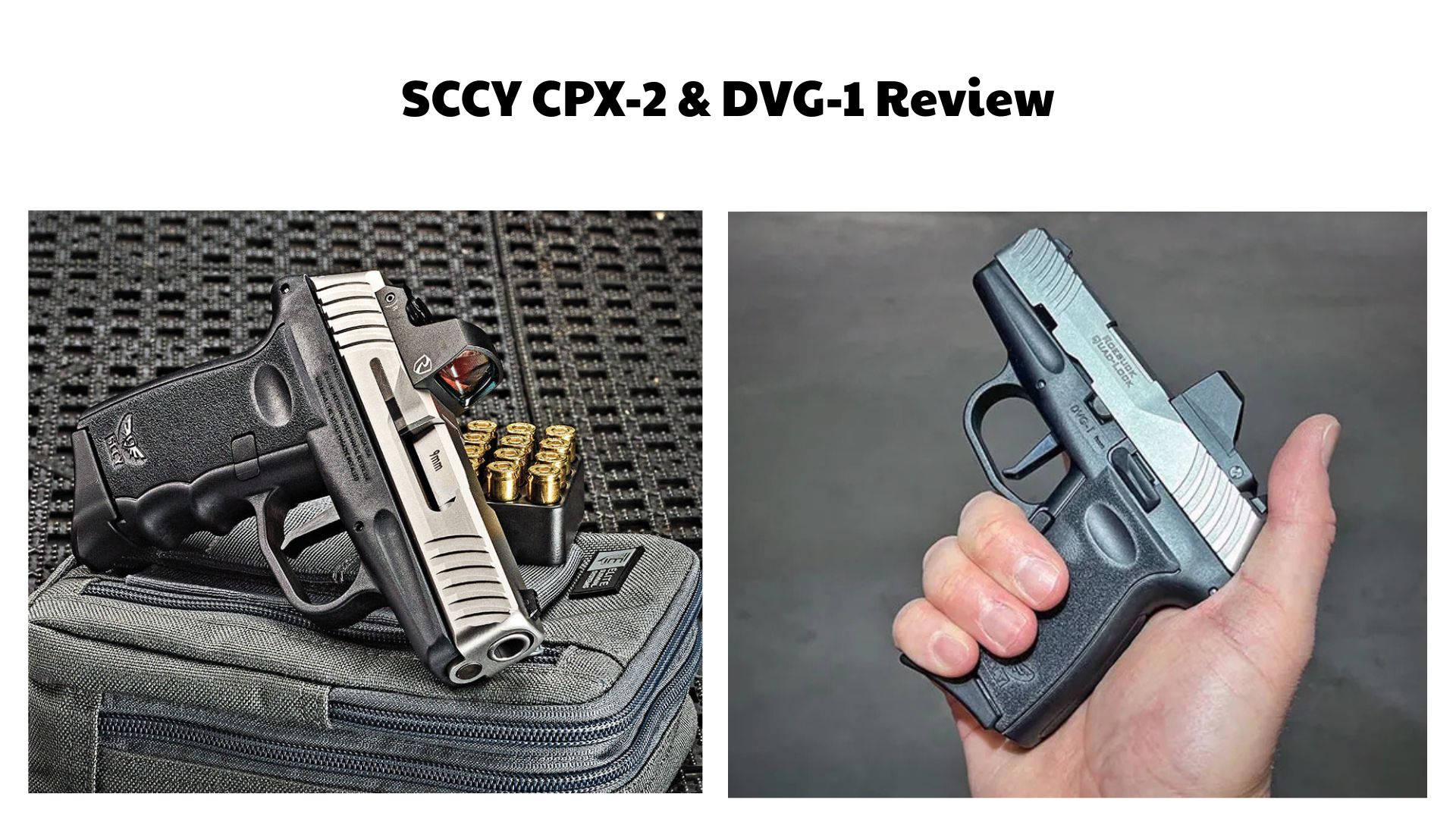

The SCCY DVG-1 and CPX-2 are two of the most recognizable budget-friendly concealed carry pistols in the 9mm category. Designed for affordability and practicality, these handguns aim to provide reliable self-defense options for everyday users without the high price tag typically associated with major firearm brands. While both models share SCCY’s compact philosophy, they differ in trigger systems and handling characteristics, offering shooters two distinct approaches within the same platform family.
In this SCCY DVG-1 & CPX-2 review, we break down their design philosophy, specifications, shooting performance, and real-world usability. The goal is to understand whether these ultra-budget pistols can deliver dependable concealed carry performance in 2026.
Introduction to SCCY DVG-1 and CPX-2 Pistols
The SCCY CPX-2 is a double-action-only (DAO) 9mm pistol that has been on the market for years and is known for its simplicity and affordability. It features a consistent long trigger pull, internal hammer system, and a compact polymer frame designed specifically for concealed carry users.
The SCCY DVG-1, on the other hand, is a more modern evolution of the platform. It adopts a striker-fired system, aiming to provide a lighter trigger pull and improved shooting experience compared to the CPX series. This makes the DVG-1 feel more aligned with modern compact pistols while still maintaining SCCY’s budget-oriented pricing structure.
Both pistols are built in the United States and reflect SCCY’s mission of delivering accessible self-defense firearms to everyday citizens. While they are not premium duty pistols, they serve an important role in the entry-level concealed carry market.
SCCY as a Budget Concealed Carry Manufacturer
SCCY Industries has built its reputation around producing ultra-affordable concealed carry handguns. Unlike larger manufacturers that offer extensive product lines across multiple price tiers, SCCY focuses primarily on simplicity and cost efficiency.
This approach allows the company to offer pistols at some of the lowest prices in the market while still maintaining basic reliability standards. The trade-off, however, is a more limited feature set and less refined ergonomics compared to mid-tier competitors.
Despite this, SCCY pistols have gained popularity among first-time gun owners, budget-conscious buyers, and those looking for a simple defensive firearm without unnecessary complexity.
Evolution of SCCY Handguns in the 9mm Market
The SCCY CPX series represents the company’s original approach to compact 9mm pistols. Early models focused heavily on affordability and simplicity, offering a DAO trigger system and fixed barrel design. Over time, SCCY refined the platform with improved ergonomics, better machining consistency, and expanded magazine capacity.
The introduction of the DVG-1 marked a significant evolution in SCCY’s design philosophy. By moving to a striker-fired system, SCCY aimed to modernize its lineup and address feedback regarding trigger feel and shootability. This change brought the DVG-1 closer to mainstream concealed carry pistols while retaining its budget-friendly pricing.
This evolution reflects SCCY’s attempt to stay competitive in a market dominated by brands like Glock, Ruger, and Smith & Wesson, especially in the entry-level concealed carry segment.
Who Are SCCY Pistols Designed For?
SCCY pistols are primarily designed for budget-conscious concealed carry users who prioritize affordability over premium features. They are often chosen by first-time gun owners who want a simple, functional self-defense firearm without a steep learning curve or high upfront cost.
These pistols are also popular as backup guns or secondary carry options due to their compact size and lightweight construction. Their simple operation makes them accessible to users who prefer straightforward mechanics rather than complex customization options.
However, they are not typically aimed at competitive shooters or users seeking high-end performance enhancements. Instead, they occupy a niche focused on basic defensive reliability at a very low price point.
Key Specifications of SCCY CPX-2 and DVG-1
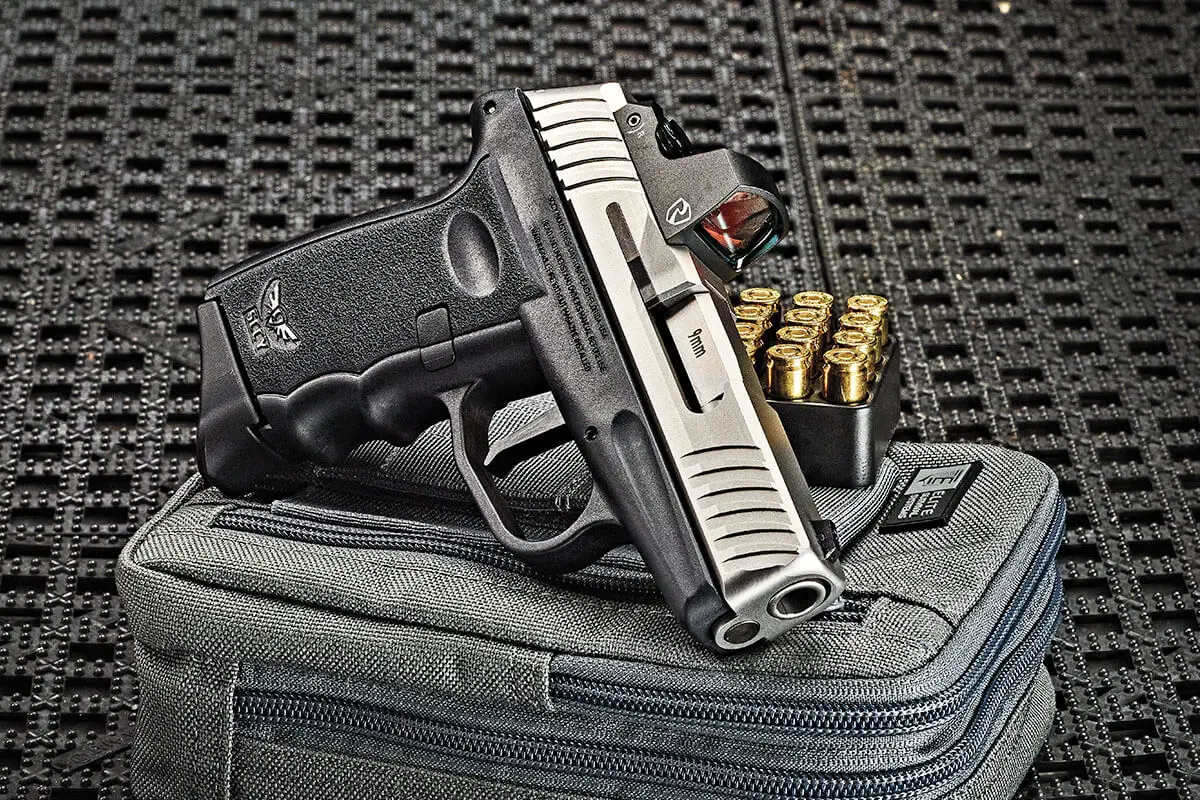
Understanding the specifications of the SCCY CPX-2 and DVG-1 helps clarify their intended role in the concealed carry market. While both pistols share a similar compact design, their internal systems and handling characteristics differ in important ways.
Caliber and Magazine Capacity (9mm, 10+1 Standard)
Both the SCCY CPX-2 and DVG-1 are chambered in 9mm, the most widely used caliber for concealed carry due to its balance of recoil control, stopping power, and ammunition availability.
Each pistol typically features a 10+1 round capacity using double-stack magazines. This capacity is standard for compact concealed carry pistols in this price category and provides sufficient firepower for defensive scenarios.
While 10 rounds may be lower than some modern high-capacity pistols, it remains adequate for most self-defense situations, especially considering the compact size of the firearms.
Barrel Length and Compact Frame Design
The SCCY CPX-2 and DVG-1 feature compact barrel lengths designed for concealed carry efficiency. The shorter barrel contributes to easier concealment but slightly reduces sight radius compared to full-size pistols.
The compact frame design allows the pistols to be carried comfortably inside the waistband (IWB) or in appendix carry positions. This makes them suitable for everyday concealed carry users who prioritize discretion and comfort.
Despite their small size, SCCY pistols maintain a relatively thick grip profile due to their double-stack magazine design, which can influence concealability depending on body type and clothing choice.
Polymer Frame Construction with Steel Slide
Both models utilize a polymer frame paired with a steel slide. This combination is common in modern compact pistols, as it helps reduce weight while maintaining structural strength in critical components.
The polymer frame contributes to comfort during extended carry, while the steel slide ensures durability under repeated cycling. This hybrid construction is designed to balance affordability, weight reduction, and functional reliability.
Although not as refined as higher-end machining standards, the construction is generally sufficient for its intended defensive use case.
Weight, Size, and Concealability Factors
The SCCY CPX-2 and DVG-1 are lightweight pistols, typically weighing under one pound unloaded. This makes them easy to carry for long periods without causing discomfort.
The compact dimensions allow for effective concealment under light clothing, making them suitable for everyday carry in various environments.
However, the relatively thick grip can sometimes make concealment more challenging compared to single-stack alternatives. This is a trade-off for higher magazine capacity.
DAO vs Striker-Fired System Differences (CPX vs DVG)
One of the key differences between the CPX-2 and DVG-1 is their firing mechanism. The CPX-2 uses a double-action-only (DAO) trigger system, meaning every trigger pull is long and consistent, similar to a revolver-style operation.
This long trigger pull is designed to enhance safety by reducing the likelihood of accidental discharge, especially for inexperienced shooters.
In contrast, the DVG-1 uses a striker-fired system, which provides a shorter and lighter trigger pull. This generally results in faster shooting and improved accuracy for many users, especially those familiar with modern striker-fired pistols.
The difference between these two systems gives buyers a choice between maximum simplicity and modern shooting ergonomics, depending on personal preference and training level.
Design and Build Quality
The design and build quality of the SCCY CPX-2 and DVG-1 reflect the company’s core philosophy: deliver a functional concealed carry pistol at the lowest possible cost while maintaining acceptable reliability standards. These are not luxury firearms, and they do not aim to compete with premium-grade pistols in terms of refinement. Instead, they prioritize practicality, simplicity, and affordability.
SCCY CPX-2 Ergonomics and Frame Design
The SCCY CPX-2 features a compact polymer frame designed specifically for concealed carry. The grip is relatively thick for a small pistol due to its double-stack magazine design, which gives it a fuller feel in the hand compared to ultra-slim single-stack pistols.
Ergonomically, the CPX-2 is functional but not highly refined. The grip angle is comfortable for most users, but the overall shape is simple and utilitarian. It does not feature aggressive contouring or premium ergonomics found in higher-end carry pistols.
However, SCCY includes finger extension magazines that help improve grip stability for users with larger hands. This small addition significantly enhances control and shooting comfort.
SCCY DVG-1 Quad-Lock Barrel System Innovation
The DVG-1 introduces SCCY’s Quad-Lock barrel system, which is designed to improve barrel-to-slide lockup consistency. This system aims to enhance accuracy and reduce movement between critical components during firing.
While the concept is mechanically simple, it plays an important role in improving the overall shooting experience compared to earlier SCCY models. The striker-fired design combined with this barrel system gives the DVG-1 a more modern feel.
In practice, the improvement is subtle but noticeable for shooters who pay attention to consistency and shot placement.
Grip Texture, Finger Extensions, and Control Layout
The grip texture on both the CPX-2 and DVG-1 is relatively mild compared to aggressive competition or duty pistols. It provides enough friction for basic control but may feel less secure during rapid fire or sweaty conditions.
Finger extension magazine bases are an important part of the design, helping improve grip length and stability. These extensions allow shooters with larger hands to achieve a more natural firing grip.
The control layout is intentionally simple. The CPX-2 uses minimal external controls, while the DVG-1 maintains a clean striker-fired layout. This simplicity reduces training complexity but also limits customization and advanced ergonomics.
Slide Finish, Machining Quality, and Durability
The slide on SCCY pistols is made from steel and typically features a basic finish designed for corrosion resistance. While it is not as refined as higher-end nitride or DLC coatings, it performs adequately for everyday concealed carry use.
Machining quality is functional rather than premium. There may be visible tool marks or less refined finishing compared to mid-tier pistols, but this is expected in the budget category.
Durability is generally acceptable for the price range, with the slide and internal components holding up well under normal defensive and range use. However, long-term heavy use may show wear more quickly than premium competitors.
Overall Fit and Finish vs Other Budget Pistols
When compared to other budget pistols, SCCY firearms sit firmly in the entry-level category. They are often more affordable than competitors like Taurus or Ruger, but this lower cost is reflected in the overall finish quality.
Fit and finish are serviceable but not refined. There may be slight inconsistencies in machining or surface finishing, but these do not typically affect basic functionality.
In summary, SCCY pistols prioritize affordability and function over aesthetic refinement or premium construction quality.
Ergonomics and Handling
Ergonomics and handling are critical aspects of any concealed carry pistol, and the SCCY CPX-2 and DVG-1 offer a mixed experience. They are designed for simplicity and compact carry, but their handling characteristics reflect their budget-oriented construction.
Grip Comfort and Hand Size Compatibility
The grip on SCCY pistols is compact but relatively thick, which can be both an advantage and a disadvantage depending on the shooter’s hand size. Users with medium to large hands may find the grip fills the hand well, while smaller-handed shooters may experience difficulty achieving a perfect grip.
The finger extension magazines help improve comfort and control, especially during extended shooting sessions. Without these extensions, the grip may feel short and less stable.
Trigger Reach and Finger Placement Feel
Trigger reach is influenced heavily by the DAO system in the CPX-2 and the striker system in the DVG-1. The CPX-2 requires a longer trigger reach due to its double-action-only design, which may feel heavy or stretched for some users.
The DVG-1 improves this aspect with a shorter and more modern striker-fired trigger reach, making it more accessible for a wider range of shooters.
Finger placement is generally straightforward, but the heavy DAO pull on the CPX-2 can require more deliberate trigger control.
Recoil Management in Lightweight Polymer Frames
Recoil management is one of the more challenging aspects of SCCY pistols due to their lightweight polymer construction. While 9mm recoil is generally manageable, the light frame results in more noticeable muzzle rise compared to heavier pistols.
Shooters may need more practice to maintain control during rapid fire sequences. The recoil impulse is sharp but not unmanageable, especially with proper grip technique.
Balance and Control During Rapid Fire
Balance is adequate for concealed carry purposes but not optimized for high-speed shooting. During rapid fire, the pistol tends to exhibit more muzzle movement than heavier or competition-focused designs.
Control improves significantly with proper grip and stance, but the platform is clearly not designed for speed shooting competitions.
Instead, it performs best in controlled defensive shooting scenarios at close distances.
Trigger Performance
The trigger systems on the SCCY CPX-2 and DVG-1 are one of the most discussed aspects of these pistols. They differ significantly in design and feel, which directly impacts shooting performance and user preference.
Long DAO Trigger on CPX-2 (Approx. 8–9 lb Pull)
The CPX-2 uses a double-action-only trigger with a pull weight typically around 8 to 9 pounds. This long, consistent trigger pull is designed to enhance safety by reducing the likelihood of accidental discharge.
However, the heavy trigger requires more deliberate control, especially for new shooters. It can feel stiff and slow compared to modern striker-fired systems.
While this may reduce speed, it encourages disciplined trigger control and can improve safety awareness during concealed carry use.
DVG-1 Striker Trigger Characteristics (Approx. 5.5 lb Pull)
The DVG-1 features a striker-fired trigger system with a lighter pull of approximately 5.5 pounds. This represents a significant improvement in shootability compared to the CPX-2.
The lighter trigger allows for faster shooting and improved accuracy potential, especially during rapid fire or defensive scenarios.
It aligns more closely with modern concealed carry expectations and provides a more familiar feel for users experienced with striker-fired pistols.
Trigger Reset and Shooting Speed Limitations
The CPX-2 has a long trigger reset due to its DAO design, which can limit shooting speed. Each shot requires a full trigger cycle, which slows down follow-up shots.
The DVG-1 offers a shorter reset, improving speed and allowing for more controlled rapid fire sequences.
Even so, neither system is optimized for competition-level speed shooting, as both prioritize safety and simplicity over performance tuning.
Impact of Heavy Trigger on Accuracy and Training
The heavy trigger on the CPX-2 can negatively affect accuracy for inexperienced shooters, especially at longer distances. However, it can also serve as a training tool for developing better trigger discipline.
The DVG-1 mitigates this issue with a lighter trigger, making it easier to achieve consistent shot placement with less effort.
Ultimately, trigger preference plays a major role in choosing between the two models, depending on whether the user prioritizes safety or shooting efficiency.
Shooting Performance and Range Evaluation
The SCCY CPX-2 and DVG-1 are designed primarily for close-range defensive use, and their performance reflects this intended role. While not competition pistols, they perform adequately within their design limitations.
Accuracy at 7–15 Yard Defensive Distances
At typical defensive distances of 7 to 15 yards, both pistols are capable of producing acceptable accuracy for self-defense purposes. The CPX-2 requires more deliberate trigger control due to its heavy DAO pull, while the DVG-1 offers slightly easier accuracy potential.
Groupings are generally sufficient for center-mass defensive shooting, though not precision-oriented. Proper training and technique significantly improve results.
Performance at 15–25 Yards (Group Size Behavior)
At extended distances of 15 to 25 yards, accuracy becomes more dependent on shooter skill. The shorter sight radius and lightweight frame can contribute to wider groupings compared to larger pistols.
The DVG-1 tends to perform slightly better at distance due to its lighter trigger, but both models are primarily optimized for close-range engagement.
Recoil Characteristics of Lightweight 9mm Pistols
Recoil is noticeable due to the lightweight construction of both pistols. While 9mm is inherently manageable, the reduced mass results in sharper muzzle rise compared to heavier platforms.
This can affect follow-up shot speed, especially for inexperienced shooters, but remains manageable with proper grip technique.
Speed Shooting and Follow-Up Shot Challenges
Speed shooting is not a strong point for SCCY pistols. The CPX-2’s heavy trigger and longer reset limit rapid fire capability, while the DVG-1 performs slightly better but still falls behind higher-end competitors.
Follow-up shots require more effort to control recoil and reset timing, making these pistols less suitable for competition-style shooting.
Real-World Range Experience and User Impressions
In real-world use, SCCY pistols are generally regarded as functional but basic. Many users appreciate their affordability and simplicity, while acknowledging limitations in refinement and shooting comfort.
They perform best when used within their intended role as short-range defensive firearms rather than high-performance range pistols.
Reliability and Durability
Reliability and durability are two of the most debated aspects of SCCY pistols, especially given their position in the ultra-budget firearm category. The CPX-2 and DVG-1 are designed to deliver functional defensive performance at a low price point, but user experiences vary depending on maintenance, ammunition choice, and individual unit tolerances.
Break-In Period Performance (100–200 Rounds Typical)
Like many budget semi-automatic pistols, SCCY firearms often require a break-in period before reaching optimal performance. This typically involves firing 100 to 200 rounds of standard FMJ ammunition.
During this phase, users may notice occasional stiffness in the slide, minor feeding hesitation, or inconsistent cycling. These issues are generally attributed to tight manufacturing tolerances, unfinished wear-in surfaces, or spring settling.
After the break-in period, many users report improved smoothness and more consistent operation. However, the degree of improvement can vary between individual pistols.
Reliability with FMJ and Hollow Point Ammunition
FMJ (Full Metal Jacket) ammunition tends to perform most reliably in SCCY pistols. It provides consistent feeding and cycling due to its uniform shape and lower expansion characteristics.
Hollow point ammunition, while commonly used for self-defense, may produce mixed results depending on bullet profile and manufacturer. Some hollow points feed reliably, while others may require testing to ensure compatibility.
This variability highlights the importance of function testing defensive ammunition before relying on it for concealed carry purposes.
Reported Feeding, Ejection, and Extractor Issues
Some users have reported occasional feeding or ejection issues, particularly in early production runs or during the break-in period. These issues may include failure to feed, stovepiping, or inconsistent extraction.
Extractor performance is generally adequate but can vary in consistency depending on ammunition type and maintenance practices.
While not universal, these issues contribute to the mixed reputation SCCY pistols have in terms of long-term reliability.
Long-Term Durability of Budget Components
SCCY pistols use budget-oriented components designed to keep manufacturing costs low. The polymer frame and steel slide are functional but not built to the same endurance standards as higher-end duty pistols.
Over time, high round counts may result in accelerated wear on small internal parts such as springs and pins. However, for typical concealed carry usage, many users find durability to be acceptable.
These pistols are best suited for moderate use rather than intensive training schedules or high-volume competition shooting.
Mixed User Experiences and QC Variability
One of the most commonly discussed aspects of SCCY pistols is quality control variability. Some users report excellent reliability and satisfaction, while others experience recurring issues.
This inconsistency is often attributed to manufacturing tolerances within the budget production model. While many pistols function well out of the box, others may require more attention or break-in to perform reliably.
As a result, user experiences can vary significantly depending on the individual firearm.
Ammunition Performance
Ammunition selection plays an important role in the performance of SCCY pistols. Due to their simple design and tight budget manufacturing tolerances, certain ammo types perform better than others.
Best Ammo Types for SCCY Pistols (115gr & 124gr FMJ)
Standard 115 grain and 124 grain FMJ ammunition is generally considered the most reliable choice for SCCY pistols. These loads provide consistent feeding and cycling while minimizing mechanical stress during break-in and regular use.
Many users prefer to start with FMJ rounds during initial testing to ensure the firearm operates smoothly before transitioning to defensive ammunition.
Hollow Point Reliability for Defensive Use
Hollow point ammunition is commonly used for self-defense due to its expansion characteristics. In SCCY pistols, reliability with hollow points can vary depending on bullet shape and brand.
Some modern defensive loads feed reliably, while others may require testing to confirm compatibility. It is strongly recommended that users test multiple brands before selecting a carry load.
This step ensures that the firearm performs consistently under defensive conditions.
+P Ammunition Performance and Wear Considerations
SCCY pistols are generally rated to handle standard pressure 9mm ammunition. +P ammunition can be used, but it may increase wear on internal components over time.
While occasional use of +P rounds is typically acceptable, frequent use is not recommended due to increased stress on the slide, barrel, and recoil system.
Users should balance performance benefits with long-term durability considerations when selecting ammunition.
Steel Case vs Brass Case Ammunition Behavior
Steel case ammunition is often used as a cost-saving training option. In SCCY pistols, steel case ammo may function adequately but can occasionally increase wear or cause minor extraction inconsistencies.
Brass case ammunition is generally preferred for smoother cycling and reduced wear on the extractor and chamber components.
For defensive use, brass-cased ammunition remains the recommended standard.
Concealed Carry Performance
The SCCY CPX-2 and DVG-1 are specifically designed for concealed carry, and their performance in this role is one of their strongest selling points. Their compact size and lightweight construction make them practical for everyday defensive use.
Size and Weight Advantages for Everyday Carry
One of the main advantages of SCCY pistols is their lightweight design. Both models are easy to carry for extended periods without causing significant discomfort.
The compact frame allows for discreet carry in various environments, making them suitable for daily concealed carry users.
This lightweight design also makes them accessible for users who prioritize comfort over tactical features.
Snag-Free Design and Pocket/IWB Carry Suitability
The rounded profile and simple external design help reduce snagging during draw from concealment. This makes the pistols suitable for inside-the-waistband (IWB) and appendix carry setups.
While they are generally too large for true pocket carry, they perform well in most standard concealed carry holsters.
The absence of excessive external controls contributes to smoother draw performance.
Comfort During Extended Daily Carry
Due to their lightweight construction, SCCY pistols are comfortable to carry for long periods. However, the relatively thick grip can sometimes create printing issues depending on clothing and body type.
With a proper holster, most users find them manageable for all-day concealed carry.
Comfort levels are generally high for budget concealed carry pistols.
Draw Speed and Real-World Carry Limitations
Draw speed is adequate but not optimized for competition-level performance. The trigger system, especially on the CPX-2, requires more deliberate control during presentation.
In real-world defensive scenarios, the pistols perform adequately within close-range engagement distances.
However, they are not designed for high-speed tactical applications or advanced shooting disciplines.
Reliability and Durability Concerns
While SCCY pistols offer affordability and simplicity, there are some reliability and durability concerns that potential buyers should understand. These concerns are not universal but are frequently discussed in user feedback.
Performance Under Stress and Rapid Fire
Under rapid fire conditions, SCCY pistols can experience increased recoil movement and occasional cycling inconsistencies. This is partly due to their lightweight construction and budget-oriented design.
With proper grip and technique, performance improves significantly, but they are not optimized for sustained high-speed shooting.
Small Parts Wear (Pins, Springs, Extractors)
Over extended use, some users report wear on smaller internal components such as springs and extractors. These parts may require replacement after high round counts.
This is not uncommon in budget pistols, but it is more noticeable in SCCY firearms due to their cost-focused design approach.
Frame and Slide Longevity Over Time
The polymer frame and steel slide are generally durable for standard concealed carry use. However, long-term heavy use may reveal wear more quickly than in premium pistols.
For moderate use cases, longevity is considered acceptable within the price category.
Warranty and Manufacturer Support Limitations
SCCY offers a transferable lifetime warranty, which is a strong benefit for budget firearm owners. However, service experiences can vary depending on customer reports.
While the warranty provides peace of mind, turnaround times and support consistency may not match larger manufacturers.
Pros and Cons of SCCY CPX-2 and DVG-1
Understanding the strengths and weaknesses of SCCY pistols helps clarify their position in the concealed carry market. They are budget-focused tools with clear advantages and limitations.
Key Advantages (Price, Capacity, Simplicity)
The main advantages include extremely low price, simple operation, and standard 10+1 capacity in a compact form factor. These features make them accessible to first-time gun owners and budget-conscious buyers.
Their simplicity also reduces training complexity, making them easy to operate under stress.
Main Drawbacks (Trigger, Recoil, Aftermarket Support)
The primary drawbacks include heavy trigger pull on the CPX-2, limited aftermarket support, and noticeable recoil due to lightweight construction.
These limitations affect shooting comfort and customization potential compared to more established platforms.
User Feedback and Mixed Real-World Opinions
User opinions on SCCY pistols are mixed. Some owners report reliable performance and satisfaction with the price-to-value ratio, while others experience inconsistency in quality or function.
This variation reflects the budget nature of the platform and highlights the importance of individual unit evaluation.
Overall, SCCY pistols remain a controversial but practical option in the ultra-budget concealed carry segment.
SCCY vs Competitors
The SCCY CPX-2 and DVG-1 sit firmly in the ultra-budget concealed carry category, where they compete with several well-known entry-level pistols. While SCCY focuses heavily on affordability and simplicity, competitors like Taurus, Ruger, and Smith & Wesson often provide more refined ergonomics, better triggers, and stronger aftermarket support. This section breaks down how SCCY stacks up in real-world comparison.
Comparison with Taurus G2C / G3C
The Taurus G2C and G3C are among the most direct competitors to SCCY pistols. Both brands target budget-conscious concealed carry buyers, but there are noticeable differences in performance and refinement.
Taurus pistols generally offer better ergonomics, more aggressive grip texture, and a more refined striker-fired trigger system compared to SCCY’s CPX-2 DAO trigger. The G2C/G3C also provide slightly better magazine capacity flexibility and stronger aftermarket support.
However, SCCY often wins in initial purchase price, making it attractive for buyers on the tightest budgets. Taurus, on the other hand, is often considered the more balanced option between cost and usability.
In real-world use, many shooters find the Taurus platform easier to shoot accurately and faster during follow-up shots.
Comparison with Ruger EC9s and LCP Series
Ruger’s EC9s and LCP series represent a different philosophy in concealed carry design. The EC9s is a slim single-stack 9mm pistol, while the LCP series focuses on ultra-compact .380 ACP pocket pistols.
Compared to SCCY, Ruger pistols generally offer better reliability consistency and more refined manufacturing quality. The EC9s, in particular, is known for its simplicity and dependable performance with fewer reported inconsistencies.
However, SCCY offers higher magazine capacity due to its double-stack design, which is a significant advantage in defensive scenarios. Ruger wins in concealability for pocket carry, while SCCY wins in capacity.
Overall, Ruger tends to be favored for smoother shooting and more consistent long-term reliability, while SCCY appeals to buyers prioritizing capacity and low cost.
Comparison with Smith & Wesson SD9 / M&P Shield
Smith & Wesson’s SD9 and M&P Shield series sit above SCCY in terms of refinement and performance. The M&P Shield, especially, is widely regarded as one of the most reliable and well-balanced concealed carry pistols in the industry.
Compared to SCCY, the M&P Shield offers a more refined trigger, better ergonomics, and significantly improved build quality. The SD9 provides a more affordable entry point but still maintains better consistency than SCCY in most cases.
SCCY’s advantage remains its lower price point, but it generally falls behind in shooting comfort, trigger quality, and long-term durability.
For users willing to spend slightly more, Smith & Wesson pistols are often considered a noticeable upgrade in overall experience.
Position in the Budget Concealed Carry Market
SCCY occupies one of the lowest price tiers in the concealed carry handgun market. It is often positioned as an entry-level defensive firearm for first-time gun owners or users with strict budget limitations.
While it lacks the refinement of competitors, it fills an important niche by providing a functional 9mm pistol at a very low cost. This makes it accessible to a wide range of users who might otherwise be priced out of concealed carry ownership.
In the broader market, SCCY is best understood as a “basic functional tool” rather than a performance-driven platform.
Aftermarket Support and Accessories
Aftermarket support plays a major role in firearm customization and long-term usability. In this area, SCCY pistols lag behind more established platforms like Glock or Smith & Wesson, but they still offer essential accessory compatibility.
Holsters and Carry Gear Availability
Holster availability for SCCY pistols is adequate but not extensive. Many major holster manufacturers offer basic IWB and OWB options, but the selection is more limited compared to mainstream carry pistols.
Because SCCY pistols have a relatively simple and consistent frame design, most holsters are functional but not highly specialized. Users typically have no trouble finding basic concealed carry solutions.
Sight Upgrades (Fiber Optic / Night Sights)
Sight upgrade options exist but are limited. Some aftermarket companies offer fiber optic or improved iron sight replacements, but the selection is not as broad as more popular platforms.
The CPX-2 and DVG-1 are primarily designed with fixed sight systems, meaning upgrades require more effort and careful compatibility checks.
This limits customization potential for shooters who prioritize sight enhancements for competition or low-light use.
Magazine Extensions and Compatibility Options
SCCY pistols typically use proprietary magazines, which restrict compatibility with third-party extensions. While extended baseplates are available in some cases, options are not as widely developed as competitors like Glock or Taurus.
Most users rely on factory magazines, which are simple and functional but not highly customizable.
Limitations of SCCY Aftermarket Ecosystem
The biggest limitation of SCCY pistols is their relatively small aftermarket ecosystem. Unlike Glock or M&P platforms, SCCY does not have a large industry of performance parts, triggers, barrels, or modular upgrades.
This means users are generally limited to factory configuration or minor accessory changes such as holsters and basic sights.
For many budget-conscious buyers, this is acceptable, but for enthusiasts who enjoy customization, it can be a significant drawback.
Pricing and Value for Money
One of SCCY’s strongest selling points is its extremely low price. It competes in the ultra-budget segment, making it one of the most affordable concealed carry pistols available in the market.
Ultra-Budget Pricing Segment ($150–$300 Range)
SCCY pistols typically fall within the $150 to $300 price range depending on promotions, retailer, and model configuration. This places them among the most affordable centerfire handguns available today.
This pricing makes SCCY especially attractive to first-time gun buyers or individuals looking for a secondary defensive firearm without significant investment.
Features vs Cost Comparison
When evaluating features versus cost, SCCY offers a basic but functional package: 9mm chambering, 10+1 capacity, polymer frame, and simple manual operation.
However, compared to slightly more expensive competitors, SCCY lacks refinement in trigger quality, ergonomics, and aftermarket support.
The value proposition is clear: low cost and basic functionality in exchange for fewer performance enhancements and limited customization.
Is SCCY Still Worth It in 2026?
In 2026, SCCY pistols remain relevant primarily for budget-conscious buyers. While many competitors now offer improved entry-level pistols at slightly higher price points, SCCY still maintains one of the lowest barriers to ownership.
For users prioritizing affordability above all else, SCCY remains a viable option. However, those willing to spend a bit more often gain significantly better ergonomics, triggers, and long-term reliability from competing brands.
Ultimately, SCCY is still worth considering—but only within its intended role as a budget-first defensive firearm.
Who Should Buy SCCY Pistols?
SCCY pistols occupy a very specific niche in the firearms market. They are not designed to compete with premium duty pistols or high-end competition firearms. Instead, they are built for users who prioritize affordability, simplicity, and basic defensive capability. Understanding the ideal buyer profile is essential before choosing one of these pistols.
Ideal Users (Budget Buyers, First-Time Gun Owners)
SCCY pistols are most suitable for budget-conscious buyers who want an entry-level defensive handgun without a significant financial investment. Their ultra-low price point makes them especially appealing to first-time gun owners who may not yet be ready to invest in higher-end platforms.
These pistols are also a common choice for individuals who need a basic self-defense firearm but are not interested in advanced customization or premium features. The simple operation and straightforward mechanics make them easy to learn and use with minimal training.
For users who prioritize function over refinement, SCCY offers a practical starting point in the concealed carry world.
Best Use Cases (CCW, Backup Gun, Range Training)
The primary use case for SCCY pistols is concealed carry (CCW). Their compact size, lightweight construction, and 9mm chambering make them suitable for everyday defensive carry in most environments.
They also serve well as backup firearms due to their low cost and ease of carry. Many users choose SCCY pistols as secondary guns that can be carried in addition to a primary duty or carry weapon.
In terms of training, they are acceptable for basic range practice and defensive shooting drills. However, they are not ideal for high-volume training or competitive shooting due to limitations in trigger refinement and recoil management.
Who Should Avoid SCCY Pistols?
SCCY pistols are not suitable for everyone. Experienced shooters who prioritize performance, precision, or customization will likely find them limiting.
Competitive shooters or individuals involved in high-intensity training programs may prefer platforms with better triggers, stronger aftermarket ecosystems, and more consistent quality control.
Additionally, users who demand premium ergonomics, advanced features, or duty-grade durability should consider higher-tier alternatives from brands like Glock, Smith & Wesson, or CZ.
In short, SCCY is not a “performance” pistol—it is a budget defensive tool with clear limitations.
Final Verdict
After evaluating design, performance, reliability, and real-world usability, the SCCY CPX-2 and DVG-1 clearly position themselves as entry-level concealed carry pistols. They are designed to deliver essential functionality at a very low price point, and in that role, they succeed with reasonable consistency.
Overall Performance Summary
Overall performance of SCCY pistols is best described as functional and adequate. They are capable of delivering acceptable accuracy at defensive distances, and they perform reliably enough for everyday concealed carry when properly maintained and broken in.
The DVG-1 offers a more modern shooting experience thanks to its striker-fired trigger, while the CPX-2 maintains a simple DAO system focused on safety and consistency. Neither model excels in advanced performance categories, but both fulfill their basic defensive purpose.
Strengths vs Weaknesses Recap
The main strengths of SCCY pistols include extremely low price, compact concealed carry design, simple operation, and adequate magazine capacity for self-defense use. These factors make them highly accessible to new gun owners and budget-focused buyers.
However, the weaknesses are equally clear. These include heavy or inconsistent trigger feel (especially on the CPX-2), limited aftermarket support, mixed quality control reports, and noticeable recoil due to lightweight construction.
In essence, SCCY pistols trade refinement and performance for affordability and simplicity.
Final Recommendation for Buyers
SCCY pistols are best recommended for first-time gun owners, budget-conscious concealed carriers, or users looking for a basic defensive firearm without significant investment. They are not ideal for advanced shooters, competition use, or those seeking premium performance.
If your priority is getting a functional 9mm concealed carry pistol at the lowest possible cost, SCCY remains a viable option. However, if your budget allows even a modest increase, stepping up to platforms like Taurus, Ruger, or Smith & Wesson will generally provide better overall shooting experience and long-term satisfaction.
Ultimately, SCCY pistols are best understood as entry-level defensive tools—simple, affordable, and serviceable, but not refined or performance-oriented.
Frequently Asked Questions (FAQ) – SCCY CPX-2 & DVG-1 Review
1. What is the SCCY CPX-2 designed for?
The SCCY CPX-2 is designed as an ultra-budget concealed carry handgun intended for personal defense. It focuses on simplicity, affordability, and basic functionality rather than advanced performance features. It is commonly used by first-time gun owners or individuals who need a low-cost defensive firearm for everyday carry.
2. What is the SCCY DVG-1?
The SCCY DVG-1 is a striker-fired 9mm pistol introduced as a more modern alternative to the CPX-2. It improves on trigger feel and shooting smoothness while still maintaining a budget-friendly price. It is designed for concealed carry users who want a slightly more refined shooting experience.
3. What is the main difference between CPX-2 and DVG-1?
The CPX-2 uses a double-action-only (DAO) trigger system, which is long and heavy for every shot. The DVG-1 uses a striker-fired system with a lighter and shorter trigger pull. This makes the DVG-1 easier to shoot accurately and faster in follow-up shots.
4. Are SCCY pistols good for concealed carry?
Yes, SCCY pistols are specifically designed for concealed carry. They are compact, lightweight, and easy to conceal under everyday clothing. However, their thicker grip design may require a good holster and proper clothing selection for optimal concealment.
5. How reliable are SCCY pistols?
SCCY pistols are generally reliable for basic defensive use, but reliability can vary between individual units. Many users report good performance after a break-in period, while others experience occasional feeding or ejection issues. Proper maintenance and ammunition selection improve reliability significantly.
6. Do SCCY pistols require a break-in period?
Yes, most SCCY pistols benefit from a break-in period of around 100–200 rounds. During this time, the internal components settle and smooth out, improving cycling consistency and overall performance.
7. What caliber do SCCY pistols use?
Both the CPX-2 and DVG-1 are chambered in 9mm. This is the most popular concealed carry caliber due to its balance of recoil, stopping power, and affordability.
8. What is the magazine capacity of SCCY pistols?
SCCY pistols typically use 10-round double-stack magazines, plus one in the chamber for a 10+1 capacity. This is standard for compact budget concealed carry pistols.
9. Are SCCY pistols good for beginners?
Yes, SCCY pistols are often recommended for beginners due to their simplicity and low cost. However, the heavy trigger on the CPX-2 may require more training and practice to master effectively.
10. Is the SCCY trigger good?
The CPX-2 has a heavy DAO trigger that some shooters find difficult, especially beginners. The DVG-1 improves this with a lighter striker-fired trigger, making it easier to shoot accurately and quickly.
11. Can SCCY pistols shoot hollow points?
Yes, SCCY pistols can shoot hollow point ammunition, but reliability varies depending on the brand and bullet profile. It is important to test multiple defensive loads to ensure proper feeding before carrying them for self-defense.
12. Are SCCY pistols +P rated?
SCCY pistols can generally handle occasional +P ammunition, but frequent use is not recommended. Higher pressure rounds may accelerate wear on internal components over time.
13. Are SCCY pistols accurate?
They are reasonably accurate at typical defensive distances (7–15 yards). Accuracy depends heavily on shooter skill, especially due to the heavy CPX-2 trigger and lightweight frame.
14. Are SCCY pistols good for home defense?
Yes, they can be used for home defense, but they are not specifically optimized for it. Their main role is concealed carry, but they can still perform effectively in close-range defensive situations.
15. How is recoil on SCCY pistols?
Recoil is noticeable due to the lightweight polymer frame. While 9mm recoil is manageable, the pistol’s light weight increases muzzle rise during rapid fire compared to heavier handguns.
16. Are SCCY pistols durable?
They are moderately durable for their price range. They are designed for regular concealed carry use rather than high-volume training or competition shooting.
17. What are common problems with SCCY pistols?
Common issues include break-in feeding problems, occasional ejection inconsistencies, and heavier trigger pull (especially on CPX-2). Quality control can also vary slightly between units.
18. Are SCCY pistols safe?
Yes, SCCY pistols include internal safety mechanisms such as firing pin blocks. The CPX-2’s long DAO trigger also acts as a safety feature by requiring a full trigger pull for each shot.
19. Do SCCY pistols have external safeties?
Most SCCY pistols do not have manual external safeties. They rely on internal safeties and trigger design for safe operation.
20. Are SCCY pistols good for self-defense?
Yes, they can be used for self-defense effectively within close-range scenarios. However, users should train regularly due to the heavy trigger and recoil characteristics.
21. What is the SCCY Quad-Lock barrel system?
The Quad-Lock system in the DVG-1 is designed to improve barrel lockup stability and enhance consistency during firing. It contributes to better accuracy and smoother cycling.
22. Are SCCY pistols good for range shooting?
Yes, they are suitable for basic range practice. However, they are not ideal for high-volume shooting or competitive training due to trigger limitations and recoil characteristics.
23. How many rounds can SCCY pistols last?
With proper maintenance, SCCY pistols can last thousands of rounds. However, long-term durability may not match higher-end pistols under heavy use conditions.
24. Are SCCY pistols easy to maintain?
Yes, they are relatively simple to maintain. Regular cleaning and lubrication are sufficient for most users, especially those using the pistol for concealed carry.
25. What holsters work with SCCY pistols?
Most basic IWB and OWB holsters designed for compact pistols will fit SCCY models. However, selection is more limited compared to mainstream brands like Glock or Smith & Wesson.
26. Can SCCY pistols be customized?
Customization options are limited. There are basic upgrades such as sights and holsters, but the aftermarket ecosystem is not as developed as other platforms.
27. Are SCCY pistols better than Taurus?
Taurus pistols generally offer better ergonomics and trigger systems, while SCCY is usually cheaper. Taurus is often considered a step up in overall refinement.
28. Are SCCY pistols better than Ruger?
Ruger pistols typically offer better reliability consistency and ergonomics, while SCCY focuses more on affordability.
29. Are SCCY pistols better than Glock?
No, Glock pistols are generally superior in reliability, aftermarket support, and performance. SCCY competes mainly on price, not quality or performance.
30. Why are SCCY pistols so cheap?
SCCY reduces manufacturing costs by using simplified designs, minimal features, and budget materials. This allows them to offer very low retail prices.
31. Are SCCY pistols good for women?
Yes, many women choose SCCY pistols due to their small size and low price. However, recoil and trigger pull should be considered during selection.
32. Are SCCY pistols good for left-handed shooters?
They can be used by left-handed shooters, but controls are not fully ambidextrous, which may require adaptation.
33. Do SCCY pistols jam a lot?
They do not inherently jam often, but some units may experience break-in related feeding issues or ammo sensitivity.
34. What is the SCCY warranty like?
SCCY offers a transferable lifetime warranty, which covers defects and functional issues. This is a strong benefit for budget firearms.
35. Are SCCY pistols made in the USA?
Yes, SCCY pistols are manufactured in the United States.
36. Can SCCY pistols be used for duty carry?
They are generally not recommended for professional duty use due to limited refinement and aftermarket support.
37. Are SCCY pistols good for competition?
No, they are not designed for competitive shooting. The heavy trigger and limited tuning options make them unsuitable for this role.
38. What is the best SCCY pistol?
The DVG-1 is generally considered the better option due to its improved striker-fired trigger system.
39. Is SCCY better than Hi-Point?
Both are budget firearms, but SCCY is generally considered more refined and easier to carry due to its lighter polymer design.
40. Are SCCY pistols worth it?
They are worth it for buyers who prioritize affordability and basic concealed carry function over performance and refinement.
41. What ammo works best in SCCY pistols?
Standard 115gr and 124gr FMJ ammunition works best for training and reliability testing.
42. Can SCCY pistols handle defensive ammo?
Yes, but defensive hollow points should be tested thoroughly for reliability before carry use.
43. Do SCCY pistols rust easily?
No, they have basic corrosion resistance, but regular maintenance is still recommended.
44. Are SCCY pistols good investments?
They are not investment firearms; they are functional tools intended for practical defensive use.
45. Do SCCY pistols have good resale value?
No, resale value is generally low due to their budget market positioning.
46. How heavy are SCCY pistols?
They are lightweight, typically under one pound unloaded, making them easy to carry daily.
47. Can SCCY pistols be used for training?
Yes, they are suitable for basic defensive training and range practice.
48. What is the main weakness of SCCY pistols?
The main weakness is the heavy trigger (CPX-2) and inconsistent refinement compared to competitors.
49. What is the main strength of SCCY pistols?
The main strength is extremely low cost combined with basic concealed carry functionality.
50. Should I choose SCCY or spend more?
If budget is extremely limited, SCCY is acceptable. If possible, spending slightly more on brands like Ruger, Taurus, or Smith & Wesson provides significantly better performance and reliability.
Read more: