
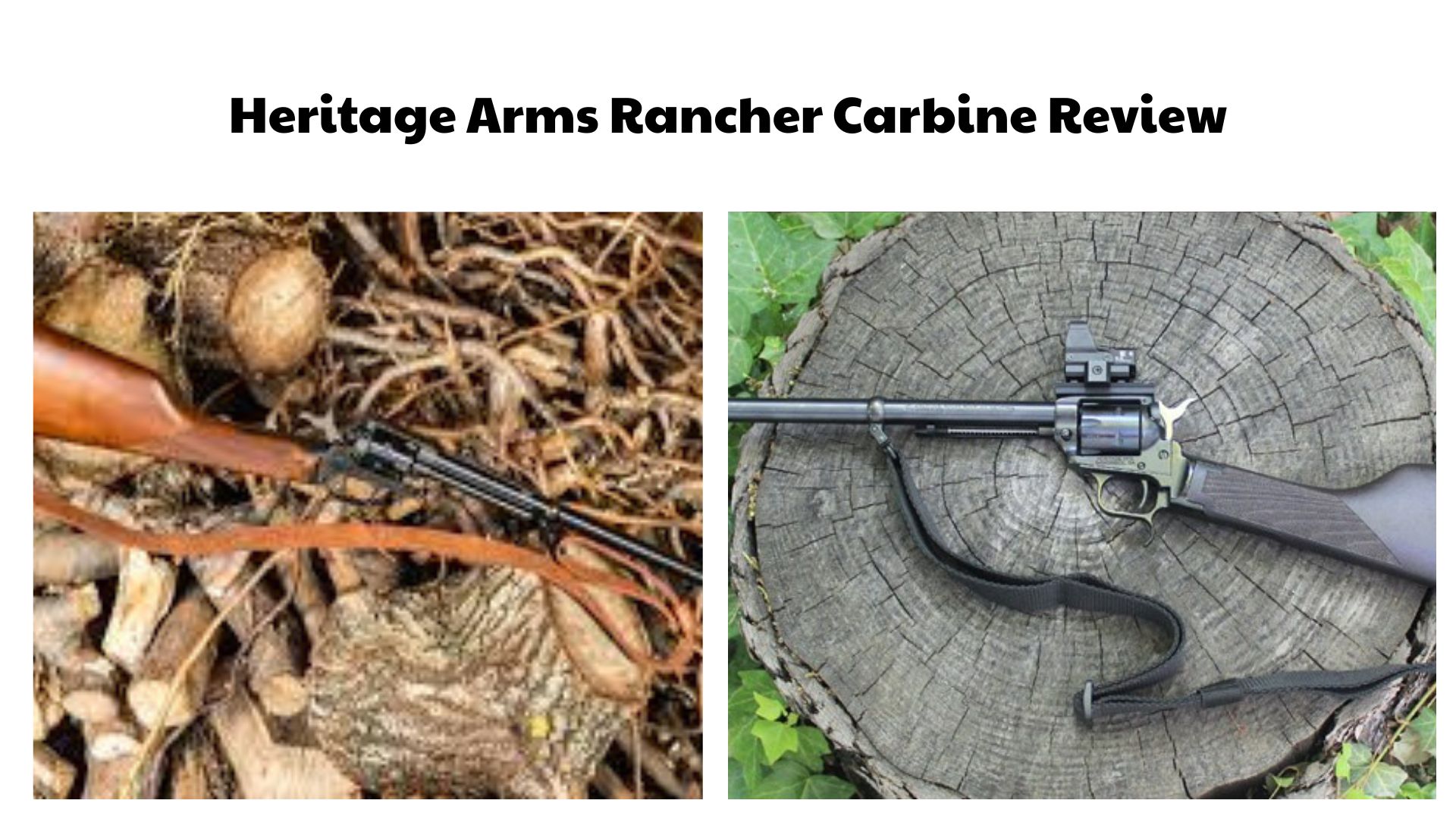

The Heritage Arms Rancher Carbine is a unique .22 LR revolver-carbine hybrid built on the Heritage Rough Rider platform. It combines a single-action revolver mechanism with a rifle-length barrel and shoulder stock, creating a distinctive firearm that blends Old West styling with practical rimfire performance.
Known for its cowboy-action aesthetics, affordability, and simplicity, the Rancher Carbine is primarily used for recreational shooting, plinking, and ranch-style utility use. While not a tactical or high-speed platform, it delivers a fun and engaging shooting experience that stands out in the modern firearms market.
What Is the Heritage Arms Rancher Carbine?
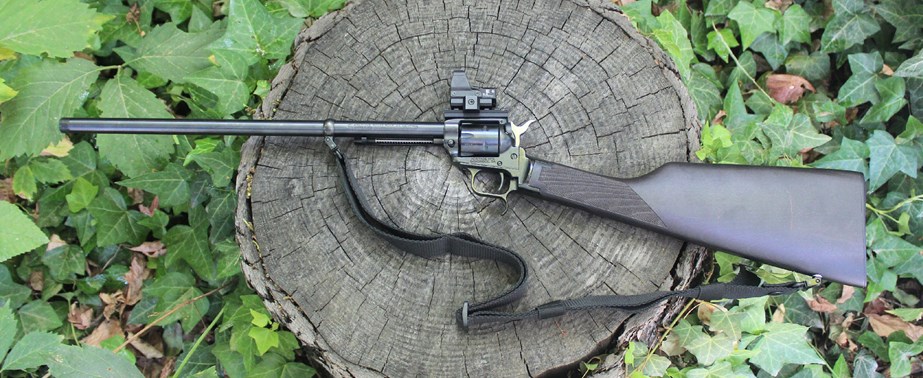
Overview of the Revolver-Carbine Concept
The Rancher Carbine is built around the idea of transforming a revolver into a shoulder-fired rifle. Instead of a traditional semi-automatic or bolt-action system, it uses a fixed revolver cylinder combined with a carbine-length barrel and stock, offering a unique shooting platform in .22 LR.
Connection to Heritage Rough Rider Revolver Platform
This carbine is directly based on the Heritage Rough Rider revolver, sharing the same action, cylinder system, and manual operation. The primary difference is the addition of a rifle stock and longer barrel, which improves stability and accuracy.
Purpose of a Revolver-Style Rifle in .22 LR
The purpose of this design is to offer a simple, mechanically reliable rimfire rifle with a nostalgic cowboy-style feel. It prioritizes fun, simplicity, and affordability over rapid-fire performance or tactical capability.
Who the Rancher Carbine Is Designed For
The Rancher Carbine is designed for recreational shooters, cowboy-action enthusiasts, ranch owners, and collectors who appreciate unique firearm designs. It is also suitable for beginners who want a simple and low-recoil shooting experience.
Design and Build Quality
Overall Construction and Materials
The rifle features a combination of steel components in the barrel and cylinder system with a synthetic or wood stock depending on the variant. The overall construction emphasizes durability while maintaining affordability.
Rifle Stock Design and Ergonomics
The shoulder stock provides a stable shooting platform compared to a traditional handgun grip. Ergonomics are simple and traditional, reflecting its cowboy-era inspiration rather than modern tactical design.
Barrel Length and Fixed Barrel Characteristics
The Rancher Carbine uses a fixed barrel design, which enhances accuracy by eliminating barrel movement during firing. The longer barrel also improves bullet velocity and sight radius.
Fit, Finish, and Cowboy-Style Aesthetics
Fit and finish are generally good for its price range, with a strong emphasis on classic Western styling. The overall aesthetic is one of its biggest attractions, appealing to fans of traditional revolver and lever-action firearms.
Revolver Action and Operating System
Single-Action Revolver Mechanism Explained
The Rancher Carbine operates using a single-action revolver system, meaning the hammer must be manually cocked before each shot. This mechanical simplicity contributes to its reliability and distinctive shooting rhythm.
Cylinder Lockup and Rotation System
The cylinder rotates and locks into place with each trigger cycle, aligning the chamber with the barrel. Proper lockup is essential for maintaining accuracy and safe operation.
Manual Cocking and Trigger Operation
Each shot requires the shooter to manually cock the hammer before pulling the trigger. This creates a deliberate shooting process that emphasizes control and accuracy.
How the Revolver System Works in a Carbine Platform
In the carbine configuration, the revolver mechanism functions the same as a handgun but benefits from increased stability due to the shoulder stock and longer barrel, improving precision and control.
Accuracy Performance
Fixed Barrel Accuracy Advantages
The fixed barrel design provides inherent accuracy benefits by eliminating movement between shots. This allows for consistent bullet trajectory and improved grouping potential compared to some moving-barrel systems.
Typical Effective Range for .22 LR Carbine
The effective range of the Rancher Carbine is typically within 25 to 75 yards for most recreational and small game shooting applications, depending on ammunition and shooter skill.
Grouping Performance at 25–50 Yards
At 25 yards, the rifle is highly consistent and capable of tight groupings. At 50 yards, accuracy remains solid, especially with quality .22 LR ammunition and proper sight alignment.
Ammunition Sensitivity and Load Preferences
Like most .22 LR firearms, the Rancher Carbine performs best with consistent ammunition types. Some loads may produce better grouping due to variations in velocity and bullet weight.
Comparison with Semi-Auto .22 Carbines
Compared to semi-automatic .22 carbines, the Rancher Carbine sacrifices speed for mechanical simplicity and consistency. It is slower to fire but can be very accurate in controlled shooting.
Recoil and Shooting Experience
Minimal Recoil of .22 LR Platform
The .22 LR cartridge produces extremely low recoil, making the Rancher Carbine easy to control for shooters of all experience levels.
Single-Action Shooting Rhythm and Feel
The manual cocking process creates a rhythmic and deliberate shooting experience that emphasizes accuracy and trigger discipline over speed.
Follow-Up Shot Speed Compared to Semi-Autos
Follow-up shots are significantly slower than semi-automatic rifles due to the need to manually cock the hammer after each shot.
Noise Level and Suppressor Considerations
The Rancher Carbine is relatively quiet in .22 LR form, and it can be even quieter when paired with subsonic ammunition and a suppressor where legally permitted.
Loading, Cycling, and Manual Operation
Revolver Cylinder Loading Process
Loading the Rancher Carbine involves opening the cylinder and manually inserting each .22 LR round into the chambers, similar to a traditional revolver.
Ejection and Reloading Speed
Ejection is also manual and slower compared to magazine-fed rifles, making reload speed one of the platform’s key limitations.
Manual Cocking for Each Shot
Each shot requires the shooter to cock the hammer manually, reinforcing a slow and controlled shooting pace.
Training Benefits of Slow-Fire Operation
This manual operation can help improve trigger discipline, accuracy fundamentals, and shooter focus, making it useful as a training tool for marksmanship basics.
Reliability and Durability
Mechanical Simplicity and Reliability Strengths
The Heritage Rancher Carbine benefits from a mechanically simple single-action revolver system, which is inherently reliable due to its reduced number of moving parts compared to semi-automatic rifles. This simplicity makes it less prone to feeding failures and cycling issues, provided it is properly maintained.
Cylinder Timing and Long-Term Wear
One of the key mechanical considerations is cylinder timing, which must remain precise for safe and accurate operation. Over long-term use, wear on internal components such as the hand, ratchet, and locking mechanism can affect timing, though this typically occurs only after extensive round counts or poor maintenance.
Fouling and Maintenance Requirements
While the Rancher Carbine is not highly sensitive to fouling, regular cleaning is still important. Carbon buildup in the cylinder chambers and barrel can affect smooth operation and accuracy. Routine maintenance helps ensure consistent performance and extends the lifespan of the revolver system.
Field Reliability in Outdoor Use
In field conditions, the Rancher Carbine performs reliably due to its straightforward mechanical design. Dust, dirt, and environmental exposure have less impact compared to more complex semi-automatic systems, making it suitable for ranch or outdoor recreational use.
Optics, Sights, and Mounting Options
Factory Iron Sight Setup
Most Rancher Carbine models come equipped with basic iron sights that are adequate for short-range shooting. These sights are simple, durable, and aligned with the platform’s traditional design philosophy.
Top Rail and Scope Mount Availability
Some versions of the Rancher Carbine offer a top rail or mounting provisions that allow users to install optics. This significantly expands its versatility for shooters who prefer enhanced aiming systems.
Red Dot vs Scope for Rancher Carbine
Red dot sights are ideal for fast target acquisition at close range, while scopes provide better precision for longer distances. Given the carbine’s typical engagement range, red dots are often the more practical choice for most users.
Ideal Optics for Short-Range Shooting
For short-range applications, low-magnification scopes (1-4x) or compact red dots work best. These optics complement the rifle’s intended use for plinking and recreational shooting.
Heritage Rancher Carbine vs Traditional .22 Carbines
Comparison with Ruger 10/22 Carbine
Compared to the Ruger 10/22, the Rancher Carbine is much slower in rate of fire due to its manual single-action operation. However, it offers mechanical simplicity and a unique shooting experience, while the 10/22 excels in speed, modularity, and aftermarket support.
Comparison with Lever-Action .22 Rifles
Lever-action .22 rifles provide faster follow-up shots than the Rancher Carbine and are more traditional in rimfire hunting roles. However, the Rancher Carbine offers a revolver-based novelty that lever-actions cannot replicate.
Semi-Auto vs Revolver-Carbine Performance Differences
Semi-automatic rifles prioritize speed and ease of use, while the Rancher Carbine emphasizes simplicity and deliberate shooting. This makes the Rancher better suited for slow-fire accuracy and recreational enjoyment rather than rapid shooting.
Accuracy vs Speed Trade-Off Analysis
The Rancher Carbine favors accuracy and control over speed. Shooters sacrifice rapid follow-up capability in exchange for a stable, fixed-barrel revolver system that encourages careful shot placement.
Heritage Rancher Carbine vs Other Heritage Models
Comparison with Heritage Rough Rider Revolver
The Rancher Carbine is essentially a rifle adaptation of the Heritage Rough Rider revolver. While both share the same action, the carbine version adds a stock and longer barrel for improved stability and accuracy.
Tactical Rancher vs Standard Rancher Variants
Tactical Rancher models typically include modern enhancements such as rails and synthetic furniture, while standard Rancher versions focus more on traditional cowboy aesthetics and simplicity.
Barrel and Stock Configuration Differences
Different Rancher variants may feature varying barrel lengths and stock designs, affecting balance, handling, and intended use. Longer barrels generally improve velocity and accuracy, while shorter configurations enhance maneuverability.
Practical Use Case Differences
Standard models are ideal for recreational plinking and traditional shooting experiences, while tactical variants are better suited for users who want accessory mounting options and modernized ergonomics.
Customization and Upgrades
Stock Replacement and Tactical Upgrades
The Heritage Rancher Carbine offers limited but meaningful customization options, primarily focused on stock replacement and aesthetic upgrades. Some users choose aftermarket synthetic stocks or tactical-style furniture to improve durability, ergonomics, or modernize the rifle’s appearance while retaining its revolver-based operation.
Optics Rails and Mounting Systems
Certain Rancher Carbine variants include or support rail systems that allow optics installation. Adding a rail significantly expands usability, enabling users to mount red dots or compact scopes for improved accuracy and target acquisition.
Grip and Ergonomic Enhancements
While ergonomics are already straightforward due to the rifle stock design, some shooters modify grips or add accessories such as cheek risers or recoil pads to improve comfort and shooting consistency during longer sessions.
Cylinder and Trigger Tuning Options
Because the Rancher Carbine is based on a revolver mechanism, internal tuning is limited and typically best left to experienced gunsmiths. Minor trigger smoothing and action polishing may improve feel, but major modifications are uncommon compared to semi-auto platforms.
Pros and Cons of Heritage Arms Rancher Carbine
Key Advantages of the Platform
The Rancher Carbine stands out for its mechanical simplicity, low recoil, unique revolver-carbine design, and strong cowboy-style aesthetics. It is highly reliable under normal conditions and offers a fun, engaging shooting experience that differs from standard .22 rifles.
Limitations and Trade-Offs
The main limitations include slow rate of fire, manual loading process, limited aftermarket support, and lack of modern tactical features. It is not designed for high-volume rapid shooting or competitive speed applications.
Value for Money in the Cowboy .22 Market
Within the cowboy-style .22 category, the Rancher Carbine offers strong value due to its affordability and dual-purpose novelty as both a revolver and rifle. It is often considered a cost-effective entry point into cowboy-action shooting.
Who Should Buy the Heritage Arms Rancher Carbine?
Cowboy Action Shooting Enthusiasts
This rifle is ideal for cowboy-action shooters who appreciate traditional single-action revolver mechanics combined with a shoulder-fired platform that enhances stability and enjoyment.
Recreational Plinkers and Casual Shooters
Casual shooters will enjoy the Rancher Carbine for its low recoil, simple operation, and fun shooting experience, making it excellent for relaxed range sessions.
Ranch and Farm Users
For light ranch or farm use, the carbine provides a simple and reliable tool for small pest control and general utility shooting where speed is not a priority.
Collectors of Unique Firearms Designs
Collectors are drawn to the Rancher Carbine due to its uncommon revolver-carbine hybrid design, making it a distinctive addition to any rimfire or cowboy-style firearm collection.
Final Verdict on Heritage Arms Rancher Carbine Review
The Heritage Arms Rancher Carbine delivers a unique blend of revolver mechanics and rifle-style shooting, creating a distinctive and enjoyable .22 LR platform. Its strength lies in simplicity, reliability, and its nostalgic cowboy aesthetic rather than speed or tactical performance.
While it lacks the rapid-fire capability and modularity of semi-automatic carbines, it compensates with mechanical robustness and a fun, deliberate shooting experience. It is best understood as a niche firearm designed for enjoyment rather than high-performance competition.
Overall, the Rancher Carbine is a budget-friendly and novelty-driven option that appeals to shooters who value tradition, simplicity, and a different style of rimfire shooting experience.
Heritage Arms Rancher Carbine – FAQ (Detailed Answers)
1. What is the Heritage Arms Rancher Carbine?
The Heritage Arms Rancher Carbine is a .22 LR revolver-based rifle built on the Heritage Rough Rider platform. It combines a single-action revolver mechanism with a shoulder stock and rifle-length barrel, creating a unique cowboy-style carbine for recreational shooting.
2. Is the Rancher Carbine a rifle or a handgun?
It is legally classified as a rifle in carbine configuration. Although it uses a revolver action internally, the addition of a stock and longer barrel makes it a shoulder-fired firearm rather than a handgun.
3. How does the Rancher Carbine operate?
It operates using a single-action revolver mechanism. The shooter must manually cock the hammer before each shot, which rotates the cylinder and aligns a new round with the barrel.
4. What caliber does it use?
The Rancher Carbine is chambered in .22 LR, making it ideal for low-cost shooting, training, and small game hunting.
5. Is it semi-automatic?
No, it is not semi-automatic. Each shot requires manual cocking of the hammer, making it a single-action firearm.
6. What makes it different from other .22 carbines?
Its revolver-based system is the key difference. Instead of magazines or bolts, it uses a rotating cylinder like a handgun, making it unique among .22 rifles.
7. Is the Rancher Carbine accurate?
Yes, it can be quite accurate due to its fixed barrel design and stable rifle stock, especially at short to medium ranges such as 25–50 yards.
8. What is its effective range?
The effective range is typically 25–75 yards depending on ammunition, shooter skill, and sight setup.
9. Is it good for beginners?
Yes, it is beginner-friendly due to low recoil and simple mechanics, but the manual operation requires patience and discipline.
10. Does it have recoil?
Recoil is extremely minimal due to the .22 LR cartridge, making it easy to shoot comfortably for long periods.
11. Is it reliable?
Yes, its mechanical simplicity contributes to good reliability, although it requires regular cleaning and proper maintenance.
12. Does it jam?
Jamming is rare since it is not magazine-fed, but issues can occur due to fouling or poorly maintained cylinders.
13. How do you load it?
Each round is manually loaded into the revolver cylinder, similar to a traditional handgun revolver system.
14. Is reloading slow?
Yes, reloading is slower compared to magazine-fed rifles because each chamber must be loaded individually.
15. How many rounds does it hold?
Capacity depends on the cylinder, typically six rounds in standard .22 LR revolver configuration.
16. Is it good for hunting?
It can be used for small game hunting such as rabbits and squirrels at close range.
17. Can it be used for pest control?
Yes, it is suitable for light pest control on farms or rural properties.
18. Is it loud?
It produces typical .22 LR noise, which is relatively mild compared to centerfire firearms.
19. Can it use a suppressor?
Yes, if equipped with a threaded barrel variant and used in accordance with local laws.
20. Does it support optics?
Some models support optics through rails, while others rely on iron sights.
21. What optics work best?
Red dots and low-power scopes (1-4x) are ideal for its short to medium-range use.
22. Is it good for tactical use?
No, it is not designed for tactical or defensive roles due to its slow firing system.
23. What is its main purpose?
Its main purpose is recreational shooting, cowboy-action fun, and light utility use.
24. Is it durable?
Yes, it is mechanically durable due to its simple revolver design with fewer moving parts.
25. What parts wear out?
The cylinder hand, locking mechanism, and internal timing components may wear over long-term use.
26. Does it require frequent cleaning?
Regular cleaning is recommended to prevent fouling buildup in the cylinder and barrel.
27. Is it sensitive to dirt?
It is moderately resistant to dirt but still benefits from maintenance after shooting sessions.
28. What is cylinder timing?
Cylinder timing refers to the alignment of the chamber with the barrel before firing, which is critical for safe operation.
29. Can timing go out of adjustment?
Yes, over long-term use or heavy wear, timing can degrade and may require gunsmith attention.
30. Is it expensive?
No, it is generally considered an affordable firearm in the .22 LR category.
31. Is it worth buying?
It is worth buying for shooters who value fun, simplicity, and cowboy-style shooting rather than speed or tactical performance.
32. Is it better than a Ruger 10/22?
No, the Ruger 10/22 is faster, more versatile, and has a much larger aftermarket, but the Rancher is more unique and simple.
33. Is it better than a lever-action .22?
Lever-action rifles are faster to shoot, but the Rancher offers a more unusual revolver-style experience.
34. Is it good for training?
Yes, it helps develop trigger discipline and patience due to its manual operation.
35. Is it heavy?
No, it is relatively lightweight and easy to carry.
36. Can kids use it?
Yes under supervision, but the manual cocking requires proper handling instruction.
37. Is it noisy indoors?
Yes, like any firearm it should only be used in safe shooting environments.
38. Does it overheat?
No significant overheating issues due to the low-pressure .22 LR cartridge.
39. Can it shoot bulk ammo?
Yes, but higher-quality ammunition provides better consistency.
40. Is it ammo sensitive?
It is moderately sensitive, with some loads performing better than others.
41. Does it have aftermarket parts?
Limited aftermarket support exists compared to mainstream rifles.
42. Can you customize it?
Yes, but customization options are mostly limited to stocks, optics, and minor accessories.
43. Is it good for competition?
No, it is not designed for competitive shooting formats requiring speed.
44. Is it safe?
Yes, when used properly following standard firearm safety rules.
45. What safety features does it have?
It includes manual safety systems typical of single-action revolvers.
46. Is it easy to clean?
Yes, cleaning is straightforward due to its simple mechanical design.
47. Can it be stored easily?
Yes, it is compact and easy to store in standard firearm storage cases.
48. Is it good for survival use?
It can be used for survival scenarios but is slower than magazine-fed rifles.
49. Does it have recoil issues for new shooters?
No, recoil is extremely light and beginner-friendly.
50. What is its biggest weakness?
Its biggest weakness is slow reload and firing speed compared to modern carbines.
51. What is its biggest strength?
Its biggest strength is mechanical simplicity and unique cowboy-style shooting experience.
52. Is it good for plinking?
Yes, it is excellent for casual plinking and recreational shooting.
53. Can it be used on a farm?
Yes, it is practical for light farm and ranch pest control.
54. Does it hold value well?
It holds moderate resale value depending on condition and market demand.
Read more: