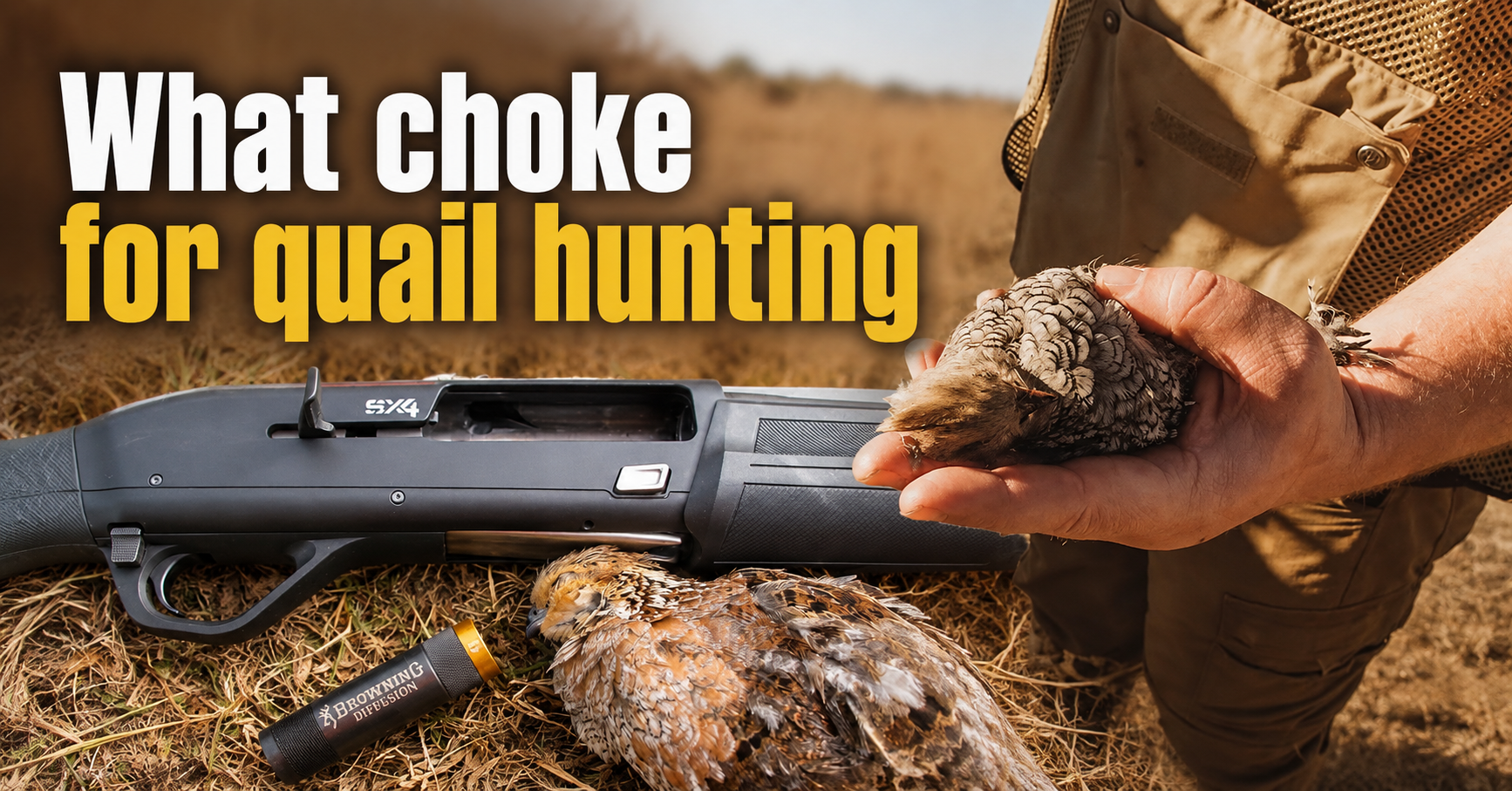

If you are wondering what choke for quail hunting works best, Improved Cylinder is the most versatile starting point. Quail are small, fast birds that commonly flush at close to moderate distances, so hunters usually need a relatively open pattern rather than the concentrated pattern produced by a Full choke.
However, cover density, hunting method, expected shooting distance, shotshell material, and the way your individual shotgun patterns can change the answer. This guide explains when to use Skeet, Improved Cylinder, Light Modified, or Modified and how to confirm your choice safely on a pattern board.
Quick Answer
Improved Cylinder is generally the best all-around choke for quail hunting because it provides a relatively open pattern suited to quick shots at close or moderate distances. Skeet or Cylinder can work for very close birds in dense cover or over a steady pointing dog. Light Modified or Modified may be more suitable when quail flush farther away in open country. Pattern your shotgun with the exact legal hunting load you intend to carry because choke labels alone cannot predict actual performance.
Quail Choke Selection at a Glance
| Choke | Typical quail application | Advantages | Limitations |
|---|---|---|---|
| Cylinder | Very close birds and exceptionally dense cover | Pattern opens quickly | May become too sparse as distance increases |
| Skeet | Close flushes over pointing dogs | Broad pattern for fast, close targets | Limited pattern density at longer distances |
| Improved Cylinder | General quail hunting in mixed cover | Balanced pattern width and useful density | May be too open for consistently distant flushes |
| Light Modified | Mixed close and moderate-distance opportunities | More density without becoming excessively tight | Not supplied with every shotgun |
| Modified | Open country, wild-flushing birds, or longer second shots | Retains pattern density farther from the muzzle | Smaller pattern at close range demands precise shooting |
| Full | Rarely necessary for ordinary quail hunting | Dense pattern at longer distances | Unforgiving at close range and may damage birds excessively |
These are starting points, not guaranteed distance ratings. Shotgun, barrel, choke, load, pellet material, and weather can all affect the pattern.
Important Firearm Safety and Legal Notice
Before handling, installing, removing, or inspecting a choke tube, completely unload the shotgun and keep the action open. Check the chamber and magazine both visually and physically while keeping the muzzle pointed in a safe direction.
Always follow the four primary firearm-safety rules:
- Treat every firearm as if it is loaded.
- Keep the muzzle pointed in a safe direction.
- Keep your finger outside the trigger guard until you are ready to shoot.
- Be certain of the target and what is in front of and beyond it.
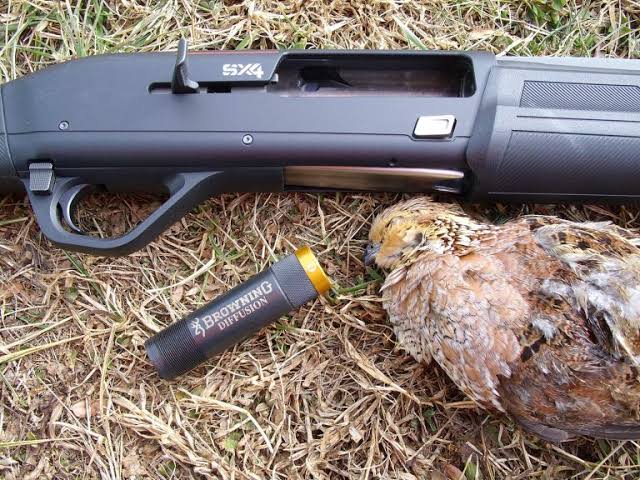
Use only choke tubes of the correct gauge and choke system for your shotgun. Similar-looking tubes are not necessarily interchangeable. For example, Browning states that its Standard Invector, Invector-Plus, and Invector-DS systems are different systems and should not be interchanged. Consult the shotgun owner’s manual and choke manufacturer before use.
Quail seasons, licenses, bag limits, permitted shotguns, shot restrictions, public-land access, and nonlead requirements vary by jurisdiction. Regulations were checked on August 16, 2026, but hunters must verify the current rules immediately before hunting.
For example, the California Department of Fish and Wildlife requires nonlead ammunition when taking wildlife with a firearm anywhere in California. Some national wildlife refuges also require approved nontoxic shot for upland hunting even when surrounding state land does not. Official regulations always override general online advice.
Why Improved Cylinder Is the Best Starting Point
A shotgun choke is a constriction at the muzzle that influences how quickly a shot pattern spreads. A relatively open choke allows the pellets to disperse sooner, while a tighter choke keeps them concentrated for a greater distance.
Quail frequently present sudden crossing or quartering shots after flushing from grass, brush, or field edges. An Improved Cylinder choke supplies a broader pattern than Modified or Full while preserving more useful density than an entirely open Cylinder choke.
Hunter education guidance commonly identifies Improved Cylinder as appropriate for small, fast, close-range game such as quail. It is still necessary to test your actual setup because two shotguns marked Improved Cylinder may not produce identical patterns.
When to Use Each Choke for Quail Hunting
Cylinder
Cylinder has no intentional muzzle constriction and produces a quickly spreading pattern. It can work when birds consistently flush very close in heavy cover, but its pattern may develop large gaps as distance increases.
Choose Cylinder only after pattern testing demonstrates adequate pellet distribution at the distances you realistically expect to shoot.
Skeet
Skeet choke is slightly more constricted than Cylinder in many choke systems. It is a practical option when hunting over a pointing dog and most birds rise at close range.
Its wider close-range pattern can be forgiving on fast targets, but hunters should pass on birds that flush beyond the proven density of the pattern.
Improved Cylinder
Improved Cylinder is the most adaptable single-choke choice for mixed quail cover. It handles close flushes while offering more pattern density than Cylinder or Skeet as distance increases.
If your shotgun has one barrel and you are uncertain what conditions to expect, start your pattern testing with Improved Cylinder.
Light Modified
Light Modified bridges the gap between Improved Cylinder and Modified. It may be useful in broken grassland, field edges, or mixed terrain where some coveys hold close but others flush farther ahead.
Because not every shotgun includes a Light Modified tube, confirm that any replacement tube matches the exact gauge, model, and choke system.
Modified
Modified provides a denser pattern for moderate-distance birds. It may be appropriate for open-country quail, late-season birds that flush ahead of hunters, or a second barrel intended for follow-up opportunities.
The tradeoff is a smaller pattern at close range. A Modified choke does not extend a hunter’s ethical range beyond demonstrated shooting ability and verified pattern performance.
Full
Full choke is generally tighter than necessary for typical quail hunting. At close range, it produces a small, concentrated pattern that can make hits more difficult and damage edible meat.
It should not be selected merely to compensate for inconsistent shooting or birds that are already beyond a responsible range. If quail are flushing too far away, changing approach, cover, pace, or hunting method is often safer than continually tightening the choke.
Best Choke Combinations for Double-Barrel Shotguns
An over-under or side-by-side allows two different choke constrictions. A common starting combination is:
- First barrel: Skeet or Improved Cylinder
- Second barrel: Improved Cylinder, Light Modified, or Modified
The more open first barrel covers a close initial flush. The tighter second barrel provides additional pattern density if the next safe opportunity is farther away.
Do not assume that the lower barrel of every over-under fires first. Trigger arrangement, barrel selector position, and mechanical design differ. Read the shotgun manual and confirm the firing order while the firearm is unloaded.
Match the Choke to Quail Habitat and Hunting Style
Dense Brush or Woodland Edges
In thick cover, shots may develop quickly and nearby vegetation can limit visibility. Skeet or Improved Cylinder is normally a reasonable starting point. If visibility is too limited to identify the bird and confirm a safe background, do not shoot.
Open Grassland and Desert Habitat
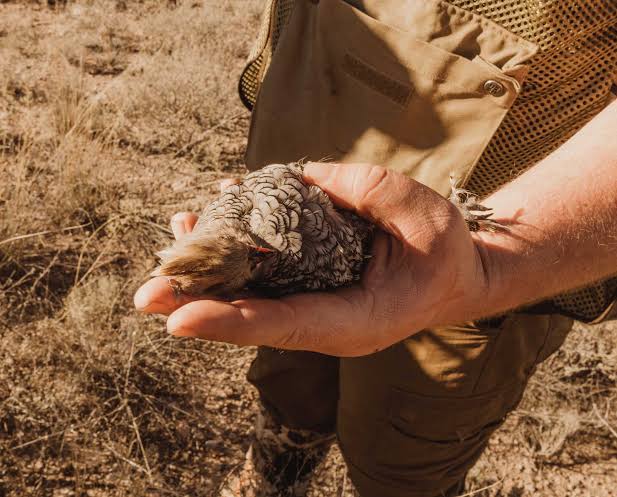
Gambel’s, scaled, or other quail in open terrain may run or flush farther ahead. Improved Cylinder, Light Modified, or Modified may provide better pattern density, depending on actual shooting distance and load performance.
Hunting Over a Pointing Dog
A steady pointing dog can provide time to prepare and may help produce closer, more predictable flushes. Skeet or Improved Cylinder often suits these conditions.
Never shoot at a low bird with a dog, person, building, road, vehicle, or livestock in front of or beyond it. A dog that breaks and chases a flushing bird can rapidly enter the line of fire.
Hunting Without a Dog
Quail may flush unexpectedly or at inconsistent distances when hunters walk cover without a dog. Improved Cylinder is a practical starting point, while Light Modified may help if pattern tests show that most safe opportunities occur farther away.
Preserve or Released-Bird Hunting
Released birds sometimes hold tightly and flush close, making Skeet or Improved Cylinder suitable. Preserve rules may specify permitted ammunition, shot materials, or firearm procedures, so ask the operator before arriving.
How Shotshell Material Affects Choke Choice
Choke performance cannot be separated from the shotshell. Lead, steel, bismuth, tungsten-based materials, pellet size, wad design, payload, and velocity may produce different patterns through the same choke.
Where legal, No. 7½ or No. 8 lead shot has traditionally been used for quail. Where lead is prohibited, choose a legal nontoxic load appropriate for small upland birds and pattern it before hunting. Do not assume that the same pellet number performs identically across different materials.
Steel shot may produce a different and sometimes tighter pattern than a comparable lead load. Not every older barrel or choke is approved for steel or other hard shot materials. Follow the shotgun and choke manufacturer’s instructions rather than relying on a general statement that a particular constriction is safe.
Never fire steel through a choke marked as unsuitable for steel. Do not assume that Full choke is safe with steel simply because it fits the barrel.
How to Pattern a Shotgun for Quail
Patterning is the only reliable way to determine what choke works with your individual shotgun and hunting load. Quail Forever recommends testing at the distances where you expect to shoot rather than relying only on the traditional 40-yard patterning distance.
- Use a safe shooting range. Select a location with an adequate backstop and permission to discharge a shotgun.
- Wear eye and hearing protection. Ensure everyone remains behind the firing line.
- Use the hunting setup. Test the same shotgun, choke, shell, shot material, and pellet size you plan to carry.
- Start at a realistic distance. Test close and moderate distances that reflect your quail habitat.
- Use a large pattern sheet. Place a visible aiming point near the center.
- Fire more than one pattern. A single shell may not represent consistent performance.
- Draw a 30-inch circle around the densest useful portion. Look for even pellet distribution, not only the total pellet count.
- Check for bird-sized gaps. Large openings can allow a small bird to pass through with inadequate pellet strikes.
- Compare chokes and loads. Change only one variable at a time so you know what produced the difference.
- Establish a personal limit. Stop shooting at distances where the pattern is too sparse or your hit consistency declines.
Pattern density alone does not determine ethical range. Target speed, angle, visibility, shooter proficiency, wind, other hunters, dogs, and the background must also support a responsible shot.
What to Look for in a Good Quail Pattern
A useful quail pattern should be reasonably centered and evenly distributed across the effective area. It should not contain large gaps through which a quail-sized target could pass.
Watch for these problems:
| Patterning problem | Possible cause | Responsible next step |
|---|---|---|
| Large empty areas | Choke too open, unsuitable load, or inconsistent shell performance | Test another choke or compatible load |
| Very small, dense center | Choke may be tighter than needed | Try a more open choke and retest |
| Pattern consistently off-center | Fit, point of impact, technique, or equipment issue | Confirm technique and have the shotgun inspected if necessary |
| Pattern adequate close but sparse farther away | Normal pattern expansion or choke too open for that distance | Shorten shooting distance or evaluate the next tighter choke |
| Uneven patterns with nontoxic shot | Load and choke combination may not work well together | Test another manufacturer-approved combination |
Choke Tube Compatibility and Maintenance
- Use only the correct choke family and gauge for the shotgun.
- Read the owner’s manual before installing or removing a tube.
- Unload the firearm completely before checking the choke.
- Never change a choke while the shotgun is loaded.
- Ensure the tube is correctly seated according to manufacturer instructions.
- Never fire a threaded barrel without an approved choke tube installed unless the manufacturer specifically permits it.
- Inspect the tube and barrel threads for damage, corrosion, bulging, or fouling.
- Use only the choke lubricant or maintenance method recommended by the manufacturer.
- Recheck the tube periodically because firing and field use may loosen some designs.
- Have damaged, seized, or incorrectly fitted tubes examined by a qualified gunsmith.
Quail Hunting Safety Around Dogs and Other Hunters
Fast covey flushes can create excitement and confusion. Establish zones of fire before entering cover and review the plan whenever hunters change positions.
The International Hunter Education Association teaches that each hunter must remain within an established safe zone and avoid swinging a shotgun outside that zone. Hunters should walk in a coordinated line where terrain permits and communicate before moving ahead, crossing, or approaching a dog on point.
- Do not fire at low-flying birds when a dog or person could be in the shot path.
- Do not shoot across another hunter’s position.
- Do not shoot at sound, movement, or an unidentified bird.
- Do not allow a wider choke pattern to justify a marginal or unsafe shot.
- Keep the safety engaged and finger outside the trigger guard until a safe shot is available.
- Keep the muzzle controlled when crossing fences, stepping over obstacles, or helping a dog.
- Stop hunting if visibility, weather, footing, or group positioning becomes unsafe.
Common Choke-Selection Mistakes
Choosing a Choke by Name Without Patterning
Choke markings describe intended constriction, not guaranteed field performance. Confirm the pattern with your actual load.
Using Full Choke to Compensate for Misses
A tighter choke cannot correct poor gun fit, inconsistent mounting, stopping the swing, or shots beyond a hunter’s practiced ability. Work with a qualified shooting instructor and practice on appropriate clay targets.
Ignoring the Hunting Environment
Skeet may work well over a close-working pointing dog but prove too open for distant desert flushes. Modified may retain density in open country but be unnecessarily tight in thick cover.
Changing Both Choke and Load at the Same Time
If multiple variables change, it becomes difficult to understand why the pattern improved or deteriorated. Test one change at a time.
Assuming All Choke Tubes Fit
Choke systems can differ within the same firearm brand. An incompatible tube can damage the shotgun and seriously injure the shooter.
Ignoring Nonlead Requirements
Some states and hunting areas require nontoxic shot for quail or other upland species. Verify both state regulations and rules for the specific property.
What Not to Do
- Do not install, remove, or tighten a choke in a loaded shotgun.
- Do not use an incompatible choke tube or incorrect gauge.
- Do not fire hard nontoxic shot through a choke not approved for it.
- Do not assume a choke designation guarantees an ethical range.
- Do not take low shots near dogs or people.
- Do not shoot beyond your safe zone of fire.
- Do not hunt without checking current seasons, licenses, bag limits, land rules, and shot restrictions.
- Do not use equipment as a substitute for practice, positive identification, or sound judgment.
FAQs
1. What is the best all-around choke for quail hunting?
Improved Cylinder is the best general starting point for most quail hunting because it balances a relatively wide pattern with useful density at close and moderate distances.
2. Is Improved Cylinder good for quail?
Yes. Hunter education materials commonly recommend Improved Cylinder for small, fast upland birds at relatively close ranges. Pattern testing is still necessary.
3. Is Skeet choke good for quail hunting?
Skeet can be effective for close flushes in dense cover or over a pointing dog. It may become too open when birds consistently flush farther away.
4. Can I use Modified choke for quail?
Yes. Modified may suit open country, late-season birds, or longer second shots. It can be unforgiving on very close birds, so confirm its pattern at realistic distances.
5. Is Full choke too tight for quail?
Full choke is generally tighter than necessary for ordinary quail hunting. It creates a small close-range pattern and may damage meat. It should not be used to justify excessively long shots.
6. Can I use Cylinder choke for quail?
Cylinder can work for extremely close birds, but pattern density may decline quickly. Test it at every distance where you might responsibly shoot.
7. What chokes should I use in an over-under for quail?
A practical starting combination is Skeet or Improved Cylinder for the first barrel and Improved Cylinder, Light Modified, or Modified for the second.
8. Which barrel should fire first on an over-under?
It depends on the shotgun and barrel-selector position. Do not assume the lower barrel always fires first. Read the manual and verify the setting while the firearm is unloaded.
9. What choke works for quail over pointing dogs?
Skeet or Improved Cylinder often works well because pointing dogs may produce relatively close flushes. Dog steadiness and safe shooting height remain more important than choke selection.
10. What choke is best for quail without a dog?
Improved Cylinder is a versatile starting point. If birds consistently flush farther away and pattern testing supports the change, Light Modified may be appropriate.
11. What choke is best for Gambel’s quail?
Improved Cylinder or Light Modified can be useful starting points. Gambel’s quail may run and flush farther in open desert terrain, but local conditions and pattern results should guide the final choice.
12. What choke is best for bobwhite quail?
Improved Cylinder is commonly suitable for bobwhite hunting in mixed cover. Skeet may work over close-holding birds, while Modified may suit more open fields.
13. Does shotgun gauge change the best choke?
The same choke names describe general pattern behavior across gauges, but payload and pattern density differ. Pattern each gauge with its intended load rather than assuming identical results.
14. What choke should I use in a 20-gauge for quail?
Improved Cylinder is a strong starting point for a 20-gauge. An over-under might be set up with Improved Cylinder and Modified, depending on cover and expected distance.
15. Can I hunt quail with a 12-gauge and Improved Cylinder?
Yes, where the gauge and load are legal. Use an appropriate upland load, pattern the shotgun, and select shots that minimize unnecessary meat damage.
16. What choke should I use in a 28-gauge?
Improved Cylinder is a practical starting point. Because a 28-gauge may carry a smaller payload than a common 12- or 20-gauge load, pattern density deserves careful attention.
17. Is a .410 suitable for quail hunting?
A .410 can be used where legal, but its smaller shot charge leaves less room for aiming or range-estimation errors. It requires careful patterning, disciplined shot selection, and substantial practice.
18. What shot size is commonly used for quail?
No. 7½ and No. 8 lead shot are traditional choices where lead is legal. Required or preferred nontoxic materials may call for different pellet sizes, so consult regulations and load-manufacturer guidance.
19. Does steel shot require a different choke?
It may. Steel can pattern differently from lead and is unsuitable for some older barrels or choke tubes. Use only a combination explicitly approved by the firearm and choke manufacturers.
20. Can I shoot steel through a Full choke?
Only if the exact barrel and choke are specifically approved for that steel load. Never make a general assumption based solely on the word “Full.”
21. How far is Improved Cylinder effective for quail?
There is no universal distance. Its useful range depends on the shotgun, choke dimensions, load, pellet material, target angle, and shooter. Pattern testing establishes the practical limit.
22. How often should I pattern my quail shotgun?
Pattern it whenever you change the choke, load, pellet material, or shotgun. Retest if the firearm is repaired, the choke is replaced, or field performance suggests a problem.
23. How do I identify the choke installed in my shotgun?
Check the markings or notch code described in the owner’s manual. If identification is uncertain, keep the shotgun unloaded and ask the manufacturer or a qualified gunsmith.
24. Can I hunt quail with a fixed-choke shotgun?
Yes, if the firearm and load are legal and the fixed choke produces a suitable pattern. Pattern the shotgun to understand its limitations rather than attempting to modify the barrel yourself.
25. Should I tighten my choke late in the season?
Only if birds consistently flush farther away and pattern testing demonstrates a responsible improvement. Better positioning, slower movement, and passing distant birds may be more appropriate.
26. Do I need nontoxic shot for quail?
It depends on the state and property. California requires nonlead ammunition for taking wildlife with a firearm, and some national wildlife refuges require approved nontoxic shot for upland hunting. Check every applicable rule.
27. Can I change choke tubes during a hunt?
Yes, if lawful and safe, but completely unload the shotgun first, keep the action open, control the muzzle, and follow the manufacturer’s procedure. Never change a tube in a loaded firearm.
28. Does a tighter choke make me a better quail shooter?
No. A tighter choke creates a smaller pattern and may expose mounting or lead errors more clearly. Practice, shotgun fit, safe shot selection, and pattern knowledge matter more.
Final Answer
For most hunters asking what choke for quail hunting, Improved Cylinder is the most useful all-around answer. Choose Skeet or Cylinder for consistently close flushes and consider Light Modified or Modified when safe shots regularly occur farther away in open country. Pattern the exact shotgun, choke, and legal load before hunting, and never use a choke or shot material that the manufacturer has not approved. Follow local quail regulations, remain within your safe zone of fire, and pass any shot that could endanger a dog, another hunter, or anything beyond the bird.
Read more: