
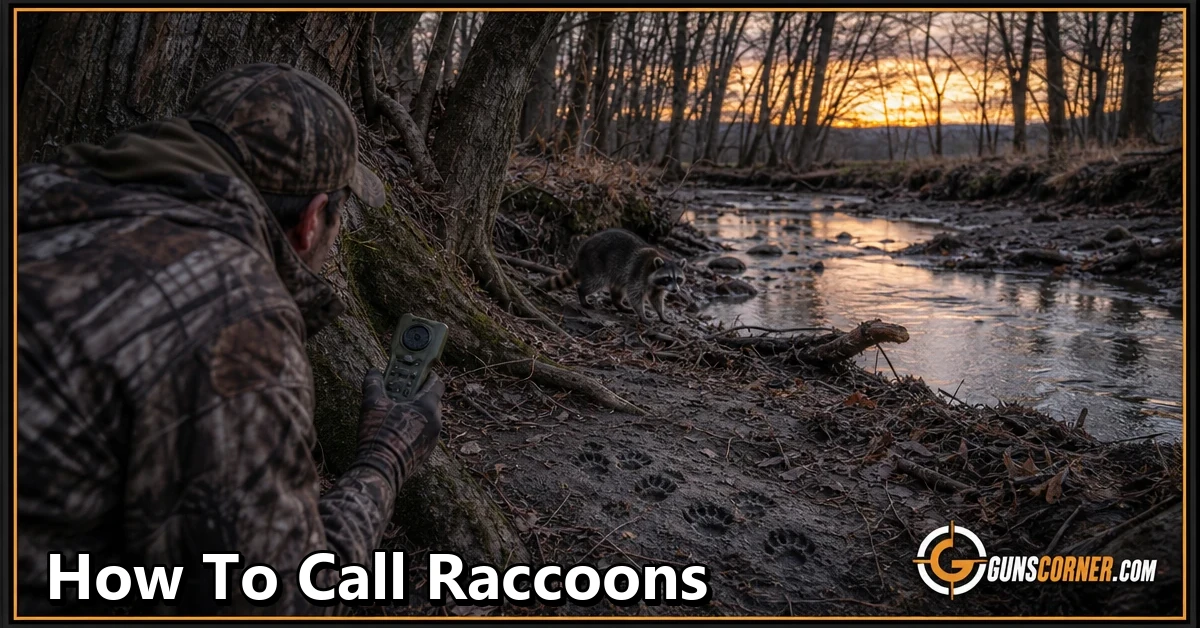

Learning how to call raccoons requires more than choosing a sound and pressing a button. A responsible caller must first confirm local regulations, identify legal access, understand likely raccoon habitat, choose a safe setup, and be prepared for non-target wildlife. Calling can be unpredictable, so use it as a scouting and hunting method—not a guaranteed way to attract an animal.
To call raccoons, first verify your license, season, legal calling methods, shooting hours, land access, and firearm rules with your wildlife agency. Scout wooded waterways, brushy edges, denning cover, tracks, scat, feeding areas, and travel routes, then set up with concealment, a safe backstop, and the wind in mind. Begin with low-volume raccoon or young-raccoon distress sounds in short, varied sequences while watching likely approach routes. Take action only after positive identification and a completely safe, legal shot opportunity.
Important Legal and Safety Notice Before You Hunt
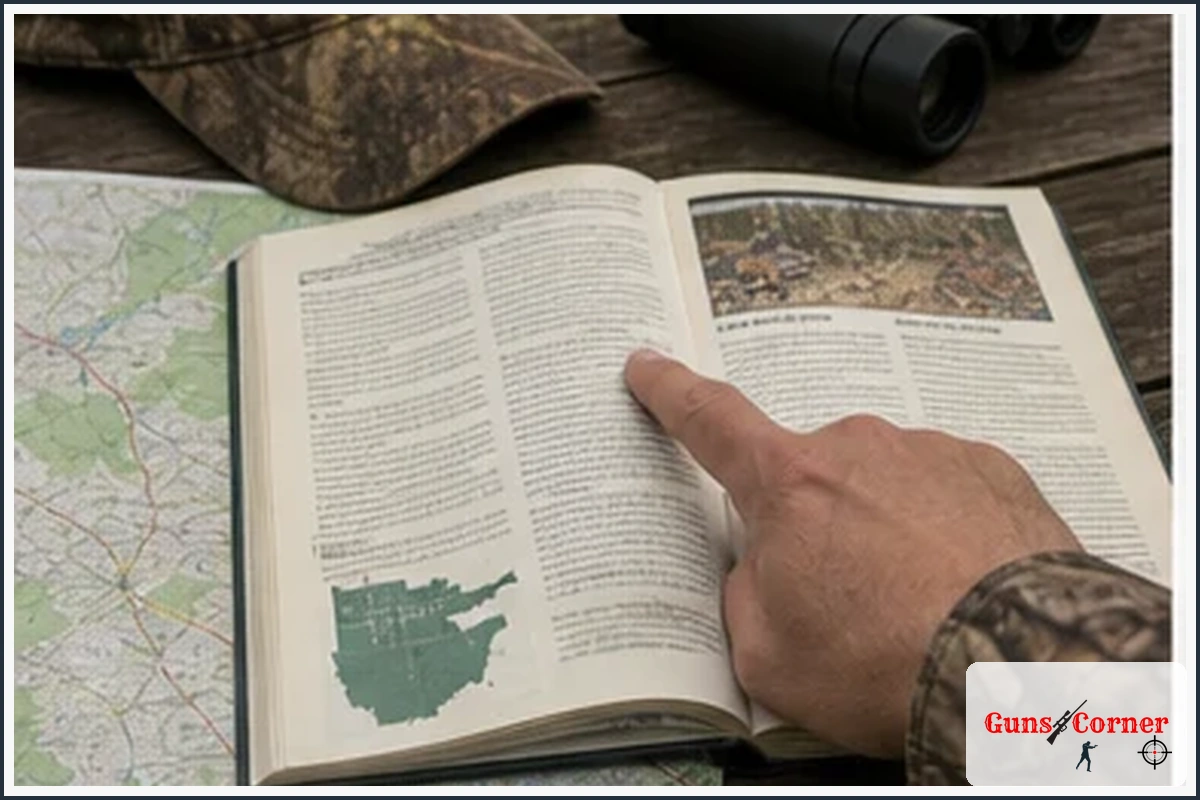
Raccoon hunting regulations vary by state, province, county, season, land type, and weapon. Before hunting, check the current rules published by your official wildlife agency. Verify the following:
- Hunting license, permits, and any required tags
- Open seasons, legal hunting hours, and bag limits
- Legal firearms, ammunition, archery equipment, and electronic-call rules
- Bait restrictions, harvest reporting, tagging, and carcass-disposal requirements
- Public-land boundaries, private-land permission, and local discharge ordinances
- Required hunter-orange or visibility clothing
- Safe transport and storage requirements for firearms
- Weather, navigation, communication, and emergency plans
Complete a hunter-education course and consider going with an experienced, ethical mentor. Always identify the target and what lies beyond it. Never shoot toward roads, houses, livestock, pets, people, trails, vehicles, or unclear movement.
Before You Call: Confirm the Goal, Species, and Rules
Calling for hunting versus nuisance-wildlife management
Calling for a lawful hunt is different from dealing with a nuisance animal near a home, livestock, pets, or public property. In nuisance situations, local wildlife officers, animal-control agencies, or licensed wildlife professionals may be safer and more appropriate than attempting to call and shoot an animal.
Do not use a call to draw raccoons into neighborhoods, roadsides, yards, or areas where people and pets may be present.
Verify that raccoon hunting and electronic calls are legal where you are
Some jurisdictions restrict electronic calls, nighttime hunting, artificial light, firearm types, ammunition, or discharge near occupied buildings. Do not assume that a method described by another hunter is legal in your area.
Check season dates, licensing, shooting hours, bait restrictions, and local discharge rules
Confirm current regulations immediately before the hunt. Pay particular attention to whether baiting is allowed, whether nighttime hunting requires special authorization, and whether your chosen equipment is permitted.
Identify the species and avoid calling protected or non-target wildlife
Raccoons can be confused with other dark-coated mammals, especially in poor light. Learn local species identification before hunting. Do not rely on sound, movement, or eye shine alone, and stop calling if non-target wildlife repeatedly responds.
How Raccoon Calling Works
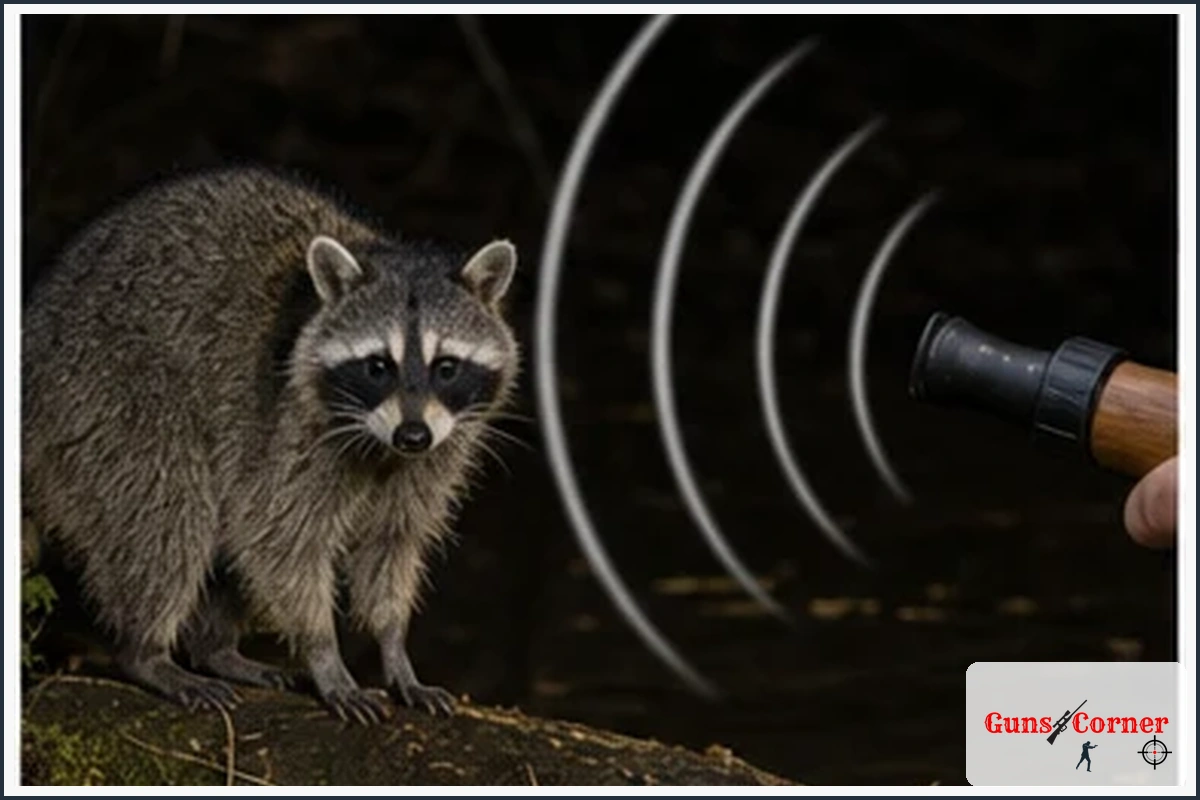
What calling can and cannot do
A call may attract an animal that is already nearby and willing to investigate, but it cannot reliably create raccoon activity where suitable habitat is absent. Calling also does not replace scouting, safe positioning, legal preparation, or positive identification.
Why food availability, weather, cover, and human disturbance affect responses
Animal movement can change with food availability, temperature, precipitation, wind, cover, hunting pressure, and nearby human activity. These variables make calling results inconsistent from one location or day to another.
Why a response is not guaranteed—even in occupied habitat
Tracks or other sign confirm that raccoons may use an area, but they do not prove that one will respond to a particular sound. An animal may be resting, feeding elsewhere, circling downwind, or simply ignoring the call.
Choose a Raccoon Call
Hand calls: strengths, limitations, and practice requirements
Hand calls are compact, quiet to transport, and do not require batteries. Their limitations include a smaller sound library and the need to practice controlling volume and tone. Practice before hunting so you can operate the call without excessive movement.
Electronic calls: sound library, volume control, remote range, weather resistance, battery life, and speaker directionality
Electronic calls can offer multiple sounds, remote operation, and volume control. When comparing one, check the current manufacturer documentation for sound selection, operating controls, battery requirements, weather limitations, remote range, and speaker directionality.
These specifications describe equipment capability, not hunting success. A larger sound library or louder speaker does not prove that a call attracts more raccoons.
Call sounds to test cautiously
- Raccoon vocalizations such as chatter, squalls, or conflict sounds
- Kit or young-raccoon distress sounds
- Small-prey distress sounds, treated as an unverified tactic rather than a guaranteed attractant
There is not enough information here to rank these sounds universally. Test them cautiously, follow local law, and keep notes about habitat, weather, sound, and animal response.
How to compare calls without assuming a manufacturer’s marketing claim is evidence
Compare controls, durability information, battery access, sound quality, remote usability, and warranty terms using current manufacturer documentation. Treat claims such as “proven,” “long range,” or “most effective” as marketing unless supported by independent, credible evidence.
Find a Legal, Safe Calling Location
Look for sign: tracks, scat, feeding areas, travel routes, dens, and water access
Raccoon sign may include tracks, scat, disturbed feeding areas, travel routes, denning cover, and use of creek or river corridors. One sign does not prove current activity, so look for several clues together and consider how fresh they appear.
Use maps, landowner information, and fresh field observations together
Use property maps, public-land regulations, aerial imagery, and on-foot scouting. Confirm boundaries before entering. On private land, obtain clear permission and follow instructions about gates, livestock, parking, and access routes.
Set up with a safe backstop and a clear view of the approach
Choose a position where you can identify an animal without swinging a firearm across unsafe areas. A natural earth bank or other reliable backstop is important, but local terrain must still be evaluated carefully.
Keep roads, homes, livestock, pets, trails, and neighboring hunters outside the danger area
Do not call where an approaching animal could place people, buildings, roads, pets, or livestock behind it. If you cannot control the background and shooting direction, do not hunt that location.
Account for wind, scent, concealment, and the possibility of animals circling downwind
Set up with cover behind or beside you and a view of likely approaches. Consider that an animal may circle toward the downwind side. Avoid making scent control claims stronger than the evidence supports; careful setup and movement discipline matter more than relying on a product.
Step-by-Step Raccoon Calling Setup
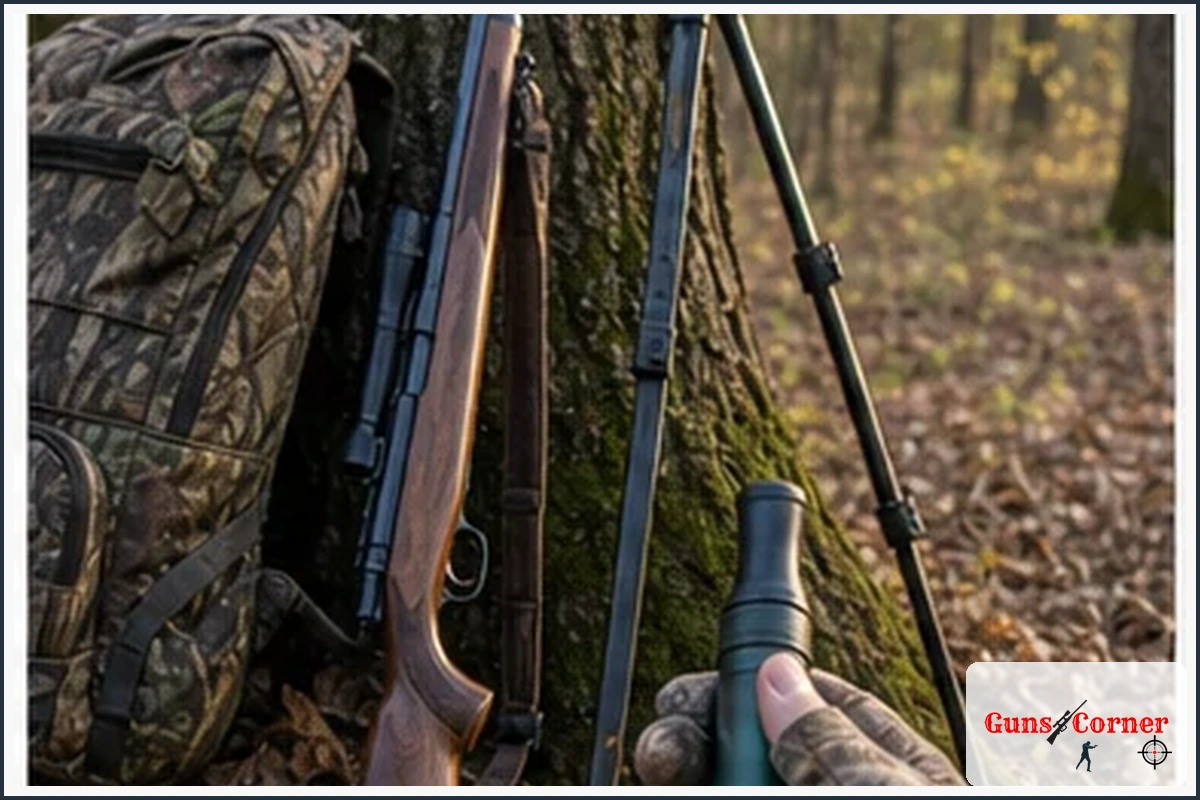
Arrive quietly and prepare before starting the call
Unload or safely carry your firearm as required, organize equipment, confirm the shooting direction, and identify your exit route before calling. Silence phones and avoid unnecessary movement.
Place the caller where sound carries without exposing your position
If using an electronic caller, place it where you can control it without repeatedly moving into view. Keep it away from unsafe shooting angles and protect it from conditions beyond its documented weather rating.
Begin with low volume and intermittent sequences
Start quietly enough to avoid overwhelming nearby animals or disturbing surrounding users. Use short sequences followed by pauses rather than continuously broadcasting.
Vary pauses and sounds instead of continuously broadcasting
There is no verified universal cadence or stand duration established by the supplied evidence. Vary sounds cautiously, observe carefully, and record what you tried rather than assuming a particular sequence always works.
Watch likely cover and the downwind approach
Scan slowly between pauses. Raccoons may approach through cover, along waterways, or from an unexpected direction. Keep your firearm pointed safely and avoid sudden movements.
End the stand without rushing and leave the area safely
Before standing, unload or secure your firearm according to local requirements and confirm that no person or animal is in your movement path. Leave quietly and avoid crossing property boundaries or unsafe terrain.
When to Call Raccoons
Daytime calling near likely den or resting cover
Daytime calling may be considered near suitable cover such as wooded creek bottoms, brushy edges, and possible denning areas. However, observations from individual hunters are not proof of a universal daytime response.
Night calling: visibility, identification, and firearm-safety constraints
Night hunting creates additional challenges in identifying animals, assessing backgrounds, navigating, and complying with artificial-light and shooting-hour rules. Only hunt at night where specifically legal, and use equipment and methods permitted by local regulations.
How season, temperature, wind, precipitation, and food abundance may change activity
Weather and food conditions can influence movement, but the exact response varies by location and individual animal. Avoid treating generalized seasonal advice as a guarantee.
Why published timing advice should be treated as field experience, not a universal rule
Articles and hunter reports can suggest ideas to test, but they do not replace wildlife-agency regulations or controlled evidence. Keep your own lawful field notes and adapt cautiously.
Calling Tactics for Common Field Situations
Wooded creek bottoms and river corridors
These areas may provide travel cover, water access, and denning structure. Set up where you can see a safe approach without pointing toward roads, homes, water users, or neighboring properties.
Farm edges, brush piles, and denning cover
Field edges and brushy areas can offer cover and feeding opportunities. Obtain landowner permission, avoid disturbing livestock, and confirm that the background remains safe across the entire potential approach.
Urban or suburban edges: when not to call
Do not call near homes, playgrounds, roads, pet areas, public trails, or occupied buildings unless the activity is clearly legal and handled by an authorized professional. In many such settings, shooting is unsafe or prohibited even when raccoons are present.
What to change after an unproductive stand
Review your notes. Check whether the habitat showed fresh sign, whether wind carried your scent toward cover, whether the caller was positioned safely, and whether human disturbance affected the site. Change one variable at a time so you can learn what mattered.
Identify the Animal Before Taking a Shot
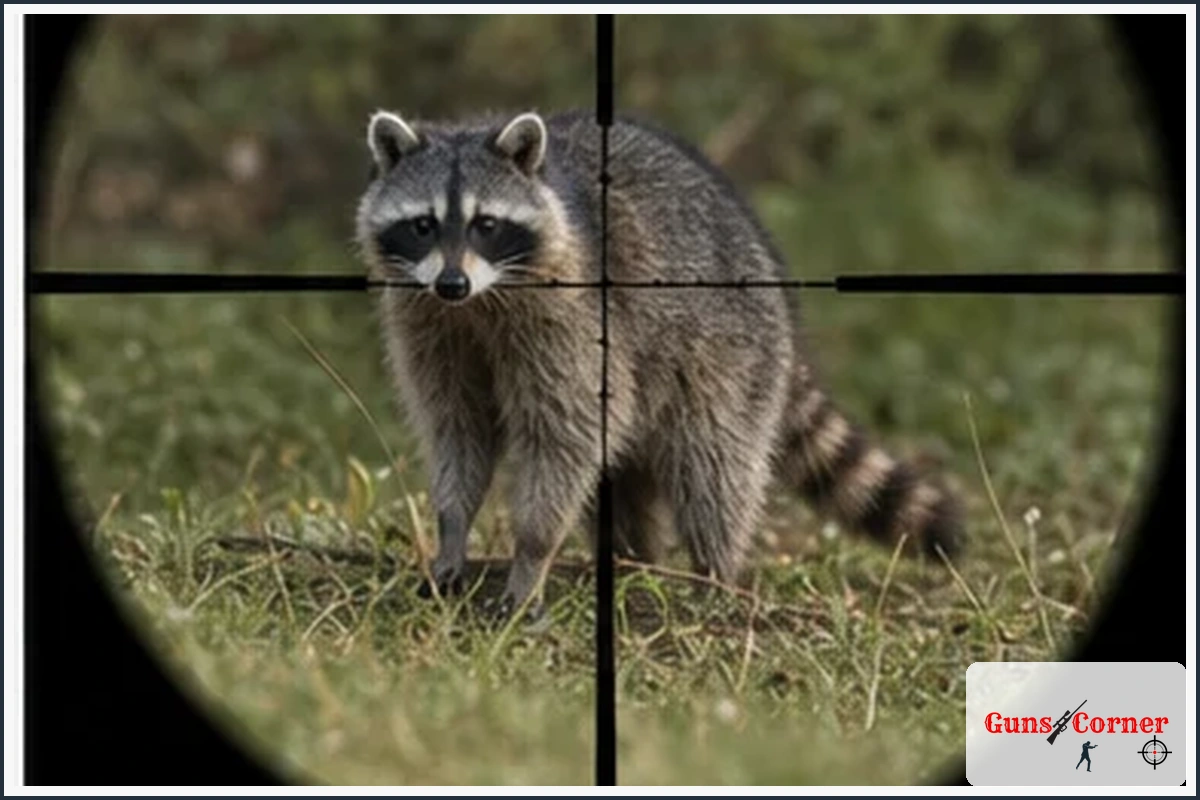
Use positive identification rather than movement, eye shine, or sound alone
Confirm the animal’s shape, behavior, and species at a distance you can safely identify. Never shoot at a sound, shadow, silhouette, or eye shine.
Confirm a safe backstop and know what lies beyond the target
A legal target is not enough. You must also know what is behind it and whether the projectile could endanger people, property, livestock, or other animals.
Do not shoot toward buildings, roads, water, or occupied areas
Water and hard surfaces can create dangerous deflection, while buildings and roads may contain unseen people or vehicles. If the background is uncertain, pass on the shot.
Use equipment and ammunition permitted by local regulations
Verify the legal weapon, ammunition, lighting equipment, and transport requirements for your jurisdiction. Follow the firearm manufacturer’s instructions and basic firearm-safety rules at all times.
After the Shot: Recovery, Humane Handling, and Disease Precautions
Plan for tracking and recovery before calling
Carry navigation, lighting, gloves, and communication equipment appropriate for the terrain. Know the legal requirements for tagging, reporting, transport, and disposal before beginning the hunt.
Keep distance from injured or aggressive raccoons
Do not approach an injured or unusually aggressive raccoon. Keep people and pets away, use appropriate professional or agency assistance when needed, and follow local guidance.
Use gloves and avoid contact with blood, saliva, feces, and nervous tissue
Wear disposable gloves for handling and clean equipment afterward. Avoid touching your face while working, and wash exposed skin thoroughly. Do not handle an animal bare-handed if illness or abnormal behavior is suspected.
Follow official guidance for suspected rabies exposure
If you are bitten, scratched, or exposed to saliva or nervous tissue, wash the area promptly with soap and water and contact a medical professional or local public-health authority for current advice. Do not wait for symptoms. For authoritative information, consult the CDC rabies guidance.
Dispose of carcasses and handle harvested animals according to local rules
Follow your wildlife agency’s instructions for carcass disposal, transport, tagging, and reporting. Use the harvest responsibly and keep meat clean and cool according to safe local handling guidance.
Ethical and Wildlife-Management Considerations
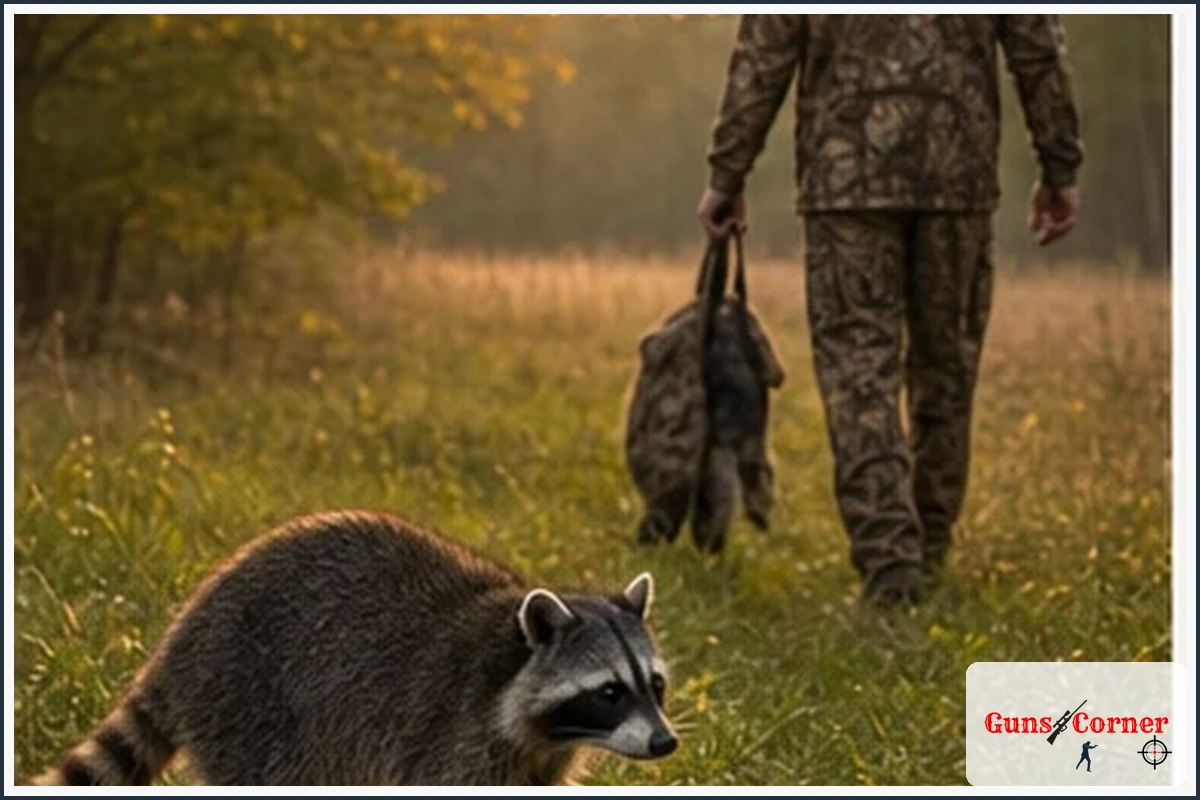
Do not use calling to create unnecessary conflict with people, pets, or livestock
Calling is inappropriate wherever it creates a foreseeable risk to people, domestic animals, or property. Respect landowners, hikers, neighbors, and other hunters.
Understand that calling can attract non-target predators and scavengers
Distress and conflict sounds may interest animals other than raccoons. Be prepared to identify every response and stop if you cannot maintain safe species identification.
Follow bag limits, tagging, reporting, and land-management requirements
Comply with current regulations rather than relying on older articles or advice from another jurisdiction.
Do not claim that removing raccoons automatically improves conservation outcomes
Wildlife-management effects depend on local population conditions, habitat, regulations, and management objectives. Responsible hunting should support lawful conservation goals, not assume that removing animals always benefits other wildlife.
Troubleshooting a Failed Stand
| Problem | Possible Cause | What to Do |
|---|---|---|
| No response | Little fresh sign, unsuitable timing, wind, food availability, or disturbance | Recheck habitat and sign, review the wind, rotate to another legal location, and keep notes. |
| Animals hang up | Exposed movement, poor concealment, unsafe approach route, or scent carried toward cover | Improve concealment, reduce movement, and reposition only when it can be done safely. |
| Only non-target animals respond | Sound attracts other species or identification is uncertain | Stop calling, identify the animals from a safe position, and change locations if necessary. |
| Repeated pressure produces fewer sightings | Animals may avoid frequent disturbance, or the site may have limited activity | Rotate legal locations, avoid overcalling, and compare field notes over time. |
| Visibility is poor | Darkness, fog, precipitation, or dense vegetation | Do not shoot. End the stand or move only when navigation and identification are safe. |
| Property boundaries are unclear | Outdated maps, unmarked lines, or changing access | Stop and verify ownership and permission before continuing. |
Quick Field Checklist

License, permission, season, and equipment
- Current license, permits, tags, and regulations checked
- Season, hours, bag limits, and calling rules confirmed
- Public-land boundaries or written private-land permission verified
- Legal firearm, ammunition, light, and caller prepared
Wind, backstop, visibility, and safe shooting direction
- Wind and likely downwind approach considered
- Safe backstop confirmed
- Roads, homes, trails, livestock, pets, and people excluded from the danger area
- Target-identification and no-shot conditions understood
Caller, spare power, navigation, light, and communication gear
- Caller tested before leaving
- Spare batteries or power carried when appropriate
- Map, compass, GPS, flashlight, and phone or radio packed
- Weather and emergency plan shared with someone else
Gloves, recovery supplies, and emergency plan
- Disposable gloves and basic first aid available
- Recovery and legal transport plan prepared
- Water, clothing layers, and communication equipment packed
- Plan for suspected disease exposure understood
When to Get More Training or Professional Guidance
Seek additional instruction if you have never handled a firearm, have not completed hunter education, are unsure about local regulations, cannot read land boundaries, or are not confident about safe shooting angles. A certified instructor, official wildlife agency, experienced ethical mentor, or reputable conservation organization can help you learn safely.
For raccoons near homes, pets, livestock, or public areas, contact the appropriate wildlife or animal-control authority rather than attempting an improvised hunt.
After the Hunt: Follow-Up, Gear Care, and Learning
Unload and store firearms safely, clean and dry equipment according to manufacturer instructions, and inspect calls, batteries, lights, boots, and navigation tools. Record the location, weather, wind, sign, sounds used, animal responses, and any safety concerns.
Complete required harvest reporting and tagging. Review what worked without assuming that one successful or unsuccessful stand proves a universal rule. Responsible notes improve future decisions while reducing unnecessary disturbance.
Recommended Hunting Gear and Tools to Consider
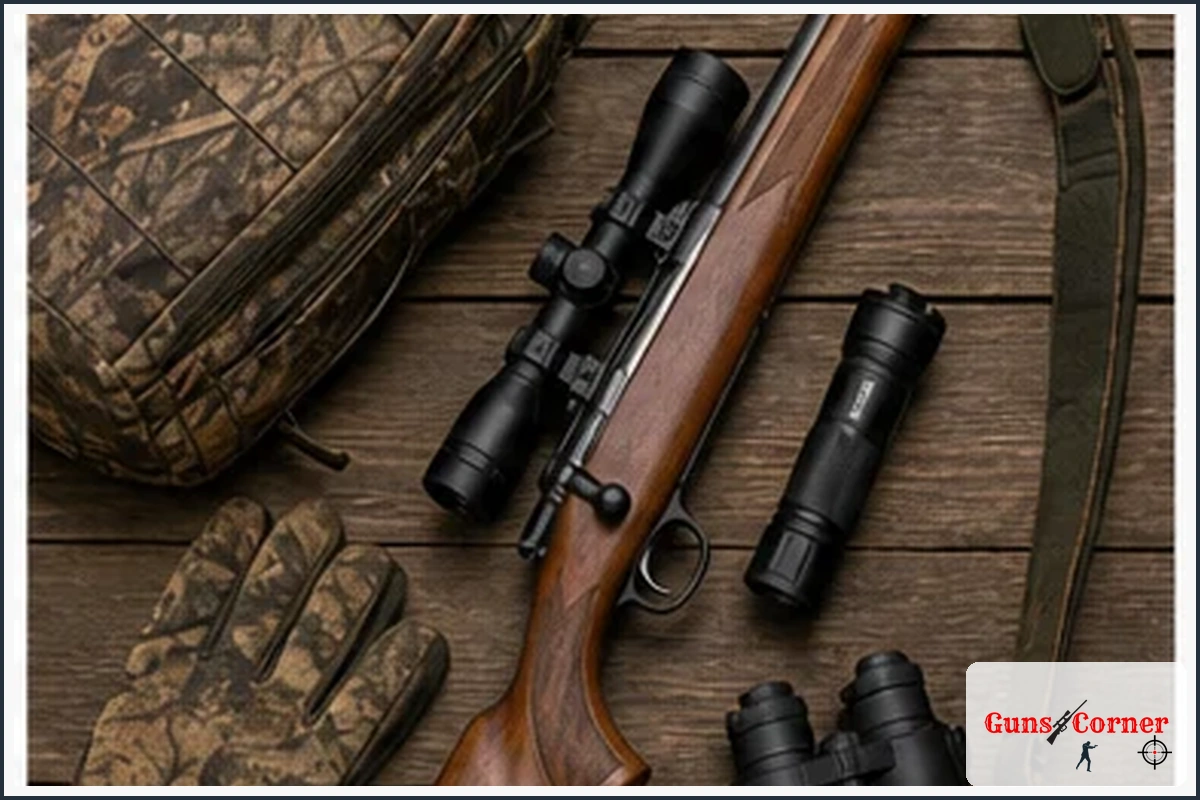
You do not need expensive equipment to call raccoons responsibly. Choose gear based on local law, terrain, weather, hunting method, safety needs, and experience.
- Legal hunting weapon, ammunition, and visibility clothing
- Hand call or electronic caller permitted in your jurisdiction
- Spare batteries or power for electronic equipment
- Weather-appropriate clothing and quiet footwear
- Binoculars or other suitable optics for identification
- Map, compass, GPS, flashlight, and emergency communication
- First aid kit, water, and basic recovery supplies
- Disposable gloves and clean transport or meat-care supplies when applicable
Frequently Asked Questions
Can you call raccoons during the day?
Daytime calling may work near suitable cover, but response is not guaranteed. Use only legal calling hours and maintain safe identification and shooting conditions.
What sounds are commonly used to call raccoons?
Hunters commonly test raccoon chatter, squalls, conflict sounds, young-raccoon distress, and small-prey distress. No sound should be treated as universally superior or guaranteed to attract raccoons.
Are electronic calls legal for raccoon hunting?
Rules vary by jurisdiction. Check your official wildlife agency for electronic-call, artificial-light, nighttime, weapon, and season restrictions before hunting.
How long should you stay on one stand?
The supplied evidence does not establish a reliable universal stand duration. Choose a safe, legal period based on local conditions, then record the result and adjust locations or sounds cautiously.
Is it safe to call raccoons near homes or roads?
Usually, these areas create serious identification, backstop, and public-safety problems. Do not call or shoot where people, vehicles, pets, buildings, or livestock could enter the danger area.
What should you do if a raccoon appears sick, unusually aggressive, or injured?
Do not approach it or allow pets and people near it. Contact local animal control, wildlife authorities, or public-health officials, especially after a bite, scratch, or saliva exposure.
Final Thoughts
How to call raccoons safely begins with regulations, legal access, habitat scouting, and a controlled setup—not with a particular sound or expensive caller. Use short, cautious calling sequences, watch likely approaches, and remain ready for non-target wildlife. The most important decision is often passing on a shot when identification, background, or legality is uncertain.
Hunt patiently, respect landowners and wildlife, follow current regulations, and handle any harvest responsibly. Results will vary with weather, habitat, animal behavior, pressure, skill, and ethical decision-making.