
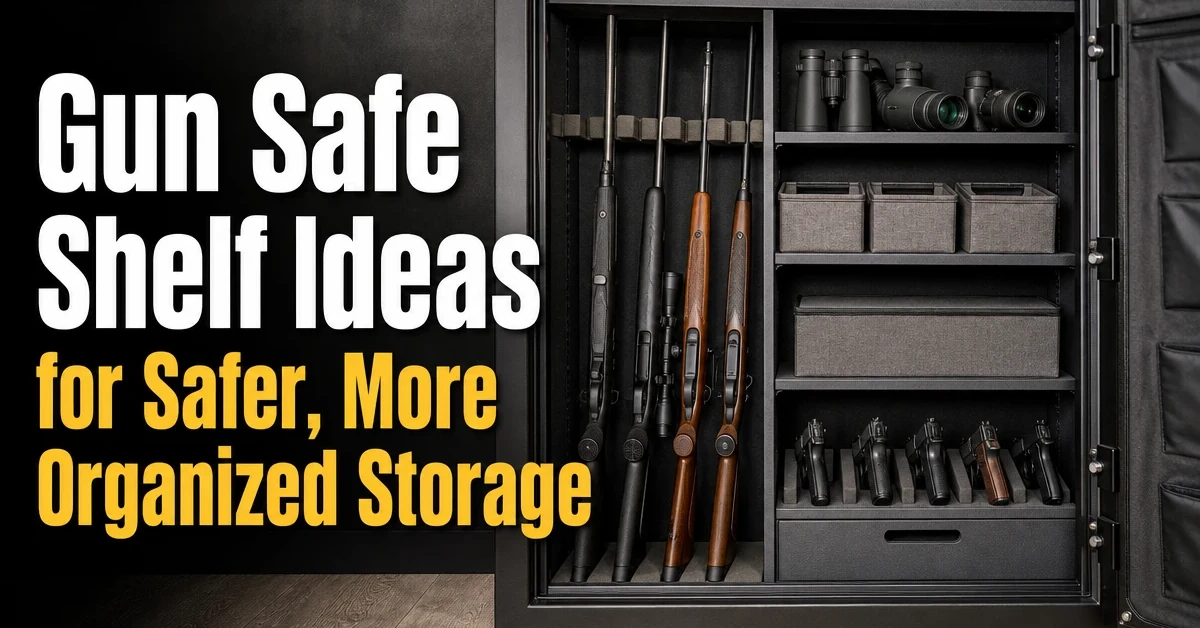

Useful gun safe shelf ideas include adjustable shelves, vertical rifle supports, handgun racks, magazine storage, door organizers, and protected spaces for cleaning supplies. The best layout keeps firearms unloaded when appropriate, prevents unauthorized access, protects equipment from damage, and follows local storage laws and manufacturer instructions.
What Makes a Good Gun Safe Shelf Layout?
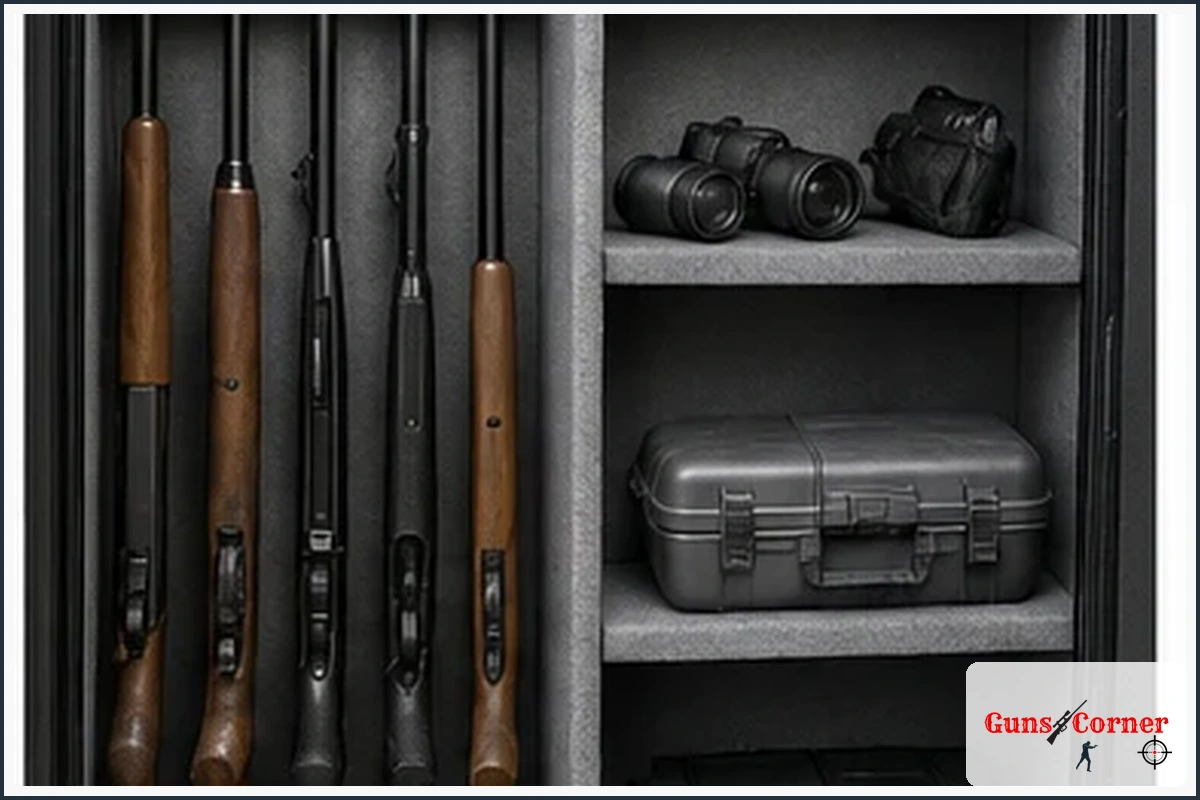
A good shelf arrangement balances security, capacity, visibility, and safe access. It should prevent firearms from leaning against one another, keep optics from being crushed, and leave enough room to handle each firearm without sweeping anyone with the muzzle.
| Storage feature | Best use | Important check |
|---|---|---|
| Adjustable shelves | Ammo cans, cases, documents, and accessories | Confirm the shelf’s weight capacity and secure fit |
| Vertical rifle supports | Long guns with scopes or slings | Protect muzzles, stocks, and optic turrets |
| Handgun rack | Keeping pistols separated and visible | Use a secure design that does not obstruct safe handling |
| Door organizer | Magazines, cables, documents, and small accessories | Ensure the door still closes and locks completely |
| Foam dividers | Preventing contact between firearms | Use non-abrasive, moisture-conscious materials |
Best Gun Safe Shelf Ideas
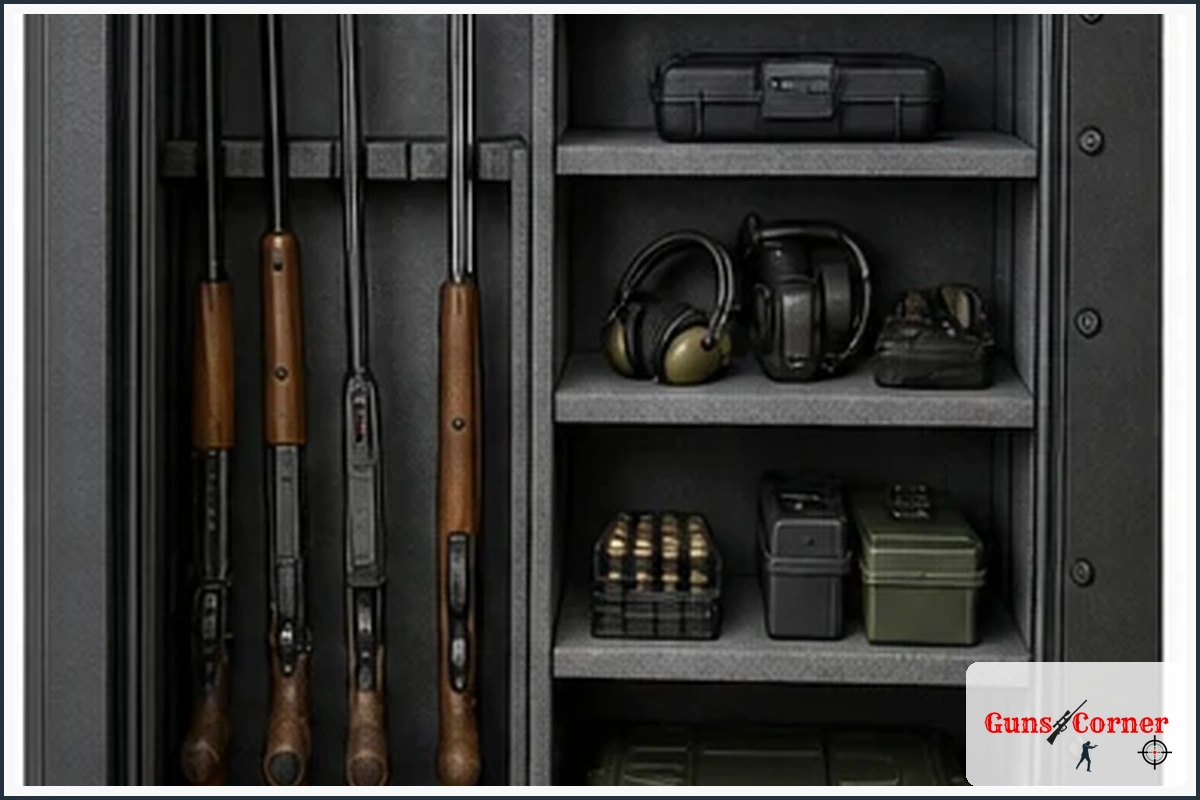
1. Use adjustable shelves for flexible storage
Adjustable shelves let you change the interior as your collection and equipment change. Place taller compartments below for cases or long accessories, and use shorter upper sections for magazines, ear protection, manuals, and cleaning supplies.
Do not overload shelves or assume that an aftermarket shelf fits every safe. Check the safe manufacturer’s dimensions, mounting points, and weight limits before modifying the interior.
2. Add vertical supports for scoped rifles
Scoped rifles often need more careful storage than bare firearms. A vertical rack or padded divider can keep rifles upright while reducing contact between stocks, bolts, and optics.
Allow enough clearance for the scope, bolt handle, sling, and any attached accessories. Avoid forcing a rifle into a compartment or placing weight on the optic.
3. Install a dedicated handgun rack
A handgun rack can turn unused vertical space into organized storage. Separating pistols makes it easier to identify each firearm without moving several others.
Store firearms according to the manufacturer’s instructions and applicable law. A rack is an organizer, not a substitute for the safe’s locking mechanism or responsible access control.
4. Use the door for lightweight accessories
Door panels and pockets can hold manuals, spare batteries, hearing protection, magazine pouches, and small tools. Keep heavy items off the door unless the safe manufacturer specifically approves the organizer and load.
After installation, close and lock the door several times. Make sure the organizer does not interfere with the locking bars, hinges, seal, or full door engagement.
5. Create a protected ammunition section
A separate shelf or container can keep ammunition organized and away from cleaning chemicals. Use original packaging or clearly labeled containers, and follow ammunition-manufacturer storage instructions.
Do not place ammunition where it can contact solvents, oils, moisture, excessive heat, or damaged cartridges. Local laws may also address ammunition storage, so verify current requirements.
6. Add removable dividers instead of permanent modifications
Removable dividers are useful when you want to change the layout without drilling into the safe. They can separate rifles, pistols, magazines, optics, and cases while preserving flexibility.
Avoid drilling, cutting, or altering the safe unless the manufacturer authorizes the work. Modifications can damage fire protection, locking components, wiring, or the warranty.
7. Use a soft-lined accessory shelf
A shallow, padded shelf works well for binoculars, rangefinders, slings, electronic hearing protection, and other items that can be scratched. Keep sharp tools and metal parts separated from firearm finishes.
Choose materials that do not shed fibers, retain moisture, or react with firearm finishes. Inspect stored equipment periodically rather than relying on padding alone.
How to Organize a Gun Safe by Priority
- Secure the safe first: Anchor it when required or recommended by the manufacturer, and position it where unauthorized people cannot easily access it.
- Store firearms safely: Follow firearm manuals, keep muzzles controlled, and use unloaded storage when appropriate for your circumstances and legal requirements.
- Protect delicate equipment: Give optics, suppressor covers where lawful, wood stocks, and finished surfaces enough clearance.
- Place frequently handled accessories conveniently: Store hearing and eye protection, manuals, and approved maintenance supplies where they can be found without disturbing firearms.
- Keep dangerous items separated: Do not mix solvents, loaded ammunition, batteries, and loose tools without considering leakage, corrosion, or accidental damage.
- Check the lock and door: Confirm the safe closes, locks, and remains secure after the shelves and organizers are installed.
Small Gun Safe Shelf Ideas for Limited Space
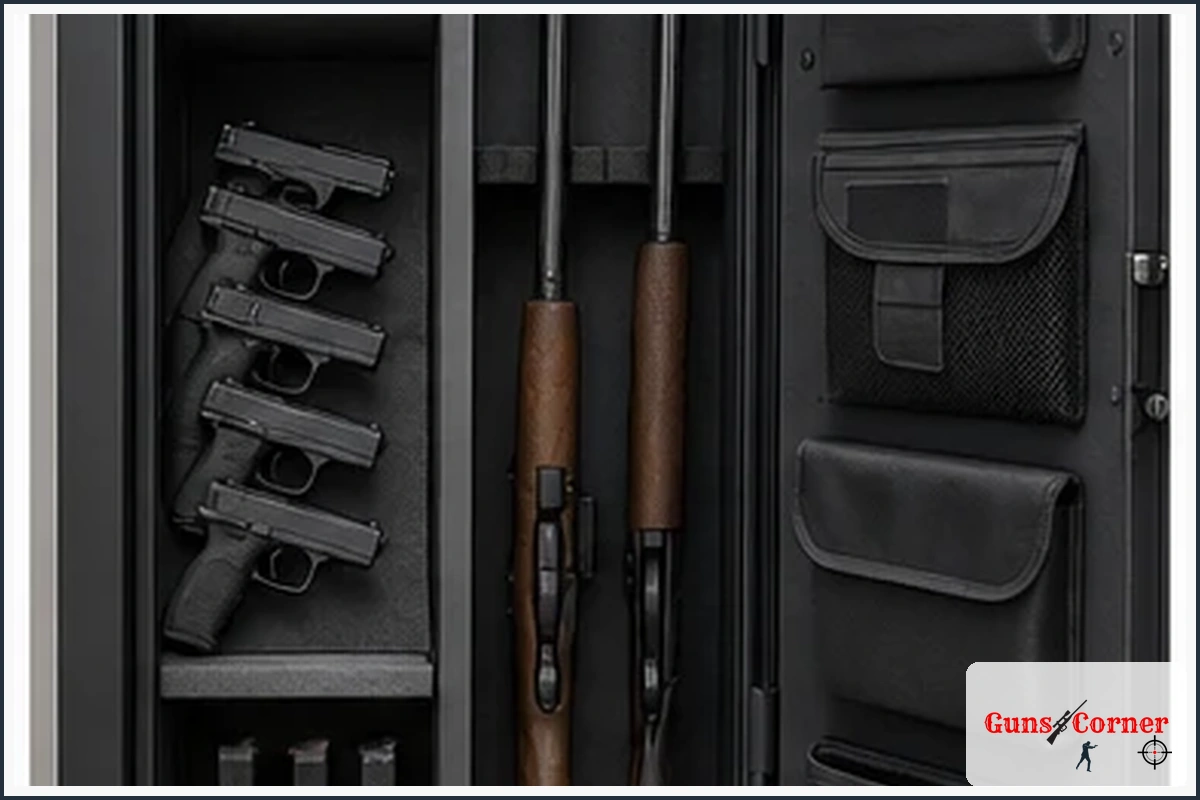
For a compact safe, prioritize vertical storage and avoid filling every available inch. A narrow handgun rack, removable shelf, and small door organizer may provide more usable capacity than large permanent compartments.
- Use slim vertical dividers for long guns.
- Store manuals and documents in a protected folder rather than loose on shelves.
- Use labeled bins for magazines and accessories.
- Keep optics in padded cases if they cannot be safely separated.
- Leave enough clearance to remove one firearm without disturbing others.
Do not sacrifice safe handling for maximum capacity. An overcrowded safe can cause damaged equipment, poor muzzle control, and unnecessary handling.
Gun Safe Shelf Ideas for a Dedicated Gun Room
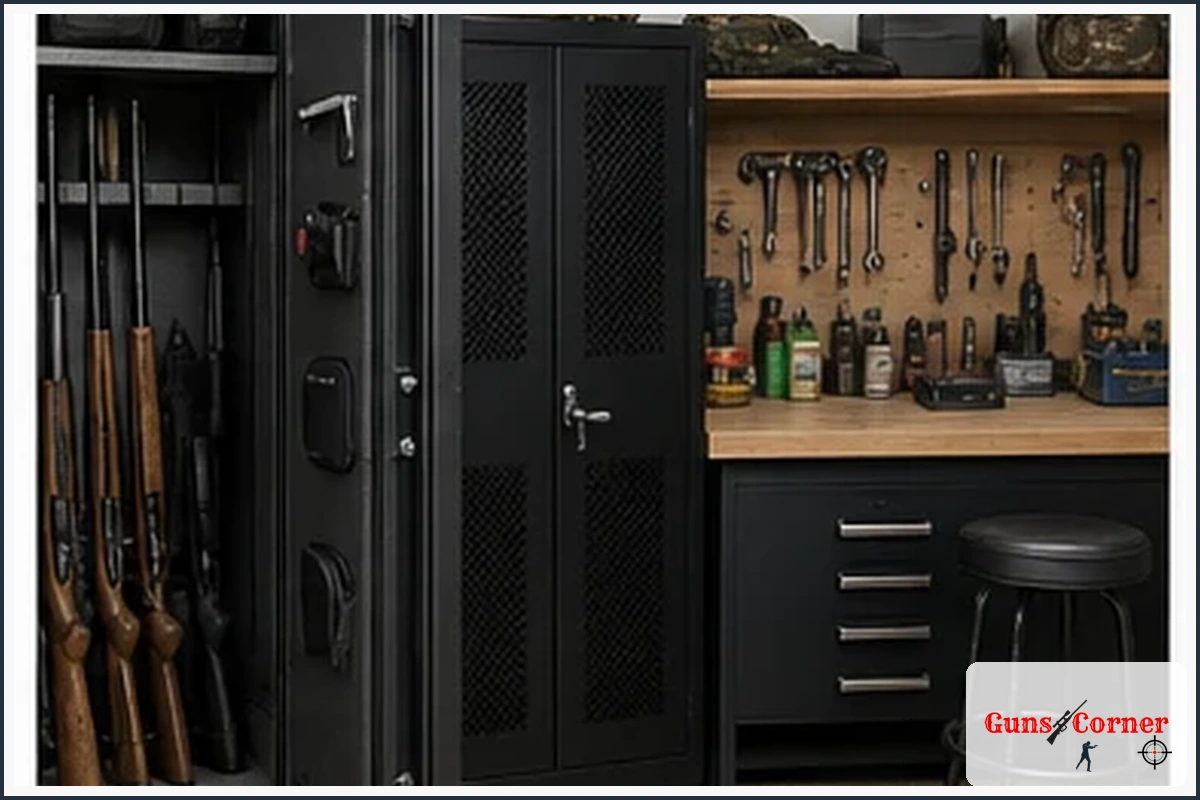
A larger storage area may support a safe, separate locked cabinets for non-regulated equipment, and a small maintenance area. Keep cleaning chemicals and tools away from firearms, ammunition, children, and unauthorized users.
A gun room should not replace a properly locked safe when firearms require secure storage. Consider visibility, access control, anchoring, lighting, humidity, and emergency planning. Follow local law and the safe manufacturer’s installation guidance.
Materials and Features to Look For
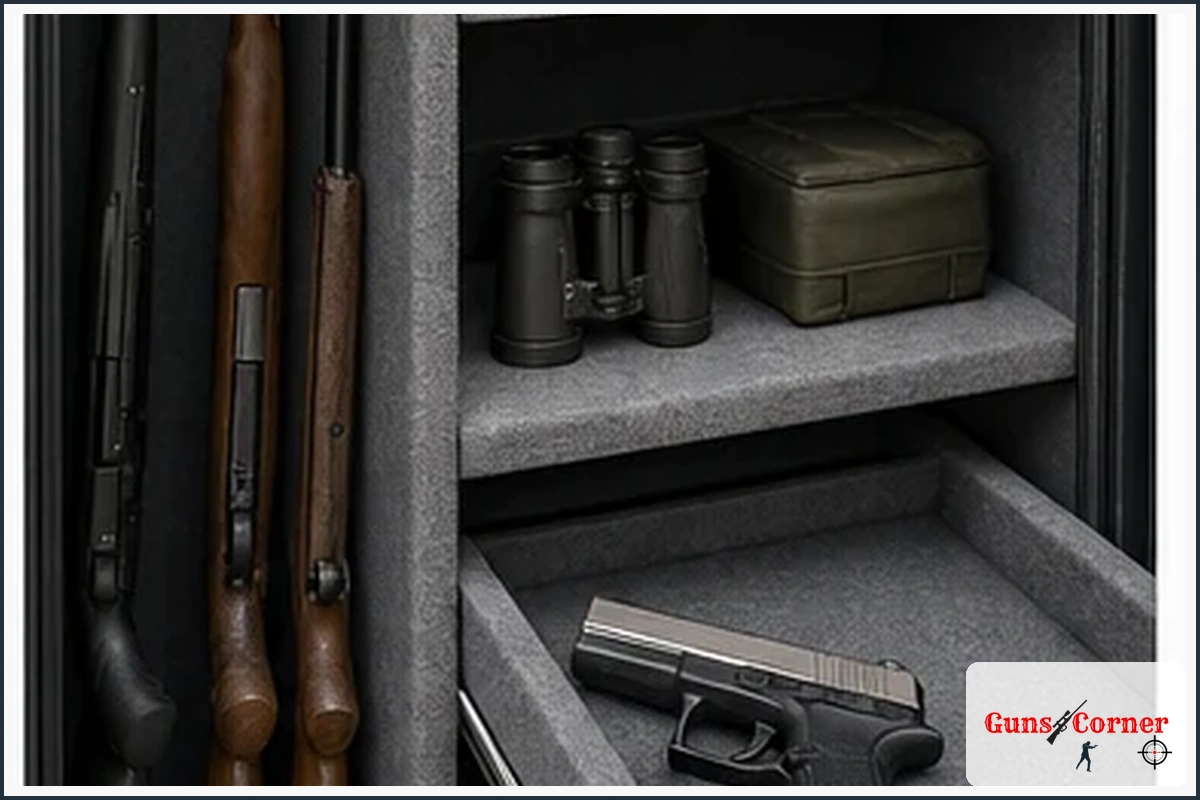
- Stable construction: Shelves should not flex excessively under their intended load.
- Protective surfaces: Padding or smooth liners can reduce scratches and impact damage.
- Moisture awareness: Avoid materials that trap water against metal surfaces.
- Adjustability: Movable supports make the layout easier to change.
- Secure attachment: Organizers must not fall, shift, or block the locking system.
- Easy inspection: You should be able to check firearms and accessories without unnecessary handling.
Common Gun Safe Shelf Mistakes
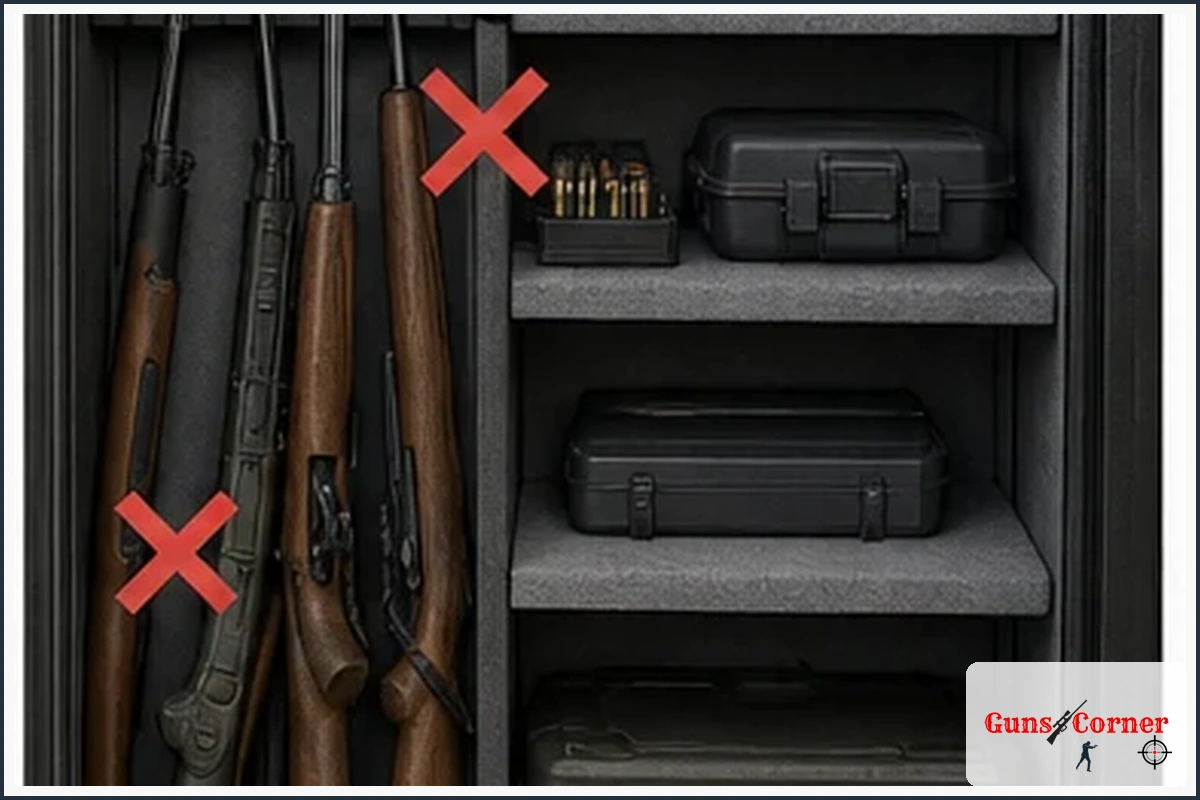
Overloading the safe
Too many firearms and accessories can bend shelves, obstruct the door, or make safe removal difficult. Capacity should be based on the actual firearm configuration, not only the manufacturer’s maximum rifle count.
Blocking the locking mechanism
Door organizers, bins, and replacement shelves can interfere with locking bars or hinges. Test the safe after every change.
Storing damp equipment
Wet cases, muddy slings, and damp clothing can raise corrosion risk inside a confined space. Dry equipment before storage and follow the safe manufacturer’s humidity-control guidance.
Using concealment as the only security measure
A decorative shelf or hidden compartment may reduce visibility, but concealment is not equivalent to a tested locking safe. Use layered security appropriate to the household and local requirements.
Keeping loaded firearms accessible to unauthorized people
Children, visitors, and untrained users should not have access to firearms or keys, codes, cards, or backup locks. Select storage that matches your household circumstances and applicable law.
Firearm Storage Safety Checklist
- Treat every firearm as if it is loaded.
- Keep the muzzle pointed in a safe direction during handling.
- Keep your finger outside the trigger guard until ready to shoot.
- Be certain of the firearm’s condition and ammunition compatibility.
- Keep firearms inaccessible to unauthorized users.
- Use the safe according to its manual.
- Do not rely on a mechanical safety as a substitute for safe handling.
- Use eye and hearing protection during shooting and maintenance when appropriate.
- Inspect for corrosion, damaged parts, or obstructions before use.
- Verify current state and local storage requirements.
Legal and Responsible Storage Considerations
Firearm-storage laws vary by jurisdiction and may depend on children in the home, firearm type, transport, temporary storage, or reporting requirements. This article provides general organization ideas, not legal advice.
Check your current state and local rules through the appropriate government authority. Also read the firearm and safe manuals before changing storage practices. Official requirements override general online guidance.
FAQs
1. What is the best shelf layout for a gun safe?
The best layout separates firearms, protects optics and finishes, keeps accessories organized, and leaves enough room for safe handling. Adjustable shelves and removable dividers usually provide the most flexibility.
2. Can I add shelves to an existing gun safe?
Often, but compatibility depends on the safe’s design. Use manufacturer-approved accessories when possible, and do not drill or modify the safe unless the manufacturer authorizes it.
3. Should ammunition be stored on the same shelf as firearms?
It may be possible, but ammunition should remain organized, dry, protected from chemicals, and inaccessible to unauthorized users. Follow manufacturer instructions and current local requirements.
4. Are hidden gun shelves as secure as gun safes?
Not necessarily. A concealed shelf may reduce visibility, but security depends on its lock, construction, anchoring, and resistance to unauthorized access. Compare the product’s tested security claims with your actual storage needs.
5. How much space should be left between stored firearms?
There is no universal spacing number because firearms differ in length, width, stocks, optics, and accessories. Leave enough clearance to remove one firearm without scraping equipment or sweeping another person with the muzzle.
6. What should not be stored inside a gun safe?
Avoid storing damp items, leaking chemicals, loose sharp tools, or anything that blocks the locking mechanism. Cleaning supplies should be sealed and separated from firearms and ammunition.
Final Answer
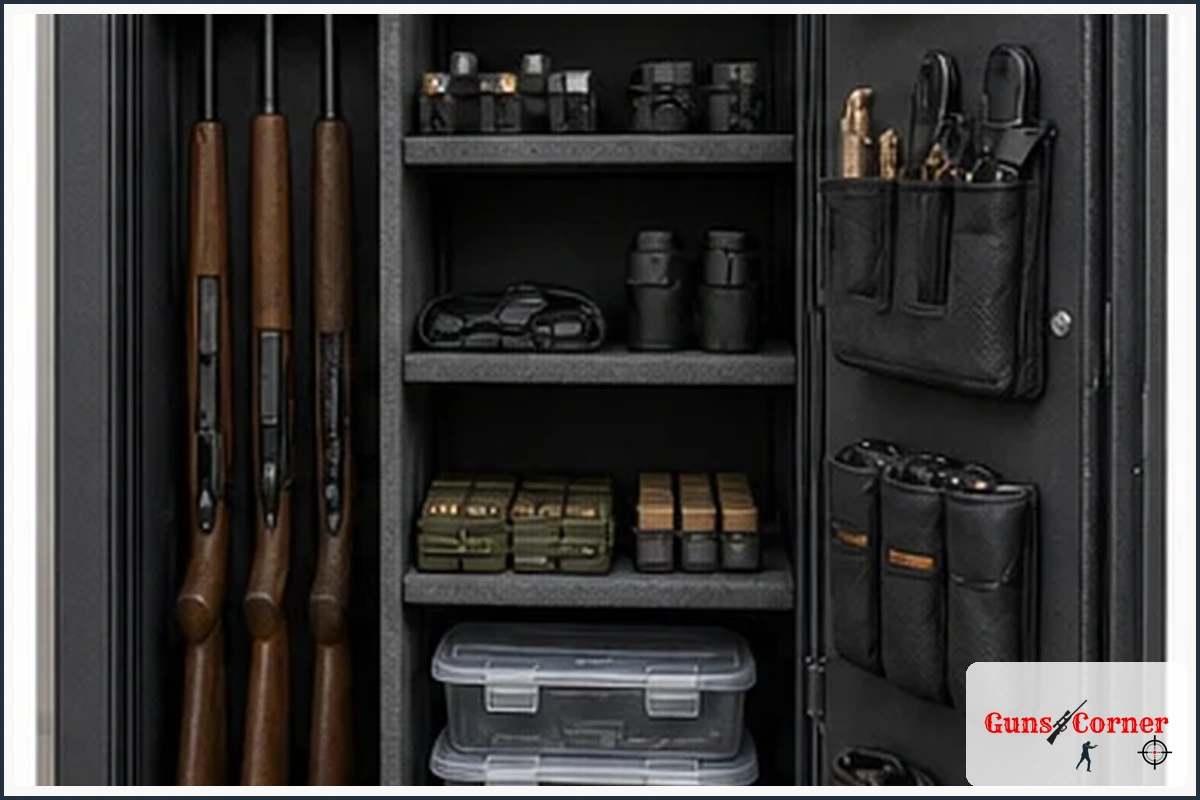
The most practical gun safe shelf ideas are adjustable shelves, vertical rifle dividers, padded handgun racks, lightweight door organizers, labeled accessory bins, and protected ammunition storage. Build the layout around safe handling, unauthorized-access prevention, moisture control, equipment protection, and the safe manufacturer’s limits. Verify current storage laws before relying on any general recommendation.