
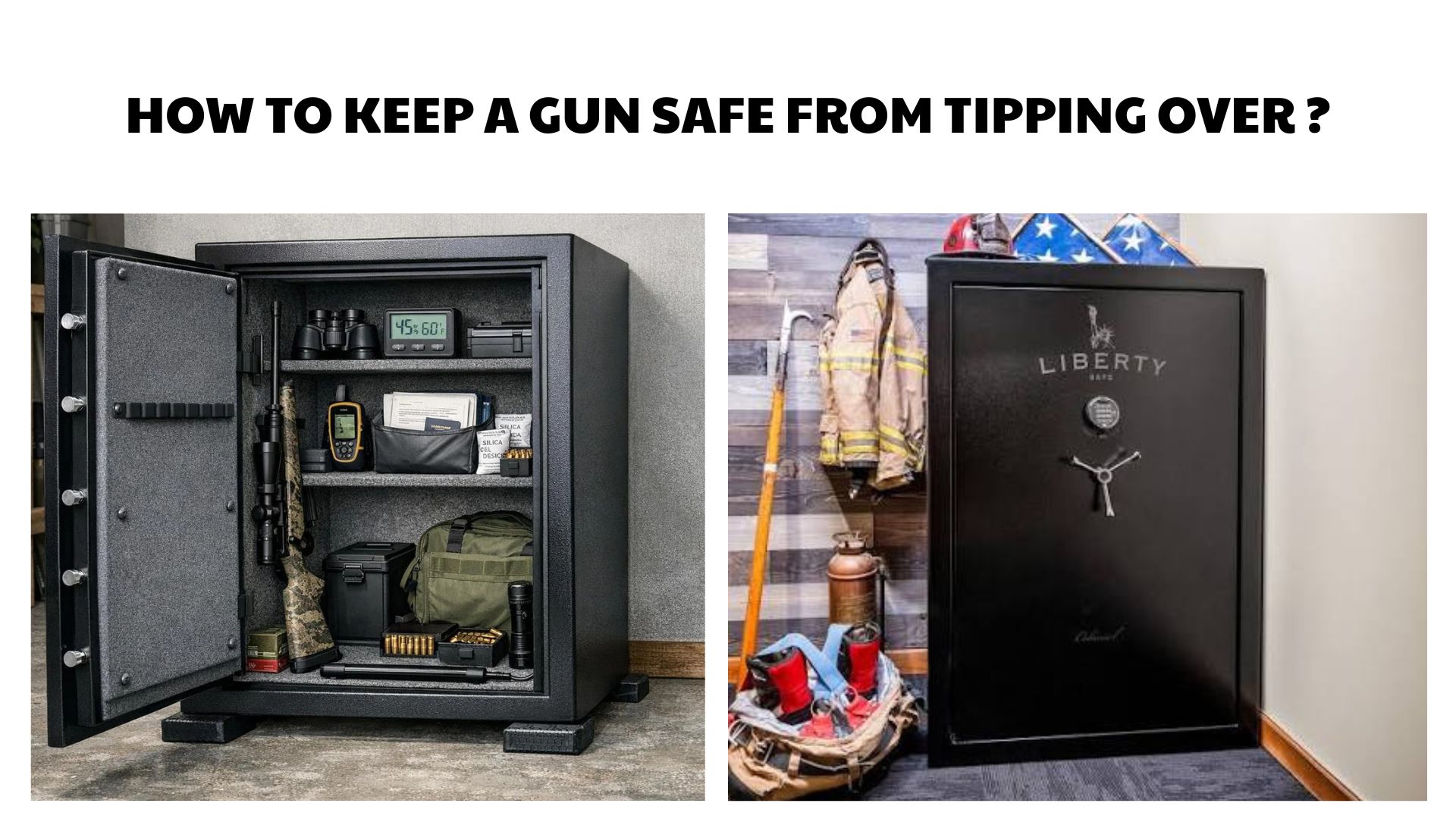

Learning how to keep a gun safe from tipping over is an important part of responsible firearm storage, home safety, and theft prevention. A gun safe may look solid and heavy, but weight alone does not always prevent tipping. Tall safes, narrow safes, uneven floors, carpet compression, open heavy doors, poor placement, and unanchored setups can all create risk.
A tipping gun safe can damage flooring, walls, trim, shelves, and firearms. More importantly, it can injure adults, children, pets, or anyone standing nearby. If a child climbs on a safe, pulls on an open door, or tries to reach items on top, the risk becomes even more serious.
This guide explains how to reduce gun safe tipping risk in a safe, legal, beginner-friendly way. You will learn how to choose a stable location, check the floor, understand center of gravity, use manufacturer-approved anchoring, protect children, avoid common mistakes, and know when to call a professional installer.
Quick Answer
To keep a gun safe from tipping over, place it on a level, structurally appropriate surface, keep heavy items low inside the safe, avoid letting children climb on it, and anchor it according to the manufacturer’s instructions when appropriate. Always check local firearm storage laws, read the gun safe manual, and use professional help if the safe is heavy, upstairs, on questionable flooring, or requires drilling. A properly planned setup can reduce tipping risk, but no method replaces responsible firearm storage, child access prevention, and regular safety checks.
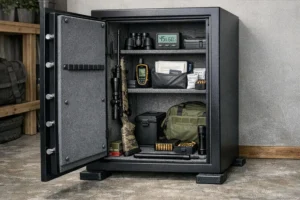
Important Firearm Safety and Legal Notice
Firearm storage laws vary by country, state, province, county, city, residence type, firearm type, household situation, and user status. Before installing, moving, anchoring, or modifying a gun safe, check current laws, the gun safe manual, lease or property rules, and professional guidance where needed. This article provides general safety information, not legal, engineering, or installation advice for every home.
- Local firearm storage laws: Verify current safe storage rules where you live.
- Child access prevention: Store firearms so children, visitors, and unauthorized users cannot access them.
- Safe manufacturer instructions: Follow the safe manual for anchoring, placement, door clearance, and maintenance.
- Floor and wall concerns: Heavy safes may require professional evaluation, especially upstairs or in older homes.
- Lease or landlord rules: Renters should check whether drilling or bolting is allowed.
- Safe firearm handling: Keep firearms controlled and secured before moving, loading, unloading, or inspecting the safe.
- Hidden hazards: Do not drill into floors or walls without checking for plumbing, electrical wiring, HVAC lines, radiant heat, or structural concerns.
- Professional help: Use qualified installers or safe movers for heavy safes, stair movement, unclear flooring, or permanent anchoring.
Understanding Gun Safe Tipping Risk
Gun safe tipping risk is mainly about weight distribution, height, door weight, floor stability, and anchoring. A tall safe with a heavy door can shift its center of gravity forward when the door is open. If the safe is narrow, lightly loaded, on thick carpet, or not anchored, the risk may increase.
The center of gravity is the point where the safe’s weight is balanced. When a heavy door opens, the weight can shift forward. If a child climbs on the door, pulls on the handle, or stands on a lower shelf, the safe may become unstable. Even a safe that feels stable when closed may behave differently when the door is open.
Common risk factors include:
- Tall, narrow safe design
- Heavy safe door
- Uneven floor or soft carpet
- Safe placed on a weak platform or unstable pad
- Heavy items stored high inside the safe
- Children climbing, pulling, or hanging on the safe
- Safe door left open for long periods
- Improper or missing anchoring
- Loose or weak anchor points
- Safe moved into position without checking level and stability
Preventing tipping is not only about theft deterrence. It is also about injury prevention, safe firearm storage, child access prevention, and protecting the home from avoidable damage.
What You Need Before You Start
- Gun safe owner’s manual or manufacturer documentation
- Current knowledge of local firearm storage laws
- Basic firearm safety knowledge before handling or storing firearms
- Measuring tape for safe footprint, clearance, and placement planning
- Level for checking whether the safe sits evenly
- Flashlight for checking floor condition, corners, anchor holes, and wall/floor areas
- Manufacturer-approved anchor kit, bolts, brackets, or mounting hardware if applicable
- Floor protection that does not reduce stability, if appropriate
- Stud finder or utility-locating guidance if wall anchoring is allowed and appropriate
- Professional installer, safe mover, contractor, landlord, or structural professional if needed
- Document folder for manuals, receipts, warranty details, serial numbers, and installation notes
how to keep a gun safe from tipping over: Step-by-Step Guide
Step 1: Check Laws, Manuals, and Safety Requirements First
Before moving or anchoring a gun safe, check current firearm storage laws in your location. Some areas may require specific storage methods, especially if children or unauthorized users may be present. Also review whether ammunition must be stored separately or locked in a separate container.
Next, read the gun safe manual. The manufacturer may provide specific instructions for anchoring, safe placement, floor types, door clearance, and maintenance. Do not assume that a generic anchor kit or random hardware is appropriate for your model.
Step 2: Make the Area Safe
Clear the area around the gun safe. Remove clutter, rugs, boxes, loose cords, cleaning supplies, and anything that could cause a trip hazard. Keep children, pets, visitors, and unauthorized users away while you inspect or adjust the safe.
If firearms need to be removed to make the safe lighter or safer to work around, handle them responsibly and keep them secured under authorized control. Do not place firearms unsecured on furniture, floors, beds, shelves, or vehicles during the process.
Step 3: Identify the Safe Type and Situation
Look at the safe’s height, width, depth, door weight, footprint, and current location. A small handgun lockbox has different tipping concerns than a tall long-gun safe. A security cabinet may be lighter and easier to tip than a heavy fire-rated safe. A tall safe in a closet may be more protected from side access but still unstable if the door opens forward.
Ask these questions:
- Is the safe tall and narrow?
- Does the door feel heavy when opened?
- Does the safe rock or shift when gently tested empty?
- Is the safe on thick carpet, uneven flooring, tile, hardwood, laminate, or concrete?
- Is the safe upstairs or over a crawl space?
- Is the safe accessible to children?
- Does the manufacturer recommend anchoring?
Step 4: Choose the Safest Practical Location
Choose a stable, level, dry, discreet, and structurally appropriate location. A corner, closet, or wall-adjacent location may reduce casual access and improve support options, but only if the safe door can open fully and the floor can support the safe.
Avoid placing the safe on unstable platforms, weak shelves, uneven boards, rolling bases, slippery mats, or surfaces that compress unevenly. Avoid locations where the safe blocks exits, doorways, electrical panels, HVAC equipment, water heaters, or emergency access.
Step 5: Check the Floor Before Loading the Safe
Gun safes can concentrate a lot of weight in a small footprint. This matters especially in upstairs rooms, older homes, apartments, mobile homes, closets, and rooms over basements or crawl spaces. A floor may look normal but still flex, slope, or compress under weight.
If the safe is heavy or the floor seems questionable, contact a structural professional or qualified installer. Do not guess about floor capacity. Also avoid placing heavy safes on damaged flooring, rotten subflooring, cracked tile, soft carpet padding, or unstable platforms.
Step 6: Level the Safe Properly
Use a level to check the safe from front to back and side to side. An uneven safe may rock, shift, strain the door, or create lock alignment problems. If the safe is on carpet, wait for the carpet and padding to compress before making final stability judgments.
Only use leveling methods that are compatible with the manufacturer’s guidance. Do not create a taller or more unstable base just to make the safe appear level. If leveling requires shims, floor correction, or professional adjustment, use safe and appropriate materials recommended by the manufacturer or installer.
Step 7: Keep Heavy Items Low Inside the Safe
Weight distribution matters. Store heavier items low inside the safe when possible. This helps keep the center of gravity lower and may reduce forward tipping risk. Avoid placing heavy ammunition cans, tools, documents, optics cases, or accessories high on shelves if they make the safe top-heavy.
Do not overload the safe door with heavy organizers, pouches, or accessories unless the manufacturer allows it. A heavily loaded door can increase forward pull when opened and may also affect hinges over time.
Step 8: Keep Children From Climbing or Pulling on the Safe
Children may see shelves, handles, doors, and safe edges as something to climb or pull. A locked safe is still a heavy object that can injure someone if it tips. Keep children away from the safe and do not let them play near it, climb it, hang on the handle, or pull on the open door.
Do not store toys, electronics, snacks, keys, or attractive items on top of the safe. Items placed above eye level may encourage reaching or climbing. Keep the area around the safe clear and boring from a child’s perspective.
Step 9: Anchor the Safe According to the Manufacturer’s Instructions
Anchoring is one of the most common ways to reduce tipping risk, but it must be done correctly. Use the manufacturer-approved anchor holes, hardware guidance, and installation method for your safe and floor type. Anchoring into the wrong material can fail and create a false sense of security.
Concrete, wood subfloor, tile, wall studs, and rental flooring all require different considerations. Do not drill into floors or walls without checking for hidden wiring, plumbing, radiant heat, HVAC lines, or structural concerns. If you are unsure, hire a qualified safe installer or contractor.
Step 10: Recheck Door Swing and Stability
After positioning or anchoring the safe, test the door while the safe is empty or lightly loaded. Open the door slowly and observe whether the safe shifts, rocks, or leans. Do not stand directly in front of a questionable safe while testing stability.
If the safe moves, stop using it and reassess the setup. A safe that shifts during testing should not be loaded with firearms until the stability issue is corrected.
Step 11: Document the Installation
Keep a record of the safe model, serial number, installation date, anchor method, hardware used, professional installer details, and warranty information. If you rent, keep written permission if anchoring was approved.
Documentation helps later if the safe needs service, you move homes, you sell the safe, you file an insurance claim, or you need manufacturer support.
Step 12: Build a Maintenance and Safety Routine
Check the safe regularly for rocking, loose anchors, floor compression, door misalignment, moisture, rust, and lock problems. A safe that was stable when installed may shift over time because of carpet compression, settling, movement, or repeated door use.
Review your setup whenever you move the safe, add heavy items, change door organizers, relocate the safe, remodel the room, or notice floor changes. Tip prevention is an ongoing safety habit.
Best Setup, Location, or Conditions for This Gun Safe Task
The best setup for gun safe tipping prevention is a level, stable, structurally appropriate location with manufacturer-approved anchoring when possible. The safe should sit flat, open safely, and remain inaccessible to children and unauthorized users.
Good conditions include:
- A level floor that can support the safe’s weight
- Low-traffic placement away from children’s play areas
- Enough space for the safe door to open without pulling the safe forward
- A dry location with low moisture risk
- Clear access for authorized users only
- Manufacturer-approved anchor points and hardware
- No hidden wiring, plumbing, or structural hazards in drilling areas
- Heavy items stored low inside the safe
- No heavy objects or tempting items stored on top
- Professional evaluation for upstairs, older, or questionable floors
Closets and corners can be useful because they may keep a safe discreet and reduce traffic around it. However, they do not automatically solve tipping risk. A closet safe still needs floor support, door clearance, humidity control, and proper anchoring if recommended.
Helpful Tips for Better Results
- Read the gun safe manual before moving, leveling, or anchoring the safe.
- Use a level to check stability before and after loading the safe.
- Store heavier items on lower shelves to keep the center of gravity lower.
- Do not let children climb, pull, lean, or play near the safe.
- Anchor the safe with manufacturer-approved methods when appropriate.
- Use professional help for heavy safes, upstairs placement, unclear floors, or drilling.
- Inspect anchors, floor condition, and safe stability on a regular schedule.
Common Mistakes to Avoid
The most common gun safe tipping mistakes come from assuming that a heavy safe cannot fall. Weight helps, but height, door weight, floor condition, and user habits also matter.
- Not checking the manual: Every safe has different installation and anchoring requirements.
- Placing the safe on an uneven surface: Rocking or leaning increases tipping risk.
- Ignoring carpet compression: Thick carpet and padding can make a safe settle unevenly.
- Loading heavy items high: High weight can make the safe more top-heavy.
- Overloading the door: Heavy door organizers can increase forward pull.
- Skipping anchoring when recommended: Manufacturer-approved anchoring can reduce tipping and theft risk.
- Using weak anchor points: Poor hardware or weak materials may fail.
- Drilling without checking hazards: Floors and walls may contain hidden wiring, plumbing, or other risks.
- Letting children play near the safe: Climbing, pulling, or hanging on a safe door can be dangerous.
- Trying to move a heavy safe alone: Heavy safes can cause injury and property damage.
Troubleshooting Common Problems
| Problem | Possible Cause | What to Do |
|---|---|---|
| The gun safe feels unstable | Uneven floor, poor placement, heavy door, carpet compression, or lack of proper anchoring | Stop using it as-is, keep children away, check the manual, and contact a professional installer if needed. |
| The safe rocks when the door opens | Forward weight shift, uneven floor, top-heavy loading, or weak anchoring | Unload heavy items from high shelves, check level, and correct anchoring according to the manual. |
| The safe leans forward | Soft carpet, uneven flooring, poor leveling, or door weight | Do not load firearms until the safe is leveled and inspected by a qualified installer if needed. |
| Anchors feel loose | Wrong hardware, weak floor material, poor installation, or movement over time | Stop relying on the anchor, check the safe manual, and contact a professional installer. |
| The safe is on thick carpet | Carpet and padding are compressing unevenly | Monitor settling, check level again, and ask the manufacturer or installer about stable placement options. |
| The floor creaks or flexes | Heavy safe weight, weak subfloor, upstairs placement, or older structure | Unload if needed and contact a structural professional before continuing to use the location. |
| The safe is difficult to anchor in an apartment | Lease restrictions, flooring limits, or landlord rules | Check lease terms, ask for written permission, and use renter-friendly security layers where appropriate. |
| The safe door hits a wall or shelf | Poor placement or not enough door clearance | Reposition the safe before loading it and make sure the door opens safely. |
| The safe is too heavy to move safely | Large safe, narrow doorway, stairs, or poor moving equipment | Do not force the move. Use professional safe movers. |
| You are unsure whether the setup is safe | Unclear manual, questionable structure, or uncertain anchor method | Pause the project and contact the safe manufacturer, installer, contractor, or structural professional. |
Responsible Firearm Storage and Home Safety
Keeping a gun safe from tipping over is only one part of responsible firearm storage. A stable safe should also be locked, access-controlled, and used in a way that prevents unauthorized access. A hidden gun is not the same as a secured gun, and a safe that can tip is not fully safe for the household.
Responsible storage includes safe handling, locked storage, controlled keys and codes, child access prevention, ammunition storage planning, and regular inspection. The safe should not become a climbing object, a shelf for heavy items, or a place where keys and codes are casually accessible.
- Keep firearms locked when not in use.
- Keep children and unauthorized users away from the safe.
- Store keys, backup keys, and combinations securely.
- Store ammunition separately when appropriate or required by law.
- Use layered security such as alarms, door locks, cameras, and privacy habits.
- Do not leave the safe door open unnecessarily.
- Inspect the safe, anchors, lock, and floor area regularly.
When to Get Professional Help
Professional help is strongly recommended when the safe is heavy, tall, upstairs, difficult to move, or requires permanent anchoring. A professional safe installer or structural professional can help reduce injury risk, property damage, and poor installation.
Get professional help when:
- The safe is too heavy to move safely.
- The safe must be moved upstairs or downstairs.
- The floor may not support the safe.
- The safe rocks, leans, or shifts when the door opens.
- You need to drill into floors, walls, concrete, or studs.
- You are unsure about hidden wiring, plumbing, radiant heating, or HVAC lines.
- The home is a rental, apartment, condo, mobile home, or older structure.
- The safe manufacturer’s anchoring instructions are unclear.
- The lock, keypad, hinges, or door alignment is affected by the safe’s position.
- You are not confident in safe firearm handling while unloading or reorganizing the safe.
Helpful professionals may include the safe manufacturer, professional safe movers, qualified safe installers, licensed locksmiths, contractors, structural professionals, landlords or property managers, firearm safety instructors, and qualified firearm law professionals.
Long-Term Maintenance, Safety Checks, and Recordkeeping
After stabilizing the safe, build a regular safety routine. Check whether the safe still sits level, whether anchors remain tight, whether the floor has compressed, and whether the safe shifts when the door opens. Also inspect for humidity, rust, dust, battery problems, and lock performance.
Record the safe model, serial number, installation date, anchor method, hardware used, professional installer details, warranty information, and maintenance schedule. If you rent, keep written permission for any approved anchoring or floor modification.
Review the setup whenever you move the safe, add heavy items, change the interior layout, add a door organizer, move to a new home, remodel the room, or notice changes in flooring. Gun safe tipping prevention should be treated as ongoing home safety maintenance.
Recommended Gun Safe Gear and Tools to Consider
You do not always need expensive gear to store firearms responsibly. Choose products based on your local laws, safe type, firearm type, home layout, safe weight, flooring, security risks, and budget.
- Gun safe or lockbox that fits your firearm storage needs
- Manufacturer-approved anchor kit or mounting hardware
- Level for checking safe stability
- Measuring tape for placement and clearance planning
- Floor protection mat if stable and approved by the manufacturer
- Safe organizer that does not overload the door or make the safe top-heavy
- Hygrometer for monitoring humidity
- Desiccant packs or rechargeable dehumidifier if humidity is a concern
- Backup batteries for electronic locks
- Document folder for manuals, receipts, warranty details, and proof of ownership
Final Thoughts
Knowing how to keep a gun safe from tipping over helps protect your home, your firearms, and the people around the safe. Start by reading the manufacturer’s manual, choosing a level and structurally appropriate location, keeping heavy items low, preventing children from climbing, and using manufacturer-approved anchoring when appropriate.
Do not assume that weight alone makes a safe stable. A tall safe with a heavy open door can still create tipping risk, especially on uneven floors, carpet, or weak structures. If the safe is heavy, upstairs, unstable, or requires drilling, call a qualified professional instead of guessing.
A stable safe should also be part of a complete responsible firearm storage plan. Keep firearms locked, prevent unauthorized access, protect keys and codes, monitor the safe over time, and review local laws regularly.
FAQs
1. How long does it take to learn how to keep a gun safe from tipping over?
Most beginners can learn the basic safety principles quickly, but proper setup depends on the safe size, floor type, location, and anchoring method. Heavy safes, upstairs locations, and unclear floor structures may require professional help.
2. Can a heavy gun safe tip over?
Yes. A heavy safe can still tip if it is tall, narrow, uneven, top-heavy, placed on soft flooring, or pulled forward by an open heavy door.
3. Why do gun safes tip over?
Gun safes may tip because of poor weight distribution, uneven floors, carpet compression, lack of anchoring, heavy doors, children climbing, or improper placement.
4. Should every gun safe be anchored?
Many safes benefit from anchoring, but the correct method depends on the safe model, floor type, and manufacturer instructions. Always read the manual before anchoring.
5. Is bolting down a gun safe required by law?
That depends on your location and situation. Storage laws vary widely, so check current local firearm storage rules rather than assuming one universal requirement.
6. Can I keep a gun safe from tipping without bolting it down?
You can reduce risk with good placement, leveling, lower weight distribution, and controlled access, but these methods may not equal proper anchoring. Follow the manufacturer’s guidance.
7. What is the safest way to stop a gun safe from tipping?
The safest approach is to place it on a level, suitable floor, keep heavy items low, keep children away, and anchor it according to the manufacturer’s instructions when appropriate.
8. Can a gun safe tip when the door is open?
Yes. A heavy open door can shift weight forward, especially on tall or narrow safes. Do not leave the door open unnecessarily.
9. Can children tip over a gun safe?
Children may increase tipping risk if they climb, pull, hang on the door, or try to reach items on top. Keep children away from the safe and store tempting items elsewhere.
10. Should I store heavy items low in a gun safe?
Yes. Storing heavier items low can help lower the center of gravity and improve stability.
11. Can door organizers make a gun safe tip?
They can contribute to forward weight if overloaded. Use only accessories approved by the manufacturer and avoid adding too much weight to the door.
12. Can ammo make a gun safe top-heavy?
Yes, if heavy ammunition is stored high inside the safe. Store heavy items lower when possible and follow local laws for ammunition storage.
13. Is it safe to place a gun safe on carpet?
It can be, but carpet and padding may compress and create uneven support. Check level and stability after the safe has settled.
14. Can a gun safe tip on hardwood flooring?
Yes, if the floor is uneven, slippery, weak, or the safe is poorly placed. Avoid dragging the safe and check stability after placement.
15. Can a gun safe tip on tile?
Yes. Tile may be uneven or crack under weight if the safe is moved poorly. Use proper moving methods and check stability carefully.
16. Can a gun safe tip on concrete?
Concrete is often stable, but tipping can still happen if the safe is tall, narrow, unanchored, or overloaded incorrectly. Follow the manual for anchoring if needed.
17. Can I anchor a gun safe to the wall?
Some safes or cabinets may allow wall anchoring, but the method depends on the product and wall structure. Follow the manual and use professional help if unsure.
18. Can I anchor a gun safe to the floor?
Many safes are designed for floor anchoring. The correct method depends on floor type, safe model, and manufacturer instructions.
19. Can I anchor a gun safe to both wall and floor?
Some setups may allow multiple anchor points, but only use methods approved by the safe manufacturer and appropriate for your structure.
20. Should I drill into the floor to anchor a gun safe?
Only if the safe manual supports that method and you have checked for hidden hazards. If unsure, hire a professional installer.
21. What hidden hazards should I check before drilling?
Possible hazards include electrical wiring, plumbing, radiant heating, HVAC lines, gas lines, and structural elements. Do not drill without confirming what is behind or below the surface.
22. Can I use furniture anti-tip straps for a gun safe?
Do not assume ordinary furniture straps are suitable for a gun safe. Gun safes may be much heavier than common furniture. Follow the gun safe manufacturer’s anchoring instructions.
23. Can I use random bolts from a hardware store?
Use only hardware that matches the safe manufacturer’s guidance and the floor or wall material. Random hardware may fail or damage the structure.
24. Can a gun cabinet tip over more easily than a gun safe?
Some gun cabinets are lighter and may tip more easily than heavy safes. They should still be placed and secured according to the manufacturer’s instructions.
25. Can a small handgun safe tip over?
A small safe may not tip like a tall safe, but it can slide, fall from a shelf, or be carried away if unsecured. Place and secure it responsibly.
26. Can a long-gun safe tip over?
Yes. Tall long-gun safes can tip if not placed or anchored correctly, especially when the door is open or the safe is top-heavy.
27. Is a wider gun safe less likely to tip?
A wider footprint can improve stability, but it does not remove all risk. Door weight, floor condition, anchoring, and loading still matter.
28. Should I place a gun safe in a corner?
A corner can reduce exposure and may help with discreet placement, but the safe still needs a level floor, proper clearance, and manufacturer-approved anchoring when needed.
29. Should I place a gun safe in a closet?
A closet can be practical if it is dry, stable, and large enough for safe access. Check floor support, door swing, humidity, and anchoring options.
30. Can a closet wall support a gun safe anchor?
It depends on the wall structure and safe design. Do not assume drywall alone is enough. Follow the manual and consult a professional if needed.
31. Can I keep a gun safe from tipping in an apartment?
Yes, but renters may face restrictions on bolting or drilling. Check lease rules, ask for written permission when needed, and understand that renter-friendly methods may have limits.
32. What if my landlord does not allow bolting?
You may need non-damaging security layers such as careful placement, heavier safe selection, cable security where appropriate, alarms, and controlled access. These may not equal proper anchoring.
33. Can I put a gun safe on a platform?
Be cautious. Platforms can increase height and instability if not designed properly. Use only stable, professional, and manufacturer-compatible support methods.
34. Can I put a gun safe on wheels?
Rolling bases can increase movement and instability unless specifically designed for that purpose. Most permanent gun safe setups should not rely on wheels.
35. Can floor mats make a gun safe unstable?
Yes, soft or slippery mats may reduce stability. Use floor protection only if it does not make the safe rock, slide, or lean.
36. How do I know if my gun safe is level?
Use a level on the safe top or another manufacturer-recommended surface. Check front-to-back and side-to-side stability.
37. What should I do if my gun safe rocks?
Stop using it as-is, unload it if necessary, keep children away, and correct the placement according to the manual or with professional help.
38. Can humidity affect gun safe stability?
Humidity may not directly tip the safe, but it can damage flooring, subflooring, and safe contents over time. Keep the safe in a dry, stable location.
39. Should I remove firearms before anchoring a safe?
Often, unloading the safe makes the work safer and easier, but firearms must remain secured and under responsible control while removed. Follow safe handling practices.
40. Should ammunition be removed before moving or anchoring a safe?
Removing heavy items can reduce weight and improve safety during movement. Follow local laws and store ammunition securely while working.
41. Can I move a heavy gun safe alone?
No. Heavy safes can cause serious injury, tipping, and property damage. Use professional safe movers for heavy models.
42. Can a gun safe tip while being moved?
Yes. Moving is one of the riskiest times for tipping. Use trained help, proper equipment, and a safe plan.
43. Can a gun safe tip on stairs?
Yes. Stairs greatly increase risk. Heavy safes should be moved on stairs only by professionals with proper equipment.
44. Should I put heavy guns at the bottom of the safe?
Store heavier items lower when possible. Use racks and organizers that keep firearms stable and prevent leaning or falling.
45. Can I store items on top of a gun safe?
Avoid storing tempting, heavy, or frequently used items on top. Items on top may encourage climbing or reaching and can add risk.
46. Can a safe tip if someone pulls the handle?
It may, especially if the safe is tall, light, unanchored, or unstable. Keep unauthorized users away and anchor the safe properly if recommended.
47. Can a safe tip if the door is left open?
Yes, particularly if the door is heavy and the safe is not anchored. Keep the door open only when needed and close it after use.
48. Does anchoring prevent theft too?
Anchoring may make removal harder, but it does not make a safe theft-proof. Use layered security and avoid advertising the safe’s location.
49. Can a thief tip a gun safe to remove it?
A determined thief may try to move or tip a safe. Proper anchoring, discreet placement, alarms, and controlled access can reduce risk, but no setup is guaranteed theft-proof.
50. Should I anchor a safe before loading it?
Often it is easier and safer to position, level, and anchor a safe before loading it heavily. Follow the manufacturer’s instructions and use professional help when needed.
51. How often should I check safe anchors?
Check anchors regularly and after moving the safe, adding heavy contents, changing floor conditions, or noticing rocking or door alignment issues.
52. Can electronic locks be affected by poor safe leveling?
Poor leveling can affect door alignment, which may make locks harder to operate. If the door does not close smoothly, correct the stability issue.
53. Can a tipping safe damage firearms?
Yes. A falling or shifting safe can damage firearms, optics, stocks, accessories, and the safe interior. Stability protects both people and property.
54. What is the biggest mistake in gun safe tipping prevention?
The biggest mistake is assuming the safe is stable because it is heavy. Stability depends on placement, floor condition, anchoring, loading, and user behavior.
55. What is the most important rule for keeping a gun safe from tipping over?
The most important rule is to follow the manufacturer’s placement and anchoring instructions while keeping the safe level, properly loaded, inaccessible to children, and regularly inspected.
Read more: