
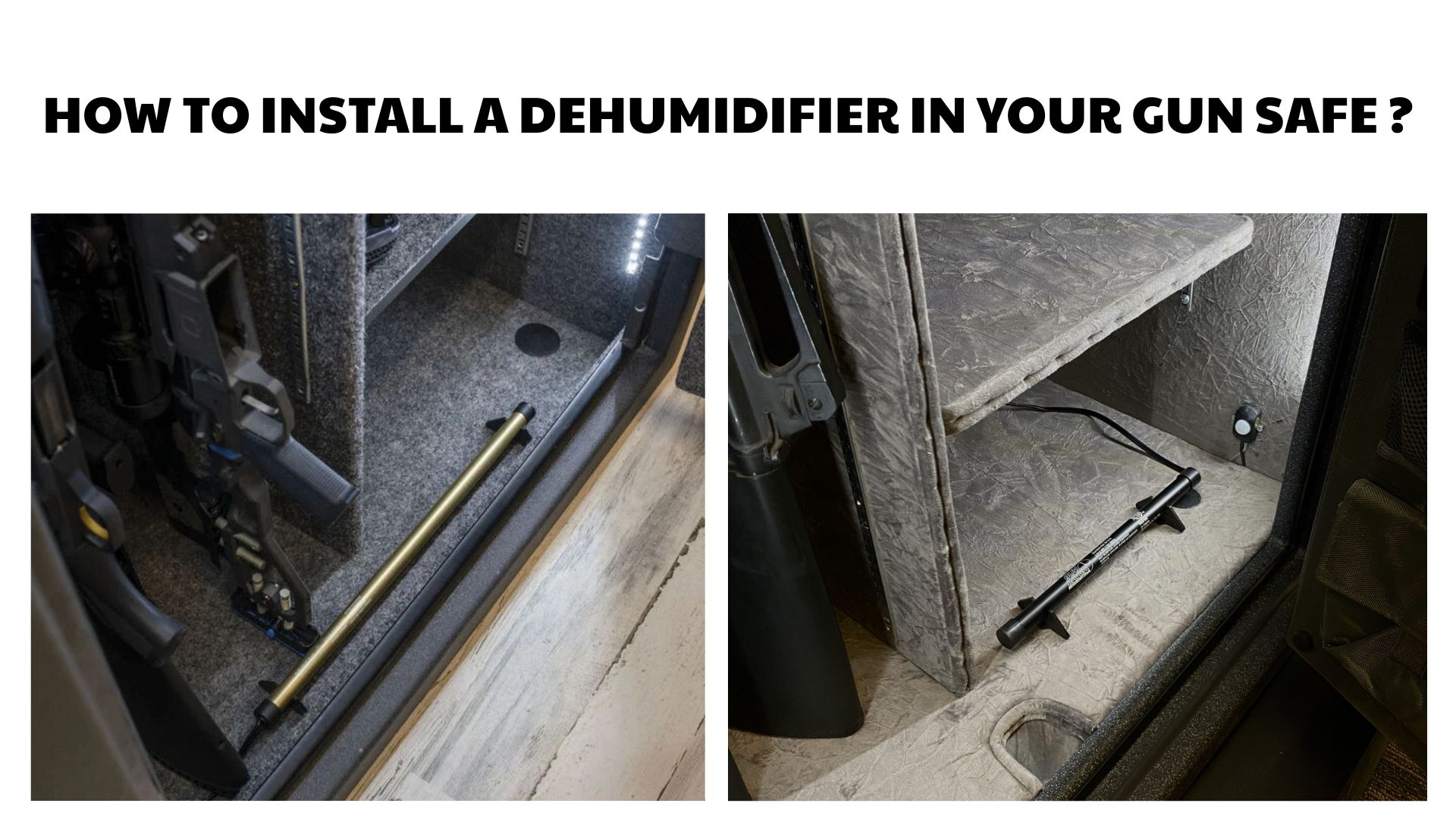

Learning how to install a dehumidifier in your gun safe is one of the most practical steps you can take to protect firearms, optics, ammunition, documents, and safe interiors from excess moisture. A gun safe can feel secure from the outside, but the inside environment still needs attention. Humidity, condensation, damp cases, and poor storage habits can all contribute to rust, corrosion, odor, and long-term damage.
This guide is written for responsible firearm owners who want a safe, simple, and beginner-friendly way to improve gun safe humidity control. You will learn how to choose the right type of gun safe dehumidifier, where to place it, how to monitor humidity with a hygrometer, what mistakes to avoid, and when to contact the safe manufacturer or a professional.
Before working around firearms, always follow safe firearm handling practices. Make sure firearms are handled responsibly, stored legally, and protected from unauthorized access, children, visitors, and prohibited users. Laws and storage rules vary by location, so verify current firearm storage requirements in your area before changing your storage setup.
Quick Answer
To install a dehumidifier in your gun safe, first make the area safe, read the gun safe and dehumidifier manuals, remove damp items, and choose a moisture-control product that matches your safe size and power access. Place a desiccant unit, rechargeable dehumidifier, or electric dehumidifier rod according to the manufacturer’s instructions, then monitor humidity with a hygrometer. Many firearm owners aim for a moderate humidity range rather than an extremely dry safe, because overly damp and overly dry conditions can both create storage problems. If your safe requires wiring, drilling, electrical work, or permanent modification, contact the manufacturer or a qualified professional.
Important Firearm Safety and Legal Notice
Firearm storage rules vary by country, state, province, county, city, residence type, firearm type, and user status. Before installing or changing anything inside your gun safe, check current local firearm storage laws, safe storage requirements, child access prevention rules, and any rules that apply to ammunition storage. Also read the gun safe owner’s manual and the dehumidifier manufacturer’s instructions.
- Local firearm storage laws: Verify current rules for storing firearms in your area.
- Child access prevention: Store firearms so children and unauthorized users cannot access them.
- Safe manufacturer instructions: Follow the manual before adding powered accessories or changing the interior layout.
- Dehumidifier instructions: Use only products designed or approved for enclosed spaces such as safes, cabinets, or small rooms.
- Electrical safety: Do not pinch cords, overload outlets, use damaged plugs, or place powered devices where they can overheat.
- Safe firearm handling: Handle firearms responsibly before rearranging the safe. Keep the workspace controlled and keep unauthorized people away.
- Ammunition storage: Check whether ammunition must be stored separately in your location.
- Professional help: Contact the safe manufacturer, a qualified installer, or an electrician if the safe needs wiring, drilling, or modification.
Understanding Gun Safe Dehumidifiers
A gun safe dehumidifier helps reduce excess moisture inside the safe. Moisture can enter a safe through humid indoor air, damp basements, garages, wet cases, temperature swings, or items stored before they are fully dry. Even a strong safe can develop interior humidity problems if the room around it is damp or the door is opened often during humid weather.
The goal is not to make the safe bone-dry at all costs. The goal is to create a stable storage environment that reduces rust risk while protecting wood stocks, leather accessories, optics, documents, and safe interiors. Many firearm storage guides recommend keeping gun safe humidity in a moderate range, often around 30% to 50% relative humidity, but the best target can depend on climate, safe location, materials inside the safe, and manufacturer guidance.
There are several common options for gun safe humidity control:
- Desiccant packs: These absorb moisture and are usually simple, silent, and non-powered.
- Rechargeable dehumidifiers: These use moisture-absorbing material that can be recharged or dried out when saturated.
- Electric dehumidifier rods: These warm the air slightly to reduce condensation and encourage air circulation inside the safe.
- Compact automatic dehumidifiers: These actively remove moisture and may be useful in larger or more humid storage spaces if compatible with the setup.
- Hygrometers: These do not remove moisture, but they help you measure humidity so you can make informed decisions.
Before choosing a product, consider your safe size, room humidity, power access, number of firearms, safe location, and whether the manufacturer recommends a specific accessory type.
What You Need Before You Start
- Gun safe owner’s manual or manufacturer documentation
- Dehumidifier manual or product instructions
- Current knowledge of local firearm storage laws
- Basic firearm safety knowledge before handling or rearranging firearms
- Hygrometer for measuring relative humidity inside the safe
- Gun safe dehumidifier, such as a desiccant pack, rechargeable unit, electric rod, or compact safe-rated dehumidifier
- Clean, dry cloth for wiping shelves, racks, and safe interior surfaces
- Flashlight for checking corners, shelves, power access, and hidden damp spots
- Safe organizer or rack system if needed to improve airflow
- Backup batteries if the safe uses an electronic lock
- Professional support if electrical routing, drilling, or safe modification is required
how to install a dehumidifier in your gun safe: Step-by-Step Guide
Step 1: Check Laws, Manuals, and Safety Requirements First
Start by reviewing your firearm storage responsibilities. Local laws may require certain storage practices, especially if children, guests, renters, prohibited persons, or shared living situations are involved. This article gives general storage and humidity-control guidance, not legal advice.
Next, read your gun safe manual and the dehumidifier instructions. Some safes include a power access hole, built-in outlet kit, removable interior panel, or accessory recommendation. Others may warn against certain modifications. Do not drill into a safe, run cords through tight gaps, or alter the interior unless the manufacturer confirms it is safe and appropriate.
Step 2: Make the Area Safe
Before installing anything, make the workspace calm, clean, and controlled. Keep children, visitors, and unauthorized users away from the safe. Handle firearms responsibly and follow safe handling rules at all times.
If you need to remove firearms to access the safe interior, do so carefully and place them in a secure temporary location where they remain under responsible control. Do not leave firearms unattended on tables, floors, beds, vehicles, or other unsecured areas while working.
Step 3: Measure the Humidity Inside the Safe
Place a hygrometer inside the gun safe and let it sit long enough to get a stable reading. A single quick reading may not tell the full story. Humidity can change during different seasons, after rain, when heating or air conditioning cycles, or when the safe door is opened frequently.
If the humidity is consistently high, a dehumidifier is likely useful. If the humidity is already very low, adding too much drying power may not be necessary. The goal is balanced moisture control, not overcorrection.
Step 4: Remove Damp Items From the Safe
Do not install a dehumidifier and ignore moisture sources. Remove wet gun cases, damp cloth, moisture-holding foam, wet boots, paper that feels damp, or accessories that have been stored in humid conditions. Wipe down shelves and interior surfaces with a clean, dry cloth.
Firearms that were recently used in rain, snow, fog, or high humidity should be dried and maintained according to the firearm manufacturer’s guidance before being returned to storage. A gun safe dehumidifier helps control the safe environment, but it should not be used as a substitute for proper firearm cleaning and care.
Step 5: Choose the Right Type of Dehumidifier
Choose a dehumidifier based on your safe size, climate, power access, and maintenance preference. A small handgun safe may only need a compact desiccant pack. A larger long-gun safe in a humid room may need a rechargeable unit, electric rod, or stronger moisture-control setup.
For a non-powered solution, desiccant packs and rechargeable dehumidifiers are simple and easy to place. For a powered solution, an electric dehumidifier rod may be useful if your safe has safe power access and the manufacturer allows it. For very humid locations, you may need to control the room humidity as well as the safe humidity.
Step 6: Install a Desiccant or Rechargeable Dehumidifier
If you are using a desiccant pack or rechargeable dehumidifier, place it where air can circulate around it. Common locations include a lower shelf, a corner, near the safe door area, or a central open space that does not block firearm access.
Do not bury desiccant under gear, place it inside a wet case, or wedge it tightly behind firearms where airflow is poor. Check the product indicator, if it has one, and recharge or replace it according to the manufacturer’s instructions. Keep a note of the recharge schedule so the unit does not become forgotten and ineffective.
Step 7: Install an Electric Dehumidifier Rod Safely
If you are using an electric dehumidifier rod, first confirm that your safe supports safe cord routing or has a manufacturer-approved power access point. Many electric rods are placed low in the safe because warm air rises and can help air move gently through the interior. However, always follow the exact product manual for placement, clearance, mounting, and electrical safety.
Keep the rod away from loose paper, fabric, plastic, foam, ammunition packaging, or anything the manufacturer says should not touch the device. Do not use a damaged cord, pinched cord, loose plug, or outlet that creates heat or sparks. If the safe has no safe way to route power, do not improvise with risky drilling or crushed door gaps. Contact the safe manufacturer or a qualified installer.
Step 8: Keep Airflow Clear Inside the Safe
A dehumidifier works better when air can move around the safe interior. Avoid packing firearms, cases, boxes, and accessories so tightly that corners become dead zones for moisture. Use safe organizers, racks, shelves, and open spacing where practical.
Do not store firearms in soft cases for long periods unless the case is specifically suitable for storage and is fully dry. Some foam-lined cases can trap moisture against metal surfaces. If you store documents, optics, leather, or wood-stock firearms, monitor humidity carefully so the environment does not become too damp or too dry.
Step 9: Test the Setup Before Relying on It
After installation, close the safe and monitor the hygrometer over several days. Check readings at different times of day if possible. If humidity drops into a stable and reasonable range, the setup is likely working. If humidity remains high, the dehumidifier may be too small, saturated, poorly placed, or unable to overcome the room’s humidity.
Also check that the safe door closes smoothly, the lock operates normally, cords are not pinched, and no accessory blocks firearm access. If an electric device produces unusual heat, smell, sound, or visible damage, unplug it and contact the manufacturer.
Step 10: Build a Maintenance and Safety Routine
Installing the dehumidifier is only the beginning. Add humidity checks to your regular gun safe maintenance routine. Look for early rust, condensation, musty odor, damp packaging, weak batteries, loose accessories, and expired or saturated desiccants.
Keep records of humidity readings, battery changes, dehumidifier recharge dates, safe maintenance, and firearm inspections. A simple note in your phone or a paper log stored outside the safe can help you catch problems before they become expensive damage.
Best Setup, Location, or Conditions for This Gun Safe Task
The best setup for a gun safe dehumidifier starts with the safe location. A dry, temperature-stable room is easier to manage than a damp garage, unfinished basement, laundry area, pool house, or shed. If your safe is located in a humid room, the dehumidifier inside the safe may help, but controlling the surrounding room humidity may also be necessary.
Good conditions include a level safe, a clean interior, moderate airflow, safe electrical access if using a powered rod, and enough space around the dehumidifier for it to work. A hygrometer should be placed where it is easy to read and not pressed against a damp item or blocked by gear.
If possible, avoid storing wet gear, damp clothing, wet gun cases, or moisture-holding foam in the safe. Even a good dehumidifier can struggle if the safe is repeatedly loaded with damp items. The safest approach is to dry and maintain firearms before storage, then use the dehumidifier to keep the interior environment stable.
Helpful Tips for Better Results
- Use a hygrometer before and after installation so you are solving a measured humidity problem, not guessing.
- Choose a dehumidifier size that matches your safe capacity and climate conditions.
- Place desiccants where air can reach them instead of hiding them behind tightly packed gear.
- Place electric rods only where the manufacturer allows and keep cords safe from pinching or damage.
- Remove damp cases, wet cloth, and moisture-holding foam from the safe before relying on a dehumidifier.
- Inspect firearms regularly for early signs of rust, especially after humid weather or long storage periods.
- Set a reminder to recharge desiccants, check batteries, review humidity readings, and update storage records.
Common Mistakes to Avoid
The most common mistake is treating a dehumidifier as a one-time fix. Moisture control is an ongoing process. If the room is damp, the safe is overloaded, or the dehumidifier is saturated, rust risk can return quickly.
- Not using a hygrometer: Without a humidity reading, you cannot know whether the setup is working.
- Using the wrong size dehumidifier: A tiny desiccant pack may not be enough for a large safe in a humid area.
- Ignoring manufacturer instructions: Safe and dehumidifier manuals matter for placement, safety, and warranty concerns.
- Storing damp items: Wet cases, damp cloth, and foam can hold moisture near metal surfaces.
- Pinching power cords: A damaged or compressed cord can create electrical risk.
- Blocking airflow: A crowded safe can prevent even humidity control.
- Forgetting to recharge desiccants: Saturated moisture absorbers stop working effectively.
- Assuming the room does not matter: A safe in a humid room may need room-level moisture control too.
- Over-drying without monitoring: Very dry storage may affect certain wood, leather, or accessory materials.
- Skipping firearm maintenance: A dehumidifier helps, but it does not replace proper cleaning, drying, and inspection.
Troubleshooting Common Problems
| Problem | Possible Cause | What to Do |
|---|---|---|
| Humidity stays too high | The dehumidifier is too small, saturated, poorly placed, or the room is very humid | Check the hygrometer, recharge or replace the unit, improve placement, and consider controlling room humidity. |
| Firearms show early rust | Excess moisture, damp storage habits, poor cleaning, or long inspection gaps | Follow firearm manufacturer maintenance guidance, improve humidity control, and inspect the safe more often. |
| Desiccant changes color quickly | The safe environment is very humid or damp items are being stored inside | Remove moisture sources, recharge the desiccant, and check whether the safe location is too damp. |
| Electric dehumidifier rod feels unsafe | Possible overheating, poor clearance, damaged cord, or wrong installation | Unplug it, stop using it, review the manual, and contact the manufacturer before reinstalling. |
| Hygrometer readings seem inconsistent | Poor placement, low-quality meter, temperature swings, or short measurement time | Move the hygrometer, allow more time for stable readings, and compare with another meter if needed. |
| The safe smells musty | Damp interior, stored cloth, wet cases, or poor ventilation before storage | Remove damp items, wipe the interior, improve humidity control, and avoid storing moisture-holding materials. |
| The safe door pinches the power cord | No proper cord access or incorrect cord routing | Do not use the cord that way. Use a manufacturer-approved access point or contact a professional. |
| Humidity is too low | Too much drying capacity for the safe size or climate | Reduce drying capacity, monitor wood or leather items, and follow manufacturer guidance for sensitive materials. |
| Dehumidifier does not fit well | Safe is too crowded or the product is too large | Reorganize the safe, choose a smaller safe-rated option, or use multiple small units if appropriate. |
| You are unsure whether the setup is safe | Manual is unclear, electrical access is limited, or safe design is unusual | Contact the safe manufacturer, dehumidifier manufacturer, or a qualified safe installer before proceeding. |
Responsible Firearm Storage and Home Safety
A gun safe dehumidifier protects against moisture, but responsible firearm storage is broader than rust prevention. Firearms should be stored so unauthorized users, children, visitors, and prohibited persons cannot access them. Access codes, backup keys, and safe combinations should be controlled carefully.
Responsible storage also means reviewing local laws, maintaining locks, checking batteries, controlling ammunition storage, using safe handling practices, and keeping records. A gun safe is an important security layer, but it should work together with good habits, home security awareness, and regular inspection.
- Keep access codes private and avoid obvious combinations.
- Store backup keys in a secure location away from unauthorized users.
- Check electronic lock batteries on a schedule.
- Inspect firearms and safe interiors regularly.
- Follow local requirements for firearm and ammunition storage.
- Do not rely on moisture control as a substitute for secure storage.
- Update your storage plan when your household, laws, or safe contents change.
When to Get Professional Help
Installing a desiccant pack or rechargeable dehumidifier is usually simple, but some situations require professional guidance. Do not improvise when electrical safety, safe modification, warranty concerns, structural issues, or legal uncertainty are involved.
Get professional help when:
- The safe does not have a safe power access point for an electric dehumidifier rod.
- You would need to drill into the safe, wall, floor, or nearby structure.
- The safe manual warns against the accessory you want to use.
- The dehumidifier cord, plug, or outlet looks damaged.
- The safe is in a very humid location and the interior remains damp.
- You are unsure how to store firearms safely while rearranging the safe.
- You need advice about local firearm storage laws.
- The safe has water damage, fire damage, lock problems, or electrical issues.
Helpful sources may include the safe manufacturer, dehumidifier manufacturer, a qualified safe installer, a licensed electrician, a reputable firearm safety organization, or a qualified legal professional for law-specific questions.
Long-Term Maintenance, Safety Checks, and Recordkeeping
After installing the dehumidifier, create a simple routine. Check the hygrometer regularly, especially during rainy seasons, winter heating changes, summer humidity, or after moving the safe to a new location. If the safe is in a basement, garage, or other damp area, check more often.
Recharge or replace desiccant products according to the manufacturer’s schedule. Inspect powered dehumidifier rods for safe operation. Wipe shelves and interior surfaces when dust or odor appears. Keep firearms clean and maintained according to manufacturer recommendations.
Recordkeeping does not need to be complicated. Keep a list of the safe model, dehumidifier type, purchase date, recharge schedule, battery schedule, humidity readings, and maintenance notes. Store proof of ownership, manuals, and warranty information in a secure place where you can find them later.
Recommended Gun Safe Gear and Tools to Consider
You do not always need expensive gear to store firearms responsibly. Choose products based on your local laws, safe type, firearm type, humidity level, home layout, security risks, and budget.
- Hygrometer for monitoring humidity inside the safe
- Desiccant packs for simple moisture absorption
- Rechargeable dehumidifier for reusable humidity control
- Electric dehumidifier rod if approved for your safe and setup
- Safe organizer or rack system that improves airflow
- Clean microfiber cloths for wiping safe interiors and accessories
- Backup batteries for electronic locks
- Document folder for safe manuals, warranty details, and proof of ownership
- Room dehumidifier if the surrounding room is consistently humid
Final Thoughts
Knowing how to install a dehumidifier in your gun safe can help protect your firearms from moisture, rust, and long-term storage problems. Start by checking your manuals, making the area safe, measuring humidity with a hygrometer, removing damp items, and choosing the right dehumidifier for your safe size and climate.
The best results come from regular monitoring, safe firearm handling, responsible access control, and consistent maintenance. A dehumidifier is useful, but it works best as part of a complete safe storage routine that includes legal compliance, child access prevention, theft reduction, firearm inspection, and careful recordkeeping.
If your setup requires electrical routing, drilling, permanent modification, or legal interpretation, do not guess. Contact the safe manufacturer, dehumidifier manufacturer, qualified installer, electrician, or legal professional before proceeding.
FAQs
1. How long does it take to learn how to install a dehumidifier in your gun safe?
Most beginners can understand the basic process in a short time, especially if they are using a desiccant pack or rechargeable dehumidifier. Powered dehumidifier rods may require more planning because cord routing, placement, and electrical safety matter. Always read the safe and product manuals before installation.
2. Do I really need a dehumidifier in my gun safe?
You may need one if your safe humidity is consistently high, firearms show rust, the safe smells musty, or the safe is located in a humid room. The best way to know is to use a hygrometer and monitor the safe over time.
3. What humidity level is best for a gun safe?
Many firearm storage guides suggest a moderate range around 30% to 50% relative humidity, but the best target can depend on climate, safe contents, and manufacturer guidance. Avoid letting the safe become consistently damp, and avoid over-drying sensitive materials.
4. What is the easiest gun safe dehumidifier for beginners?
Desiccant packs and rechargeable dehumidifiers are often the easiest because they do not require power or installation hardware. They still need monitoring, recharging, or replacement to keep working effectively.
5. Where should I place a dehumidifier in a gun safe?
Place it where air can circulate and where it does not block firearm access. Desiccants often work well on a shelf or in a corner with airflow. Electric rods are commonly placed low in the safe when the manufacturer allows it, but you should follow the product manual.
6. Can I put a dehumidifier rod at the bottom of my gun safe?
Many electric dehumidifier rods are designed to be placed low in the safe because warm air rises. However, placement depends on the product design and the safe layout. Follow the exact manufacturer instructions.
7. Can I install a dehumidifier without electricity?
Yes. Desiccant packs and rechargeable moisture absorbers can be used without electricity. They are useful when the safe has no power access or when you want a simple, low-maintenance option.
8. Is an electric dehumidifier rod safe in a gun safe?
It can be safe when it is designed for gun safes, installed according to the manual, placed with proper clearance, and powered through a safe cord route. Do not use damaged cords, pinched cords, or improvised wiring.
9. Can a dehumidifier damage firearms?
A properly selected and monitored dehumidifier should help protect firearms from moisture. However, over-drying or poor placement may affect wood, leather, or accessories. Use a hygrometer and inspect your firearms regularly.
10. Should I use a hygrometer with a gun safe dehumidifier?
Yes. A hygrometer tells you whether the dehumidifier is actually controlling humidity. Without one, you are guessing instead of managing the safe environment.
11. How often should I check gun safe humidity?
Check humidity at least regularly and more often during seasonal changes, rainy weather, or if your safe is in a basement, garage, or humid room. New setups should be monitored closely for the first several days.
12. How often should I recharge a gun safe dehumidifier?
Recharge timing depends on the product, safe humidity, safe size, and climate. Follow the manufacturer’s indicator or schedule. If the unit saturates quickly, your safe or room may have a larger humidity problem.
13. Can I use silica gel in a gun safe?
Yes, silica gel desiccant is commonly used for moisture control in safes and storage containers. Use enough for the safe size, place it where airflow reaches it, and recharge or replace it as needed.
14. Can I use rice instead of a gun safe dehumidifier?
Rice is not an ideal long-term gun safe moisture-control solution. A proper desiccant, rechargeable dehumidifier, or safe-rated humidity-control product is more reliable and easier to monitor.
15. Can I use a household room dehumidifier inside a gun safe?
Most household room dehumidifiers are not designed to fit inside a gun safe. They may require drainage, airflow, and clearance that a safe cannot provide. Use products designed for safes or control the room humidity outside the safe.
16. Should I put a dehumidifier in a small handgun safe?
A small handgun safe may benefit from a compact desiccant pack if humidity is a problem. Make sure the product does not interfere with safe closure, lock operation, or quick lawful access.
17. Should I put a dehumidifier in a large long-gun safe?
Large safes often need stronger or multiple humidity-control products, especially in humid climates. Use a hygrometer to confirm whether your setup is working throughout the safe interior.
18. Can I use more than one dehumidifier in a gun safe?
Yes, but use a hygrometer to avoid over-drying and to confirm the setup is balanced. Multiple smaller units may help in a large safe, but they still need regular monitoring.
19. Why is my gun safe still humid after installing a dehumidifier?
The dehumidifier may be too small, saturated, blocked by gear, or placed poorly. The room may also be too humid. Remove damp items, improve placement, recharge the unit, and consider room-level humidity control.
20. Why do guns rust inside a safe?
Rust can occur from humidity, condensation, fingerprints, poor cleaning, damp cases, wet storage conditions, or long inspection gaps. A dehumidifier helps, but firearms still need proper care and inspection.
21. Should firearms be cleaned before going into a safe?
Yes. Firearms should be cleaned, dried, and protected according to the manufacturer’s guidance before storage. A dehumidifier is not a replacement for firearm maintenance.
22. Can I store guns in soft cases inside a safe?
Long-term storage in soft cases can be risky if the case traps moisture. If you use cases, make sure they are fully dry and suitable for storage. Many owners prefer open safe racks with better airflow.
23. Can foam cause moisture problems in a gun safe?
Some foam can trap moisture against metal surfaces, especially if it becomes damp. Avoid storing firearms long-term against moisture-holding foam unless the material is designed for that purpose and kept dry.
24. Is a gun safe dehumidifier enough for a basement safe?
Maybe, but basements can be very humid. You may need both a safe dehumidifier and room-level moisture control. Monitor with a hygrometer inside the safe and, if possible, in the surrounding room.
25. Is a gun safe dehumidifier enough for a garage safe?
A garage safe may face temperature swings and humidity changes. A dehumidifier can help, but the room environment may still be challenging. Check the safe manual because some manufacturers discourage certain damp or extreme locations.
26. Can temperature changes affect gun safe humidity?
Yes. Temperature changes can contribute to condensation and changing relative humidity. A stable indoor location is usually easier to manage than a place with frequent temperature swings.
27. Can a gun safe be too dry?
Yes, overly dry conditions may affect wood stocks, leather accessories, or other materials. Monitor humidity instead of trying to remove all moisture without control.
28. Should I store ammunition with a dehumidifier?
Check local laws and ammunition manufacturer guidance. Ammunition should be stored in a cool, dry, secure place. Some locations may require separate firearm and ammunition storage.
29. Can a dehumidifier help protect optics?
It can help reduce moisture inside the safe, which may benefit optics and accessories. However, optics should still be stored according to manufacturer guidance and protected from impacts, dust, and extreme conditions.
30. Can a dehumidifier help protect documents in a gun safe?
It may help reduce moisture exposure, but many gun safes are not ideal document-preservation environments by themselves. Important documents may need protective sleeves or separate storage designed for paper and data media.
31. Should I drill a hole in my gun safe for a dehumidifier cord?
Do not drill into a safe unless the manufacturer specifically approves the method. Drilling can affect fire protection, warranty, structure, security, or internal components. Use a manufacturer-approved power access point or seek professional help.
32. Can I run a cord through the gun safe door?
You should not run a cord through the door if it will be pinched, damaged, or prevent the door from sealing and locking properly. Use only safe, manufacturer-approved cord routing.
33. What should I do if my dehumidifier cord gets hot?
Unplug it immediately and stop using it. Check the product manual and contact the manufacturer. Do not continue using any electrical accessory that shows signs of overheating or damage.
34. Can an electric dehumidifier rod touch gear inside the safe?
Follow the manufacturer’s clearance instructions. In general, avoid contact with paper, fabric, foam, plastic, accessories, or anything that could be damaged by heat.
35. How do I know if a dehumidifier is working?
Use a hygrometer and compare readings before and after installation. Also look for fewer moisture symptoms, less musty odor, and more stable humidity over time.
36. Should I leave an electric gun safe dehumidifier on all the time?
Some electric rods are designed for continuous use, but you should follow the product manual. If you notice unusual heat, smell, damage, or electrical issues, unplug it and contact the manufacturer.
37. Can I use a rechargeable dehumidifier and electric rod together?
Some owners use both in humid environments, but you should monitor humidity carefully. More drying power is not always better if it creates an overly dry environment.
38. What is the best dehumidifier for a gun safe?
The best option depends on safe size, humidity level, power access, climate, and maintenance preference. Desiccants are simple, rechargeable units are reusable, and electric rods may help in larger safes with safe power access.
39. How do I choose the right size dehumidifier?
Check the product coverage guidance and compare it to your safe size. If your safe is large, crowded, or located in a humid area, you may need a larger product or more than one moisture-control device.
40. Should I put the hygrometer near the dehumidifier?
It is better to place the hygrometer where it gives a realistic reading of the safe interior, not directly beside the dehumidifier. If the safe is large, you may compare readings from different areas.
41. Why does my gun safe smell damp?
A damp smell may come from trapped moisture, wet cases, stored fabric, poor ventilation before storage, or a saturated desiccant. Remove moisture sources and monitor humidity closely.
42. Can I install a dehumidifier in a fireproof gun safe?
Often yes, but you must follow the safe manufacturer’s instructions. Do not drill, modify insulation, or route cords in a way that may reduce fire protection or safe performance.
43. Can I install a dehumidifier in a biometric gun safe?
Yes, if the dehumidifier fits safely and does not interfere with the lock, sensor, door, or stored firearm. Keep electronics dry and follow both product manuals.
44. Can humidity damage a digital gun safe lock?
Excess moisture may contribute to corrosion or electronic issues over time. Keep the safe environment dry, replace batteries on schedule, and contact the manufacturer if the keypad behaves unusually.
45. Should I remove everything from the safe before installing a dehumidifier?
You do not always need to remove everything, but you should create enough space to work safely and check for damp items. If firearms are moved, keep them secure and under responsible control.
46. Can I install a dehumidifier in a closet gun safe?
Yes, but closet airflow and room humidity matter. Make sure the safe is not surrounded by damp clothing, blocked vents, or moisture sources. Check the hygrometer after installation.
47. Can a dehumidifier prevent all rust?
No product can guarantee total rust prevention. A dehumidifier reduces moisture risk, but firearm cleaning, inspection, handling, climate control, and storage habits are also important.
48. Should I oil firearms before storing them in a gun safe?
Follow the firearm manufacturer’s maintenance guidance. Many firearms benefit from proper cleaning and light protection before storage, but excessive oil can attract dust or affect certain materials.
49. How often should I inspect firearms in storage?
Inspect them regularly, especially in humid climates or after weather changes. Long-term storage should include scheduled checks for rust, moisture, lock function, and safe interior condition.
50. Can I put a dehumidifier near ammunition?
Follow ammunition manufacturer guidance and local storage laws. Keep ammunition dry and secure, but do not place powered devices or heat sources against packaging unless the manufacturer says it is safe.
51. What should I do if water entered my gun safe?
Remove contents safely, secure firearms responsibly, dry the interior, inspect for damage, and contact the safe manufacturer. Firearms exposed to water should be handled and maintained according to manufacturer guidance or by a qualified professional.
52. Do I need professional help to install a gun safe dehumidifier?
For simple desiccants, usually no. For powered rods, electrical routing, safe modification, or unclear manufacturer instructions, professional help is a safer choice.
53. Can a gun safe dehumidifier improve home security?
It improves storage conditions, not physical security. Theft prevention still depends on the safe quality, anchoring, location, access control, alarms, and responsible storage habits.
54. Is it legal to use a dehumidifier in a gun safe?
Using a dehumidifier is generally a storage maintenance choice, but firearm storage laws vary. Check local laws to make sure your overall firearm and ammunition storage setup is compliant.
55. What is the most important rule when installing a gun safe dehumidifier?
The most important rule is to follow the safe and dehumidifier manuals while maintaining responsible firearm safety. Measure humidity, avoid unsafe electrical shortcuts, keep firearms secure, and monitor the setup over time.
Read more: