

Learning how to secure a gun safe without bolting it to the floor is important for renters, apartment residents, homeowners with finished floors, people who cannot drill, and anyone who needs a less permanent firearm storage setup. Bolting a safe to a proper floor or wall structure is often one of the strongest ways to improve stability and theft deterrence, but it is not always allowed or practical.
This guide explains safer alternatives for improving gun safe security when floor bolting is not an option. You will learn how to evaluate your location, reduce tipping risk, improve theft deterrence, protect floors, use layered home security, manage humidity, control access, and know when professional help is the better choice.
No no-bolt method should be treated as equal to proper anchoring. The goal is realistic risk reduction, not guaranteed security. Responsible firearm storage also requires legal compliance, safe firearm handling, child access prevention, secure keys and codes, and careful long-term maintenance.
Quick Answer
To secure a gun safe without bolting it to the floor, choose a heavier and harder-to-move safe, place it in a discreet and stable location, keep it low and level, use manufacturer-approved cable security or wall anchoring if allowed, add alarm sensors, control access codes and backup keys, and use layered home security. Always check current firearm storage laws, lease rules, safe manufacturer instructions, and property restrictions before choosing a setup. A no-bolt method can reduce risk, but it is not equal to proper bolting. Call a professional installer, safe manufacturer, landlord, structural professional, or qualified legal source if the safe is heavy, unstable, legally unclear, or difficult to secure safely.
Important Firearm Safety and Legal Notice
Firearm storage, safe installation, child access prevention, vehicle transport, access control, and ammunition storage laws vary by country, state, province, county, city, residence type, firearm type, vehicle type, and user status. This article provides general safety information only. Always verify current rules with official government sources, local legal authorities, local law enforcement, qualified firearm law professionals, and your safe manufacturer.
- Check current local firearm storage laws before choosing any no-bolt safe setup.
- Verify child access prevention rules if children, visitors, roommates, or unauthorized users may be present.
- Review vehicle firearm transport laws if firearms must be moved to another location.
- Read your lease, rental agreement, HOA rules, or building policies before using anchors, cables, or heavy safes.
- Ask the landlord or property manager before drilling into floors, walls, closets, or built-in structures.
- Read the gun safe manufacturer’s installation and maintenance instructions before using any security accessory.
- Consider floor load, stair safety, tipping risk, and structural concerns before placing a heavy safe.
- Unload firearms before storing, moving, cleaning, or handling them unless a specific lawful safety protocol says otherwise.
- Store firearms so children, guests, roommates, maintenance workers, prohibited persons, and unauthorized users cannot access them.
- Call a professional if installation, moving, legal compliance, lock servicing, structural support, or safe stability is unclear.
Understanding the Gun Safe Topic
Bolting a gun safe to the floor can improve theft deterrence and tipping prevention when it is done correctly, but not every owner can drill into the floor. Renters may be restricted by lease terms. Apartment residents may have unknown floor construction. Homeowners may want to protect tile, hardwood, concrete coatings, radiant floor heating, or finished flooring. Some people may also move often and need a temporary but responsible setup.
When you cannot bolt a safe to the floor, security should come from layers. A layered approach may include choosing a heavier safe, placing it in a discreet location, using a closet or corner, attaching it only to manufacturer-approved points if allowed, using cable security where appropriate, adding alarms or sensors, securing room access, managing keys and codes, and keeping firearms unloaded and inaccessible to unauthorized users.
The most important limitation is that no-bolt setups are usually easier to move than properly anchored safes. A cable can be a deterrent, but it is not the same as a properly installed floor anchor. Hiding a safe can reduce visibility, but it does not replace physical security. A heavier safe can be harder to remove, but it may create moving and floor-load concerns.
A responsible owner should choose the safest legal setup available for the home, safe type, firearm type, household risk, local law, and property limitations.
What You Need Before You Start
- Gun safe owner’s manual or manufacturer documentation
- Current knowledge of local firearm storage and transport laws
- Basic firearm safety knowledge before handling or storing firearms
- Lease, rental agreement, HOA rules, or property rules if applicable
- Landlord or property manager permission if walls, floors, closets, or built-in structures may be affected
- Measuring tape for closets, corners, doorways, hallways, stairs, and final placement
- Floor protection mat or furniture pad appropriate for the safe and floor type
- Manufacturer-approved cable kit, wall anchor option, or security accessory if appropriate
- Alarm sensor, vibration sensor, door sensor, or home security device if appropriate
- Hygrometer for monitoring humidity inside the safe
- Desiccant packs, rechargeable dehumidifier, or electric dehumidifier rod if relevant and approved for your setup
- Backup batteries for electronic locks
- Secure document folder for manuals, receipts, warranty details, serial numbers, and proof of ownership
- Professional safe mover, installer, locksmith, structural professional, landlord, or legal guidance if needed
How to Secure a Gun Safe Without Bolting It to the Floor: Step-by-Step Guide
Step 1: Check Laws, Manuals, and Safety Requirements First
Before changing your gun safe setup, check current firearm storage laws in your area. Laws may cover child access prevention, safe storage, transportation, loaded versus unloaded storage, ammunition storage, and who may legally access firearms.
Next, read the gun safe manual. The manufacturer may explain whether the safe can be secured with cable systems, wall anchors, pre-drilled anchor points, security accessories, or specific installation methods. Do not improvise with methods that could damage the safe, weaken the structure, or create unsafe access.
Step 2: Make the Area Safe
Keep children, visitors, roommates, pets, and unauthorized users away from the work area. If firearms must be removed while you move or reposition the safe, follow safe firearm handling rules. Verify firearms are unloaded before storage, moving, cleaning, or handling unless a specific lawful safety protocol says otherwise.
Keep ammunition controlled and stored separately when appropriate or legally required. Do not leave firearms loose on furniture, beds, counters, closets, vehicles, or other unsecured places during setup.
Step 3: Identify the Safe Type and Situation
Identify whether your safe is a small handgun lockbox, compact digital keypad safe, biometric safe, long-gun cabinet, closet safe, heavy fire-rated safe, or apartment-friendly security cabinet. Different safe types have different risks.
A light safe may be easier to hide but easier to carry away. A heavy safe may deter quick removal but may create floor load and moving concerns. A tall safe may have tipping risk if not anchored. A digital safe needs battery maintenance. A closet safe needs ventilation and humidity monitoring.
Step 4: Choose the Safest Practical Approach
If floor bolting is not possible, choose a layered approach rather than relying on one trick. Combine discreet placement, stable positioning, access control, manufacturer-approved security accessories, home security sensors, floor protection, humidity control, and responsible firearm storage habits.
Do not claim that a no-bolt setup is theft-proof. The goal is to slow unauthorized access, reduce easy removal, limit tipping risk, and keep firearms inaccessible to unauthorized users.
Step 5: Choose a Low-Visibility Location
Place the safe where it is not visible from windows, entry doors, hallways, balconies, or common areas. A closet, interior room, bedroom corner, or discreet storage area may be better than an obvious living-room location.
Avoid locations that block emergency exits, electrical panels, vents, plumbing access, or required maintenance access. Also avoid places exposed to leaks, high humidity, direct sunlight, or major temperature swings.
Step 6: Improve Stability and Tipping Prevention
Place the safe on a level, stable surface. Keep tall safes positioned so they are less likely to tip forward when the door opens. Do not allow children to climb on or play near the safe. A heavy door can change the safe’s balance quickly.
If the safe feels unstable, do not use it as-is. Check the manual and contact a professional installer or the manufacturer. For tall or heavy safes, wall anchoring may be safer than no anchoring if it is allowed and structurally appropriate, but it should be done only with proper permission and professional guidance when needed.
Step 7: Use Manufacturer-Approved Cable Security if Appropriate
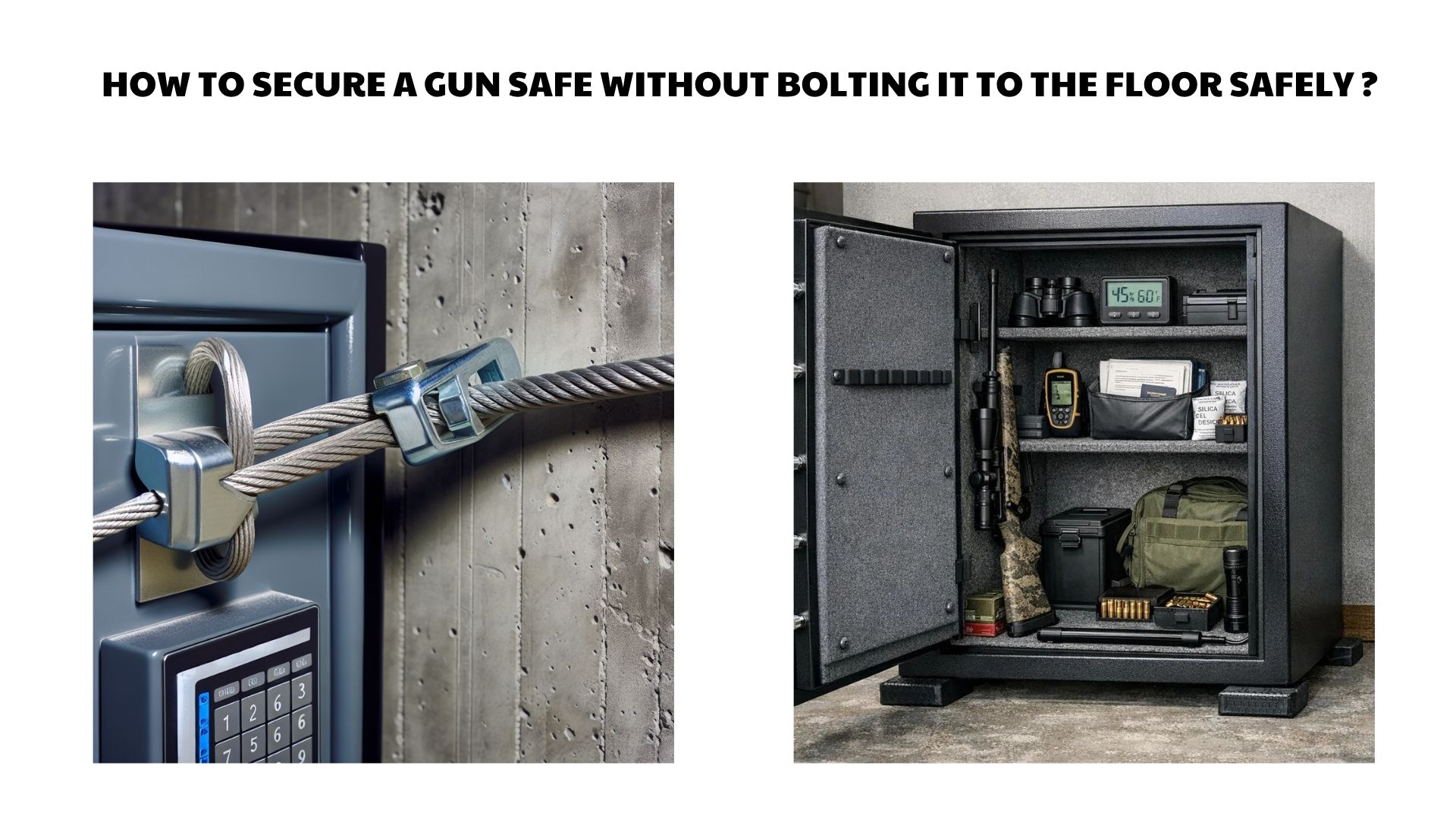
Some smaller safes and lockboxes include cable security options. A cable may help deter quick grab-and-go theft when attached to a strong, appropriate anchor point according to the manufacturer’s instructions.
Do not attach a cable to weak furniture, decorative fixtures, plumbing, railings, door handles, or anything that could break, create danger, or violate property rules. Do not assume a cable is equal to bolting a safe to a proper structure.
Step 8: Add Layered Home Security
Consider adding non-destructive layers such as a safe vibration sensor, door sensor, interior alarm, apartment security system, room camera where legal and appropriate, stronger door habits, window coverings, and discreet storage practices. Security layers can make a no-bolt safe less attractive to thieves without modifying the floor.
Keep safe details private. Do not tell casual visitors, neighbors, delivery workers, or social media audiences where the safe is located or what it contains.
Step 9: Control Codes, Keys, and Backup Access
Access control is one of the most important parts of safe gun storage. Keep digital keypad codes private. Choose a code that is not obvious. Do not write codes where children, visitors, or roommates can find them.
Store backup keys securely and away from unauthorized users. If your safe uses batteries, replace them on a schedule and test the lock with the door open when appropriate. Keep the manual and proof of ownership in a secure location outside the safe.
Step 10: Manage Humidity and Firearm Condition
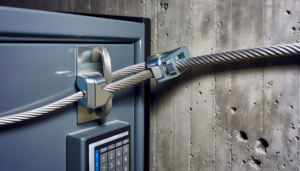
Use a hygrometer inside the safe to monitor humidity. If moisture is a concern, use desiccant packs, a rechargeable dehumidifier, or an electric dehumidifier rod approved for your safe and setup. Do not use unsafe heat sources or improvised electrical devices.
Do not store wet cases, damp clothing, moisture-holding foam, or recently exposed firearms inside the safe. Clean and lightly protect firearms according to manufacturer guidance, and inspect them regularly for rust.
Step 11: Test the Setup Before Relying on It
After placing and securing the safe, test the setup. Check whether the safe rocks, tips, slides, blocks a walkway, damages flooring, or becomes visible from outside. Open and close the door to confirm that nothing interferes with the lock, hinges, keypad, or bolts.
If the safe moves too easily, feels unstable, or creates access concerns, improve the setup before storing firearms inside.
Step 12: Document What You Did
Record the safe model, serial number, purchase receipt, installation notes, security accessories used, battery schedule, humidity readings, and maintenance dates. If you received landlord permission for wall anchoring, cable installation, or safe placement, keep that documentation too.
Step 13: Build a Maintenance and Safety Routine
Review your no-bolt setup regularly. Check stability, humidity, access control, battery status, alarm sensors, floor condition, and whether unauthorized people could access the safe. Re-check laws and lease rules when you move, change roommates, add children to the home, or change firearms.
Best Setup, Location, or Conditions for This Gun Safe Task
The best no-bolt gun safe setup is stable, discreet, dry, legal, and layered. It should reduce unauthorized access and theft risk without damaging property or creating tipping hazards.
- Choose a low-visibility location away from windows and entry doors.
- Use a level, stable surface.
- Use floor protection that does not make the safe unstable.
- Keep tall safes away from areas where children could climb or pull on the door.
- Consider a closet only if the safe fits properly and humidity can be managed.
- Use manufacturer-approved cable security only with suitable anchor points.
- Use alarm sensors or home security layers when appropriate.
- Keep firearms locked, inaccessible, and stored according to current law.
- Use humidity control for long-term firearm storage.
- Call a professional if the safe is heavy, unstable, difficult to move, or structurally unclear.
Helpful Tips for Better Results
- Choose the heaviest safe you can safely place, move, and support in your home.
- Do not buy a safe based only on size; consider weight, door swing, access method, and placement.
- Place the safe where visitors and delivery workers will not easily see it.
- Use a layered security plan instead of relying on one cable, one lock, or one hiding spot.
- Keep backup keys and codes away from children, guests, roommates, and prohibited users.
- Use a hygrometer to monitor moisture inside the safe.
- Replace digital keypad batteries before they fail.
- Keep safe records and proof of ownership in a secure place outside the safe.
- Review lease rules before using wall anchors, cables, or any property attachment.
- Use professional safe movers for heavy safes, stairs, tight turns, or upper floors.
Common Mistakes to Avoid
The biggest mistake is assuming that “not bolted” means “good enough” without adding other safety layers. A no-bolt setup needs careful planning because the safe may be easier to move, tip, or target.
- Not checking current firearm storage laws.
- Ignoring the safe manufacturer’s manual.
- Assuming no-bolt security equals proper anchoring.
- Leaving firearms accessible to children, visitors, roommates, or unauthorized users.
- Using weak passwords or sharing safe codes casually.
- Leaving backup keys in obvious places.
- Forgetting keypad batteries.
- Letting humidity build up inside the safe.
- Storing wet cases, damp gear, or moisture-holding foam inside the safe.
- Attaching cables to weak furniture or unsafe anchor points.
- Placing a tall safe where it can tip forward.
- Moving a heavy safe without professional help.
- Violating lease rules in an apartment or rental property.
- Putting the safe where it is visible from outside.
- Assuming one legal rule applies everywhere.
Troubleshooting Common Problems
| Problem | Possible Cause | What to Do |
|---|---|---|
| The gun safe feels unstable | Uneven floor, soft carpet, poor placement, heavy door, or lack of proper anchoring | Stop using it as-is, keep children away, check the manual, improve placement, and contact a professional installer if needed. |
| The safe slides on the floor | Slick flooring, poor floor protection, low safe weight, or weak positioning | Use stable floor protection, choose a better location, and consider professional guidance for safer security options. |
| The safe is easy to see | Visible placement near doors, windows, hallways, or visitor areas | Move it to a more discreet legal location and avoid discussing safe contents or location publicly. |
| The cable security setup feels weak | Weak anchor point, wrong cable, improper use, or unsuitable safe type | Follow manufacturer instructions, use only appropriate anchor points, and do not rely on a cable as the only security layer. |
| Apartment lease does not allow drilling | Rental restrictions or property damage concerns | Do not drill. Use non-destructive layers and ask the landlord about written permission if needed. |
| The safe is too heavy to move safely | Large safe, stairs, tight turns, upper floor, or lack of equipment | Hire professional safe movers. Do not attempt risky DIY moving with untrained helpers. |
| Humidity stays too high | Damp room, closet storage, wet cases, saturated desiccant, or no dehumidifier | Use a hygrometer, remove damp items, recharge desiccant, and improve room humidity control. |
| Firearms show early rust | Moisture exposure, fingerprints, damp storage, or poor inspection routine | Clean firearms according to manufacturer guidance, improve humidity control, and inspect more often. |
| Digital keypad does not respond | Weak battery, dead battery, keypad issue, or lock malfunction | Follow the manual, replace batteries if appropriate, and contact manufacturer support or a licensed locksmith. Do not attempt bypass methods. |
| Legal rules are unclear | Different laws by location, firearm type, residence type, vehicle type, or user status | Check official government sources, local law enforcement, or a qualified firearm law professional before changing storage practices. |
Responsible Firearm Storage and Home Safety
Securing a gun safe without bolting it to the floor should never distract from the main purpose of safe gun storage: preventing unauthorized access, child access, theft, misuse, and unsafe handling.
A responsible setup includes locked storage, safe firearm handling, secure code management, backup key control, ammunition storage considerations, regular inspection, humidity control, and respect for local laws. Firearms should not be left unsecured in drawers, closets, under beds, vehicles, or other easy-access areas.
Layered home security may include a quality safe, secure room placement, cable security where appropriate, alarms, cameras where legal and appropriate, strong door habits, window coverings, good lighting, and careful household rules. A safe is helpful, but it should not be the only safety measure.
When to Get Professional Help
Professional help is the safer choice when the no-bolt setup involves legal uncertainty, heavy safe movement, possible structural issues, unclear manufacturer guidance, or lock problems.
- You are unsure about firearm storage or transport laws.
- You are not confident in safe firearm handling.
- The safe is very heavy or must be moved upstairs or downstairs.
- The floor, closet, wall, or stairs may not support the safe.
- The safe feels unstable or tips when the door opens.
- The home is a rental or apartment with lease restrictions.
- You want to use wall anchors, cable systems, or other attachment points but are unsure what is safe or allowed.
- Drilling may affect wiring, plumbing, HVAC lines, radiant floor heating, or structural components.
- The lock, keypad, biometric scanner, or mechanical dial is malfunctioning.
- The safe has fire damage, water damage, humidity damage, or attempted forced-entry damage.
Helpful contacts may include safe manufacturer support, licensed locksmiths, professional safe movers, professional safe installers, qualified contractors, structural professionals, landlords or property managers, local legal authorities, qualified firearm law professionals, and reputable firearm safety organizations.
Long-Term Maintenance, Safety Checks, and Recordkeeping
A no-bolt safe setup should be reviewed regularly because household conditions, humidity, access risks, and legal rules can change over time.
- Check that the safe remains stable and level.
- Inspect floors, mats, shelves, and surrounding surfaces for damage.
- Check that the safe is still discreet and not visible from outside.
- Review cable security, alarm sensors, and other layered security devices.
- Monitor humidity with a hygrometer.
- Recharge or replace desiccants as needed.
- Inspect firearms for rust according to manufacturer guidance.
- Replace electronic lock batteries on a schedule.
- Test lock operation safely with the door open when appropriate.
- Protect backup keys and codes from unauthorized users.
- Update records, serial numbers, manuals, receipts, warranty details, and proof of ownership.
- Review local firearm storage laws periodically.
Recommended Gun Safe Gear and Tools to Consider
You do not always need expensive gear to store firearms responsibly. Choose products based on your local laws, safe type, firearm type, humidity level, home layout, vehicle needs, security risks, and budget.
- Gun safe or lockbox that fits your firearm storage needs
- Heavier safe or security cabinet if appropriate for your floor and layout
- Manufacturer-approved cable kit if suitable for your safe
- Floor protection mat if appropriate
- Alarm sensor, safe vibration sensor, or home security device if appropriate
- Hygrometer for monitoring humidity
- Desiccant packs or rechargeable dehumidifier
- Electric dehumidifier rod if approved for your safe and setup
- Safe organizer or non-moisture-holding storage accessories
- Backup batteries for electronic locks
- Secure backup key storage solution
- Document folder for manuals, receipts, warranty details, and proof of ownership
If affiliate links are included in a published version of this article, use clear disclosure language and proper link attributes such as rel=”nofollow sponsored”.
Final Thoughts
Knowing how to secure a gun safe without bolting it to the floor means understanding both the benefits and limits of no-bolt security. Start by checking current laws, reading the safe manual, reviewing lease or property rules, choosing a stable discreet location, and adding several practical layers of protection.
A no-bolt setup may include a heavier safe, closet placement, floor protection, manufacturer-approved cable security, alarm sensors, access-code control, backup key protection, humidity control, and careful household habits. However, it should not be described as equal to proper anchoring or guaranteed theft protection.
The responsible goal is to reduce risk, prevent unauthorized access, protect firearms from moisture and damage, follow current law, and ask qualified professionals for help when the setup is unclear.
FAQs
1. How long does it take to learn how to secure a gun safe without bolting it to the floor?
You can learn the basic options in one session, but choosing the right setup may take longer because you need to check laws, safe type, floor support, property rules, and security needs.
2. Can a gun safe be secure without being bolted down?
It can be more secure with layered protection, but it is usually not as secure as a properly anchored safe. Use no-bolt methods as risk reduction, not a guarantee.
3. Is bolting a gun safe always required?
Not always, but requirements may depend on local law, safe design, household risk, and property rules. Check official legal sources and manufacturer guidance.
4. What is the best no-bolt way to secure a gun safe?
The best approach is layered security: a heavier safe, discreet placement, stable surface, access control, cable security where appropriate, alarms, and good storage habits.
5. Can I use a cable to secure a gun safe?
Some safes support cable security. Use only manufacturer-approved cable methods and suitable anchor points. Do not rely on a cable as the only layer.
6. Is a cable as strong as floor bolting?
No. A cable can deter quick removal, but it should not be treated as equal to proper anchoring into a suitable structure.
7. What should I attach a safe cable to?
Only attach it to a strong, appropriate point allowed by the manufacturer and property rules. Avoid weak furniture, plumbing, railings, or decorative fixtures.
8. Can I secure a safe to furniture?
Usually, furniture is not strong enough to be a reliable anchor. It may break, tip, or create a hazard. Follow manufacturer guidance.
9. Can I secure a safe in a closet without bolting?
Possibly. A closet can add discretion, but you still need stable placement, humidity control, safe access, and unauthorized access prevention.
10. Is hiding a gun safe enough?
No. Discretion helps, but hiding alone does not replace physical security, access control, and responsible storage habits.
11. Should I choose a heavier safe if I cannot bolt it down?
A heavier safe may reduce quick removal, but it can create floor load, moving, and stair safety concerns. Balance weight with property limits.
12. Can a heavy safe damage floors?
Yes. Heavy safes can dent, scratch, crack, or compress floors. Use floor protection and verify support if weight is a concern.
13. Can renters secure a gun safe without drilling?
Yes, renters can use non-destructive layers such as safe placement, cable security where appropriate, alarm sensors, floor protection, and access control.
14. Should I ask my landlord before using a safe?
Ask if the safe is heavy, requires moving through shared areas, may affect flooring, or involves anchors, cables, or installation changes.
15. Can I drill into a rental floor if I repair it later?
Do not drill without permission. It may violate your lease, damage property, or create structural concerns.
16. Can I wall-anchor a safe instead of floor-bolting it?
Maybe, if the manufacturer allows it and the wall structure is appropriate. Get landlord permission and professional guidance if needed.
17. Can wall anchoring damage wiring or plumbing?
Yes. Drilling into walls can affect wiring, plumbing, HVAC lines, or structural components. Use a qualified professional if unsure.
18. How do I prevent a tall safe from tipping?
Use a stable level surface, keep children away, avoid overloading the door, and consider professional anchoring if allowed and appropriate.
19. Can children tip a gun safe?
A child climbing on or pulling a safe door can create tipping risk, especially with tall safes. Keep children away and use proper stability measures.
20. Should I store firearms unloaded?
Official safety guidance commonly recommends storing firearms unloaded when not in use. Check current laws and follow safe firearm handling rules.
21. Should ammunition be stored separately?
Many safety recommendations encourage storing ammunition separately and securely, and some locations may require it. Check local law.
22. Can I store a loaded firearm in a no-bolt safe?
Storage laws and safe practices vary by location and situation. Verify current laws and consider the risks of unauthorized access.
23. How do I prevent unauthorized access?
Use a quality safe, keep codes private, secure backup keys, limit access, store ammunition responsibly, and keep children and unauthorized users away.
24. Should I share the safe code with someone else?
Only authorized, responsible, legally permitted users should have access. Keep codes private and change them if security is uncertain.
25. Where should I keep backup keys?
Keep backup keys in a secure location away from children, visitors, roommates, prohibited persons, and obvious hiding places.
26. Can digital keypad batteries cause a lockout?
Yes. Weak or dead batteries can prevent access. Replace batteries on a schedule and follow the safe manual.
27. Should I keep the manual inside the safe?
Keep a copy in a secure location outside the safe so you can access it during maintenance or lockout issues.
28. Can I use alarm sensors with a gun safe?
Yes, alarm or vibration sensors can add awareness if the safe is moved or disturbed, but they do not replace secure storage.
29. Can a camera improve gun safe security?
A camera may help in some homes if legal and appropriate, but privacy, lease rules, and household consent may matter.
30. Should I place the safe near a window?
Avoid window visibility when possible. Windows may expose the safe to outside view, sunlight, condensation, and temperature swings.
31. Can humidity damage guns in a safe?
Yes. Moisture can contribute to rust, corrosion, musty odors, and damage to accessories. Use a hygrometer and humidity control when needed.
32. Do I need a hygrometer?
A hygrometer is useful because it shows the actual humidity inside the safe instead of relying on guesswork.
33. Should I use desiccant packs?
Desiccant packs can help absorb moisture, especially in smaller safes or closets. Recharge or replace them according to product instructions.
34. Can I use an electric dehumidifier rod?
Only if the safe and dehumidifier manufacturer allow it and the electrical setup is safe. Do not improvise wiring.
35. Can soft gun cases trap moisture?
Yes. Some soft cases can hold moisture. Store firearms clean and dry and inspect them regularly.
36. What if firearms show rust?
Follow firearm manufacturer cleaning guidance or consult a qualified gunsmith if rust is significant. Improve humidity control before restocking.
37. Can a safe be too light?
A very light safe may be easier to carry away. Use layered security, cable options where appropriate, and discreet placement.
38. Is a small lockbox enough?
A small lockbox may fit some needs, but suitability depends on firearm type, local law, theft risk, and access-control needs.
39. Is a security cabinet the same as a gun safe?
No. Security cabinets and safes may differ in construction, fire resistance, lock quality, and theft resistance. Choose based on your needs and laws.
40. Can I secure a safe in a vehicle instead?
Vehicle firearm storage laws vary widely, and vehicles are high-theft-risk environments. Verify current laws before using a vehicle safe.
41. Is a vehicle gun safe safer than home storage?
Not necessarily. Vehicles are often targeted for theft. Remove firearms from vehicles when not legally or practically necessary.
42. Can I move a heavy safe myself?
Heavy safes can cause injury, tipping, stair damage, and floor damage. Use professional safe movers for heavy safes, stairs, or tight spaces.
43. What if the safe is upstairs?
Check floor support, stair safety, moving route, and weight concerns. Ask a structural professional or safe mover if uncertain.
44. Can no-bolt safes be used in apartments?
Yes, but check lease rules, local laws, floor protection, humidity, access control, and safe weight before choosing a setup.
45. Can roommates create a security concern?
Yes. Keep firearms, keys, combinations, and safe access away from unauthorized or prohibited users.
46. What if a roommate is legally prohibited from possessing firearms?
Seek qualified legal guidance immediately. Laws and responsibilities can be serious when a prohibited person lives in the same home.
47. Should I change the code after moving?
Yes, changing codes after moving can be a good practice, especially if movers, roommates, or others may have seen access details.
48. Should I post my safe setup online?
No. Avoid sharing safe location, model, serial numbers, key details, or security setup publicly.
49. Can burglars carry away an unbolted safe?
A smaller or lighter unbolted safe may be easier to remove. Use layered security to reduce easy removal and visibility.
50. Can I make an unbolted safe theft-proof?
No. No safe setup is theft-proof. The goal is risk reduction, delay, access prevention, and responsible storage.
51. What if the safe door does not close smoothly?
Check for interior obstructions, shelf movement, or uneven placement. Contact the manufacturer if the issue continues.
52. What if the safe lock fails?
Use lawful owner steps only: check the manual, replace batteries if appropriate, contact the manufacturer, or call a licensed locksmith.
53. When should I call the safe manufacturer?
Call for installation guidance, accessory compatibility, warranty questions, lock issues, battery questions, and approved security options.
54. When should I call a professional installer?
Call if the safe is heavy, unstable, difficult to place, may need wall anchoring, or may affect floors, walls, or structural components.
55. What is the most responsible way to secure a gun safe without bolting it to the floor?
The most responsible way is to check laws and manuals, choose a stable discreet location, use approved security layers, control access, manage humidity, and get professional help when needed.
Read more: