
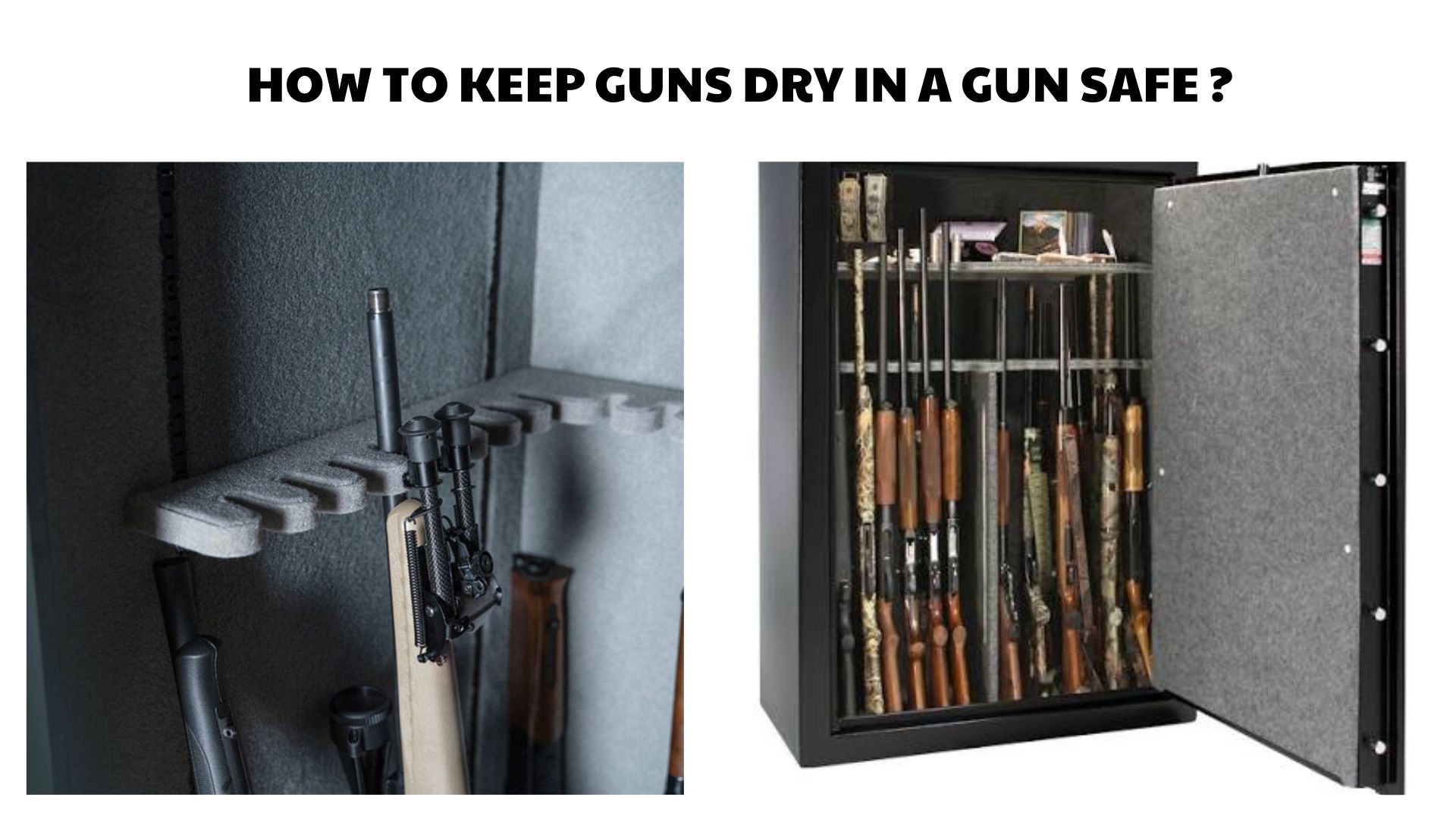

Learning how to keep guns dry in a gun safe is one of the most important parts of responsible firearm storage. A gun safe can help protect firearms from unauthorized access, theft, and damage, but the inside of the safe can still trap moisture if you do not monitor humidity and storage conditions.
This guide explains how to reduce moisture, prevent rust, choose basic humidity-control tools, inspect your firearms, and build a safe long-term maintenance routine. It is written for responsible firearm owners who want practical, beginner-friendly steps without unsafe shortcuts or unsupported legal claims.
Before working around any firearm or gun safe, follow safe firearm handling rules, keep firearms inaccessible to unauthorized users, and verify current storage laws in your location. Official and public-health safe-storage guidance commonly emphasizes storing firearms locked, unloaded, and separate from ammunition when not in use.
Quick Answer
To keep guns dry in a gun safe, place the safe in a dry, temperature-stable area, monitor the inside with a hygrometer, and use a safe-appropriate moisture-control product such as desiccant packs, a rechargeable dehumidifier, or an electric dehumidifier rod. Do not store wet cases, damp clothing, moisture-holding foam, or recently exposed firearms inside the safe. Clean and lightly protect firearms according to the firearm manufacturer’s guidance, then inspect them regularly for rust. Always store firearms legally and securely, and contact the safe manufacturer, a qualified locksmith, or a firearm safety professional if you are unsure about safe storage or equipment use.
Important Firearm Safety and Legal Notice
Firearm storage laws vary by country, state, province, county, city, residence type, firearm type, user status, and household situation. This article provides general safety and maintenance information only. Always verify current laws with official government sources, local legal authorities, qualified firearm law professionals, or local law enforcement before storing firearms.
- Check current local firearm storage laws before choosing a storage method.
- Follow child access prevention rules in your location.
- Store firearms so children, visitors, unauthorized users, and prohibited persons cannot access them.
- Use secure storage devices, lockboxes, safes, or gun locks according to applicable law and safe-storage best practices.
- Store ammunition separately when appropriate or required by law.
- Read the gun safe owner’s manual before adding powered accessories, dehumidifier rods, lighting, shelving, or organizers.
- Follow the firearm manufacturer’s cleaning, lubrication, and corrosion-prevention guidance.
- Keep safe combinations, access codes, and backup keys away from unauthorized users.
- Unload firearms before storage or maintenance unless a lawful, authorized safety protocol says otherwise.
- Call a professional if you are unsure about electrical accessories, safe installation, safe lock problems, legal requirements, or safe firearm handling.
The U.S. Department of Justice safe-storage guide advises firearm owners to point firearms in a safe direction, verify they are unloaded, store unloaded firearms in a locked cabinet, safe, gun vault, or storage case, and keep ammunition locked away from the firearm.
Understanding the Gun Safe Topic
A gun safe can slow unauthorized access and protect firearms from theft or damage, but it is not automatically a dry environment. Moisture can enter a safe through humid room air, damp basements, wet gun cases, condensation, poor ventilation, or firearms stored after rain, snow, sweat, or field use.
Humidity matters because many firearms contain metal components that can rust when exposed to moisture for long periods. High humidity and temperature swings can contribute to corrosion, mold, and material damage, especially inside closed spaces such as closets, lockers, and gun safes.
The goal is not to make the safe extremely dry at all costs. Wood stocks, leather accessories, paper documents, and some finishes can be affected by overly harsh storage conditions. The practical goal is stable, controlled humidity, regular monitoring, and consistent inspection.
The beginner mistake is assuming that buying a safe solves every storage problem. A safe is only part of a responsible system. You still need safe firearm handling, secure access control, legal compliance, humidity monitoring, rust prevention, and maintenance.
What You Need Before You Start
- Gun safe owner’s manual or manufacturer documentation
- Firearm owner’s manual and cleaning guidance
- Current knowledge of local firearm storage laws
- Basic firearm safety knowledge before handling or storing firearms
- Hygrometer for measuring humidity inside the safe
- Desiccant packs, rechargeable dehumidifier, or electric dehumidifier rod approved for your safe setup
- Clean, dry gun socks or safe-friendly organizers that do not trap moisture
- Soft cloths and firearm-safe cleaning supplies recommended by the firearm manufacturer
- Backup batteries for electronic locks if your safe uses a keypad
- Document folder for manuals, serial numbers, receipts, warranty details, and maintenance notes
- Professional support if electrical installation, safe wiring, lock issues, or legal uncertainty is involved
How to Keep Guns Dry in a Gun Safe: Step-by-Step Guide
Step 1: Check Laws, Manuals, and Safety Requirements First
Before changing your storage setup, review your firearm storage responsibilities. Laws vary by location and household situation, especially where children, visitors, renters, prohibited persons, or vehicle storage are involved. Also read your gun safe manual so you know what accessories, electrical features, and humidity-control devices are appropriate for your safe.
Step 2: Make the Area Safe
Work slowly and keep children, visitors, and unauthorized users away from the safe. Before handling firearms, follow basic firearm safety rules. Point each firearm in a safe direction, verify its condition, and unload it before storage or maintenance unless a specific lawful safety protocol says otherwise.
Step 3: Remove Damp Items from the Safe
Take out wet gun cases, damp foam, sweaty slings, wet hunting clothing, used cleaning rags, cardboard boxes, and anything that can hold moisture. Moisture-holding materials can keep the safe humid even if you add a dehumidifier.
Step 4: Measure Humidity with a Hygrometer
Place a hygrometer inside the gun safe and check it regularly. Guessing is unreliable because the humidity inside a closed safe can be different from the room outside. Safe manufacturers and firearm storage guides commonly recommend monitoring humidity rather than relying only on feel or smell.
Step 5: Choose a Moisture-Control Method
For small safes, desiccant packs or rechargeable moisture absorbers may be enough. For larger safes, an electric dehumidifier rod or safe-specific dehumidifier may provide more consistent control if the safe supports powered accessories. Choose based on safe size, room humidity, climate, access to power, and manufacturer guidance.
Step 6: Place the Dehumidifier Correctly
Follow the dehumidifier and safe manufacturer’s instructions. Desiccant packs often work best near moisture-prone areas such as corners or shelves. Electric rods are commonly placed low in the safe because warm air rises, but you should follow the exact product instructions and avoid unsafe wiring.
Step 7: Store Only Clean and Dry Firearms
Do not place firearms in the safe immediately after exposure to rain, snow, sweat, or high humidity. Dry them first, clean them according to the firearm manufacturer’s instructions, and apply only the recommended amount of protective oil or corrosion protection. Too much oil can attract dust, affect wood, or create messy storage conditions.
Step 8: Improve Safe Location if Needed
If the safe is in a damp basement, garage, laundry room, or area with large temperature swings, humidity may be harder to control. A dry, temperature-stable indoor location is usually better for long-term firearm storage than a musty or non-climate-controlled area. Liberty Safe notes that temperature swings and humid spaces can contribute to condensation, rust, mold, and corrosion.
Step 9: Test the Setup Before Relying on It
After adding a hygrometer and humidity-control method, monitor the readings for several days. Check whether the safe remains stable during rainy weather, seasonal changes, air-conditioning cycles, and heating cycles. Adjust the number or type of moisture-control products if needed.
Step 10: Build a Maintenance and Safety Routine
Inspect firearms regularly for early rust, wipe down metal surfaces as recommended, recharge or replace desiccants, check powered dehumidifiers, and record humidity readings. Also test lock operation, replace keypad batteries on a schedule, and review who has access to codes or keys.
Best Setup, Location, or Conditions for This Gun Safe Task
The best setup for keeping guns dry in a gun safe is a secure, dry, temperature-stable, low-humidity location that does not expose the safe to condensation, flooding risk, or major temperature swings. A main-floor closet, interior room, or climate-controlled storage area may be better than a damp basement or hot garage, depending on your home layout and security needs.
- Choose a dry indoor location when possible.
- Avoid placing the safe directly against damp exterior walls.
- Keep the safe away from water heaters, laundry moisture, plumbing leaks, and flood-prone areas.
- Use a hygrometer inside the safe, not just in the room.
- Keep firearms off damp carpet or moisture-holding foam.
- Use safe-friendly organizers that allow airflow.
- Follow electrical safety rules for powered dehumidifiers.
- Keep the safe secure and inaccessible to unauthorized users.
Helpful Tips for Better Results
- Check humidity readings at least weekly until you understand your safe’s pattern.
- Recharge desiccant packs before they are fully saturated.
- Do not store firearms in soft cases for long periods unless the case is specifically safe for long-term storage and completely dry.
- Open the safe occasionally in a dry room to inspect contents and allow basic air exchange.
- Wipe fingerprints from metal surfaces before long-term storage.
- Keep a small maintenance log with humidity readings, inspection dates, and dehumidifier recharge dates.
- Use manufacturer-approved accessories instead of improvising electrical or heating devices inside the safe.
Common Mistakes to Avoid
Many moisture problems happen because owners focus only on the safe and forget the environment around it. A quality safe in a damp room can still develop moisture problems if humidity is not monitored.
- Not checking current firearm storage laws.
- Ignoring the safe manual or dehumidifier instructions.
- Storing wet cases, damp foam, or field gear inside the safe.
- Assuming a safe is automatically dry inside.
- Using no hygrometer and relying on guesswork.
- Letting desiccant packs become saturated.
- Using unsafe heat sources or non-approved electrical devices.
- Leaving firearms accessible to unauthorized users while cleaning or drying them.
- Sharing safe codes casually or storing backup keys in obvious places.
- Forgetting keypad batteries and then rushing into unsafe lockout decisions.
- Failing to inspect firearms for early rust.
- Storing ammunition in damp conditions.
Troubleshooting Common Problems
| Problem | Possible Cause | What to Do |
|---|---|---|
| Humidity stays high inside the safe | Damp room, saturated desiccant, wet items, or undersized dehumidifier | Remove damp items, recharge or replace desiccant, consider a stronger safe-approved dehumidifier, and improve room humidity control. |
| Firearms show early rust | Moisture exposure, fingerprints, poor cleaning, or long inspection gaps | Stop long-term storage until cleaned, follow firearm manufacturer guidance, improve humidity control, and inspect more often. |
| Dehumidifier does not seem to work | Wrong size, poor placement, no power, expired desiccant, or very humid room | Check the instructions, verify power, reposition if allowed, recharge desiccant, or contact the manufacturer. |
| Safe smells musty | Moisture, mold, damp carpet, wet cases, or poor ventilation | Remove contents safely, dry the interior, discard moisture-holding materials, and monitor humidity before restocking. |
| Condensation appears | Temperature swings or cold safe surfaces meeting warm humid air | Move the safe to a more stable environment if possible and use monitored humidity control. |
| Desiccant fills up quickly | High room humidity or too many moisture sources | Use more capacity, recharge more often, reduce room humidity, and remove damp items. |
| Wood stocks look too dry | Overly dry environment or excessive heat | Review humidity readings, avoid extreme drying, and follow firearm manufacturer care guidance. |
| Digital keypad does not respond | Weak battery, keypad issue, or lock malfunction | Follow the manual, replace batteries if appropriate, use manufacturer-approved recovery steps, or contact support. Do not attempt bypass methods. |
| Safe door does not close smoothly | Overloaded interior, shifted organizer, obstruction, or mechanical issue | Unload safely, remove obstructions, check the manual, and contact the safe manufacturer if the problem continues. |
| Legal rules are unclear | Different laws by location or household situation | Check official government sources, local law enforcement, or a qualified firearm law professional before changing storage habits. |
Responsible Firearm Storage and Home Safety
Keeping guns dry is important, but moisture control is only one part of responsible firearm storage. A dry firearm that is accessible to a child, visitor, unauthorized user, or prohibited person is not safely stored.
Responsible storage includes preventing unauthorized access, securing keys and combinations, keeping firearms locked when not in use, considering separate ammunition storage, and maintaining safe habits every time the safe is opened. The California Department of Justice advises storing firearms unloaded, using a firearms safety device, placing the firearm in a locked container, and storing ammunition separately.
Layered security can include a quality safe, access control, locked ammunition storage, alarm sensors, cameras, good lighting, and careful household rules. No safe or accessory guarantees total security, so responsible habits matter every day.
When to Get Professional Help
Get professional help when the task goes beyond basic inspection, cleaning, and manufacturer-approved humidity control.
- You are unsure about firearm storage laws.
- You are not confident in safe firearm handling.
- The safe has electrical wiring or powered accessories you do not understand.
- The safe lock, keypad, biometric reader, or dial is malfunctioning.
- The safe has water damage, fire damage, mold, or structural problems.
- The safe is too heavy to move safely.
- The safe location has flooding, floor load, or installation concerns.
- You are locked out and need lawful owner support.
- You need to verify whether your storage method complies with local rules.
Helpful contacts may include the gun safe manufacturer, firearm manufacturer, licensed locksmith, professional safe installer, professional safe mover, qualified contractor, landlord or property manager, local legal authority, or reputable firearm safety organization.
Long-Term Maintenance, Safety Checks, and Recordkeeping
A good long-term routine is simple: monitor, inspect, clean, document, and adjust. Keep the safe clean and dry, check the hygrometer regularly, recharge moisture-control products, and inspect firearms for rust according to manufacturer guidance.
- Record humidity readings during different seasons.
- Write down desiccant recharge or replacement dates.
- Replace electronic lock batteries on a schedule.
- Test lock operation safely before you need urgent access.
- Keep manuals, receipts, serial numbers, and warranty details in a secure document file.
- Review who knows safe codes or has access to backup keys.
- Review local storage laws periodically because laws can change.
- Inspect the room around the safe for leaks, condensation, or musty smells.
Recommended Gun Safe Gear and Tools to Consider
You do not always need expensive gear to store firearms responsibly. Choose products based on your local laws, safe type, firearm type, humidity level, home layout, security risks, and budget.
- Gun safe or lockbox that fits your firearm storage needs
- Hygrometer for monitoring humidity
- Desiccant packs for smaller safes or supplemental moisture control
- Rechargeable dehumidifier for reusable moisture absorption
- Electric dehumidifier rod if approved for your safe and setup
- Safe organizer that does not trap moisture
- Dry gun socks or storage sleeves suitable for your firearm type
- Backup batteries for electronic locks
- Document folder for manuals, receipts, warranty details, and proof of ownership
- Home humidity control device if the room itself is too damp
If affiliate links are used in a published version of this article, disclose the affiliate relationship clearly and use proper attributes such as rel=”nofollow sponsored” where appropriate.
Final Thoughts
Knowing how to keep guns dry in a gun safe comes down to a few reliable habits: choose a dry location, measure humidity, use the right moisture-control method, store only clean and dry firearms, remove damp materials, and inspect everything regularly.
Do not rely on guesswork, unsafe heat sources, or a one-time setup. A gun safe should be part of a larger responsible storage system that includes legal compliance, child access prevention, secure codes and keys, proper firearm handling, and regular maintenance.
When in doubt, follow the safe manual, follow the firearm manufacturer’s guidance, check current laws, and ask a qualified professional for help.
FAQs
1. How long does it take to learn how to keep guns dry in a gun safe?
Most beginners can learn the basic process in one afternoon. The long-term habit is monitoring humidity, recharging moisture-control products, and inspecting firearms regularly.
2. What is the best way to keep guns dry in a gun safe?
The best approach is to use a hygrometer, remove moisture sources, place the safe in a dry location, and use desiccant or a safe-approved dehumidifier.
3. Do I need a hygrometer in my gun safe?
Yes, a hygrometer is highly useful because it tells you the actual humidity inside the safe. Without it, you are guessing.
4. Can a gun safe still get humid inside?
Yes. A gun safe can trap humid air, especially if it is in a damp room or contains wet cases, foam, or recently exposed firearms.
5. Are desiccant packs good for gun safes?
Desiccant packs can work well for small safes or as supplemental moisture control. They must be recharged or replaced when saturated.
6. Are electric dehumidifier rods safe for gun safes?
They can be safe when they are designed for gun safes and installed according to manufacturer instructions. Do not improvise with unsafe heating devices.
7. Where should I put a dehumidifier rod in a gun safe?
Many rods are placed low in the safe because warm air rises, but you should follow the specific product and safe manufacturer instructions.
8. Can I store guns in soft cases inside a safe?
Long-term storage in soft cases can trap moisture if the case is not designed for it or is not fully dry. Use caution and inspect often.
9. Should I store wet hunting gear in my gun safe?
No. Wet clothing, slings, cases, and field gear can raise humidity and increase rust risk.
10. Why do guns rust inside a safe?
Rust can develop from moisture, fingerprints, poor cleaning, damp storage materials, condensation, or long periods without inspection.
11. How often should I check my gun safe humidity?
Check weekly at first. Once you understand your safe’s pattern, continue checking regularly and after major weather changes.
12. What humidity level is best for a gun safe?
There is no single perfect number for every firearm, climate, and material. Aim for stable, moderate dryness and follow firearm and safe manufacturer guidance.
13. Can a gun safe be too dry?
Yes, extremely dry or hot conditions may affect wood stocks, leather accessories, or certain materials. Avoid extremes.
14. Is a basement a bad place for a gun safe?
A dry, climate-controlled basement may work, but a damp or musty basement can make humidity control harder.
15. Is a garage a good place for a gun safe?
A garage may expose the safe to heat, cold, humidity, and theft risk. Use caution and monitor conditions carefully.
16. Should I clean guns before putting them in a safe?
Yes. Clean and protect firearms according to manufacturer guidance before long-term storage.
17. Can fingerprints cause rust on guns?
Fingerprints can leave oils and salts on metal surfaces. Wiping firearms before storage can reduce corrosion risk.
18. Should ammunition be stored in the same safe?
That depends on local law, household safety needs, and your storage setup. Many safety sources recommend storing ammunition separately and securely.
19. Do gun safe dehumidifiers protect ammunition?
They may help reduce moisture, but ammunition should still be stored according to manufacturer guidance and applicable law.
20. Can silica gel damage firearms?
Properly used silica gel should not touch or abrade firearm finishes. Keep it contained and follow product instructions.
21. How do I know when desiccant needs recharging?
Many rechargeable desiccants have an indicator color. If not, follow the product schedule and monitor safe humidity.
22. Can I use rice to dry a gun safe?
Rice is not ideal for firearm storage. Use products designed for moisture control, such as desiccant packs or safe dehumidifiers.
23. Can I use a household dehumidifier for the room?
Yes, controlling room humidity can help the safe interior, especially in basements or humid climates.
24. Should I open my gun safe often to air it out?
Occasional inspection in a dry room can help, but frequent opening in humid air may bring more moisture inside.
25. Can foam inside a safe cause rust?
Some foam can hold moisture. Avoid damp foam and inspect foam-lined storage carefully.
26. Are gun socks useful for rust prevention?
Dry, firearm-safe gun socks may help protect surfaces, but they should not replace humidity control and regular inspection.
27. Should I oil guns heavily before storage?
No. Use the amount and type of protection recommended by the firearm manufacturer. Excess oil can create other problems.
28. Can wood stocks be damaged by humidity?
Yes. High humidity can encourage swelling or mold, while overly dry conditions may affect wood stability.
29. Can polymer firearms rust?
Polymer frames may not rust like steel, but metal parts, barrels, magazines, and springs can still corrode.
30. Should magazines be stored dry too?
Yes. Magazines contain metal parts that can corrode, so they should be clean, dry, and inspected.
31. What should I do if I see rust?
Stop ignoring the issue. Follow manufacturer cleaning guidance or consult a qualified gunsmith if the rust is significant.
32. Can I store cleaning solvents in my gun safe?
It is usually better to store chemicals separately according to their labels. Some chemicals can create odors, spills, or material concerns.
33. Can leather holsters cause moisture problems?
Leather can hold moisture and may affect firearm finishes during long-term storage. Avoid storing firearms inside damp leather holsters.
34. Is a closet safe good for humidity control?
A closet can work if it is dry, ventilated enough, and temperature-stable. Avoid closets with damp exterior walls or plumbing leaks.
35. Should I anchor my gun safe?
Anchoring can improve stability and theft resistance when done properly, but follow the safe manual, local rules, lease terms, and structural guidance.
36. Can renters use gun safe dehumidifiers?
Yes, renters can usually use non-permanent humidity-control products, but powered accessories and safe placement should still follow safety rules and lease limits.
37. Does a fireproof safe control humidity?
Fire protection does not automatically mean humidity control. You may still need a hygrometer and dehumidifier.
38. Can water-resistant safes trap moisture?
Yes. Tighter seals can reduce water entry but may also reduce air exchange, making humidity monitoring important.
39. How often should I inspect stored firearms?
Inspect monthly at first, then adjust based on humidity, climate, and storage conditions. Long-term storage still needs periodic checks.
40. What if my safe is already damp inside?
Remove firearms safely, dry the interior, remove damp materials, use humidity control, and inspect firearms for rust before restocking.
41. Can a dehumidifier prevent all rust?
No. It reduces risk but cannot guarantee rust prevention. Cleaning, handling, storage conditions, and inspections still matter.
42. Are battery-powered dehumidifiers useful?
Some may help depending on safe size and humidity level. Choose products designed for enclosed storage and follow instructions.
43. Can I run an extension cord into a gun safe?
Only follow manufacturer-approved electrical setups. Unsafe wiring can create fire, shock, or warranty problems.
44. Should I store documents in my gun safe?
You can, but humidity control matters because paper can absorb moisture. Consider protective document storage.
45. Can mold grow in a gun safe?
Yes. Mold can develop if humidity is high and organic materials such as wood, leather, paper, or cloth are stored damp.
46. What is the safest way to handle firearms during safe cleaning?
Keep firearms pointed in a safe direction, verify they are unloaded, keep ammunition away from the work area, and prevent unauthorized access.
47. Should I store backup keys inside the safe?
No. Backup keys should be secured away from unauthorized users and not stored where they defeat the purpose of the safe.
48. How do keypad batteries relate to moisture control?
Battery compartments can corrode in poor conditions. Check batteries on a schedule and keep the safe interior dry.
49. What if my safe lock fails while I am doing maintenance?
Use lawful owner steps only: check the manual, replace batteries if appropriate, contact the manufacturer, or call a licensed locksmith.
50. Can I drill or force open a safe if humidity is damaging guns inside?
No. Do not attempt bypass, drilling, prying, or forced entry. Contact the safe manufacturer or a licensed locksmith and be ready to prove ownership.
51. Does storing guns dry replace safe storage laws?
No. Moisture control does not replace legal storage requirements, secure access control, or child access prevention.
52. Should I tell family members the safe code?
Only authorized, responsible users should have access. Keep codes inaccessible to children, visitors, and prohibited persons.
53. Can a vehicle gun safe keep guns dry?
Vehicle environments often have temperature swings and theft risks. Verify laws, avoid long-term vehicle storage when unnecessary, and monitor moisture carefully.
54. When should I call the safe manufacturer?
Call the manufacturer if you are unsure about dehumidifier compatibility, electrical accessories, warranty issues, lock problems, or safe maintenance.
55. What is the most important habit for keeping guns dry?
The most important habit is regular monitoring. Use a hygrometer, inspect firearms, remove moisture sources, and maintain your dehumidifier system.