
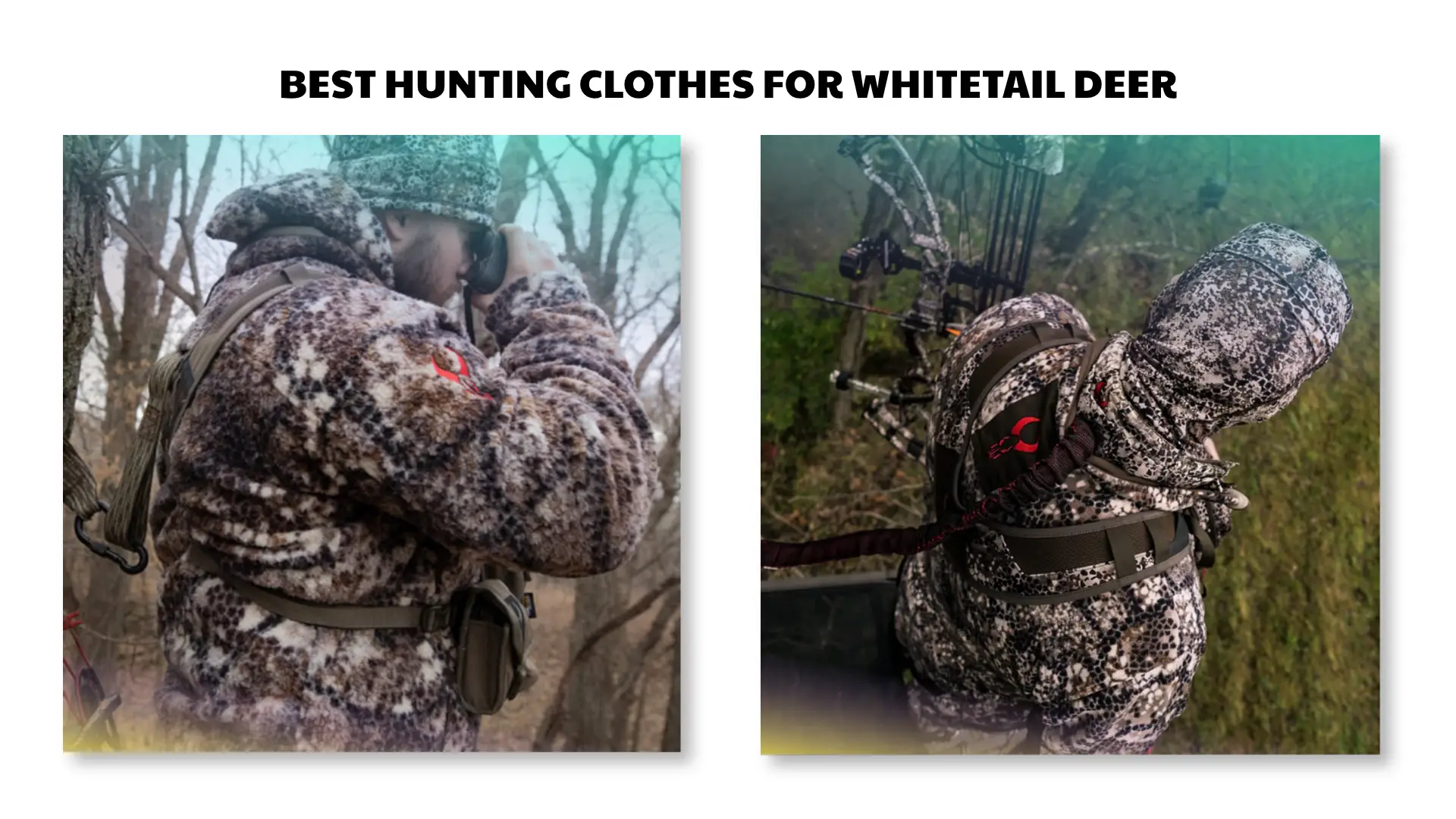
Responsible hunting reminder: Follow all federal, state, local, and property-specific hunting laws. Carry the required license and tags, observe legal seasons and shooting hours, use legally required blaze orange or blaze pink, identify the target and what is beyond it, and use a full-body fall-arrest system for treestand hunting. Clothing does not make dangerous weather or unsafe terrain acceptable.
Key Takeaways
- Build a base, insulation, and outer-layer system instead of depending on one heavy garment.
- Choose quiet outer fabric when deer may be close, especially during bow season.
- Use lightweight, breathable clothing for long approaches and add insulation near the stand.
- Water-resistant clothing handles damp brush; prolonged rain usually requires a dedicated waterproof shell.
- Fit the complete system with your safety harness, boots, gloves, and intended base layers.
- Check current blaze-orange or blaze-pink requirements for the exact state, season, and property.
Quick Picks:
- Best Overall: TIDEWE Hunting Clothes for Men with Fleece Lining on Amazon
- Best Cold-Weather Value: NEW VIEW Cold Weather Camo Hunting Clothes with Face Mask on Amazon
- Best Waterproof One-Piece Option: Guide Gear Dry Waterproof Insulated Hunting Coveralls on Amazon
- Best Uninsulated Bibs: Mossy Oak Cotton Mill 2.0 Camo Hunting Bibs on Amazon
- Best Lightweight Pants: NOMAD Tibbee Lightweight Camo Hunting Pants on Amazon
- Best Mid-Layer Hoodie: Mossy Oak Performance Fleece Camo Hunting Hoodie on Amazon
- Best Early-Season Shirt: Realtree Men’s Essential Camo Lightweight Performance Long Sleeve Shirt on Amazon
- Best Budget Base Layer: Thermajohn Men’s Thermal Underwear Long Johns Set on Amazon
Comparison Table: 15 Best Hunting Clothes for Whitetail Deer
| Product | Best For | Material / Build | Warmth | Weather Protection | Mobility / Hunting Style | Check Price |
|---|---|---|---|---|---|---|
| TIDEWE Hunting Clothes for Men with Fleece Lining | Best overall two-piece whitetail system | Quiet brushed outer fabric; jacket-and-pants set | Fleece-lined for cool to cold hunts | Water-resistant construction; not a substitute for dedicated rainwear | Designed for layered movement and treestand use | Check Price on Amazon |
| NEW VIEW Cold Weather Camo Hunting Clothes with Face Mask | Best cold-weather value set | Quiet camo jacket and pants with integrated face-covering concept | Warm fleece-lined configuration | Water-resistant outer layer for damp brush and light weather | Best for slower hunting styles and stationary sits | Check Price on Amazon |
| YEVHEV Quiet Hunting Clothes Suit | Best simple quiet camo suit | Camouflage hoodie-style jacket and pants | Moderate layering platform | General field protection; verify current water-resistance claims | Flexible enough for mixed walking and sitting | Check Price on Amazon |
| NEW VIEW Water-Resistant Hunting Jacket and Pants | Best balanced early-to-mid-season suit | Quiet jacket-and-pants set with low-profile camo exterior | Light-to-moderate warmth depending on layers | Water-resistant for dew, brush, and short light showers | Good for active approaches and changing positions | Check Price on Amazon |
| Guide Gear Dry Waterproof Insulated Hunting Coveralls | Best one-piece wet and cold option | Insulated hooded coverall with waterproof-oriented construction | Designed for cold, stationary field use | Best weather coverage in this comparison | Warm and protective but bulkier for long hikes | Check Price on Amazon |
| Mossy Oak Cotton Mill 2.0 Camo Hunting Bibs | Best uninsulated bibs | Cotton-blend stretch bib overalls in Mossy Oak patterns | Uninsulated; warmth depends on layering | Best for dry weather and light brush | Comfortable coverage with fewer waist restrictions | Check Price on Amazon |
| Mossy Oak Cotton Mill 2.0 Camo Hunting Pants | Best traditional hunting pants | Cotton-poly-spandex cargo-style hunting pants | Lightweight to moderate; layer for cold weather | Best in dry early and mid-season conditions | Stretch blend supports walking and kneeling | Check Price on Amazon |
| NOMAD Tibbee Lightweight Camo Hunting Pants | Best lightweight warm-weather pants | Light synthetic performance hunting pants | Minimal insulation for warm and active hunts | Quick-drying field layer; verify exact finish | Excellent for long walks and early season | Check Price on Amazon |
| Mossy Oak Performance Fleece Camo Hunting Hoodie | Best mid-layer hoodie | Performance fleece pullover in hunting camo | Moderate mid-layer insulation | Best under a shell in wind or rain | Comfortable for active layering and stand use | Check Price on Amazon |
| Legendary Whitetails Men’s Plaid Camo Pullover Hoodie | Best casual-to-field crossover hoodie | Heavyweight pullover sweatshirt with hunting-inspired camo styling | Comfortable moderate warmth | Dry-weather layer; not a technical shell | Relaxed fit for camp, blind, and light field use | Check Price on Amazon |
| Realtree Men’s Essential Camo Lightweight Performance Long Sleeve Shirt | Best lightweight camo shirt | Light synthetic long-sleeve performance shirt | Minimal warmth for early season | Quick-drying sun and brush layer | Excellent for warm active hunts | Check Price on Amazon |
| Realtree Camo Hunting Shirt for Men Long Sleeve | Best traditional long-sleeve camo top | Simple long-sleeve hunting shirt | Lightweight seasonal coverage | Dry-weather garment | Comfortable for scouting, blind hunting, and layering | Check Price on Amazon |
| BASSDASH UPF 50+ Camo Long Sleeve Hunting Fishing Hoodie Shirt | Best hot-weather hooded shirt | Light synthetic hooded performance shirt | Minimal; designed for warm conditions | Sun and light brush protection | Excellent for scouting and active early season | Check Price on Amazon |
| Thermajohn Men’s Thermal Underwear Long Johns Set | Best budget base-layer set | Synthetic thermal top and bottom | Warm base layer for cool and cold weather | Worn under outer layers; not weatherproof | Stretch fit intended for low-bulk layering | Check Price on Amazon |
| Carhartt Men’s Knit Cuffed Beanie | Best simple cold-weather headwear | Stretch knit cuffed beanie | Reliable head warmth for cool and cold conditions | Best in dry weather or under a hood | Low bulk and easy to carry | Check Price on Amazon |
The TIDEWE and NEW VIEW suits provide the easiest complete outer-layer starting points. Guide Gear coveralls offer stronger cold and wet-weather coverage but are less convenient for long walks. Mossy Oak bibs and pants are quieter, traditional choices for dry conditions, while NOMAD pants and Realtree or BASSDASH shirts fit early-season mobility. The Thermajohn set improves cold-weather performance underneath almost any outer garment, and the fleece hoodie fills the gap between a base shirt and a weather shell.
1. TIDEWE Hunting Clothes for Men with Fleece Lining on Amazon
Short Overview
The TIDEWE fleece-lined hunting suit is the strongest all-around choice in this list for a hunter who wants one coordinated jacket-and-pants system.
It is aimed at cool-weather deer, bow, and general big-game use rather than hot early-season scouting.
The brushed exterior and quiet closure approach are relevant when movement noise matters in a stand or ground setup.
The jacket is designed to work around a safety harness, which is useful for treestand hunters who follow the harness manufacturer’s instructions.
Multiple pockets help separate gloves, calls, tags, and small essentials without requiring a bulky pack for every short sit.
The fleece lining makes the set easier to use over a moisture-managing base layer during frosty mornings.
Water resistance can help with damp brush and light precipitation, but hunters should still carry a true waterproof shell when steady rain is likely.
Fit should be checked with the exact base and mid layers you plan to wear, because an outer suit that feels correct indoors can become restrictive when fully layered.
For most whitetail hunters building a first complete clothing system, this set offers a practical balance of warmth, concealment, organization, and value.
Key Features
- Coordinated jacket and pants
- Fleece-lined interior
- Quiet hunting-oriented exterior
- Safety-harness-compatible jacket design
- Multiple field pockets
Pros
- Covers the outer-layer role in one purchase
- Useful for stand hunting and moderate walking
- Quiet fabric is appropriate for close-range deer hunting
- Good value for beginners building a complete kit
Cons
- Can feel too warm during active hikes or mild weather
- Water resistance should not be confused with a fully waterproof rain shell
- Sizing must allow room for base and mid layers
Who It’s Best For
Whitetail hunters who want one versatile cold-season jacket-and-pants set for treestands, ground blinds, and short approaches.
2. NEW VIEW Cold Weather Camo Hunting Clothes with Face Mask on Amazon
Short Overview
The NEW VIEW cold-weather suit is a popular value-focused option for hunters who spend long periods sitting rather than hiking continuously.
Its jacket-and-pants format simplifies matching camouflage, warmth, and pocket layout.
The fleece lining is intended to add insulation during late-fall and winter whitetail seasons.
An integrated face-covering concept can reduce exposed skin, although it should never obstruct vision, hearing, or safe equipment use.
Quiet fabric is particularly useful for bowhunters and hunters who frequently adjust position at close range.
The suit is better treated as a weather-resistant outer layer than as guaranteed protection in prolonged heavy rain.
Because insulation and fit vary by size and activity level, buyers should compare the current sizing chart and recent feedback before ordering.
Hunters who walk long distances may prefer to carry the jacket and put it on near the stand to avoid sweating.
This is a strong budget alternative for cold stand hunting when premium technical clothing is outside the plan.
Key Features
- Jacket-and-pants cold-weather set
- Fleece-lined construction
- Quiet exterior material
- Integrated face-covering design
- Multiple pockets for small hunting essentials
Pros
- Warm set at a value-oriented price tier
- Useful for stationary whitetail hunting
- Face coverage helps reduce exposed skin
- Coordinated set simplifies layering decisions
Cons
- May be bulky for long, steep approaches
- Face covering will not fit every head shape comfortably
- Dedicated rain gear is still needed for sustained wet weather
Who It’s Best For
Budget-conscious treestand and ground-blind hunters who need a warm outer suit for cold, low-activity hunts.
3. YEVHEV Quiet Hunting Clothes Suit on Amazon
Short Overview
The YEVHEV quiet hunting suit is a straightforward jacket-and-pants option for hunters who want camouflage without a premium technical price.
It is better suited to mild and cool conditions than to extreme cold unless substantial insulation is added underneath.
The hooded jacket provides head and neck coverage while still allowing the hunter to choose a separate hat or face covering.
Quiet-material construction is valuable in timber where branches and fabric contact can create unnecessary noise.
The pants offer a coordinated outer layer that can be worn over a thermal base when temperatures drop.
Its greatest advantage is simplicity: one set covers the main visible outer layer for many early- and mid-season whitetail hunts.
The current Amazon listing should be checked for exact fabric, pocket, and water-resistance details because configurations can change.
Hunters should test full range of motion while climbing steps, kneeling, and sitting before the return window closes.
It is a practical starter suit for occasional hunters who value quiet movement more than maximum insulation.
Key Features
- Two-piece camouflage suit
- Hooded jacket
- Quiet hunting-oriented fabric
- Layer-friendly cut
- General-purpose pocket arrangement
Pros
- Simple full-camo solution
- Suitable for early and mid-season layering
- Good for mixed walking and stationary use
- Beginner-friendly design
Cons
- Not the warmest option for freezing sits
- Weather protection should be verified before purchase
- Durability may not match premium technical outerwear
Who It’s Best For
Occasional and beginner whitetail hunters who want a quiet two-piece camo system for moderate conditions.
4. NEW VIEW Water-Resistant Hunting Jacket and Pants on Amazon
Short Overview
This NEW VIEW hunting suit is a lighter and more flexible alternative to heavily insulated cold-weather sets.
It is designed around quiet movement, multiple pockets, and general water resistance for changing deer-season conditions.
The set works best as an outer shell over a chosen base and mid layer rather than as the only source of insulation.
That approach gives the hunter more control during warm walks and cooler stationary periods.
The quieter surface is helpful for bowhunting and close-range encounters in thick cover.
Water resistance can manage damp vegetation, but hunters should not assume it replaces taped-seam rainwear.
The jacket and pants should be checked for harness access, pocket placement, and leg length in the selected size.
A lighter system also packs more easily when temperatures rise after sunrise.
This is a useful middle-ground pick for hunters who move more than a dedicated late-season stand hunter.
Key Features
- Quiet jacket-and-pants set
- Water-resistant outer material
- Multiple utility pockets
- Layer-friendly design
- Camo pattern suited to mixed woodland cover
Pros
- More adaptable than a heavily insulated suit
- Suitable for mobile and stationary hunting
- Easy to combine with different base layers
- Good value for shoulder-season use
Cons
- Needs added insulation in freezing weather
- Not intended for prolonged heavy rain
- Exact fabric details may vary by current listing
Who It’s Best For
Active whitetail hunters who want one quiet set for early fall, the rut, and moderately cold days.
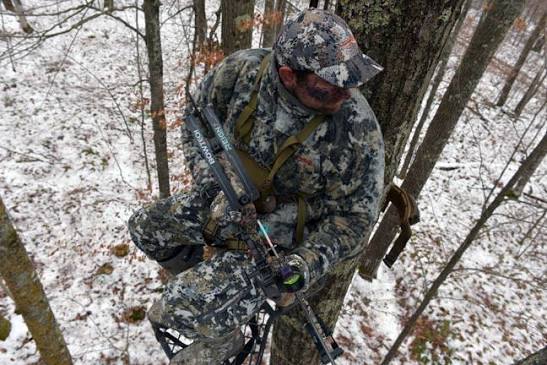
5. Guide Gear Dry Waterproof Insulated Hunting Coveralls on Amazon
Short Overview
Guide Gear Dry coveralls are designed for hunters who prefer one protective outer garment over separate jacket and pants.
The hooded, insulated construction is particularly useful for cold rain, wet snow, and long stationary sits.
A one-piece design reduces the exposed gap at the waist when sitting, bending, or climbing into a blind.
It also simplifies dressing at the vehicle because fewer separate outer pieces are required.
The tradeoff is bulk, especially during long walks or when temperatures rise.
Hunters should avoid overheating on the approach by venting or carrying the coveralls until close to the stand.
The current listing should be checked for exact membrane, insulation, pocket, and zipper details rather than assuming a specific performance rating.
Fit needs enough room for thermal layers without making the legs or torso excessively loose around climbing equipment.
For wet, cold whitetail conditions, this is the most protective single garment in the list.
Key Features
- One-piece insulated coverall
- Hooded design
- Waterproof-oriented outer construction
- Multiple storage pockets
- Full-body coverage for stationary hunting
Pros
- Excellent coverage around the waist and lower back
- Practical for wet snow and cold rain
- Warm for long treestand or blind sits
- Simplifies the outer-layer system
Cons
- Bulky and warm for long active approaches
- Bathroom access is less convenient than separate garments
- Correct torso length is important for comfort
Who It’s Best For
Late-season whitetail hunters facing cold precipitation, wind, and extended low-activity sits.
6. Mossy Oak Cotton Mill 2.0 Camo Hunting Bibs on Amazon
Short Overview
Mossy Oak Cotton Mill 2.0 bibs are a useful uninsulated outer layer for hunters who prefer full torso coverage without heavy late-season insulation.
The bib format helps keep shirts tucked, reduces exposure at the lower back, and avoids a tight belt under a treestand harness.
Stretch in the fabric blend supports kneeling, stepping over logs, and climbing into a stand.
Because the bibs are uninsulated, they can be used in warm weather over a light shirt or in cooler weather over thermal bottoms.
The cotton content can feel quiet and familiar, but it also dries more slowly than a fully synthetic technical fabric.
These bibs are therefore best in dry conditions or when a waterproof shell is available.
Pocket access should be checked while wearing a harness or pack waist belt.
The adjustable shoulder system makes it easier to create room for different seasonal layers.
They are a dependable value pick for hunters who want quiet, comfortable bib coverage across a broad part of deer season.
Key Features
- Uninsulated bib overall design
- Stretch cotton-blend fabric
- Adjustable shoulder straps
- Multiple cargo-style pockets
- Available in several Mossy Oak patterns
Pros
- Comfortable around the waist
- Quiet fabric for close-range hunting
- Easy to layer for different temperatures
- Good seasonal versatility
Cons
- Cotton blend dries slower when soaked
- No built-in insulation
- Not a dedicated rain garment
Who It’s Best For
Bowhunters, early-season hunters, and anyone who prefers bibs over standard pants.
7. Mossy Oak Cotton Mill 2.0 Camo Hunting Pants on Amazon
Short Overview
Mossy Oak Cotton Mill 2.0 pants are a familiar, practical choice for hunters who prefer conventional cargo pants over bibs.
The fabric blend adds useful stretch while keeping the quieter hand feel associated with cotton-rich hunting clothing.
They are light enough for early-season whitetail hunts and substantial enough for cool mornings with a thin base layer.
Cargo pockets keep tags, gloves, and small accessories organized without overloading a jacket.
The pants are not designed as insulated winter trousers, so hunters should plan thermal bottoms for cold treestand sits.
They also are not the first choice for prolonged rain because cotton-containing fabrics can hold moisture.
The straightforward cut makes them easy to wear with belts, suspenders, knee pads, or gaiters as conditions require.
Buyers should check waist and inseam guidance, particularly if they plan to wear thick base layers.
For dry-weather deer hunting, these pants offer one of the best combinations of quiet comfort, mobility, and affordability.
Key Features
- Stretch cotton-blend construction
- Cargo-style pocket layout
- Button and zipper closure
- Multiple camouflage pattern choices
- Traditional pant fit
Pros
- Quiet and comfortable
- Useful for early and mid-season deer hunting
- Good mobility for walking and kneeling
- Easy to combine with thermal bottoms
Cons
- Not waterproof
- Limited warmth without layers
- Cotton content can dry slowly
Who It’s Best For
Hunters who want affordable, quiet camo pants for dry woods, food plots, and moderate walking.
8. NOMAD Tibbee Lightweight Camo Hunting Pants on Amazon
Short Overview
NOMAD Tibbee pants fill the lightweight role that insulated suits and cotton bibs cannot.
They are aimed at warm-weather hunts, scouting, and active approaches where heat management matters more than insulation.
The synthetic construction is generally quicker to dry than cotton-rich hunting pants.
A lighter fabric also reduces bulk under a rain shell or late-season bib.
These pants are most useful during early archery seasons, southern whitetail seasons, and long walks to remote setups.
They should not be mistaken for cold-weather stand pants without substantial layering.
Hunters should check the current pocket arrangement, waist design, and available camo patterns before purchase.
A smooth performance fabric can be slightly noisier than brushed fleece, so movement discipline still matters at close range.
For mobile hunters who overheat easily, the Tibbee is the best lightweight pant in this comparison.
Key Features
- Lightweight synthetic construction
- Quick-drying performance orientation
- Camo patterns for warm-season vegetation
- Mobile fit
- Pocket layout for small essentials
Pros
- Comfortable for long approaches
- Better moisture handling than cotton-heavy pants
- Easy to layer under shells
- Good early-season value
Cons
- Little built-in warmth
- May not be as quiet as heavier brushed fabric
- Requires a separate shell in cold rain
Who It’s Best For
Early-season bowhunters, southern whitetail hunters, and anyone covering significant distance on foot.
9. Mossy Oak Performance Fleece Camo Hunting Hoodie on Amazon
Short Overview
The Mossy Oak Performance Fleece hoodie is a versatile mid layer that can also serve as an outer layer in mild, dry weather.
Fleece adds warmth without the stiffness of a heavy hunting coat.
The hood provides useful head and neck coverage when the temperature drops after sunset.
Its camouflage exterior makes it easier to remove the outer shell without exposing a bright civilian layer.
The pullover format is simple and relatively quiet, although it offers less ventilation control than a full-zip jacket.
It works well over a synthetic or merino-style base and under a windproof or waterproof shell.
Hunters who walk hard should avoid wearing too much fleece on the approach because trapped sweat can cause chilling later.
The current size chart should be checked with the intended base layer and outer jacket.
As a value mid layer for whitetail hunting, this hoodie is easy to use across early fall, the rut, and mild late-season days.
Key Features
- Performance fleece fabric
- Pullover hood
- Hunting camouflage exterior
- Layer-friendly design
- Front storage pocket
Pros
- Useful as a mid layer or mild-weather outer layer
- Quiet and comfortable
- Provides head and neck coverage
- Good value for a seasonal layering system
Cons
- Not windproof or waterproof on its own
- Pullover design offers limited ventilation
- Can be too warm during strenuous hiking
Who It’s Best For
Whitetail hunters who need an affordable, quiet insulating layer beneath a shell or late-season suit.
10. Legendary Whitetails Men’s Plaid Camo Pullover Hoodie on Amazon
Short Overview
The Legendary Whitetails plaid camo pullover is a comfortable crossover piece for camp, travel, scouting, and relaxed blind hunting.
It is more of a heavyweight sweatshirt than a technical windproof or waterproof hunting layer.
That distinction matters because comfort and warmth do not replace a proper shell during rain, snow, or strong wind.
The relaxed design leaves room for a base layer and works well during chores around camp.
Hunting-inspired colors make it less visually conspicuous than a bright everyday hoodie, although camouflage matching is not its main strength.
The fabric is best for dry conditions and should be protected from sparks around campfires.
Buyers should follow the garment care instructions to reduce shrinkage and preserve fit.
It is not the quietest or lightest technical hunting piece, but it is one of the most versatile garments for everyday use beyond deer season.
Choose it when comfort and value matter more than advanced weather protection.
Key Features
- Heavyweight pullover sweatshirt
- Hunting-inspired plaid and camo styling
- Relaxed layering fit
- Hood and front pocket
- Suitable for field and casual use
Pros
- Comfortable for camp and blind use
- Useful beyond hunting season
- Warm for cool dry days
- Widely reviewed and beginner-friendly
Cons
- Not waterproof or windproof
- Heavier than technical fleece
- May require careful washing to maintain fit
Who It’s Best For
Hunters who want a comfortable hoodie for camp, scouting, ground blinds, and casual wear.
11. Realtree Men’s Essential Camo Lightweight Performance Long Sleeve Shirt on Amazon
Short Overview
The Realtree Essential long-sleeve shirt is a practical warm-weather layer for early archery season and southern whitetail hunting.
Its lightweight synthetic construction is intended to manage heat better than a heavy cotton shirt.
Long sleeves provide basic sun and brush coverage while keeping exposed skin concealed.
The shirt can be worn alone in warm weather or used as a light base beneath fleece and outerwear.
It packs small, dries relatively quickly, and is easy to keep as a backup in a daypack.
Because it has little insulation, it is not enough for a cold stand without additional layers.
The smooth fabric should be checked for noise against straps and vegetation before a close-range bowhunt.
Sizing should allow free shoulder movement when drawing a bow or climbing.
For a low-cost early-season top, it offers dependable versatility without unnecessary bulk.
Key Features
- Lightweight performance fabric
- Long sleeves for coverage
- Realtree camouflage
- Quick-drying design
- Easy layering profile
Pros
- Comfortable in warm conditions
- Useful as a base or standalone shirt
- Packs easily
- Affordable entry into camo hunting clothing
Cons
- Provides little warmth
- Not a rain or wind shell
- Smooth fabric may make some noise against gear
Who It’s Best For
Early-season bowhunters, warm-climate deer hunters, and anyone needing a light camo base shirt.
12. Realtree Camo Hunting Shirt for Men Long Sleeve on Amazon
Short Overview
This Realtree long-sleeve hunting shirt is a simple, proven garment for hunters who do not need a complicated technical top.
It provides camouflage coverage across the arms and torso for early-season and moderate-weather hunts.
The straightforward design makes it useful for scouting, food-plot sits, and ground blinds.
It can also serve as a clean outer layer over a thin moisture-wicking undershirt.
Unlike a fleece hoodie, it adds little insulation and is easier to wear during warmer walks.
The shirt should be paired with a shell when wind or rain is expected.
Buyers should confirm current fabric composition, pattern, and fit because marketplace variations can differ.
A traditional shirt may also be easier to wash and rotate than a full hunting suit.
It is a sensible budget pick for hunters who want dependable camouflage without extra bulk.
Key Features
- Long-sleeve camo coverage
- Simple field shirt design
- Layer-friendly fit
- Suitable for warm and moderate weather
- Multiple Realtree pattern options may be available
Pros
- Straightforward and easy to use
- Good for scouting and early season
- Low bulk
- Affordable backup hunting shirt
Cons
- Little insulation
- No meaningful rain protection
- Exact fabric may vary by selected listing option
Who It’s Best For
Beginners and warm-weather hunters who want a simple camouflage long-sleeve shirt.
13. BASSDASH UPF 50+ Camo Long Sleeve Hunting Fishing Hoodie Shirt on Amazon
Short Overview
The BASSDASH hooded performance shirt is designed for hot weather, high activity, and long exposure to sun.
It is useful during summer scouting, trail-camera work, early archery season, and warm southern hunts.
The lightweight hood adds neck and head coverage without requiring a heavy sweatshirt.
A synthetic performance fabric generally dries faster than cotton after sweat or light moisture.
The shirt can also serve as a thin base beneath a fleece layer when mornings start cool.
It is not intended to provide insulation during long cold sits.
The hood and any face coverage should never interfere with peripheral vision, hearing, or safe handling of hunting equipment.
Hunters should choose a pattern that matches the season and evaluate the fit around the shoulders.
This is the best warm-weather hooded top in the comparison.
Key Features
- Lightweight hooded design
- UPF-rated sun protection in the current product family
- Quick-drying synthetic fabric
- Camo pattern options
- Long-sleeve coverage
Pros
- Excellent for hot early-season conditions
- Hood adds sun and concealment coverage
- Works as a thin base layer
- Useful for hunting, fishing, and scouting
Cons
- Minimal warmth
- Not windproof or waterproof
- Hood fit must not obstruct vision or hearing
Who It’s Best For
Warm-climate whitetail hunters, summer scouts, and active early-season bowhunters.
14. Thermajohn Men’s Thermal Underwear Long Johns Set on Amazon
Short Overview
The Thermajohn long-john set fills the most important hidden role in a cold-weather whitetail system: the base layer.
A close-fitting thermal top and bottom help move moisture away from the skin while adding warmth without the bulk of another outer garment.
This matters during the walk in, when sweat can later cause rapid chilling during a stationary sit.
The set works under bibs, hunting pants, coveralls, and insulated suits.
It is a budget option rather than a premium merino-wool system, but it gives new hunters a practical starting layer.
The fit should be close without restricting circulation or movement.
Hunters who sweat heavily may still need to slow their approach, vent outer layers, and change a damp top at the stand.
The thermal set is not flame resistant and should be kept away from heaters, stoves, and open flame.
For cold-weather value, this base layer improves almost every outer clothing option on the list.
Key Features
- Two-piece thermal top and bottom
- Low-bulk synthetic construction
- Stretch fit
- Designed for layering
- Useful beyond hunting
Pros
- Affordable complete base layer
- Adds warmth without heavy bulk
- Fits under bibs and coveralls
- Good starter option for cold hunts
Cons
- Not weatherproof
- May retain odor more than merino wool
- Fit must be close but not restrictive
Who It’s Best For
Beginners and budget hunters who need a complete thermal base layer for cold mornings and stationary sits.
15. Carhartt Men’s Knit Cuffed Beanie on Amazon
Short Overview
The Carhartt knit beanie is not a camouflage technical hunting product, but it solves a basic cold-weather problem reliably.
Head and ear coverage can make a major comfort difference during a long whitetail sit.
The low-bulk knit design fits under many jacket hoods and can be carried in a pocket.
Neutral or dark colors can work in a blind, while blaze-orange options may help meet visibility requirements where legally appropriate.
Hunters must check their state or local blaze-orange rules because a beanie alone may not satisfy the required garment area.
The knit material is best in dry cold and can absorb moisture in rain or wet snow.
It should be paired with a waterproof hood when precipitation is expected.
The simple design also makes it useful for camp, chores, and everyday winter use.
As an inexpensive finishing layer, it provides more practical value than many specialized accessories.
Key Features
- Stretch knit construction
- Fold-over cuff
- Low-bulk fit under a hood
- Wide range of color options
- Everyday and field use
Pros
- Simple dependable warmth
- Easy to pack
- Useful beyond hunting
- Many color choices
Cons
- Not waterproof
- Not camouflage unless a suitable color is selected
- Does not automatically satisfy blaze-orange regulations
Who It’s Best For
Any whitetail hunter who needs uncomplicated head warmth and a low-cost item that works on and off the hunt.
How to Choose the Best Hunting Clothes for Whitetail Deer
Start With Your Hunting Style
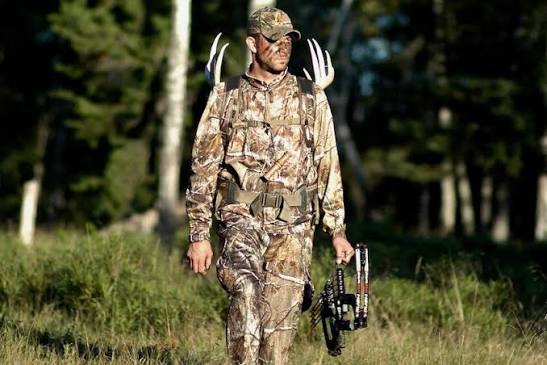
A stationary treestand hunter and a hunter walking several miles need different clothing. Stationary hunters generate little body heat and need more wind protection and insulation. Mobile hunters need lighter, breathable layers that can be opened, removed, or packed. Ground-blind hunters may prioritize seated comfort and darker interior-compatible clothing, while bowhunters often place greater value on quiet sleeves and unrestricted shoulder movement.
Plan a Layering System
The base layer should manage moisture next to the skin. The mid layer traps warm air and can be fleece, wool, or a packable synthetic garment. The outer layer manages wind, precipitation, brush, and visible concealment. A modular system is more useful than one oversized coat because the hunter can change insulation as temperature and activity change.
Match Clothing to the Season
Early season often means heat, humidity, insects, and long walks. Use lightweight synthetic shirts, thin pants, and breathable head coverage. During the rut, conditions can swing from freezing mornings to mild afternoons, so packable fleece and a quiet shell are useful. Late season usually requires a dry base, substantial insulation, wind protection, and extra attention to hands, head, and feet.
Account for Terrain and Vegetation
Open agricultural edges require different concealment and wind protection than dense evergreen cover. Briars and rough brush increase the need for durable pants. Steep terrain increases heat output and makes heavy coveralls less practical. Wet lowlands favor quick-drying or waterproof materials, while dry hardwood stands make quiet brushed fabric more valuable.
Choose Warmth Based on Activity
Manufacturers may describe garments as warm, insulated, or cold-weather without providing a universal temperature rating. Your metabolism, wind, humidity, base layers, meal intake, and movement all affect comfort. Avoid buying only by insulation language. A hunter walking continuously can overheat in clothing that is comfortable for a motionless treestand hunter.
Understand Waterproofing
Water-resistant outerwear is useful for dew, light snow, and damp brush. Waterproof hunting clothing usually relies on a membrane or coating and seam management. Even a waterproof shell can feel wet inside when sweat cannot escape. Check closure design, hood coverage, cuff adjustment, and whether the garment fits over insulation without compressing it.
Evaluate Quietness
Quiet clothing reduces avoidable fabric noise, but no garment eliminates the need for controlled movement. Rub sleeves together, turn at the waist, operate zippers, and test the garment against harness webbing. Cold temperatures can make some shell fabrics stiffer and louder. Brushed fleece and cotton-rich fabrics are often quieter but usually provide less water protection.
Check Fit and Sizing
Measure chest, waist, hips, inseam, and torso according to the brand chart. Try outer garments with the exact layers you will use. Raise both arms, draw a bow safely without an arrow, sit, kneel, climb steps, and bend at the waist. Clothing should not pull across the shoulders, compress the thighs, expose the lower back, or bunch behind the knees.
Leave Room for Circulation
Overly tight clothing compresses insulation and can reduce circulation. This matters around the waist, thighs, cuffs, and boot openings. Thick socks do not compensate for tight footwear, and tight bibs do not become warmer because more base layers are forced underneath. Warmth comes from dry insulation and trapped air, not pressure.
Consider Harness Compatibility
Treestand clothing should work with the safety harness exactly as the harness manufacturer intends. Do not cut a homemade port, alter webbing, or route a tether through an unapproved opening. Put the harness on from the ground and remain attached during ascent, hunting, and descent using an appropriate system.
Choose Useful Pockets
More pockets are not always better. Important pockets should remain accessible while seated and while wearing a harness or pack. Quiet closures are useful for calls and gloves. Keep licenses, tags, and communication equipment dry and secure. Avoid overloading pockets in ways that restrict movement or create hard pressure points.
Think About Blaze-Orange Requirements
Camouflage is only one part of legal hunting clothing. Many firearm seasons require a specified amount of visible blaze orange or blaze pink, and rules can differ for archery seasons, ground blinds, public land, or tracking. Review current regulations from the wildlife agency governing the exact hunt. A small orange logo or hat may not meet the legal minimum.
Balance Weight and Packability
A heavy insulated suit can be comfortable after reaching the stand but exhausting during the approach. Packable insulation lets the hunter walk in lighter clothing and dress near the destination. Consider the volume of each layer, not only its listed weight. Clothing must leave room in the pack for water, emergency equipment, and legally required gear.
Check Durability and Maintenance
Inspect seams, knees, seat, cuffs, zippers, and pocket corners. Brush-heavy hunting demands stronger outer fabric than a short walk to a box blind. Read the care label before buying because some waterproof treatments and odor-control finishes require specific detergents and drying methods. Repair small damage early before it spreads.
Set a Practical Budget
Prioritize safety, weather protection, fit, and moisture management. A reliable base layer and legal visibility garment can be more important than premium camouflage. A coordinated budget suit may offer strong value, while frequent hunters may benefit from lighter and more durable premium layers. Do not buy duplicate garments before identifying the gap in the current system.
Hunt Legally and Ethically
Wear clothing that supports safe identification by other hunters and does not encourage risky weather exposure. Carry the correct licenses and tags, follow season and method restrictions, respect property boundaries, and make responsible shot decisions. A clothing system supports field comfort; it does not replace training, judgment, navigation, communication, or emergency planning.
Common Mistakes to Avoid When Buying Whitetail Hunting Clothes
- Buying one heavy suit without planning base and mid layers.
- Wearing insulated clothing during a long approach and arriving soaked with sweat.
- Confusing water resistance with reliable protection in prolonged rain.
- Choosing outerwear too tight for thermal layers and free movement.
- Ignoring fabric noise around sleeves, pockets, packs, and harness straps.
- Buying camouflage before checking blaze-orange or blaze-pink laws.
- Choosing heavy coveralls for a highly mobile hunting style.
- Using cotton-rich clothing in cold wet conditions without a backup plan.
- Failing to test harness access and seated pocket placement.
- Waiting until opening morning to wash, fit, and practice in new clothing.
Expert Tips for Using Whitetail Hunting Clothes
- Walk in wearing fewer layers and add insulation near the stand.
- Carry a dry spare base-layer top on long or steep approaches.
- Use moisture-wicking socks and avoid cotton in cold wet conditions.
- Keep waterproof shells accessible rather than buried at the bottom of the pack.
- Practice bow or firearm mounting in the complete legal clothing system before the season.
- Dry every layer completely after rain, snow, or heavy perspiration.
- Inspect garments for tears that could catch on ladders, branches, or equipment.
- Store hunting clothes away from fuel, solvents, smoke, and strong household fragrances.
- Use a full-body treestand harness and never modify it to fit clothing.
- Follow current licensing, season, visibility, and property regulations.
Final Recommendation
The TIDEWE fleece-lined hunting suit is the best overall pick for hunters who want a practical jacket-and-pants system without assembling every outer layer separately. NEW VIEW offers strong alternatives for cold-weather value and lighter early-to-mid-season use. Guide Gear coveralls are better for wet late-season sits, while Mossy Oak bibs and pants provide quiet traditional options for dry conditions.
NOMAD Tibbee pants, Realtree shirts, and the BASSDASH hoodie are better for warm weather and long walks. The Mossy Oak fleece hoodie fills the mid-layer role, and the Thermajohn thermal set is the most useful budget addition for cold hunting. The right choice depends on weather, terrain, activity, fit, safety requirements, and the garments you already own.
Check current product details and availability on Amazon before ordering. Share this guide with a hunting partner or family member who is building a responsible whitetail clothing system.
Frequently Asked Questions
1. What should I look for when buying hunting clothes for whitetail deer?
Start with the season, hunting style, expected temperature, precipitation, and walking distance. A good system usually includes a moisture-managing base layer, an insulating mid layer, and a quiet weather-resistant outer layer. Check fit while seated, kneeling, climbing, and wearing a safety harness. Also verify local blaze-orange requirements before choosing the final outer color.
2. What are the best hunting clothes for whitetail deer overall?
For many hunters, a quiet jacket-and-pants set such as the TIDEWE fleece-lined system is a practical overall choice because it covers the outer-layer role. It still needs a suitable base layer, and colder or wetter conditions may require extra insulation or a dedicated rain shell. The best choice changes with climate and activity.
3. Do I need camouflage to hunt whitetail deer?
Camouflage can help break up the human outline, especially at bowhunting distance, but movement, wind direction, safe positioning, and legal visibility rules matter more. Solid earth-tone clothing can work when it is quiet and weather appropriate. During firearm seasons, required blaze orange or pink takes priority over concealment.
4. What camouflage pattern is best for whitetail hunting?
Choose a pattern that matches the dominant background at the height and distance where deer are likely to see you. Open hardwoods, evergreen cover, late-season gray timber, and ground-level brush can call for different contrast. Avoid assuming that the most detailed pattern is automatically the most effective.
5. Should hunting clothing be tight or loose?
It should allow full movement and enough room for planned layers without hanging loosely around equipment. A base layer normally fits close, while mid and outer layers need space to trap air. Clothing that is too tight can restrict circulation and reduce warmth, while oversized fabric can snag and make noise.
6. How should I size hunting clothes for layering?
Use the manufacturer’s current chart and measure while wearing the thickest base and mid layers you expect to use. Check shoulder movement, sleeve length, waist, rise, inseam, and torso length. When between sizes, read the return policy and recent fit feedback rather than assuming every brand uses the same cut.
7. What should I wear for early-season whitetail hunting?
Use a light synthetic or merino-style base, lightweight camo shirt, breathable pants, and minimal head or face coverage. Carry a light rain shell when storms are possible. Avoid heavy fleece on the approach because overheating and sweat can make the later sit uncomfortable.
8. What should I wear during the whitetail rut?
Rut conditions vary widely, so use an adaptable layering system. A light base, fleece mid layer, and quiet wind-resistant outer set can handle cool mornings and warmer midday movement. Packable layers are more useful than one extremely heavy garment when temperatures change.
9. What should I wear for late-season deer hunting?
Late-season stand hunting usually requires a dry base layer, warm mid layers, insulated bibs or coveralls, a wind-resistant outer layer, insulated headwear, gloves, and suitable boots. Keep layers vented during the walk in, then add insulation near the stand. Monitor for numbness, shivering, confusion, and other cold-stress signs.
10. Are one-piece coveralls better than a jacket and pants?
Coveralls reduce drafts at the waist and can be very warm in cold precipitation. Separate garments provide better ventilation, easier bathroom access, and more flexible sizing. Coveralls are strongest for low-activity late-season sits, while separate pieces are more adaptable for mobile hunting.
11. Are hunting bibs better than regular pants?
Bibs provide lower-back coverage, avoid a tight belt, and layer well for treestand sitting. Pants are lighter, easier to vent, and more convenient for walking and daily wear. The better choice depends on temperature, mobility, and personal comfort.
12. Are uninsulated bibs useful in cold weather?
Yes, when they are cut generously enough for thermal bottoms and insulating pants underneath. Uninsulated bibs are more versatile across seasons because the hunter controls the warmth. They do not provide the same convenience as an insulated late-season bib.
13. Is fleece good for whitetail hunting?
Fleece is warm, relatively quiet, and useful as a mid layer. It is not naturally windproof or waterproof, so it works best under a shell in exposed weather. Avoid wearing excessive fleece during a hard approach because it can trap heat and sweat.
14. Is cotton bad for deer hunting?
Cotton can be quiet and comfortable in dry mild weather, but it absorbs water and dries slowly. Wet cotton can accelerate heat loss in cold conditions. Use synthetic or wool-style layers when getting wet would create a cold-weather risk.
15. Are synthetic base layers good for hunting?
Synthetic base layers dry quickly, stretch well, and are usually affordable. They can retain odor more readily than some wool fabrics, so wash and dry them according to instructions. Performance depends more on moisture management and fit than camouflage.
16. Is merino wool worth it for whitetail hunting?
Merino wool is valued for moisture management, comfort across temperatures, and odor control, but it costs more and may be less durable than some synthetics. A blend can provide a useful compromise. No fabric eliminates human scent or the need to hunt favorable wind.
17. How many layers should I wear for deer hunting?
Use as many layers as needed to stay dry and warm without overheating. A typical system has a base, insulating mid layer, and protective outer layer, with an extra puffy or vest for stationary cold. Temperature, wind, humidity, activity, and the length of the sit determine the final combination.
18. How do I avoid sweating on the walk to my stand?
Start slightly cool, open vents, remove the hat or mid layer, slow the pace, and carry the warmest jacket when practical. Put insulation on only after your breathing and body temperature settle. A dry spare base-layer top can be valuable on long approaches.
19. Why is moisture management important in cold weather?
Moisture conducts heat away from the body and can leave a hunter chilled after activity stops. A wicking base, controlled pace, ventilation, and dry insulation reduce this problem. Waterproof outerwear should also be breathable enough for the expected activity.
20. Do waterproof hunting clothes stay completely dry?
No garment guarantees dryness in every combination of rain, pressure, wear, and perspiration. Waterproof membranes also require intact seams, closures, and surface treatments. Follow cleaning and care instructions, and carry a backup plan for prolonged severe weather.
21. What is the difference between water-resistant and waterproof clothing?
Water-resistant fabric can handle dew, damp brush, or short light showers. Waterproof clothing is designed for stronger water protection, usually with a membrane, coating, and managed seams. Always check the manufacturer’s exact claim rather than relying on a marketplace title.
22. How important is wind protection for treestand hunting?
Wind can remove body heat rapidly during a stationary sit. A quiet wind-resistant outer layer often adds more comfort than simply adding another breathable fleece. Protect the torso, neck, head, and hands while keeping enough ventilation to avoid internal moisture.
23. What makes hunting clothing quiet?
Brushed fabrics, soft fleece surfaces, covered closures, and carefully placed pockets reduce noise. Test garments by rubbing sleeves, drawing a bow, turning at the waist, and operating zippers in a quiet room. Even quiet fabric can become noisy when frozen or rubbing against a pack.
24. Are magnetic pockets useful for bowhunting?
Magnets can provide quiet one-handed access, but they can also attract metal objects and may affect certain electronic or medical devices. Follow manufacturer warnings. A hunter should know every closure by touch before using it in low light.
25. What clothing is best for a treestand hunter?
Choose quiet outer fabric, harness-compatible openings, warm bibs or coveralls, wind protection, and pockets accessible while seated. Never modify a harness or route it through an opening not approved by the harness manufacturer. Use a full-body fall-arrest system from the ground up.
26. What clothing is best for a ground-blind hunter?
Ground-blind hunters can prioritize warmth, dark interior-compatible colors, comfortable seated fit, and quiet pockets. Avoid reflective fabrics and noisy hook-and-loop closures near windows. Required blaze orange may still apply outside or inside the blind depending on local law.
27. What clothing is best for still-hunting whitetails?
Still-hunters need light, breathable, quiet clothing with good mobility and brush resistance. Too much insulation causes sweat during constant movement. Use modular layers and carry a warmer garment for pauses.
28. What clothing is best for long walks to public-land setups?
Use lightweight synthetic pants, a moisture-managing top, and packable insulation. Keep the heavy jacket in the pack until near the destination. Fit, chafe prevention, and freedom of movement are more important than maximum warmth during the approach.
29. Can I wear ordinary hiking clothes for deer hunting?
Yes, when they are quiet, suitably colored, weather appropriate, and compliant with visibility laws. Hunting-specific garments mainly add camouflage, quiet fabrics, stand-oriented pockets, and harness features. Ordinary technical outdoor layers can work well beneath the outer layer.
30. Do scent-control hunting clothes work?
Some garments are marketed to manage odor, but no clothing makes a hunter scent-free. Keep garments clean, limit strong household odors, and store them dry. Wind direction and air movement remain essential field considerations.
31. How should I wash hunting clothes?
Follow each care label. Use the specified water temperature, close zippers, avoid products that damage membranes, and rinse thoroughly. Unscented detergent may reduce added fragrance, but it does not remove the need to hunt the wind.
32. Should I use fabric softener on hunting clothes?
Usually not on technical garments because softener can affect wicking, odor treatments, and water-repellent finishes. Follow the exact garment instructions. Fleece, waterproof membranes, and base layers can have different care requirements.
33. How should I dry waterproof hunting clothing?
Follow the label, because some garments allow low heat to refresh a durable water-repellent finish while others require air drying. Do not place clothing near open flame or an unsafe heater. Inspect seam tape and coatings after drying.
34. How do I store hunting clothes between hunts?
Store garments clean and completely dry in a breathable closet or clean tote as appropriate to the fabric. Avoid damp basements, fuel, solvents, smoke, and strong fragrances. Do not seal any wet clothing in a container.
35. How can I reduce odor in synthetic hunting clothes?
Wash promptly according to the label, dry completely, rotate base layers, and avoid leaving damp garments in a vehicle or bag. Odor-control products should be compatible with the garment. Good hygiene and wind awareness are more reliable than fragrance masking.
36. How often should hunting clothes be replaced?
Replace garments when insulation is compressed, waterproof layers delaminate, seams open, closures fail, or fit becomes unsafe. Small tears can sometimes be repaired with approved patches. High-wear pieces such as pants and gloves may need replacement earlier than mid layers.
37. Can I repair a torn hunting jacket?
Many small tears can be repaired with a patch recommended for the fabric and membrane. Clean and dry the area first and follow the repair product instructions. Large tears near harness ports, structural seams, or zippers may require professional repair or replacement.
38. Should I break in new hunting clothes before the season?
Yes. Wear and wash them as permitted, practice sitting and climbing, and locate every pocket. This reveals chafing, noisy areas, restricted movement, and sizing problems while returns are still possible.
39. How do I test hunting clothing for noise?
Wear the complete system in a quiet room and perform real movements such as drawing, turning, kneeling, and reaching. Test layers against each other, not only each garment alone. Pack straps and safety harness webbing can create noise that is not obvious on the hanger.
40. What should I wear under insulated coveralls?
Use a moisture-managing base and add only enough mid-layer insulation for the conditions. Too much clothing can restrict movement and compress insulation. Ensure the coverall torso remains comfortable when seated and climbing.
41. How much room should I leave for thick socks and base layers?
Clothing should not compress circulation. For pants and coveralls, verify waist, seat, thigh, and rise with the actual layers. For boots, follow boot-specific sizing guidance rather than simply buying a larger clothing size.
42. Are hunting hoodies safe around a bowstring?
Loose drawstrings, hood edges, and bulky collars can interfere with bow movement. Secure or remove dangling cords according to the garment instructions and test the complete setup with an unloaded bow in a safe environment.
43. Can a face mask or hood reduce hearing?
Yes. Thick fabric around the ears can reduce or alter sound direction. Keep situational awareness, avoid obstructing peripheral vision, and use only hearing protection appropriate to the hunting method and local rules.
44. Do I need blaze orange for whitetail deer hunting?
Requirements depend on state, season, weapon type, land, and sometimes whether the hunter is inside a blind. Check the current regulations for the exact hunt. Camouflage does not override a legal blaze-orange or blaze-pink requirement.
45. Is a blaze-orange hat enough?
Not always. Many jurisdictions specify a minimum visible area or particular garments. A hat may be useful but insufficient. Read current state and property regulations before the hunt.
46. Can deer see blaze orange?
Whitetail vision differs from human vision, and blaze orange is used because it is highly visible to people. The safety and legal benefits outweigh concerns about camouflage. Hunters should also minimize movement and avoid reflective accessories.
47. What clothing should I wear while tracking a deer after dark?
Wear legally required visibility garments, carry dependable lighting with backup power, and use weather-appropriate layers. Notify a responsible person and follow property and tracking rules. Do not pursue into unsafe terrain or across property boundaries without permission.
48. What should I wear in freezing rain?
Use a dry base, insulating mid layers, a verified waterproof shell or coverall, waterproof gloves, and suitable footwear. Keep spare dry items protected in a bag. End the hunt if water penetrates the system or cold-stress symptoms appear.
49. How do I know if I am getting dangerously cold?
Persistent shivering, loss of coordination, numbness, slurred speech, unusual fatigue, and confusion are warning signs. Leave the field, seek shelter, replace wet clothing, and get medical help when symptoms are serious. Do not rely on clothing ratings as a guarantee.
50. Can insulated hunting clothes be too warm?
Yes. Overheating creates sweat and can reduce later comfort. Match insulation to activity and use vents or removable layers. Stationary hunters generally need more insulation than hunters walking continuously.
51. What hunting clothes are best for mild southern winters?
Use a breathable base, light fleece or hoodie, quiet uninsulated pants, and a packable shell. Heavy northern-style coveralls can be excessive. Prepare for rapid temperature swings and rain rather than focusing only on maximum insulation.
52. What hunting clothes are best for northern late season?
Use a layered system with a dry base, substantial insulation, wind protection, insulated bibs or coveralls, and protected extremities. Plan a slower approach to limit sweat. Carry emergency communication and know when conditions exceed the clothing system.
53. Are expensive hunting clothes worth it?
Premium garments may offer better patterning, lighter insulation, quieter membranes, more durable construction, and stronger support. They are worthwhile when those benefits match frequent use. A well-chosen budget layer system can still be safe and effective.
54. How should beginners prioritize a hunting-clothing budget?
Buy fit, a moisture-managing base, required blaze orange, and reliable weather protection before premium camouflage. Add a quiet mid layer and outer suit next. Spend where failure would create a safety or comfort problem, not only where branding is strongest.
55. What should I check before buying hunting clothes on Amazon?
Confirm the seller, exact ASIN, size chart, current materials, care instructions, return policy, recent reviews, and product variations. Colors and sizes can be grouped under one page with different availability. Do not rely on an old review for a newly changed model.
Read more: 15 Best Hunting Clothes for Men