
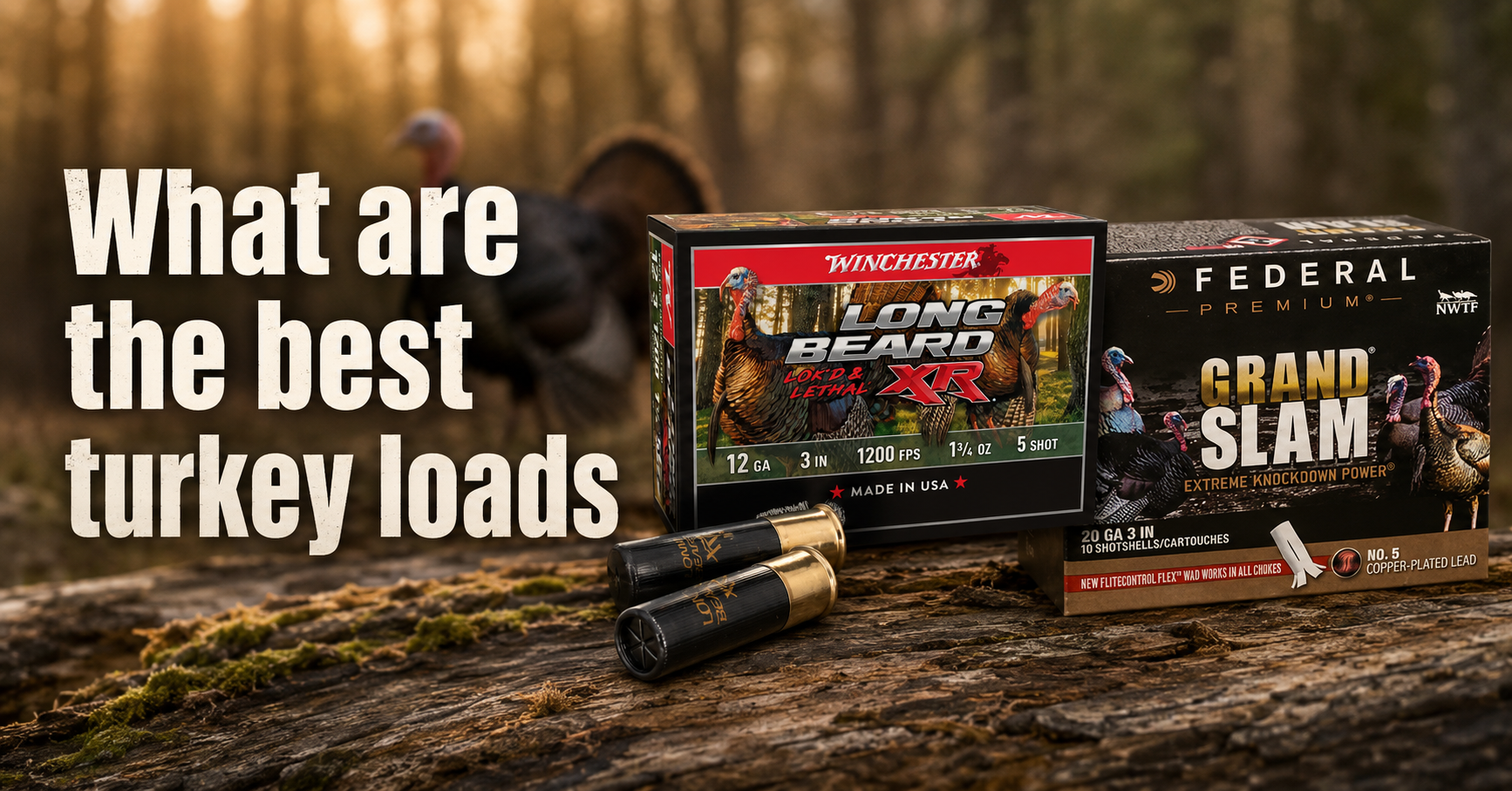

A turkey-load box may advertise dense patterns, high velocity, heavy payloads, tungsten shot, specialized wads, or extended performance. None of those claims reveals how the shell will perform through your particular shotgun and choke.
The best turkey load is a legal shell that fits the shotgun’s exact gauge and chamber, functions reliably, produces an even and repeatable pattern, and does not create more recoil than the hunter can manage accurately. A premium tungsten load may provide exceptional pellet density, but a well-patterned lead load can remain a practical choice when local regulations permit it.
This guide answers what are the best turkey loads by comparing current TSS, tungsten-blend, mixed-payload, and traditional lead options. It also explains shot size, gauge, recoil, choke compatibility, legal restrictions, pattern testing, and common setup problems.
Product details and official regulations referenced in this article were reviewed on July 26, 2026. Ammunition specifications, availability, and hunting regulations can change.
Quick Answer
The Federal Premium Heavyweight TSS line is the strongest overall starting point for hunters seeking high pellet density across several common turkey gauges. Winchester Long Beard XR is a leading traditional lead option, while Federal 3rd Degree uses a mixed payload intended to produce a more forgiving close-range pattern than an extremely tight single-material load.
For sub-gauge shotguns, current TSS families from Federal, HEVI-Shot, Winchester, Fiocchi, Remington, and APEX provide options for 20 gauge, 28 gauge, and .410 bore. The correct choice depends on the shotgun’s chamber length, approved choke, local shot-size rules, recoil tolerance, and the pattern produced on paper. No load should be used at a distance where its pattern has not been verified.
Best Turkey Loads at a Glance
| Load | Best For | Shot Material | Current Gauge Coverage | Main Advantage | Main Limitation |
|---|---|---|---|---|---|
| Federal Heavyweight TSS | Best overall TSS family | 18 g/cc TSS | Multiple gauges, including sub-gauges | High pellet count and broad configuration range | Premium cost and very tight patterns in some setups |
| Winchester Long Beard Tungsten | Current broad-gauge tungsten option | 17 g/cc tungsten | 12, 20, 28 gauge and .410 bore | Buffered tungsten payload across four common gauges | Newer line with less long-term field history |
| HEVI-18 TSS Turkey | Full-density TSS selection | 18 g/cc TSS | 12, 20, 28 gauge and .410 bore | Numerous shot-size and gauge combinations | Configuration choices can be confusing to beginners |
| APEX Mossy Oak Greenleaf TSS | High-count duplex TSS | No. 9 and No. 10 TSS blend | 12, 20, 28 gauge and .410 bore | Very high pellet counts | Small shot may not be legal everywhere |
| Winchester Long Beard XR | Traditional lead load | Lead | Common 12- and 20-gauge configurations | Strong pattern performance without TSS pricing | Lead may be prohibited on some properties |
| Federal 3rd Degree | Close-to-middle-distance flexibility | Lead and TSS blend | 12 and 20 gauge | Three-stage payload creates different pattern zones | Not legal where lead is prohibited |
| Remington Final Strut HD | Mid-density tungsten alternative | 12 g/cc tungsten blend | 12 and 20 gauge | Denser than traditional lead without using full-density TSS | Fewer gauges and shot sizes than larger product families |
| Remington Premier TSS | Straightforward factory TSS | 18 g/cc TSS | 12, 20 gauge and .410 bore | Simple full-density TSS lineup | Must be tested carefully with the selected choke |
| Fiocchi Golden Turkey TSS | Sub-gauge variety | 18 g/cc TSS | 12, 20, 28 gauge and .410 bore | Four-gauge factory lineup | Selected loads may not be stocked locally |
| Browning TSS Tungsten Turkey | Factory duplex TSS | TSS duplex payloads | 12, 20 gauge and .410 bore | Combines pellet count with larger-pellet energy | Duplex performance still varies by shotgun |
Important Legal and Firearm-Safety Notice
Turkey ammunition laws are not uniform. A load that is legal in one state, province, wildlife unit, refuge, or public-hunting property may be prohibited somewhere else. Regulations may specify gauge, shell capacity, shot material, maximum pellet size, minimum pellet size, legal shooting hours, and approved hunting methods.
Indiana currently permits several conventional lead shot sizes as well as smaller TSS sizes, while Maine uses a different list of gauge and shot-size combinations. Some state-managed properties and national wildlife refuges require nontoxic shot even when statewide turkey regulations allow lead. These differences make current property-specific verification essential.
Before hunting, verify:
- Legal shotgun gauges and chamber lengths.
- Permitted lead, bismuth, tungsten, steel, or other shot materials.
- Minimum and maximum shot sizes.
- Public-land or refuge nontoxic-shot requirements.
- Magazine-capacity restrictions.
- Season dates and legal shooting hours.
- License, permit, tag, and harvest-reporting requirements.
- Whether a fall or spring season has different equipment rules.
Apply the four basic firearm-safety principles whenever a turkey shotgun is handled:
- Treat every firearm as if it is loaded.
- Keep the muzzle pointed in a safe direction.
- Keep your finger outside the trigger guard until ready to shoot.
- Be certain of the target and what lies beyond it.
These principles are included in the International Hunter Education Association’s education standards.
Never shoot at movement, sound, a partial silhouette, or an unidentified red, white, or blue object. Other turkey hunters may be concealed and using calls or decoys nearby.
How Turkey Loads Differ
Lead
Lead turkey loads generally use comparatively large pellets such as No. 4, No. 5, or No. 6 shot. They remain practical where legal and can produce excellent patterns through a compatible choke.
Lead is less dense than TSS, so manufacturers commonly use heavier payloads, specialized buffering, plated pellets, and purpose-built wads to protect pellet shape and maintain pattern quality.
Tungsten Super Shot
TSS is an approximately 18 g/cc tungsten-alloy material used in many current premium turkey loads. Its greater density allows manufacturers to use smaller pellets while maintaining useful retained energy and placing more pellets into a given payload. Federal, HEVI-Shot, Remington, Fiocchi, Winchester, and APEX currently offer full-density TSS turkey products.
The increased pellet count can create exceptionally dense patterns. It can also create very small margins for aiming error at close distance, particularly when combined with an extremely tight choke.
Lower-Density Tungsten and Tungsten Blends
Not every tungsten load uses 18 g/cc TSS. Winchester’s current Long Beard Tungsten uses 17 g/cc shot, while Remington Final Strut HD uses a 12 g/cc tungsten blend. These materials occupy different positions between conventional lead and full-density TSS.
Duplex and Multi-Material Loads
A duplex load combines two pellet sizes or types. The purpose is normally to balance pellet count, pattern characteristics, and individual pellet energy.
Federal 3rd Degree uses No. 5 copper-plated lead, No. 6 FLITESTOPPER lead, and No. 7 Heavyweight TSS. Browning offers TSS duplex configurations, while APEX Greenleaf uses a blend of No. 9 and No. 10 TSS.
1. Best Overall: Federal Premium Heavyweight TSS
Federal Premium Heavyweight TSS is the most versatile overall recommendation because the product family covers several gauges, shot sizes, payloads, and shell lengths.
Federal states that its TSS material has a density of 18 g/cc and uses a FLITECONTROL FLEX wad designed for use through standard and ported turkey chokes. Current configurations include 12-, 20-, and 28-gauge loads as well as .410-bore offerings.
Why It Stands Out
- Offers options for full-size and sub-gauge shotguns.
- High-density pellets provide large pellet counts with small shot.
- Current lineup includes single-size and duplex payloads.
- Manufacturer supports both ported and standard turkey-choke use with its specified wad.
Limitations
- Premium TSS costs more than traditional lead ammunition.
- Dense patterns can be unforgiving at very close distance.
- Not every choke produces good results with every Heavyweight TSS variation.
- Small TSS shot must be confirmed as legal in the hunting jurisdiction.
2. Best Current Broad-Gauge Tungsten Line: Winchester Long Beard Tungsten
Winchester Long Beard Tungsten joined Winchester’s turkey lineup for 2026. Winchester lists 12-, 20-, and 28-gauge options along with .410-bore loads.
The line uses 17 g/cc tungsten shot and a buffered payload. It should not be confused with Winchester Long Beard XR, which is a lead load, or the separately named Long Beard TSS family.
Why It Stands Out
- Available across four popular turkey-gun sizes.
- Denser shot than conventional lead.
- Buffered construction is intended to improve pellet flow and pattern consistency.
- Provides another factory tungsten option for 28 gauge and .410 bore.
Limitations
- It is a newer product line with less long-term user history.
- Hunters must distinguish it carefully from similarly named Winchester products.
- Manufacturer pattern claims do not establish performance in an individual shotgun.
3. Best Full-Density TSS Selection: HEVI-18 TSS Turkey
HEVI-18 TSS Turkey provides an extensive selection for 12-, 20-, and 28-gauge shotguns and .410-bore turkey guns.
HEVI-Shot describes HEVI-18 as an 18 g/cc load using spherical buffering. Current listings include multiple shell lengths, shot sizes, payload weights, and velocities, giving hunters many combinations to pattern.
Why It Stands Out
- Broad selection of gauges and configurations.
- Full-density TSS permits high pellet counts.
- Includes both full-size and lightweight sub-gauge options.
- Single-shot-size offerings simplify pellet-size comparison.
Limitations
- The number of configurations can make selection difficult.
- Some loads carry heavy payloads and produce substantial recoil.
- Small TSS sizes are subject to state and property-specific rules.
4. Best High-Count Duplex TSS: APEX Mossy Oak Greenleaf
APEX Mossy Oak Greenleaf Turkey TSS uses a duplex blend of No. 9 and No. 10 TSS.
APEX currently offers the Greenleaf family in 12, 20, and 28 gauge and .410 bore. The manufacturer lists especially high pellet counts because the load combines two very small TSS pellet sizes.
Why It Stands Out
- Extremely high pellet counts.
- Available for several sub-gauge turkey guns.
- Duplex payload is intended to fill gaps within the pattern.
- Useful for hunters specifically seeking small-shot TSS.
Limitations
- No. 10 TSS is not legal in every jurisdiction.
- Very dense patterns require especially careful close-range aiming.
- Selected configurations may be less widely stocked than large factory brands.
- The shell must be checked against the exact shotgun model and chamber.
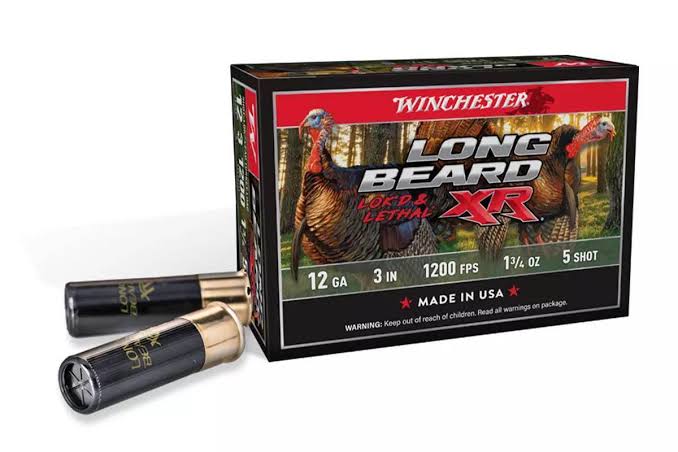
5. Best Traditional Lead Load: Winchester Long Beard XR
Winchester Long Beard XR remains a leading option for hunters who prefer a conventional lead payload or do not need TSS.
Winchester uses its Shot-Lok system to protect the lead pellets during ignition. The manufacturer claims denser patterns than conventional lead turkey loads, but every hunter must confirm those claims through personal pattern testing.
Why It Stands Out
- Does not require premium tungsten material.
- Available in familiar lead shot sizes.
- Purpose-built pellet-protection system.
- Widely recognized among traditional turkey-load choices.
Limitations
- Lead is prohibited on some public properties and refuges.
- Lower material density produces fewer pellets than comparable small-shot TSS payloads.
- Tight patterns may still require a more open choke at close distances.
- Manufacturer extended-range claims should not determine a hunter’s personal limit.
6. Best Mixed Payload for Variable Distances: Federal 3rd Degree
Federal 3rd Degree with Heavyweight TSS is designed differently from a conventional uniformly tight turkey load.
Its three-part payload includes No. 5 copper-plated lead, No. 6 FLITESTOPPER lead, and No. 7 Heavyweight TSS. Federal explains that the different pellets separate at different rates, producing a wider close-range portion and a denser central pattern farther away. Current configurations include 12- and 20-gauge loads.
Why It Stands Out
- Designed to reduce the close-range limitations of extremely tight patterns.
- Combines larger lead pellets with smaller TSS pellets.
- Available for 12- and 20-gauge shotguns.
- May suit hunters encountering turkeys at varied but verified distances.
Limitations
- Contains lead and is unsuitable where only nontoxic shot is permitted.
- Its complex pattern must be evaluated at several distances.
- Hunters cannot assume the three zones appear identically through every choke.
7. Best Mid-Density Tungsten Option: Remington Final Strut HD
Remington Final Strut HD is a new-for-2026 turkey line using 12 g/cc tungsten-blended shot.
Current configurations include 3-inch 12-gauge loads with 2-ounce payloads and 3-inch 20-gauge loads with 1 1/4-ounce payloads. No. 6 and No. 7 shot options are listed.
Why It Stands Out
- Uses denser-than-lead tungsten-blended shot.
- Provides No. 6 and No. 7 options.
- Available for both 12- and 20-gauge hunters.
- Occupies a middle ground between lead and full-density TSS.
Limitations
- Limited to two gauges in the current lineup.
- New product with limited long-term history.
- Two-ounce 12-gauge payloads may generate significant recoil.
- Availability should be confirmed before the season.
8. Best Straightforward Factory TSS Alternative: Remington Premier TSS
Remington Premier TSS is Remington’s full-density tungsten-super-shot turkey line.
Remington lists 18 g/cc tungsten in current 12-gauge, 20-gauge, and .410-bore configurations. Its focused lineup makes it easier to understand than product families containing numerous blends and specialty payloads.
Why It Stands Out
- Full-density TSS construction.
- Covers the three most common modern turkey-gun sizes.
- Straightforward single-material payload.
- Suitable for hunters who do not want a duplex load.
Limitations
- Does not currently provide the same gauge breadth as some competitors.
- Dense patterns may be too tight through certain choke combinations.
- Premium material increases ammunition cost.
9. Best Four-Gauge Factory TSS Alternative: Fiocchi Golden Turkey TSS
Fiocchi Golden Turkey TSS is offered in 12, 20, and 28 gauge and .410 bore.
Fiocchi states that the line uses 18 g/cc tungsten super shot. The broad gauge selection makes it relevant to families or hunting groups using several shotgun sizes.
Why It Stands Out
- Available for four popular turkey-gun sizes.
- Uses full-density TSS.
- Provides a factory option for 28 gauge and .410 bore.
- Simple product naming makes gauge comparison easier.
Limitations
- Local availability can vary.
- Specific load details must be checked before ordering or patterning.
- Small TSS shot may face local size restrictions.
10. Best Factory Duplex TSS Alternative: Browning TSS Tungsten Turkey
Browning TSS Tungsten Turkey uses buffered TSS payloads, including duplex configurations that mix pellet sizes.
Browning currently lists 12- and 20-gauge options and .410-bore loads. Its duplex choices are intended to combine the pellet count of smaller shot with the individual pellet energy of larger shot.
Why It Stands Out
- Factory-loaded TSS duplex options.
- Available for 12 gauge, 20 gauge, and .410 bore.
- Buffered payload is intended to support consistent patterns.
- Useful alternative to single-size No. 9 TSS loads.
Limitations
- Duplex designs do not eliminate the need to pattern.
- Limited current support for 28-gauge users.
- Manufacturer distance claims should not replace personal testing.
Which Load Type Fits Your Hunting Setup?
| Hunter or Setup | Practical Starting Point | Why | What to Verify |
|---|---|---|---|
| New 12-gauge hunter | Lead No. 5 or No. 6 turkey load | Simpler and generally less costly to pattern repeatedly | Recoil, lead legality, and pattern consistency |
| Recoil-sensitive hunter | 20-gauge TSS or moderate lead load | May provide useful patterns without the weight of a large 12-gauge payload | Actual recoil, shotgun fit, and legal shot size |
| 28-gauge hunter | Purpose-built TSS load | Small dense pellets increase pellet count in limited payload space | Chamber length, choke approval, and legal size |
| .410-bore hunter | Manufacturer-approved TSS turkey load | Traditional lead payloads offer limited pellet count in a .410 shell | .410 legality, minimum age rules, and verified pattern |
| Close-cover setup | More open pattern or mixed-payload load | Reduces the risk of an extremely small close-range pattern | Pattern at the closest realistic distance |
| Nontoxic-only property | Approved tungsten, TSS, bismuth, or other permitted material | Lead possession may be prohibited | Property-specific approved-shot list |
What Shot Size Is Best for Turkey Hunting?
No shot size is universally best. The selection depends on pellet material, gauge, payload, choke, expected distance, and local law.
Lead No. 4
No. 4 lead provides relatively large pellets but fewer pellets per ounce. It can leave larger gaps in a pattern than smaller shot, especially in lighter payloads.
Lead No. 5
No. 5 lead is a common compromise between pellet count and individual pellet size. It remains a reasonable starting point where lead and No. 5 shot are legal.
Lead No. 6
No. 6 lead provides more pellets than No. 4 or No. 5. Its pattern may be denser, but each pellet is smaller.
TSS No. 7 to No. 10
Because TSS is substantially denser than lead, manufacturers use smaller sizes while maintaining useful pellet energy. No. 9 is especially common, while duplex products may use combinations such as No. 7 and No. 9 or No. 9 and No. 10.
Do not assume that all small TSS is legal. Indiana, for example, specifically addresses TSS No. 8, No. 9, and No. 10, while other states use different limits.
Gauge and Shell-Length Considerations
12 Gauge
The 12 gauge offers the broadest ammunition selection. Heavy 3-inch and 3 1/2-inch loads can produce substantial recoil, and the longest shell is not automatically the best choice.
20 Gauge
The 20 gauge offers numerous lead, blended-tungsten, and full-TSS loads. A properly fitted 20-gauge shotgun can be easier to carry, but light shotgun weight may offset some of the expected recoil reduction.
28 Gauge
Modern TSS has made the 28 gauge a practical turkey option where regulations allow it. The smaller payload means choke and ammunition selection must be confirmed carefully.
.410 Bore
A .410 bore should be used only with a purpose-built legal turkey load that has been patterned through the exact shotgun and choke. Some jurisdictions still prohibit .410 bore for turkeys, while others specifically permit it with TSS. NWTF testing has demonstrated that suitable .410 TSS loads can produce effective patterns, but this does not make every .410 shotgun, choke, or load appropriate.
Shell Length
Use only the shell lengths marked on the shotgun barrel and permitted by the firearm manual. A shotgun with a 3-inch chamber must never be loaded with a 3 1/2-inch shell.
Longer shells typically allow heavier payloads, but they can also produce more recoil, cost more, and create no practical benefit when a shorter load already patterns well.
How to Pattern Turkey Loads Safely
Patterning is the process of firing the shotgun at a large paper target to examine where the pellets strike and how evenly they are distributed. The National Wild Turkey Federation identifies patterning as essential for evaluating the shotgun, choke, and ammunition as a complete system.
- Confirm the shotgun is in safe working condition. Follow the firearm manual and use only compatible shells and chokes.
- Use an authorized range and safe backstop. Wear eye and hearing protection.
- Begin with a large blank target. Confirm the shotgun’s point of impact before using a turkey-head target.
- Shoot from a stable rest. Keep the shotgun supported without placing the barrel directly on a hard object.
- Test close distance first. Learn how small the pattern is before moving farther away.
- Test several realistic distances. NWTF guidance commonly recommends checking approximately 20, 30, and 40 yards rather than testing only at the farthest distance.
- Fire more than one shell when possible. One target cannot show whether the load is repeatable.
- Evaluate point of impact and pattern distribution. A dense pattern in the wrong place is not acceptable.
- Record the results. Note the shotgun, choke, shell, shot size, distance, and conditions.
- Set a personal maximum distance. Stop where the pattern no longer provides a consistent ethical margin.
Choke Compatibility
Do not select a choke from the word “turkey” alone. Constriction, internal geometry, wad design, barrel dimensions, shot hardness, and payload all affect the result.
- Follow the shotgun and choke manufacturers’ instructions.
- Confirm that the choke is approved for the selected shot material.
- Do not assume the tightest choke produces the best pattern.
- Do not fire a damaged, swollen, loose, or incorrectly threaded choke.
- Check choke security according to the manufacturer’s directions.
- Stop firing if extraction, pressure signs, sound, or recoil feels abnormal.
Some specialized wads perform differently through ported and nonported chokes. Federal specifically states that FLITECONTROL FLEX is designed for both types, but that statement does not apply automatically to every wad or load.
Recoil Matters More Than Maximum Payload
A heavy turkey shell can produce uncomfortable recoil, particularly from a light shotgun or awkward seated position. Excessive recoil can encourage flinching, reduce practice, and make accurate shooting less consistent.
To manage recoil responsibly:
- Use a shotgun that fits correctly.
- Start patterning with lower-recoil target ammunition to confirm basic point of impact.
- Use the full turkey load only as needed for final testing.
- Wear suitable hearing and eye protection.
- Use a stable shooting position.
- Take breaks between heavy shells.
- Consider a lighter legal payload rather than automatically selecting a magnum shell.
- Seek help from a qualified shotgun fitter or instructor when recoil remains difficult.
Common Turkey-Load Mistakes
Buying Ammunition Before Reading the Shotgun Barrel
Gauge and chamber length must match exactly. Similar-looking shells are not interchangeable.
Assuming the Most Expensive Load Is Automatically Best
A premium load that shoots poorly through the selected shotgun is less useful than a simpler load that patterns evenly and reliably.
Patterning Only at Long Distance
Very tight turkey combinations may create an unexpectedly small pattern at close range. Test the distances that could realistically occur.
Changing the Choke After Patterning
A different choke creates a different system. Pattern again whenever the choke, shell, sight, or barrel changes.
Using the Manufacturer’s Advertised Range as a Personal Limit
Marketing claims describe controlled product performance, not your ability, hunting position, weather, or target identification.
Ignoring Point of Impact
A tight, centered-looking cluster can still strike above, below, or beside the point of aim.
Selecting a Heavy Shell for a Small or Recoil-Sensitive Hunter
Excessive recoil can reduce confidence and accuracy. Fit and controllability matter more than payload size.
Assuming Lead Is Legal Everywhere
Some refuges, public areas, and state-managed properties require approved nontoxic shot for turkey hunting.
Using Small TSS Without Checking Shot-Size Rules
No. 9 or No. 10 TSS is legal in some jurisdictions but not all.
Mixing Shells in the Field
Carry only ammunition compatible with the shotgun and legal for the hunt. Avoid confusing turkey shells with unsuitable field or target loads.
Troubleshooting Turkey-Load Problems
| Problem | Possible Causes | What to Check | Safer Next Step |
|---|---|---|---|
| Pattern strikes away from the aiming point | Stock fit, sight alignment, barrel regulation, optic zero | Point of impact with a large target | Stop hunting until the sighting system is corrected |
| Pattern has large gaps | Load-choke mismatch, damaged pellets, inconsistent point of aim | Several targets with the same setup | Try another manufacturer-approved choke or load |
| Pattern is excessively tight close up | Very dense TSS load and tight choke | Targets at close realistic distances | Test a more open approved choke or broader-pattern load |
| Recoil is uncomfortable | Heavy payload, poor fit, light shotgun, unstable position | Stock fit and selected shell | Use a more manageable legal load and obtain instruction |
| Shell will not chamber | Wrong gauge, excessive shell length, damaged shell, chamber problem | Barrel markings and ammunition box | Do not force it; unload and seek qualified inspection |
| Action does not cycle reliably | Load characteristics, maintenance, firearm fault | Manual and approved ammunition list | Stop using the combination and contact the manufacturer |
| Choke loosens during patterning | Improper installation, damaged threads, incorrect tube | Choke and barrel threads | Stop firing and consult a qualified professional |
| Two boxes with the same name perform differently | Different shot size, payload, shell length, or product code | Complete box labels and lot information | Pattern the exact variation intended for hunting |
| Small TSS load is legally uncertain | State rule distinguishes lead and tungsten sizes | Official current regulation text | Contact the wildlife agency before hunting |
| Ammunition became wet or damaged | Poor storage or field exposure | Hull, primer, crimp, and manufacturer guidance | Do not use questionable ammunition |
What Not to Do
- Do not load ammunition that does not match the shotgun’s gauge and chamber.
- Do not force a shell into the chamber.
- Do not use an unapproved or damaged choke tube.
- Do not hunt with a load you have never patterned.
- Do not rely on the shotgun’s mechanical safety instead of safe handling.
- Do not shoot at turkey sounds, movement, or incomplete identification.
- Do not use lead or prohibited shot where nontoxic ammunition is required.
- Do not assume small TSS shot is universally legal.
- Do not use manufacturer range claims as permission for a low-confidence shot.
- Do not continue shooting when recoil causes pain, flinching, or poor control.
- Do not use wet, corroded, dented, or otherwise damaged shells.
- Do not leave ammunition accessible to children or unauthorized users.
Ammunition Care and Storage
- Store ammunition in its original labeled packaging.
- Keep it in a cool, dry location.
- Protect it from moisture, oil, solvents, and extreme heat.
- Keep different gauges and shell lengths separated.
- Control access according to household circumstances and local law.
- Inspect shells before loading.
- Do not use shells with corrosion, damaged crimps, swollen hulls, or loose components.
- Follow manufacturer guidance for disposal of questionable ammunition.
- Record the product code and lot number of the load used for patterning.
Final Answer
So, what are the best turkey loads? Federal Premium Heavyweight TSS is the strongest overall family for hunters seeking full-density tungsten across several gauges and shot-size configurations. Its main limitation is that it is expensive to pattern and may produce an extremely tight close-range pattern.
Winchester Long Beard XR is the leading traditional lead alternative where lead is permitted. Federal 3rd Degree is useful for hunters wanting a mixed payload designed around varied pattern behavior, while Remington Final Strut HD provides a current mid-density tungsten option.
Sub-gauge hunters should compare HEVI-18, Fiocchi Golden Turkey TSS, Winchester Long Beard Tungsten, Remington Premier TSS, APEX Greenleaf, and the relevant Federal Heavyweight TSS configurations. The final choice must be made on the patterning range—not from the brand name, pellet density, shell length, or box claims alone.
FAQs
1. What is the best turkey load overall?
Federal Heavyweight TSS is a strong overall family because it offers several gauges and payload configurations. The best individual shell is still the legal load that patterns most consistently through your shotgun.
2. Is TSS better than lead for turkey hunting?
TSS is substantially denser and allows more small pellets in the payload. Lead remains effective where legal and may be easier to afford for repeated pattern testing.
3. Is tungsten the same as TSS?
No. TSS is a high-density tungsten alloy, normally around 18 g/cc. Other tungsten or tungsten-blend products may use lower-density materials.
4. What does 18 g/cc mean?
It describes the approximate density of the pellet material in grams per cubic centimeter. Greater density allows a smaller pellet to retain more mass than a same-size pellet made from a lighter material.
5. What is a duplex turkey load?
A duplex load combines two pellet sizes or materials. The manufacturer normally uses the combination to balance pellet count, energy, and pattern characteristics.
6. What is the best lead turkey load?
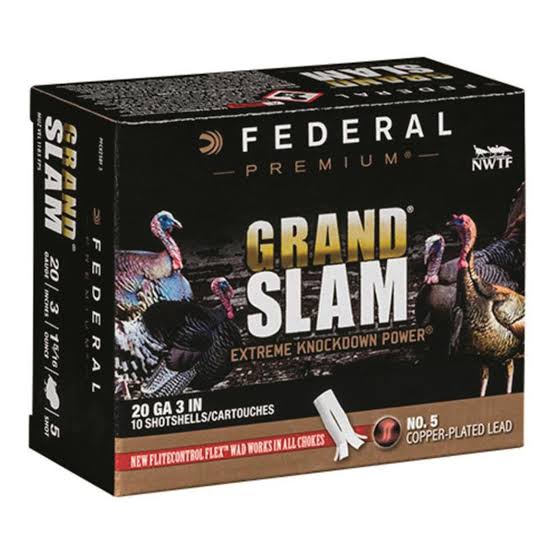
Winchester Long Beard XR is a leading current lead choice. Federal Grand Slam, Fiocchi Golden Turkey, and Remington lead turkey loads are also worth patterning where legal.
7. What shot size is best for lead turkey loads?
No. 5 is a common starting point because it balances pellet size and pellet count. No. 4 and No. 6 may perform better through particular shotguns.
8. What shot size is best for TSS?
No. 9 TSS is widely used, while No. 7, No. 8, No. 9 1/2, and No. 10 appear in current products. Local regulations and pattern testing determine which is appropriate.
9. Is No. 10 TSS legal?
It is legal in some jurisdictions and prohibited in others. Check the exact state, provincial, and property-specific rules.
10. Can I use No. 9 lead for turkey hunting?
It is generally not comparable to No. 9 TSS because lead is much less dense. It may also be outside the legal lead-shot-size range in many jurisdictions.
11. What is the best 12-gauge turkey load?
Pattern a 3-inch Heavyweight TSS, HEVI-18, Long Beard Tungsten, or Long Beard XR configuration. A 3 1/2-inch shell is unnecessary when the 3-inch load already performs consistently.
12. What is the best 20-gauge turkey load?
Current 20-gauge TSS options from Federal, HEVI-Shot, Remington, Fiocchi, APEX, Winchester, and Browning provide strong starting points. Recoil and shotgun fit remain important.
13. What is the best 28-gauge turkey load?
A purpose-built TSS or high-density tungsten load is generally the most practical choice. Federal, HEVI-Shot, Fiocchi, Winchester, and APEX currently provide 28-gauge options.
14. What is the best .410 turkey load?
A manufacturer-approved 3-inch TSS turkey load is the normal starting point where .410 bore is legal. It must be patterned through the exact shotgun and choke.
15. Can a .410 bore ethically take a turkey?
Suitable .410 TSS combinations can produce useful patterns, but legality, shotgun fit, pattern consistency, and personal distance limits must all be verified.
16. Is a 3 1/2-inch shell better than a 3-inch shell?
Not automatically. It normally holds a heavier payload and creates more recoil. A 3-inch shell may pattern better through the selected shotgun.
17. Can I shoot a 3 1/2-inch shell in a 3-inch chamber?
No. Use only shell lengths marked for the shotgun’s chamber.
18. Does a faster turkey load work better?
Velocity is only one factor. Pellet material, pattern quality, payload, recoil, and reliable function can matter more than a small velocity difference.
19. Does a heavier payload always pattern better?
No. More pellets can improve density, but wad behavior, choke geometry, pellet deformation, and point of impact also affect the result.
20. What choke should I use with TSS?
Use a choke approved by the shotgun, choke, and ammunition manufacturers. Do not assume the tightest available constriction is best.
21. Can TSS damage a choke?
Commercial TSS loads normally use protective wads, but the choke must still be approved for the load and installed correctly. Follow all manufacturer instructions.
22. Can I shoot TSS through a factory full choke?
Possibly, when the firearm and ammunition manufacturers permit it. Pattern it before hunting and do not assume that a specialized extra-full tube is required.
23. Can I use a ported choke with TSS?
Some loads are specifically designed for ported chokes, while others may not perform well. Check the ammunition and choke guidance.
24. Why is my turkey pattern too tight?
The combination may use high-pellet-count TSS and an excessively tight choke. Test a more open approved choke or a load designed for broader close-range coverage.
25. Why does my shotgun shoot high?
Possible causes include stock fit, bead alignment, optic zero, or barrel point of impact. Confirm it on a large target before hunting.
26. Why do two turkey loads pattern differently?
They may use different wads, pellet hardness, buffering, payloads, velocities, or shot sizes. Small manufacturing and shotgun differences also affect patterns.
27. How many turkey loads should I test?
Begin with two or three legal, compatible options rather than buying every load. Test enough shells to judge repeatability.
28. How far should I pattern a turkey shotgun?
Test the close, middle, and farther distances realistically expected in the field. Approximately 20, 30, and 40 yards is a useful starting sequence.
29. Is 40 yards the standard turkey distance?
It is a common pattern-testing benchmark, not an automatic ethical limit. Some setups fail before that distance, while others pattern farther than a hunter should responsibly shoot.
30. How many pellets should be in a turkey pattern?
Pellet-count standards are only guidelines. Evaluate point of impact, even distribution, central density, and repeatability rather than relying on one number alone.
31. Should I pattern with every shell in the box?
That is usually unnecessary. Fire enough to confirm repeatability while balancing recoil, ammunition cost, and barrel heating.
32. Can I zero with target loads first?
Target loads can help identify a major point-of-impact problem with less recoil, but the final pattern and sight adjustment must be confirmed with the hunting load.
33. Should I clean the barrel between turkey loads?
Follow the firearm manufacturer’s maintenance guidance. Barrel fouling can influence patterns, so use a consistent condition when comparing loads.
34. Is lead turkey ammunition legal on public land?
It depends on the property. Some public areas permit it, while certain refuges and state lands require approved nontoxic shot.
35. Is steel shot good for turkey hunting?
Specialized steel or steel-blend turkey loads exist, but steel is much less dense than lead or tungsten. Use only a purpose-built legal load that patterns adequately.
36. Is bismuth suitable for turkey hunting?
Purpose-built bismuth turkey loads can be useful where lead is prohibited. They should be evaluated through the exact shotgun and choke like any other load.
37. Are turkey loads safe in older shotguns?
Only when the firearm manufacturer or a qualified gunsmith confirms the gauge, chamber length, pressure level, choke, barrel condition, and shot-material compatibility.
38. Why will my semiautomatic not cycle a turkey load?
Possible causes include firearm condition, maintenance, ammunition configuration, or a mechanical problem. Stop using the combination and consult the manual or manufacturer.
39. How should turkey ammunition be stored?
Keep it in original packaging in a cool, dry, access-controlled location away from oil, solvents, heat, moisture, and unauthorized users.
40. What is the most important turkey-load advice?
Verify legality and compatibility, then pattern the exact shotgun, choke, sight, and shell combination at realistic distances before hunting.
Read more: