
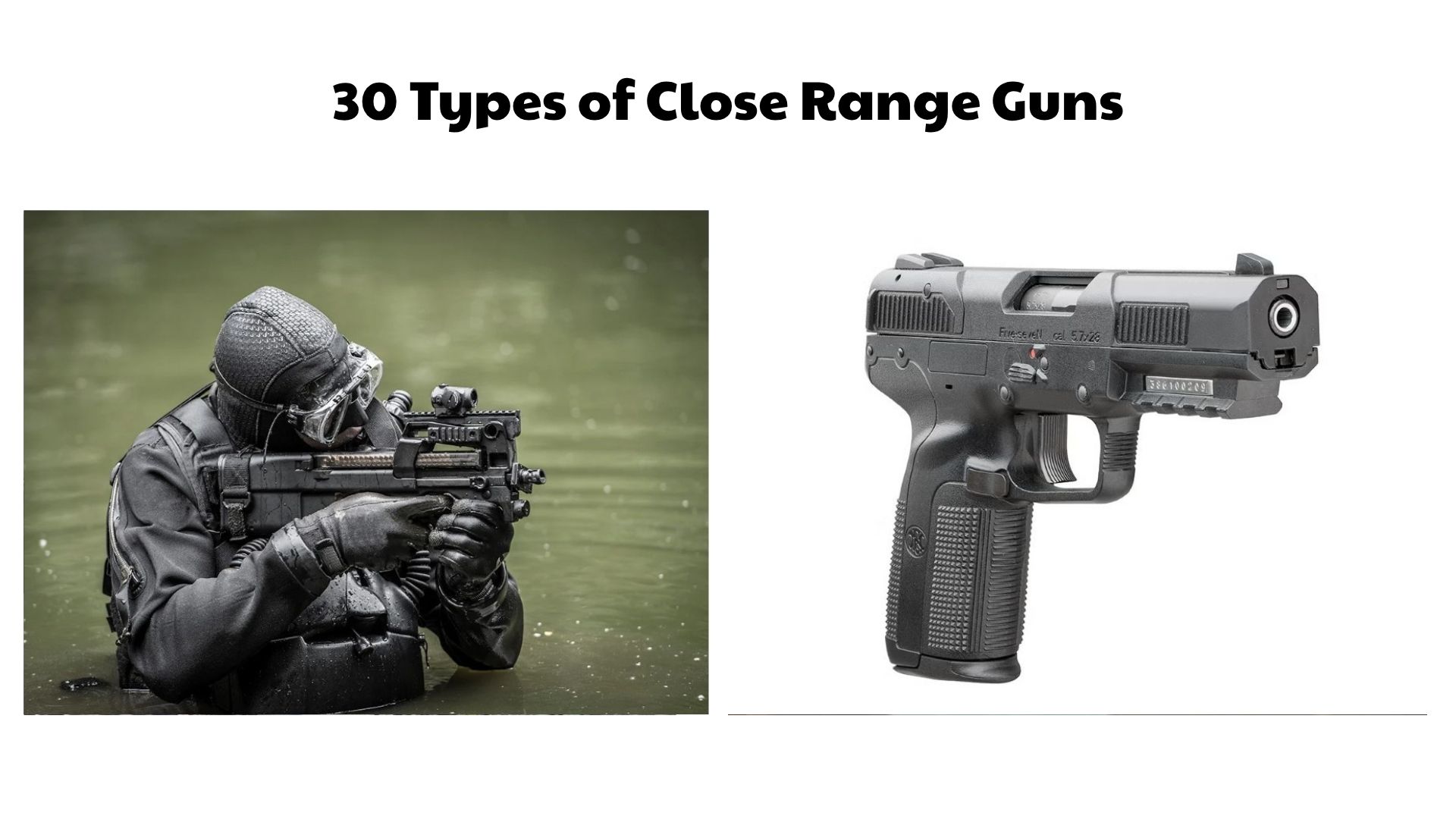

Close range combat weapons are designed for environments where speed, maneuverability, and control matter more than raw distance. Whether used in military operations, law enforcement, or personal defense scenarios, these firearms excel in tight spaces such as buildings, urban streets, or confined interiors. In this guide, we explore 30 types of close range guns, focusing on their design, strengths, and practical roles. Each firearm listed here is known for reliability and effectiveness at short distances, typically under 50 meters. If you are looking to understand how different close range guns perform and why they are chosen in high-pressure situations, this article provides a clear and structured overview.
30 Types of Close Range Guns
1. KRISS Vector
The KRISS Vector is one of the most recognizable close range guns thanks to its unconventional design and advanced recoil mitigation system. Unlike traditional submachine guns, the Vector uses a delayed blowback mechanism that redirects recoil downward, reducing muzzle climb significantly. This makes it highly controllable during rapid fire, which is a critical advantage in close quarters combat where split-second accuracy can make a difference.
In practical use, the KRISS Vector excels in environments such as indoor operations, hallways, and urban settings. Its compact frame allows users to maneuver easily around corners or through tight spaces without sacrificing firepower. The weapon is commonly chambered in .45 ACP, offering strong stopping power at short distances. This combination of control and power makes it a preferred choice for specialized units.
Another advantage of the Vector is its modularity. It supports various attachments, including suppressors, optics, and tactical lights, allowing users to customize it for specific missions. While it may not be designed for long-range engagements, its performance within 50 meters is exceptional, making it a standout example among types of close range guns.
2. Heckler & Koch MP7
The Heckler & Koch MP7 is a personal defense weapon developed to bridge the gap between pistols and rifles. It is compact, lightweight, and chambered in a high-velocity cartridge designed to penetrate body armor, which gives it a unique role in close range combat scenarios. Its small size allows it to be carried easily, even by personnel who are not primarily combat-focused.
One of the defining features of the MP7 is its controllability. Despite its high rate of fire, the weapon remains stable due to its ergonomic design and balanced weight distribution. This makes it suitable for rapid engagements where multiple targets may need to be addressed quickly. The folding foregrip and retractable stock further enhance its adaptability in confined spaces.
In operational settings, the MP7 is often used by security forces and special operations units. It provides more firepower than a handgun while remaining more compact than a traditional rifle. This balance is what places it firmly among the most effective close range guns available today.
3. Heckler & Koch MP5
The MP5 is widely regarded as one of the most iconic submachine guns ever produced. Developed in the 1960s, it has remained in service for decades due to its reliability and precision. The weapon uses a roller-delayed blowback system, which contributes to its smooth operation and manageable recoil.
What sets the MP5 apart is its accuracy. Even in fully automatic mode, the weapon maintains tight groupings at close range, making it highly effective in tactical situations. Its 9mm chambering ensures manageable recoil while still delivering adequate stopping power. This makes it suitable for both military and law enforcement applications.
The MP5 has been used in countless operations around the world, often in hostage rescue and counter-terrorism missions. Its proven track record and consistent performance have solidified its reputation as one of the most reliable types of close range guns ever created.
4. UMP-45
The UMP-45 is another creation from Heckler & Koch, designed as a more modern and cost-effective alternative to the MP5. It features a simpler blowback system and is constructed using lightweight polymer materials, making it both durable and easy to handle.
Chambered in .45 ACP, the UMP-45 delivers strong stopping power at close range. This makes it particularly effective in situations where immediate incapacitation is necessary. Despite its larger caliber, the weapon remains controllable due to its ergonomic design and relatively low rate of fire.
The UMP-45 is often chosen for its balance between power and practicality. It may not have the same legacy as the MP5, but it offers modern features and reliability that make it a valuable option among close range guns.
5. PP-19 Bizon
The PP-19 Bizon stands out due to its distinctive helical magazine, which is mounted under the barrel. This design allows for a high ammunition capacity without significantly increasing the weapon’s size. For close range engagements, having more rounds available can be a decisive advantage.
Based on the AK platform, the Bizon inherits a reputation for reliability. It performs well in various conditions, including harsh environments where other firearms might struggle. Its simple design also makes it easy to maintain and operate.
While it may not be as widely used as some Western counterparts, the PP-19 Bizon remains a unique and effective example of types of close range guns. Its combination of high capacity and rugged performance makes it particularly suited for sustained engagements in confined spaces.
6. CZ Scorpion EVO 3
The CZ Scorpion EVO 3 is a modern submachine gun that has quickly gained recognition among professionals and civilian enthusiasts for its simplicity, reliability, and adaptability in close quarters environments. Designed with a polymer frame and a straightforward blowback system, it emphasizes durability while keeping maintenance requirements low, which is especially valuable in high-stress situations where equipment must function without hesitation. Its compact size and balanced weight distribution make it easy to maneuver through tight corridors, stairwells, and confined indoor spaces, where larger rifles may become cumbersome.
One of the defining characteristics of the Scorpion EVO 3 is its user-friendly ergonomics. Controls are ambidextrous, allowing both left- and right-handed users to operate the firearm comfortably without adjusting their grip. The weapon also features a folding or collapsible stock, which enhances portability and makes it suitable for rapid deployment scenarios. In close range combat, the ability to quickly shoulder the weapon and acquire a target can significantly impact performance, and the Scorpion excels in this regard.
In terms of performance, the CZ Scorpion EVO 3 offers consistent accuracy and manageable recoil, even during rapid fire. Chambered in 9mm, it strikes a balance between controllability and sufficient stopping power, making it a practical choice for law enforcement and personal defense roles. Its modular rail system allows users to attach optics, lights, and foregrips, tailoring the firearm to specific operational needs. Among the many types of close range guns available today, the Scorpion EVO 3 stands out as a dependable and versatile option that prioritizes function over complexity.
Another aspect worth noting is the weapon’s growing popularity across various sectors. From tactical teams to civilian shooters, its reputation continues to expand due to its affordability and performance. While it may not have the historical legacy of older platforms, it represents a modern evolution of the submachine gun concept, combining proven design principles with contemporary enhancements. This makes it a strong contender in any discussion about effective close range guns.
7. MP9
The MP9 is a compact machine pistol that exemplifies portability and rapid-fire capability in close range combat scenarios. Developed as an evolution of earlier designs, it focuses on delivering high rates of fire within a lightweight and easily concealable package. This makes it particularly useful for specialized units that require a balance between firepower and mobility, especially in environments where space is limited.
One of the key advantages of the MP9 is its extremely compact design. With a folding stock and minimal overall length, it can be deployed quickly from a concealed position or carried comfortably for extended periods. This level of portability does not come at the expense of performance, as the weapon is capable of delivering sustained automatic fire when needed. In close quarters, where engagements are often brief and intense, this capability can provide a decisive edge.
Despite its small size, the MP9 is designed with user control in mind. The inclusion of a foregrip helps stabilize the weapon during firing, reducing muzzle rise and improving accuracy. Chambered in 9mm, it offers manageable recoil, allowing users to maintain control even during rapid bursts. This combination of speed and control is essential for effective use in confined environments.
The MP9 also supports various attachments, including suppressors and optics, enhancing its versatility. While it may not replace larger firearms in all scenarios, it fills a specific niche within the broader category of types of close range guns. Its compact form and rapid-fire capability make it particularly suited for close protection roles and specialized tactical operations.
8. PP2000
The PP2000 is a Russian-designed submachine gun known for its compact structure and innovative approach to portability. Built with simplicity and efficiency in mind, it is designed to perform reliably in close quarters combat situations where speed and maneuverability are essential. Its lightweight construction allows users to handle the weapon comfortably, even during extended operations.
A notable feature of the PP2000 is its unique magazine system, which can double as a stock when inserted into the rear of the weapon. This design reduces the need for additional components, making the firearm more streamlined and easier to carry. In close range engagements, this simplicity can translate into faster deployment and reduced risk of mechanical complications.
Performance-wise, the PP2000 delivers consistent results within its intended range. Chambered in 9mm, it offers a balance between recoil control and stopping power, making it suitable for both military and law enforcement applications. Its compact dimensions allow users to navigate tight spaces with ease, which is a critical factor in urban combat scenarios.
While it may not be as widely recognized as some Western counterparts, the PP2000 remains an effective example of types of close range guns. Its emphasis on practicality and reliability ensures that it continues to serve as a valuable tool in situations where efficiency and simplicity are paramount.
9. Spectre M4
The Spectre M4 is an Italian submachine gun that stands out for its high-capacity magazine system and compact design. Developed with close quarters combat in mind, it offers a unique combination of firepower and portability. Its four-column magazine allows for a higher ammunition capacity without significantly increasing the weapon’s size, which can be advantageous during prolonged engagements.
In terms of handling, the Spectre M4 is designed to be intuitive and easy to operate. Its controls are straightforward, allowing users to focus on target acquisition and engagement rather than complex mechanical processes. This simplicity is particularly valuable in high-pressure situations where quick decision-making is required.
The weapon’s performance at close range is consistent and reliable. Chambered in 9mm, it provides manageable recoil, enabling users to maintain accuracy during rapid fire. Its compact frame allows for easy maneuvering in confined spaces, making it suitable for urban operations and indoor scenarios.
Although it is less common than some other submachine guns, the Spectre M4 remains a noteworthy entry among types of close range guns. Its distinctive magazine design and practical performance characteristics make it an interesting option for those seeking a balance between capacity and control.
10. Beretta PM12
The Beretta PM12 is a classic submachine gun that has been widely used by military and law enforcement agencies for decades. Known for its reliability and straightforward design, it has proven itself in a variety of operational environments. Its compact size and balanced construction make it well-suited for close range engagements.
One of the strengths of the PM12 is its durability. Built to withstand harsh conditions, it continues to function reliably even when exposed to dirt, dust, and other environmental challenges. This level of resilience is essential for close quarters combat, where equipment failure is not an option.
In terms of performance, the PM12 offers controlled automatic fire and consistent accuracy within its effective range. Chambered in 9mm, it provides sufficient stopping power while remaining easy to handle. Its ergonomic design allows users to maintain a stable grip, which contributes to improved control during firing.
The Beretta PM12 may not feature the advanced modularity of newer firearms, but its proven track record ensures its continued relevance. Among the many types of close range guns, it represents a reliable and time-tested option that prioritizes function and dependability.
11. FN P90
The FN P90 is a distinctive personal defense weapon known for its futuristic design and innovative features. Its bullpup configuration allows for a compact overall length while maintaining a longer barrel, which enhances performance without sacrificing maneuverability. This makes it particularly effective in close quarters environments.
One of the most notable aspects of the P90 is its top-mounted magazine, which holds a high number of rounds in a compact format. This design not only increases capacity but also contributes to the weapon’s balanced weight distribution. In close range combat, having additional ammunition readily available can be a significant advantage.
The P90 is chambered in a specialized cartridge designed to penetrate body armor, setting it apart from traditional submachine guns. This capability makes it a valuable tool for military and security forces operating in high-risk environments. Despite its advanced features, the weapon remains easy to control, thanks to its ergonomic design.
As one of the most recognizable types of close range guns, the FN P90 combines innovation with practicality. Its unique design and performance characteristics ensure its continued use in specialized roles where compactness and firepower are equally important.
12. Knight’s Armament PDW
The Knight’s Armament PDW represents a modern approach to personal defense weapons, combining compact dimensions with rifle-like performance. Designed for close range engagements, it offers enhanced ballistic capabilities compared to traditional submachine guns, making it suitable for a variety of tactical scenarios.
Its compact design allows for easy handling in confined spaces, while its advanced engineering ensures reliable operation. The weapon is built with precision, reflecting the manufacturer’s focus on quality and performance. This attention to detail contributes to its effectiveness in demanding environments.
In use, the Knight’s Armament PDW provides a balance between power and control. Its design allows users to engage targets quickly and accurately, which is essential in close quarters combat. The inclusion of modern features such as accessory rails further enhances its versatility.
Among the many types of close range guns, this PDW stands out for its combination of compactness and advanced performance. It reflects the ongoing evolution of firearms designed for close range applications.
13. LWRC M6 PSD
The LWRC M6 PSD is a compact rifle designed specifically for close quarters combat. Its short barrel and lightweight construction make it easy to maneuver, while its robust design ensures reliable performance in various conditions. This combination makes it a practical choice for tactical operations.
One of the key advantages of the M6 PSD is its adaptability. It supports a wide range of attachments, allowing users to customize the weapon for specific missions. This flexibility is particularly valuable in dynamic environments where requirements can change rapidly.
Performance-wise, the M6 PSD offers consistent accuracy and manageable recoil, even during rapid fire. Its design allows users to maintain control while engaging targets at close range, which is essential for effective operation in confined spaces.
As part of the broader category of types of close range guns, the LWRC M6 PSD demonstrates how modern engineering can enhance traditional firearm concepts. Its combination of compactness, reliability, and adaptability makes it a strong contender in this field.
14. ST Kinetics CPW
The ST Kinetics CPW is a compact personal defense weapon designed for urban combat and close protection roles. Its lightweight construction and streamlined design make it easy to carry and deploy, which is crucial in fast-paced environments.
A notable feature of the CPW is its focus on ergonomics. The weapon is designed to be intuitive to use, allowing operators to quickly adapt to its controls. This ease of use is particularly important in high-pressure situations where efficiency is key.
In terms of performance, the CPW delivers reliable results at close range. Its design emphasizes control and accuracy, enabling users to engage targets effectively in confined spaces. The inclusion of modern features such as accessory rails enhances its versatility.
While it may not be as widely known as some other firearms, the ST Kinetics CPW remains a practical example of types of close range guns. Its emphasis on simplicity and efficiency ensures its relevance in specialized roles.
15. Honey Badger PDW
The Honey Badger PDW is a compact firearm designed for suppressed operations and close quarters combat. Its short barrel and integrated suppressor make it particularly suited for scenarios where noise reduction is important. This feature allows for discreet engagement without compromising effectiveness.
The weapon’s design prioritizes maneuverability and ease of use. Its lightweight construction and compact dimensions make it ideal for navigating tight spaces, while its ergonomic layout ensures comfortable handling. These qualities are essential for close range engagements.
In terms of performance, the Honey Badger offers a balance between power and control. Its design allows for accurate and consistent firing, even in rapid succession. This makes it a reliable choice for tactical operations where precision is required.
Among the various types of close range guns, the Honey Badger PDW stands out for its specialized design and practical performance. It represents a modern approach to close quarters combat, combining innovation with functionality.
16. Benelli M4 Tactical
The Benelli M4 Tactical is widely regarded as one of the most reliable semi-automatic shotguns designed specifically for close range combat. Originally developed for military use, it incorporates a gas-operated system that ensures consistent cycling even under harsh conditions. This reliability is one of the primary reasons why it has been adopted by elite forces around the world, particularly in environments where failure is not an option. In close quarters scenarios, such as building clearing or confined tactical operations, the ability to depend on a firearm without hesitation is critical, and the Benelli M4 consistently delivers in this regard.
What makes the Benelli M4 Tactical particularly effective among types of close range guns is its balance between power and control. Chambered in 12 gauge, it provides significant stopping power, capable of neutralizing threats at very short distances with minimal delay. At the same time, its semi-automatic action reduces the need for manual cycling, allowing the operator to maintain focus on target acquisition and situational awareness. This is especially important in high-pressure environments where every fraction of a second matters.
The design of the Benelli M4 also emphasizes ergonomics and adaptability. It features a comfortable grip, a well-positioned safety, and the ability to mount accessories such as optics or tactical lights. These enhancements allow users to tailor the shotgun to their specific needs, improving effectiveness in low-light or rapidly changing conditions. The relatively short barrel length further contributes to its maneuverability, making it easier to handle in tight spaces such as hallways or vehicles.
Overall, the Benelli M4 Tactical stands as a benchmark for modern combat shotguns. Its combination of durability, firepower, and user-friendly design ensures its place among the most effective close range guns available today, particularly in scenarios where maximum impact at minimal distance is required.
17. Mossberg 590A1
The Mossberg 590A1 is a pump-action shotgun known for its rugged construction and battlefield-proven reliability. Built to meet strict military standards, it features a heavy-walled barrel and metal trigger guard, making it capable of withstanding extreme conditions without compromising performance. This durability makes it a trusted option for close quarters combat, where equipment must perform consistently under stress.
As a pump-action shotgun, the Mossberg 590A1 requires manual cycling between shots, which can be seen as both a limitation and an advantage. While it may not match the speed of semi-automatic systems, it offers greater control over ammunition selection and is less prone to malfunctions caused by varying loads. In close range engagements, this reliability often outweighs the need for rapid fire, especially in situations where each shot must be deliberate and effective.
The shotgun’s 12-gauge chambering ensures significant stopping power, making it highly effective at short distances. Its design also includes features that enhance usability, such as an ambidextrous safety and a straightforward loading system. These elements contribute to its practicality in real-world scenarios, where ease of use can directly impact performance.
Among types of close range guns, the Mossberg 590A1 represents a classic approach that prioritizes reliability and simplicity. It may lack some of the advanced features of modern firearms, but its proven track record ensures that it remains a dependable choice for close quarters operations.
18. Remington 870
The Remington 870 is one of the most iconic pump-action shotguns ever produced, known for its versatility and long-standing reputation for reliability. Since its introduction, it has been widely used by law enforcement, military personnel, and civilians, making it a staple in discussions about close range guns. Its simple design and robust construction allow it to perform consistently across a wide range of environments.
One of the key strengths of the Remington 870 is its adaptability. It can be configured with different barrel lengths, stocks, and accessories, allowing users to tailor it to specific roles. In close quarters combat, shorter barrel configurations are often preferred, as they enhance maneuverability and ease of handling. This flexibility makes the 870 suitable for various scenarios, from home defense to tactical operations.
Performance-wise, the Remington 870 delivers reliable and powerful results. Its pump-action mechanism ensures consistent operation, even with a variety of ammunition types. Chambered in 12 gauge, it provides strong stopping power, which is essential for effective engagement at short distances. The manual action also gives users a sense of control, allowing them to manage each shot with precision.
The Remington 870 continues to be a relevant and effective option among types of close range guns. Its combination of reliability, versatility, and proven performance ensures that it remains a trusted choice for those who require a dependable firearm in close quarters situations.
19. Winchester Model 1912 Trench Gun
The Winchester Model 1912 Trench Gun is a historical firearm that gained prominence during early 20th-century conflicts, particularly in trench warfare. Designed for close range engagements, it proved highly effective in confined and chaotic environments, where rapid target acquisition and decisive stopping power were essential. Its legacy continues to influence modern shotgun designs.
This pump-action shotgun is chambered in 12 gauge, delivering significant impact at short distances. Its design includes features such as a heat shield and bayonet lug, reflecting its military origins and intended use in close combat scenarios. These characteristics highlight its role as a specialized tool for intense, short-range engagements.
Despite its age, the Winchester Model 1912 remains a symbol of reliability and effectiveness. Its straightforward mechanism ensures consistent performance, while its robust construction allows it to endure challenging conditions. In close quarters combat, these qualities are invaluable, as they provide users with confidence in their equipment.
Among types of close range guns, the Winchester Model 1912 Trench Gun represents a historical benchmark. It demonstrates how early firearm designs addressed the challenges of close combat, laying the foundation for modern innovations in this category.
20. Combat Pump Shotgun
The term “combat pump shotgun” refers to a category of pump-action shotguns specifically configured for tactical use. These firearms are designed to excel in close quarters environments, where reliability and stopping power are critical. While individual models may vary, they share common characteristics such as short barrels, durable construction, and straightforward operation.
One of the primary advantages of a combat pump shotgun is its reliability. The manual cycling mechanism reduces the likelihood of malfunctions, making it a dependable choice in high-pressure situations. This reliability is particularly important in close range combat, where any failure could have serious consequences.
In terms of performance, combat pump shotguns deliver significant stopping power due to their 12-gauge chambering. This makes them highly effective at short distances, where precision and impact are more important than range. Their design also allows for the use of various ammunition types, providing flexibility in different scenarios.
As a category, combat pump shotguns remain a fundamental part of the broader discussion on types of close range guns. Their simplicity, reliability, and effectiveness ensure that they continue to be widely used in both professional and civilian contexts.
21. M4 Carbine (CQB configuration)
The M4 Carbine in CQB configuration is a shortened and optimized version of a standard military rifle, specifically adapted for close quarters combat. By reducing barrel length and incorporating tactical accessories, it becomes more maneuverable and better suited for confined environments. This adaptability makes it one of the most versatile close range guns available.
One of the defining features of the CQB-configured M4 is its modularity. It can be equipped with optics, foregrips, lights, and suppressors, allowing users to tailor the weapon to their specific needs. This flexibility is particularly valuable in dynamic environments where conditions can change rapidly.
Performance-wise, the M4 Carbine offers a balance between power and control. It provides greater range and accuracy than submachine guns while remaining compact enough for close quarters use. This makes it a practical choice for operations that may extend beyond immediate close range engagements.
Among types of close range guns, the M4 Carbine stands out for its versatility. It bridges the gap between rifles and more compact firearms, offering a well-rounded solution for a variety of tactical scenarios.
22. SIG MCX Rattler
The SIG MCX Rattler is a compact firearm designed specifically for close quarters combat and suppressed operations. Its short barrel and advanced gas system allow it to function reliably with a variety of ammunition types, including subsonic rounds. This versatility makes it a popular choice for specialized missions.
One of the key advantages of the Rattler is its compact size. It is significantly shorter than traditional rifles, making it easier to maneuver in tight spaces. Despite its size, it maintains a high level of performance, providing effective engagement capabilities at close range.
The design of the Rattler also emphasizes modularity and user comfort. It supports a wide range of attachments, allowing users to customize it for specific tasks. This adaptability enhances its effectiveness in different operational environments.
As part of the broader category of types of close range guns, the SIG MCX Rattler represents a modern approach that combines compactness with advanced engineering. Its performance and versatility make it a strong contender in this field.
23. HK416C
The HK416C is a compact variant of a well-known rifle platform, designed to provide reliable performance in close quarters combat. Its short barrel and piston-driven system ensure consistent operation, even in demanding conditions. This reliability is a key factor in its adoption by various military units.
The weapon’s compact design allows for easy handling in confined spaces, while its robust construction ensures durability. These characteristics make it suitable for a wide range of tactical scenarios, from urban operations to vehicle-based engagements.
In terms of performance, the HK416C offers a balance between power and control. It provides sufficient accuracy and stopping power for close range engagements, while remaining manageable during rapid fire. This combination is essential for effective operation in high-pressure environments.
Among types of close range guns, the HK416C stands out for its reliability and adaptability. It reflects the evolution of modern firearms designed to meet the demands of close quarters combat.
24. AKS-74U
The AKS-74U is a compact version of a well-known rifle platform, designed for use in close quarters and by personnel requiring a smaller firearm. Its short barrel and folding stock make it highly portable, allowing for easy handling in confined spaces.
One of the key strengths of the AKS-74U is its reliability. Built on a proven design, it performs consistently in a variety of conditions, including harsh environments. This reliability makes it a trusted option for close range engagements.
In terms of performance, the AKS-74U offers a balance between power and maneuverability. While it may not match the accuracy of longer rifles, it provides sufficient effectiveness within its intended range. Its compact size allows users to navigate tight spaces with ease.
As part of the broader category of types of close range guns, the AKS-74U represents a practical solution that prioritizes reliability and portability. Its design ensures that it remains relevant in modern tactical scenarios.
25. CZ Scorpion Carbine
The CZ Scorpion Carbine is an extended version of the Scorpion platform, designed to provide improved stability and accuracy while maintaining the core advantages of a compact firearm. Although slightly larger than typical submachine guns, it remains highly effective in close range scenarios.
One of the main advantages of the Scorpion Carbine is its enhanced control. The longer barrel and stock provide greater stability, allowing for more precise shooting. This can be particularly beneficial in situations where accuracy is critical.
Despite its increased size, the weapon retains a high level of maneuverability. Its ergonomic design ensures comfortable handling, making it suitable for extended use. This balance between control and mobility is a key factor in its effectiveness.
Among types of close range guns, the CZ Scorpion Carbine offers a unique combination of features. It bridges the gap between compact submachine guns and larger rifles, providing a versatile option for various applications.
26. Glock 18
The Glock 18 is a selective-fire pistol capable of both semi-automatic and fully automatic operation. Its compact size and high rate of fire make it a powerful tool in close range combat, particularly in situations where rapid engagement is required.
One of the defining features of the Glock 18 is its simplicity. Like other pistols in its family, it is designed for ease of use and reliability. This straightforward design ensures consistent performance, even under challenging conditions.
In terms of performance, the Glock 18 offers significant firepower in a small package. Its ability to switch to automatic fire provides an advantage in certain scenarios, although it requires careful control to maintain accuracy.
As part of the broader category of types of close range guns, the Glock 18 represents a compact yet powerful option. Its unique capabilities make it suitable for specialized roles in close quarters combat.
27. Beretta 93R
The Beretta 93R is a machine pistol designed to provide controlled bursts of automatic fire. Its distinctive design includes a folding foregrip and compensator, which help manage recoil and improve accuracy during rapid fire.
One of the key advantages of the 93R is its ability to deliver short, controlled bursts. This feature allows users to maintain accuracy while still benefiting from increased firepower. In close range engagements, this balance can be particularly effective.
The weapon’s design also emphasizes stability and control. The inclusion of additional support features helps reduce muzzle rise, making it easier to handle during operation. This contributes to its overall effectiveness in confined environments.
Among types of close range guns, the Beretta 93R stands out for its unique approach to automatic fire. Its design reflects a focus on precision and control, making it a valuable option in specialized scenarios.
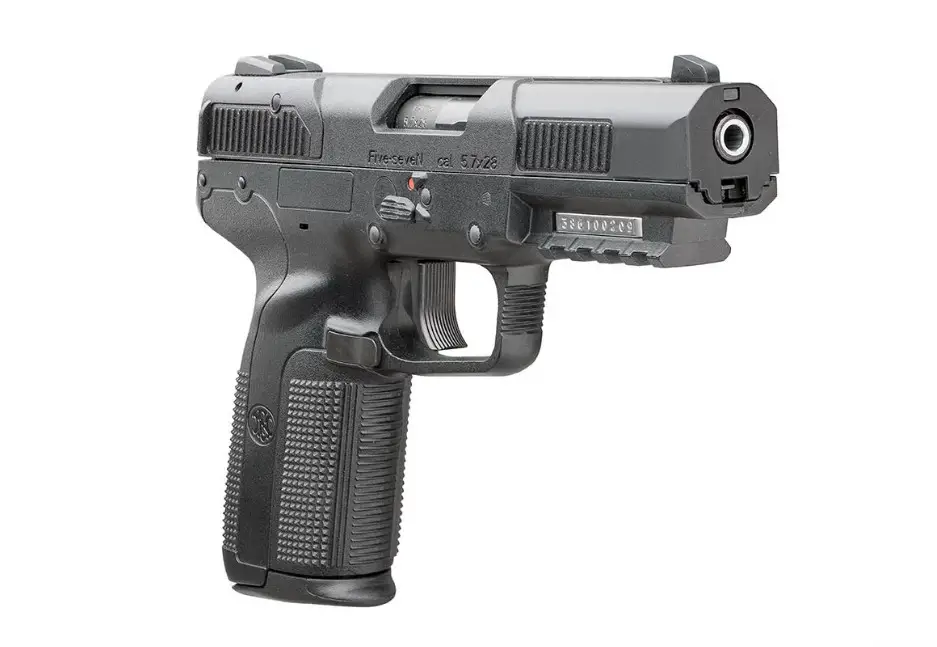
28. FN Five-seveN
The FN Five-seveN is a semi-automatic pistol known for its lightweight design and high-velocity cartridge. Developed to complement certain personal defense weapons, it offers enhanced penetration capabilities compared to traditional handgun calibers.
One of the defining characteristics of the Five-seveN is its low recoil. Despite its high velocity, the weapon remains easy to control, allowing for accurate follow-up shots. This makes it particularly effective in close range engagements where precision is important.
The pistol’s ergonomic design ensures comfortable handling, while its high-capacity magazine provides additional firepower. These features contribute to its practicality in various scenarios, from personal defense to tactical operations.
As part of the broader discussion on types of close range guns, the FN Five-seveN offers a modern approach to handgun design. Its combination of performance and usability makes it a noteworthy option in this category.
29. SIG Sauer P226 Tactical
The SIG Sauer P226 Tactical is a refined version of a well-established pistol platform, designed to meet the demands of modern tactical use. Known for its reliability and accuracy, it has been widely adopted by military and law enforcement agencies.
One of the key strengths of the P226 Tactical is its precision. The pistol is designed to deliver consistent accuracy, making it suitable for close range engagements where shot placement is critical. Its ergonomic design further enhances control and comfort.
The inclusion of tactical features such as threaded barrels and accessory rails allows for greater customization. These enhancements make the pistol adaptable to various operational needs, improving its overall effectiveness.
Among types of close range guns, the SIG Sauer P226 Tactical represents a balance between tradition and modern innovation. Its proven performance ensures its continued relevance in close quarters scenarios.
30. CZ 75 Automatic
The CZ 75 Automatic is a machine pistol variant of a classic handgun design, offering selective-fire capability in a familiar platform. Its robust construction and ergonomic layout make it a reliable option for close range combat.
One of the defining features of the CZ 75 Automatic is its ability to deliver sustained fire when needed. This capability provides an advantage in certain scenarios, although it requires careful handling to maintain accuracy.
The weapon’s design emphasizes durability and ease of use. Its all-metal construction ensures longevity, while its intuitive controls allow users to operate it effectively. These qualities contribute to its practicality in real-world situations.
As the final entry in this list of types of close range guns, the CZ 75 Automatic highlights the versatility of handgun platforms. Its combination of familiarity and enhanced firepower makes it a unique and effective option for close quarters engagements.
Conclusion
Close quarters environments demand firearms that prioritize speed, control, and reliability over long-range precision, and as this guide has shown, the wide variety of types of close range guns reflects how different designs solve the same problem in unique ways. From compact submachine guns and modern PDWs to powerful shotguns and versatile carbines, each category brings its own strengths to close range combat scenarios. Some firearms focus on high rates of fire and maneuverability, while others emphasize stopping power or adaptability, but all are engineered with confined spaces and rapid engagements in mind.
Understanding these differences helps clarify why no single weapon is considered universally “best.” Instead, effectiveness depends on the specific context, such as indoor operations, urban environments, or personal defense situations. For example, shotguns dominate at extremely short distances with unmatched impact, while compact carbines offer a balance between range and control. Meanwhile, pistols and machine pistols provide portability and accessibility, making them valuable as primary or secondary options in close quarters.
What remains consistent across all types of close range guns is the importance of handling, reliability, and ease of use. In high-pressure scenarios, these factors often matter more than raw specifications. A firearm that can be deployed quickly, controlled effectively, and trusted to function without failure becomes a critical tool rather than just equipment. This is why many of the firearms listed in this article have remained relevant for years, even as technology continues to evolve.
In the end, close range guns are not defined solely by their size or caliber, but by how well they perform in fast, confined, and unpredictable environments. Whether modern or classic, each weapon in this list contributes to a broader understanding of how firearms are optimized for close combat, offering insight into both their design philosophy and real-world application.
FAQ: Types of Close Range Guns
1. What are types of close range guns?
Types of close range guns are firearms specifically designed to perform effectively at short distances, typically within 0 to 50 meters, where speed, control, and maneuverability are more important than long-range accuracy.
2. What defines a close range gun?
A close range gun is defined by its compact size, ease of handling, and ability to deliver fast and controlled shots in confined spaces such as buildings or urban environments.
3. Why are close range guns important?
Close range guns are important because many real-world engagements occur in tight spaces where quick reaction time and weapon control are critical.
4. What is the effective range of close range guns?
Most close range guns are optimized for distances under 50 meters, although some carbines can extend effectiveness slightly beyond that range.
5. Are submachine guns considered close range guns?
Yes, submachine guns are among the most common types of close range guns due to their compact size and high rate of fire.
6. What makes shotguns effective at close range?
Shotguns are effective at close range because they deliver high stopping power and spread, increasing the likelihood of hitting a target in tight spaces.
7. Are pistols suitable for close range combat?
Yes, pistols are highly suitable for close range combat due to their portability and ease of deployment in confined environments.
8. What is a PDW in close range weapons?
A Personal Defense Weapon (PDW) is a compact firearm designed to offer more firepower than a pistol while remaining smaller than a rifle.
9. Which is better for close range, SMG or shotgun?
Both have advantages; SMGs offer control and rapid fire, while shotguns provide maximum stopping power at very short distances.
10. Are carbines used in close quarters?
Yes, compact carbines are widely used in close quarters because they balance firepower, accuracy, and maneuverability.
11. What caliber is best for close range guns?
Common calibers include 9mm, .45 ACP, and 12 gauge, each offering different balances of recoil and stopping power.
12. Do close range guns have high recoil?
It depends on the firearm; shotguns typically have higher recoil, while SMGs and pistols are designed for better control.
13. Why is compact size important?
Compact size allows easier movement in tight spaces, making it quicker to aim and engage targets.
14. Can rifles be used for close range?
Yes, especially compact or CQB-configured rifles designed for maneuverability in confined environments.
15. What is CQB?
CQB stands for Close Quarters Battle, referring to combat situations in confined spaces such as buildings or narrow areas.
16. Are close range guns accurate?
Yes, they are designed to be highly accurate within their intended short-distance range.
17. What role do attachments play?
Attachments like optics and lights improve visibility, accuracy, and adaptability in close range situations.
18. Are suppressors useful in close range guns?
Suppressors can reduce noise and muzzle flash, making them useful in certain tactical scenarios.
19. What is the advantage of high rate of fire?
A high rate of fire allows faster engagement of multiple targets in close quarters.
20. Are automatic weapons common in close range combat?
Yes, many close range guns feature automatic or burst fire to increase effectiveness in rapid engagements.
21. What is stopping power?
Stopping power refers to a firearm’s ability to quickly incapacitate a target at close range.
22. Why are shotguns called powerful close range guns?
Because they deliver significant energy and impact at short distances, making them highly effective.
23. Are close range guns easy to control?
Most are designed with control in mind, though some require training to handle effectively.
24. What is a machine pistol?
A machine pistol is a handgun capable of automatic fire, often used in specialized close range scenarios.
25. Do close range guns require training?
Yes, proper training is essential to safely and effectively use any firearm.
26. What is the role of ergonomics?
Ergonomics improve comfort and control, allowing users to operate the firearm more efficiently.
27. Are older firearms still relevant?
Yes, many older designs remain effective due to their reliability and proven performance.
28. What environments use close range guns?
Urban areas, buildings, vehicles, and confined spaces are common environments for close range guns.
29. Are close range guns lightweight?
Most are designed to be lightweight to improve mobility and reduce fatigue.
30. What is the advantage of short barrels?
Short barrels make firearms easier to handle and maneuver in tight spaces.
31. Are close range guns customizable?
Yes, many support accessories that allow customization for different needs.
32. What is recoil management?
Recoil management refers to controlling the backward force of a firearm during firing.
33. Why is reliability important?
Reliability ensures the firearm functions correctly in critical situations without failure.
34. Are close range guns used by law enforcement?
Yes, they are widely used for tactical operations and urban policing.
35. What is burst fire?
Burst fire is a firing mode that releases a set number of rounds with one trigger pull.
36. Can close range guns be used for self-defense?
Yes, many are specifically designed for personal protection.
37. What is muzzle rise?
Muzzle rise is the upward movement of a firearm during firing.
38. How do optics help?
Optics improve aiming speed and accuracy in close range engagements.
39. Are close range guns durable?
Most are built to withstand heavy use and harsh conditions.
40. What is magazine capacity?
Magazine capacity refers to the number of rounds a firearm can hold.
41. Why is high capacity useful?
High capacity allows more shots before reloading, which is useful in fast-paced situations.
42. Are close range guns loud?
Yes, firearms are generally loud, though suppressors can reduce noise levels.
43. What is a folding stock?
A folding stock allows the firearm to be more compact for storage and transport.
44. Are close range guns easy to maintain?
Many are designed with simple mechanisms for easy cleaning and maintenance.
45. What is tactical use?
Tactical use refers to the strategic application of firearms in controlled operations.
46. Can close range guns be used outdoors?
Yes, but they are optimized for short distances rather than long-range shooting.
47. What is fire control?
Fire control refers to managing how and when a firearm is fired.
48. Are close range guns expensive?
Prices vary widely depending on the model, features, and manufacturer.
49. What is weapon balance?
Weapon balance refers to how evenly the weight is distributed for easier handling.
50. Why are close range guns popular?
They are popular because they are practical, effective, and versatile in many real-world scenarios.
51. What should beginners know about close range guns?
Beginners should focus on safety, proper handling, and understanding the basic function of the firearm.
Read more: