
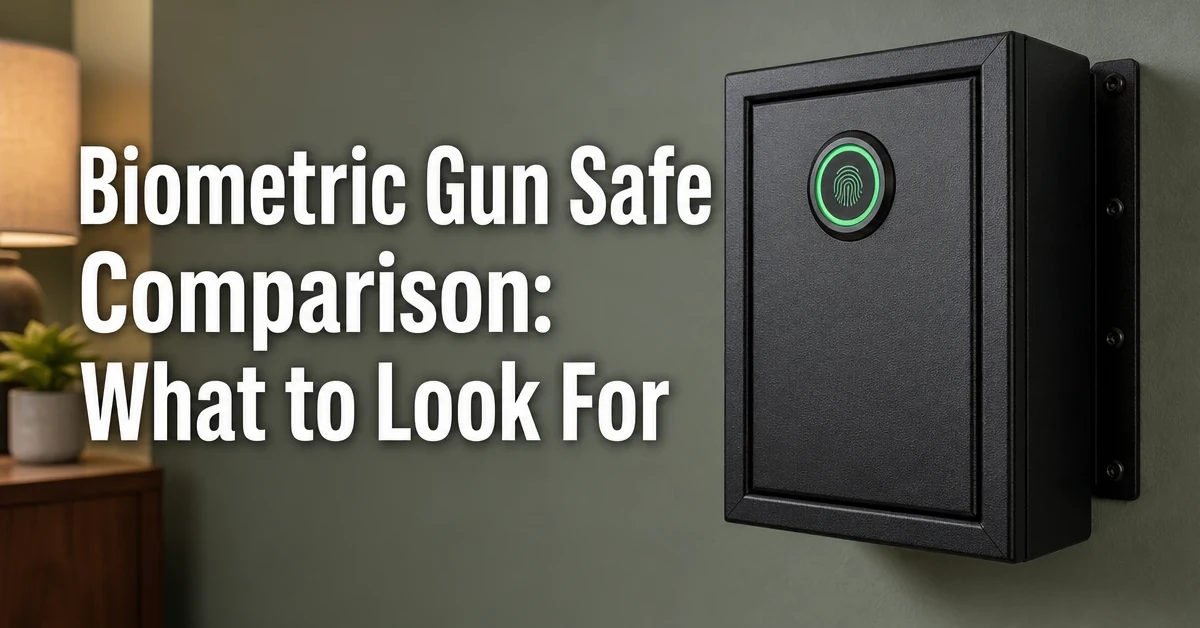
A useful biometric gun safe comparison should examine more than fingerprint access. The right choice depends on reliable entry, secure construction, firearm capacity, mounting options, backup access, battery design, and your local storage requirements. A biometric lock can be convenient, but it should never replace safe handling, secure installation, or a backup method.
How to Compare Biometric Gun Safes
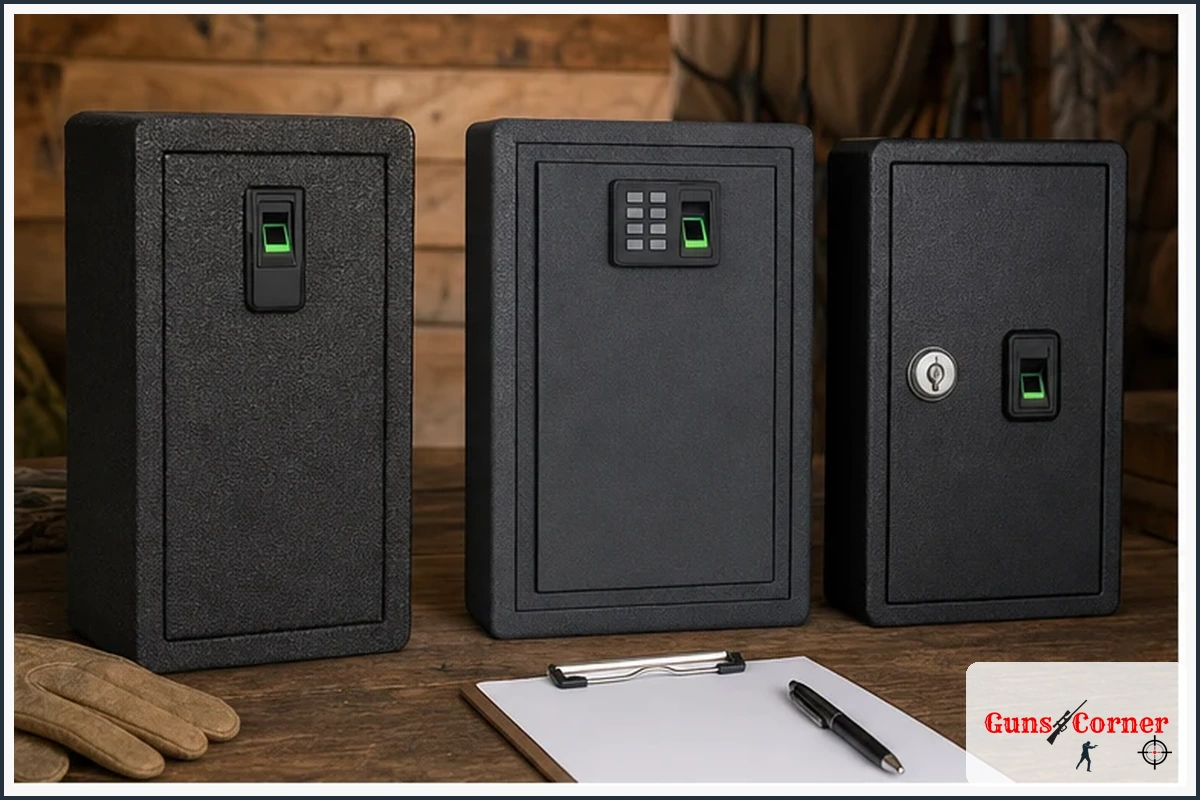
Compare each safe across these practical categories:
| Factor | Why It Matters | What to Check |
|---|---|---|
| Biometric reader | Determines how consistently the safe opens for an enrolled user. | Enrollment process, multiple finger storage, low-battery behavior, and performance with clean, dry fingers. |
| Backup entry | A fingerprint reader can fail or lose power. | Mechanical key or keypad backup, and whether it can be secured from unauthorized access. |
| Construction | Protects against casual theft and unauthorized handling. | Steel thickness, hinge protection, locking bolts, pry resistance, and door fit. |
| Mounting | An unsecured safe may simply be carried away. | Pre-drilled mounting holes, included hardware, and compatibility with the installation surface. |
| Size | A pistol box cannot substitute for a long-gun safe. | Interior dimensions, firearm fit, optic clearance, and room for unloaded magazines or accessories. |
| Power system | Dead batteries can prevent normal access. | Battery type, warning indicators, external emergency power, and replacement procedure. |
| Installation location | Placement affects security and accessibility. | Stable mounting surface, moisture exposure, visibility, and protection from children or unauthorized users. |
Biometric Gun Safe Types
Compact pistol safes
These small containers are designed for one or a few handguns. They are useful when limited storage space and quick authorized access are priorities. However, their compact size often means less resistance to force than a larger, properly anchored safe.
Portable or vehicle-size safes
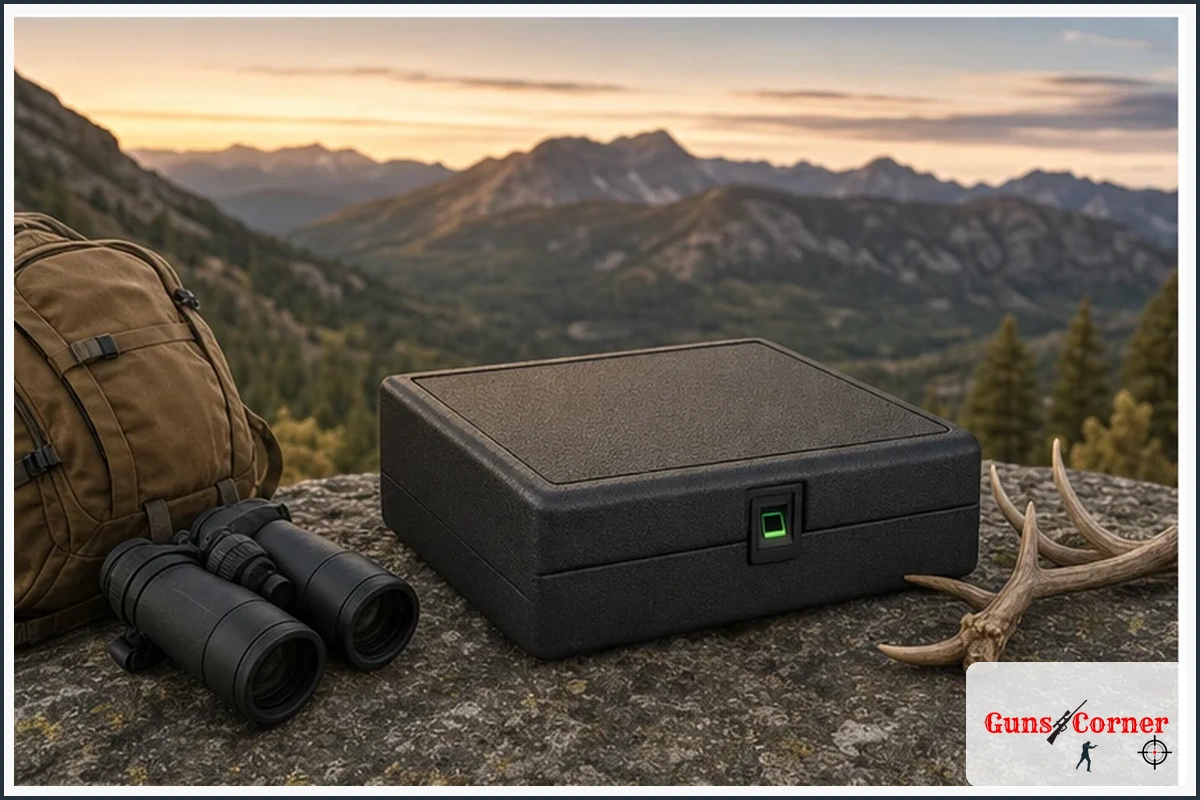
Portable models may be convenient for lawful transport, but portability is also a security limitation. A small safe should be secured whenever practical, and firearm transport laws vary by jurisdiction. Verify current state and local requirements before transporting a firearm.
Long-gun safes
Rifle- and shotgun-length safes require sufficient interior height and depth. Check whether the safe accommodates the firearm with its optic, sling, or other permanently attached equipment. Do not assume a stated firearm capacity applies to every configuration.
Full-size gun safes
Larger safes may provide more storage and stronger anchoring options, but they are heavier and usually less suited to immediate access. A biometric lock is only one part of the safe’s overall security design.
Fingerprint Reliability: The Most Important Comparison Point
Fingerprint recognition is convenient, but it is not infallible. Wet, dirty, cold, injured, or unusually dry fingers may be harder for a reader to recognize. Enroll more than one finger, and consider registering the same finger more than once if the manufacturer permits it.
Test the safe repeatedly after setup. Test it with the fingers you actually intend to use, in realistic lighting and body positions. Do not wait until an urgent situation to discover that the reader, battery, or programming procedure is unreliable.
A biometric lock should always have a manufacturer-approved backup access method. Store backup keys securely and separately from the safe, rather than leaving them beside it or in an obvious hiding place.
Biometric Access Versus Keypad and Mechanical Locks
| Lock type | Main advantage | Main limitation |
|---|---|---|
| Biometric | Fast access without remembering a code. | Reader performance can vary with fingers, power, and maintenance. |
| Keypad | Does not depend on fingerprint recognition. | Requires remembering and protecting a code; batteries still require attention. |
| Mechanical key | Does not depend on batteries or electronics. | Keys can be lost, copied, or accessed by someone who finds them. |
| Combined system | Provides more than one authorized entry method. | More components require careful setup and security management. |
No lock type is automatically best for every household. Choose the system that authorized users can operate reliably while keeping the backup method secure.
Construction and Mounting Matter More Than the Scanner
A fingerprint reader does not make a lightweight box theft-proof. Compare the body, door, hinges, locking mechanism, and resistance to prying. Look for a design that can be anchored to an appropriate structural surface using the manufacturer’s instructions.
Mounting hardware supplied with a safe may not be suitable for every floor, wall, vehicle, or cabinet. If you are uncertain about the installation surface, consult a qualified professional. Do not modify the safe in a way that compromises its structure or lock.
Also distinguish between theft resistance and fire protection. A safe marketed for quick access may not provide a tested fire rating. Never assume that a biometric safe protects documents or firearms from fire unless the manufacturer provides specific, verifiable testing information.
Choosing the Right Size
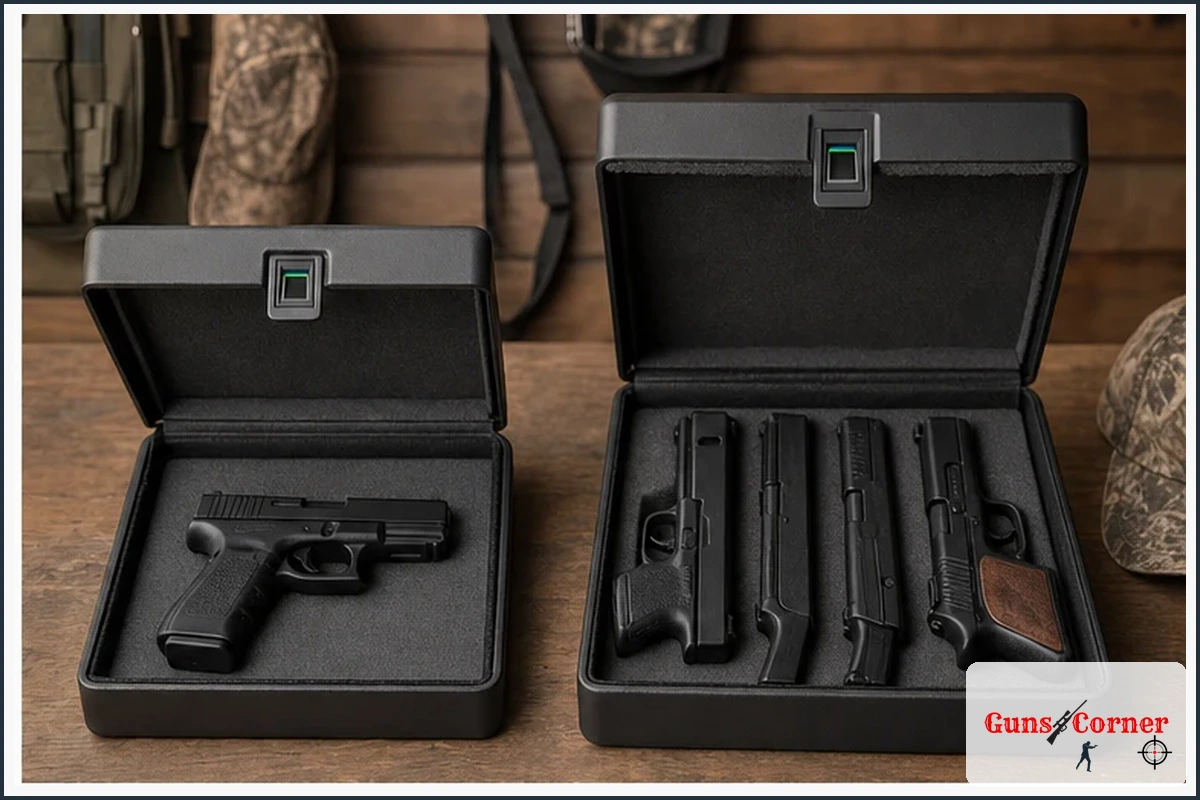
- One handgun: Consider a compact safe with enough clearance for the actual firearm and any approved storage configuration.
- Several handguns: Measure the interior carefully because padding and locking hardware reduce usable space.
- Optic-equipped firearms: Confirm height and depth clearance rather than relying only on the advertised capacity.
- Rifles or shotguns: Use a long-gun safe designed for the firearm’s overall dimensions.
- Households with children: Select a design that prevents unauthorized access and install it according to the manufacturer’s instructions.
Store firearms unloaded unless a specific, lawful storage arrangement and professional guidance indicate otherwise. Keep ammunition secured according to applicable law, household circumstances, and manufacturer recommendations.
Setup and Maintenance Checklist
- Read the complete manufacturer manual before programming the lock.
- Install fresh, compatible batteries.
- Enroll multiple authorized fingerprints.
- Set up the backup keypad or key according to the manual.
- Test access repeatedly while the safe is open.
- Mount the safe securely where appropriate.
- Confirm the firearm fits without interfering with the door or locking bolts.
- Keep the reader clean and dry.
- Replace batteries according to the manufacturer’s schedule or warning indicators.
- Periodically test the safe without leaving the firearm unsecured.
Four Firearm Safety Rules Still Apply
A safe supports responsible ownership but does not replace firearm safety:
- Treat every firearm as if it is loaded.
- Keep the muzzle pointed in a safe direction.
- Keep your finger outside the trigger guard until ready to shoot.
- Be certain of the target and what is beyond it.
When removing or returning a firearm, control the muzzle, keep your finger away from the trigger, verify the firearm’s condition, and follow the manufacturer’s instructions. Mechanical locks and safes are security tools, not substitutes for safe handling.
Common Mistakes to Avoid
- Choosing a safe solely because it has a fingerprint scanner.
- Failing to test the reader after enrollment.
- Leaving the safe unsecured because it is small or portable.
- Hiding a backup key in an obvious location.
- Ignoring low-battery warnings.
- Assuming advertised capacity includes optics and accessories.
- Confusing a quick-access safe with a fire-rated or high-security safe.
- Storing a firearm where children or unauthorized users can reach it.
- Using unverified hardware or drilling into the safe without authorization.
- Ignoring local firearm-storage and transport laws.
What to Verify Before Buying
Check the current manufacturer documentation for dimensions, materials, lock functions, battery requirements, warranty terms, and installation instructions. Product specifications and model versions can change, so do not rely on an old review alone.
Also verify applicable state and local firearm-storage laws. Requirements may differ based on household circumstances, children, transportation, location, or firearm type. Official regulations override general online guidance.
FAQs
1. Are biometric gun safes reliable?
They can be reliable when properly installed, programmed, powered, and maintained, but fingerprint readers may fail to recognize fingers affected by moisture, dirt, cold, or injury. Always use a secure backup access method.
2. Is a biometric gun safe better than a keypad safe?
Neither is universally better. Biometric access avoids remembering a code, while a keypad does not depend on fingerprint recognition. The better option is the system authorized users can operate consistently and secure responsibly.
3. Should a biometric gun safe be bolted down?
Anchoring is often important because a small unsecured safe may be removed. Follow the manufacturer’s mounting instructions and use hardware appropriate for the installation surface.
4. Can a biometric gun safe be used in a vehicle?
Some are designed for lawful transport, but vehicle storage and firearm transport laws vary. Check current official rules and secure the safe so it cannot be easily seen or removed.
5. Are biometric gun safes fireproof?
Not necessarily. Quick-access biometric safes should not be assumed to have fire protection unless the manufacturer provides a specific, verifiable fire rating.
6. How many fingerprints should be programmed?
Program multiple authorized fingers according to the manufacturer’s instructions. This can improve usability when one finger is wet, dirty, cold, or unavailable.
7. Where can I verify firearm-storage laws?
Check your state government, state police, attorney general, wildlife agency, or other official regulatory authority. Laws can change, so verify them before purchasing, transporting, or storing a firearm.
Final Answer: Biometric Gun Safe Comparison
The best biometric gun safe comparison evaluates access reliability, backup entry, construction, mounting, size, power management, and local storage requirements—not just fingerprint technology. Choose a safe that fits the firearm, can be secured properly, and prevents unauthorized access. Program and test it carefully, maintain its batteries, follow the manufacturer’s instructions, and verify current firearm-storage laws before relying on it.
Related posts:

10 Best Gun Safe for Home Security: Secure Storage Picks for Firearm Owners
Gun Safe Shelf Ideas for Safer, More Organized Storage

20 Best Cheap Gun Safe – Budget Gun Safes for Home Security, Quick Access & Storage (2026 Guide)

Are Gun Safes Fireproof

How to Open a Digital Gun Safe Without Combination: Safe Legal Options