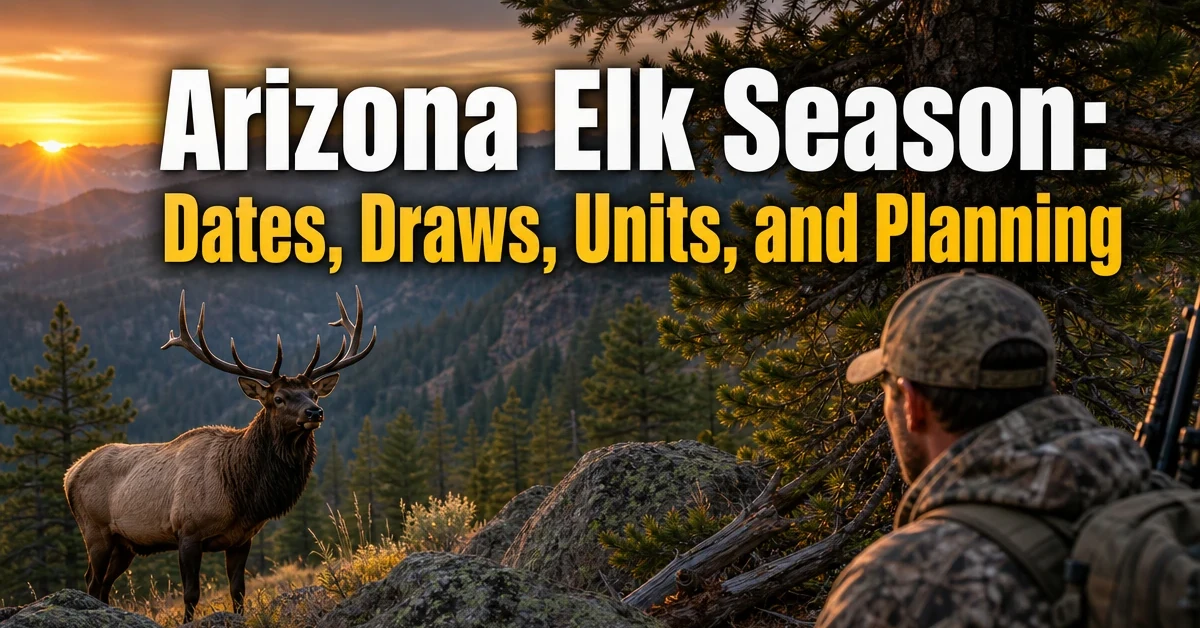
Arizona elk season is not one single statewide date. Season timing depends on the hunting unit, elk type, weapon, and permit-tag, with archery and firearms hunts occurring in different windows. Always check the current Arizona Game and Fish Department regulations before applying, traveling, or hunting.
What Is Arizona Elk Season?
Arizona elk season refers to the state’s regulated hunting periods for elk. Arizona divides elk opportunities by game-management unit, hunt number, weapon type, and sometimes animal classification such as bull or cow elk.
Because dates and hunt structures can change annually, the official Arizona hunting regulations are the controlling source. Online summaries can help with planning, but they should not replace the current regulation booklet or hunt information published by the Arizona Game and Fish Department.
How Arizona Elk Hunts Are Organized
| Factor | Why It Matters |
|---|---|
| Game-management unit | Each unit may have different dates, available hunts, terrain, and access conditions. |
| Weapon type | Archery, muzzleloader, and modern-firearm hunts may occur during different season periods. |
| Permit-tag | Hunters generally need the correct permit-tag for the specific hunt and unit. |
| Elk classification | The hunt may specify bull, cow, either-sex, or another legal designation. |
| Land ownership | Public-land access, private property permission, and federal restrictions can affect where hunting is lawful. |
When Is Arizona Elk Season?
Arizona elk hunts commonly occur across several periods rather than one continuous season. General planning often includes early archery opportunities, later archery periods, and firearm hunts in the fall or early winter. Exact opening and closing dates vary by hunt number and year.
The most reliable way to find the dates is to use the current Arizona Game and Fish Department elk regulations and hunt-draw materials. Check the specific hunt code, unit, legal weapon, season dates, legal animal, and permit conditions together.
Why Dates Can Differ by Unit
Arizona’s elk habitat spans high-country forests, mountain ranges, plateaus, and other landscapes with different access, wildlife-management, and conservation considerations. Unit-specific dates allow the state to manage hunting opportunity and elk populations more precisely.
Do not assume that a date listed for one unit applies to another unit. Even neighboring units can have different hunt choices or regulations.
Arizona Elk Draw and Permit-Tag Basics
Many Arizona elk opportunities are controlled through a draw. Applicants must carefully follow the current application instructions, deadlines, license requirements, and hunt-choice rules published by Arizona Game and Fish.
Draw information and deadlines can change. The application deadline has historically occurred early in the year, but hunters should verify the current deadline rather than relying on a previous season’s calendar.
Information to Confirm Before Applying
- Whether the desired elk hunt is available through the current draw.
- The required hunting license and application fees.
- The application deadline and official submission time zone.
- The hunt number, unit, season dates, and legal weapon.
- Whether the hunt is for bull, cow, either-sex, or another designation.
- Any residency, tag, or license requirements.
- Whether the application information matches the current regulation booklet.
A license, application, or successful draw result does not authorize hunting everywhere. Hunters must still follow unit boundaries, land-access rules, season dates, weapon restrictions, and permit conditions.
Archery, Muzzleloader, and Rifle Elk Hunts
Archery Hunts
Archery hunts require close-range decision-making, reliable equipment, and disciplined shot selection. Hunters should practice from realistic positions and limit shots to distances where they can consistently place an arrow in a vital area.
Check the current regulations for archery-equipment definitions, broadhead requirements, crossbow provisions, and any unit-specific restrictions.
Muzzleloader Hunts
Muzzleloader hunts may have distinct equipment and ammunition rules. Verify permitted ignition systems, projectile requirements, optics restrictions, and loading procedures before the hunt.
Use only components recommended by the firearm manufacturer, and practice with the exact hunting setup. Keep the muzzle pointed safely, treat the firearm as loaded, and never rely on the mechanical safety alone.
Modern-Firearm Hunts
Firearm elk hunts require positive target identification, a safe backstop, and careful consideration of what lies beyond the animal. Elk hunting terrain can include steep slopes, roads, buildings, livestock areas, and other hunters.
Before hunting, confirm ammunition compatibility, sight-in the rifle, use hearing and eye protection during practice, and stay within your demonstrated accuracy. No cartridge or rifle replaces sound judgment and ethical shot selection.
How to Check the Current Arizona Elk Regulations
- Visit the official Arizona Game and Fish Department website.
- Open the current big-game regulations or elk hunt information.
- Identify the exact hunt number and game-management unit.
- Confirm the opening and closing dates.
- Check the legal animal, weapon, bag limit, and permit conditions.
- Review access restrictions for public, private, state, and federal land.
- Recheck the information immediately before traveling.
Official regulations override general online guidance. Emergency closures, fire restrictions, access changes, disease-management actions, or other updates may also affect a hunt.
Preparing for an Arizona Elk Hunt
Legal and Administrative Preparation
- Carry the required license, permit-tag, and identification.
- Know the boundaries of the assigned unit.
- Review private-property boundaries and obtain permission where required.
- Understand tagging, reporting, and evidence-of-sex requirements if applicable.
- Check current fire, camping, vehicle, and land-management restrictions.
Physical and Field Preparation
- Condition for steep terrain, elevation, and long days carrying equipment.
- Carry sufficient water, food, navigation tools, first-aid supplies, and weather layers.
- Use offline maps and leave an itinerary with a trusted person.
- Carry reliable communication equipment appropriate for the area.
- Plan how meat will be cooled and transported if an elk is harvested.
Firearm and Archery Safety
- Treat every firearm as if it is loaded.
- Keep the muzzle pointed in a safe direction.
- Keep your finger outside the trigger guard until ready to shoot.
- Be certain of the target and what is beyond it.
- Never shoot at unidentified movement.
- Do not take a shot beyond your proven ability.
- Follow manufacturer instructions for firearms, bows, crossbows, and ammunition.
What Not to Do During Arizona Elk Season
- Do not hunt outside the dates or unit listed on your permit-tag.
- Do not assume a general elk date applies to every Arizona unit.
- Do not enter private land without permission.
- Do not shoot toward roads, homes, livestock, people, or an unsafe backstop.
- Do not rely on outdated regulation summaries.
- Do not take a marginal shot because the season is ending.
- Do not leave harvested game unrecovered or improperly cooled.
- Do not continue into dangerous weather, terrain, heat, cold, or visibility conditions.
Ethical Elk Hunting and Game Recovery
Ethical hunting means identifying the animal correctly, taking only a responsible shot, and making every reasonable legal effort to recover the elk. Mark the last known location, observe the animal’s reaction, and avoid rushing through sign that may help with tracking.
If the trail becomes difficult, consider contacting an experienced local tracker or legally authorized tracking-dog handler. Never trespass or enter hazardous terrain without a safe plan.
After recovery, cool the meat promptly and follow current wildlife-agency and food-safety guidance. Hunters should also check whether disease-testing or meat-handling recommendations apply in the unit they hunted.
FAQs About Arizona Elk Season
1. Is Arizona elk season the same statewide?
No. Dates and hunt rules vary by game-management unit, hunt number, weapon, and legal animal. Check the current official regulations for the specific hunt.
2. Do I need an Arizona elk permit-tag?
Elk hunting generally requires the correct license and permit authorization for the selected hunt. Confirm the current requirements with Arizona Game and Fish before applying or hunting.
3. When should I apply for Arizona elk?
Apply according to the current annual draw schedule. Deadlines can change, so use the latest Arizona Game and Fish application instructions rather than relying on a prior year’s date.
4. Can I hunt elk on private land in Arizona?
Only when the hunt is legally authorized and you have any required landowner permission. A permit-tag does not give permission to cross or hunt private property.
5. Are archery and rifle elk seasons different?
Yes. Arizona separates hunts by weapon type and hunt design. Equipment, dates, and legal requirements must be checked for the exact hunt code.
6. Where can I find the official Arizona elk season dates?
Use the current Arizona Game and Fish Department big-game regulations and hunt information. Confirm the unit, hunt number, dates, legal animal, weapon, and access rules together.
Final Answer: Arizona Elk Season
Arizona elk season consists of multiple unit-specific hunts rather than one statewide season date. The correct dates, weapon rules, permit conditions, and legal animal depend on the current hunt code and game-management unit.
Before applying or hunting, verify the latest Arizona Game and Fish Department regulations, prepare for the terrain and weather, practice with your equipment, and follow safe, ethical game-recovery practices.
Related posts:

How to Hunt a Buck: Beginner-Friendly Guide to Safe, Legal, and Ethical Buck Hunting
10 Best Hunting First Aid Kit Options for Safe Outdoor Preparedness
15 Best Hunting Packs for Backcountry: Frame Packs, Meat Haulers & Multi-Day Hunting Backpacks
How to Hunt Mule Deer: A Complete Beginner-Friendly Guide

What Age Can Kids Start Hunting? A Safe, Legal Guide for Families