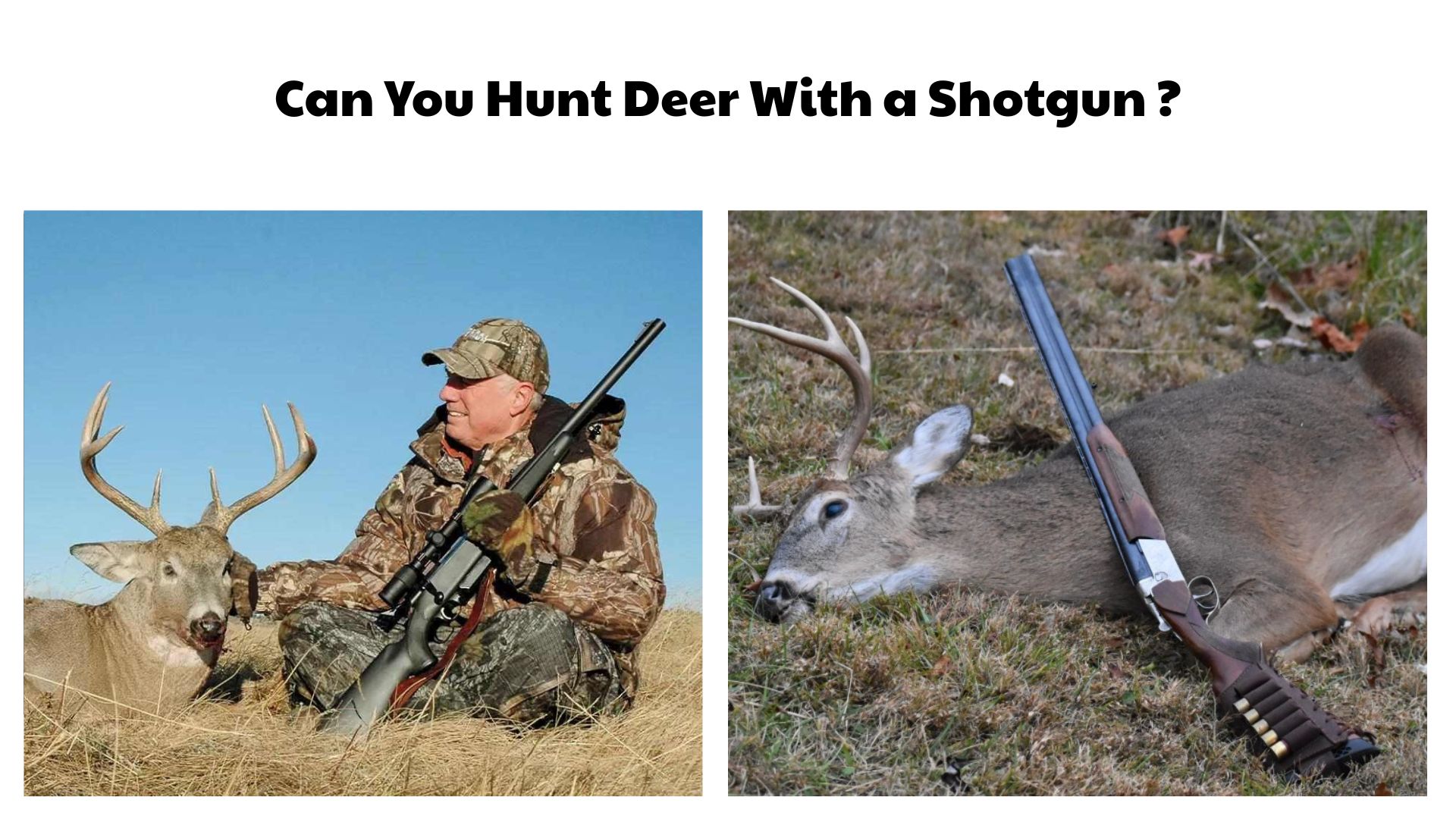
Growing popularity of shotgun deer hunting in North America, especially in regions with dense populations and regulated hunting zones. Why shotguns are often used in “shotgun-only” hunting zones, where rifles are restricted to improve safety and reduce long-range projectile risks.
Importance of understanding legal regulations before hunting, as deer hunting laws vary significantly by state, county, and wildlife management area. Overview of what this guide covers, including legality, shotgun equipment requirements, effective hunting techniques, and best practices for ethical and safe deer hunting.
Is It Legal to Hunt Deer With a Shotgun?
State and Local Hunting Regulations
- Hunting laws vary widely by state and region, meaning there is no single national rule for shotgun deer hunting in the United States.
- Some states and wildlife management areas allow shotguns only in designated deer hunting zones, particularly in areas where rifle use is restricted.
- It is essential for hunters to check official state wildlife agency regulations before hunting, as rules can change by season, zone, and even land type.
- Many regions enforce seasonal and weapon-specific restrictions that determine when and where shotguns may be used for deer hunting.
Shotgun-Only Hunting Zones
- Shotgun-only zones are designated areas where rifles are prohibited for deer hunting, and hunters must use shotguns loaded with appropriate ammunition such as slugs.
- These zones are typically established for wildlife management and public safety purposes, especially in suburban or densely populated regions.
- The main safety reason behind these restrictions is the shorter effective range of shotguns compared to rifles, which reduces the risk of stray long-distance bullets.
- By limiting hunters to shotguns, wildlife agencies can allow hunting activity while minimizing potential danger to nearby residents and infrastructure.
Legal Shotgun Requirements for Deer Hunting
- Many jurisdictions specify acceptable shotgun gauges for deer hunting, commonly including 12 gauge, 16 gauge, and 20 gauge depending on local regulations.
- In most cases, hunters are required to use slugs rather than birdshot or buckshot, as slugs provide the necessary penetration and ethical lethality for deer.
- Magazine capacity restrictions are often enforced, with many regions limiting shotguns to 2+1 or 3 total shells to promote fair chase and safety.
- Some jurisdictions also regulate barrel length, rifled barrel usage, and overall firearm configuration to ensure compliance with hunting laws and safety standards.
Why Hunters Use Shotguns for Deer Hunting
Safety Advantages
- One of the primary reasons hunters choose shotguns for deer hunting is their reduced projectile range compared to rifles. Shotgun slugs and shot lose energy more quickly over distance, making them more suitable for controlled hunting environments.
- This shorter effective range significantly lowers the risk of accidental long-distance impacts, which is especially important in densely populated hunting areas or regions with nearby residential zones.
- Because of this safety profile, many wildlife management authorities designate shotgun-only zones to allow hunting while minimizing public safety risks.
Versatility of Shotguns
- Shotguns are highly versatile firearms capable of firing different types of ammunition, including birdshot, buckshot, and slugs. This flexibility allows hunters to adapt their firearm to different hunting scenarios.
- While slugs are typically used for deer hunting, the same shotgun can be used for smaller game or different hunting conditions simply by changing ammunition type.
- This multi-purpose capability makes shotguns a practical choice for hunters who pursue multiple types of game throughout the year.
Accessibility for Hunters
- Shotguns are often more affordable and widely available compared to rifles, making them an accessible option for new and experienced hunters alike.
- Their design also tends to have a more forgiving learning curve, especially for beginners who are developing shooting fundamentals such as recoil control and target acquisition.
- Because of this accessibility, many hunters begin their big-game experience with a shotgun before transitioning to other firearm platforms.
Best Shotgun Setup for Deer Hunting
Choosing the Right Gauge
- The 12-gauge is the most commonly used option for deer hunting because it delivers maximum power and effective range when firing slugs. It is widely available and suitable for most hunting environments.
- The 20-gauge is a lighter alternative that produces reduced recoil, making it more comfortable for beginner hunters or those sensitive to heavier recoil. While it has less power than a 12-gauge, it is still effective at appropriate hunting distances.
Barrel Types
- Smoothbore barrels are commonly used with traditional rifled slugs and are widely available on standard hunting shotguns. They offer solid performance at short to medium ranges.
- Rifled barrels are designed for improved accuracy when using sabot slugs. The rifling stabilizes the projectile, allowing for better precision and extended effective range compared to smoothbore setups.
Optics and Sights
- Iron sights are simple, durable, and reliable, making them a common choice for shotgun deer hunting in shorter-range environments.
- Red dot optics are increasingly popular because they provide faster target acquisition and improved accuracy in low-light or fast-moving situations.
- Some hunters also use scopes on slug guns to increase precision at longer ranges, especially when using rifled barrels and sabot slugs.
Ammunition Types for Deer Hunting
Rifled Slugs
- Rifled slugs are the most common and widely legal ammunition type for shotgun deer hunting in many regions.
- They are designed for smoothbore barrels and provide reliable performance at short to medium hunting distances.
- Their simplicity and availability make them a standard choice for many hunters.
Sabot Slugs
- Sabot slugs are designed for higher accuracy and longer effective range compared to traditional slugs.
- They are typically used in rifled barrels, which help stabilize the projectile during flight for improved precision.
- This combination makes them ideal for hunters who need better long-range performance in shotgun-only zones.
Buckshot (Limited Use)
- Buckshot is legal for deer hunting in some areas, but its use is increasingly limited due to ethical and range considerations.
- It is generally effective only at very short distances, making it less practical for most modern deer hunting scenarios.
- Because of its limited range and variable performance, many hunters prefer slugs for more consistent and humane results.
Effective Shotgun Deer Hunting Techniques
Shot Placement and Accuracy
- Accurate shot placement is one of the most critical factors in ethical deer hunting. Hunters must focus on the vital zone, which includes the heart and lungs, to ensure a quick and humane harvest.
- Because shotguns have a more limited effective range compared to rifles, understanding personal shooting capability and practicing regularly is essential for consistent accuracy in real hunting conditions.
- Ethical hunters also establish strict maximum shot distance limits based on their skill level, firearm setup, and ammunition type to avoid taking low-probability shots that could lead to wounding an animal.
Hunting Range Considerations
- Shotgun slugs are generally effective at short to medium ranges, typically within a controlled distance where accuracy and energy are still sufficient for ethical deer hunting.
- Beyond this range, both accuracy and energy drop significantly, which is why shotguns are not considered long-range hunting tools like rifles.
- Understanding these limitations is essential for responsible hunting, as it helps ensure clean, ethical shots and reduces the risk of missed or poorly placed shots.
Stalking vs Stand Hunting
- Still hunting, also known as stalking, involves slowly and quietly tracking deer through their natural habitat. This method requires patience, awareness, and careful movement to avoid detection.
- Tree stand hunting is a popular strategy that involves positioning the hunter above ground level to gain better visibility and reduce scent detection by deer.
- Ground blinds provide concealment at ground level and are often used in areas with heavy deer traffic or when hunting in shotgun-only zones where visibility and shot distance are limited.
Safety Guidelines for Shotgun Deer Hunting
- Always identify the target clearly before shooting: One of the most critical safety rules in hunting is positive target identification. Hunters must be absolutely certain of their target, ensuring it is a legal deer and not another hunter, animal, or object. Poor visibility or rushed decisions can lead to serious accidents.
- Be aware of backstops and surroundings: Before firing, always consider what lies beyond the target. Shotgun slugs can travel a significant distance and still retain energy. A safe backstop, such as a hill or dense terrain, helps prevent unintended damage or injury.
- Follow all firearm handling safety rules: Standard firearm safety principles apply at all times: treat every firearm as if it is loaded, keep the muzzle pointed in a safe direction, keep your finger off the trigger until ready to shoot, and be aware of your firearm’s status at all times.
- Use appropriate hearing and eye protection: Shotguns produce loud reports and significant recoil. Wearing hearing protection prevents long-term hearing damage, while eye protection helps guard against debris, environmental hazards, and mechanical issues.
Common Mistakes When Hunting Deer With a Shotgun
- Using birdshot instead of slugs: One of the most serious mistakes is attempting to hunt deer with birdshot. Birdshot is designed for small game and birds, not for big game like deer. It lacks the penetration and energy required for ethical, humane kills and is illegal in most deer hunting regulations.
- Ignoring local hunting regulations: Hunting laws vary significantly by state, county, and wildlife management zone. Failing to follow these regulations—such as shotgun-only rules, slug requirements, or seasonal restrictions—can lead to fines, loss of hunting privileges, or legal penalties.
- Overestimating effective shooting distance: Many hunters mistakenly assume shotgun slugs are effective at rifle-like distances. In reality, shotguns have a much shorter effective range, and pushing beyond that range often results in missed shots or unethical hits.
- Poor sighting-in and ammunition testing: Each shotgun and slug combination performs differently. Failing to properly sight in the firearm with the chosen ammunition can lead to inaccurate shots in the field. Testing multiple loads and confirming point of impact is essential.
- Not practicing with chosen slug type: Even experienced shooters can struggle if they do not practice with the exact slug they plan to use. Different slugs have different recoil patterns, trajectories, and point-of-impact shifts, making practice critical for consistency and accuracy.
Advantages of Shotgun Deer Hunting
- Safer in populated hunting areas: Shotguns are often preferred in regions with higher population density because slugs have a shorter effective range compared to rifle bullets, reducing the risk of long-distance stray projectiles.
- Legal option in restricted rifle zones: Many states and wildlife management areas designate shotgun-only zones for deer hunting. This allows hunting access while maintaining strict safety controls in sensitive areas.
- Affordable entry into big game hunting: Shotguns are generally more accessible and cost-effective than rifles, making them a practical choice for beginners entering deer hunting for the first time.
- Flexible ammunition choices: Shotguns can be adapted for multiple uses beyond deer hunting by switching ammunition types, offering versatility for hunters who pursue different game species.
Limitations of Shotgun Deer Hunting
- Shorter effective range compared to rifles: Shotguns firing slugs are generally limited to short and medium distances, making them less suitable for long-range hunting situations.
- More recoil with heavy slug loads: Many shotgun slug loads produce significant recoil, which can affect shooter comfort and follow-up shot accuracy, especially for inexperienced hunters.
- Requires careful ammo and barrel matching: Performance varies depending on whether the shotgun uses smoothbore or rifled barrels, and selecting the correct slug type is essential for accuracy and safety.
- Less precision at long distances: Even with proper setup, shotguns are inherently less precise than rifles at extended ranges, requiring hunters to carefully respect ethical distance limits.
Expert Insight Summary
- Shotgun deer hunting is highly regulated but widely practiced across North America, especially in shotgun-only zones designed to balance hunting access with public safety.
- Modern slugs significantly improve the effectiveness of shotguns, making them suitable for ethical medium-range big game hunting when used within their performance limits.
- Success in shotgun deer hunting depends heavily on consistent practice, proper ammunition selection, and strict compliance with local hunting laws and regulations.
- Ethical hunting requires a clear understanding of the limitations of shotgun range and accuracy, ensuring hunters only take responsible, high-probability shots.
Conclusion
- Yes, you can legally hunt deer with a shotgun in many regions, particularly in areas that designate shotgun-only hunting zones or restrict rifle use.
- However, hunting laws vary significantly by location, so it is essential to always verify local wildlife regulations before heading into the field.
- Shotguns are effective, safe, and practical tools for deer hunting when used in the appropriate environments and with the correct setup and ammunition.
- The final recommendation is to choose the right shotgun configuration, follow all legal requirements, and always prioritize ethical shot placement for responsible and effective hunting.
Frequently Asked Questions (FAQ) – Hunting Deer With a Shotgun
1. Can you legally hunt deer with a shotgun?
Yes, you can legally hunt deer with a shotgun in many regions, but legality depends entirely on local, state, or provincial hunting regulations. Many wildlife agencies allow shotgun deer hunting in designated shotgun-only zones, especially in areas where rifle use is restricted for safety reasons. Hunters must always verify current rules before hunting because requirements can change by season, zone, and land type.
2. Why do some states require shotguns for deer hunting?
Some states require shotguns in certain deer hunting areas primarily for safety reasons. Shotguns firing slugs have a much shorter effective range compared to rifles, which reduces the risk of long-distance accidental impacts in populated or suburban areas. This helps wildlife agencies allow hunting while minimizing danger to nearby residents.
3. What is a shotgun-only deer hunting zone?
A shotgun-only deer hunting zone is a designated area where rifles are prohibited for deer hunting. Hunters in these zones must use shotguns loaded with approved ammunition, typically slugs. These zones are usually established in areas with higher population density or mixed land use where safety concerns are a priority.
4. What gauge shotgun is best for deer hunting?
The 12-gauge is the most popular and powerful choice for deer hunting, offering strong energy and effective range. The 20-gauge is also widely used, especially by beginners or hunters who prefer lighter recoil. Both can be effective when paired with the correct slug ammunition and proper shot placement.
5. Can you use buckshot for deer hunting?
Buckshot is legal in some areas but is increasingly restricted for deer hunting due to ethical and performance concerns. It is only effective at very short distances and lacks the precision of slugs. Most modern deer hunting regulations prefer or require slugs instead of buckshot.
6. What is the most common ammunition for shotgun deer hunting?
Rifled slugs are the most common ammunition used for shotgun deer hunting. They provide reliable penetration and are widely accepted in shotgun-only zones. Sabot slugs are also popular when used with rifled barrels for improved accuracy and extended range.
7. How far can you shoot a deer with a shotgun?
The effective range of a shotgun for deer hunting typically falls within short to medium distances, depending on the firearm setup and ammunition type. Most ethical hunters limit shots to distances where they can consistently ensure accurate placement in the vital zone.
8. Is a shotgun powerful enough for deer?
Yes, shotguns firing slugs are powerful enough to ethically harvest deer when used within their effective range. Modern slugs are designed to deliver sufficient energy and penetration for big game hunting when shot placement is correct.
9. What is the difference between rifled slugs and sabot slugs?
Rifled slugs are designed for smoothbore barrels and provide solid performance at short to medium range. Sabot slugs are designed for rifled barrels and offer improved accuracy and longer effective range due to better stabilization in flight.
10. Do I need a special shotgun for deer hunting?
You do not necessarily need a special shotgun, but certain setups perform better. A shotgun capable of firing slugs is required, and many hunters prefer rifled barrels or slug-specific smoothbore barrels for better accuracy and consistency.
11. Is a rifled barrel better for deer hunting?
A rifled barrel can improve accuracy when using sabot slugs, making it a strong option for hunters who want better precision at longer distances. However, smoothbore barrels can still be effective with standard rifled slugs at shorter ranges.
12. Are shotguns safer than rifles for deer hunting?
Shotguns are often considered safer in certain environments because their slugs have a shorter effective range than rifle bullets. This reduces the risk of long-distance travel and makes them more suitable for densely populated hunting areas.
13. Can beginners hunt deer with a shotgun?
Yes, shotguns are often recommended for beginner deer hunters because they are more affordable, widely available, and easier to learn. However, beginners must still practice extensively and understand safety and legal requirements before hunting.
14. Do shotguns kick more than rifles?
Shotguns firing slugs can produce significant recoil, sometimes more noticeable than many rifles. Recoil varies depending on gauge, load, and firearm design. Proper stance and training can help manage recoil effectively.
15. What is the legal minimum gauge for deer hunting?
Minimum gauge requirements vary by jurisdiction. Many states allow 20-gauge and 12-gauge shotguns for deer hunting, but local regulations should always be checked before hunting.
16. Can you hunt deer with birdshot?
No, birdshot is not suitable or legal for deer hunting in most areas. It lacks the penetration and energy required for ethical big game hunting and is intended only for small game and birds.
17. What is the best range to shoot a deer with a shotgun?
The best range is within a distance where the hunter can consistently place accurate shots in the vital zone. This depends on skill level, shotgun setup, and ammunition type, but generally remains within short to medium range.
18. Do you need a scope for shotgun deer hunting?
A scope is not required but can improve accuracy, especially when using rifled barrels and sabot slugs. Many hunters also use red dot sights for faster target acquisition.
19. Are red dots good for shotgun deer hunting?
Yes, red dot sights are popular because they allow quick target acquisition and are effective in low-light hunting conditions. They are especially useful for close to medium-range shooting.
20. Can you hunt deer in all states with a shotgun?
No, not all states allow shotgun deer hunting universally. Some restrict firearms based on zone, season, or land type. Always check local wildlife regulations before hunting.
21. Why are rifles restricted in some deer zones?
Rifles are restricted in some areas due to their long-range capabilities, which can pose safety risks in populated regions. Shotguns are preferred because they reduce long-distance projectile hazards.
22. What is the effective range of a 12-gauge slug?
A 12-gauge slug is effective at short to medium ranges depending on the firearm and slug type. Accuracy and energy drop significantly beyond ethical hunting distances.
23. Can you hunt deer with a 20-gauge shotgun?
Yes, a 20-gauge shotgun is effective for deer hunting when using appropriate slugs. It is often chosen for its lighter recoil and ease of handling.
24. Is shotgun deer hunting ethical?
Yes, shotgun deer hunting is ethical when done within proper range limits, with accurate shot placement, and using appropriate ammunition such as slugs.
25. What is the biggest mistake in shotgun deer hunting?
One of the biggest mistakes is overestimating effective range and taking shots beyond the shotgun’s ethical capability, leading to missed or poorly placed shots.
26. Do shotguns require special hunting permits?
In some regions, special permits or licenses may be required depending on season and weapon type. Always check local regulations.
27. Can you use semi-automatic shotguns for deer hunting?
Yes, semi-automatic shotguns are legal in many areas for deer hunting, but they must still comply with magazine capacity and ammunition restrictions.
28. How accurate are shotguns for deer hunting?
Shotguns can be highly accurate within their effective range when properly sighted in and matched with the correct ammunition type.
29. Do slugs work in smoothbore barrels?
Yes, rifled slugs are designed specifically for smoothbore barrels and perform well at short to medium ranges.
30. What is the best slug for deer hunting?
The best slug depends on your shotgun setup. Rifled slugs are common for smoothbore barrels, while sabot slugs are preferred for rifled barrels due to higher accuracy.
31. Can you hunt deer at night with a shotgun?
Night hunting laws vary widely. In many places, deer hunting at night is illegal regardless of firearm type unless specifically permitted by wildlife regulations.
32. What should you avoid when shotgun hunting deer?
Avoid using incorrect ammunition, ignoring legal restrictions, and taking shots beyond your effective range. These mistakes can lead to unsafe or unethical outcomes.
33. Is shotgun deer hunting good for beginners?
Yes, it is often recommended for beginners due to lower cost, easier handling, and legal availability in many regions.
34. Can shotguns be used for long-range deer hunting?
No, shotguns are not designed for long-range hunting. Their effectiveness decreases significantly beyond medium distances.
35. Do shotguns require zeroing like rifles?
Yes, shotguns used for slugs should be sighted in to ensure point-of-impact accuracy with the chosen ammunition.
36. Can weather affect shotgun deer hunting?
Yes, weather such as fog, rain, and wind can impact visibility and accuracy, making shot selection more challenging.
37. Is shotgun deer hunting more affordable than rifle hunting?
Generally, yes. Shotguns and slug ammunition are often more affordable than rifle setups and specialty hunting cartridges.
38. Can you hunt deer with a tactical shotgun?
Yes, as long as it meets legal requirements for hunting and is configured properly with appropriate ammunition.
39. What is the best position for shotgun deer hunting?
Tree stands and ground blinds are commonly used to improve visibility, concealment, and shot accuracy.
40. Do shotguns work in dense forests for deer hunting?
Yes, shotguns are well-suited for dense forests where shorter engagement distances are common.
41. How important is practice in shotgun deer hunting?
Practice is essential for accuracy, recoil control, and understanding your effective shooting range.
42. Can shotgun deer hunting be dangerous?
Like all hunting, it carries risks if safety rules are ignored. Proper training and awareness greatly reduce danger.
43. What should you check before hunting deer with a shotgun?
Check legal regulations, sight alignment, ammunition type, firearm condition, and environmental conditions.
44. Are pump-action shotguns good for deer hunting?
Yes, pump-action shotguns are reliable, durable, and widely used for deer hunting.
45. Do shotguns require maintenance for hunting?
Yes, regular cleaning and maintenance ensure reliability and consistent performance in the field.
46. Can you hunt deer in rain with a shotgun?
Yes, but visibility and tracking conditions may be more difficult, requiring careful shot selection.
47. Is shotgun deer hunting still popular today?
Yes, it remains popular in regulated hunting zones and among hunters who prefer close to medium-range hunting methods.
48. What is the best shotgun brand for deer hunting?
There is no single best brand; many reputable manufacturers produce reliable hunting shotguns suitable for deer hunting.
49. Do you need special training for shotgun deer hunting?
While not always required, hunter safety courses and firearm training are strongly recommended and often legally required.
50. What is the most important rule in shotgun deer hunting?
The most important rule is ethical shot placement within your effective range while strictly following all local hunting regulations.
Read more: