
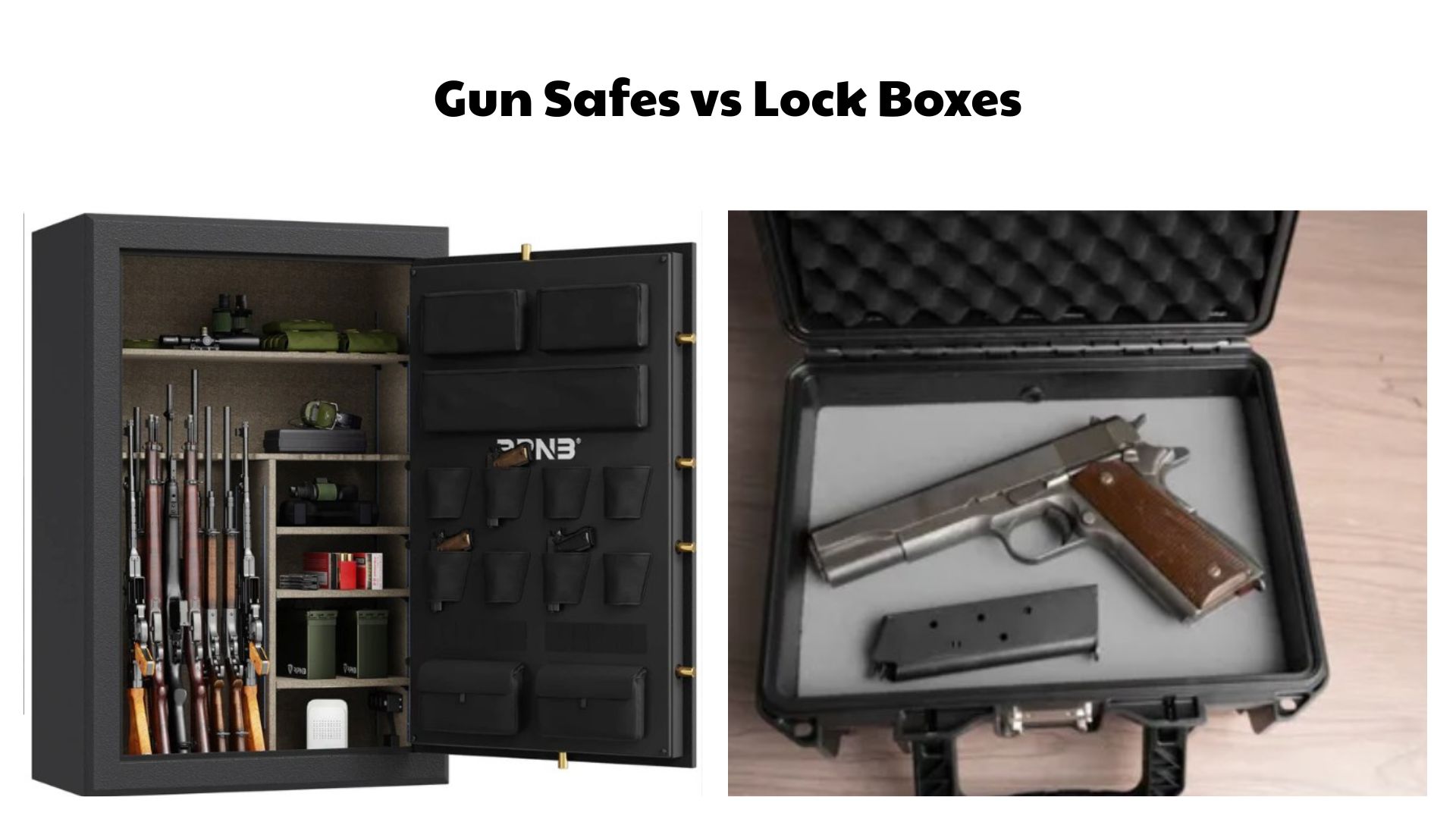

Secure firearm storage is a fundamental part of responsible gun ownership. It is not only about keeping weapons out of unauthorized hands but also about ensuring safety in the home, meeting legal requirements, and maintaining long-term control over access. Proper storage reduces risks of accidents, theft, and misuse, making it a critical responsibility for every firearm owner. In many regions, safe storage is also tied directly to legal compliance, meaning the choice of storage solution can have legal implications as well as practical ones.
Choosing the right storage system affects two key areas: security and accessibility. A highly secure option may slow down access in urgent situations, while a fast-access solution may offer less protection against theft. This trade-off is central to understanding modern firearm storage. That is why comparing gun safes vs lock boxes is important for anyone who wants to balance safety with readiness.
The two most common firearm storage solutions are gun safes and lock boxes. Gun safes are designed for maximum security and long-term protection. They are built to resist forced entry, fire, and environmental damage while storing multiple firearms and valuables. Lock boxes, on the other hand, focus on speed and convenience. They are compact, portable, and designed for fast access, especially in home defense scenarios where every second matters.
When deciding between these options, several key factors come into play. Security level is often the first consideration, as it determines how well the firearm is protected against theft or unauthorized access. Speed of access is equally important for users who may need to respond quickly in emergencies. Storage capacity also matters, especially for collectors or households with multiple firearms. Portability can influence whether the storage solution stays fixed in one location or can be moved when needed. Finally, intended use plays a major role—whether the firearm is primarily for home defense or long-term storage will often determine the most suitable option.
What Is a Gun Safe?
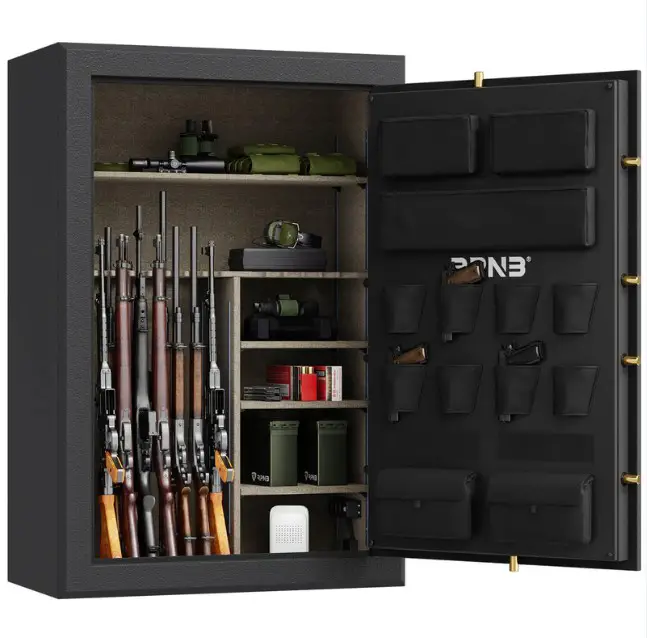
A gun safe is a heavy-duty, secure storage system specifically designed for firearms. Its primary purpose is to prevent unauthorized access while ensuring that weapons are safely stored when not in use. Unlike basic storage containers, a gun safe is engineered to provide long-term protection through reinforced construction, advanced locking systems, and resistance to external threats. It is widely considered the standard solution for responsible firearm storage in homes and professional environments.
Most gun safes are built using reinforced steel construction combined with advanced locking mechanisms. This combination creates a strong physical barrier that is difficult to breach without specialized tools and significant time. The design focuses on delaying or preventing forced entry, which is a key factor in deterring theft attempts. Over time, gun safe technology has evolved to include more sophisticated access systems while maintaining a strong emphasis on durability and security.
The main purpose of a gun safe is to protect firearms from theft, unauthorized access, fire, and environmental damage. In addition to securing weapons, many gun safes also safeguard other valuable items such as documents, electronics, and personal belongings. Fire resistance is particularly important, as some models are designed to withstand high temperatures for a limited period, helping to preserve contents during emergencies. This makes gun safes not only a security tool but also a protective storage solution for critical assets.
Gun safes are commonly used in several real-world scenarios. The most common use is home firearm storage, where owners need a secure and controlled environment for their weapons. They are also widely used for long-term weapon protection, especially for firearms that are not regularly accessed. Many gun owners use safes to store multiple firearms along with ammunition and accessories in an organized manner. In some regions, owning a gun safe also helps meet legal compliance requirements for firearm storage, making it an essential part of responsible ownership.
Key Characteristics of Gun Safes
Thick Steel Body and Reinforced Door Structure
One of the defining features of a gun safe is its thick steel body combined with a reinforced door. This construction provides strong resistance against cutting, prying, and drilling attempts. The door is typically the most heavily reinforced part, often including multiple locking points that secure it into the frame. This structure is designed to significantly slow down or prevent forced entry.
High-Security Locking Systems
Gun safes often feature advanced locking systems such as digital keypads, mechanical combination locks, or biometric fingerprint scanners. These systems provide controlled access while maintaining high security standards. Some models combine multiple authentication methods for added protection, ensuring that only authorized users can open the safe.
Large Storage Capacity
Unlike compact storage options, gun safes are designed with significant internal space. They can store multiple rifles, handguns, ammunition, and accessories in an organized layout. Adjustable shelving and internal compartments allow users to customize storage based on their needs, making them suitable for both casual owners and firearm collectors.
Fire-Resistant and Environmental Protection
Many gun safes include fire-resistant materials designed to protect contents during high-temperature events. Some models also offer protection against humidity and moisture, helping prevent corrosion and long-term damage to firearms. These environmental protections make gun safes suitable for long-term storage in various conditions.
Heavy Construction and Fixed Installation
Gun safes are typically heavy and designed for permanent placement. Most models are bolted to the floor or wall to prevent movement or theft. This fixed installation adds another layer of security by making it extremely difficult for intruders to remove the safe from its location.
High Resistance to Forced Entry and Tampering
Overall, gun safes are built to resist forced entry attempts through a combination of strong materials, reinforced locking mechanisms, and structural design. While no system is completely unbreakable, a well-built gun safe significantly increases the time and effort required to gain access, which is a key deterrent in real-world theft scenarios.
What Is a Lock Box?
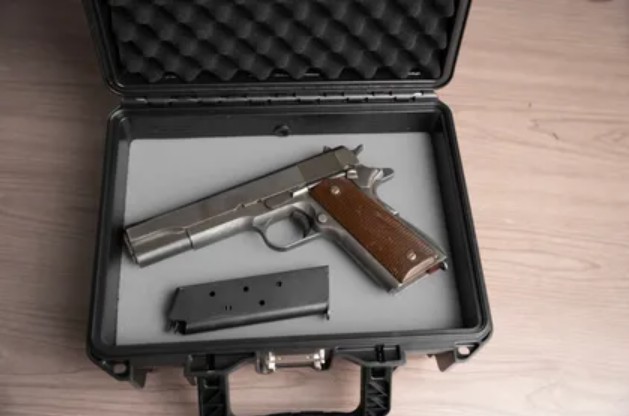
A lock box is a compact and portable firearm storage solution designed to provide controlled access to a weapon or small valuables. Unlike large gun safes, a lock box focuses on simplicity, speed, and convenience. It is typically used when the primary goal is not long-term high-security storage but rather quick and reliable access when needed. Because of its smaller size and lightweight construction, a lock box can be placed in discreet locations throughout a home, vehicle, or workspace.
The main purpose of a lock box is to support quick access rather than maximum protection. In real-world usage, this makes it especially useful in situations where time is critical, such as home defense scenarios. Instead of dealing with heavy doors or complex storage systems, the user can retrieve the firearm or item in a matter of seconds. This speed-focused design is one of the main reasons lock boxes are widely used alongside larger gun safes.
Lock boxes are commonly used in several practical scenarios. One of the most common uses is storing handguns for home defense, where immediate access is essential. They are also used for temporary firearm storage when a full safe is not available or necessary. In addition, many users rely on lock boxes for travel or vehicle storage, especially when transporting firearms in a controlled and secure manner. Outside of firearms, they are also useful for small valuables such as keys, access cards, or emergency cash.
Key Characteristics of Lock Boxes
Compact and Lightweight Design
Lock boxes are built to be small, lightweight, and easy to handle. This compact design allows them to be placed in tight or hidden spaces where larger storage systems would not fit. Their portability makes them highly practical for users who need flexible storage options in different environments.
Portable or Easily Mountable
Many lock boxes are designed to be either portable or securely mounted in discreet locations such as under desks, inside drawers, or within vehicles. This flexibility allows users to choose between mobility and fixed installation depending on their specific needs and security preferences.
Simple Locking Mechanisms
Lock boxes typically use straightforward locking systems such as mechanical keys, combination dials, or basic biometric scanners. These systems are designed for fast access while still providing a controlled level of security. The emphasis is on ease of use rather than advanced multi-layer protection.
Limited Storage Capacity
Most lock boxes are designed to hold one handgun or a small number of compact items. Their limited internal space is a trade-off for portability and speed. While they are not suitable for storing multiple firearms or large collections, they are effective for essential items that require quick access.
Focus on Accessibility Over Maximum Protection
The core design philosophy of a lock box is accessibility. It prioritizes fast retrieval over high-level resistance to forced entry. While it still provides a controlled storage environment, it is not intended to withstand prolonged or highly aggressive break-in attempts like a gun safe.
Ideal for Rapid Access in Emergency Situations
Lock boxes are especially useful in emergency situations where seconds matter. Their simple operation and close placement options allow users to access stored firearms or valuables quickly. This makes them a practical choice for home defense setups where readiness is a top priority.
Gun Safes vs Lock Boxes – Key Differences
When comparing gun safes vs lock boxes, the most important thing to understand is that they are built for completely different priorities. Gun safes are designed around maximum protection and long-term storage, while lock boxes focus on speed, accessibility, and compact convenience. This difference affects every aspect of their design, from materials and capacity to how quickly they can be accessed in real-world situations. Below is a clear breakdown of how these two systems compare across the most important factors.
1. Security Level
Gun Safes:
Gun safes provide maximum protection against theft, forced entry, and tampering. They are built with reinforced steel, heavy locking bolts, and secure door structures that make unauthorized access extremely difficult. Their primary purpose is long-term security, meaning they are designed to slow down or stop break-in attempts entirely.
Lock Boxes:
Lock boxes offer basic to moderate protection. While they can prevent casual access, they are generally easier to break into or remove compared to gun safes. Their security level is sufficient for controlled access but not intended to resist prolonged or professional forced entry attempts.
2. Purpose and Intended Use
Gun Safes:
Gun safes are intended for long-term firearm storage and protection. They are commonly used to store multiple firearms, ammunition, and other valuables in a single secure location. Their design prioritizes safety and preservation over speed of access.
Lock Boxes:
Lock boxes are designed for fast access storage. They are typically used for a single firearm or essential items that may need to be retrieved quickly. This makes them especially useful for daily carry users or home defense setups where immediate access is important.
3. Size and Storage Capacity
Gun Safes:
Gun safes offer large storage capacity. They can hold multiple rifles, handguns, ammunition, documents, and valuables. Many models include adjustable shelving and internal organization systems, making them suitable for collectors or households with several firearms.
Lock Boxes:
Lock boxes have limited storage capacity. Most are designed to hold one handgun or a small set of essential items. Their compact size is intentional, prioritizing portability and quick access over storage volume.
4. Portability
Gun Safes:
Gun safes are heavy, bulky, and typically installed in a fixed location. Many are bolted to the floor or wall to prevent movement or theft. Once installed, they are not designed to be relocated frequently.
Lock Boxes:
Lock boxes are lightweight and portable. They can be easily moved, mounted in different locations, or stored in vehicles. This flexibility makes them suitable for users who need mobile or adaptable storage options.
5. Access Speed
Gun Safes:
Gun safes generally have slower access speeds due to their strong security mechanisms. While modern safes may include electronic or biometric locks, they are still designed primarily for storage rather than immediate response.
Lock Boxes:
Lock boxes provide fast access, making them suitable for emergency situations. Their simple locking systems allow users to retrieve firearms or items quickly when time is critical.
6. Construction and Durability
Gun Safes:
Gun safes are built using heavy-duty steel construction with reinforced locking bolts and pry-resistant doors. Their durability is designed to withstand significant physical force and prolonged tampering attempts.
Lock Boxes:
Lock boxes use lighter materials and simpler construction. Their design focuses on portability and convenience rather than brute-force resistance, making them less durable under heavy attack conditions.
7. Fire and Environmental Protection
Gun Safes:
Many gun safes include fire-rated protection and environmental sealing. This helps protect firearms and valuables from high temperatures, humidity, and other environmental risks.
Lock Boxes:
Lock boxes generally offer limited or no fire and water resistance. Their design prioritizes access speed and portability rather than environmental protection.
Gun Safes vs Gun Lockers vs Lock Boxes
To fully understand firearm storage options, it is helpful to include gun lockers in the comparison. Each system represents a different level of security, capacity, and accessibility.
Gun Safes: Maximum security, long-term storage, and high capacity for multiple firearms and valuables.
Gun Lockers: A mid-level solution that is lighter and more affordable than safes, offering moderate protection for limited firearm storage.
Lock Boxes: Compact and fast-access storage designed for minimal security needs and quick retrieval of essential items.
When choosing between these options, the decision usually depends on three main factors: security needs, budget, and firearm usage frequency. High-security environments favor gun safes, while everyday access scenarios often benefit from lock boxes. Gun lockers sit in between, offering a balance of cost and protection.
Advantages of Gun Safes
Gun safes are widely regarded as the highest standard in firearm storage, especially for long-term security. Their design focuses on protection, durability, and controlled access, making them a preferred choice for responsible gun owners who prioritize safety over convenience.
One of the biggest advantages of gun safes is their highest level of firearm security. Built with reinforced steel and advanced locking systems, they are designed to resist forced entry, tampering, and unauthorized access. This makes them significantly more secure than portable storage options and ideal for protecting valuable firearms.
Gun safes also provide strong protection from theft and unauthorized access. Their heavy construction and locking mechanisms make it extremely difficult for intruders to remove or open them quickly. In many cases, the time required to breach a gun safe acts as a strong deterrent on its own.
Another important advantage is fire-resistant and durable construction. Many gun safes include fire-rated insulation that helps protect firearms and documents during high-temperature events. This durability extends the lifespan of both the safe and its contents, ensuring long-term reliability under various conditions.
Gun safes also offer large storage capacity for multiple firearms and valuables. They can hold rifles, handguns, ammunition, accessories, and even personal documents or electronics. This makes them especially useful for collectors or households with more than one firearm.
Overall, gun safes are ideal for long-term responsible gun ownership. They provide peace of mind, legal compliance in many regions, and a structured way to store firearms securely over time.
Disadvantages of Gun Safes
Despite their strong advantages, gun safes also come with certain limitations that may not suit every user. These disadvantages are mostly related to convenience, cost, and accessibility.
One of the main drawbacks is that gun safes are expensive compared to lock boxes. High-quality safes with advanced features such as fire resistance and biometric locks can require a significant investment. This cost can be a barrier for some new firearm owners.
Gun safes are also heavy and difficult to relocate. Once installed, especially if bolted to the floor or wall, they are not designed to be moved frequently. This lack of mobility limits flexibility in changing storage locations.
Another disadvantage is slower access in emergency situations. Because of their strong security mechanisms, opening a gun safe takes more time than accessing a lock box. In scenarios where every second matters, this delay can be a concern.
Finally, gun safes require dedicated installation space. Their size and weight mean they need a fixed, secure location in the home or building. Not all living spaces can easily accommodate this requirement.
Advantages of Lock Boxes
Lock boxes are designed with a completely different purpose in mind compared to gun safes. Their focus is on speed, convenience, and portability, making them highly practical for specific use cases.
One of the key advantages is quick and easy access to firearms. Lock boxes are designed for fast retrieval, which is especially important in home defense situations where response time matters. Their simple locking systems allow users to access contents in seconds.
Lock boxes also feature a portable and compact design. Their small size allows them to be placed in discreet locations such as bedside tables, vehicles, or drawers. This flexibility makes them highly convenient for users who need mobility or limited-space solutions.
Another advantage is affordability. Lock boxes are generally more affordable than gun safes, making them an accessible entry-level storage option for new firearm owners or those with limited budgets.
They are also ideal for bedside or vehicle use, where fast access is more important than maximum security. This makes them popular for home defense setups and travel-related firearm storage.
Additionally, lock boxes offer convenient access for daily or frequent use. Users who regularly handle a firearm for specific purposes may find them more practical than larger, slower-access safes.
Disadvantages of Lock Boxes
While lock boxes are convenient and fast, they come with several limitations that make them unsuitable for high-security or long-term storage needs.
One major disadvantage is their lower security level compared to gun safes. Lock boxes are designed for basic protection and can be more vulnerable to forced entry or unauthorized access.
They also have limited storage capacity, typically holding only one handgun or a small number of essential items. This restricts their use for firearm collections or multiple weapon storage.
Another drawback is that lock boxes are easier to tamper with or steal. Their lightweight design and portable nature make them less resistant to determined theft attempts compared to heavy gun safes.
Finally, lock boxes offer minimal protection against fire or environmental damage. Unlike gun safes, most models do not include fire-resistant materials or moisture protection, making them less suitable for long-term preservation of firearms or valuables.
When Should You Choose a Gun Safe?
Choosing a gun safe makes the most sense when your primary goal is long-term security, organization, and comprehensive protection for multiple firearms. Gun safes are built for situations where access speed is less important than keeping weapons fully secured and protected over time.
You should choose a gun safe if you own multiple firearms. When your collection includes several handguns or rifles, a structured storage system becomes necessary. Gun safes provide organized compartments, racks, and shelving that allow you to store firearms safely without clutter or risk of damage. This makes them especially practical for collectors or households with more than one firearm owner.
Gun safes are also the right choice if you need maximum long-term security. Their reinforced construction, heavy steel body, and advanced locking systems are designed to resist theft attempts and unauthorized access. If your priority is preventing intrusion or safeguarding valuable items for extended periods, a gun safe is the most reliable solution.
Another strong reason to choose a gun safe is if you want fire and theft protection. Many modern gun safes include fire-resistant materials that help protect firearms and documents during high-heat emergencies. Combined with strong anti-theft construction, they offer a dual layer of protection that lock boxes generally cannot match.
You should also consider a gun safe if you have space for a fixed installation. Gun safes are heavy and typically require a dedicated area in the home, often bolted to the floor or wall. This permanent setup adds stability and makes them difficult to move, which enhances security but requires proper planning for placement.
Finally, a gun safe is ideal if you prioritize storage over immediate access. Because safes are designed for protection rather than speed, they take longer to open compared to lock boxes. This trade-off is acceptable when the main goal is secure storage rather than rapid retrieval in emergency situations.
When Should You Choose a Lock Box?
A lock box is the better option when speed, portability, and convenience are more important than maximum security. It is designed for users who need quick access to a firearm or small valuables without the complexity of a full-sized safe.
You should choose a lock box if you need fast access to a firearm, especially for home defense use. Lock boxes are built for rapid retrieval, allowing users to access a handgun in seconds. This makes them highly practical for situations where immediate response time is critical.
Lock boxes are also suitable if you own one or two handguns. Their limited storage capacity is not a disadvantage in this case, as they are specifically designed for compact firearm storage. For users who do not require large storage systems, a lock box provides a simple and effective solution.
Another reason to choose a lock box is if you want portable storage for travel or temporary use. Their lightweight and compact design makes them easy to move between locations, including vehicles, hotel rooms, or temporary living spaces. This flexibility is one of their strongest advantages.
You should also consider a lock box if you have limited space. Unlike gun safes, which require a fixed installation area, lock boxes can be placed in drawers, closets, bedside tables, or other discreet locations. This makes them ideal for apartments or smaller living environments.
Finally, a lock box is the right choice if you prioritize speed over maximum security. While they do not offer the same level of protection as gun safes, they excel in situations where fast and easy access is more important than long-term resistance against forced entry.
Expert Insight – Why the Best Solution Often Includes Both
In real-world firearm ownership, the discussion around gun safes vs lock boxes is not always about choosing one over the other. From a practical and safety-focused perspective, these two systems are not competing solutions. Instead, they are complementary tools designed to solve different problems within a complete firearm safety strategy.
Gun safes and lock boxes serve different roles in firearm storage. A gun safe is built for long-term protection, offering a secure environment for multiple firearms, ammunition, and valuable items. Its purpose is to minimize risk, prevent unauthorized access, and provide strong resistance against theft or environmental damage. On the other hand, a lock box is designed for speed and accessibility. It supports rapid retrieval of a firearm or essential items in situations where time and convenience matter most.
Because of these differences, many experienced firearm owners prefer an integrated approach rather than relying on a single storage method. In this setup, a gun safe is used as the primary storage system for long-term security. It holds multiple firearms and ensures they are safely stored when not in use. This reduces overall risk and provides a controlled environment for the majority of the firearm collection.
At the same time, a lock box is used for a quick-access defensive firearm. This allows the owner to maintain a separate, easily reachable storage option for home defense purposes. In urgent situations, accessing a firearm from a lock box is significantly faster than opening a full-sized safe, making it a practical solution for immediate response needs.
This combined approach creates a balanced system that addresses both ends of the spectrum: maximum security and immediate accessibility. It reflects a realistic understanding of firearm usage in daily life, where different scenarios require different levels of access and protection. Instead of forcing a single solution to handle all needs, users can assign specific roles to each storage type.
Ultimately, balancing security and accessibility is the key principle in real-world firearm storage. A system that is too focused on security may slow down response time, while a system focused only on speed may compromise protection. Using both gun safes and lock boxes together helps bridge this gap and creates a more complete and responsible storage strategy.
Final Verdict
When comparing gun safes vs lock boxes, the final decision depends entirely on your priorities and daily usage patterns. Gun safes represent maximum protection, long-term storage capability, and high-level security. They are best suited for safeguarding multiple firearms and valuable items in a controlled and secure environment.
Lock boxes, in contrast, focus on fast access, portability, and convenience. They are designed for situations where speed matters most, such as home defense or temporary firearm storage. While they do not offer the same level of protection as gun safes, they excel in accessibility and ease of use.
The best choice is not universal. It depends on your lifestyle, how often you use your firearm, your storage space, and your overall security needs. Some users prioritize long-term protection, while others prioritize immediate access. Both approaches are valid depending on the context.
In practice, many responsible gun owners choose to use both systems together. A gun safe provides secure long-term storage for most firearms, while a lock box ensures quick access to a designated defensive firearm when needed. This dual setup offers full coverage, combining safety, readiness, and flexibility in a single, practical system.
Frequently Asked Questions (FAQ) – Gun Safes vs Lock Boxes
1. What is the main difference between a gun safe and a lock box?
The main difference lies in purpose and protection level. A gun safe is designed for maximum security, long-term storage, and protection against theft, fire, and unauthorized access. A lock box is designed for quick access and portability, usually for a single firearm or small items. Gun safes prioritize security, while lock boxes prioritize speed and convenience.
2. Are gun safes more secure than lock boxes?
Yes. Gun safes are significantly more secure because they are built with thick steel walls, reinforced doors, and advanced locking mechanisms. Lock boxes provide only basic to moderate protection and can be easier to break into or remove. If security is the top priority, gun safes are the stronger option.
3. Can a lock box replace a gun safe?
No, a lock box cannot fully replace a gun safe. While it is useful for quick access and temporary storage, it does not provide the same level of protection or storage capacity. Most responsible firearm owners use both systems together instead of choosing one over the other.
4. What is a gun safe mainly used for?
A gun safe is mainly used for long-term firearm storage, protection of multiple weapons, and securing valuable items. It is also commonly used for legal compliance in areas where firearm storage regulations exist. Its purpose is to keep firearms secure when they are not in immediate use.
5. What is a lock box mainly used for?
A lock box is mainly used for fast access storage, especially for home defense firearms, travel, or temporary storage needs. It is also used for small valuables like keys or documents. Its design focuses on speed and convenience rather than heavy-duty protection.
6. Are gun safes fireproof?
Many gun safes are fire-resistant, but not completely fireproof. They are designed to withstand high temperatures for a limited time, protecting firearms and documents from heat damage. The level of fire protection varies depending on the model and rating.
7. Can lock boxes protect against fire?
Most lock boxes do not offer fire protection. They are built for accessibility and portability, not environmental resistance. If fire protection is needed, a gun safe is the better option.
8. Which is better for home defense: gun safe or lock box?
A lock box is generally better for home defense because it provides faster access to a firearm. However, a gun safe is still important for storing other firearms securely. Many users combine both: a gun safe for storage and a lock box for emergency access.
9. Are gun safes heavy?
Yes, gun safes are typically very heavy due to their thick steel construction. Many weigh hundreds of pounds and are designed to stay in a fixed location. This weight adds to their security by making them difficult to move or steal.
10. Are lock boxes portable?
Yes, lock boxes are highly portable. They are lightweight and can be easily moved between rooms, vehicles, or travel locations. This portability is one of their main advantages over gun safes.
11. How many guns can a gun safe hold?
Gun safes vary widely in capacity. Smaller models may hold a few handguns, while larger safes can store multiple rifles, handguns, and accessories. Some high-capacity safes are designed for collectors with extensive firearm inventories.
12. How many guns can a lock box hold?
Most lock boxes are designed to hold one handgun or a small compact firearm. They are not intended for multiple firearms due to their limited internal space.
13. Are gun safes worth the money?
Yes, for most firearm owners, gun safes are worth the investment. They provide long-term protection, legal compliance in many regions, and peace of mind. While they are more expensive, the security benefits often justify the cost.
14. Are lock boxes affordable?
Yes, lock boxes are generally much more affordable than gun safes. They are often used as entry-level storage solutions or secondary storage for quick access firearms.
15. Can a gun safe be broken into easily?
No, a quality gun safe is designed to resist forced entry. While no safe is completely unbreakable, high-quality models significantly slow down or deter break-in attempts due to their reinforced construction.
16. Can a lock box be broken into easily?
Yes, compared to gun safes, lock boxes are easier to break into. They are designed for convenience rather than high-level resistance against forced entry.
17. Where should I place a gun safe?
A gun safe should be placed in a secure, stable location such as a dedicated room, closet, or corner of the home. It is often bolted to the floor or wall to prevent movement or theft.
18. Where should I place a lock box?
A lock box can be placed in discreet and easily accessible locations such as bedside tables, drawers, closets, or vehicles. The placement depends on how quickly you need access.
19. Do gun safes require installation?
Most gun safes require installation or anchoring, especially larger models. This is done to improve security and prevent theft or movement of the safe.
20. Do lock boxes require installation?
Some lock boxes can be mounted, but many are portable and do not require permanent installation. This makes them flexible and easy to reposition.
20. Do lock boxes require installation?
Not all lock boxes require installation. Many models are fully portable and can be placed directly in drawers, cabinets, or vehicles. However, some lock boxes include mounting holes so they can be bolted down for added security. Installation is optional and depends on whether the user prioritizes portability or fixed placement.
21. Which is better for beginners: gun safe or lock box?
For beginners, a gun safe is usually recommended for long-term storage because it provides higher security and structured organization. However, a lock box can be useful for beginners who need quick access for home defense. Many experts suggest using both: a gun safe for storage and a lock box for daily readiness.
22. Can I use both a gun safe and a lock box together?
Yes, using both together is actually one of the most practical setups. A gun safe handles long-term storage of multiple firearms and valuables, while a lock box provides fast access to a primary defensive firearm. This combination balances security and accessibility effectively.
23. Are biometric locks reliable for gun safes?
Biometric locks are generally reliable when made by reputable manufacturers. They offer fast access and convenience. However, like any electronic system, they depend on battery life and sensor quality. Many gun owners prefer models that include backup keys or combination options.
24. Do gun safes stop burglars completely?
No safe can guarantee 100% protection, but gun safes significantly slow down and deter burglars. Their heavy steel construction and reinforced locking systems make forced entry time-consuming, which often discourages theft attempts entirely.
25. Are lock boxes suitable for travel?
Yes, lock boxes are commonly used for travel because they are compact and portable. They allow users to securely store firearms or valuables while moving between locations. However, legal requirements for transport must always be followed depending on the region.
26. Can children open gun safes easily?
No, properly secured gun safes are designed to prevent unauthorized access, including by children. Advanced locking systems and heavy construction make them extremely difficult to open without credentials or keys.
27. Can children open lock boxes?
It depends on the model. Some low-quality lock boxes may be easier to open, but higher-quality models with biometric or strong mechanical locks provide better protection. Still, gun safes are always more secure for child safety.
28. Do gun safes protect against humidity?
Many gun safes include moisture control features such as dehumidifiers or sealed interiors. This helps prevent rust and corrosion on firearms stored for long periods, especially in humid environments.
29. Do lock boxes protect against rust or humidity?
Most lock boxes do not include humidity protection. Without additional care, firearms stored in lock boxes may be exposed to moisture, which can lead to rust over time. They are not designed for long-term environmental protection.
30. Are gun safes required by law?
In some regions, gun safes or secure storage systems are legally required for firearm ownership. Laws vary widely depending on country and state, so it is important to check local regulations. Even where not required, they are strongly recommended for safety.
31. Can lock boxes be hidden easily?
Yes, lock boxes are small and can be easily concealed in drawers, closets, or vehicles. This makes them practical for discreet storage, especially in home defense setups.
32. Do gun safes come in different sizes?
Yes, gun safes come in a wide range of sizes. Some are compact and designed for a few handguns, while others are large enough to store multiple rifles, ammunition, and valuables. Size selection depends on storage needs.
33. Are lock boxes waterproof?
Most lock boxes are not waterproof. Some may offer basic resistance to moisture, but they are not designed for full water protection like high-end gun safes.
34. Can gun safes be moved after installation?
Technically yes, but it is difficult. Gun safes are extremely heavy and often bolted down, making relocation a challenging process that may require professional assistance.
35. Are lock boxes noisy to open?
Some lock boxes with mechanical or electronic locks may produce minor noise when opening. However, most are designed to operate quietly for discreet access when needed.
36. Do gun safes protect important documents?
Yes, many gun safes are used to store important documents such as passports, certificates, and legal papers. Fire-rated models are especially useful for protecting these items from heat damage.
37. Can ammunition be stored in a gun safe?
Yes, ammunition is commonly stored in gun safes. Keeping firearms and ammo in the same secure location is a standard practice for responsible gun owners.
38. Can lock boxes store ammunition?
Lock boxes can store small amounts of ammunition, but space is limited. They are not designed for bulk storage like gun safes.
39. Are gun safes bulletproof?
Most gun safes are not fully bulletproof, but they are highly resistant to penetration and forced entry. Their main purpose is security and delay, not ballistic protection.
40. Do lock boxes come with alarms?
Some advanced lock boxes include alarm features, especially biometric models. These alarms trigger when unauthorized access is attempted, adding an extra layer of security.
41. Are gun safes difficult to install?
Large gun safes can be difficult to install due to their weight and size. Many require anchoring to floors or walls. Smaller safes are easier to set up but still require careful placement.
42. Do lock boxes last long?
Lock boxes can last a long time if used properly and maintained well. However, their durability is generally lower than gun safes due to lighter construction materials.
43. Can gun safes be hacked electronically?
Low-quality electronic locks may be vulnerable, but reputable gun safes use secure systems that are difficult to bypass. Mechanical backup options also reduce risk.
44. Are biometric gun safes fast to open?
Yes, biometric safes are typically very fast. Fingerprint recognition allows quick access, making them popular for users who want both security and speed.
45. Do lock boxes require batteries?
Only electronic or biometric lock boxes require batteries. Mechanical models operate without power, making them more reliable in situations where batteries may fail.
46. Can gun safes be hidden?
Yes, some gun safes are designed to be hidden inside walls, closets, or furniture. However, larger safes are often visible due to their size and weight.
47. Are lock boxes good for apartments?
Yes, lock boxes are ideal for apartments because they are compact, lightweight, and do not require permanent installation. They are a practical solution for limited living spaces.
48. Do gun safes reduce insurance costs?
In some cases, yes. Insurance providers may offer discounts if firearms or valuables are stored in certified gun safes, as they reduce risk of theft and damage.
49. Are lock boxes TSA approved?
Some lock boxes are designed to meet TSA requirements for firearm transport, but approval depends on specific models and airline regulations. Always verify before travel.
50. What is the best overall setup for firearm storage?
The most effective setup for many firearm owners is a combination system. A gun safe is used for long-term storage and protection of multiple firearms, while a lock box is used for quick-access defensive needs. This hybrid approach provides both high security and immediate readiness, making it a balanced and practical solution in real-world use.
Read more: