
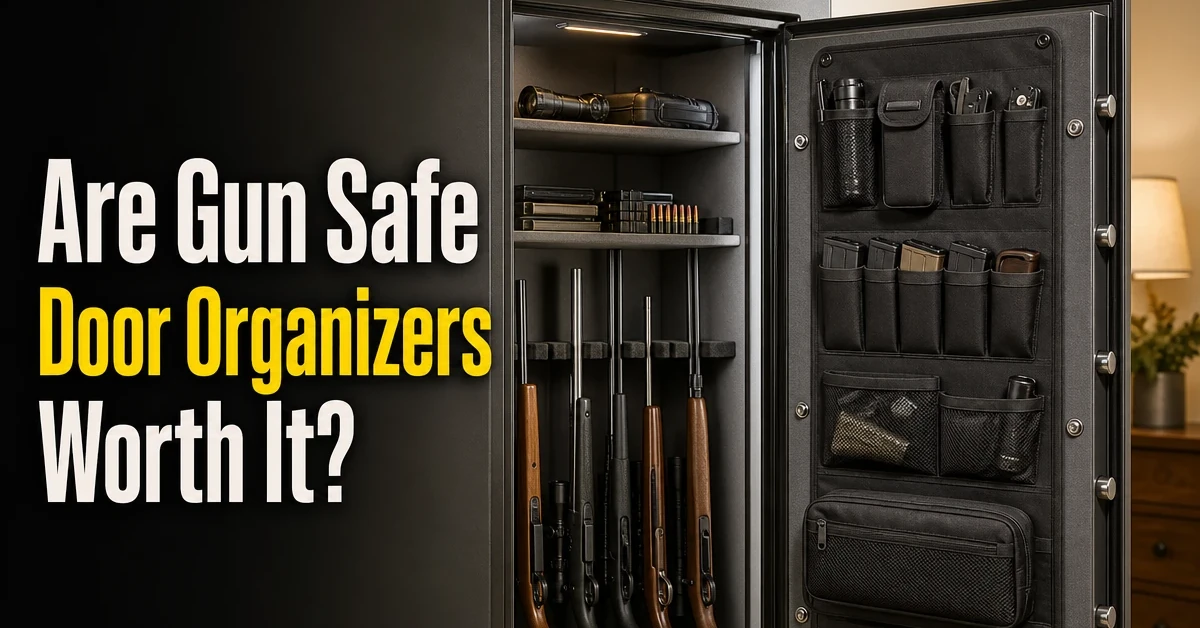

Are gun safe door organizers worth it? Usually, yes—if your safe has unused door space and you need better organization for handguns, magazines, documents, or range gear. They can improve access and free shelf space, but they are not automatically worthwhile: compatibility, added weight, secure attachment, and responsible firearm storage matter most.
When a Gun Safe Door Organizer Is Worth It
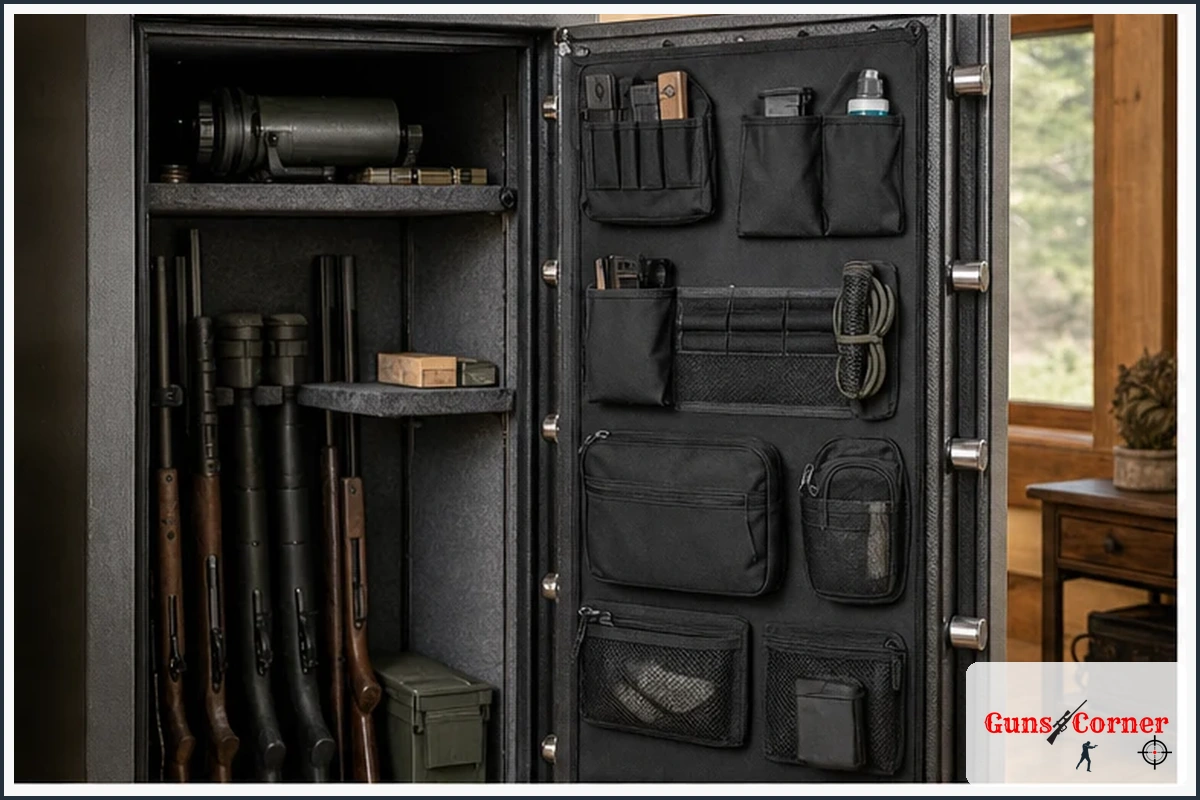
A door organizer is most useful when the safe’s interior door has enough clearance for a panel, pockets, or holsters without interfering with shelves, firearms, locking bars, or the door seal.
- You need more usable storage: Door pockets can hold smaller items that otherwise occupy shelf space.
- You want faster organization: Frequently used accessories are easier to locate.
- Your safe has wasted door space: A suitable organizer can turn that unused area into practical storage.
- You store varied equipment: Magazines, hearing protection, cables, documents, optics accessories, and cleaning supplies may fit better on the door.
The main benefit is organization, not increased safe capacity. An organizer should never be used to overcrowd the safe or force firearms against one another.
When a Door Organizer May Not Be Worth It
A door panel may be a poor choice if your safe is already near its weight limit, has limited interior clearance, or contains firearms that could contact the organizer when the door closes.
- The panel blocks shelves or prevents the door from closing fully.
- Added weight causes the door to sag or makes operation difficult.
- The mounting system is incompatible with the safe’s construction.
- Pockets allow firearms or magazines to shift during normal door movement.
- The organizer holds items that could interfere with locking hardware.
- You primarily store long guns and have no practical need for door pockets.
In a small safe, a simple shelf adjustment or separate locked storage container may be more useful than adding a large door panel.
Benefits and Limitations at a Glance
| Factor | Potential Benefit | Possible Drawback |
|---|---|---|
| Storage | Uses otherwise empty door space | Does not replace adequate firearm clearance |
| Organization | Keeps small accessories visible | Loose items may shift if pockets are overloaded |
| Access | Makes selected gear easier to find | Frequent access should not compromise safe storage |
| Installation | Many panels attach without permanent modification | Mounting methods vary by safe design |
| Capacity | May free shelf space | Can reduce clearance around firearms and locking parts |
What to Check Before Buying a Gun Safe Door Organizer
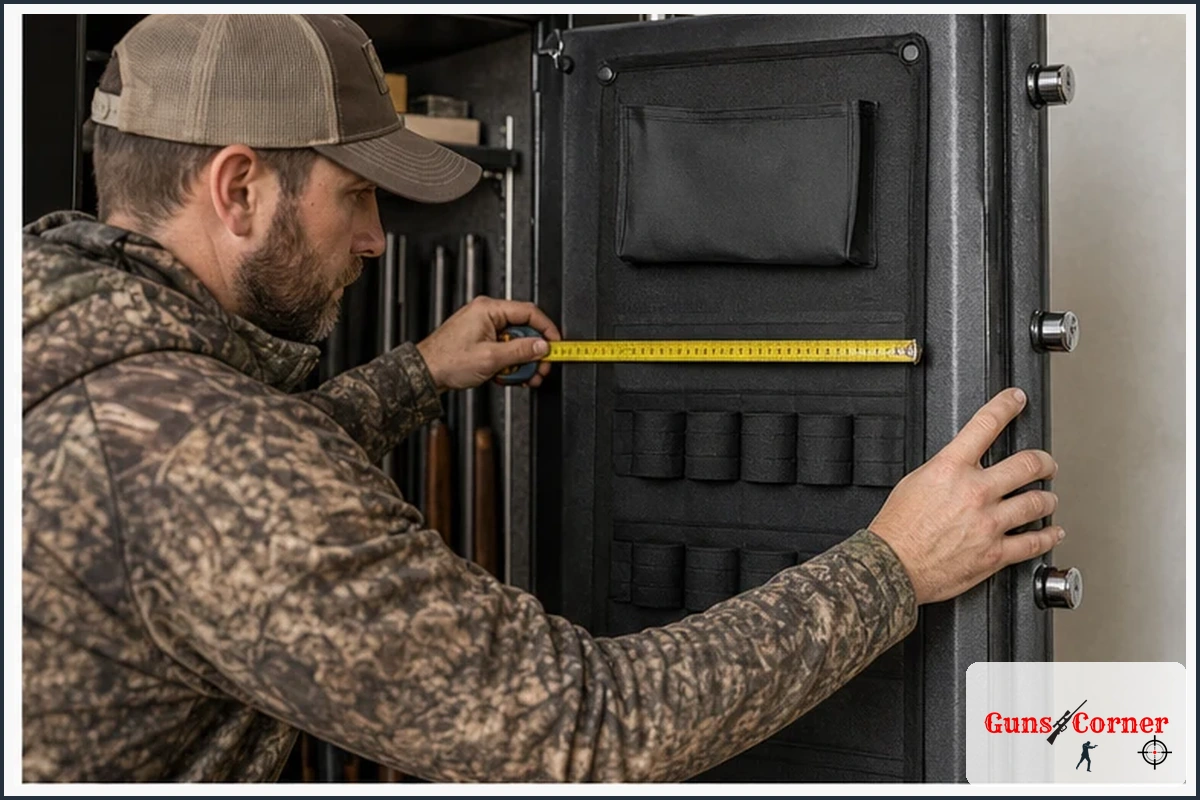
Measure the Door and Interior Clearance
Measure the usable door area, not just the outside dimensions. Check the distance between the door panel and shelves, firearm stocks, optics, locking bars, and the safe’s gasket or seal.
Close the door slowly after installation and confirm that nothing contacts the organizer. Never rely only on a product’s general size description; mounting position can change the usable clearance.
Confirm the Mounting Method
Common organizers use hook-and-loop fasteners, straps, magnets, factory attachment points, or other hardware. Use only a method approved for your safe and compatible with its interior lining.
Do not drill into a safe door unless the safe manufacturer specifically permits it and you understand the potential effect on locking hardware, fire protection, and warranty coverage.
Consider Weight and Door Balance
Organizers become heavier when loaded. Excessive weight may make the door harder to operate or affect its alignment over time. Follow the safe manufacturer’s instructions and keep the load distributed sensibly.
Inspect Construction and Retention
Look for reinforced stitching, secure attachment points, abrasion-resistant material, and pockets that retain their contents when the door moves. A handgun compartment should keep the firearm from falling or shifting into an unsafe position.
Product specifications and fit vary by model. Verify dimensions and installation instructions from the organizer manufacturer before purchasing.
How to Use One Safely
- Unload firearms before organizing the safe. Confirm the chamber and magazine status according to the firearm manufacturer’s instructions.
- Install the organizer with the safe empty. This makes it easier to inspect clearance and attachment points.
- Close the door slowly. Check for contact with firearms, shelves, locking hardware, and the seal.
- Secure loose items. Nothing should fall into the path of locking bars or obstruct the door.
- Keep ammunition separated as required by local law and your storage plan.
- Recheck the panel periodically. Look for loose fasteners, stretched fabric, damaged stitching, or sagging.
Continue following the four basic firearm-safety principles: treat every firearm as loaded, keep the muzzle pointed in a safe direction, keep your finger outside the trigger guard until ready to shoot, and identify the target and what lies beyond it.
Best Items to Store on a Safe Door
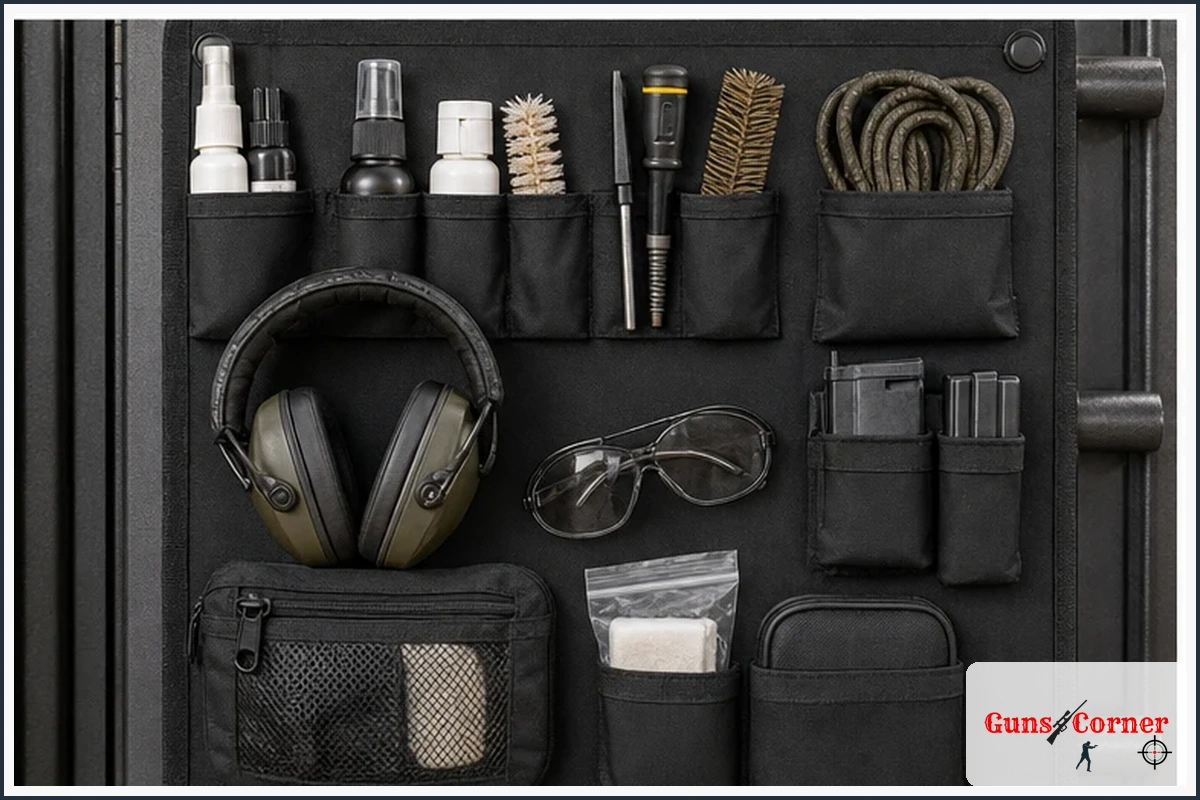
Door organizers are generally most useful for lightweight, non-critical accessories rather than large or heavy equipment.
- Cleaning supplies
- Hearing and eye protection
- Small tools
- Firearm manuals and maintenance records
- Range bags or cables
- Safely secured magazines, where appropriate
- Documents and small valuables
Use dedicated, properly fitted firearm storage positions for firearms. Avoid placing loaded firearms in pockets unless the storage system is specifically designed for that purpose and local requirements are satisfied.
Common Mistakes to Avoid
- Buying by advertised width without measuring interior clearance.
- Overloading the organizer with heavy items.
- Allowing a firearm, optic, or magazine to press against the door seal.
- Blocking shelves, hinges, locking bars, or emergency mechanisms.
- Using improvised mounts that can detach inside the safe.
- Assuming an organizer makes an overcrowded safe safe to use.
- Storing keys, combinations, or access devices where unauthorized users can find them.
Safe Storage and Legal Considerations
A door organizer does not replace responsible firearm storage. Keep firearms secured against unauthorized access, especially where children or other untrained people may be present. Storage requirements vary by state and locality, so check current official law and follow the firearm manufacturer’s instructions.
If the safe is used for home-defense storage, balance accessibility with secure access control. A convenient organizer should never encourage unsafe handling or leave firearms unsecured outside the safe.
FAQs
Are gun safe door organizers safe?
They can be safe when properly fitted, securely attached, and kept clear of firearms, shelves, locking hardware, and the door seal. Inspect the organizer regularly and do not overload it.
Do gun safe door organizers increase firearm capacity?
They may free shelf space for smaller equipment, but they do not safely increase the number of firearms a safe can hold. Firearms still need adequate clearance and protection from contact.
Can a gun safe door organizer damage the safe?
Improper drilling, excessive weight, or unsuitable adhesives can damage the interior, affect the door, or interfere with warranty coverage. Follow the safe and organizer manufacturers’ instructions.
What should not be stored in a gun safe door organizer?
Avoid heavy items, loose objects that can enter locking mechanisms, and anything that prevents the door from closing completely. Do not use general pockets as a substitute for dedicated firearm retention.
Are custom organizers better than universal organizers?
A custom or manufacturer-specific organizer may provide better fit and clearance, while a universal model can be more flexible and affordable. The better choice depends on verified measurements, attachment quality, and safe compatibility.
Final Answer: Are Gun Safe Door Organizers Worth It?
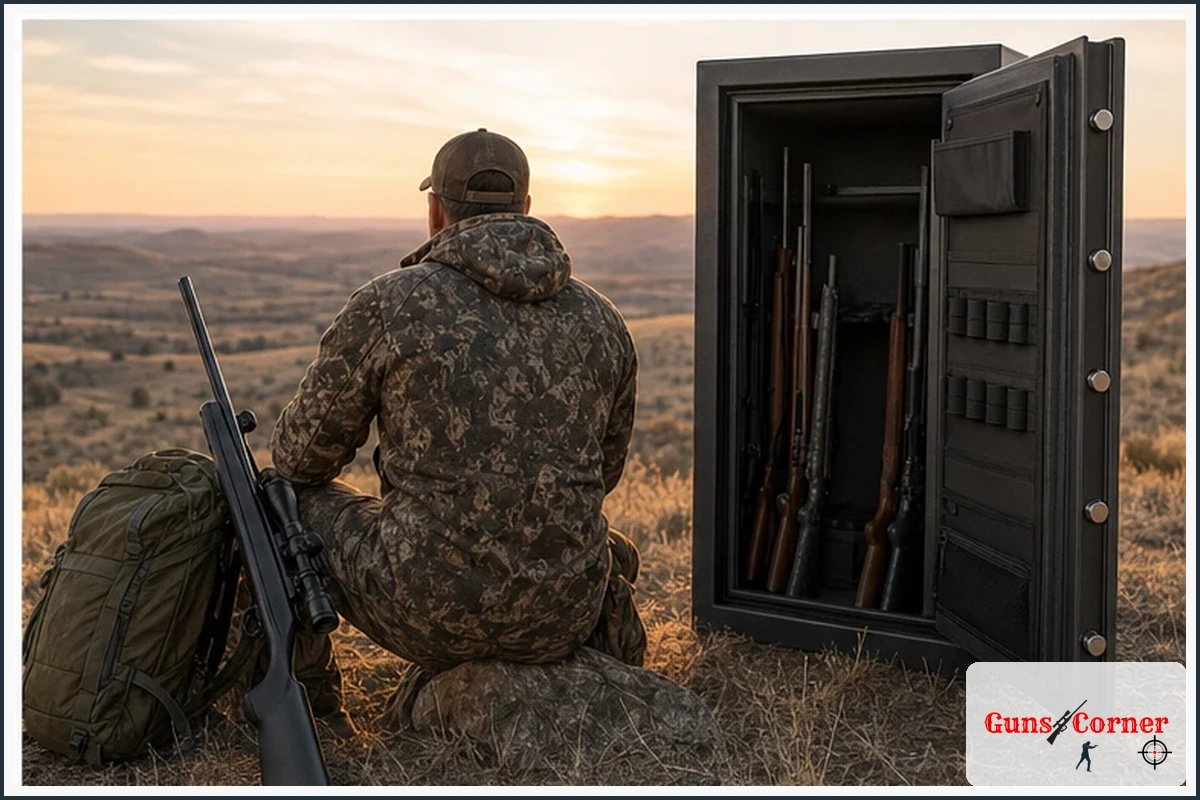
Gun safe door organizers are worth it when they use otherwise wasted space, improve organization, and fit the safe without adding excessive weight or interfering with firearms and locking hardware. They are not worth buying simply to overcrowd a safe or replace proper firearm storage.
Measure first, verify compatibility, follow manufacturer instructions, and check current storage laws in your jurisdiction. Responsible organization should make secure storage easier—not compromise it.