
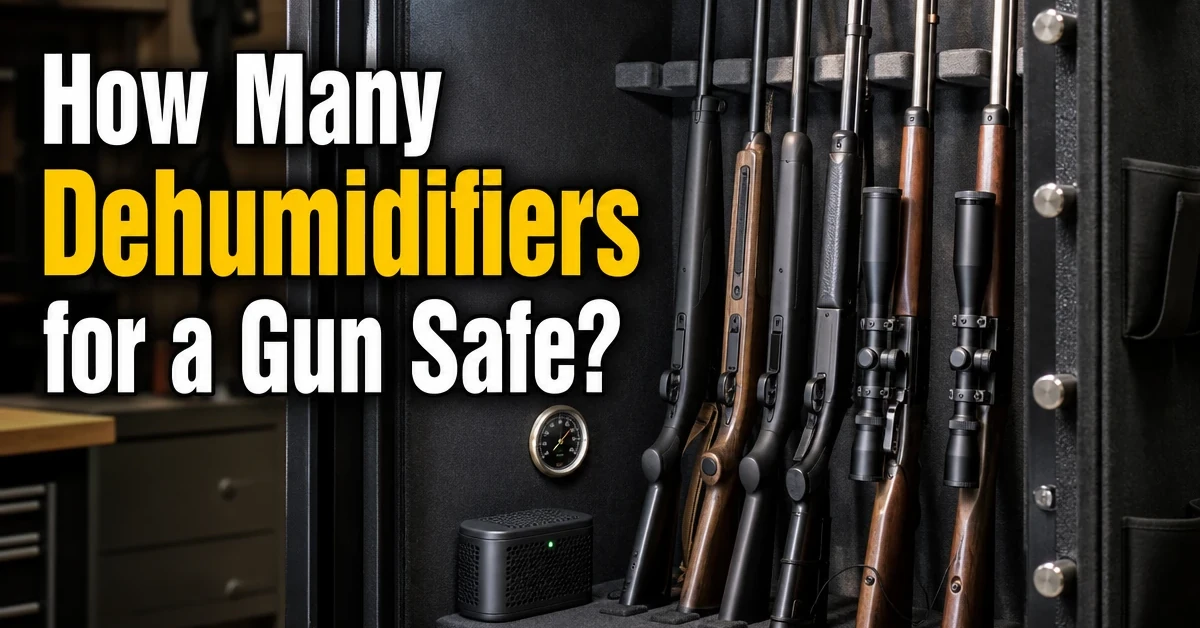

For most gun safes, one properly sized dehumidifier is enough. A large safe, unusually damp room, poor door seal, or persistent high humidity may justify a second unit—but adding more devices without measuring humidity is not automatically better. The safest approach is to use a hygrometer, follow the dehumidifier manufacturer’s coverage guidance, and control moisture in the room around the safe.
Why One Dehumidifier Is Usually Enough
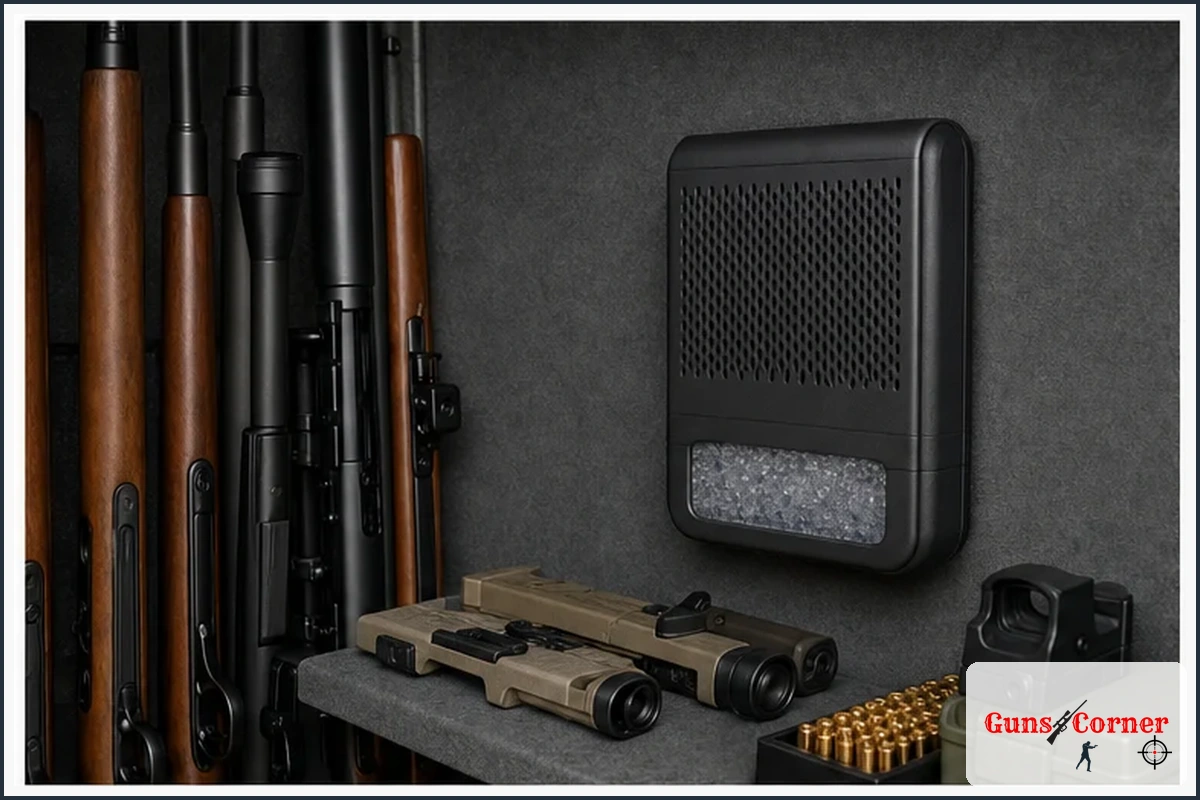
A gun-safe dehumidifier is intended to reduce condensation and help protect firearms, ammunition, optics, and other metal items from surface corrosion. The correct number depends more on safe volume, humidity, air circulation, and device capacity than on the safe’s advertised gun count.
| Situation | Starting point | What to monitor |
|---|---|---|
| Small or medium safe in a climate-controlled room | One appropriately rated unit | Relative humidity and signs of condensation |
| Large safe or tightly packed interior | One higher-capacity unit, or a second unit if needed | Humidity at both upper and lower areas |
| Damp basement, garage, or coastal environment | One safe dehumidifier plus room-level moisture control | Ambient room humidity and safe humidity |
| Humidity remains high after installation | Diagnose the room, seal, placement, and measurement before adding another unit | Verified hygrometer readings over time |
How to Decide How Many Dehumidifiers You Need
1. Measure the Safe’s Interior Volume
Measure the interior length, width, and height, then multiply those dimensions to estimate cubic volume. Use the manufacturer’s stated coverage rating when available, because different products use different designs and capacity descriptions.
Do not assume that a “40-gun” safe needs a specific number of units. Interior shelving, rifles, cases, documents, and accessories can restrict air movement, while the actual room conditions may have a greater effect than the safe’s storage capacity.
2. Check Relative Humidity With a Hygrometer
A small digital hygrometer gives you useful information about whether the setup is working. Place it inside the safe where it will not be blocked by firearms or shelving, and compare its reading with the humidity in the surrounding room.
There is no single universal humidity number that guarantees protection for every firearm and storage environment. Aim for stable, moderate humidity rather than extremely dry conditions. Very dry air can be undesirable for some wood stocks and other materials, while excessive moisture increases corrosion risk.
3. Consider the Room Before Adding a Second Unit
A safe located in a damp basement or garage may continue to show elevated humidity even with multiple internal devices. In that situation, a room dehumidifier, improved ventilation, leak repair, or relocation to a more stable environment may provide more benefit than adding another small absorber inside the safe.
Keep the safe away from direct water sources and avoid placing it directly against a damp exterior wall when practical. Follow the safe manufacturer’s installation guidance.
When a Second Dehumidifier May Make Sense
A second unit may be reasonable when the safe is unusually large, has separate compartments, contains obstructed shelves, or remains humid after the first unit is correctly installed and the room has been addressed.
Before adding one, verify that:
- The first unit is rated for the safe’s interior volume.
- The hygrometer is accurate enough for practical monitoring.
- The safe door closes and seals correctly.
- The safe is not exposed to leaks, condensation, or damp flooring.
- Firearms and cases are not blocking airflow.
- The room itself is not excessively humid.
- The second device can be installed safely according to its instructions.
Using two devices is not automatically harmful, but excessive heating or unnecessary electrical equipment can create maintenance and safety concerns. A second unit should solve a measured problem, not simply provide extra reassurance.
Rod Dehumidifiers vs. Moisture Absorbers
| Type | How it works | Advantages | Limitations |
|---|---|---|---|
| Electric warming rod | Gently warms air to encourage circulation and reduce condensation risk | Continuous operation when properly installed; no refill cycle | Requires safe power access and does not remove room moisture |
| Rechargeable desiccant | Absorbs moisture and is periodically regenerated | Does not require continuous electrical power inside the safe | Needs monitoring and recharging; capacity varies by product |
| Disposable moisture absorber | Collects moisture in an absorbent material or container | Simple and inexpensive for limited applications | Must be replaced and checked for spills or saturation |
Do not combine products solely because another setup uses both. Choose a system that matches the safe, room, power availability, and maintenance routine. Always follow the manufacturer’s instructions for placement, clearance, electrical connection, and replacement.
Where to Place a Gun-Safe Dehumidifier
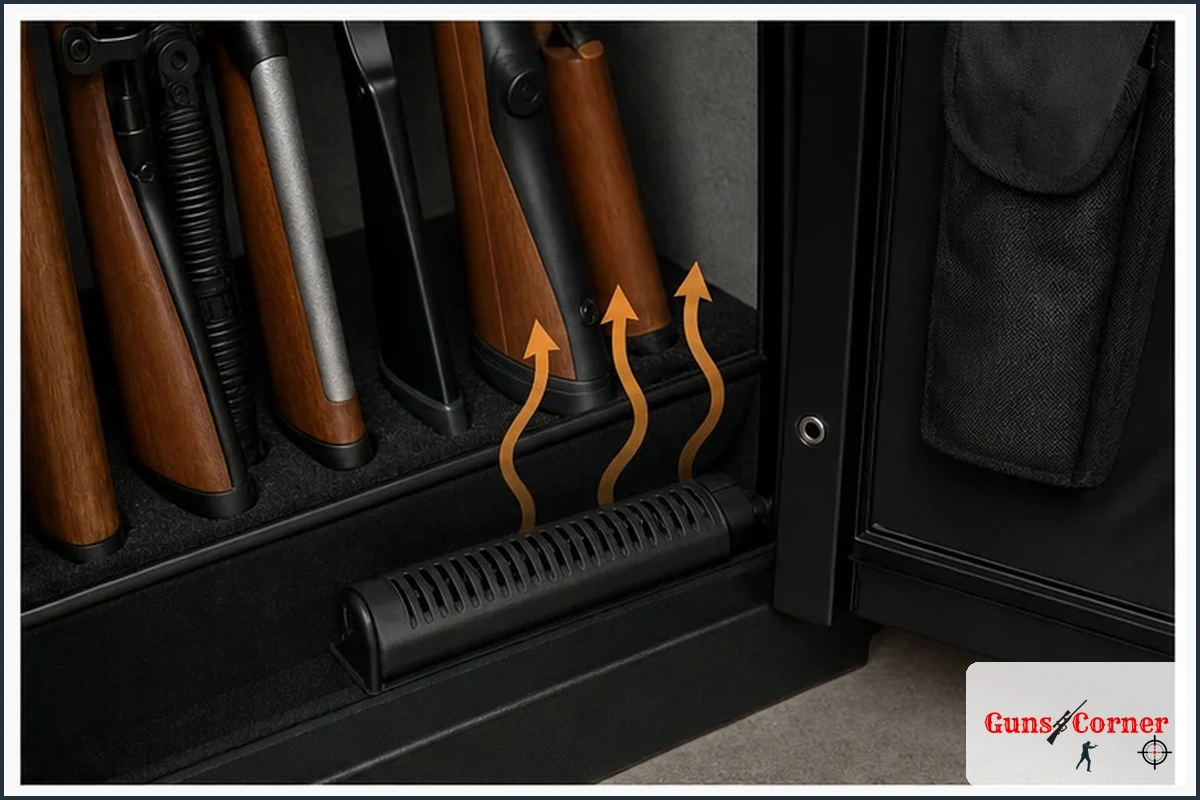
Placement depends on the device design. Many warming rods are installed low in the safe so warmed air can circulate upward, but the product manual takes priority. Desiccant units should not be buried under gear or placed where leaked liquid could contact firearms or ammunition.
- Keep the unit clear of clothing, paper, cases, and other materials unless the instructions state otherwise.
- Do not modify the power cord or use an unsafe electrical connection.
- Keep moisture collectors upright and inspect them regularly.
- Leave enough space for air movement around firearms.
- Use only devices designed for the intended environment and voltage.
Common Mistakes to Avoid
- Adding devices without measuring humidity: A hygrometer helps identify whether the problem is inside the safe or in the room.
- Ignoring the surrounding room: Internal devices cannot fully correct leaks, flooding, or persistently damp air.
- Overpacking the safe: Crowded storage restricts circulation and can hide moisture.
- Storing damp equipment: Wet cases, clothing, or firearms can introduce moisture directly into the safe.
- Failing to inspect firearms: Check metal surfaces, bore areas, optics, and accessories periodically.
- Using household appliances inside the safe: A general room dehumidifier may not be designed for enclosed safe use.
- Assuming a dehumidifier replaces maintenance: Clean, lightly protect, and store firearms according to their manufacturer instructions.
Safe Firearm Storage Practices
Moisture control is only one part of responsible storage. Keep firearms secured against unauthorized access, especially children and untrained users. Store ammunition according to manufacturer guidance and applicable law, and maintain the safe’s locking system and emergency access procedures.
Before storing a firearm, confirm that it is unloaded and that the chamber and magazine condition are known. Always follow the four basic firearm safety rules: treat every firearm as loaded, keep the muzzle pointed safely, keep your finger outside the trigger guard until ready to shoot, and identify the target and what lies beyond it.
When to Seek Professional Help
Persistent condensation, visible rust, water intrusion, damaged wiring, or unexplained humidity changes deserve prompt attention. Stop using a damaged electrical device and consult the manufacturer or a qualified professional. If firearms show corrosion, follow the firearm manufacturer’s maintenance guidance or use a qualified gunsmith rather than aggressively removing rust from valuable finishes.
FAQs
1. Is one dehumidifier enough for a gun safe?
Usually, yes. One correctly sized unit is often sufficient for a small or medium safe in a reasonably dry, climate-controlled room. Confirm performance with a hygrometer instead of relying only on the number of devices.
2. Can you use two dehumidifiers in one gun safe?
Yes, when the safe is large or humidity remains high after the room and first device have been checked. Use compatible products, avoid overcrowding, and follow each manufacturer’s installation instructions.
3. Should a dehumidifier be placed at the top or bottom of a gun safe?
Placement varies by design. Many warming rods are positioned low to encourage air circulation, but the product manual should determine the correct location. Desiccant products should remain stable, visible, and protected from spills.
4. Does a gun-safe dehumidifier remove all moisture?
No. It helps manage moisture inside the safe but does not repair leaks, dry a damp room, or replace firearm maintenance. Room humidity and storage habits remain important.
5. Do I need a room dehumidifier as well?
You may need one if the safe is in a damp basement, garage, or other high-humidity space. Reducing moisture around the safe can be more effective than continually adding internal devices.
6. How do I know whether my gun safe is too humid?
Use a hygrometer and watch for persistent elevated readings, condensation, musty odors, or surface corrosion. Readings should be interpreted with the room’s temperature, storage materials, and firearm condition in mind.
7. Can a gun-safe dehumidifier damage firearms?
A properly rated and correctly installed device should not damage firearms, but excessive heat, unsafe wiring, spills, or extremely dry conditions can create problems. Follow the product and firearm manufacturers’ instructions.
Final Answer: How Many Dehumidifiers for a Gun Safe?
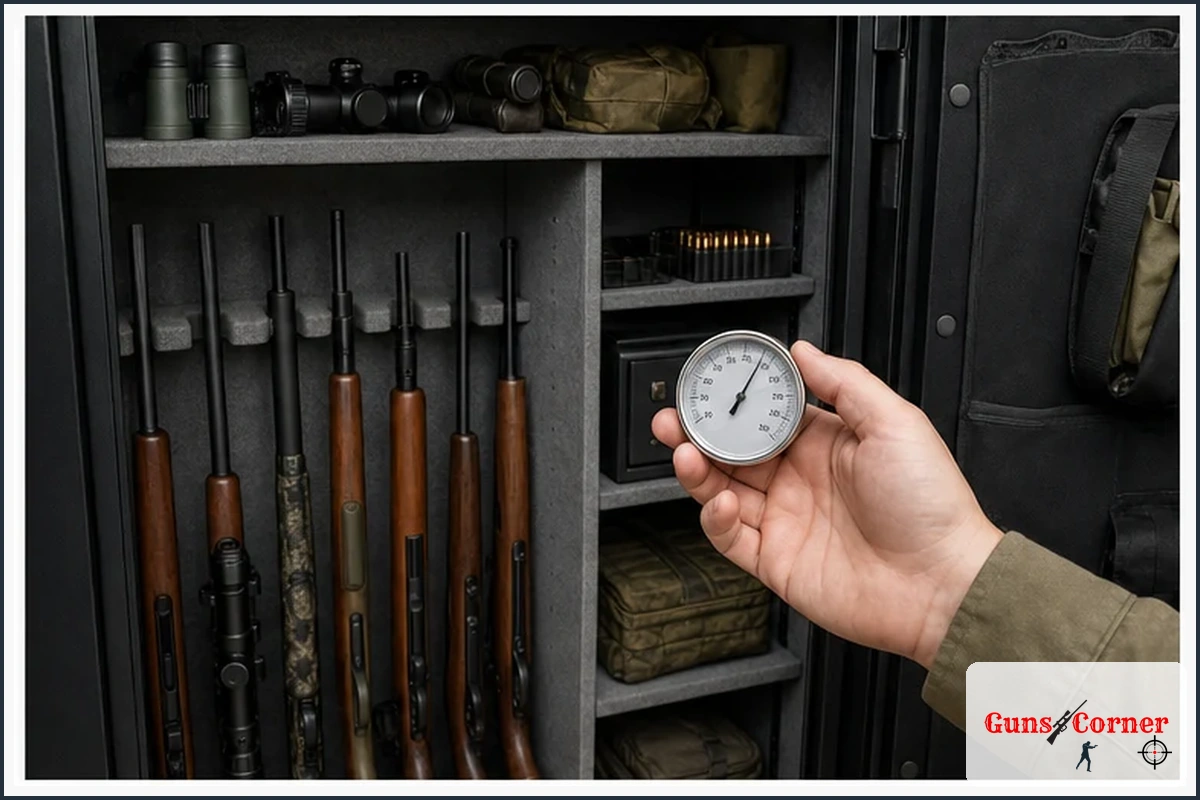
Start with one appropriately sized dehumidifier and monitor the safe with a hygrometer. Add a second only when the safe’s size, layout, or measured humidity shows that one unit is insufficient after addressing room moisture and airflow. Safe installation, secure firearm storage, regular inspection, and manufacturer guidance matter more than simply using the greatest number of devices.
General online advice does not replace the safe and dehumidifier manuals. For electrical, storage, or firearm-maintenance concerns, follow the manufacturer’s instructions and consult a qualified professional.