
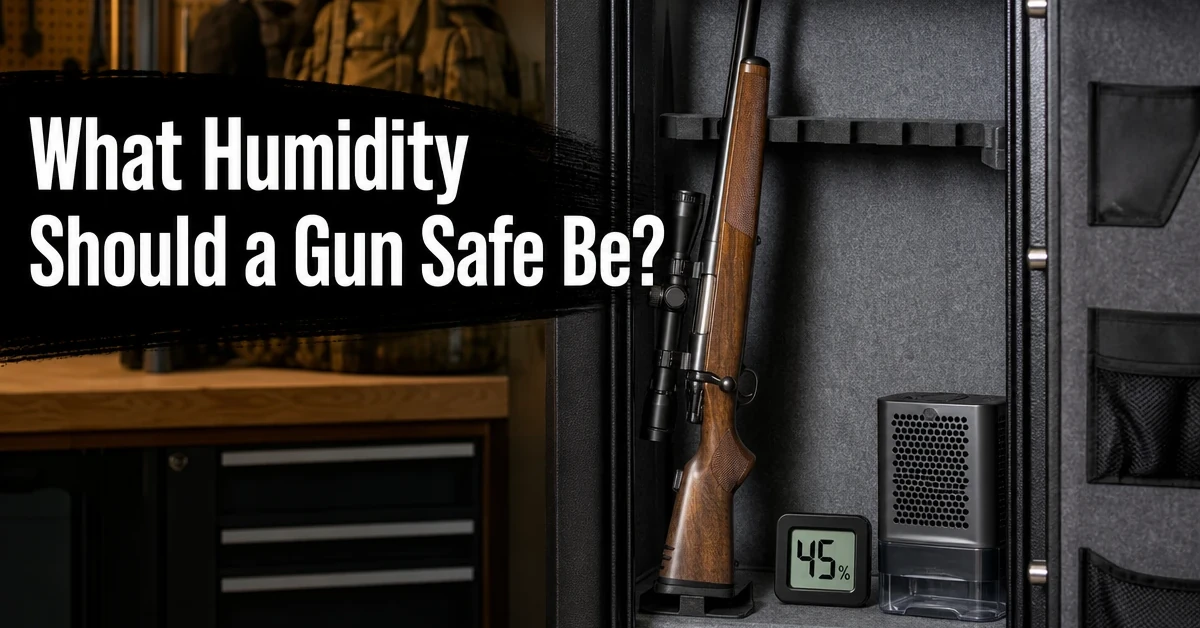

What humidity should a gun safe be? For most firearm storage, aim for approximately 40% to 50% relative humidity, with about 50% serving as a practical target. This range helps limit rust on metal parts without excessively drying wooden stocks. Use a reliable hygrometer, control temperature changes, and follow each firearm manufacturer’s storage instructions.
Why Gun-Safe Humidity Matters
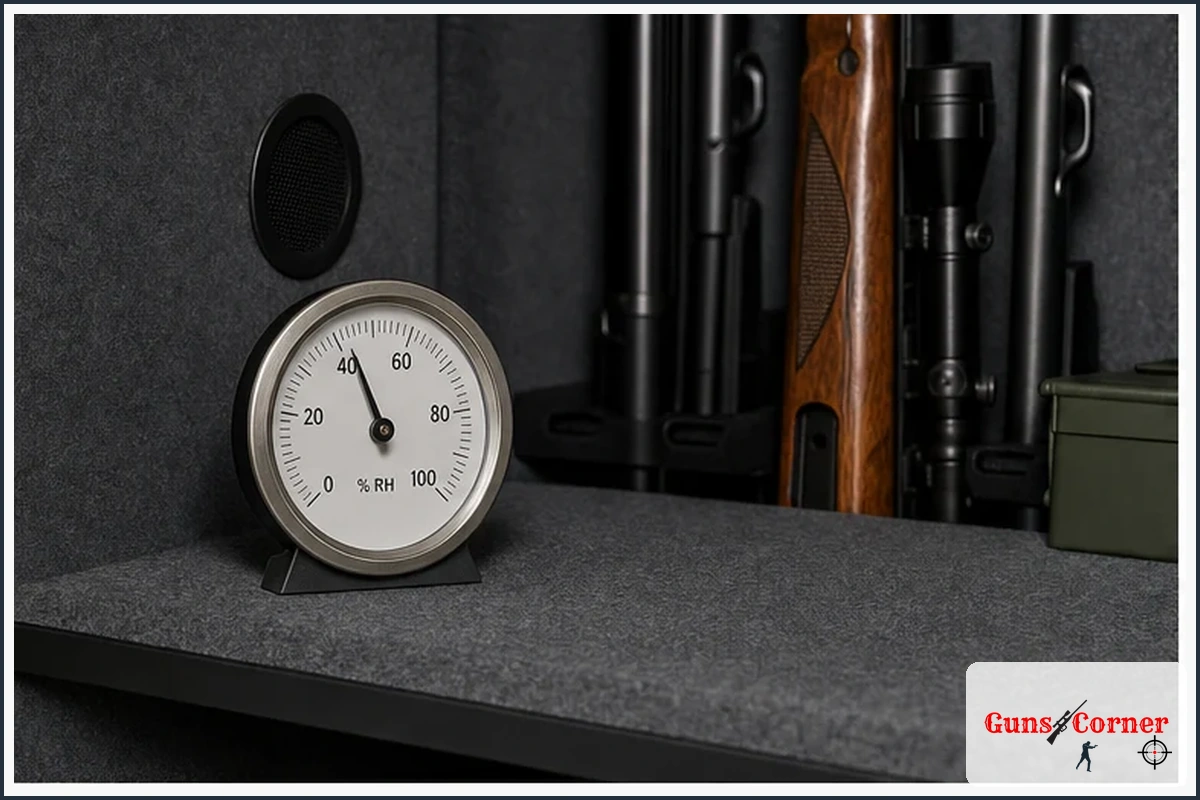
Humidity is the amount of water vapor in the air. Relative humidity, usually shown as RH, describes how much moisture the air holds compared with the maximum it could hold at that temperature.
High humidity can encourage corrosion on blued, stainless, and unfinished metal surfaces. Moisture can also affect ammunition, leather, optics, wood stocks, and other materials stored inside a safe.
Humidity is only part of the problem. Temperature swings can cause condensation when warm, moist air contacts cooler firearm surfaces. A safe in a damp basement, garage, or poorly conditioned room may therefore need more monitoring than one kept in a stable indoor living area.
Recommended Humidity Range for a Gun Safe
| Relative Humidity | General Storage Concern | Practical Response |
|---|---|---|
| Below 30% | May be excessively dry for some wood stocks and finishes | Check wooden firearms and manufacturer guidance |
| 40%–50% | Generally a sensible storage range | Monitor regularly and maintain stable conditions |
| Above 50% | Increasing corrosion risk, especially with temperature changes | Improve moisture control and inspect firearms |
| Above 60% | Unnecessarily damp for long-term firearm storage | Act promptly with dehumidification and environmental changes |
These are practical storage guidelines rather than a universal legal or manufacturer specification. Collectible firearms, heavily oiled firearms, wood-stocked guns, and firearms with specialized finishes may have different care requirements.
How to Measure Humidity Inside a Gun Safe
Use a digital hygrometer
Place a dependable digital hygrometer inside the safe so you can measure the actual conditions around the firearms. A room hygrometer does not necessarily show the humidity inside a closed safe.
Choose a unit with a readable display and, preferably, high- and low-humidity memory. Check its accuracy according to the manufacturer’s instructions. An inexpensive sensor can be useful, but an obviously inaccurate reading can create false confidence.
Position the sensor properly
Keep the hygrometer away from a heating element, direct airflow, exterior walls, and containers that may hold moisture. In a large safe, conditions may differ between the upper and lower shelves, so a second sensor can help identify problem areas.
Check trends instead of one reading
A single reading is less useful than a pattern. Record humidity at different times, especially after heavy rain, seasonal changes, or frequent safe openings. Rapid swings may matter even when the average reading appears acceptable.
Ways to Control Moisture in a Gun Safe
Use a properly installed safe dehumidifier
A purpose-built electric safe dehumidifier can gently warm the air and reduce the likelihood of condensation. Follow the product’s installation instructions, electrical requirements, clearance guidance, and safe-size recommendations.
Do not place an electrical device where it can contact water, interfere with the safe door, damage firearm finishes, or create a trip or cord hazard.
Consider rechargeable moisture absorbers
Rechargeable desiccant products can help in smaller safes or locations without convenient power. They must be monitored and regenerated as directed. A saturated absorber is no longer protecting the safe effectively.
Control the surrounding room
Moving the safe away from damp concrete floors, plumbing leaks, exterior moisture, and unconditioned spaces may be more effective than adding more devices inside the safe. A dehumidifier inside the safe cannot correct a serious leak or persistently wet room.
Open the safe carefully
Opening a safe allows room air inside. In humid weather, repeated openings can raise the internal humidity. Avoid storing wet firearms, damp cases, wet clothing, or recently used gear inside the safe.
Gun-Safe Storage Practices That Reduce Rust
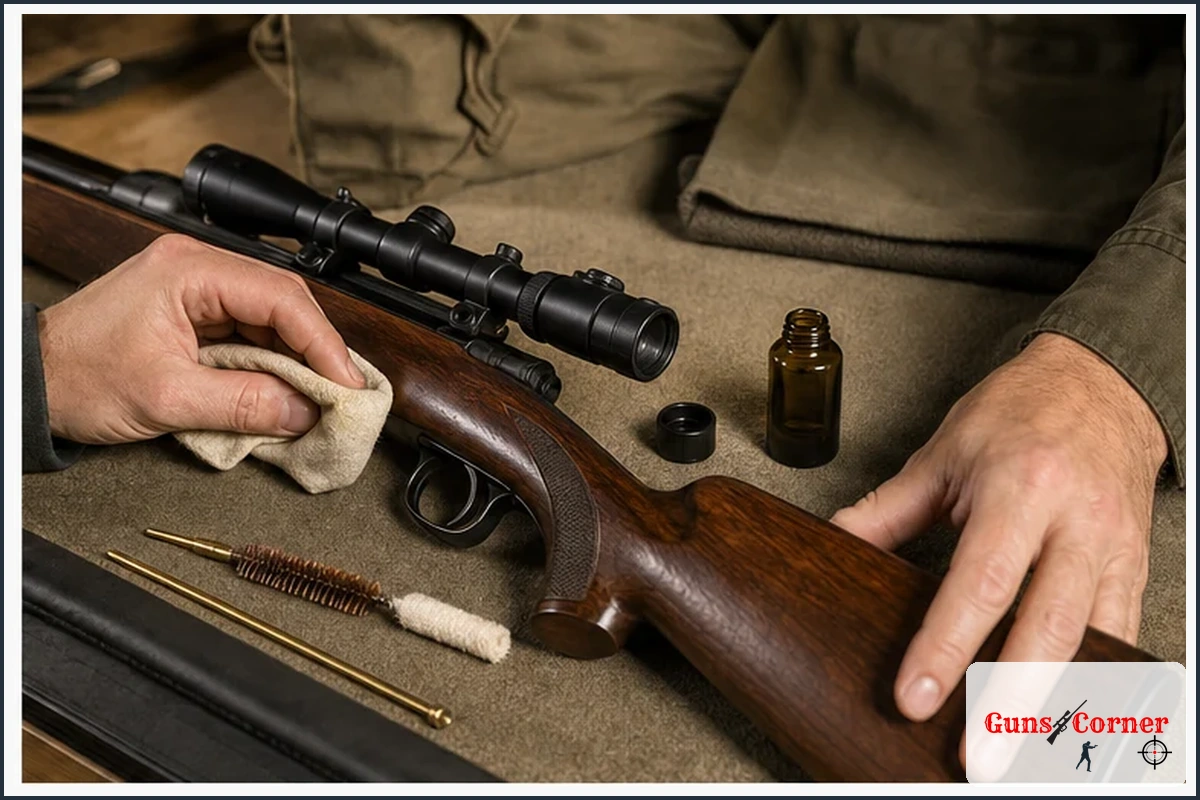
- Clean and lightly protect firearms according to the manufacturer’s instructions before storage.
- Dry firearms completely after exposure to rain, snow, condensation, or high humidity.
- Allow recently used firearms to reach a dry, stable condition before placing them in the safe.
- Keep firearms from touching damp carpeting, concrete, cardboard, or untreated wood.
- Leave enough space for air circulation between firearms and accessories.
- Inspect firearms periodically rather than relying only on the hygrometer.
- Store ammunition according to its manufacturer’s guidance and keep it away from moisture.
- Follow the firearm and safe manufacturers’ cleaning, lubrication, and storage instructions.
Common Gun-Safe Humidity Mistakes
Trying to make the safe completely moisture-free
Removing all moisture is neither a realistic nor universally desirable goal. Extremely dry conditions may affect some wooden stocks, grips, or other materials. Stable moderate humidity is generally more practical than chasing a zero-moisture reading.
Relying on a dehumidifier without a hygrometer
A heating rod or desiccant may help, but it does not tell you whether the safe is actually within a suitable range. Measure the conditions directly.
Using a room reading as the safe reading
The interior of a sealed safe can have different temperature and humidity conditions from the surrounding room. Always measure inside the safe.
Storing damp cases or gear with firearms
Soft cases, slings, rain gear, and hunting clothing can retain moisture. Dry them outside the safe before storage.
Ignoring temperature changes
A safe located in a garage, attic, shed, or basement may experience larger temperature swings than one inside a climate-controlled room. Condensation risk should be considered alongside the RH reading.
What to Do If You Find Rust or Condensation
- Unload the firearm safely and confirm its condition according to the manufacturer’s instructions.
- Move it to a clean, dry environment away from additional moisture.
- Do not aggressively scrape, polish, or disassemble parts unless you are qualified and the manufacturer permits it.
- Document the condition and inspect nearby firearms and ammunition.
- Correct the humidity source before returning the firearm to storage.
- Seek help from a qualified gunsmith for significant corrosion, seized parts, damaged finishes, or concerns about safe operation.
Never assume a firearm is safe to fire simply because external rust appears minor. Corrosion inside the bore, chamber, locking surfaces, or other critical areas deserves professional evaluation.
Firearm Storage Safety
Humidity control does not replace secure firearm storage. Keep firearms unloaded when appropriate for storage, prevent unauthorized access, and follow applicable laws and manufacturer instructions. Use a safe or locking system suitable for your household circumstances.
Always follow the four basic firearm safety rules: treat every firearm as loaded, keep the muzzle pointed in a safe direction, keep your finger outside the trigger guard until ready to fire, and positively identify the target and what is beyond it.
Local storage requirements vary. Verify current rules with the appropriate state or local authority, particularly where children, visitors, or other unauthorized users may have access.
FAQs
1. Is 50% humidity good for a gun safe?
Yes. Approximately 50% relative humidity is a practical target for many firearm storage situations. Monitor the actual safe interior and follow the firearm manufacturer’s recommendations.
2. Is 60% humidity too high for a gun safe?
It is higher than ideal for long-term firearm storage and may increase corrosion risk, particularly during temperature changes. Improve moisture control and inspect firearms for early rust.
3. Is 30% humidity too low for a gun safe?
It may be unnecessarily dry, especially for firearms with wooden stocks or grips. Check the manufacturer’s guidance and watch for changes in wood, finishes, or fit.
4. Should a gun safe be heated?
A purpose-built safe dehumidifier may help reduce condensation, but it should be correctly sized and installed. It is not a substitute for a hygrometer, dry storage practices, or fixing room moisture problems.
5. Where should a gun safe hygrometer go?
Place it where it represents the air around the firearms, away from heating elements, direct airflow, exterior walls, and moisture absorbers. Large safes may benefit from more than one sensor.
6. Can firearms be stored in a basement?
They can be, but basements often have higher humidity and greater condensation risk. Monitor the safe interior, keep it off damp flooring where practical, and control the surrounding room.
7. How often should gun-safe humidity be checked?
Check it regularly and whenever weather, seasons, location, or storage equipment changes. More frequent monitoring is sensible in damp or unconditioned spaces.
Final Answer: What Humidity Should a Gun Safe Be?
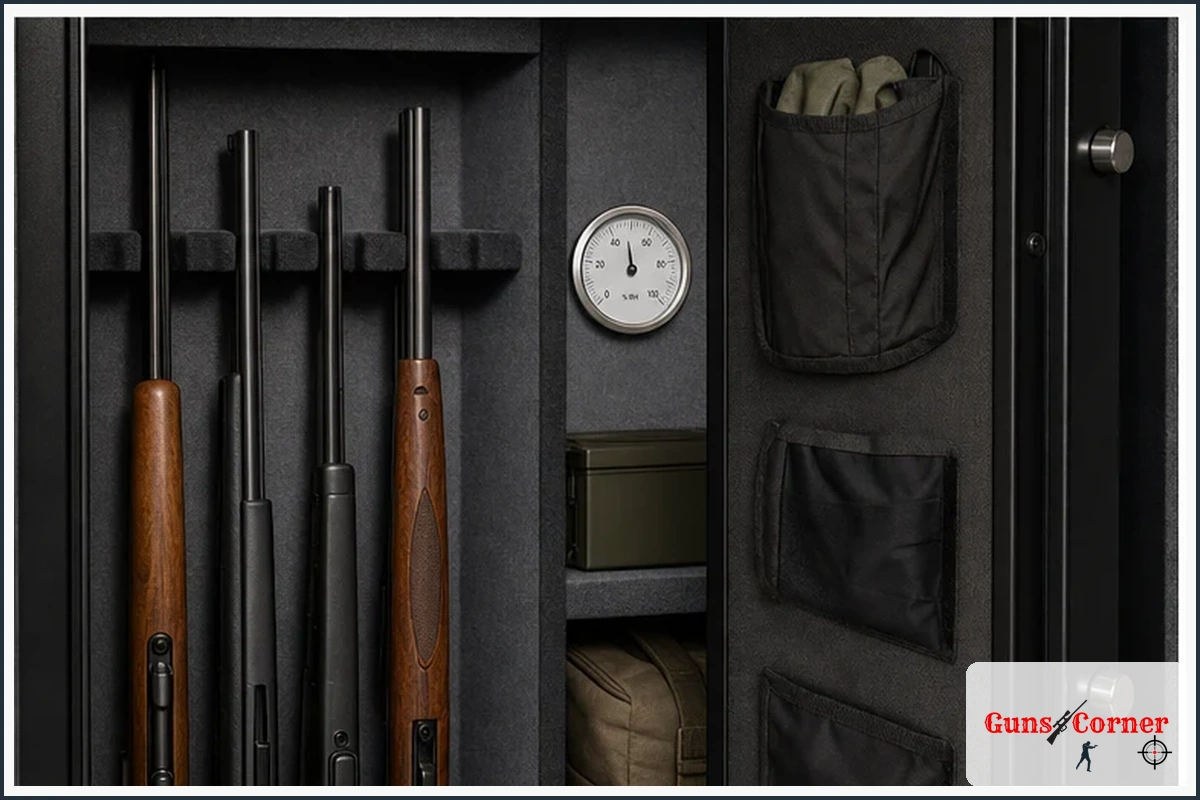
Keep a gun safe near 40% to 50% relative humidity, with about 50% as a practical target for many firearms. Use an inside-the-safe hygrometer, avoid storing damp equipment, control temperature swings, and use a properly installed dehumidification method when necessary. Humidity guidance is general, so official firearm and safe manufacturer instructions, secure-storage requirements, and applicable local laws take priority.