
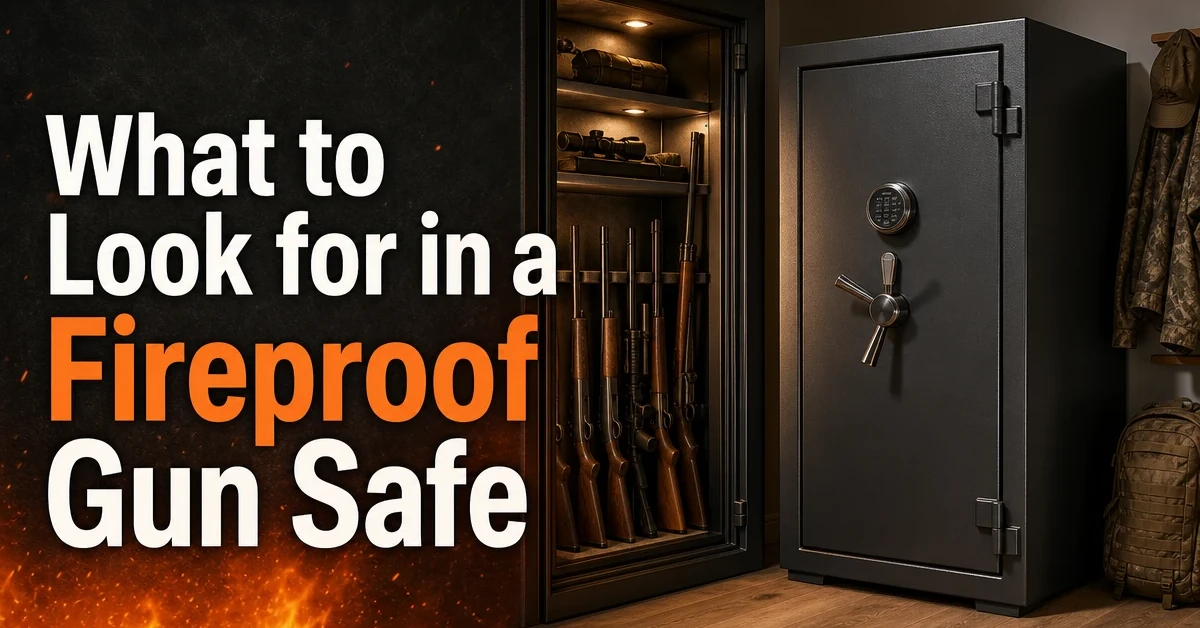

When deciding what to look for in a fireproof gun safe, focus on verified fire-resistance testing, secure construction, an appropriate lock, correct capacity, and professional installation. No consumer safe is completely fireproof; protection is limited by the safe’s tested temperature, exposure time, construction, and placement. Choose a fire-rated gun safe that also prevents unauthorized firearm access and follow the manufacturer’s installation instructions.
Why “Fireproof” Is Not the Same as Fire-Resistant
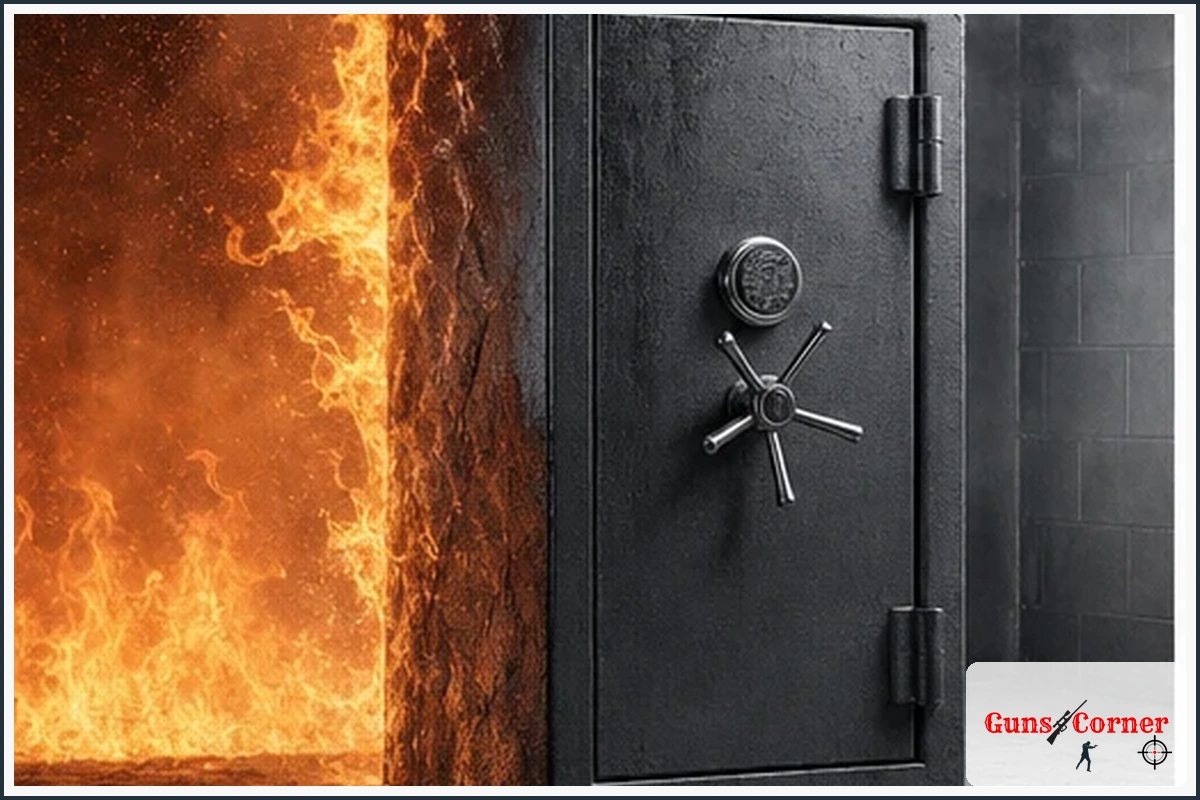
“Fireproof” is common marketing language, but no safe can withstand unlimited heat for unlimited time. A more accurate description is fire-rated or fire-resistant. A fire rating should identify how long the safe was tested and what maximum interior temperature it maintained during that test.
Fire protection also varies by manufacturer and testing method. Treat an unsupported “30-minute” or “120-minute” claim cautiously unless the company clearly explains the test standard, testing organization, temperature limit, and conditions.
What to Look for in a Fireproof Gun Safe
| Feature | What to Check | Why It Matters |
|---|---|---|
| Fire rating | Test duration, interior temperature limit, and named testing standard | Shows the conditions the safe was designed to withstand |
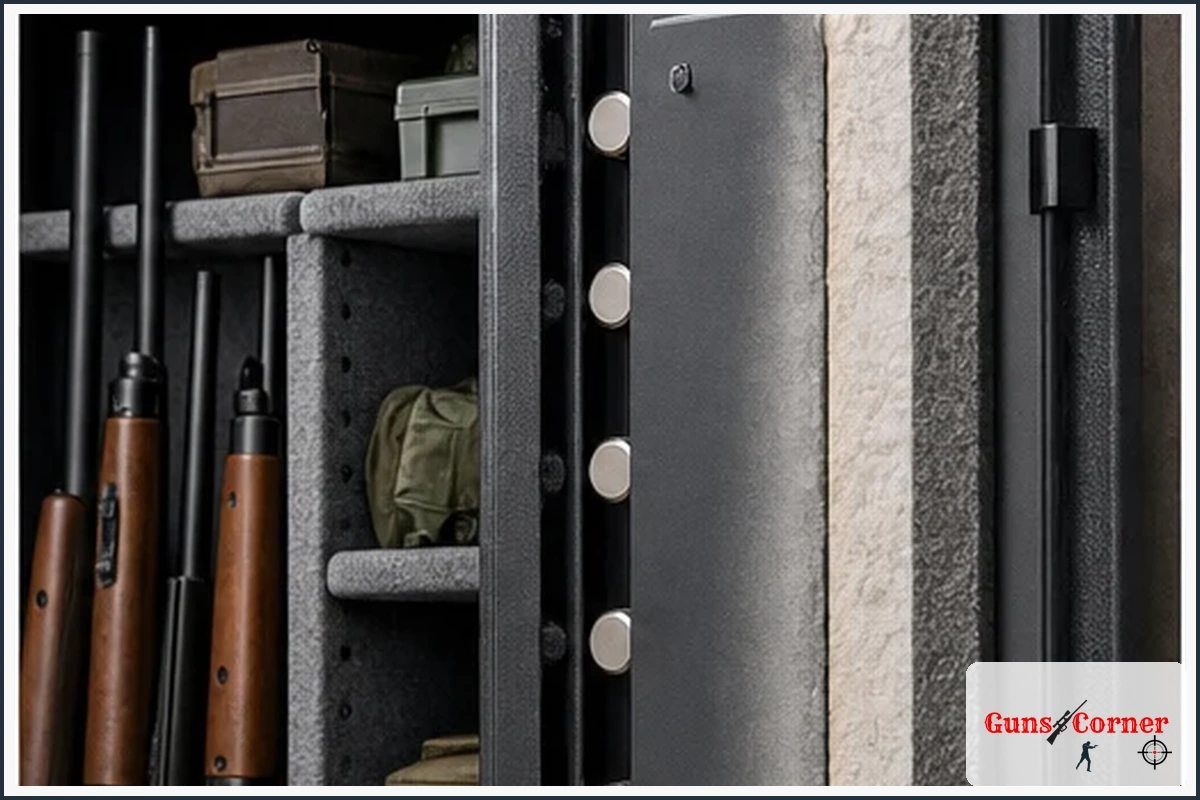
| Construction | Steel body, door strength, hinges, bolts, and insulating material | Supports security and heat resistance |
| Door seal | Heat-expanding seal and a close-fitting door | Helps limit heat and smoke entering around the door |
| Lock | Reliable mechanical, electronic, or biometric design with backup access | Controls unauthorized access and affects long-term reliability |
| Capacity | Usable interior space, rifle height, optics clearance, and future needs | Prevents overcrowding and unsafe storage |
| Anchoring | Factory-provided floor or wall mounting points | Makes removal and tipping more difficult |
| Interior protection | Nonabrasive shelving, stock supports, and moisture-control compatibility | Helps prevent scratches, contact damage, and corrosion |
1. A Clearly Documented Fire Rating
Start with the fire rating, but do not judge protection by the advertised minutes alone. Check:
- The test duration.
- The maximum interior temperature claimed during testing.
- The testing standard or laboratory.
- Whether the claim applies to the entire safe or only a component.
- Whether the safe was tested with firearms, documents, or another test load.
Ask the manufacturer for a test report or technical explanation if the listing provides only a large number and no supporting details. A rating without a stated test method is difficult to compare with another brand’s rating.
2. Durable Steel Construction
A fire-rated safe should also provide meaningful resistance to unauthorized entry. Examine the body, door, hinges, locking bolts, pry-resistant features, and weld quality. Steel thickness can be useful, but it should not be the only consideration because overall design and construction also affect security.
Do not assume that a heavy safe is automatically well protected. Weight may come from insulation, steel, hardware, or a combination of materials. Look for consistent specifications and a manufacturer that explains how the safe is built.
3. A Properly Sealing Door
The door should close evenly and compress its seal around the full perimeter. Many fire-resistant safes use an intumescent, or heat-expanding, seal designed to swell as temperatures rise. The seal cannot make the safe permanently airtight or fireproof, but it can help reduce heat and smoke entry during a fire.
Inspect the seal for gaps, damage, loose sections, or interference from shelving. A misaligned door can reduce both fire and burglary protection.
4. A Lock That Balances Security and Reliability
Common lock choices include mechanical combination locks, electronic keypads, and biometric systems. The best option depends on your household, maintenance habits, access requirements, and tolerance for batteries or electronic failure.
- Mechanical combination locks: Do not require batteries, but opening may be slower and operation requires practice.
- Electronic locks: Offer convenient access, but batteries and electronic components require maintenance.
- Biometric locks: May provide convenient authorized access, but performance can vary with batteries, dirty sensors, moisture, or damaged fingerprints.
Check whether the lock has a documented backup procedure, whether the manufacturer provides service support, and whether the lock remains compatible with the safe’s fire rating. Never leave a backup key where unauthorized people can find it.
5. Enough Room for Firearms and Accessories
Choose capacity based on the firearms you own now and the space needed for likely future additions. Measure scoped rifles, long barrels, suppressors where lawful, shotgun configurations, and other accessories before buying.
Manufacturers’ rifle capacities may assume slim, unscoped firearms placed tightly together. A safe advertised for a certain number of long guns may hold fewer when the firearms have optics, wide stocks, slings, or protective sleeves.
6. Anchoring and Safe Placement
Look for factory mounting holes and follow the manufacturer’s instructions for anchoring. A large safe can still be difficult to move, tip, or steal if it is installed correctly, but installation must match the floor or wall structure.
Place the safe where it is dry, accessible to authorized users, and protected from unnecessary environmental exposure. Avoid improvised modifications that could damage the fire barrier or compromise the lock.
Understand the Safe’s Fire-Protection Materials
Fire-resistant safes commonly use insulating materials between inner and outer shells. The material, thickness, seams, door design, and installation all affect performance. Do not assume that a particular lining material guarantees a specific level of protection.
Some insulation systems may release moisture during a fire or under certain environmental conditions. For that reason, firearms stored in a fire-rated safe still need regular inspection, appropriate humidity control, and maintenance according to the manufacturer’s guidance.
Fire Protection Does Not Replace Moisture Control
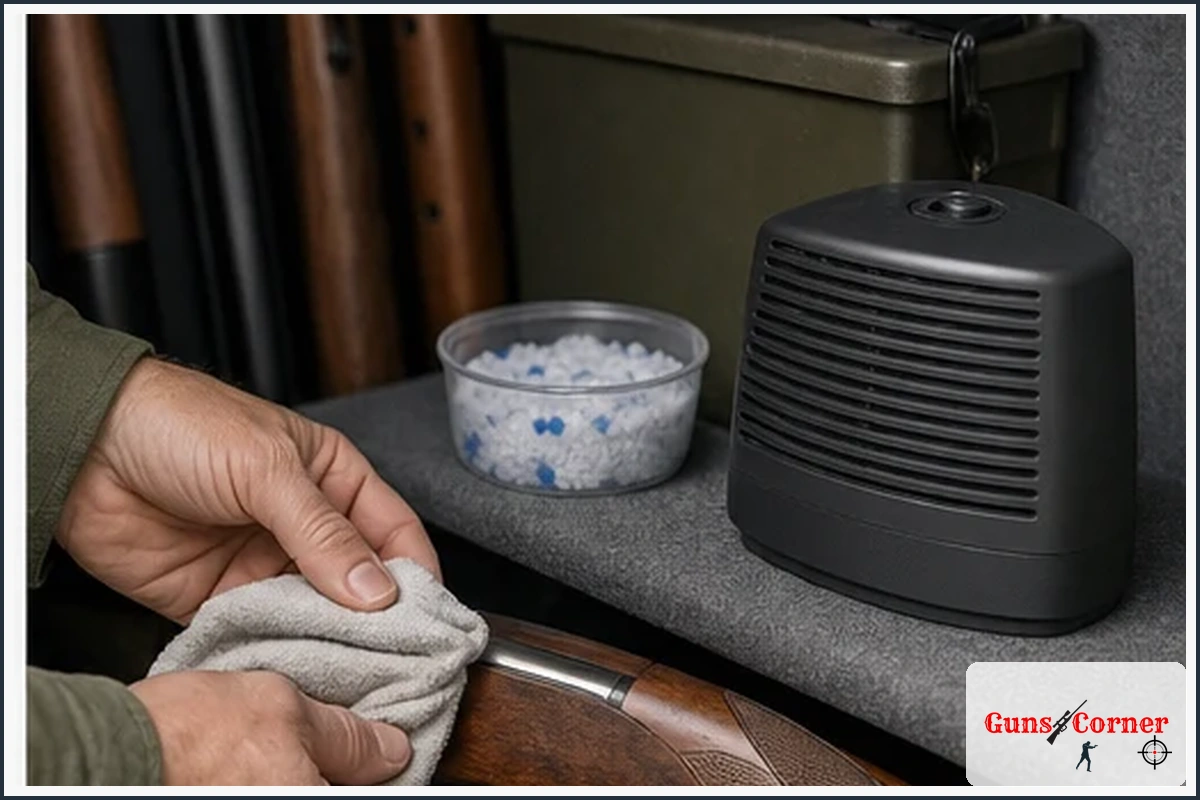
A safe can protect against heat while still allowing corrosion problems if humidity is poorly managed. Before storing firearms:
- Clean and lightly protect firearms according to the manufacturer’s instructions.
- Use a safe-approved humidity-control method when appropriate.
- Do not block ventilation or alter the safe’s insulation.
- Inspect firearms and accessories periodically for rust or condensation.
- Keep ammunition stored according to its manufacturer’s instructions and local requirements.
Do not place wet firearms, damp clothing, or muddy gear inside the safe. A fire-resistant safe is not a substitute for drying and maintenance.
Safety and Legal Considerations
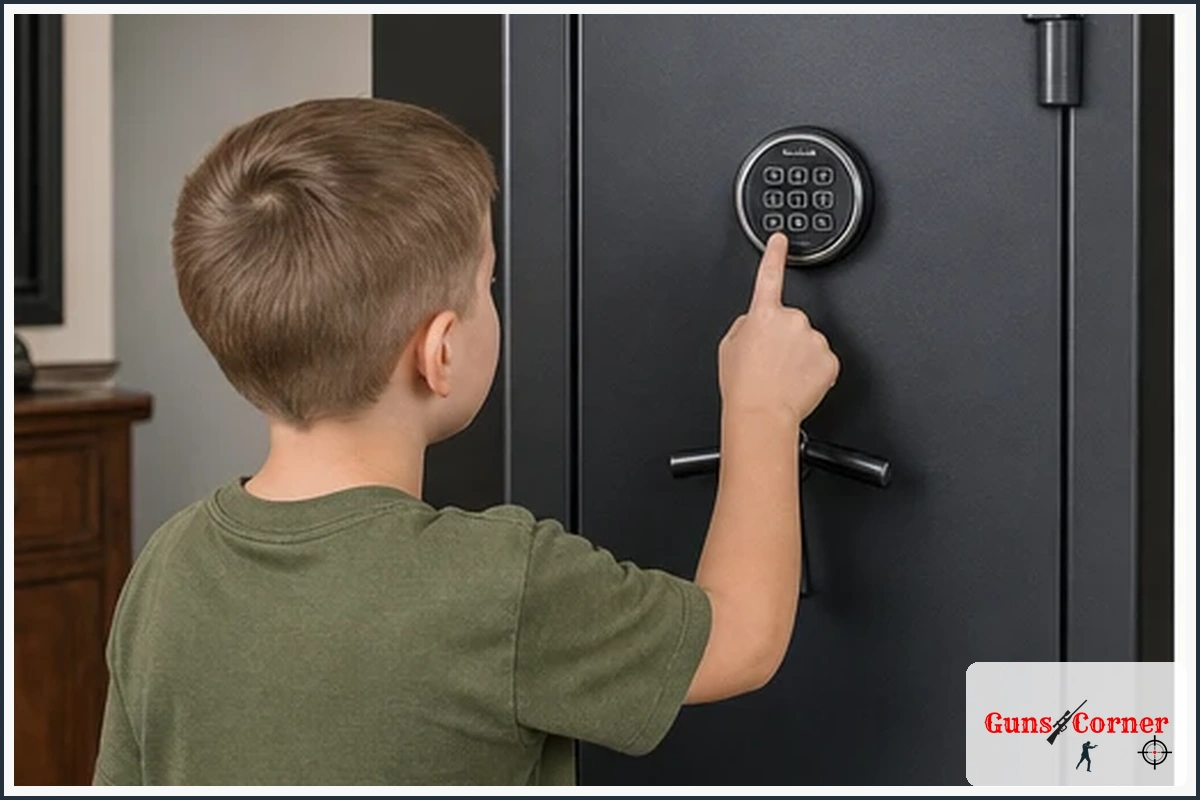
A gun safe should prevent unauthorized access, including access by children, visitors, and other household members who are not authorized to handle firearms. Store firearms unloaded when appropriate for your situation, separate ammunition when required or prudent, and follow applicable local storage laws.
Always follow the firearm and safe manufacturers’ instructions. Laws concerning firearm storage, access, transport, and child-access prevention vary by jurisdiction and may change. Official regulations override general online guidance, so check your state or local authority before relying on this information.
Firearm storage does not eliminate the need for the four basic safety rules:
- Treat every firearm as if it is loaded.
- Keep the muzzle pointed in a safe direction.
- Keep your finger outside the trigger guard until ready to shoot.
- Be certain of the target and what is beyond it.
Common Buying Mistakes
- Choosing the biggest fire-rating number: A rating is difficult to evaluate without its test conditions and interior temperature limit.
- Confusing capacity with usable capacity: Scoped and accessorized firearms require more room.
- Ignoring the lock’s maintenance needs: Electronic and biometric systems require battery and access planning.
- Skipping anchoring: A heavy safe is not automatically secure against removal or tipping.
- Buying an unverified “fireproof” cabinet: A thin locking cabinet may provide access control but little tested fire resistance.
- Modifying the safe: Drilling or cutting can affect insulation, structure, and warranty coverage.
- Neglecting humidity: Fire protection does not prevent rust caused by poor storage conditions.
What to Check Before You Buy
- List the firearms, optics, and accessories that must fit inside.
- Compare the documented fire-test details, not just advertised minutes.
- Inspect the door seal, hinges, bolts, and lock design.
- Confirm the safe has suitable mounting points.
- Check its exterior dimensions, delivery route, floor strength, and installation requirements.
- Review warranty, service, replacement-lock, and battery information.
- Confirm that the storage arrangement complies with current local law.
FAQs
Is any gun safe completely fireproof?
No. Consumer safes are designed for limited fire resistance under specified test conditions. Heat exposure, duration, placement, construction, and fire behavior can exceed those conditions.
What is the most important fire rating detail?
Look for the test duration, the maximum interior temperature, and the named testing method or laboratory. A time rating without those details is hard to compare.
Are fire-rated gun safes waterproof?
Not necessarily. Fire protection and water resistance are separate features. Firefighting water, sprinkler discharge, and flood exposure may still damage firearms and contents.
Should a gun safe be bolted down?
When the safe and building structure allow it, anchoring according to the manufacturer’s instructions can improve stability and resistance to removal. Do not drill or modify the safe without approved guidance.
Can a fire-rated safe prevent firearm rust?
No. Rust prevention depends on proper cleaning, dry storage, humidity control, and regular inspection. A fire rating addresses heat exposure, not all storage conditions.
Which lock type is best?
There is no universal best lock. Choose a reliable system that authorized users can operate safely, maintain correctly, and access without leaving an unsecured backup key.
Final Answer
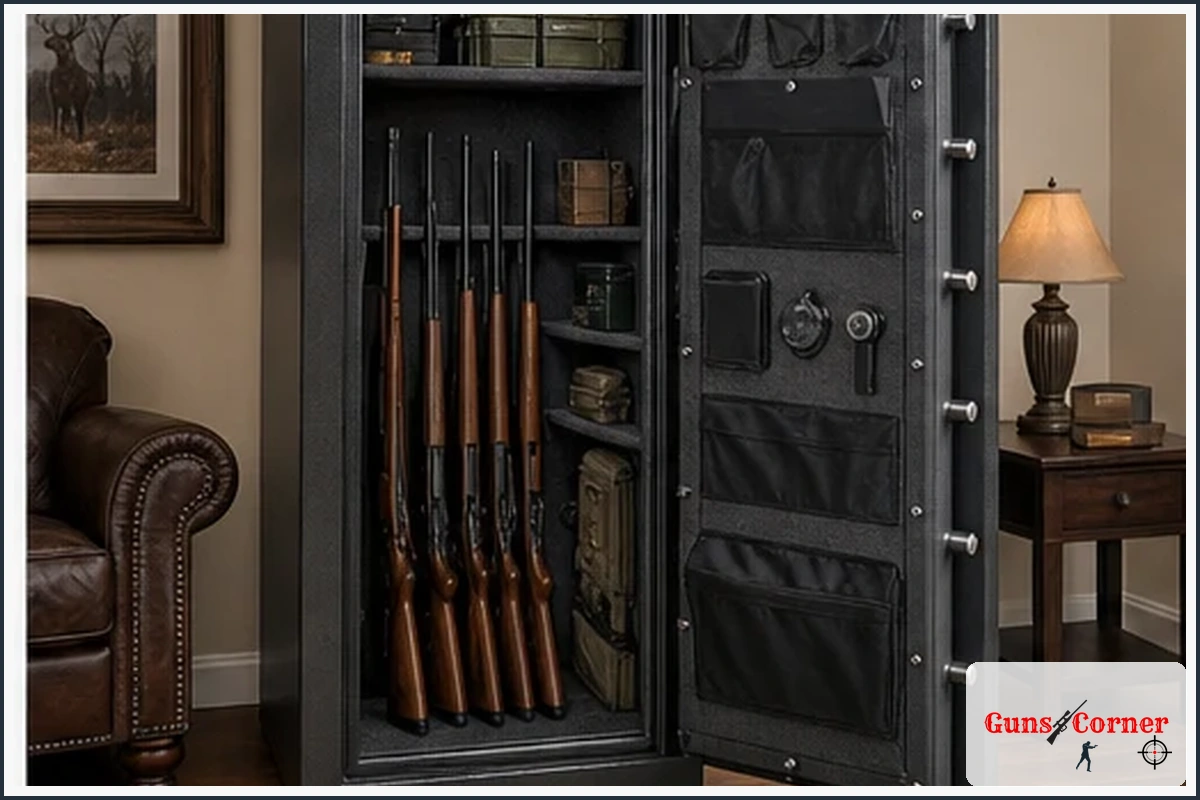
What to look for in a fireproof gun safe comes down to verified fire-resistance testing, strong construction, a complete door seal, a dependable lock, sufficient usable capacity, anchoring options, and moisture-control planning. Treat “fireproof” as marketing shorthand for limited fire resistance, and compare the actual test conditions instead of relying on advertised minutes alone. Before buying or installing a safe, verify current storage laws, follow manufacturer instructions, and maintain the safe and firearms regularly.