
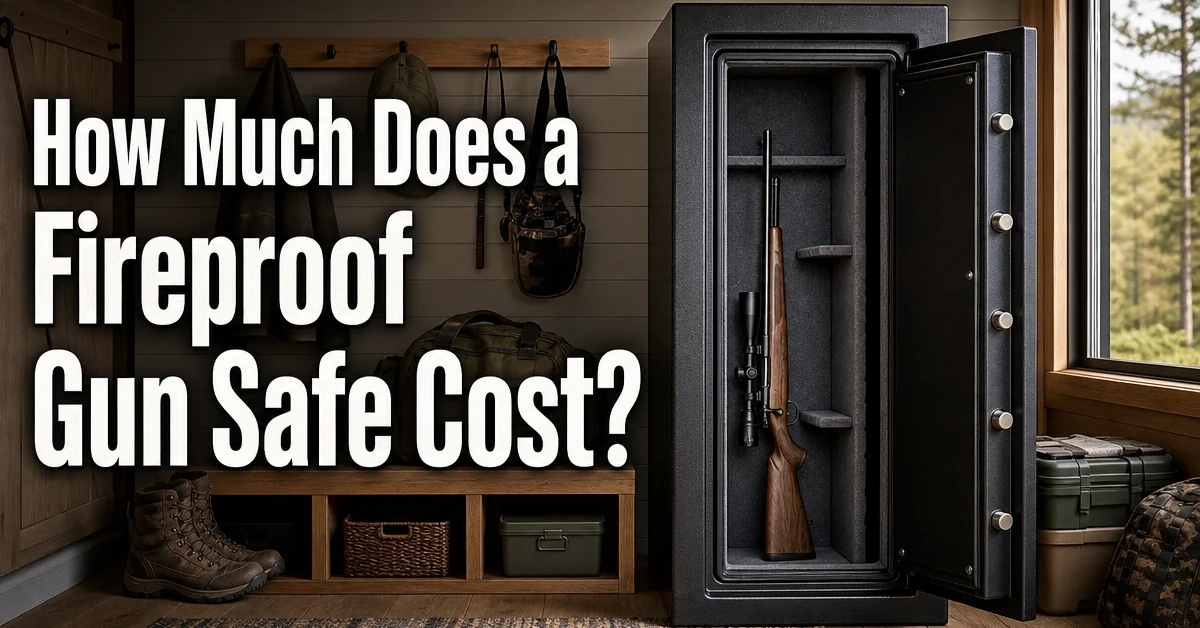

How much does a fireproof gun safe cost? Most full-size fire-rated gun safes cost roughly $500 to $4,000 or more, while premium models can exceed $5,000. The final price depends on capacity, fire-rating duration, steel construction, lock type, security features, delivery, and installation. This guide explains what you can realistically expect to pay and how to compare fireproof gun safes safely.
Typical Fireproof Gun Safe Prices
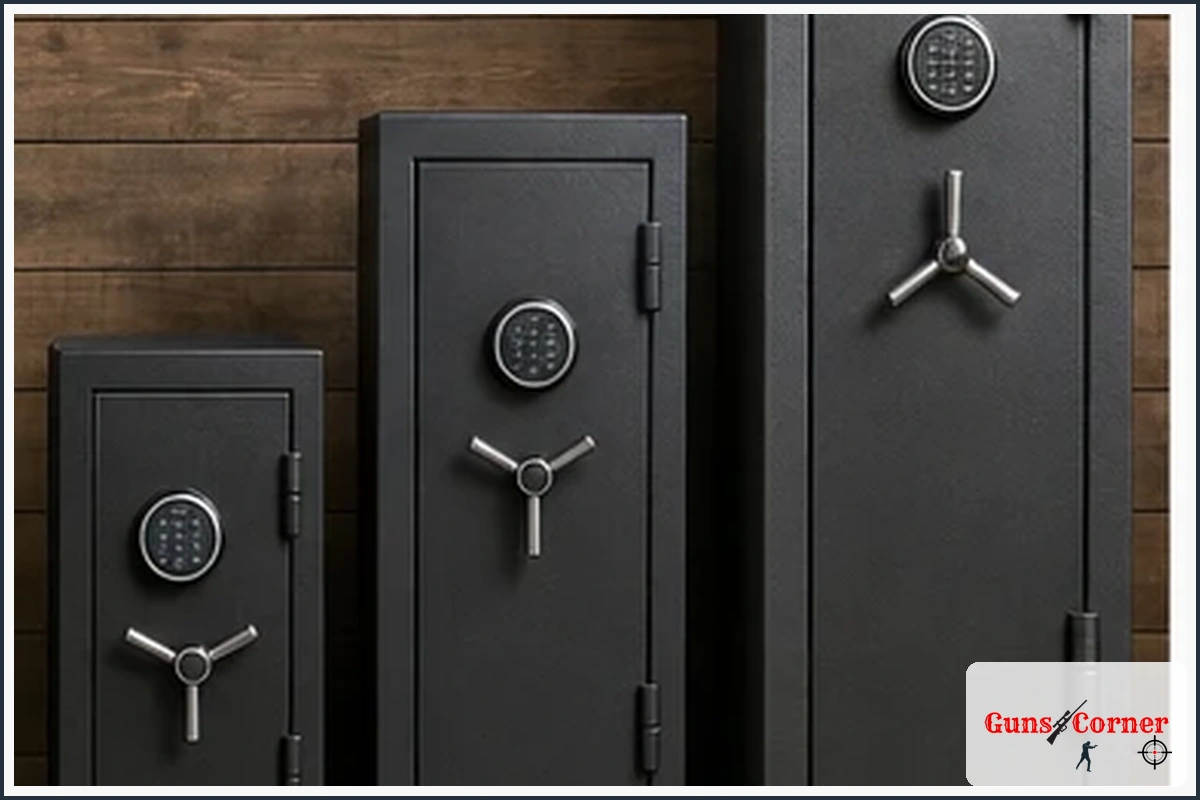
| Safe category | Typical price range | Best suited for |
|---|---|---|
| Small fire-resistant safe | About $300–$800 | A few firearms, documents, or compact storage needs |
| Mid-size fire-rated gun safe | About $800–$2,000 | Several long guns and household firearm storage |
| Large or premium gun safe | About $2,000–$4,500 | Larger collections and stronger construction |
| Luxury or high-capacity safe | $4,500 and higher | Large collections, upgraded interiors, and premium finishes |
These are broad planning ranges rather than guaranteed current prices. Retail prices change with promotions, shipping, regional availability, and model specifications. A product advertised as “fireproof” may also have a different tested fire-resistance rating than another safe, so compare the actual certification and rating instead of relying only on the label.
What Determines the Cost of a Fireproof Gun Safe?
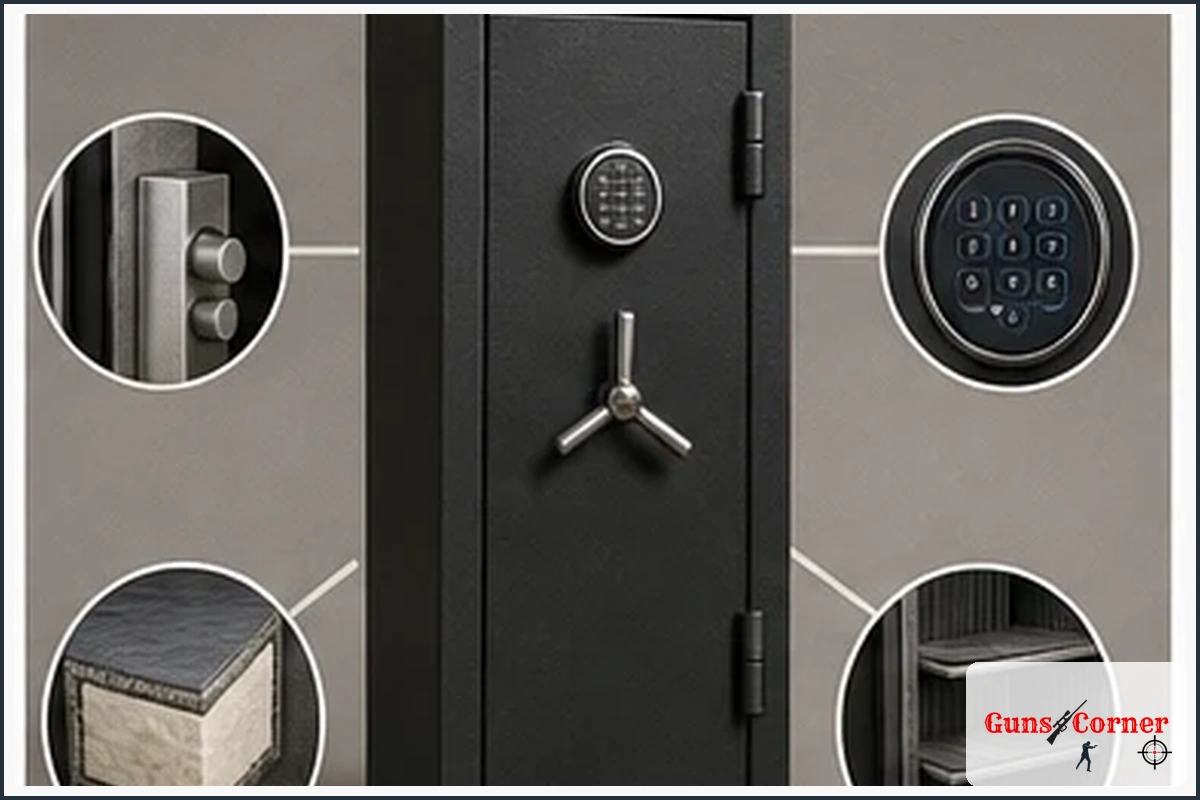
Capacity and physical size
Small safes generally cost less because they use less steel and have simpler interiors. Tall safes designed for rifles, shotguns, scopes, and accessories cost more because they require larger doors, stronger locking systems, and more structural material.
Advertised firearm capacity is often based on slim firearms without scopes or accessories. If your rifles have large optics, bipods, slings, or magazines attached, the practical capacity may be considerably lower.
Fire-resistance rating
Fire ratings commonly describe how long a safe is designed to protect its contents under a specified test condition. A longer rating usually increases the price, but the number alone does not tell the whole story.
Check:
- The stated protection time.
- The test standard or certification.
- The maximum interior temperature claimed during testing.
- Whether the rating applies to the entire safe or only a particular component.
- Whether the manufacturer explains the test method clearly.
No household gun safe makes firearms invulnerable to every fire. Heat, duration, smoke, water, building collapse, and the safe’s location can all affect the outcome.
Steel thickness and construction
Heavier steel, reinforced doors, protected hinges, drill-resistant plates, and stronger locking bars generally raise the cost. A heavy safe may offer better resistance to forced entry, but weight also creates transportation and installation challenges.
Do not judge security by exterior appearance alone. Review the manufacturer’s specifications, lock information, warranty, and anchoring instructions.
Lock type
Mechanical combination locks may cost more initially or require different maintenance than basic electronic locks. Electronic locks can be convenient, but they depend on batteries and electronic components. Biometric locks may add convenience but should not be selected solely for speed or marketing claims.
Regardless of lock type, follow the manufacturer’s instructions and maintain access credentials securely. A mechanical safety feature does not replace responsible storage practices.
Water and smoke protection
Some models include water-resistant seals or claims relating to smoke and moisture. These features can increase price, but they should be evaluated carefully because fire hoses, sprinkler systems, and firefighting water may damage firearms even when the safe survives the fire.
Look for specific, documented claims rather than assuming that a fire rating automatically means waterproof protection.
Additional Costs Beyond the Safe
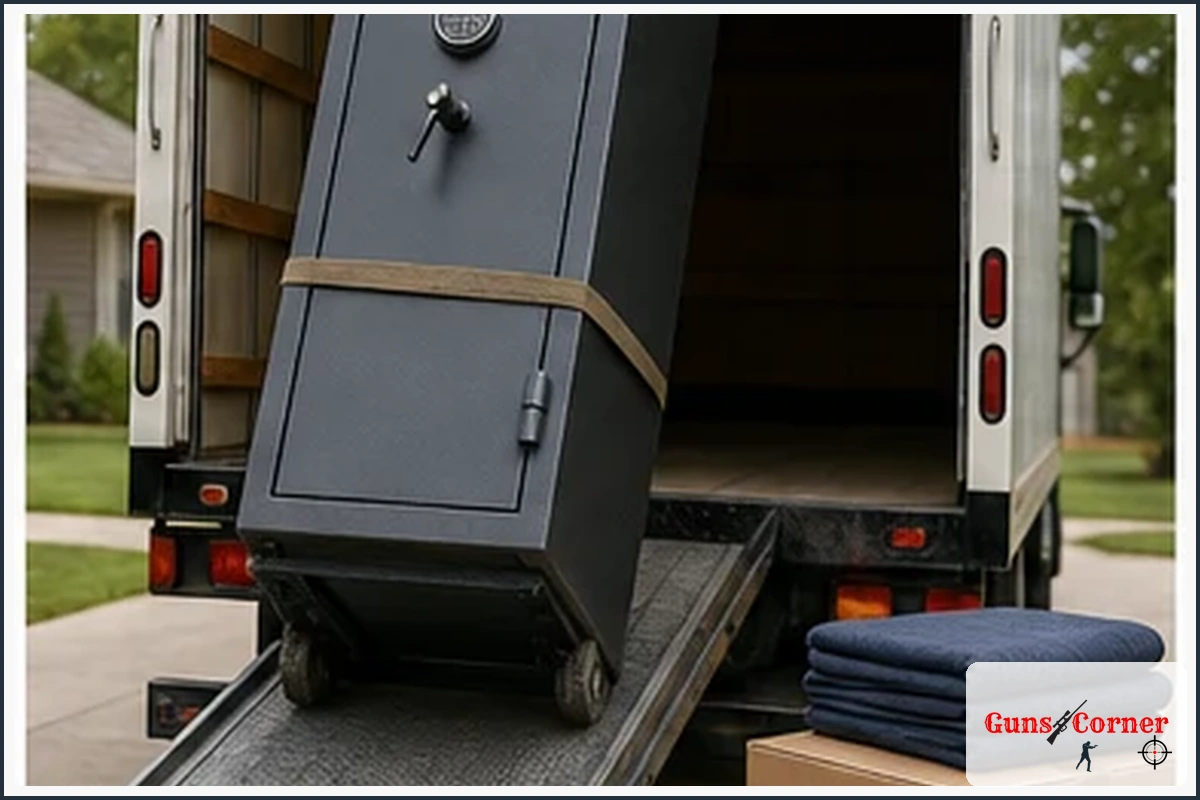
The purchase price is only part of the budget. Depending on the safe’s size and location, plan for several additional expenses.
- Delivery: Heavy safes may require specialized delivery.
- Inside placement: Moving a large safe through stairs, narrow doors, or uneven floors may cost extra.
- Anchoring: Bolting the safe to an appropriate structural surface can improve stability and theft resistance.
- Floor reinforcement: Very heavy safes may require professional evaluation before placement.
- Interior accessories: Shelves, pistol racks, lighting, and dehumidifiers can increase the total cost.
- Maintenance: Batteries, lock service, replacement parts, and moisture-control products may be recurring expenses.
Ask for a complete delivered-and-installed quote before comparing models. A low advertised price may not include stairs, difficult access, anchoring, or removal of old equipment.
How Much Should You Spend?
For many households, a sensible budget begins with a reliable, properly sized safe that has a documented fire rating and a lock appropriate for the household. Spending more can make sense when you need greater capacity, longer fire protection, stronger construction, or professional installation.
Do not spend your entire budget on decorative features while overlooking:
- Secure anchoring.
- Unauthorized-access prevention.
- Reliable locking hardware.
- Correct interior dimensions.
- Clear warranty and service support.
- Protection from household moisture.
The most expensive safe is not automatically the best choice. The right model is one that fits your firearms, your home, your budget, and your ability to install and use it correctly.
Fireproof Gun Safe Buying Checklist
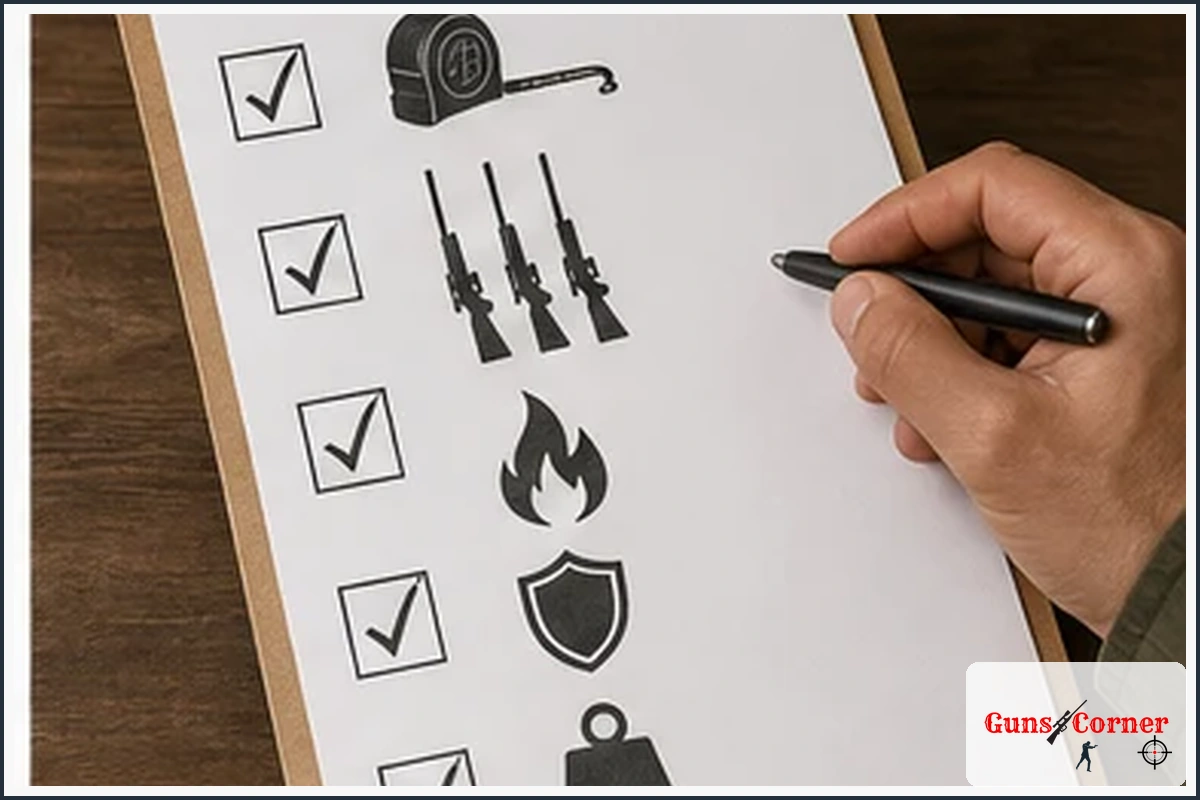
- Measure the intended location, including door swing and clearance.
- Estimate realistic capacity, allowing room for scopes and accessories.
- Compare the documented fire rating and test information.
- Check the safe’s empty weight and delivery requirements.
- Review anchoring instructions and floor limitations.
- Compare mechanical, electronic, and biometric lock options.
- Confirm warranty coverage and local service availability.
- Consider humidity control for long-term firearm storage.
- Verify any state or local firearm-storage requirements.
- Purchase only after confirming that the safe can be installed securely.
Safe Installation and Firearm Storage Safety
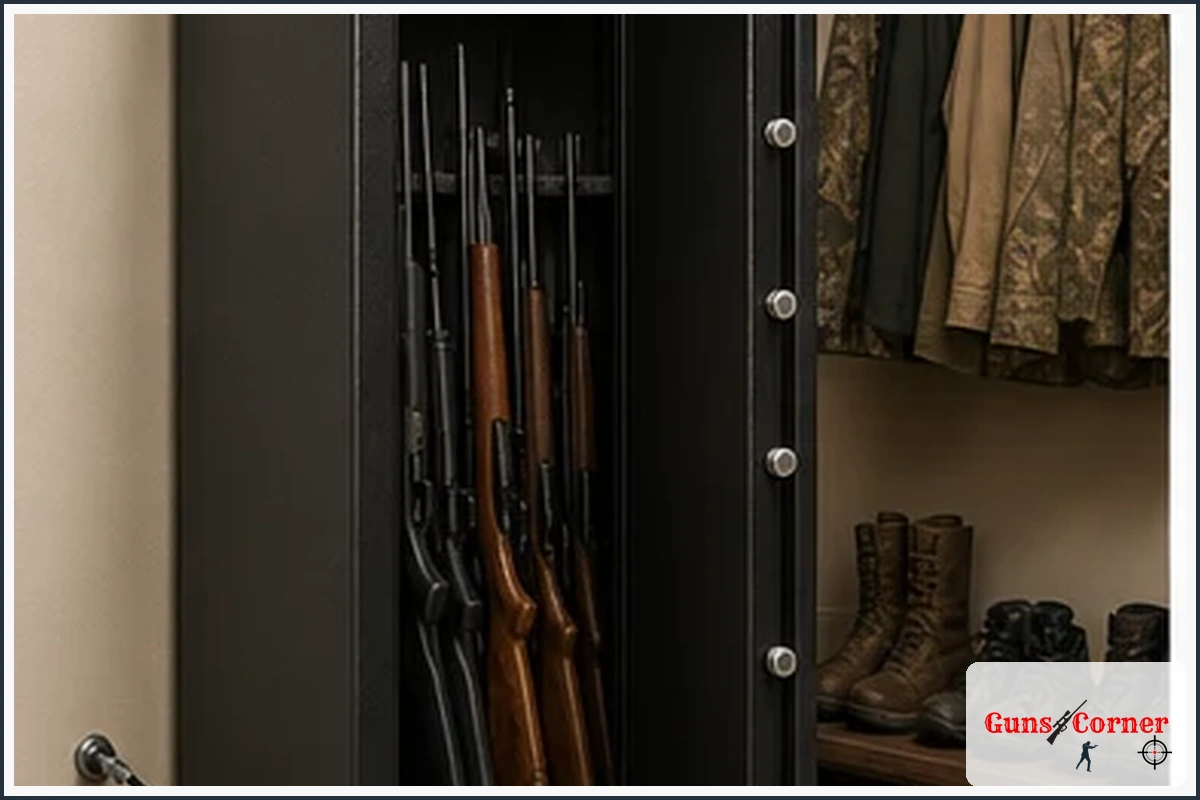
Place the safe where unauthorized people, especially children and visitors, cannot access it. Follow the manufacturer’s anchoring instructions and avoid improvised mounting methods. A tall safe should be secured against tipping when the design and structure allow it.
Store firearms unloaded unless a specific lawful and professionally instructed storage arrangement applies. Keep ammunition secured according to manufacturer guidance and applicable law. Treat every firearm as loaded, keep the muzzle pointed in a safe direction, keep your finger outside the trigger guard until ready to shoot, and be certain of the target and what is beyond it.
Check current state and local storage requirements before installation. Official regulations override general online guidance.
Common Mistakes When Buying a Fire-Rated Gun Safe
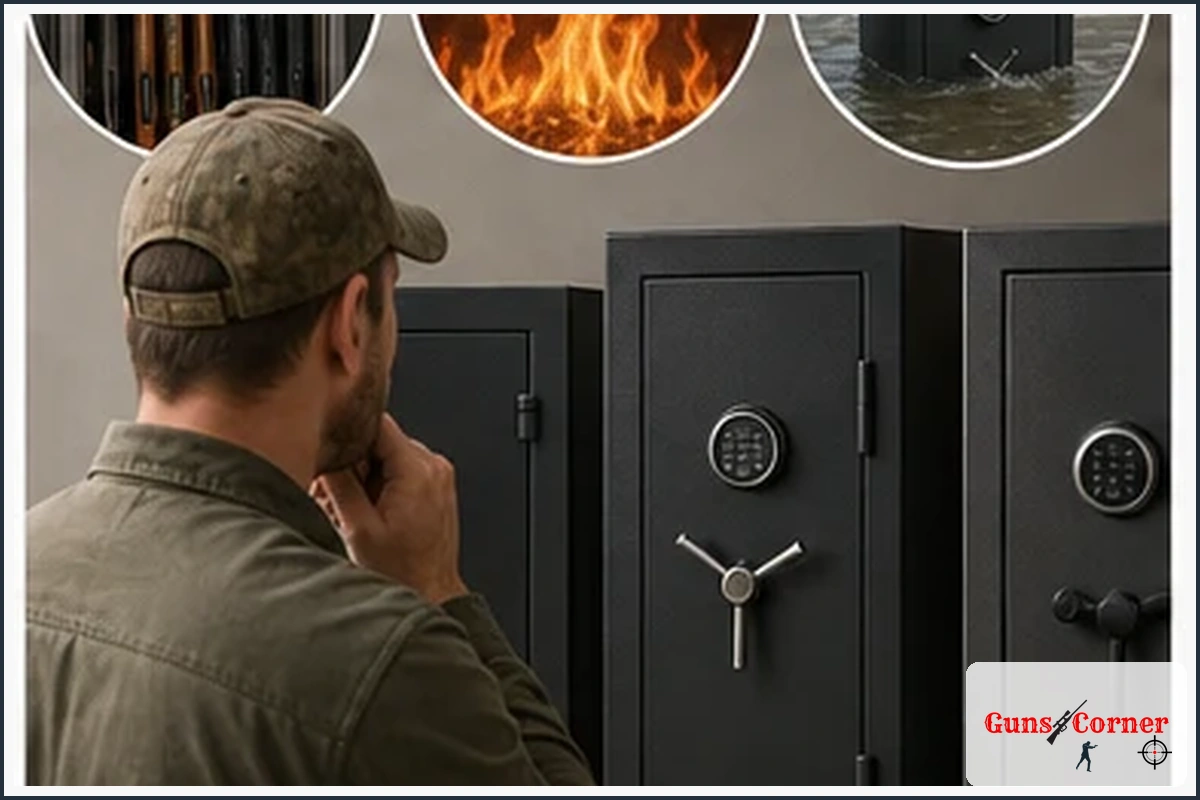
- Buying based only on the advertised gun count: Real capacity decreases when firearms have optics or accessories.
- Assuming “fireproof” means fireproof under every condition: Ratings have specific test limits.
- Ignoring delivery costs: Large safes can require specialized handling.
- Choosing a location without checking floor strength: Heavy equipment can create structural concerns.
- Skipping anchoring: A heavy safe still needs proper installation.
- Buying an unknown lock without service support: Lock failure can make access difficult.
- Forgetting moisture control: Firearms can rust in a closed safe if humidity is unmanaged.
FAQs
1. What is the cheapest fireproof gun safe?
Small fire-resistant firearm safes may cost around $300 to $800, although prices vary. Confirm that the model is actually fire-rated and suitable for the size and type of firearm you need to store.
2. Is a $500 gun safe fireproof?
Some safes near $500 may carry a documented fire-resistance rating, but price alone proves nothing. Review the manufacturer’s test information, protection time, construction, and lock details.
3. Are expensive gun safes worth the money?
They can be worthwhile when you need greater capacity, stronger construction, longer fire protection, or better service support. They are not automatically necessary for every firearm owner.
4. Does a fire-rated gun safe protect against water?
Not necessarily. Firefighting water, sprinklers, and moisture may still damage firearms. Look for separate, specific water-resistance information rather than assuming a fire rating includes it.
5. How large should a gun safe be?
Choose a safe based on the firearms you own now, their optics and accessories, and likely future needs. Manufacturer capacity numbers often assume compact firearms without attachments.
6. Should a gun safe be bolted down?
Proper anchoring can improve stability and resistance to unauthorized removal, but the installation must follow the manufacturer’s instructions and suit the building structure. Consult a qualified installer when necessary.
7. What is the best lock for a gun safe?
Mechanical, electronic, and biometric locks each have advantages and limitations. Choose a reliable option that household users can operate correctly and maintain according to the manufacturer’s instructions.
Final Answer
How much does a fireproof gun safe cost? A realistic budget is about $500 to $4,000 for many full-size models, while premium or high-capacity safes can cost more than $5,000. Compare the verified fire rating, construction, lock, practical capacity, installation requirements, warranty, and total delivered cost—not just the advertised price. Store firearms securely, follow manufacturer instructions, and verify current local storage laws before installation.