
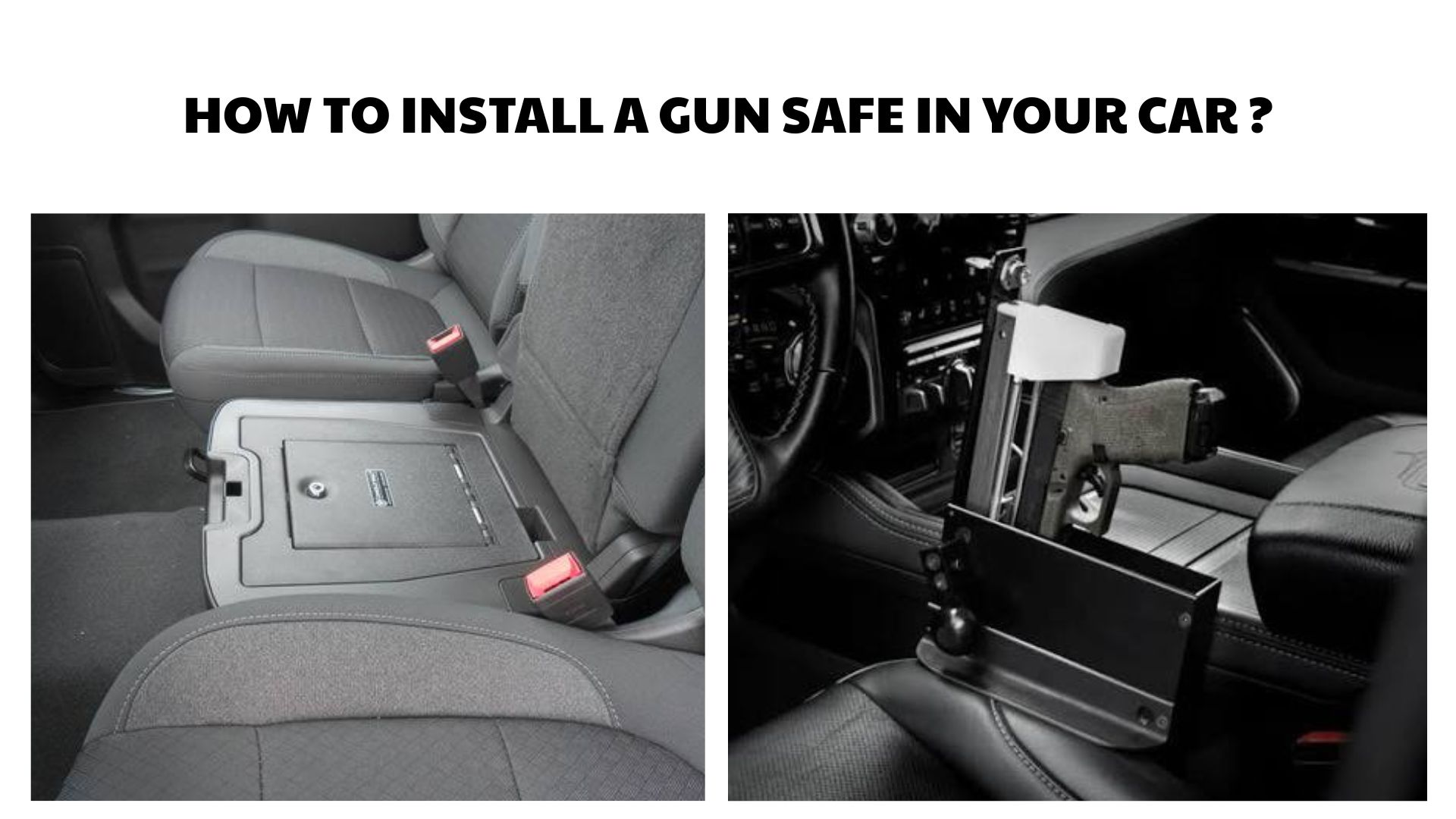

Learning how to install a gun safe in your car is important for responsible firearm owners who need secure temporary firearm storage while traveling, commuting, hunting, visiting restricted locations, or moving between lawful storage locations. A vehicle is not the same as a home gun safe. Cars are exposed to theft risk, heat, vibration, visibility issues, legal restrictions, and safety systems such as airbags, wiring, seat tracks, and fuel lines.
This beginner-friendly guide explains how to think through car gun safe installation in a safe, legal, and practical way. You will learn how to check firearm transport laws, choose a vehicle-safe storage location, avoid dangerous installation mistakes, secure the safe without interfering with driving, and build a long-term routine for responsible vehicle firearm storage.
This article is not legal advice and does not replace your vehicle manual, gun safe manual, state law, local law, or professional installation guidance. Firearm storage and transport laws vary widely by country, state, province, city, firearm type, permit status, vehicle type, and destination. Before placing a firearm in a vehicle gun safe, verify current rules with official government sources or a qualified legal professional.
Quick Answer
To install a gun safe in your car, first check your local firearm transport and storage laws, then choose a lockable vehicle gun safe that fits your firearm, vehicle layout, and access needs. Place it where it does not interfere with pedals, steering, airbags, seat movement, visibility, passengers, or emergency exits, and secure it using the manufacturer-approved cable, bracket, or mounting system. If drilling, permanent mounting, electrical wiring, or custom installation is required, use a qualified professional instead of guessing. A car gun safe can reduce unauthorized access and theft risk, but it does not make vehicle firearm storage risk-free.
Important Firearm Safety and Legal Notice
Firearm storage, vehicle transport, concealed carry, and access rules vary by location. A gun safe that is acceptable in one state, province, or country may not satisfy the law somewhere else. Before installing or using a vehicle gun safe, check current laws, your firearm permit conditions, vehicle rules, employer policies, school-zone restrictions, restricted-location rules, and any state or local transport requirements that apply to your route.
- Local firearm storage laws: Confirm whether your area requires firearms to be unloaded, locked, separated from ammunition, or stored in a specific way.
- Vehicle firearm transport laws: Check rules for transporting firearms in a passenger compartment, trunk, SUV cargo area, truck cab, or vehicle without a separate trunk.
- Permit and carry rules: Do not assume a carry permit allows every type of vehicle storage or every location.
- Restricted locations: Schools, government buildings, workplaces, airports, private businesses, and certain public areas may have special rules.
- Child access prevention: Store firearms so children, passengers, visitors, and unauthorized users cannot access them.
- Safe manufacturer instructions: Follow the vehicle gun safe manual for cable use, bracket use, mounting points, lock operation, and maintenance.
- Vehicle safety systems: Do not interfere with airbags, seatbelts, seat tracks, pedals, wiring, fuel lines, sensors, or emergency exits.
- Professional help: Use a professional installer if the job requires drilling, permanent mounting, custom brackets, electrical work, or vehicle disassembly.
Understanding Vehicle Gun Safe Installation
A vehicle gun safe is usually a compact lockbox or reinforced storage container designed to secure a handgun or small firearm temporarily inside a vehicle. Some models use a steel cable that loops around a seat frame or fixed anchor point. Others use brackets, under-seat mounts, console inserts, trunk mounts, or custom vehicle-specific mounting systems.
The purpose of a car gun safe is to reduce unauthorized access and make theft more difficult. It is not a guarantee against theft. Vehicles are common theft targets because they are portable, often parked in public, and may contain visible valuables. A firearm left in a vehicle should be locked, hidden from view when legally appropriate, and removed when storage is no longer necessary.
The best installation depends on the vehicle type, safe type, firearm type, local law, and whether the firearm must be quickly accessible or stored only for transport. A sedan with a separate trunk has different options than a pickup truck, hatchback, SUV, van, or vehicle with fold-flat seats. The safest choice is the one that follows the law, protects passengers, keeps the firearm secured, and does not compromise vehicle safety.
What You Need Before You Start
- Vehicle gun safe or lockbox designed for firearm storage
- Gun safe owner’s manual or manufacturer documentation
- Vehicle owner’s manual, especially sections related to airbags, seats, cargo areas, wiring, and safety systems
- Current knowledge of local firearm storage and transport laws
- Basic firearm safety knowledge before handling or storing firearms
- Manufacturer-approved cable, bracket, mounting plate, or hardware included with the safe
- Measuring tape for checking safe fit and clearance
- Flashlight for checking under-seat space, trunk areas, or cargo locations
- Soft cloth or protective mat to prevent scratches if recommended by the safe manufacturer
- Backup key, access code, or biometric setup instructions if the safe includes electronic access
- Professional vehicle installer if drilling, permanent mounting, wiring, or interior panel removal is required
- Secure temporary storage location while arranging the vehicle safe setup
how to install a gun safe in your car: Step-by-Step Guide
Step 1: Check Laws, Manuals, and Safety Requirements First
Before buying or installing a car gun safe, check the firearm transport laws that apply to your location and route. Some laws may address whether the firearm must be unloaded, whether ammunition must be stored separately, whether the firearm may be in the passenger compartment, and whether a glove compartment or center console qualifies as lawful storage. These rules can vary widely, so do not rely on general advice alone.
Read the gun safe manual and your vehicle manual. The safe manual tells you how the product is meant to be secured. The vehicle manual helps you avoid airbag areas, seatbelt systems, wiring paths, seat movement, and cargo restraints. If the instructions conflict or seem unclear, contact the safe manufacturer or a qualified installer before proceeding.
Step 2: Make the Area Safe
Work in a controlled environment. Keep children, passengers, pets, and unauthorized users away while planning the installation. If a firearm is present, handle it responsibly and follow safe firearm handling practices. Keep your finger away from the trigger, keep the firearm pointed in a safe direction, and follow the manufacturer’s instructions for safe unloading, storage, and handling.
If you are only test-fitting the safe, do it without a firearm inside. This makes the process safer and easier. Do not leave a firearm unattended on a seat, floorboard, dashboard, console, or trunk area while you adjust the safe.
Step 3: Identify Your Vehicle and Safe Type
Different vehicles require different storage decisions. A sedan may allow trunk storage. A pickup may require under-seat or rear-seat lockbox placement. An SUV, hatchback, or van may have an open cargo area that is visible through windows, which increases theft concerns. A compact car may have limited space under seats because of wiring, vents, seat motors, or sensors.
Also identify the safe type. Portable cable safes, console safes, under-seat safes, trunk-mounted safes, cargo-area lockboxes, and custom-fit vehicle safes all have different installation needs. Use the method the safe was designed for instead of improvising.
Step 4: Choose the Safest Practical Location
Choose a location that keeps the safe secure, discreet, and out of the way. The safe should not slide under pedals, block seat movement, interfere with steering, obstruct visibility, press against airbag zones, block seatbelts, or create a hazard during sudden braking or a crash.
Common locations may include the trunk, rear cargo area, under a seat, behind a rear seat, or inside a vehicle-specific console safe. The best location depends on your vehicle and the law where you are. If a location makes the safe visible from outside the vehicle, reconsider the placement or use additional legal and safe concealment methods to reduce theft temptation.
Step 5: Test Fit the Safe Before Mounting
Place the empty safe in the planned location and check clearance. Open and close the safe several times. Confirm that the lid, drawer, cable, bracket, or lock can operate without hitting the seat, console, trim, door, or cargo cover.
Move seats through their normal range if the safe is near seat tracks. Make sure passengers can sit safely and that the safe does not press into their feet or legs. If the safe is in a cargo area, make sure it cannot become loose luggage during hard braking.
Step 6: Use Manufacturer-Approved Securing Methods
If the safe uses a cable, loop it only around a strong fixed point approved by the manufacturer or suitable for that type of security use. Avoid wrapping the cable around moving parts, sharp edges, weak trim, seat adjustment handles, thin plastic, or anything connected to airbag wiring or seat sensors.
If the safe uses brackets or a mounting plate, follow the safe manufacturer’s instructions exactly. Do not substitute random hardware unless the manufacturer allows it. A poorly secured safe may shift, rattle, damage the vehicle, or become easier to steal.
Step 7: Avoid Unsafe Drilling or Vehicle Modification
Do not drill into your vehicle unless you know what is behind the surface and the safe manufacturer, vehicle manufacturer, or a qualified installer confirms the method is appropriate. Vehicle floors, consoles, trunks, and seats may contain wiring, fuel lines, sensors, seat mounts, airbag components, or structural parts.
If permanent mounting is required, professional installation is usually the safer choice. A professional can help avoid damage to safety systems, electrical wiring, upholstery, vehicle structure, and warranty-sensitive parts.
Step 8: Test the Lock and Access Method
Before relying on the safe, test the lock repeatedly while the safe is empty. Check the key, combination, digital keypad, biometric reader, or mechanical lock according to the manual. If the safe uses batteries, install fresh batteries and record a replacement schedule.
Make sure the safe opens and closes smoothly without forcing the lid or door. If the lock sticks, the cable blocks the door, or the safe shifts when opened, fix the setup before storing a firearm.
Step 9: Check Visibility and Theft Risk
Look at the vehicle from outside during the day and at night. Can you see the safe through a window? Does the cable, bracket, case outline, or storage location suggest a firearm may be inside? If so, the safe may attract attention even if it is locked.
A vehicle gun safe should be as discreet as legally and practically possible. Avoid stickers, decals, visible firearm accessories, range bags, ammunition boxes, or other signs that suggest a firearm may be in the vehicle.
Step 10: Store the Firearm Responsibly
When using the safe, follow local law and safe handling practices. Some jurisdictions require firearms to be unloaded or stored separately from ammunition during vehicle transport. Others may have different rules depending on permit status, destination, or firearm type. Verify the rules before storage.
Do not leave a firearm in a vehicle longer than necessary. Heat, cold, theft risk, moisture, and parking conditions all make vehicles less ideal than secure home storage. When the firearm no longer needs to be in the vehicle, move it to a lawful and secure storage location.
Step 11: Document the Setup
Keep records of the safe model, serial number, purchase receipt, key code if provided by the manufacturer, warranty details, and installation notes. Store this information securely outside the vehicle. If the safe is stolen, damaged, or locked out, these records may help with manufacturer support, insurance, or law enforcement reporting.
If a professional installer completes the work, keep the installation receipt and any notes about mounting location, hardware used, and vehicle areas avoided.
Step 12: Build a Maintenance and Safety Routine
Check the safe regularly. Look for loose cables, worn brackets, damaged locks, weak batteries, rust, moisture, rattling, or changes caused by seat movement and vibration. Vehicle environments are harder on equipment than indoor storage, so routine inspection matters.
Review your legal obligations periodically, especially when traveling across state or provincial lines. Laws can change, and rules may differ at your destination.
Best Setup, Location, or Conditions for This Gun Safe Task
The best car gun safe setup is secure, discreet, legal, and compatible with your vehicle’s safety systems. A trunk can be useful in some vehicles because it separates the firearm from the passenger compartment, but laws still vary. In SUVs, hatchbacks, vans, and pickup trucks, storage may require extra planning because cargo areas or rear seats may be visible or accessible.
For many users, a low-profile safe under a seat, behind a rear seat, or inside a dedicated console insert may be practical. However, the safe must not interfere with seat motors, seat tracks, airbag sensors, passenger comfort, pedals, driver movement, or emergency exits.
A good vehicle gun safe location should meet these conditions:
- It follows current firearm transport and storage laws in your location.
- It is not easily visible from outside the vehicle.
- It is attached using the manufacturer-approved method.
- It does not move during normal driving, braking, or turning.
- It does not interfere with airbags, wiring, pedals, seatbelts, or seat movement.
- It allows the safe door or lid to open without forcing it.
- It allows responsible access only by authorized users.
- It does not encourage leaving a firearm in the vehicle longer than necessary.
Helpful Tips for Better Results
- Check your firearm transport laws before buying a safe so you choose a setup that fits your legal needs.
- Test fit the safe while it is empty before storing any firearm inside it.
- Choose a location that is hidden from casual view but does not interfere with safe driving.
- Use only manufacturer-approved cables, brackets, mounts, or hardware.
- Do not drill into a vehicle unless a qualified professional confirms it is safe.
- Remove the firearm from the vehicle when storage is no longer legally or practically necessary.
- Check locks, batteries, cables, brackets, and mounting points on a routine schedule.
Common Mistakes to Avoid
Many vehicle gun safe mistakes happen because the owner focuses only on convenience. A good setup must balance legal compliance, theft prevention, safe access, vehicle safety, and responsible firearm handling.
- Not checking current laws: Vehicle firearm rules vary widely. Always verify current requirements for your location and route.
- Assuming the glove box is enough: Some laws specifically treat glove compartments and center consoles differently from locked containers.
- Leaving the safe visible: A visible safe may signal that a firearm or valuable item is inside the vehicle.
- Using weak anchor points: Thin plastic trim, seat handles, or loose cargo hooks may not provide meaningful theft resistance.
- Blocking vehicle safety systems: Never interfere with airbags, seatbelts, wiring, sensors, pedals, or seat tracks.
- Improvising with random hardware: Poor hardware can fail, damage the vehicle, or reduce safe performance.
- Leaving firearms in the car too long: Vehicles are high-theft-risk environments and should not replace secure home storage.
- Sharing access codes: Only authorized users should know the code or have the key.
- Forgetting batteries: Electronic locks need battery checks and backup access planning.
- Ignoring heat and moisture: Vehicle interiors can become very hot, cold, or humid, which may affect firearms and accessories.
Troubleshooting Common Problems
| Problem | Possible Cause | What to Do |
|---|---|---|
| The safe slides while driving | Weak anchor point, loose cable, poor placement, or wrong safe size | Stop using that setup, remove the firearm, and secure the safe using the manufacturer-approved method. |
| The safe is visible through the window | Poor placement or vehicle layout | Choose a more discreet legal location and avoid leaving firearm-related items visible in the vehicle. |
| The safe blocks seat movement | Safe is too large or placed too close to seat tracks | Move the safe, choose a smaller model, or use a vehicle-specific mount that does not interfere with seats. |
| The safe may interfere with wiring or airbags | Unsafe location or uncertain vehicle structure | Do not install it there. Check the vehicle manual and contact a qualified installer. |
| The lock does not open smoothly | Misalignment, pressure on the lid, weak battery, or defective lock | Test the safe empty, replace batteries if appropriate, and contact the manufacturer if the issue continues. |
| The cable is too short | Wrong safe model or poor anchor location | Do not use an improvised cable unless the manufacturer allows it. Choose a compatible safe or approved accessory. |
| The safe rattles while driving | Loose placement, poor padding, or unsecured bracket | Recheck the mounting method and use only manufacturer-approved adjustments. |
| The car has no trunk | SUV, hatchback, pickup, van, or compact vehicle layout | Check local law and use a locked container placed where it is secure, discreet, and not readily accessible if required by law. |
| Legal rules are unclear | State, local, permit, destination, or vehicle-type differences | Do not guess. Check official government sources or speak with a qualified firearm law professional. |
| The safe is difficult to access responsibly | Poor placement, wrong opening direction, or blocked lid | Test with the safe empty and choose a location that supports safe, lawful, and controlled access. |
Responsible Firearm Storage and Home Safety
A vehicle gun safe is a temporary storage tool, not a complete firearm safety plan. Responsible firearm storage means preventing unauthorized access, reducing theft risk, following the law, and maintaining control over who can access the firearm.
Secure storage is especially important when children, visitors, passengers, roommates, service workers, or prohibited users may be near the vehicle. A firearm should not be left loose in a glove box, under a seat, in a door pocket, in a center console, or in a bag that can be easily removed.
- Keep the firearm locked when not under direct lawful control.
- Keep the safe key, code, or biometric access limited to authorized users.
- Do not advertise firearm ownership through decals, visible gear, or unsecured range bags.
- Use layered security such as locked doors, alarms, parking awareness, and discreet storage.
- Remove firearms from the vehicle when they no longer need to be there.
- Review safe storage laws regularly.
- Store ammunition according to local law and manufacturer guidance.
When to Get Professional Help
Professional help is the right choice when installation could affect vehicle safety, firearm compliance, or safe reliability. A vehicle is full of hidden components, and a mistake can damage wiring, airbags, seat sensors, fuel lines, trim, carpet, or structural parts.
Get professional guidance when:
- You are unsure about vehicle firearm transport laws.
- The safe must be permanently mounted.
- The installation requires drilling into the floor, trunk, console, or seat area.
- The safe may be near airbags, sensors, wiring, seat motors, or fuel lines.
- The vehicle is leased, rented, borrowed, or employer-owned.
- The safe has an electronic lock or wiring feature that requires vehicle power.
- The safe does not fit without forcing it into place.
- The safe manufacturer’s instructions are unclear.
- The lock, keypad, biometric reader, or cable system is malfunctioning.
- You are not confident in safe firearm handling during the setup process.
Helpful professionals may include the gun safe manufacturer, a qualified vehicle installer, a reputable locksmith, a firearm safety instructor, the vehicle dealership service department, or a qualified firearm law professional.
Long-Term Maintenance, Safety Checks, and Recordkeeping
Vehicle gun safes experience vibration, heat, cold, dust, and daily movement. Check your safe regularly to make sure it still locks, opens, and stays secured. Inspect cables, brackets, screws, access codes, batteries, and any mounting hardware according to the safe manufacturer’s instructions.
Keep records of the safe model, serial number, purchase receipt, warranty, key code if provided, and installation notes. Store these records outside the vehicle in a secure location. If the safe is stolen, damaged, or locked out, documentation can help with support, reporting, or insurance.
Also review the firearm storage routine itself. Ask whether the firearm truly needs to remain in the vehicle, whether the safe is still discreet, whether local laws have changed, and whether anyone else has gained access to the key or code. Responsible storage is an ongoing habit, not a one-time installation.
Recommended Gun Safe Gear and Tools to Consider
You do not always need expensive gear to store firearms responsibly. Choose products based on your local laws, firearm type, vehicle layout, safe type, security risks, and budget.
- Vehicle-rated gun safe or lockbox that fits your firearm storage needs
- Manufacturer-approved security cable or mounting bracket
- Vehicle-specific console safe if compatible with your vehicle and legal needs
- Compact safe for temporary locked storage during lawful transport
- Backup batteries for electronic locks
- Document folder for safe manual, receipt, warranty, and proof of ownership
- Small hygrometer or moisture-control accessory if the vehicle environment is humid
- Flashlight for checking fit, clearance, and anchor points
- Professional installation service for permanent mounting or custom vehicle work
Final Thoughts
Learning how to install a gun safe in your car starts with legal research, safe handling, and careful planning. Choose a vehicle gun safe that fits your firearm, vehicle layout, and storage purpose. Place it where it is secure, discreet, and does not interfere with driving, passengers, airbags, seatbelts, wiring, or emergency exits.
Use only manufacturer-approved securing methods, test the setup while the safe is empty, and contact a qualified professional if installation requires drilling or custom mounting. Most importantly, remember that a car gun safe is temporary storage. It can help reduce unauthorized access and theft risk, but it should not replace secure home storage or responsible firearm habits.
If legal rules are unclear, do not guess. Verify current laws with official sources or a qualified legal professional before transporting or storing a firearm in any vehicle.
FAQs
1. How long does it take to learn how to install a gun safe in your car?
Most people can understand the basic planning process in a short time, but safe installation depends on the vehicle, safe model, and legal requirements. Simple cable lockboxes are usually easier than permanent mounts. If drilling or custom work is required, professional installation is safer.
2. Is it legal to install a gun safe in your car?
Installing a safe may be legal in many places, but using it for firearm storage depends on local transport and storage laws. Rules vary by location, firearm type, permit status, and vehicle type. Always verify current laws before storing a firearm in a vehicle.
3. Is a car gun safe the same as a home gun safe?
No. A car gun safe is usually smaller and designed for temporary storage. A home gun safe may be heavier, larger, and better suited for long-term firearm storage.
4. Where is the best place to install a gun safe in a car?
The best location is secure, discreet, legal, and does not interfere with driving or safety systems. Common options include the trunk, under-seat area, rear cargo area, or vehicle-specific console safe, depending on the vehicle and local law.
5. Can I install a gun safe under the driver’s seat?
Possibly, but only if it does not interfere with seat movement, pedals, wiring, airbags, or safe driving. Test the fit with the safe empty and check your vehicle manual before using that location.
6. Can I install a gun safe under the passenger seat?
Possibly, but passenger-seat areas may include wiring, sensors, vents, or airbag components. Make sure the safe does not affect seat movement or passenger safety.
7. Can I install a gun safe in the trunk?
A trunk may be a practical location in some vehicles, especially when laws require separation from the passenger compartment. However, legal rules vary, so check current transport laws before relying on trunk storage.
8. Can I install a gun safe in an SUV?
Yes, but SUVs often have visible cargo areas and no separate trunk. Choose a discreet, secure location and check whether local law requires the firearm to be stored in a locked container and not readily accessible.
9. Can I install a gun safe in a pickup truck?
Yes, but pickup trucks may require careful planning because the cab, rear seat, and storage compartments vary widely. Under-seat or rear-seat lockboxes may work if they do not interfere with safety systems.
10. Can I install a gun safe in a center console?
Some vehicles support console safes made for specific models. However, some laws treat glove compartments or consoles differently from locked containers, so verify legal requirements before relying on a console safe.
11. Can I use the glove box as a gun safe?
A glove box is not the same as a dedicated gun safe. Some laws specifically exclude glove compartments from certain locked-container requirements. Use a proper lockbox and check local law.
12. Should a vehicle gun safe be bolted down?
Permanent mounting may improve security when done correctly, but it can also create vehicle safety and warranty concerns. If bolting requires drilling, use professional help and follow the safe and vehicle manuals.
13. Is a cable-secured gun safe good enough?
A cable-secured lockbox can reduce unauthorized access and make theft harder, but it is not theft-proof. It should be attached to a strong fixed point and used according to the manufacturer’s instructions.
14. What should I attach a cable gun safe to?
Use a strong fixed point that does not move and does not interfere with seat tracks, wiring, airbags, or vehicle safety systems. Do not attach it to weak plastic trim or moving parts.
15. Can I drill into my car to mount a gun safe?
Do not drill unless you know what is behind the surface and the manufacturer or a qualified installer confirms the method is safe. Vehicles may contain hidden wiring, sensors, fuel lines, and airbag components.
16. Can a gun safe interfere with airbags?
Yes, if placed in an unsafe location. Avoid airbag zones and areas with airbag sensors or wiring. Check the vehicle manual and use professional installation if uncertain.
17. Can a gun safe interfere with seat movement?
Yes. Under-seat safes can block seat tracks, motors, or adjustment mechanisms if poorly placed. Move the seat through its full range during test fitting.
18. Can a gun safe interfere with pedals?
A gun safe should never be placed where it can slide near pedals. If it can move into the driver’s footwell, the setup is unsafe.
19. Should the gun safe be hidden from view?
Yes, when legally and practically possible. A visible safe may attract thieves because it suggests valuable contents are inside.
20. Should I remove gun-related stickers from my car?
Many safety educators recommend avoiding visible signs that suggest firearms may be in the vehicle. Stickers, range bags, ammunition boxes, and firearm accessories can attract attention.
21. Can I leave a firearm in a car gun safe overnight?
That depends on local law and your situation, but vehicles are high-theft-risk environments. Remove the firearm and store it in a secure home safe when it no longer needs to be in the vehicle.
22. Can I keep ammunition in the same car safe?
Laws vary. Some locations require ammunition to be stored separately or have specific transport requirements. Check local law and ammunition manufacturer guidance.
23. Should the firearm be unloaded in a vehicle gun safe?
Many transport laws require firearms to be unloaded in certain situations, but rules vary by location, permit status, and firearm type. Verify the law before transport or storage.
24. Is a biometric car gun safe reliable?
A biometric safe may be convenient, but reliability depends on product quality, battery condition, sensor cleanliness, and setup. Always test it empty and maintain backup access according to the manual.
25. Is a key-lock car gun safe better than a digital safe?
Each has advantages. Key locks avoid batteries but require secure key control. Digital locks can be fast but need battery maintenance. Choose based on lawful access needs and responsible security habits.
26. What happens if the car gun safe battery dies?
Follow the safe manual. Many electronic safes have a manufacturer-approved backup key or external battery method. Keep backup access secure and never leave keys where unauthorized users can find them.
27. Should I keep the backup key in the car?
Usually, keeping the backup key in the same vehicle can defeat the purpose of the safe if thieves find it. Store backup keys securely away from unauthorized users.
28. Can heat damage a firearm in a vehicle safe?
Vehicle interiors can become very hot. Heat may affect accessories, optics, lubricants, batteries, or stored items. Avoid long-term vehicle storage and follow firearm manufacturer guidance.
29. Can moisture build up in a car gun safe?
Yes. Temperature changes and humidity can affect vehicle storage. Inspect firearms regularly and consider a small moisture-control accessory if appropriate for the safe.
30. Should I use a dehumidifier in a car gun safe?
A compact desiccant may help if moisture is a concern. Make sure it does not interfere with safe closure, firearm storage, or access.
31. Can I install a car gun safe in a leased vehicle?
Be careful. Permanent mounting or drilling may violate lease terms. Use non-damaging options if appropriate, and check the lease before installing anything permanent.
32. Can I install a gun safe in a rental car?
Permanent installation is generally not appropriate in a rental car. If you must transport a firearm, check the law, rental agreement, and use a lawful temporary locked container when allowed.
33. Can I install a gun safe in an employer-owned vehicle?
Only if the law and employer policy allow it. Many employers restrict firearms in company vehicles. Check written policies before storing any firearm.
34. Is a console safe theft-proof?
No. No safe is theft-proof. A console safe may reduce unauthorized access, but determined thieves with time and tools may still defeat vehicle security.
35. Is a trunk gun safe theft-proof?
No. A trunk safe can improve security, but vehicles can still be broken into or stolen. Use a trunk safe as one layer of responsible storage.
36. Can I store multiple firearms in a car gun safe?
Only if the safe is designed for that capacity and local law allows it. Do not overcrowd the safe or create unsafe handling conditions.
37. Should I store documents with my firearm in the vehicle safe?
Only store necessary documents if safe and lawful. Avoid leaving sensitive personal information in a vehicle where it could be stolen.
38. Can I use a regular cash lockbox for firearm storage in a car?
A regular cash box may not provide the fit, padding, cable security, or firearm-focused design of a vehicle gun safe. Choose a product designed for firearm storage when possible.
39. How do I know if a car gun safe is the right size?
Measure the firearm, safe interior, and vehicle storage area. The safe should close fully without forcing the firearm, accessories, or lock mechanism.
40. Should I store a firearm in a holster inside the safe?
That depends on the firearm, holster, safe design, and local law. If used, the holster should not interfere with safe closure or responsible firearm handling.
41. Can a vehicle gun safe prevent child access?
It can help when used correctly, but it must be locked, secured, and access-controlled. Keys and codes must be kept away from children and unauthorized users.
42. Can a child open a car gun safe?
A quality locked safe should reduce that risk, but poor key control, shared codes, weak locks, or unlocked storage can create danger. Never rely on the safe alone without responsible habits.
43. Should I tell passengers there is a firearm in the safe?
That depends on the situation, law, and safety needs. The firearm should remain secured from unauthorized access at all times.
44. Can I travel across state lines with a gun safe in my car?
Interstate firearm transport can involve federal, state, and local rules. Verify the laws for your origin, destination, and every place you travel through before the trip.
45. Can I use a car gun safe while hunting?
Hunters may use vehicle lockboxes for temporary storage, but hunting laws, transport rules, loaded firearm rules, and public land regulations vary. Check current wildlife and firearm regulations.
46. Can I install a gun safe in a motorcycle?
Motorcycles require specialized legal and safety planning because storage space and theft risk are different. Use only lawful, secure storage methods and check local transport laws.
47. Can I put a gun safe in a truck bed toolbox?
Possibly, but check local law and make sure the toolbox and safe are secure, weather-resistant, and not easily removed. A loose toolbox is not responsible storage.
48. What should I do if the car gun safe is stolen?
Report the theft to law enforcement promptly and provide safe model, firearm information, serial numbers, and documentation if available. Also notify your insurer if applicable.
49. What records should I keep for a vehicle gun safe?
Keep the safe model, serial number, receipt, warranty, key information if provided, installation notes, and professional installation records in a secure location outside the vehicle.
50. Can I install a gun safe without professional help?
Simple cable lockboxes may be installed by following the manual. Permanent mounts, drilling, custom brackets, or electrical work should be handled by a qualified professional.
51. How often should I inspect a car gun safe?
Inspect it regularly, especially after long drives, rough roads, seasonal changes, or seat adjustments. Check the lock, cable, bracket, batteries, and mounting points.
52. Can a car gun safe damage my vehicle interior?
It can if poorly placed or secured. Use manufacturer-approved mounting, avoid sharp edges, protect surfaces when appropriate, and avoid locations that interfere with vehicle components.
53. Is a vehicle gun safe good for long-term firearm storage?
No. A vehicle safe is usually best for temporary storage. Long-term storage should generally be in a secure, climate-aware home storage setup that follows local law.
54. What is the biggest mistake when installing a gun safe in a car?
The biggest mistake is ignoring legal requirements and vehicle safety systems. A setup that seems convenient can still be unsafe or unlawful if it interferes with the vehicle or violates transport rules.
55. What is the safest way to use a gun safe in your car?
The safest approach is to verify the law, use a purpose-built lockbox, secure it with the manufacturer-approved method, keep it discreet, control access, and remove the firearm from the vehicle when storage is no longer necessary.
Read more: