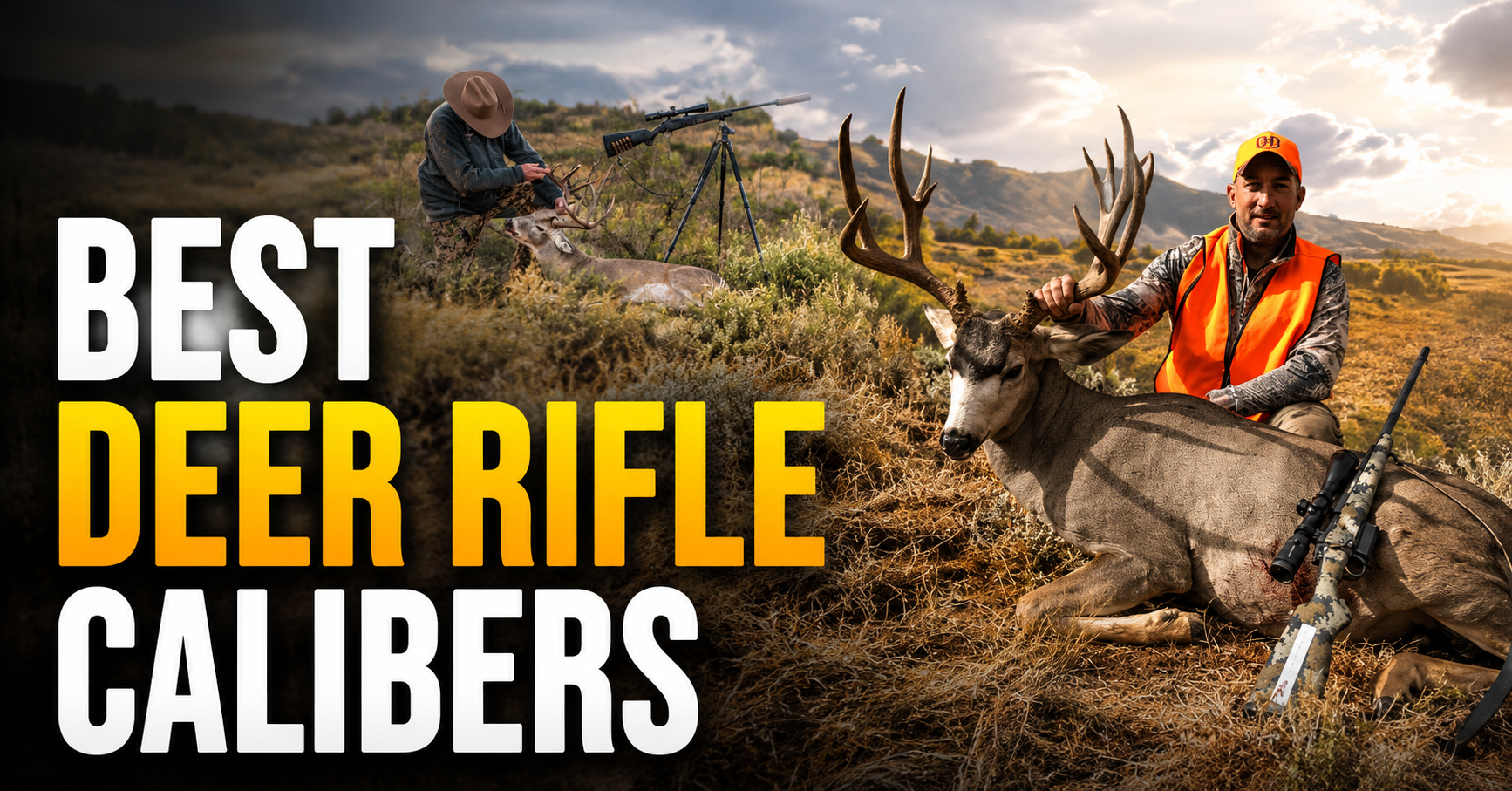
The best deer rifle calibers are not simply the largest or fastest options. A useful deer cartridge must be legal where you hunt, manageable enough for accurate shooting, compatible with an appropriate hunting bullet, and suited to your expected terrain and distance.
This guide compares dependable choices for whitetail, mule deer, blacktail, and similar deer hunting. It is intended for hunters choosing a first rifle, replacing an older setup, or matching a cartridge to a particular hunting environment.
Quick Answer
The best deer rifle calibers for most hunters include .243 Winchester, 6.5 Creedmoor, 7mm-08 Remington, .270 Winchester, .308 Winchester, and .30-06 Springfield. The .30-30 Winchester remains practical for close woodland hunting, while .350 Legend is worth considering where qualifying straight-wall cartridges are permitted or required. Your best choice is the legal cartridge you can shoot accurately with a properly constructed hunting bullet. Check current regulations and practice from realistic field positions before hunting.
Best Deer Rifle Calibers at a Glance
| Cartridge | Best Application | Relative Recoil | Main Advantage | Main Limitation |
|---|---|---|---|---|
| .243 Winchester | New hunters and recoil-sensitive shooters | Low | Comfortable to practice with | Requires careful bullet selection and shot discipline |
| 6.5 Creedmoor | General-purpose deer hunting | Low to moderate | Balanced recoil and external ballistics | Use a hunting bullet rather than a target-only load |
| 7mm-08 Remington | Balanced performance with manageable recoil | Moderate | Efficient deer cartridge in compact rifles | Local ammunition selection may be smaller |
| .270 Winchester | Open country and mixed-distance hunting | Moderate | Relatively flat trajectory | More recoil and muzzle blast than smaller options |
| .308 Winchester | Versatile all-around deer hunting | Moderate | Broad rifle and ammunition availability | Light rifles can produce noticeable recoil |
| .30-06 Springfield | Deer plus larger North American game | Moderate to substantial | Wide range of suitable hunting loads | More recoil than many hunters need for deer alone |
| .30-30 Winchester | Close woodland hunting | Moderate | Compact rifles and proven short-range usefulness | More curved trajectory than modern bottleneck options |
| .350 Legend | Shorter-range or qualifying straight-wall areas | Low to moderate | Manageable recoil in many rifle configurations | Legality and cartridge specifications vary by jurisdiction |
| .25-06 Remington | Open terrain and recoil-conscious hunters | Low to moderate | Flat-shooting deer cartridge | Ammunition may be less available locally |
| 6.5 PRC | Open-country hunting with practiced shooters | Moderate | More velocity than 6.5 Creedmoor | More recoil, blast, ammunition cost, and barrel heat |
| 7mm Remington Magnum | Open country and mixed-species hunts | Substantial | Strong downrange capability | Unnecessary recoil for many ordinary deer hunts |
| .300 Winchester Magnum | Experienced hunters pursuing deer and larger game | High | Versatility for larger species and open terrain | Recoil and blast can reduce practical accuracy |
Relative recoil varies with rifle weight, stock fit, shooting position, bullet weight, load, recoil pad, and individual sensitivity.
Important Safety and Legal Notice
Legal deer-hunting cartridges vary by state, province, wildlife management unit, season, land type, and firearm category. Some jurisdictions set a minimum bullet diameter, require centerfire ammunition, list approved cartridges, restrict rifles on certain public lands, or allow only cartridges meeting specific case dimensions. A cartridge described as a “straight-wall deer cartridge” is not automatically legal in every restricted area.
Check the current regulation booklet from the wildlife agency responsible for your hunting location. Public lands, national wildlife refuges, and special hunts may impose additional restrictions. The U.S. Fish and Wildlife Service notes that hunting on federal refuge lands remains subject to current federal and state regulations, along with rules for the individual refuge.
Always follow the four primary firearm safety rules:
- Treat every firearm as if it is loaded.
- Keep the muzzle pointed in a safe direction.
- Keep your finger outside the trigger guard until you are ready to shoot.
- Be certain of the target and what is in front of and beyond it.
A mechanical safety does not replace safe handling. Read the rifle manufacturer’s manual, confirm that the exact ammunition designation matches the barrel marking, and obtain qualified instruction if you are unfamiliar with the firearm.
Caliber Versus Cartridge: An Important Distinction
Hunters commonly say “caliber” when comparing .308 Winchester, .30-06 Springfield, and other options. Technically, caliber usually describes approximate bullet or bore diameter, while a cartridge is the complete ammunition design.
Cartridges using bullets of similar diameter can differ significantly in case capacity, pressure, velocity, recoil, rifle action length, and intended use. For example, .308 Winchester and .300 Winchester Magnum both use bullets of approximately the same diameter, but they are not interchangeable and do not produce the same shooting experience.
Always use the exact cartridge printed on the firearm’s barrel and specified in its manual. Similar names do not establish ammunition compatibility.
Which Deer Cartridge Is Best for Each Type of Hunter?
| Hunter or Situation | Strong Starting Options | Why |
|---|---|---|
| Recoil-sensitive beginner | .243 Winchester or 6.5 Creedmoor | Manageable recoil can support productive practice and reduce flinching |
| One general-purpose deer rifle | 7mm-08 Remington or .308 Winchester | Balanced performance without requiring a magnum cartridge |
| Open agricultural country | .270 Winchester or .25-06 Remington | Relatively flat trajectories with suitable hunting loads |
| Dense woodland | .30-30 Winchester or .308 Winchester | Available in practical rifles for shorter shooting opportunities |
| Qualifying straight-wall area | .350 Legend | Purpose-built option with generally manageable recoil |
| Deer and larger-game rifle | .30-06 Springfield | Broad selection of hunting loads for different species |
| Experienced open-country hunter | 6.5 PRC or 7mm Remington Magnum | Additional downrange capability when the shooter can manage the recoil |
Detailed Comparison of the Best Deer Rifle Calibers
1. .243 Winchester: Best for Low-Recoil Deer Hunting
The .243 Winchester is a longstanding choice for new hunters and people who find heavier cartridges uncomfortable. Its mild recoil makes regular practice easier, which can matter more than extra power that the shooter cannot control.
The .243 offers less margin for unsuitable bullets, poor angles, and imprecise placement than larger deer cartridges. Select ammunition specifically designed for deer-sized game rather than lightly constructed varmint bullets or non-expanding target ammunition. Hunters should wait for a high-percentage presentation and stay within the distance at which they can reliably place a first shot from a field position.
Best for: Recoil-sensitive shooters, supervised new hunters, and deer hunting where the cartridge is legal.
Consider another option if: You want one rifle for substantially larger game or regularly encounter difficult shot angles that should generally be passed.
2. 6.5 Creedmoor: Best Balance of Recoil and Shootability
The 6.5 Creedmoor has become a common deer cartridge because it combines relatively comfortable recoil with efficient bullets and broad rifle availability. It is generally easier to practice with than many traditional magnum cartridges.
Its popularity in target shooting creates an important ammunition distinction. A target bullet is not automatically an appropriate deer bullet. Choose a manufacturer-labeled hunting load with controlled or otherwise suitable expansion, and verify its performance guidance for deer-sized game.
Best for: Hunters who want a modern, manageable cartridge for woodland edges, fields, and open terrain.
Limitations: It is not a substitute for range estimation, wind judgment, ethical shot selection, or accurate placement.
3. 7mm-08 Remington: Best All-Around Choice With Moderate Recoil
The 7mm-08 Remington is based on the .308 Winchester case necked to accept a smaller-diameter bullet. It offers a useful balance of recoil, hunting-bullet selection, and downrange performance.
Many hunters consider it an excellent bridge between mild cartridges and traditional .30-caliber options. Its main practical disadvantage is that ammunition selection may be smaller in some local stores than the selection for .308 Winchester or .30-06 Springfield.
Best for: Hunters seeking one efficient deer cartridge without moving to magnum recoil.
Check before choosing: Confirm that appropriate hunting ammunition is reliably available where you live or travel.
4. .270 Winchester: Best for Open-Country Deer Hunting
The .270 Winchester has a long history as a deer cartridge. It offers a comparatively flat trajectory and is well suited to field edges, western terrain, and other areas where shots may vary in distance.
Its recoil is manageable for many adults in a properly fitted rifle, but it is more noticeable than .243 Winchester recoil. A lightweight mountain rifle can feel considerably sharper than a heavier rifle chambered for the same cartridge.
Best for: Open-country hunters who want a traditional cartridge with broad usefulness.
Limitations: Its trajectory does not remove the need to confirm distance and understand the actual load’s drop.
5. .308 Winchester: Best General-Purpose Deer Cartridge
The .308 Winchester is one of the most practical all-around choices for deer. Rifles and suitable hunting ammunition are widely represented, and the cartridge fits compact short-action rifles.
It offers more power than many hunters need for close whitetail hunting, but it remains versatile across a range of terrain. Recoil can be noticeable in very light rifles, so stock fit and rifle weight deserve attention.
Best for: Hunters who value availability, versatility, and a broad selection of deer ammunition.
Limitations: It may cause more recoil than a new or smaller-framed shooter needs.
6. .30-06 Springfield: Best for Deer and Larger Game
The .30-06 Springfield remains relevant because of its flexibility. Manufacturers offer suitable hunting loads across a broad range of bullet weights and constructions, allowing the same rifle to serve for deer and potentially larger North American game when legal and appropriate.
That versatility comes with more recoil than many mild and medium deer cartridges. Hunters who pursue only whitetails at ordinary woodland distances may shoot more confidently with a less powerful option.
Best for: A hunter wanting one rifle for deer and larger species.
Limitations: More recoil, a longer action, and potentially more rifle than a deer-only hunter requires.
7. .30-30 Winchester: Best Traditional Woods Cartridge
The .30-30 Winchester is closely associated with compact lever-action rifles and close woodland hunting. It works well where visibility is limited and shots are expected at modest distances.
Compared with flatter-shooting bottleneck cartridges, the .30-30 requires greater attention to trajectory as distance increases. Tubular-magazine rifles may also require ammunition with projectiles approved by the firearm and ammunition manufacturers for that magazine configuration.
Best for: Thick timber, compact rifles, and hunters who understand its trajectory.
Limitations: It is not the most forgiving choice for longer, uncertain distances.
8. .350 Legend: Best Mild Straight-Wall Option
The .350 Legend was developed as a straight-wall hunting cartridge and is offered in both bolt-action and compatible semiautomatic rifle platforms. It generally provides manageable recoil and practical performance for many short- to medium-distance deer settings.
Do not assume it is legal simply because a state permits some straight-wall cartridges. Regulations can specify bullet diameter, case length, cartridge lists, season type, county, or public-versus-private land.
Best for: Hunters in locations where the exact cartridge is legal and expected shots match its capabilities.
Limitations: More curved trajectory than many popular bottleneck cartridges and regulations that require careful verification.
9. .25-06 Remington: Best Flat-Shooting Mild Option
The .25-06 Remington combines a relatively small-diameter hunting bullet with a full-length cartridge case. It has a reputation for mild-to-moderate recoil and a useful trajectory in open terrain.
It can be a strong deer option with the correct hunting bullet, but ammunition may not be stocked as widely as .243 Winchester, .270 Winchester, or .308 Winchester.
Best for: Open-country deer hunters who prefer less recoil than many larger cartridges.
Limitations: Local ammunition availability and careful projectile selection.
10. 6.5 PRC: Best Modern Open-Country Option
The 6.5 PRC provides more velocity than the 6.5 Creedmoor and is intended for hunters who value additional downrange capability. It can be useful in open country when paired with a suitable hunting projectile and a well-practiced shooter.
The extra velocity also brings more recoil, muzzle blast, ammunition expense, and barrel heat. Hunters whose shots are normally close may receive little practical benefit over a milder cartridge.
Best for: Experienced hunters working in open terrain.
Limitations: Greater cost and recoil without an automatic increase in field accuracy.
11. 7mm Remington Magnum: Best Traditional Magnum Option
The 7mm Remington Magnum is useful for hunters who may pursue deer across open terrain or want a cartridge that can also serve for larger species. It offers substantial downrange performance with an appropriate hunting load.
Its recoil and muzzle blast can make practice less enjoyable, especially in a lightweight rifle. A hunter who shoots a moderate cartridge accurately is better prepared than one who flinches with a magnum.
Best for: Experienced shooters who genuinely need its capabilities.
Limitations: More recoil, blast, ammunition expense, and rifle length than many deer hunts require.
12. .300 Winchester Magnum: Best for Experienced Mixed-Game Hunters
The .300 Winchester Magnum is capable of hunting deer, but its primary advantage appears when a hunter also pursues larger game or needs additional downrange performance in suitable conditions.
For many whitetail hunts, the cartridge introduces more recoil and muzzle blast than necessary. It should not be selected merely because it appears more powerful on a ballistic chart.
Best for: Experienced hunters who can manage the cartridge and want broader big-game versatility.
Limitations: High recoil can reduce practice quality, confidence, and practical accuracy.
How to Select the Best Deer Rifle Caliber for You
Check the Law Before Comparing Performance
Determine the legal firearm type, cartridge restrictions, season dates, ammunition rules, magazine limits, and land-specific requirements first. A technically capable cartridge is useless if it is prohibited during your hunt.
Review the official regulation booklet again shortly before the season because rules can change. Check emergency orders, chronic wasting disease regulations, nonlead ammunition requirements, refuge rules, and local discharge restrictions where applicable.
Choose a Recoil Level You Can Practice With
Recoil tolerance is individual. Rifle weight, stock dimensions, recoil pad, shooting position, and load all influence perceived recoil. A cartridge that feels comfortable in a heavy range rifle may feel sharper in a lightweight hunting rifle.
Persistent anticipation or flinching is a reason to reduce recoil, improve rifle fit, obtain instruction, or choose another cartridge. Accurate placement is more valuable than unused power.
Match the Cartridge to the Terrain
Dense woods often provide brief, close opportunities where a compact rifle and manageable handling matter. Open country may place more emphasis on trajectory, wind, steady shooting support, and reliable distance measurement.
Do not choose a long-range cartridge based only on the possibility of a distant shot. Consider where you actually hunt and how frequently a longer opportunity can be taken safely and ethically.
Consider the Rifle, Not Just the Cartridge
Rifle fit influences safe handling and accuracy. Check length of pull, grip reach, trigger access, comb height, balance, total weight, safety operation, and the ability to cycle the action without leaving a stable position.
A short or adjustable stock can be more important to a smaller hunter than choosing the mildest cartridge available. Never assume that a youth-labeled rifle fits every young or small-framed shooter.
Evaluate Ammunition Availability
Look for more than generic range ammunition. Confirm that local or dependable suppliers carry a suitable deer-hunting load for the chambering. You should be able to purchase enough of the same load to sight in, verify accuracy, practice responsibly, and hunt.
Never mix cartridge designations or fire ammunition simply because it appears to fit. Match the full designation on the ammunition box to the markings and instructions for the rifle.
Use a Purpose-Built Hunting Bullet
Bullet construction can be as important as cartridge selection. Common deer-bullet categories include traditional cup-and-core soft points, bonded bullets, polymer-tipped hunting bullets, controlled-expansion designs, and expanding monolithic copper or copper-alloy bullets.
The correct choice depends on expected impact conditions, deer size, local nonlead rules, and manufacturer recommendations. Target bullets and lightly constructed varmint bullets should not be assumed to perform like deer-hunting bullets.
Set an Ethical Distance Based on Demonstrated Skill
A cartridge does not establish a hunter’s ethical range. Your limit should reflect repeatable first-shot accuracy from realistic positions, the size of the vital area, wind-reading ability, verified trajectory, visibility, animal presentation, and a safe backstop.
If any essential factor is uncertain, wait for a better opportunity or decline the shot. Passing is a responsible hunting decision.
Choosing an Appropriate Deer Bullet
| Bullet Category | General Characteristic | What to Verify |
|---|---|---|
| Traditional soft point | Designed to expand on game | Recommended species and expected impact conditions |
| Bonded hunting bullet | Designed to retain the core and jacket during expansion | Compatibility with your cartridge, rifle, and deer application |
| Polymer-tipped hunting bullet | Combines a streamlined tip with an expanding design | Confirm that it is a hunting model, not a target or varmint bullet |
| Monolithic expanding bullet | Lead-free construction with engineered expansion | Twist-rate compatibility and manufacturer-recommended impact conditions |
| Target bullet | Designed primarily for accuracy or competition | Do not assume suitability for hunting without explicit manufacturer guidance |
Test the exact hunting load in your rifle. Two rifles chambered for the same cartridge may prefer different ammunition. Verify reliable feeding, extraction, point of impact, grouping, and zero before the season.
Why More Power Is Not Always Better
Moving to a magnum cartridge can increase velocity and downrange energy, but it may also increase recoil, blast, rifle weight, ammunition expense, and practice fatigue. These disadvantages can outweigh the ballistic benefit during ordinary deer hunting.
A moderate cartridge that encourages frequent, accurate practice is often the more responsible choice. Equipment cannot compensate for poor target identification, an unsafe background, rushed shot placement, or a distance beyond the hunter’s proven ability.
A Practical Preseason Accuracy Test
- Inspect the rifle. Follow the manufacturer’s instructions and confirm that mounts, fasteners, and the bore are in serviceable condition.
- Confirm the ammunition. Use the exact cartridge designation and selected hunting load.
- Establish a supported zero. Use a safe range with an adequate backstop.
- Allow the barrel to cool as needed. Avoid treating a hunting rifle like a high-volume competition firearm.
- Practice field positions. Shoot from kneeling, sitting, prone, or a supported standing position as conditions safely permit.
- Practice the first shot. A cold-bore first shot is more representative of a hunting opportunity than a rapid string.
- Confirm realistic distances. Do not extend your hunting limit beyond consistent, responsible performance.
- Recheck before the hunt. Confirm zero after travel, a hard impact, scope work, or any reason to suspect a change.
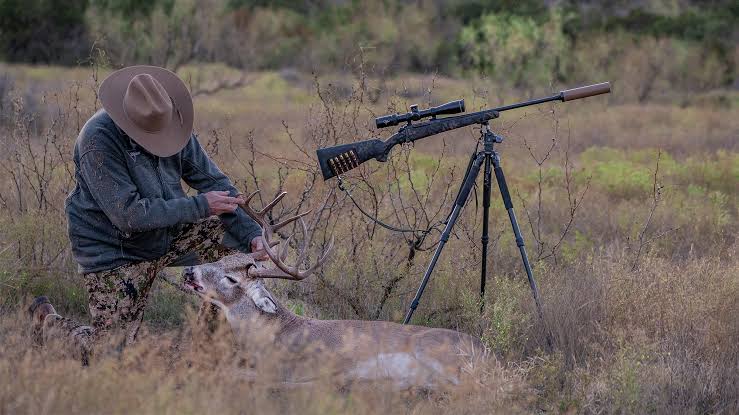
Common Deer-Caliber Selection Mistakes
- Buying by reputation alone: A popular cartridge may not suit your body, terrain, rifle, or local law.
- Ignoring recoil: Excessive recoil can cause flinching and reduce practice quality.
- Using the wrong bullet: Cartridge power cannot correct unsuitable projectile construction.
- Assuming straight-wall means legal: Jurisdictions may impose detailed cartridge specifications.
- Choosing an uncommon cartridge without checking supply: Limited ammunition can interfere with practice and load verification.
- Relying on advertised maximum range: Marketing figures do not establish an ethical field distance.
- Ignoring rifle fit: Poor stock dimensions can make even mild cartridges difficult to shoot.
- Failing to test hunting ammunition: A new load may produce a different point of impact from practice ammunition.
- Shooting at poor presentations: No cartridge makes an obstructed, unidentified, or unsafe shot acceptable.
- Changing equipment immediately before the season: New rifles, optics, or loads require enough time for verification and practice.
What Not to Do
- Do not fire at sound, movement, color, or an animal you have not positively identified.
- Do not shoot without knowing what is in front of and beyond the deer.
- Do not take a shot toward roads, buildings, livestock, people, or an unsafe background.
- Do not assume a cartridge is legal based on an online list from a different state or previous season.
- Do not use ammunition with a designation different from the rifle’s chambering.
- Do not rely on a mechanical safety as a substitute for muzzle and trigger discipline.
- Do not take shots beyond your demonstrated accuracy.
- Do not climb a tree, cross an obstacle, or enter a vehicle with a loaded firearm.
- Do not trespass while hunting or recovering game.
- Do not abandon a reasonable, safe, and legal recovery effort after a shot.
Field Safety and Ethical Shot Selection
Load and unload in accordance with the manufacturer’s instructions while maintaining muzzle control. Keep the chamber status appropriate to the situation and local rules, and communicate clearly with hunting partners.
Before firing, positively identify the species and confirm that the individual animal is legal for your tag and season. Prefer high-percentage presentations that expose the vital area, and avoid shots obscured by brush or affected by unsafe angles.
Mark the deer’s location and your position before moving. If a shot is taken, observe the animal’s reaction, listen carefully, identify the point where it was last seen, and follow current local recovery rules. Obtain landowner permission before entering private property, even during recovery.
Final Answer
The best deer rifle calibers are those that balance legality, recoil, rifle fit, ammunition quality, field accuracy, and expected hunting conditions. The .243 Winchester and 6.5 Creedmoor are strong low-recoil options; 7mm-08 Remington and .308 Winchester are excellent general-purpose choices; .270 Winchester suits open country; .30-30 Winchester remains practical in woods; and .350 Legend may fit qualifying straight-wall regulations. The .30-06 Springfield offers broader big-game versatility, while magnums make the most sense for experienced hunters with a genuine need for their additional capability. Whatever you choose, use a suitable hunting bullet, verify your zero, follow the four firearm safety rules, and stay within your demonstrated ability.
FAQs
1. What is the best overall deer rifle caliber?
There is no universal winner. The .308 Winchester and 7mm-08 Remington are particularly balanced choices because they combine suitable deer performance with manageable rifle configurations and moderate recoil.
2. What is the best deer caliber for a beginner?
The .243 Winchester and 6.5 Creedmoor are common starting points because they generally produce less recoil than traditional .30-caliber cartridges. Proper rifle fit and qualified instruction remain essential.
3. Is .243 Winchester enough for deer?
It can be suitable where legal when loaded with a purpose-built deer bullet and used with precise placement. Hunters should avoid lightly constructed varmint bullets and marginal shot presentations.
4. Is 6.5 Creedmoor good for deer hunting?
Yes, it is a practical deer cartridge with a suitable expanding hunting bullet. Its manageable recoil makes it attractive to hunters who want to practice frequently.
5. Is .308 Winchester good for whitetail deer?
Yes. It is a versatile whitetail cartridge with broad hunting-ammunition availability. Recoil can still be noticeable in lightweight rifles.
6. Is .30-06 too much for deer?
It is fully capable of deer hunting but may provide more recoil than some hunters need. It is especially useful when the same rifle will also serve for larger game.
7. Is .270 Winchester better than .308 Winchester for deer?
Neither is universally better. The .270 often appeals to open-country hunters seeking a relatively flat trajectory, while the .308 offers compact rifle options and broad ammunition availability.
8. Is 7mm-08 better than 6.5 Creedmoor for deer?
The 7mm-08 generally uses larger-diameter hunting bullets, while the 6.5 Creedmoor may produce slightly milder recoil in comparable setups. Both can be excellent when legal and paired with appropriate ammunition.
9. Is .30-30 Winchester still effective for deer?
Yes. It remains a practical woodland cartridge at distances where the hunter has verified its trajectory and accuracy. It is less forgiving as distance increases.
10. Is .350 Legend a good deer cartridge?
It can be a useful mild-recoil option for shorter- and medium-distance hunting. Confirm that the exact cartridge and firearm type are legal for the location and season.
11. What is the lowest-recoil deer rifle caliber?
Among widely used centerfire deer cartridges, .243 Winchester is commonly selected for low recoil. Actual recoil depends on the rifle, load, bullet weight, stock fit, and shooter.
12. Is a larger caliber always better for deer?
No. Additional power offers little benefit if recoil causes poor placement or discourages practice. Suitability depends on the complete cartridge, bullet, rifle, hunter, and conditions.
13. What is the best caliber for deer under 100 yards?
Many cartridges work at close distance, including .30-30 Winchester, .350 Legend, .243 Winchester, 7mm-08, and .308 Winchester. Legality, recoil, bullet construction, and safe shooting lanes matter more than small ballistic differences.
14. What is the best caliber for deer in thick woods?
The .30-30 Winchester and .308 Winchester are practical choices in compact rifles. No bullet reliably “brush busts,” so hunters should not fire through branches or vegetation that obstruct the vital area.
15. What is the best caliber for open-field deer hunting?
The .270 Winchester, .25-06 Remington, 6.5 Creedmoor, and 7mm-08 Remington are useful options. Open terrain still requires accurate ranging, wind judgment, and a safe backstop.
16. What is the best caliber for mule deer?
Common choices include 6.5 Creedmoor, 7mm-08, .270 Winchester, .308 Winchester, and .30-06. Select according to terrain, deer size, expected distance, recoil tolerance, and local regulations.
17. Do I need a magnum caliber for mule deer?
No. Standard cartridges are fully practical when the hunter uses an appropriate bullet and stays within proven accuracy limits. Magnums are optional, not mandatory.
18. What deer caliber is best for a small-framed hunter?
Consider .243 Winchester, 6.5 Creedmoor, or 7mm-08 in a properly fitted rifle. Stock dimensions and total rifle weight may influence comfort as much as cartridge choice.
19. What is the best deer caliber for a youth hunter?
A mild cartridge such as .243 Winchester may be appropriate when legal, but the rifle must fit the individual youth. Training, close supervision, maturity, and compliance with youth-hunting laws are more important than age alone.
20. Is .223 Remington legal and suitable for deer?
Rules and opinions vary considerably. Some jurisdictions permit it, while others impose minimum-caliber or cartridge requirements. Its limited margin makes bullet construction and placement particularly important; many hunters prefer a larger legal deer cartridge.
21. Is .22-250 Remington suitable for deer?
It may be legal in some places and prohibited in others. Because it is commonly associated with varmint bullets, hunters must not assume every load is suitable for deer. A more conventional deer cartridge often offers greater flexibility.
22. Is .300 Blackout good for deer?
It may be suitable at limited distances with an appropriate expanding hunting load and where legal. Its trajectory and terminal-performance limits should be verified carefully rather than assumed from the rifle platform.
23. Is .300 Winchester Magnum necessary for whitetail deer?
No. It is capable but often produces more recoil and blast than a typical whitetail hunt requires. Mild and moderate cartridges are usually easier to practice with.
24. Is .450 Bushmaster good for deer?
It can be effective and may qualify under certain straight-wall regulations, but it generally produces more recoil than .350 Legend. Check exact legal cartridge specifications before choosing it.
25. What is a straight-wall deer cartridge?
It is a cartridge whose case walls have little or no bottleneck. Some jurisdictions permit qualifying straight-wall cartridges during particular deer seasons, but definitions and dimensional limits vary.
26. Are straight-wall cartridges safer than bottleneck cartridges?
No cartridge removes the need for a safe background and responsible handling. Regulatory decisions may consider geography and projectile travel, but hunters must follow identical target-identification and backstop principles.
27. What bullet weight is best for deer?
There is no universal weight. Use a manufacturer-recommended deer load that functions accurately in your rifle and suits the cartridge, expected impact conditions, and local ammunition rules.
28. Are match bullets suitable for deer hunting?
Do not assume so. Some are designed primarily for target accuracy and may not provide predictable hunting performance. Use a projectile explicitly recommended by its manufacturer for deer-sized game.
29. Are copper bullets good for deer?
Expanding monolithic copper or copper-alloy hunting bullets can be effective when matched to the rifle and expected conditions. They may also satisfy nonlead requirements where applicable.
30. Do I need lead-free ammunition for deer hunting?
That depends on the jurisdiction and land. Some areas require nonlead ammunition, while others do not. Check the current wildlife-agency and land-manager rules for your exact hunt.
31. How much recoil is too much?
Recoil is too much when it causes pain, flinching, poor trigger control, reluctance to practice, or inconsistent placement. Better rifle fit, instruction, a heavier rifle, or a milder cartridge may help.
32. Does a muzzle brake reduce recoil?
A properly designed brake can reduce felt recoil, but it substantially changes muzzle blast and may affect hunting partners or unprotected hearing. Follow manufacturer guidance and always use hearing protection during practice.
33. Does a heavier rifle reduce recoil?
All else being equal, additional rifle weight generally reduces felt recoil. However, a heavier rifle may be more tiring to carry, particularly in mountain terrain.
34. How far can a deer rifle shoot ethically?
Ethical range is not a fixed cartridge number. It ends where the hunter can no longer place a first shot consistently under the actual wind, position, visibility, and time constraints.
35. Should I zero my deer rifle at 100 or 200 yards?
The appropriate zero depends on the cartridge, load, sight height, expected terrain, and verified trajectory. Confirm every zero at the range rather than relying solely on a ballistic table.
36. Can I hunt with a different load than the one used to zero?
You should not assume two loads share the same point of impact. Recheck the zero whenever you change the manufacturer, bullet type, bullet weight, or load.
37. How much ammunition should I use for preseason practice?
Use enough to confirm the rifle, zero, first-shot placement, and accuracy from realistic positions without overheating the barrel. Quality practice matters more than rapidly firing a large quantity.
38. How often should I verify my deer rifle’s zero?
Check before the season and after travel, a hard impact, scope adjustment, mount work, or any event that may have changed alignment. A final confirmation shortly before hunting is prudent.
39. Do I need an expensive rifle for deer hunting?
No. Reliability, safe function, suitable fit, consistent accuracy, and a properly mounted optic matter more than prestige. A moderately priced rifle can serve responsibly when maintained and practiced with.
40. Where should I check legal deer calibers?
Use the current official hunting regulations from the state or provincial wildlife agency and any applicable land manager. Confirm the wildlife unit, season, firearm category, land type, and cartridge restrictions.
Read more: