
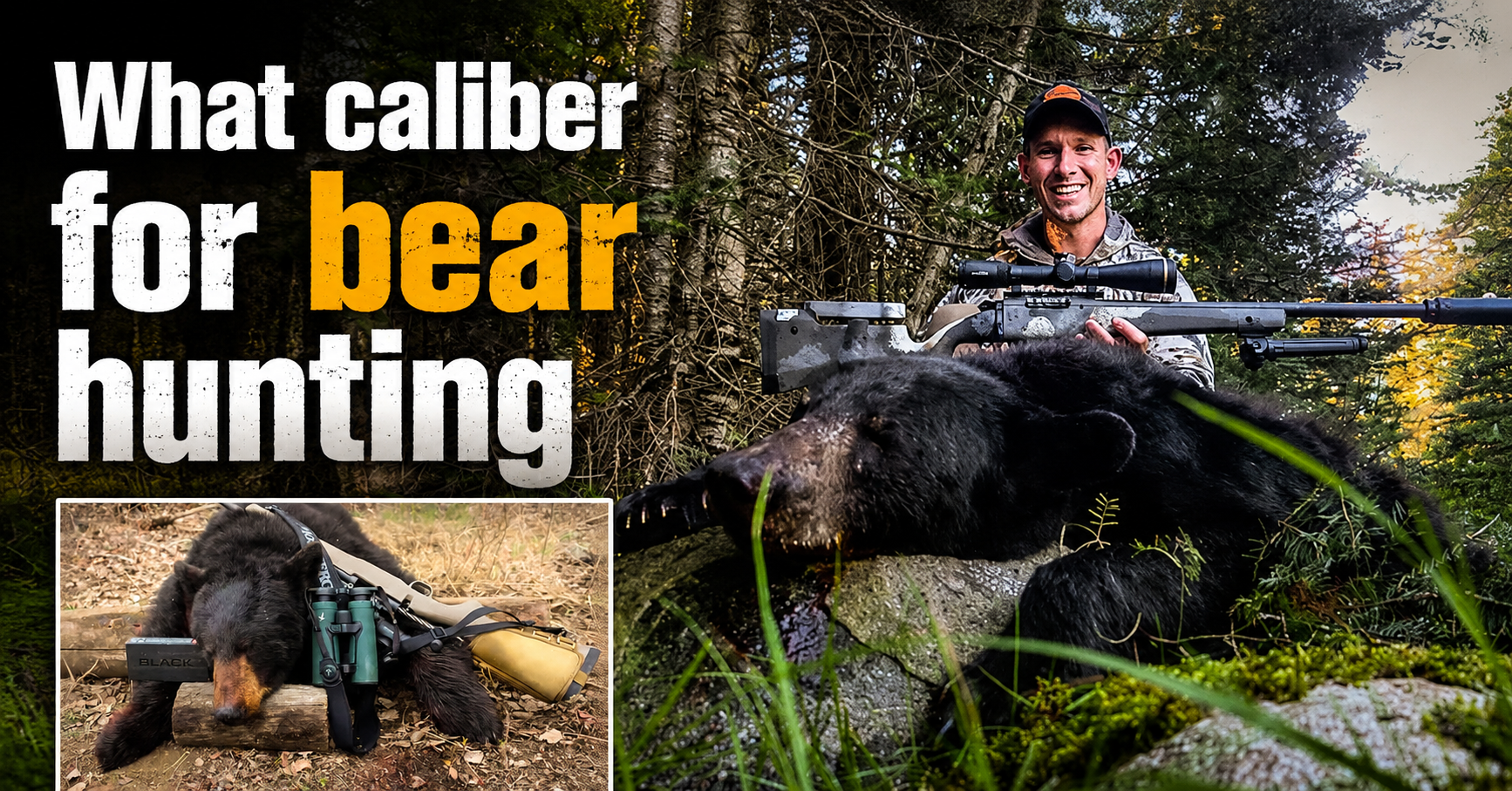

The appropriate bear-hunting caliber depends first on the species. A cartridge that is entirely suitable for an average black bear may not be a sensible choice for a large coastal brown bear. Terrain, expected distance, bullet construction, rifle fit, recoil tolerance, and local law also affect the decision.
For black bear hunting, moderate centerfire cartridges such as the .270 Winchester, 7mm-08 Remington, .308 Winchester, and .30-06 Springfield are practical choices. For large brown or grizzly bears, the .30-06 with a heavy premium hunting bullet represents a commonly cited practical starting point, while the .300 Winchester Magnum, .338 Winchester Magnum, and .375 H&H Magnum provide additional capability for hunters who can shoot them accurately.
Quick Answer
For most black bear hunters, the .308 Winchester or .30-06 Springfield offers an excellent balance of recoil, ammunition availability, bullet selection, and penetration. The .270 Winchester and 7mm-08 are also capable when loaded with controlled-expansion hunting bullets.
In close woodland, the .30-30 Winchester, .35 Whelen, and .45-70 Government can be effective within their realistic trajectory and accuracy limits. For Alaska brown bear, the Alaska Department of Fish and Game states that a .30-06 loaded with a 200- or 220-grain premium bullet can do the job with good placement. It recommends considering a .300, .338, or larger magnum only if the hunter shoots it as accurately as the .30-06.
No caliber guarantees an immediate result or compensates for poor shot placement. Use a legal expanding bullet designed for the bear species, practice from realistic positions, and stay within your demonstrated ability.
Important Safety and Legal Notice
Regulations were reviewed on August 3, 2026. Bear seasons, legal weapons, minimum calibers, baiting, hound use, licenses, tags, quotas, reporting, sealing, and salvage requirements vary by state, province, wildlife unit, and bear species.
Wyoming’s 2026 black bear regulations require an eligible centerfire firearm of at least .24 caliber and impose additional cartridge or ammunition standards. Montana’s 2026 black bear regulations do not establish a general rifle or handgun caliber limitation, but weapon-restriction areas and other hunt rules may still apply.
In Montana, black bear hunters must pass a bear-identification test, and grizzly bears may not be taken during a black bear hunt. Alaska establishes detailed unit-specific brown and black bear seasons, sealing requirements, bag limits, guide requirements, and emergency closures in its 2026–2027 hunting regulations.
Check current official regulations immediately before hunting. Do not treat another state’s minimum caliber as a nationwide rule.
Bear Hunting Caliber Comparison
| Cartridge | Typical Hunting Bullet Range | Best-Fit Application | Recoil | Main Limitation |
|---|---|---|---|---|
| .270 Winchester | Approximately 140–150 grains | Black bear in open or mixed terrain | Moderate | Bullet construction must favor controlled expansion and penetration |
| 7mm-08 Remington | Approximately 140–160 grains | Black bear and multi-species hunting | Moderate | Less ammunition availability than .308 Winchester |
| .308 Winchester | Approximately 165–180 grains | General black bear hunting | Moderate | More trajectory correction than faster cartridges at extended distances |
| .30-06 Springfield | Approximately 165–220 grains | Black bear and properly planned brown bear hunts | Moderate to substantial | Heavy loads can produce significant recoil in light rifles |
| .300 Winchester Magnum | Approximately 180–200 grains | Large black bear and brown bear in open country | Substantial | More recoil, blast, and practice cost than most black bear hunts require |
| .338 Winchester Magnum | Approximately 200–250 grains | Large brown or grizzly bear | Heavy | Only useful if the hunter can shoot it accurately and repeatedly |
| .375 H&H Magnum | Approximately 250–300 grains | Large brown bear and other heavy game | Heavy | Rifle weight, recoil, ammunition cost, and limited need outside heavy game |
| .30-30 Winchester | Approximately 150–170 grains | Black bear at close woodland distances | Moderate | More curved trajectory and limited practical distance |
| .35 Whelen | Approximately 200–250 grains | Black bear, large black bear, and close-to-moderate-range heavy game | Substantial | Factory ammunition may be difficult to find |
| .45-70 Government | Approximately 300–405 grains | Close-range black bear in thick cover | Varies from moderate to heavy | Curved trajectory and major differences among firearm-approved loads |
What Caliber for Bear Hunting Should You Choose?
1. .270 Winchester: Capable Black Bear Cartridge
The .270 Winchester can be effective for black bears when loaded with a controlled-expansion hunting bullet. It offers a useful trajectory for clear-cuts, mountain slopes, and other areas where a shot may be longer than one encountered over bait or in dense timber.
Choose a bullet intended for larger deer-sized or big-game animals rather than a lightly constructed projectile intended to expand rapidly. Accuracy and bullet construction are more important than obtaining the highest possible velocity.
The .270 Winchester is not the first recommendation for a large coastal brown bear. Hunters planning that kind of hunt should consult their guide and use equipment appropriate for much larger animals.
2. 7mm-08 Remington: Balanced Black Bear Option
The 7mm-08 Remington combines moderate recoil with bullets capable of controlled expansion and useful penetration. It is a strong option for hunters who want one rifle for black bear, deer, and other medium game.
Approximately 140- to 160-grain hunting bullets are commonly considered, but construction matters more than choosing one exact weight. A bonded or other controlled-expansion bullet can be preferable when angled penetration may be required.
3. .308 Winchester: Practical All-Around Black Bear Choice
The .308 Winchester is one of the most practical answers for black bear hunting. Rifles and hunting ammunition are widely available, recoil is manageable for many adults, and suitable bullets are offered in several weights and constructions.
A controlled-expansion bullet of approximately 165 to 180 grains is a sensible starting category. Federal, for example, offers a 180-grain .308 Winchester bonded hunting load designed for medium and big game.
The .308 does not need magnum velocity to be effective at ordinary black bear distances. A hunter who already shoots an accurate .308 well generally does not need another rifle solely for a black bear hunt.
4. .30-06 Springfield: Most Versatile Bear Choice
The .30-06 Springfield provides a broad range of hunting-bullet weights and can be adapted to black bear or brown bear hunting. For black bears, controlled-expansion bullets around 165 to 180 grains are common. For large brown bears, Alaska guidance discusses premium bullets of 200 or 220 grains.
The Alaska Department of Fish and Game firearm guide emphasizes that experienced guides generally prefer a familiar .270 or .30-06 that a hunter shoots well over a new magnum that has received little practice.
The .30-06 remains a practical choice because it provides adequate capability without the recoil of the larger magnums. Heavy bullet loads still require practice, especially in a lightweight rifle.
5. .300 Winchester Magnum: Open-Country Brown Bear Option
The .300 Winchester Magnum can provide additional velocity with heavy .30-caliber hunting bullets. It may suit open-country brown bear hunts where the hunter already uses the cartridge accurately.
Its disadvantages include greater recoil, muzzle blast, ammunition expense, and the possibility of reduced practice. A hunter who flinches with the .300 is better served by an accurately handled .30-06.
For ordinary black bear hunting, the .300 Winchester Magnum is usually more cartridge than necessary, although it remains effective with appropriate ammunition.
6. .338 Winchester Magnum: Established Large-Bear Cartridge
The .338 Winchester Magnum is commonly associated with Alaska brown and grizzly bear hunting. It can fire heavy, controlled-expansion bullets suitable for large animals, but its recoil is substantial.
Selecting a .338 makes sense only when the hunter can operate it without flinching, recover from recoil, and place accurate follow-up shots if legally and ethically required. Several months of structured practice may be necessary before a major hunt.
7. .375 H&H Magnum: Specialized Heavy-Game Choice
The .375 H&H Magnum is a specialized cartridge for large and potentially dangerous game. It offers heavy bullets and substantial penetration but produces significant recoil and requires a comparatively large rifle.
It is unnecessary for most black bear hunts. For a guided coastal brown bear hunt, it may be appropriate when recommended by the outfitter and when the hunter has demonstrated proficiency with it.
8. .30-30 Winchester: Close-Cover Black Bear Cartridge
The .30-30 Winchester can be effective for black bears at conservative woodland distances. Its compact lever-action rifles are convenient in dense vegetation, but its trajectory becomes increasingly curved as distance grows.
Use a hunting bullet approved for the rifle’s magazine system and intended for black bear-sized game. Do not extend the shot simply because a modern optic is installed.
9. .35 Whelen: Heavy Bullet Without a Magnum Belt
The .35 Whelen fires relatively heavy, large-diameter bullets and can be useful for black bears and other heavy game. It provides an alternative for hunters who value bullet weight and penetration without choosing a full magnum cartridge.
Its practical weakness is ammunition availability. Confirm that enough identical hunting ammunition is available for sight-in, field practice, and the hunt before selecting it for travel.
10. .45-70 Government: Thick-Cover Specialist
The .45-70 Government is a close-range option frequently associated with lever-action rifles. It can use heavy hunting bullets, but trajectory and recoil vary considerably among loads.
Modern .45-70 ammunition is offered at very different performance levels because rifles chambered for the cartridge differ greatly in strength. Use only ammunition expressly approved for the specific firearm. Never assume that every .45-70 load is interchangeable among old and modern rifles.
Best Calibers by Bear Species
Black Bear
Practical options include:
- .270 Winchester
- 7mm-08 Remington
- .308 Winchester
- .30-06 Springfield
- .30-30 Winchester at close range
- .35 Whelen
- .45-70 Government at close range
The .308 Winchester and .30-06 Springfield provide the broadest combination of ammunition availability, suitable bullet construction, manageable recoil, and multi-species use.
Interior Grizzly
The .30-06 Springfield with a heavy premium bullet is a reasonable starting category, while the .300 Winchester Magnum and .338 Winchester Magnum offer additional capability. Final selection should be coordinated with the outfitter or guide.
Coastal Brown Bear
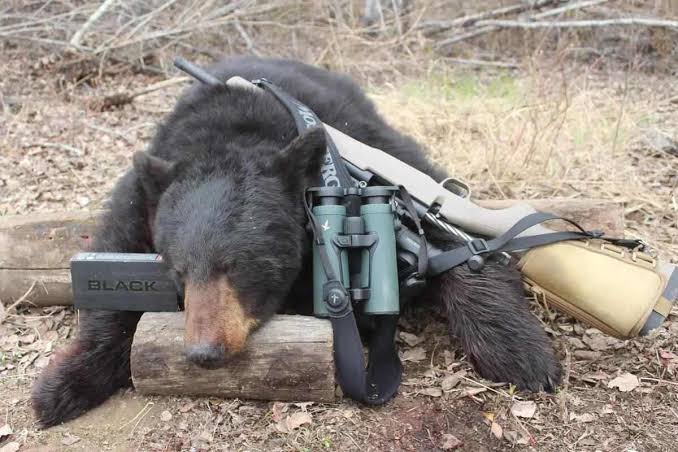
The Alaska Department of Fish and Game recognizes a properly loaded .30-06 as capable with good placement, while .300, .338, and larger magnums are popular options. A .338 Winchester Magnum or .375 H&H may be suitable for hunters who handle their recoil confidently.
Kodiak Brown Bear
The Alaska Kodiak brown bear FAQ notes that many experienced hunters regard the .30-06 with a 180-grain soft-point bullet as the smallest effective category, while .300, .338, and .375 magnums are popular and well suited.
This is experienced-hunter guidance rather than a universal legal minimum. Follow the recommendation of the licensed guide and use the cartridge you can shoot accurately.
Polar Bear
Polar bear harvest is governed by specialized federal, territorial, Indigenous, and international rules. Do not apply ordinary black or brown bear recommendations to a polar bear hunt. Work through the authorized program or outfitter and follow its exact equipment requirements.
Bullet Construction Matters as Much as Caliber
Controlled-Expansion Soft Points
A conventional soft-point hunting bullet can be suitable for black bear when designed to expand while retaining enough mass for penetration. Do not substitute a varmint bullet merely because it is offered in the same cartridge.
Bonded Bullets
Bonding joins the jacket and lead core to reduce separation. This can support weight retention and penetration when the bullet encounters dense muscle or bone. Federal describes this principle in its hunting-bullet selection guide.
Monolithic Copper Bullets
Expanding copper-alloy bullets can provide high weight retention and may satisfy non-lead requirements. They often weigh less than comparable lead-core bullets, so evaluate them by construction and manufacturer guidance rather than matching grain weight alone.
Partition-Style Bullets
A partitioned design allows the front portion to expand while the rear section supports continued penetration. It is a traditional choice for animals requiring both expansion and deep penetration.
Avoid Full-Metal-Jacket and Target Ammunition
Full-metal-jacket and target bullets are generally inappropriate for bear hunting because they may not provide predictable expansion. Use ammunition expressly designed and legal for hunting the intended bear species.
Choosing Bullet Weight
| Cartridge | Black Bear Starting Range | Large Brown Bear Starting Range | Important Qualification |
|---|---|---|---|
| .270 Winchester | Approximately 140–150 grains | Not a primary recommendation | Use controlled-expansion construction |
| 7mm-08 Remington | Approximately 140–160 grains | Not a primary recommendation | Accuracy and penetration matter more than maximum weight |
| .308 Winchester | Approximately 165–180 grains | Consult the guide before considering it | Favor a robust expanding hunting bullet |
| .30-06 Springfield | Approximately 165–180 grains | Approximately 180–220 grains | Alaska guidance specifically discusses premium 200- or 220-grain bullets |
| .300 Winchester Magnum | Approximately 165–180 grains | Approximately 180–200 grains | Use only if recoil does not reduce accuracy |
| .338 Winchester Magnum | Usually unnecessary | Approximately 200–250 grains | Choose a controlled-expansion big-game design |
| .375 H&H Magnum | Unnecessary for most hunts | Approximately 250–300 grains | Coordinate the load with the outfitter |
These ranges are starting categories, not loading instructions or legal standards. Use factory ammunition or published manufacturer data appropriate for the exact rifle.
Recoil and Rifle Fit
A powerful cartridge is useful only when the hunter can fire it accurately without anticipating recoil. Heavy magnums can cause flinching, slow recovery, and reduced practice. A lighter cartridge in a familiar rifle may produce a more humane result.
Rifle weight, stock dimensions, recoil-pad design, shooting position, clothing, muzzle devices, and hearing protection influence perceived recoil. Test the complete hunting setup well before the trip.
Do not arrive in camp with an unfamiliar magnum that has only been fired enough to establish a rough zero. Alaska’s official guidance specifically favors a familiar, accurately handled rifle over unnecessary power.
What Is an Ethical Bear-Hunting Range?
There is no universal ethical distance. Black bear hunts over bait may involve close shots, while spot-and-stalk hunts can occur across clear-cuts, alpine slopes, or tundra. Dense fur can make the body angle and exact anatomical position harder to judge.
Limit shots to the distance where you can consistently place the first bullet into a vital-area-sized target from the same field position and in similar conditions. The bullet must also remain within its manufacturer’s intended expansion range.
Do not extend the distance because a cartridge is labeled “magnum” or “long range.” Moving closer, waiting for a better angle, or declining the opportunity is often the more responsible decision.
Shot Selection and Recovery
Wait for a clear, high-percentage presentation. Broadside or modest quartering-away angles generally provide a more predictable route to the heart-and-lung area than steep quartering shots.
Avoid head and neck shots. These present relatively small targets and can produce severe injury without a rapid harvest if placement is slightly wrong. Do not shoot through brush, at an obscured bear, or at movement that has not been positively identified.
After firing:
- Maintain muzzle control and observe the bear’s direction of travel.
- Mark the point where the bear stood and the last location where it was visible.
- Follow the outfitter’s or hunter-education guidance about how long to wait.
- Approach cautiously and remain alert in dense cover.
- Make every reasonable, safe, and legal recovery effort.
- Do not enter private land without permission.
- Complete tagging, reporting, sealing, and salvage requirements promptly.
Positive Bear Identification
Color alone cannot reliably distinguish a black bear from a grizzly. Black bears may be brown, cinnamon, blond, or black. Look at several characteristics, including facial profile, shoulder shape, ears, claws, and overall body form.
The Montana Bear Identification Program requires hunters to study these differences and pass an examination before purchasing a black bear license.
Never shoot when species identification is uncertain. Also verify any prohibition on taking a sow accompanied by cubs. Positive identification is more important than the size of the bear or the opportunity to fill a tag.
Firearm Safety
- Treat every firearm as if it is loaded.
- Keep the muzzle pointed in a safe direction.
- Keep your finger outside the trigger guard until ready to fire.
- Be certain of the target and what is in front of and beyond it.
Additional bear-hunting precautions include:
- Unload the rifle before entering a vehicle or crossing an obstacle.
- Use eye and hearing protection during practice.
- Keep the rifle under control while using binoculars or a spotting scope.
- Do not depend on a mechanical safety as a substitute for safe handling.
- Confirm a safe background, especially when hunting over bait or near roads and buildings.
- Carry only ammunition matching the exact chamber designation.
- Follow the licensed guide’s safety instructions during a guided hunt.
Bear Meat Safety
Bear meat can carry Trichinella parasites. Freezing, curing, drying, smoking, or judging the meat by color does not reliably make it safe.
A 2026 CDC report advises cooking bear meat to an internal temperature above 165°F or 74°C, verified with a food thermometer. The CDC bear-meat safety report also warns that freezing alone cannot be assumed to eliminate every Trichinella species.
- Keep raw bear meat separate from ready-to-eat foods.
- Wash hands, knives, cutting boards, and grinders thoroughly.
- Do not sample raw or undercooked meat.
- Use a calibrated food thermometer.
- Follow all local testing, salvage, and disease advisories.
Common Caliber-Selection Mistakes
- Treating every bear species alike: A black bear and coastal brown bear require different planning.
- Choosing the largest cartridge available: Heavy recoil can reduce accuracy and practice.
- Ignoring bullet construction: Caliber alone does not guarantee controlled expansion or penetration.
- Using deer ammunition automatically: Some light, rapidly expanding loads may be unsuitable for larger bears.
- Buying an unfamiliar magnum before the trip: Familiarity and accuracy matter more than additional power.
- Assuming the minimum legal caliber is ideal: Legal minimums do not account for every bear size or hunting condition.
- Practicing only from a bench: Field shooting may involve sitting, kneeling, prone, or improvised support.
- Failing to identify the bear: A caliber decision is irrelevant if the wrong species is targeted.
- Changing ammunition without checking zero: A different bullet can significantly shift point of impact.
- Ignoring recovery and meat care: Responsible hunting continues after the shot.
What Not to Do
- Do not hunt without checking current bear regulations and closures.
- Do not shoot a bear you cannot positively identify.
- Do not take an unsafe, obstructed, or steeply angled shot.
- Do not use target, full-metal-jacket, or varmint ammunition as a substitute for a suitable hunting bullet.
- Do not take shots beyond your demonstrated accuracy.
- Do not rely on caliber as a substitute for hunter education.
- Do not shoot toward roads, buildings, camps, livestock, people, or an unsafe horizon.
- Do not trespass while hunting or recovering a bear.
- Do not ignore tagging, sealing, reporting, or salvage deadlines.
- Do not eat raw, rare, or undercooked bear meat.
Final Answer
For most black bear hunters asking what caliber for bear hunting, the .308 Winchester and .30-06 Springfield are the strongest all-around choices. Both offer suitable controlled-expansion bullets, broad availability, and manageable recoil for experienced hunters. The .270 Winchester and 7mm-08 Remington are also capable, while the .30-30, .35 Whelen, and .45-70 suit closer woodland conditions.
For large brown or grizzly bears, a .30-06 loaded with a heavy premium hunting bullet is a practical starting category recognized by Alaska wildlife guidance. The .300 Winchester Magnum, .338 Winchester Magnum, and .375 H&H are appropriate only when the hunter can shoot them just as accurately.
Choose the legal cartridge that matches the bear species, use a robust expanding hunting bullet, verify the rifle’s zero, and remain within a conservative field range.
FAQs
1. What is the best caliber for black bear hunting?
The .308 Winchester and .30-06 Springfield are excellent general choices because they combine suitable bullet selection, availability, and manageable recoil.
2. What is the best caliber for brown bear hunting?
A .30-06 with a heavy premium bullet is a practical starting point. The .300 Winchester Magnum, .338 Winchester Magnum, and .375 H&H are common larger options.
3. What is the minimum caliber for grizzly bear hunting?
Legal minimums vary, while practical recommendations also depend on bear size and conditions. Alaska guidance recognizes a properly loaded .30-06 as capable for brown bears.
4. Is .243 Winchester enough for black bear?
It may be legal and technically capable in some situations, but it provides less margin than the .270, 7mm-08, .308, or .30-06. Bullet construction and conservative shot selection become especially important.
5. Is 6.5 Creedmoor good for black bear?
It can be effective with a robust expanding hunting bullet and precise placement. A .308 or .30-06 provides a broader selection of heavier bullets.
6. Is .270 Winchester good for black bear?
Yes. Use a controlled-expansion hunting bullet and remain within the distance where the rifle is consistently accurate.
7. Is 7mm-08 enough for black bear?
Yes. It is a balanced, moderate-recoil cartridge when paired with an appropriate 140- to 160-grain hunting bullet.
8. Is .308 Winchester enough for black bear?
Yes. The .308 is one of the most practical black bear cartridges with a suitable controlled-expansion bullet.
9. Is .30-06 good for all bears?
It is highly versatile and can be used for black and brown bears with species-appropriate ammunition. It does not remove the need for accurate placement and careful shot selection.
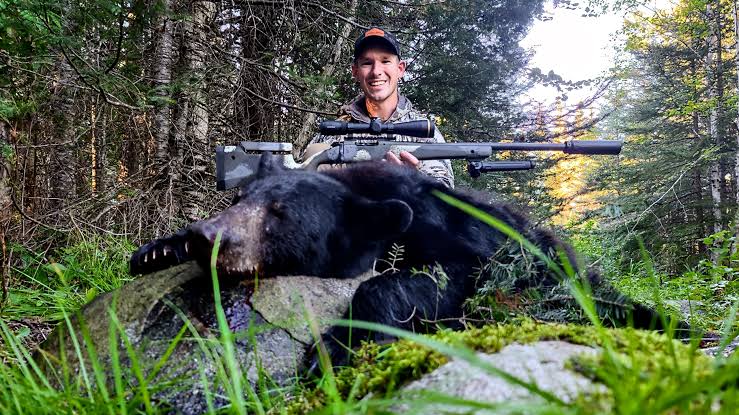
10. Is .300 Winchester Magnum necessary for black bear?
No. It is effective but usually more powerful than necessary. A .308 or .30-06 normally produces less recoil while providing suitable performance.
11. Is .300 Winchester Magnum good for grizzly bear?
Yes, when loaded with a robust hunting bullet and used by someone who shoots it accurately. It is not automatically better than a familiar .30-06.
12. Is .338 Winchester Magnum good for brown bear?
Yes. It is an established large-bear cartridge, but its recoil requires substantial practice.
13. Is .375 H&H too much for black bear?
It is unnecessary for most black bear hunts and may create excessive recoil and meat damage. It is better suited to specialized heavy-game hunting.
14. Can you hunt black bear with a .30-30?
Yes, at conservative woodland distances with an appropriate hunting bullet and a clear shot angle.
15. Is .45-70 good for black bear?
Yes. It can be effective at close range, but trajectory, recoil, and firearm-specific ammunition limitations must be respected.
16. Is .35 Whelen good for bear hunting?
Yes. It provides heavy bullets and useful penetration for black bears and other large game, although ammunition may be less available.
17. Can a shotgun be used for bear hunting?
Some jurisdictions allow shotguns with specified slugs or buckshot, while others impose restrictions. Check current regulations and use only a suitable hunting load.
18. Can a muzzleloader be used for bear hunting?
Yes where legal. Minimum caliber, bullet weight, powder, ignition, sight, and season requirements vary widely.
19. What bullet weight is best for .308 black bear hunting?
Approximately 165- to 180-grain controlled-expansion hunting bullets are common starting choices.
20. What bullet weight is best for .30-06 black bear hunting?
Approximately 165 to 180 grains is practical for many black bear hunts. Accuracy and construction should determine the final choice.
21. What bullet weight is best for .30-06 brown bear hunting?
Alaska guidance discusses premium 200- or 220-grain bullets, while its Kodiak guidance recognizes a 180-grain soft point as a commonly cited minimum category.
22. What bullet weight is best for .338 Winchester Magnum?
Approximately 200- to 250-grain controlled-expansion bullets are common for large game. Consult the outfitter and ammunition manufacturer.
23. Are bonded bullets good for bears?
Yes. Bonding can help the bullet retain mass and penetrate after encountering dense tissue or bone.
24. Are copper bullets good for bears?
Expanding monolithic copper bullets can provide high weight retention and useful penetration when matched to the species and impact velocity.
25. Can I use full-metal-jacket ammunition?
It is generally inappropriate and may be illegal because it does not provide the predictable expansion expected from a hunting bullet.
26. Are deer bullets suitable for black bear?
Some controlled-expansion deer bullets are suitable, while lightly constructed or rapid-expansion designs may not be ideal. Check the manufacturer’s intended use.
27. Do I need a magnum rifle?
No for most black bear hunts. A magnum may be useful for large brown bears only when the hunter can manage its recoil without losing accuracy.
28. How far can you shoot a black bear with a .308?
The ethical distance is where you can reliably hit a vital-area target from a realistic position and the bullet remains within its intended expansion range.
29. What is the average black bear shooting distance?
It varies with bait, hounds, clear-cuts, timber, and spot-and-stalk methods. Do not plan around a presumed average.
30. Is 300 yards ethical for black bear?
It may be for a practiced hunter with a stable position, verified ballistics, a clear angle, and suitable bullet performance. Dense fur can make precise placement difficult.
31. Where should you aim on a bear?
Wait for a clear broadside or modest quartering-away presentation and follow hunter-education guidance for reaching the heart-and-lung area.
32. Should you aim for a bear’s shoulder?
Shot angle and bullet construction matter. Avoid treating the visible shoulder as a universal aiming point; understand the underlying anatomy and intended bullet path.
33. Are head shots recommended?
No. The brain is a small target protected by substantial bone, and a slight error can wound the animal without producing a rapid harvest.
34. How do I distinguish a black bear from a grizzly?
Use multiple characteristics, including shoulder hump, facial profile, ears, claws, and body shape. Color alone is unreliable.
35. Can a brown-colored bear be a black bear?
Yes. Black bears can be brown, cinnamon, blond, or nearly black. Always evaluate several physical characteristics.
36. Do I need a bear-identification test?
Some jurisdictions require one. Montana requires successful completion before a hunter can obtain a black bear license.
37. Should a beginner hunt brown bear?
A first-time brown bear hunter should work with a properly licensed and experienced guide, complete all required education, and practice extensively before the hunt.
38. Can frozen bear meat still contain parasites?
Yes. CDC guidance warns that freezing wild game may not kill every freeze-resistant Trichinella species.
39. What temperature should bear meat reach?
Current CDC guidance recommends an internal temperature above 165°F or 74°C, confirmed with a food thermometer.
40. What is the safest caliber choice for a beginner?
For black bear, a properly fitting .308 Winchester or .30-06 that the hunter can manage comfortably is a sensible starting point. Training and accuracy remain essential.
Read more: