
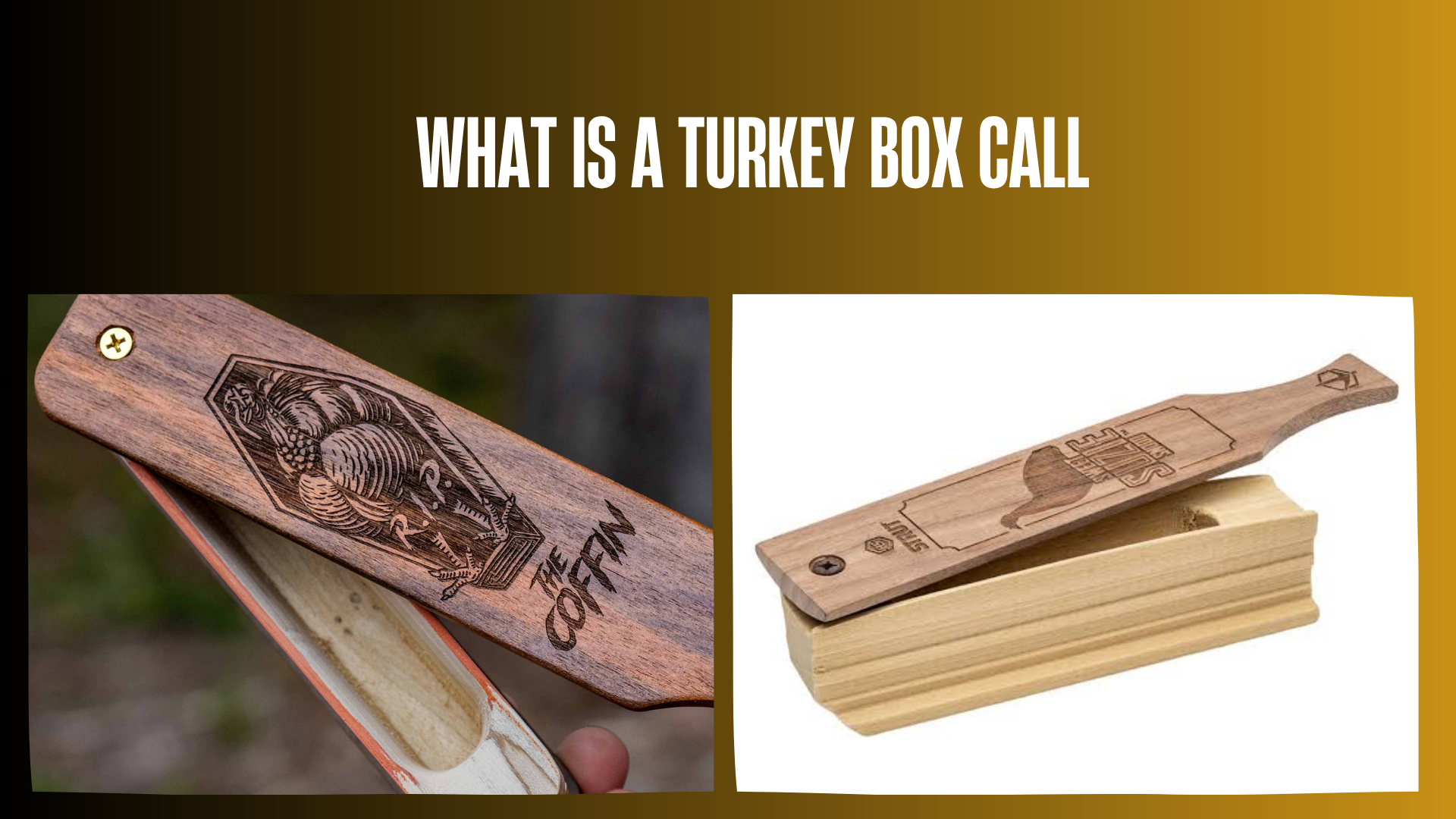

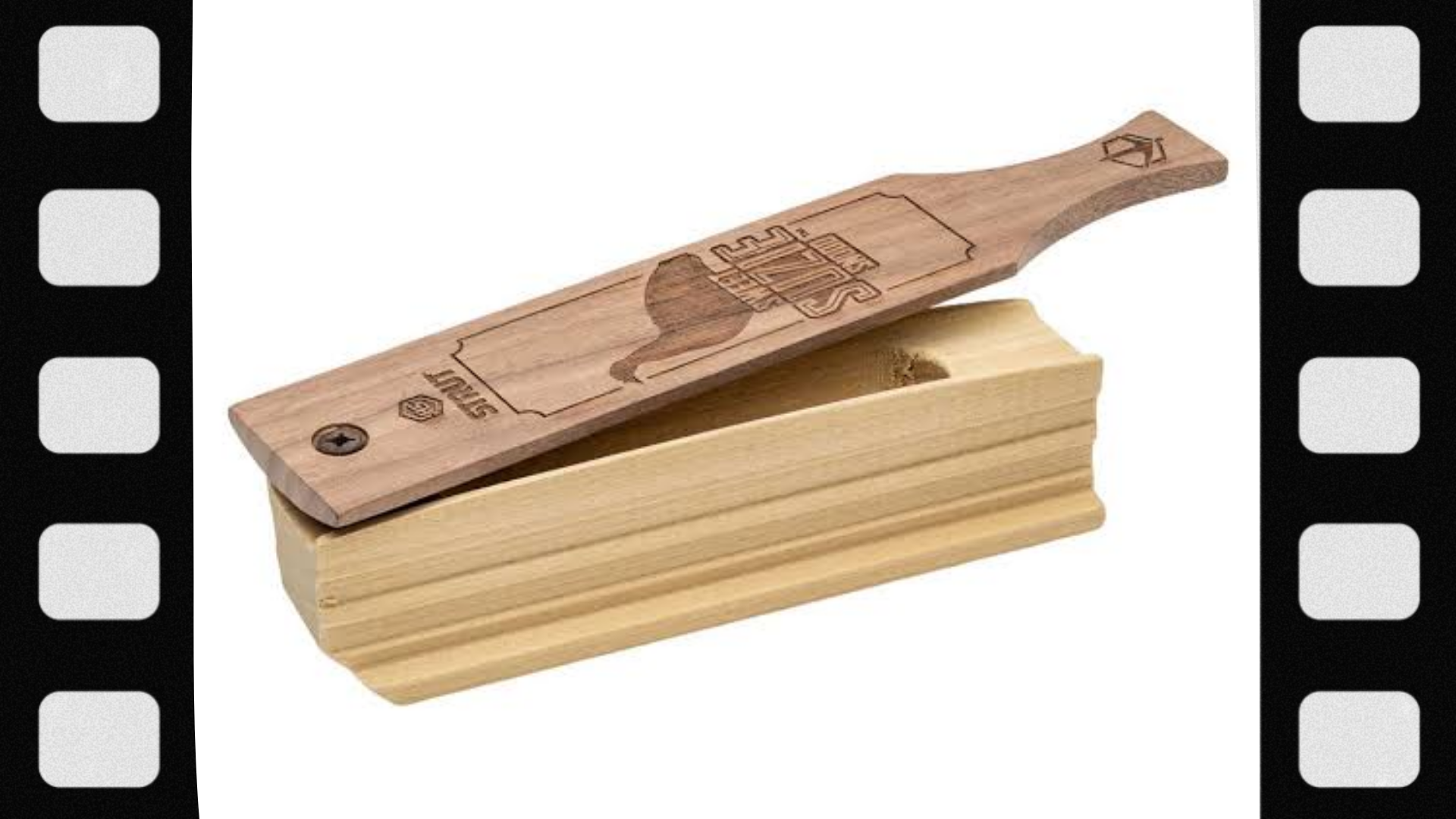
A turkey box call is a handheld friction call used to imitate wild turkey vocalizations. It normally consists of a hollow box and a hinged paddle, or lid. When the paddle is moved across the raised edge of the box, friction and the hollow chamber create turkey-like sounds such as yelps, clucks, purrs, and cutting.
Box calls are especially popular with beginning turkey hunters because the basic motion is relatively easy to learn and the call can produce plenty of volume. The National Wild Turkey Federation recommends a box call as one of the easier ways for beginners to produce a consistent turkey sound, while the Missouri Department of Conservation similarly describes box calls as easy to use and capable of producing loud calls that carry well in noisy conditions.
Quick Answer
If you are wondering what is a turkey box call, it is a mechanical turkey call that creates sound by rubbing a paddle across the lip, or rail, of a hollow box. The friction makes the wood vibrate, while the hollow body helps amplify the sound. By changing paddle speed, pressure, rhythm, and stroke length, a hunter can imitate several turkey vocalizations. Box calls are generally beginner-friendly, but they require hand movement and traditional wooden versions can be affected by moisture.
How Does a Turkey Box Call Work?
A traditional box call relies on friction and resonance rather than air blown through a reed.
The main components are:
- The box: A hollow chamber that helps amplify and shape the sound.
- The rails or side edges: The raised surfaces contacted by the paddle.
- The paddle or lid: The movable top section that creates friction against the rail.
- The hinge or pivot point: The connection that keeps the paddle aligned while allowing it to swing.
When the paddle moves across a rail, the surfaces vibrate. The hollow body adds resonance, creating the characteristic rasp and tonal break associated with many turkey calls. Missouri Department of Conservation describes the basic action simply: the paddle is stroked over the edges of the wooden box, and changing speed and pressure changes the resulting vocalization.
Turkey Box Call at a Glance
| Feature | What It Means | Why It Matters |
|---|---|---|
| Call type | Friction call | No blowing or mouth positioning is required |
| Basic action | Paddle moves across the box rail | Speed, pressure, and rhythm change the sound |
| Common sounds | Yelps, clucks, purrs, cutting, and other turkey vocalizations | Gives beginners several useful calls from one tool |
| Learning curve | Generally beginner-friendly | Basic yelps and clucks can be easier to learn than many mouth-call techniques |
| Volume | Can be relatively loud | Useful when trying to be heard over wind or at longer distances |
| Primary limitation | Requires hand movement | Movement can be a disadvantage when a turkey is close |
| Weather consideration | Traditional wooden calls can be moisture-sensitive | Keeping the call dry can help maintain consistent friction |
What Sounds Can a Turkey Box Call Make?
A box call is more versatile than its simple appearance suggests. A skilled caller can produce several common turkey vocalizations by changing the way the paddle contacts the box.
Yelp
The yelp is one of the most recognizable wild turkey sounds and one of the first calls most beginners learn. Missouri Department of Conservation describes the yelp as the most common hen call and a general communication sound.
On a box call, a series of smooth paddle strokes can produce the familiar rising-and-breaking yelp rhythm. This is often the first sound to practice because it teaches paddle pressure, cadence, and control.
Cluck
A cluck is a short, single-note call. Wild turkeys use clucks in ordinary communication, and hunters often use them as relatively subtle calls. Missouri describes the cluck as a soft staccato sound that can communicate the general idea of another turkey being nearby.
On a box call, a short movement or pop of the paddle can create a cluck.
Purr
A purr is a softer rolling sound commonly associated with contented or close-range turkey communication. The National Wild Turkey Federation describes the cluck-and-purr combination as typical flock talk associated with contentment.
Creating a convincing purr on a box call usually requires a slower, more controlled paddle movement than a yelp.
Cutting
Cutting consists of sharp, irregular clucks delivered with more excitement and intensity. NWTF describes cutting as loud, sharp clucks often mixed with yelping.
A box call’s volume and crisp friction sound can make it particularly suitable for this type of vocalization.
Other sounds
Experienced callers may also use box calls for additional vocalizations, including putts, cackles, kee-kee sounds, and other variations. NWTF calling competitions recognize a broad range of turkey vocalizations, including plain yelps, cutting, assembly calls, cackles, kee-kee runs, clucks, and purrs.
Why Are Box Calls Popular With Beginners?
The biggest advantage is that the sound-producing mechanism is visible. A beginner can watch the paddle move, hear the result, then adjust pressure and rhythm.
NWTF advises beginning turkey callers to start with one call and learn basic sounds such as the cluck, purr, putt, and yelp. It specifically notes that beginners often find a box call one of the easiest ways to produce a consistent sound.
Missouri Department of Conservation also describes box calls as easy for new hunters to learn and sufficiently loud for noisy or windy conditions.
A beginner does not need to master every turkey vocalization. A believable yelp and cluck, combined with patience and knowledge of turkey behavior, are more useful than producing many different sounds poorly.
How Do You Use a Turkey Box Call?
The exact feel varies slightly among calls, but the general process is straightforward.
- Hold the box securely without squeezing it excessively. Avoid unnecessarily damping the parts designed to vibrate.
- Hold the paddle by its handle. Let it rest naturally against the box rail.
- Use light pressure at first. Heavy pressure is not necessary to make useful sounds.
- Move the paddle across the rail. Listen to the tone produced by each stroke.
- Adjust speed, pressure, and cadence. These changes produce different turkey-like vocalizations.
- Practice slowly before increasing speed. Consistency is more useful than volume when learning.
HuntWise and Missouri Department of Conservation both describe the fundamental action as moving or stroking the paddle across the box edge and changing pressure, speed, and rhythm to alter the resulting sound.
How to Make a Basic Yelp With a Box Call
Start with the paddle touching one rail. Move it across the rail in a smooth stroke while applying light, controlled pressure.
The objective is not simply to create a squeak. Listen for a note that changes or “breaks” as the paddle moves. Repeat that motion in a natural rhythm.
Do not worry about producing a competition-quality call when you are beginning. Wild turkey vocalizations naturally vary in pitch, rasp, volume, and rhythm.
How to Make a Cluck With a Box Call
A cluck uses a much shorter paddle movement than a yelp. Rather than making a long sweeping stroke, make a brief controlled contact that produces one sharp note.
Practice individual clucks first. Once the sound becomes repeatable, you can experiment with spacing and combining clucks with other vocalizations.
How to Make a Purr With a Box Call
A purr generally requires slower, lighter contact. Move the paddle carefully across the rail so that the friction produces a rolling or vibrating sound rather than a sharp yelp.
This sound can require more fine control than a basic yelp, so beginners should not be concerned if it takes longer to learn.
How Loud Should You Call?
There is no single correct volume for every hunting situation.
Box calls are capable of relatively high volume, which is one reason they are useful when trying to communicate across larger areas or when wind and other background noise reduce how far sound carries. Missouri’s hunter education material specifically identifies loudness as a box-call advantage.
However, loud calling is not automatically better. Turkey responses vary with individual birds, hunting pressure, season phase, habitat, weather, and other factors. Once a turkey appears close, additional loud calling can also require unnecessary movement.
Why Does a Box Call Need Chalk?
Some traditional wooden box calls use chalk on the underside of the paddle to maintain appropriate friction. Missouri Department of Conservation notes that some box calls need chalk before they produce realistic sounds.
Follow the call manufacturer’s instructions because maintenance varies by design and material. Do not apply oils, waxes, finishes, or other substances to the friction surfaces unless the manufacturer specifically recommends them.
Why Should a Turkey Box Call Be Kept Dry?
Moisture can change the friction between wooden surfaces. As a result, traditional wooden box calls may sound different or become harder to operate in rain or high humidity.
Missouri’s turkey-calling guidance lists wet or humid weather as a limitation of traditional box calls.
A protective call pouch or dry storage compartment can help, but hunters should follow the manufacturer instructions for the exact call.
Box Call vs. Pot Call vs. Mouth Call
| Call Type | How It Makes Sound | Beginner Advantage | Main Limitation |
|---|---|---|---|
| Box call | Paddle rubs across a box rail | Relatively easy to produce consistent yelps and clucks | Requires visible hand movement |
| Pot or slate call | Separate striker moves across a slate, glass, metal, or similar surface | Offers substantial control and tonal variation | Requires practice and usually both hands |
| Mouth or diaphragm call | Air passes across latex reeds placed in the mouth | Hands remain free while calling | Usually requires more practice to control |
| Push-button call | A rod or internal friction mechanism moves when a button is pushed | Very simple operation | May offer less manual control than more advanced friction calls |
Missouri hunter education specifically notes that box and slate calls are comparatively easy to learn but require the hunter’s hands, while mouth calls require more practice but keep the hands free.
What Are the Advantages of a Turkey Box Call?
- Beginner-friendly: The basic sound-producing motion is easy to understand.
- Good volume: A box can produce calls capable of carrying through wind and woodland noise.
- Multiple sounds: One call can imitate several turkey vocalizations.
- Easy to practice: The visible paddle movement helps beginners connect motion with sound.
- No mouth technique required: Unlike diaphragm calls, the user does not need to position latex reeds in the mouth.
- Consistent mechanics: The paddle and box remain attached, simplifying setup.
What Are the Limitations?
- It requires movement. Moving the paddle can be noticeable if a turkey is already close.
- It generally occupies the hands. This makes it less convenient than a mouth call when a hunter needs to remain ready and still.
- Traditional wooden models can dislike moisture. Rain or humidity may change the sound.
- It can be louder than necessary. Beginners sometimes use excessive volume simply because the call can produce it.
- It still requires practice. Easy to learn does not mean every stroke automatically sounds natural.
These strengths and limitations are also reflected in Missouri Department of Conservation’s turkey-calling education: box calls are easy and loud, but moisture and the need to use the hands are meaningful disadvantages.
When Should a Hunter Use a Box Call?
A box call can be useful when a hunter wants enough volume to reach farther through the woods, when learning basic turkey sounds, or when trying to communicate before a turkey has moved close enough that hand movement becomes a concern.
It can also be a useful practice call at home because the mechanism makes it easy to experiment with rhythm and pressure.
No call guarantees a response. Turkeys may approach, answer without approaching, remain silent, move away, or ignore calling entirely. Weather, breeding behavior, hunting pressure, flock structure, and individual behavior all affect responses.
When Should You Stop Calling and Stay Still?
One drawback of a box call becomes especially important when a turkey is nearby: using it creates hand movement.
Missouri hunter education emphasizes that box calls require the hunter’s hands. It also warns that turkeys detect movement well and that hunters should remain still as birds approach.
If a bird is close or approaching, unnecessary calling and movement can reduce the value of the setup. Listening and remaining still may become more important than producing another call.
Turkey Box Call Safety
Calling wild turkeys introduces a safety issue that does not exist with ordinary wildlife observation: another hunter may hear the call and believe a real turkey is nearby.
For that reason:
- Never assume movement or a turkey-like sound is a legal target.
- Positively identify the entire bird before any shot is considered.
- Know exactly what is beyond the target.
- Avoid placing yourself where another hunter could approach your calling position without seeing you clearly.
- Do not stalk turkey sounds; another hunter may be producing them.
- If another hunter approaches, use a clear human voice rather than turkey sounds to identify your presence.
- Follow hunter-orange requirements where applicable when moving to and from hunting locations.
Be especially cautious about imitating a gobble
A gobble can be particularly risky because it imitates the sound of a male turkey that another hunter may be seeking. Missouri Department of Conservation specifically labels imitation of the gobble as not recommended because of safety concerns.
Beginners are generally better served learning hen vocalizations such as yelps and clucks rather than using gobbler sounds in hunting situations where other hunters might be present.
Are Turkey Box Calls Legal?
A traditional manually operated box call is commonly used in turkey hunting, but hunting regulations are jurisdiction-specific. Rules may differ by state, province, public-land unit, season, or hunt type.
Regulations can also distinguish between manually operated calls and electronic calling equipment. Do not assume that because one type of call is legal in one location, every calling method is legal everywhere.
Before hunting, verify current regulations with the official wildlife agency responsible for your hunting area. Also check season dates, licensing and permit requirements, legal hunting methods, public-land restrictions, and any special rules for the specific hunt.
Common Beginner Box Call Mistakes
Pressing the paddle too hard
Heavy pressure can make the call harder to control. Begin with lighter contact and gradually adjust until the call produces the sound you want.
Calling too quickly
Rhythm matters. Practice slow, repeatable movements before trying excited calling sequences.
Trying to learn every sound immediately
A beginner can accomplish more by learning a recognizable yelp and cluck before attempting a large calling vocabulary.
Calling constantly
A bird that stops answering has not necessarily left. Missouri Department of Conservation notes that an older gobbler can sometimes approach without continuing to vocalize.
Listening and patience should remain part of the strategy.
Moving the call when a turkey is already close
Box calls require visible movement. If the bird is near enough to detect that movement, another call may do more harm than good.
Ignoring moisture
A wet wooden call may sound different from the way it did during practice. Protect it according to the manufacturer’s care instructions.
Using gobbler sounds without considering other hunters
This creates an avoidable safety concern. Turkey hunting requires clear target identification and awareness that other hunters may be attracted to turkey sounds.
How Should a Beginner Practice?
Practice away from an active hunting situation first. Learning at home allows you to concentrate on sound rather than simultaneously watching for birds and managing hunting equipment.
A simple practice routine is:
- Learn one basic yelp rhythm.
- Repeat it until the pressure and stroke feel consistent.
- Practice single clucks.
- Alternate between moderate-volume yelps and quieter clucks.
- Listen to recordings of actual wild turkey vocalizations from reputable wildlife or conservation sources.
- Add purrs and cutting only after the basic sounds are repeatable.
NWTF recommends that beginners start with a single call and build skills around basic vocalizations before progressing to more advanced sounds.
Does an Expensive Box Call Work Better?
Price alone does not determine whether a call will be useful to a particular hunter. Wood selection, construction, tuning, durability, moisture resistance, and sound are relevant, but skill and familiarity matter too.
You do not need the most expensive equipment to hunt responsibly. Choose gear based on the species, terrain, weather, local regulations, safety, reliability, maintenance requirements, and your actual experience.
For a first box call, ease of use, consistent sound, clear manufacturer instructions, and a design you are willing to practice with are more important than decorative materials or prestige.
How Do You Care for a Turkey Box Call?
Follow the manufacturer’s instructions for the specific call. General care usually centers on protecting the friction surfaces and keeping the call clean and dry.
- Keep traditional wooden calls away from unnecessary moisture.
- Do not coat friction surfaces with oils or other products unless instructed by the manufacturer.
- Apply appropriate call chalk only when the maker recommends it.
- Protect the paddle and box from being crushed inside a pack.
- Allow a damp call to dry appropriately before long-term storage.
- Check the hinge or paddle attachment periodically for obvious damage.
What Beginners Should Know Before Turkey Hunting
A turkey call is only one part of turkey hunting. A new hunter should also understand local regulations, safe firearm or archery handling, positive target identification, turkey behavior, legal hunting hours, property boundaries, and responsible game recovery.
Hunter education is especially valuable because turkey hunting involves calling an animal toward the hunter, which makes movement, identification, and awareness of other hunters particularly important.
A call should never be treated as a substitute for safety, scouting, practice, or understanding the regulations.
FAQs
1. What is a turkey box call?
A turkey box call is a friction-operated hunting call that usually consists of a hollow box and a movable paddle. Stroking the paddle across the box rail creates turkey-like vocalizations.
2. Is a box call good for beginners?
Yes. Both NWTF and Missouri Department of Conservation identify box calls as particularly approachable for beginners because they can produce consistent sounds with relatively simple movements.
3. What is a turkey box call made of?
Traditional models are commonly made primarily from wood, though exact materials vary by manufacturer. The important functional elements are the resonating box and the friction-producing paddle.
4. Why does a box call sound like a turkey?
Friction between the paddle and box rail causes vibration, while the hollow box resonates and amplifies the sound. Paddle pressure, speed, and rhythm change the tone.
5. What turkey sounds can a box call make?
Common sounds include yelps, clucks, purrs, cuts, and other turkey vocalizations. Missouri’s turkey-calling guidance specifically notes that speed and paddle pressure can be changed to create several different sounds.
6. What is the easiest sound to learn on a turkey box call?
Many beginners start with the plain yelp because the repeated paddle motion helps teach cadence and pressure. Clucks are another useful early sound.
7. How do you make a yelp on a box call?
Use a smooth, controlled paddle stroke across the rail and repeat the motion rhythmically. Adjust pressure and speed until the call produces a clean tonal break.
8. How do you make a cluck on a turkey box call?
Use a short, controlled paddle movement rather than the longer sweep used for a yelp. The goal is a single crisp note.
9. Can a box call make a purr?
Yes. Slower, lighter friction between the paddle and rail can create a rolling purr sound, although it may require more control than basic yelping.
10. Is a turkey box call loud?
It can be. Missouri hunter education identifies good volume as one of the strengths of a box call, particularly when conditions are windy or noisy.
11. Is a box call better than a mouth call?
They solve different problems. A box call is generally easier for a beginner to operate, while a mouth call requires more practice but allows hands-free calling.

12. Is a box call better than a slate call?
Not universally. Box calls are often easier for beginners and capable of good volume. Pot or slate calls provide a different type of friction control and can produce a broad range of tones with practice.
13. Does a turkey box call require two hands?
Most traditional operation involves one hand stabilizing the box and the other controlling the paddle. Missouri hunter education identifies the need for the hands as one of the call’s limitations.
14. Why do turkey box calls use chalk?
Some wooden box calls use chalk to maintain useful friction between the paddle and rail. Follow the manufacturer’s directions because not every model requires identical maintenance.
15. Can a turkey box call get wet?
Traditional wooden models may perform differently when wet or humid. Missouri Department of Conservation specifically notes wet conditions as a potential weakness of box calls.
16. How should I store a box call?
Keep it protected from unnecessary moisture, dirt, and crushing pressure, and follow the manufacturer’s storage and maintenance directions.
17. When should I use a box call while turkey hunting?
It can be useful when learning basic calls or when additional volume is helpful. As a turkey approaches, reducing movement and unnecessary calling can become more important.
18. Can you call too much to a turkey?
Possibly. Turkey responses vary, and continuous calling is not always useful. Some gobblers may approach quietly, so hunters should balance calling with listening and patience.
19. Why did a gobbler stop answering my box call?
There are several possibilities: the bird may be approaching silently, moving with hens, losing interest, reacting to pressure, or changing direction. A lack of response does not establish one definite explanation.
20. Can a turkey recognize a bad box call?
Turkeys can react differently to calling, but there is no simple threshold separating a “good” and “bad” call. Natural turkey sounds themselves vary considerably. Consistent rhythm and appropriate calling behavior matter more than perfection.
21. Can a box call imitate a gobble?
Some callers can produce gobble-like sounds with certain box calls, but imitating gobblers during hunting can create a safety problem because another hunter may believe the sound comes from a real male turkey. Missouri specifically advises against imitating a gobble for safety reasons.
22. Are turkey box calls legal everywhere?
Do not assume so. Regulations differ by jurisdiction and may distinguish between manual and electronic calls or establish special rules for particular hunts. Check the current official regulations where you plan to hunt.
23. Are electronic turkey calls the same as box calls?
No. A traditional box call is manually operated through friction. Electronic calls reproduce sounds electronically and may be subject to different regulations.
24. Do I need an expensive box call?
No. Beginners usually benefit more from a call they can operate consistently and practice with regularly than from simply buying the most expensive option.
25. What turkey sounds should a beginner learn first?
Start with a plain yelp and cluck. Once those are consistent, add softer purrs and more excited calling such as cutting. NWTF also recommends that beginners build from basic sounds rather than trying to master everything immediately.
26. Can I practice a turkey box call at home?
Yes. Practicing outside an active hunt allows you to concentrate on rhythm, paddle pressure, and tone without simultaneously managing field safety and approaching wildlife.
27. How long does it take to learn a box call?
There is no universal timeline. Many beginners can produce recognizable basic sounds relatively quickly, while realistic rhythm, volume control, and several different vocalizations take additional practice.
28. What is the biggest disadvantage of a box call?
For many hunters, the biggest limitation is movement. Operating the paddle generally requires the hands, which can be problematic when a turkey is nearby and watching for movement.
29. Should I carry more than one turkey call?
You can, but a beginner does not need a large collection. NWTF recommends learning one call well before adding more.
30. What is the safest way to use a turkey box call?
Use it only in a lawful hunting situation, stay aware that other hunters can hear the call, avoid imitating gobbles where doing so could create confusion, positively identify any bird before considering a shot, and always know what is beyond the target.
Final Answer
What is a turkey box call? It is a friction-operated turkey call that uses a movable paddle and hollow box to imitate turkey vocalizations. By changing the paddle’s speed, pressure, stroke length, and rhythm, a hunter can create sounds such as yelps, clucks, purrs, and cutting.
A box call is one of the more beginner-friendly turkey calls because its mechanism is simple, visible, and capable of producing useful volume. Its main disadvantages are that it requires hand movement and traditional wooden calls can be affected by wet weather. Learn a basic yelp and cluck first, keep the call maintained according to its instructions, and remember that no call guarantees a response from a wild turkey.
Most importantly, treat calling as part of responsible hunting rather than as a substitute for hunter education and good judgment. Verify current local turkey-hunting regulations, positively identify the bird, know what is beyond the target, and use extra caution because another hunter may hear your calling.
Read more: