
A pointing dog locates game, usually birds, and pauses in a focused stance that signals its location to the handler. If you are wondering “what is a pointing dog?” the key is that pause: the dog indicates game instead of immediately rushing forward to make it fly. Understanding this behavior helps explain both its hunting role and the needs of these often energetic companions.
Quick Answer
A pointing dog is a hunting dog that finds game by scent and stops in a deliberate stance to indicate where it believes the game is located. Pointing breeds include the Pointer, German Shorthaired Pointer, Brittany, Vizsla, and several setters. Their inherited tendency to point is developed through experience and training, particularly learning to remain steady and cooperate with a handler. Some also retrieve and track, but those abilities should not be assumed from pointing alone. Before fieldwork, build reliable basic training and check local hunting, dog-training, and land-access rules.
What Is a Pointing Dog Doing When It Stops?
A dog working through suitable habitat may detect bird scent carried through the air. Its movement changes as it investigates, and it may stop with its body focused toward the apparent source. The handler reads that behavior as an indication that game may be nearby.
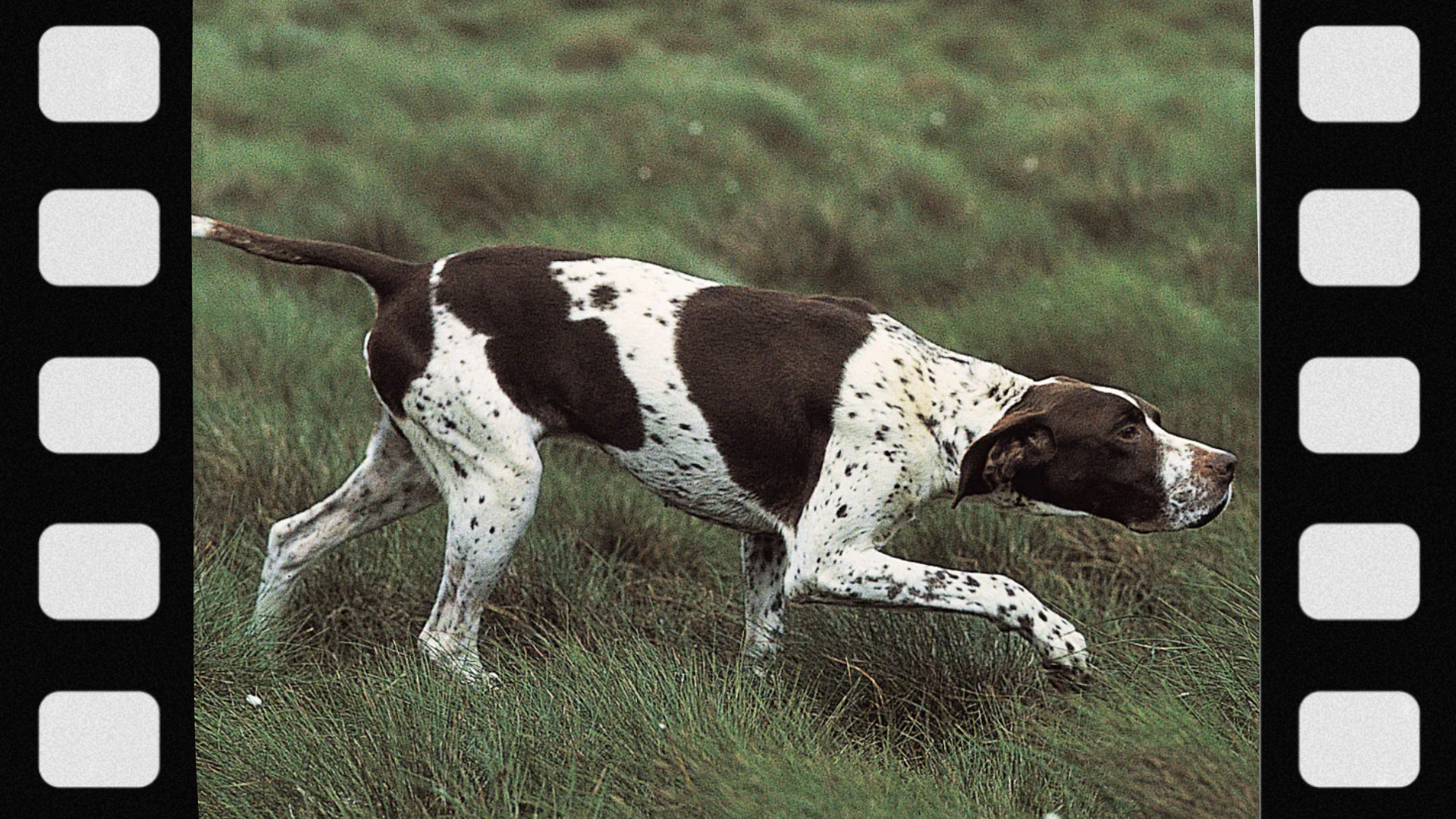
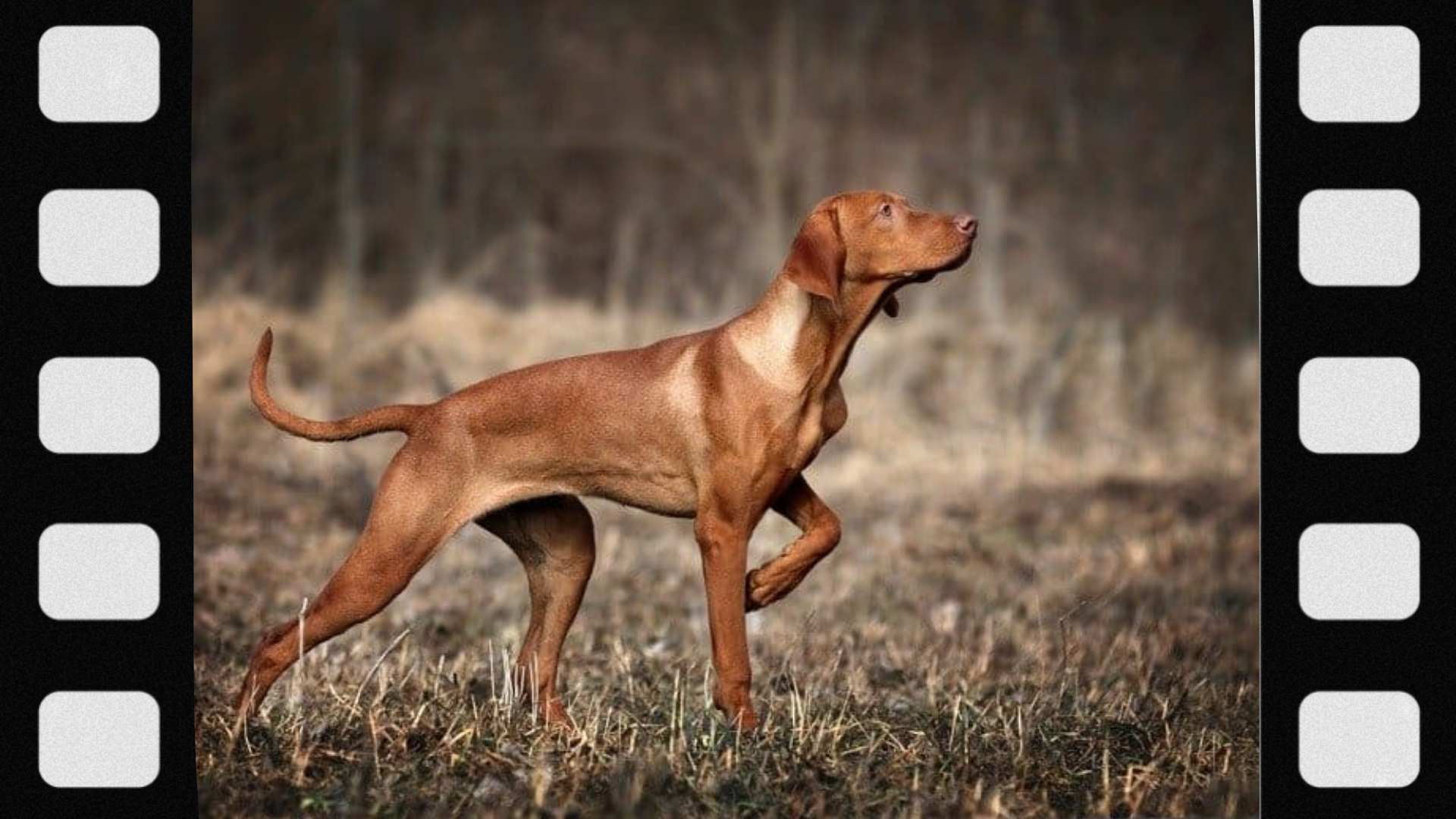
A familiar pointing posture includes a still body, an extended head, and sometimes one raised front paw. However, a lifted paw is not the defining feature. Dogs can point with all four feet on the ground, and posture varies with the dog and situation.
The American Kennel Club explains that pointing commonly involves detecting scent on air currents. It also notes that dogs outside recognized pointing breeds can display similar pauses or raised-paw behavior. A single pose does not prove a dog’s ancestry or hunting ability.
A point is an indication, not a guarantee
The bird may move, escape before the handler arrives, or no longer be where the scent suggests. Wind, vegetation, conditions, experience, and the movement of the game can affect the encounter.
Never interpret a point as positive identification of a legal target. The hunter remains responsible for identifying the species and evaluating the surroundings.
Pointing Dog vs. Flushing Dog vs. Retriever
| Working role | Main task | Typical examples |
|---|---|---|
| Pointing dog | Finds game and pauses to indicate its location | Pointer, Brittany, English Setter |
| Flushing dog | Finds game and causes it to leave cover | English Springer Spaniel, English Cocker Spaniel |
| Retriever | Finds and brings back downed game | Labrador Retriever, Golden Retriever |
| Versatile hunting dog | Combines pointing with retrieving and tracking work | German Shorthaired Pointer, German Wirehaired Pointer, Small Munsterlander |
These roles overlap. A flushing spaniel may retrieve, and a pointing dog may also be a capable retriever. The distinction describes the main task, not everything an individual dog can learn.
The Canadian Kennel Club distinguishes pointing from flushing by whether the dog stops to indicate game or puts it into flight. NAVHDA’s definition of a versatile hunting dog includes pointing, retrieving on land and water, and tracking wounded game.
“Pointer” can mean a breed or a general type
The Pointer is a particular breed, often called the English Pointer in everyday conversation. A pointing dog is the broader working category. An English Setter or Brittany can be a pointing dog without being a Pointer.
Common Pointing Breeds and Their Differences
Breed descriptions provide starting points. Individual temperament, breeding line, socialization, health, and training can matter as much as the breed label.
| Breed | General characteristics | Ownership consideration |
|---|---|---|
| Pointer | Athletic bird-finding specialist with a short coat | Discuss working range and daily activity needs with knowledgeable owners. |
| German Shorthaired Pointer | Medium-sized, energetic, versatile sporting dog | Plan for substantial activity, training, and household companionship. |
| Brittany | Agile, energetic bird dog with a relatively compact build | Smaller size does not mean low exercise needs. |
| English Setter | Pointing breed with a feathered coat | Allow time for coat care and checking for burrs after outings. |
| Vizsla | Active, affectionate sporting breed | Consider its need for engagement and close interaction with its household. |
| German Wirehaired Pointer | Versatile hunting breed with a wire coat | Evaluate grooming, temperament, and the demands of the particular line. |
AKC breed information describes the German Shorthaired Pointer and Brittany as energetic sporting dogs, while its setter guidance highlights both exercise and companionship. These are tendencies, not promises about an individual puppy.
Match the dog to your climate and routine
Think about coat maintenance, heat, cold, wet conditions, transport space, and the terrain you regularly visit. A short coat does not prevent overheating, and a heavier coat does not make a dog immune to cold or wet weather.
Ask breeders or rescues about the actual dog’s energy, confidence, response to other animals, and ability to settle. For a hunting prospect, discuss the working characteristics of its relatives without treating a pedigree as a guarantee.
Is Pointing Instinctive or Trained?
The tendency to point can be inherited; dependable field behavior requires development. A puppy may pause naturally at an interesting scent but still chase when a bird moves. That is different from a trained dog remaining steady while the handler approaches and manages the situation.
Useful skills include recall, responding to a stop cue, cooperating at a manageable distance, and remaining composed around distractions. Retrieving and tracking are additional tasks, not automatic consequences of pointing.
Build cooperation with humane training
- Start with everyday foundations: reward attention, recall, calm handling, and comfortable leash walking.
- Keep sessions manageable: work at a level where the dog can succeed, then increase difficulty gradually.
- Use controlled environments: prevent uncontrolled chasing and access to roads, livestock, or protected wildlife.
- Develop confidence: avoid overwhelming a young or inexperienced dog with unfamiliar situations.
- Choose qualified help: look for a trainer who explains methods clearly and prioritizes animal welfare.
The American Veterinary Society of Animal Behavior recommends reward-based methods for dog training. Harsh punishment is not a necessary starting point for developing a cooperative hunting companion.
Do not take an unprepared dog to a firing line to “see how it reacts.” Sound sensitivity and fear deserve careful handling with qualified professional guidance.
Pointing-Dog Terms Beginners Often Hear
| Term | Plain-English meaning |
|---|---|
| Point | A focused pause indicating the apparent location of game |
| Flush | Game leaving cover, often by taking flight |
| Steadiness | Remaining controlled through specified events instead of chasing immediately |
| Backing or honoring | Stopping in response to another dog’s point rather than interfering |
| Retrieve | Finding and bringing game back to the handler |
| Tracking | Following scent associated with an animal’s movement |
| Brace | A pair of dogs working or being evaluated together |
Exact steadiness expectations differ by training stage and event. AKC’s introductory pointing-breed hunt test, for example, expects a dog to locate a bird and hold point long enough for the handler to approach. More advanced programs assess additional skills. Always consult the organizer’s current rules.
Can a Pointing Dog Be a Good Family Companion?
Yes, when the individual dog and household are a suitable match. Many pointing breeds enjoy close relationships with people, but their working background often comes with substantial activity and enrichment needs.
A fenced yard alone does not provide training, companionship, or enough interesting activity. Consider whether your household can offer regular outings, sniffing opportunities, reward-based learning, and adequate rest throughout the year.
Children and other pets need individual assessment
Supervise interactions with children and give the dog a quiet place to rest undisturbed. Evaluate compatibility with cats and other household animals rather than assuming a friendly temperament eliminates prey drive. Pet birds, rabbits, and other small animals require secure separation.
Meet adult dogs when possible. An adult dog assessed by a responsible rescue may provide more information about everyday behavior than choosing a puppy from appearance alone.
Field Safety: Protect the Dog Before Pursuing the Hunt
Check current local requirements before hunting or training on wildlife. Dog-training seasons, bird-use rules, leash requirements, and land access may differ from hunting-season rules. Michigan DNR’s dog-training guidance is one example of an agency setting specific restrictions and designated training areas; its rules should not be applied to other jurisdictions.
Prepare for the dog’s health and identification
- Arrange veterinary guidance on fitness, vaccinations, parasite prevention, and relevant regional risks.
- Build conditioning gradually rather than expecting an inactive dog to work all day.
- Carry clean drinking water, a bowl, and appropriate canine first-aid supplies.
- Use identification with current contact details and keep microchip information updated.
- Consider suitable visibility or protective equipment for the terrain, checking its fit and potential for overheating or rubbing.
- Know how you would reach veterinary care and transport an injured dog.
Do not rely on enthusiasm to judge fatigue
An eager dog may continue working despite becoming too hot. Cornell veterinary researchers identify strenuous activity, heat, humidity, and unfamiliar conditions as relevant to overheating in sporting dogs. Schedule breaks and stop before the dog is exhausted.
Excessive panting with weakness, confusion, vomiting, difficulty breathing, or collapse can indicate a medical emergency. Stop activity, move the dog to a cooler area, begin cooling with cool water and airflow, and contact an emergency veterinarian immediately. Do not delay care to finish the outing.
Keep people and dogs out of the line of fire
When firearms are involved, follow all four fundamental rules:
- Treat every firearm as if it is loaded.
- Keep the muzzle pointed in a safe direction.
- Keep your finger outside the trigger guard until ready to shoot.
- Be certain of the target and what is beyond it.
Know the locations of every dog and person. Do not fire at movement hidden in cover or take a shot that could endanger a dog. A mechanical safety never replaces safe handling. Complete hunter education and follow firearm-manufacturer instructions.
Check the dog afterward
Inspect paws, skin, ears, and coat for cuts, ticks, burrs, and other problems. Offer rest and monitor recovery. Persistent limping, eye discomfort, unusual coughing, or behavior changes warrant veterinary advice rather than another training session.
Common Beginner Mistakes
- Expecting every young dog to develop on the same schedule. Evaluate progress individually instead of setting a universal pointing deadline.
- Choosing only by appearance. Consider temperament, health, daily needs, and working style.
- Assuming a point means a bird must be present. Treat it as information, not certainty.
- Confusing enthusiasm with readiness. A motivated dog still needs conditioning, recall, and controlled exposure.
- Buying technology before building basic skills. A tracking device can help locate a dog but does not teach cooperation.
- Ignoring the off-season. Dogs need appropriate exercise, care, and companionship year-round.
FAQs
1. Is a pointing dog the same as a bird dog?
A pointing dog is one type of bird dog. The broader term also includes dogs that specialize in flushing or retrieving birds.
2. Is the Pointer the only breed that points?
No. Setters, Brittanys, Vizslas, German pointing breeds, and several other breeds perform pointing work.
3. Why does a pointing dog lift one paw?
It can be part of the dog’s focused posture while investigating game. A raised paw alone does not establish that the dog is pointing; context matters.
4. Can a dog point without lifting a paw?
Yes. The important feature is its focused pause indicating game, not a required three-legged pose.
5. Does the dog need to see the bird?
No. A pointing dog can indicate a bird concealed in vegetation after detecting its scent.
6. Can mixed-breed dogs point?
Yes. Mixed-breed dogs can show pointing behavior. Their suitability for fieldwork depends on the individual dog and its training, not that behavior alone.
7. Can every dog be trained into a pointing dog?
Dogs can learn many behaviors, but teaching a pause is not the same as developing dependable game-finding and pointing ability. Inherited tendencies and individual aptitude matter.
8. At what age should a puppy start pointing?
There is no universal age. Some show the tendency early, while others develop later. Seek a humane assessment if you are concerned rather than forcing a timetable.
9. Do pointing dogs bark when they find birds?
The characteristic signal is the stance itself. Barking is not required for pointing and may have a different cause.
10. What does it mean if the dog points but no bird appears?
The bird may have moved, scent may remain, or the dog may be interpreting something else. One encounter rarely explains the cause with certainty.
11. Do pointing dogs also retrieve?
Many do, particularly versatile hunting dogs. Interest in carrying objects and a dependable retrieve are different, so evaluate and develop that skill separately.
12. Can a pointing dog track wounded game?
Some are trained for that work. Follow local tracking rules and property-access requirements, and do not assume an untrained dog can recover game reliably.
13. Are setters pointing dogs?
Yes. Setters belong within the pointing-dog category even though “pointer” is not part of their breed names.
14. Is a Brittany a flushing spaniel?
The Brittany is a pointing breed. Its historical “Brittany Spaniel” name can cause confusion; AKC changed the name to Brittany in 1982.
15. How far from the handler should a pointing dog work?
There is no single distance suitable for every dog and setting. Terrain, visibility, hazards, training, and handler control all matter.
16. Does a pointing dog need to hunt to have a good life?
No. A non-hunting household can meet its needs through suitable exercise, enrichment, training, and companionship. Choose activities that fit the dog rather than permitting uncontrolled wildlife chasing.
17. Can a pointing dog live in an apartment?
Possibly, if its activity, toileting, training, and rest needs are reliably met. Access to suitable outings matters more than the address alone.
18. How much exercise does one need?
Needs vary with age, health, breed, and individual energy. Discuss an appropriate routine with your veterinarian; avoid applying an adult working-dog schedule to a puppy or senior.
19. Are pointing dogs easy to train?
Many are willing learners, but enthusiasm, independence, sensitivity, and distractions can affect training. Consistency and suitable rewards matter more than assuming the breed will train itself.
20. Where can beginners see pointing dogs work?
Ask an AKC pointing-breed club or a NAVHDA chapter about observing an event or introductory activity. Confirm visitor arrangements and choose instruction that meets your animal-welfare expectations.
Final Answer
What is a pointing dog? It is a hunting dog that locates game and pauses to indicate its apparent location to a handler. Natural pointing tendencies become useful teamwork through humane training, experience, and dependable control. Whether the dog hunts or lives primarily as a companion, its health, exercise, safety, and daily welfare should guide your decisions.
Read more: