
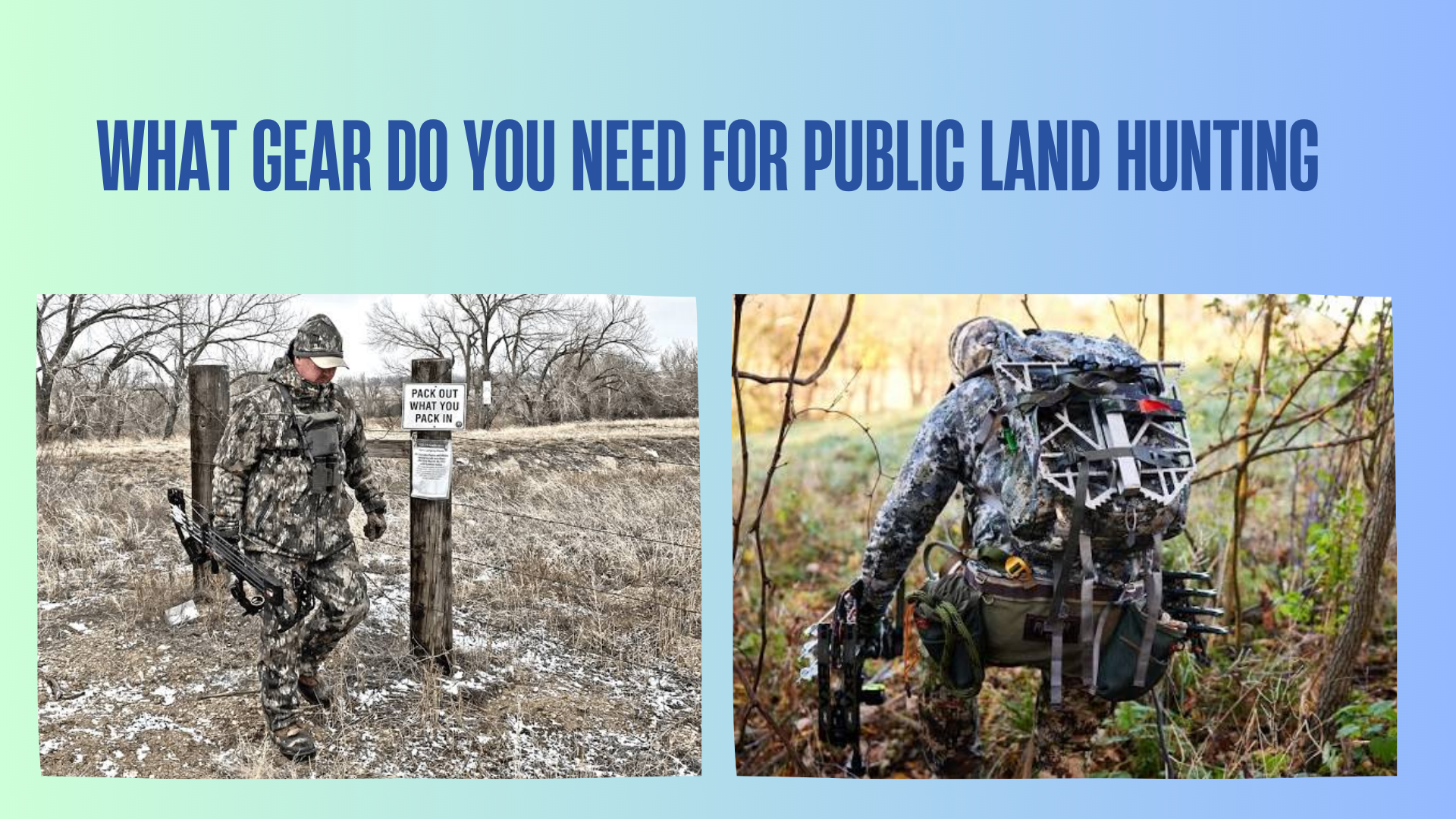
If you are wondering what gear do you need for public land hunting, begin with equipment that keeps you legal, oriented, visible, hydrated, protected from weather, and capable of recovering game responsibly. Public land can involve uncertain boundaries, long walks, changing conditions, other recreationists, and limited vehicle access, so careful preparation matters more than carrying every hunting gadget available.
This guide separates genuine necessities from species-specific tools and optional conveniences. Your final equipment list must reflect the species, hunting method, terrain, weather, trip length, land-management rules, and your own experience.
Quick Answer: What Gear Do You Need for Public Land Hunting?
For public land hunting, you normally need the required license, permits and tags; current regulations and boundary maps; a legal hunting firearm or bow; weather-appropriate clothing and boots; navigation and communication devices; water, food, a first-aid kit, a headlamp, and basic game-recovery tools. Carry required visibility clothing, such as hunter orange or fluorescent pink, wherever local regulations mandate it. Add species-specific equipment only after covering navigation, emergency preparedness, safe weapon handling, and legal access. Before leaving, verify the parcel’s current rules with the state wildlife agency and the federal, state, tribal, county, or municipal agency managing the land.
Important Safety and Legal Notice
Public ownership does not automatically mean that every parcel is open to hunting, every access route is public, or every hunting method is permitted. Seasons, permits, weapons, ammunition, hunter-visibility requirements, vehicle use, camping, fires, blinds, tree stands, electronic equipment, baiting, dogs, and game-retrieval rules vary by jurisdiction and parcel.
Check the current regulation booklet, emergency orders, closures, official maps, and posted notices immediately before your hunt. The U.S. Fish and Wildlife Service hunting-license page can help U.S. hunters locate state licensing information. For federal property, consult the responsible agency, such as the Bureau of Land Management, U.S. Forest Service, or the applicable National Wildlife Refuge.
Official regulations, land-manager instructions, signs, and lawful orders override general online guidance.
Public Land Hunting Gear Summary
| Item | Purpose | Essential or Optional | What to Check |
|---|---|---|---|
| License, permits, and tags | Legal authorization and harvest documentation | Essential where required | Species, unit, dates, weapon, validation, and tagging procedure |
| Official regulations | Confirm current hunting and land-use rules | Essential | Updates, emergency orders, closures, and parcel-specific restrictions |
| Boundary and access maps | Avoid trespass and identify legal routes | Essential | Map date, land ownership, easements, gates, and offline availability |
| Legal firearm, bow, or crossbow | Hunting equipment appropriate for the season | Essential | Local legality, condition, compatibility, zero or tune, and safe transport |
| Required ammunition or arrows | Compatible hunting projectiles | Essential | Manufacturer compatibility, projectile rules, lead restrictions, and quantity |
| Hunter-visibility clothing | Help other people recognize you as a hunter | Required in some jurisdictions; prudent in many situations | Color, garment area, season, species, and land-specific requirements |
| Broken-in boots and suitable clothing | Protection, traction, and temperature control | Essential | Forecast, terrain, water exposure, fit, and insulation |
| Rain shell and spare insulating layer | Protection from rapid weather changes | Essential when conditions warrant | Waterproofing, ventilation, packability, and overnight temperatures |
| Navigation system | Track position, boundaries, routes, and return path | Essential | Offline maps, battery level, compass skills, and current official data |
| Communication device | Routine and emergency contact | Essential | Coverage, batteries, emergency features, and satellite subscription status |
| Water and treatment method | Prevent dehydration | Essential | Trip length, heat, exertion, refill availability, and treatment reliability |
| Food and emergency calories | Maintain energy and provide a delay reserve | Essential | Trip duration, weather delays, allergies, and pack weight |
| First-aid kit and personal medication | Manage common injuries until help is available | Essential | Training, contents, expiration dates, allergies, and individual needs |
| Headlamp and backup light | Safe travel and recovery in low light | Essential | Battery charge, spare batteries, weather resistance, and local recovery rules |
| Knife, gloves, and game bags | Clean, responsible field care | Essential after a harvest | Sharpness, sanitation, local carcass-transport rules, and species size |
| Binoculars | Identify animals and inspect terrain without pointing a weapon | Strongly recommended | Clarity, weight, weather sealing, and safe observation habits |
| Trekking poles | Improve balance and assist with heavy loads | Optional | Terrain, pack weight, strength, and adjustability |
| Calls, decoys, blind, or stand | Support a species-specific hunting method | Optional or situational | Legality, placement rules, removal deadlines, visibility, and manufacturer limits |
Start With Documents, Permissions, and Current Maps
The most important public land hunting equipment may be paperwork and reliable land information. A premium backpack cannot correct an invalid tag, a closed access road, or an accidental crossing onto private property.
Licenses, Permits, and Tags
Carry every document required for the species, unit, season, weapon, and land parcel. Depending on local rules, this may include a hunting license, species tag, controlled-hunt permit, habitat stamp, migratory-bird documentation, federal duck stamp, refuge permit, hunter education proof, or parking pass.
Learn the required harvest-tagging and reporting process before entering the field. If electronic documentation is permitted, determine whether it remains accessible without cellular service and whether a charged device is legally sufficient. Carrying a protected paper copy may provide a useful backup, but it does not replace any legally required original document.
Ownership and Access Maps
Download current maps for offline use. Mark the parking area, legal access route, parcel boundary, nearby private property, closed roads, trailheads, water sources, difficult terrain, and an emergency exit route.
Do not assume that a road crossing private property grants public access. Public land can be surrounded by private parcels, and a map showing public ownership does not necessarily show a lawful access easement. The BLM Public Land Access Map can assist with BLM access research, but hunters should still confirm local conditions and restrictions with the responsible office.
A mapping application is useful, but it should not be your only navigation system. Bring a compass, save coordinates, and consider carrying a printed map in a waterproof sleeve. Consumer map boundaries may contain errors or lag behind ownership changes.
Essential Hunting Equipment
A Legal, Familiar Hunting Weapon
Bring a firearm, bow, crossbow, or muzzleloader that is legal for the species, season, and property. Inspect it before the trip and confirm that it functions correctly. Use only compatible ammunition, arrows, broadheads, accessories, and components identified by the manufacturer.
Practice from realistic field positions before hunting. Establish a personal maximum distance based on consistent accuracy under controlled conditions, then shorten that limit when wind, fatigue, poor visibility, unstable footing, animal movement, or an uncertain backstop increases difficulty.
The Four Universal Firearm Safety Rules
- Treat every firearm as if it is loaded.
- Keep the muzzle pointed in a safe direction.
- Keep your finger outside the trigger guard until you are ready to shoot.
- Be certain of the target and what is in front of and beyond it.
These rules apply during transport, loading, unloading, hiking, resting, crossing obstacles, and handling a firearm around partners. A mechanical safety is a useful feature, but it never replaces safe handling.
Transport and store firearms in accordance with current federal, state, local, and land-manager rules. Keep an unattended firearm secured against unauthorized access. Before entering a vehicle, climbing, crossing a fence, or negotiating a hazardous obstacle, follow your hunter education training and the manufacturer’s instructions for unloading and controlling the firearm.
Ammunition, Arrows, and Small Accessories
Carry enough compatible hunting ammunition or properly matched arrows for the planned hunt, verification needs, and reasonable contingencies without adding needless weight. Protect ammunition from moisture and damage. Bowhunters should inspect shafts, nocks, vanes, strings, cables, broadheads, and attachment points before every hunt. Never dry-fire a bow or crossbow.
Possible small essentials include an appropriate sling, release aid, bow pull-up rope, lens cloth, scope cover, arrow repair items, and compact tools specifically approved for the equipment. Do not attempt field modifications that compromise safety or legality.
Clothing and Footwear for Public Land
Public land hunters often walk farther and spend more time exposed to weather than expected. Choose quiet, durable clothing that manages moisture and allows free movement. Camouflage can help in some situations, but appropriate insulation, visibility, fit, and weather protection matter more.
Use a Layering System
- Base layer: Moves perspiration away from the skin. Avoid moisture-holding fabrics in cold conditions.
- Midlayer: Adds insulation and can be removed during strenuous walking.
- Outer layer: Blocks wind, rain, snow, or abrasive vegetation.
- Spare layer: Provides dry insulation after unexpected weather, sweat, or a delayed return.
Avoid dressing so warmly for the hike that your insulation becomes saturated with sweat. Start slightly cool, adjust layers before overheating, and put insulation back on when you stop.
Boots and Socks
Wear boots suited to the terrain, temperature, and water exposure. They should provide secure traction and enough support for the expected load. Break them in before opening day and test them with the same socks you plan to wear.
Carry a spare pair of dry socks on long or wet hunts. Gaiters can help in snow, mud, wet vegetation, or loose debris, but they are not essential on every trip.
Visibility Clothing
Carry the exact hunter-orange or fluorescent-pink garment required by local law, if applicable. Requirements may specify a minimum visible area, particular garment type, season, or exemption. Even when not legally required, strategically worn visibility clothing may help other public-land users recognize you, especially while walking or transporting game.
Navigation and Communication Gear
Use Redundant Navigation
A practical system includes a phone or handheld GPS with offline maps, a compass, and a printed map. Know how to obtain coordinates, identify your direction of travel, and return to a known route without relying on cellular coverage.
Before leaving the vehicle:
- Confirm that the correct map is downloaded.
- Mark the vehicle and legal access point.
- Check battery levels and carry a protected power bank if appropriate.
- Review parcel boundaries and surrounding private property.
- Identify at least one safe exit route.
- Note cliffs, rivers, roads, fire areas, or other hazards.
Do not let an electronic boundary line tempt you into walking directly along private property. Leave a practical buffer whenever possible and follow posted signs and lawful closures.
Communication and Trip Plans
Carry a charged phone in a protected location. In areas with unreliable coverage, a satellite messenger or personal locator beacon can provide valuable emergency capability. Understand what the device can and cannot do, activate any required subscription, update it, and test it before the hunt.
Leave a trip plan with a dependable person. Include the exact parcel, parking location, vehicle description, planned route, hunting partners, check-in time, and the time at which they should contact authorities if you have not returned. Notify that person when plans change.
Water, Food, First Aid, and Emergency Protection
Water
Carry enough water for the temperature, exertion, altitude, and trip duration. Add a reliable filter, purifier, or other treatment method when depending on natural sources. A stream shown on a map may be dry, frozen, contaminated, or inaccessible, so confirm water availability rather than assuming it.
Food
Choose compact food that is easy to eat in poor weather and provides steady energy. Bring more than the minimum for a remote hunt in case navigation, recovery work, weather, injury, or vehicle trouble delays your return.
First-Aid Kit
A basic hunting first-aid kit may include wound dressings, adhesive bandages, medical tape, blister care, gloves, a compact elastic wrap, necessary medication, and any supplies appropriate to your training. The most useful kit is one you know how to use. Consider first-aid and wilderness first-aid training rather than relying on equipment alone.
Emergency Shelter and Fire Equipment
For remote or cold conditions, carry a compact emergency shelter, waterproof fire-starting tools where fires are lawful and safe, and extra insulation. Fire restrictions can change quickly. Check current orders and never start a fire when prohibited or when conditions make it unsafe.
A whistle and signal mirror provide lightweight signaling options. A small repair kit containing cordage, tape, and equipment-specific parts can solve common problems, but it should remain compact.
Optics and Observation Tools
Binoculars allow you to identify animals, evaluate terrain, and observe other land users without pointing a firearm. They are one of the most useful additions to a public-land kit. Use a secure harness or strap that protects the binoculars without interfering with safe weapon handling.
A rangefinder can assist with distance estimation, but it does not make a difficult shot ethical. Confirm that electronic devices are lawful for the location and season, especially where regulations restrict technology or archery accessories.
A spotting scope may help in open country, but its weight is rarely justified for a short woodland hunt. Decide whether its scouting value exceeds the burden of carrying the scope and tripod.
Game Recovery and Meat-Care Gear
Plan recovery before taking a shot. Know the distance to the nearest legal vehicle route, the steepness of the terrain, the temperature, and whether you can safely move the animal without driving off designated routes.
Basic Recovery Kit
- A sharp, suitable knife with a protective sheath
- Disposable or washable gloves
- Clean, breathable game bags appropriate to the species
- Flagging material or digital waypoints where marking is lawful
- Headlamp with backup power
- Paracord or lightweight cordage
- Pack frame, game cart, sled, or partner assistance when appropriate
- Cleaning supplies for hands and tools
- Required tag, validation tool, or reporting information
Learn the lawful field-dressing, quartering, evidence-of-sex, tagging, transport, and carcass-disposal rules for the jurisdiction. Some areas have disease-related restrictions on moving whole carcasses or particular tissues.
Cool edible meat promptly, keep it clean, and protect it from dirt, digestive contents, insects, and excessive heat. Do not consume meat that appears abnormal, conflicts with a disease advisory, or was handled in a way that makes its safety doubtful.
Recovery Ethics
After a shot, observe the animal’s reaction and mark the exact last-seen location. Follow local rules concerning waiting periods, tracking dogs, nighttime recovery, weapons during tracking, and entry onto adjacent property. Never trespass to retrieve game. Contact the landowner, conservation officer, or appropriate authority when permission or guidance is required.
Species-Specific Public Land Gear
Deer and Other Big Game
Useful additions include binoculars, a rangefinder where legal, quiet layers, game bags, a robust pack or recovery cart, and marking tools. Tree-stand hunters need a properly fitted full-body fall-arrest system and a lifeline used according to the manufacturer’s instructions. Haul an unloaded firearm or bow separately rather than climbing with it.
Elk and Mountain Game
Prioritize dependable boots, layered clothing, offline navigation, water treatment, emergency communication, trekking poles, a pack capable of safely carrying meat, and enough clean game bags. Conditioning and a realistic recovery plan are more valuable than unnecessary accessories.
Turkey Hunting
Species-appropriate calls, a legal hunting weapon, a seat cushion, insect protection, and a compact decoy where permitted may help. Because turkey hunters often wear camouflage and imitate birds, positive target identification is critical. Never stalk an unidentified call, wave artificial fans toward an unknown hunter, or carry an uncovered decoy where it could be mistaken for a live bird.
Waterfowl Hunting
Depending on the location, equipment may include legal nontoxic ammunition, calls, decoys, waders, waterproof clothing, and a retrieval method. Boat hunters should wear an appropriate personal flotation device and respect boat capacity and weather limits. Cold water can quickly become life-threatening; do not rely on waders as flotation.
Small Game and Upland Birds
Useful items include eye protection, hearing protection, durable brush-resistant clothing, appropriate visibility garments, water, and a game vest. Hunters using dogs should carry additional water, first-aid supplies, identification, and weather-appropriate protection for the dog.
Archery Hunting
Carry a release aid or finger protection, a compact approved repair kit, rangefinder where lawful, arrow-pulling or broadhead tools as appropriate, and a method for protecting broadheads. Confirm arrow spine, total setup, tuning, and broadhead compatibility before hunting. Practice with the hunting configuration rather than changing equipment immediately before the season.
Optional Gear That Can Improve a Hunt
You do not need the most expensive equipment to hunt responsibly. Choose gear based on the species, terrain, weather, local regulations, fit, safety, reliability, maintenance requirements, and your actual experience.
- Seat pad: Improves comfort during long stationary periods.
- Trekking poles: Add balance on steep ground and during pack-outs.
- Rangefinder: Helps confirm distance where legal.
- Small power bank: Extends phone or GPS use in cold weather.
- Wind indicator: Helps monitor changing air movement where legal.
- Calls and decoys: Useful for particular species and methods, but never guaranteed.
- Game camera: Can support preseason scouting where placement and use are lawful.
- Compact tripod or shooting support: May improve stability when used safely and legally.
- Pack rain cover or waterproof liner: Protects insulation and emergency equipment.
- Portable charger or spare device batteries: Provides redundancy, especially in cold conditions.
How to Keep Your Hunting Pack Light
Pack weight affects comfort, speed, balance, and your ability to remove meat safely. Reduce weight by eliminating duplicated convenience items, not by removing water, navigation, first aid, insulation, required equipment, or emergency communication.
- Lay out every item before packing.
- Separate legal requirements, safety essentials, hunting tools, and conveniences.
- Check the forecast and route while keeping a margin for unexpected change.
- Use multipurpose items when they perform each function reliably.
- Divide shared equipment among trusted partners.
- Measure water needs realistically instead of guessing.
- Leave heavy species-specific equipment behind when it does not suit the hunt.
- Reassess everything you carried but never used, while preserving emergency reserves.
Do not pursue an ultralight pack by removing the equipment that would matter during an injury, navigation error, weather delay, or unexpected overnight stay.
A Practical Packing System
Organize equipment so that urgent items remain accessible. Keep navigation, communication, a headlamp, water, first aid, rain protection, and required documents where you can reach them without emptying the entire pack.
- On your body: License, identification, communication device, compass, and essential medication.
- Top or outside pocket: Headlamp, map, snacks, gloves, and rain shell.
- Protected core: Dry insulation, emergency shelter, batteries, and fire-starting equipment.
- Dedicated field-care section: Knife, gloves, game bags, cordage, and cleaning supplies.
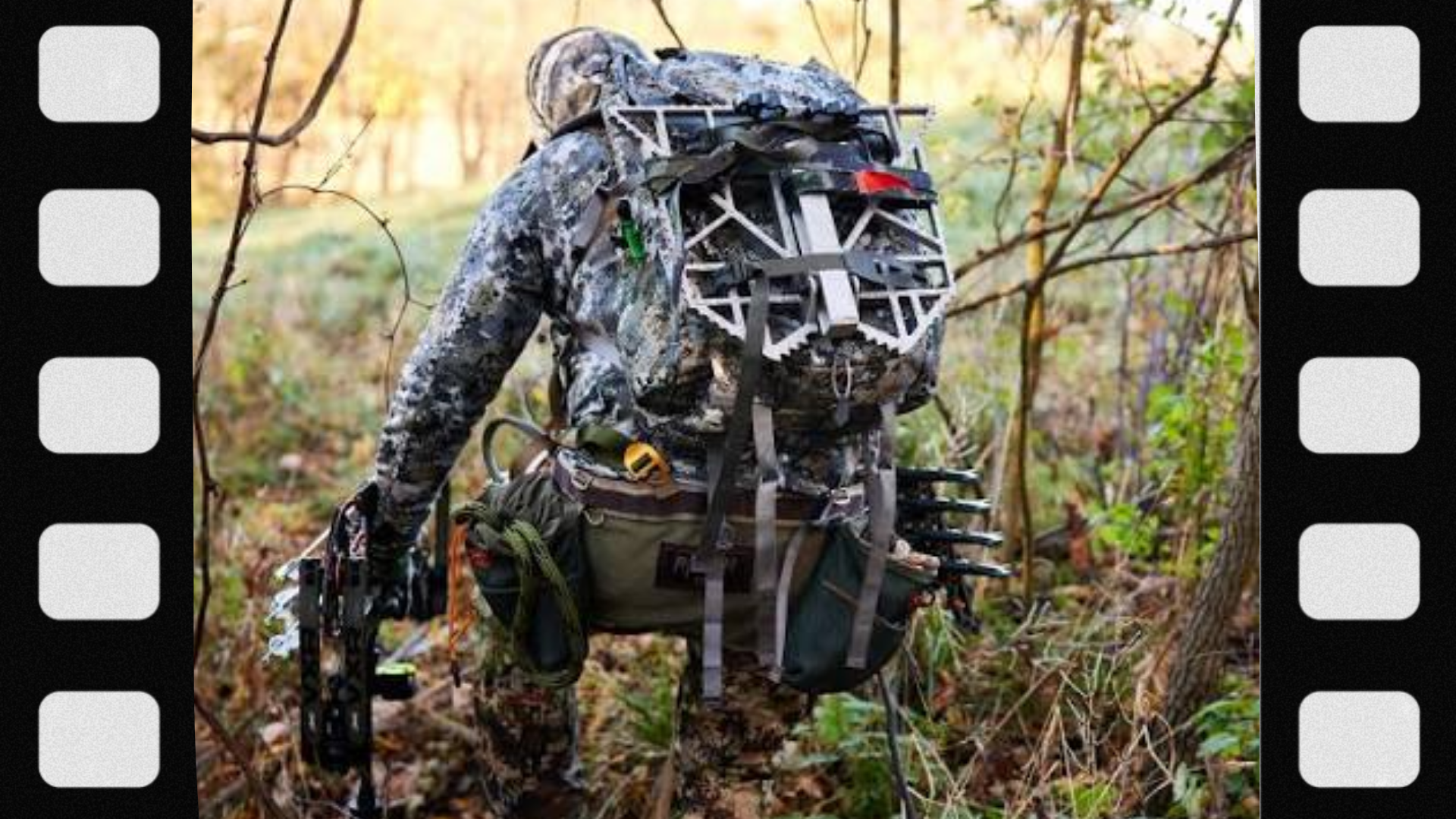
- External attachment: Only secure, quiet equipment that cannot snag vegetation or interfere with weapon handling.
Use waterproof bags or a pack liner for items that must remain dry. Balance the load close to your back and tighten compression straps so the pack does not shift on uneven ground.
What to Check Before Leaving Home
- Confirm the species, season, unit, legal weapon, and valid dates.
- Check licenses, permits, tags, stamps, and reporting requirements.
- Verify that the parcel is open and the access route is legal.
- Review closures, fire restrictions, road conditions, and vehicle rules.
- Download current offline maps and pack a backup.
- Inspect the firearm, bow, ammunition, arrows, optics, and safety equipment.
- Check the forecast, sunrise and sunset times, and expected overnight low.
- Pack water, food, first aid, emergency shelter, and required medication.
- Test communication devices, lights, batteries, and chargers.
- Prepare game-recovery and meat-care equipment.
- Leave a detailed trip plan with a responsible person.
- Set a firm turnaround time based on weather, daylight, and physical condition.
Common Beginner Mistakes
Carrying Too Much Specialized Equipment
New hunters often pack multiple calls, large optics, extra clothing, and redundant accessories while overlooking water, navigation, and recovery tools. Build the kit around safety and the actual hunt rather than hypothetical situations.
Trusting a Phone Without an Offline Backup
Cell coverage can disappear, cold temperatures can shorten battery life, and screens can break. Download maps, carry backup power, and know how to use a compass and printed map.
Confusing Public Ownership With Public Access
A public parcel can lack a legal route through surrounding private property. Confirm public roads, trails, easements, gates, and parking before the trip.
Ignoring the Pack-Out
A harvested big-game animal can require several trips, partner assistance, or specialized carrying equipment. Consider distance, heat, elevation, darkness, and vehicle restrictions before taking a shot.
Wearing New Boots on Opening Day
Unfamiliar boots can cause blisters, instability, or painful pressure points. Break them in gradually with the socks and approximate load you will use while hunting.
Leaving Essential Equipment in the Vehicle
A first-aid kit, rain jacket, or flashlight cannot help when it is miles away. Carry critical equipment even on a hunt expected to last only a few hours.
Failing to Prepare for Other People
Public land may contain hunters, hikers, workers, cyclists, campers, livestock, and vehicles. Maintain positive target identification, choose safe shooting directions, and change plans when other users enter the area.
What Not to Do on Public Land
- Do not hunt without verifying current wildlife and land-management rules.
- Do not cross private property without lawful access or the owner’s permission.
- Do not shoot at sound, color, movement, or an animal you cannot positively identify.
- Do not shoot without knowing what is in front of and beyond the target.
- Do not take a shot beyond your demonstrated ability.
- Do not rely on a mechanical safety as a substitute for muzzle and trigger control.
- Do not climb, cross a dangerous obstacle, or enter a vehicle with a loaded firearm.
- Do not place stands, cameras, blinds, bait, or markers without confirming that they are permitted.
- Do not block gates, roads, trails, or emergency access.
- Do not drive off designated routes simply to retrieve game unless current rules expressly allow it.
- Do not trespass during game recovery.
- Do not abandon meat, carcass parts, litter, flagging, or equipment contrary to local rules.
- Do not continue when weather, fatigue, injury, darkness, fire, water, or terrain makes the trip unsafe.
Printable Public Land Hunting Gear Checklist
Documents and Legal Preparation
- Valid hunting license
- Species permit or tag
- Required stamps and additional permits
- Hunter education proof where required
- Photo identification
- Current regulation booklet or saved official regulations
- Parcel permit, parking pass, or access authorization where required
- Harvest reporting and tagging instructions
- Emergency and land-manager contact information
Navigation and Communication
- Current ownership and topographic maps
- Offline phone or GPS map
- Compass
- Printed waterproof map
- Charged phone
- Satellite communicator or personal locator beacon for remote areas
- Power bank or spare batteries
- Written trip plan left with a responsible person
Hunting Equipment
- Legal, inspected firearm, bow, crossbow, or muzzleloader
- Compatible legal ammunition or arrows
- Protective case for transport where appropriate or required
- Sling, release aid, or other method-specific equipment
- Binoculars
- Rangefinder where lawful and useful
- Lens cloth and protective covers
- Compact manufacturer-approved repair tools
Clothing
- Required hunter-visibility garment
- Moisture-managing base layer
- Insulating midlayer
- Rain and wind shell
- Broken-in boots
- Appropriate socks and a dry spare pair
- Hat and gloves
- Gaiters where conditions warrant
- Insect and sun protection
Food, Water, and Emergency Equipment
- Adequate drinking water
- Water treatment method when relying on natural sources
- Food plus a reasonable emergency reserve
- First-aid kit
- Personal medication
- Headlamp
- Backup light and batteries
- Emergency shelter
- Whistle
- Fire-starting tools where lawful and appropriate
- Compact repair kit
Recovery and Meat Care
- Knife and protective sheath
- Disposable or washable gloves
- Clean game bags
- Cordage
- Pack frame, cart, or sled if appropriate
- Cleaning supplies
- Cooler and ice prepared at the vehicle when suitable
- Tagging and reporting materials
- Recovery plan and partner contact
Final Answer
So, what gear do you need for public land hunting? At minimum, carry valid documents, current regulations and maps, a legal and familiar hunting weapon, required visibility clothing, suitable boots and layers, navigation and communication tools, water, food, first aid, lighting, emergency protection, and equipment for lawful game recovery.
Add binoculars and only the species-specific tools that support your chosen method. Confirm legal access, parcel rules, weather, closures, and the recovery route before entering the field. Safe handling, accurate shooting, ethical decisions, physical preparation, and current official information are more important than expensive equipment.
FAQs
1. What is the most important gear for public land hunting?
The most important items are your legal documents, current boundary information, navigation tools, communication device, weather protection, water, first aid, and legal hunting equipment. These address the consequences that equipment selection can actually prevent.
2. Do I need special gear to hunt public land?
You do not necessarily need special branded equipment, but you need reliable maps, legal-access information, emergency supplies, and a recovery plan. Public land often requires more self-sufficiency than a small private parcel.
3. Do I need a hunting license on federal public land?
Generally, hunters in the United States must comply with the applicable state licensing and wildlife rules even when hunting federal land. The federal parcel may also impose additional permits, closures, and land-use restrictions.
4. Is all public land open to hunting?
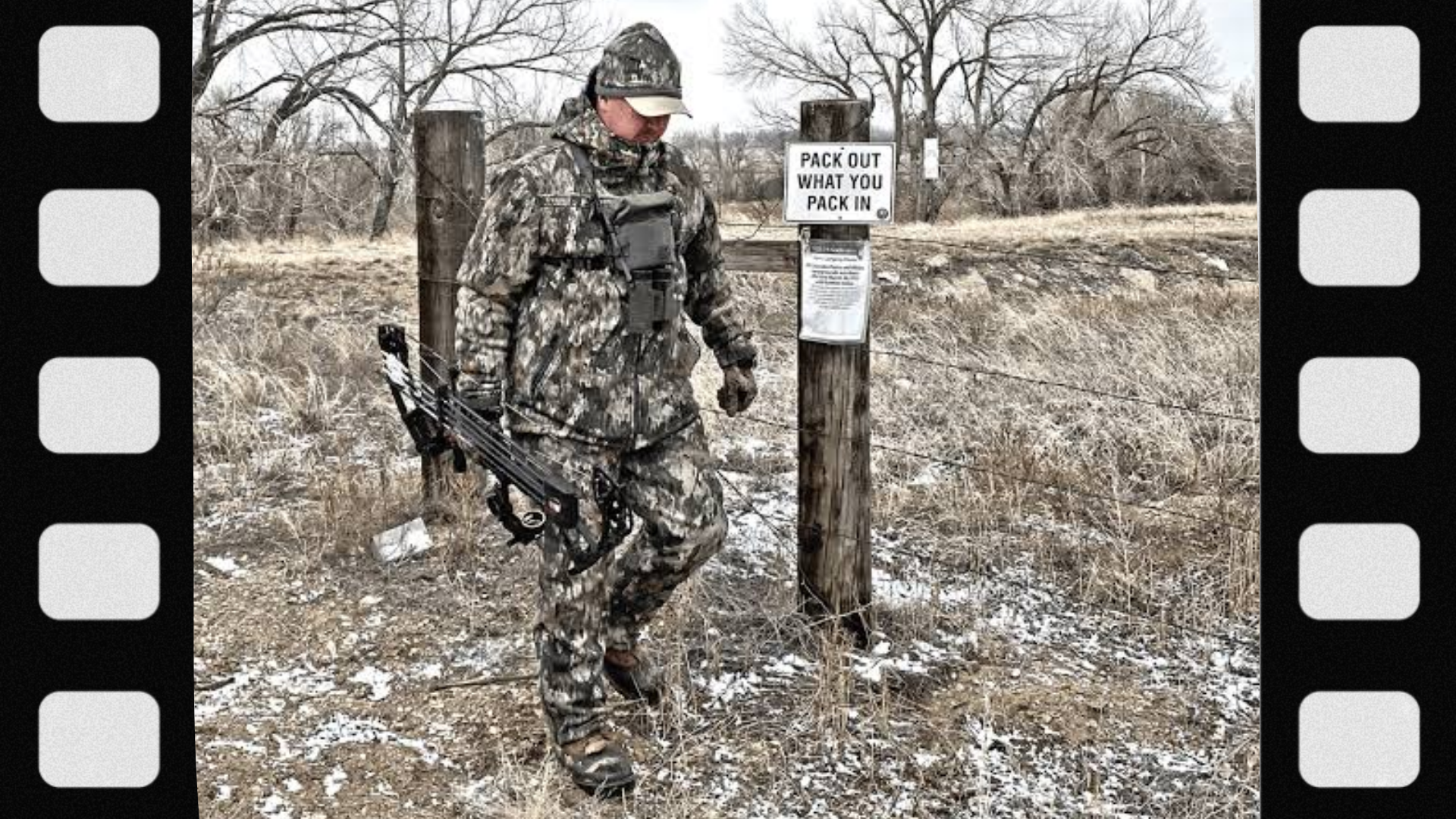
No. Some public land is closed to hunting, open only during certain seasons, limited to specific methods, or subject to parcel-specific permits. Confirm the status with the managing agency.
5. How do I know where public land boundaries are?
Use current official land-status maps and compare them with a reputable offline mapping tool, posted signs, and information from the local land office. Leave a buffer from uncertain boundaries and never treat a consumer map as permission to cross private property.
6. Can I cross private property to reach public land?
Only when you have lawful access, such as a confirmed public easement or the landowner’s permission. Public ownership beyond a private parcel does not automatically grant a right to cross it.
7. Should I carry a paper map?
Yes, especially in remote country. A protected paper map provides a valuable backup if your phone or GPS loses power, breaks, or displays incomplete information.
8. Can I rely on my phone for navigation?
A phone with downloaded maps is useful, but it should not be your only system. Carry backup power, a compass, and enough knowledge to navigate if the phone fails.
9. Do I need a satellite communicator?
It is not necessary for every parcel, but it is valuable where cellular coverage is unreliable or rescue could be delayed. Test the device and confirm that any required service plan is active.
10. How much water should I carry?
The correct quantity depends on heat, altitude, exertion, trip length, body size, and reliable refill opportunities. Begin well hydrated, carry a reserve, and never assume a mapped water source will be usable.
11. What size pack is best for a public land day hunt?
Choose the smallest pack that comfortably carries your essential equipment and, where applicable, supports your recovery plan. Fit, load control, durability, and access matter more than a particular capacity number.
12. Do I need camouflage?
Camouflage may help for close-range hunting or animals with sharp vision, but it is not always essential. Movement control, wind awareness, legal visibility clothing, comfort, and weather protection are usually more important.
13. Do I need hunter orange on public land?
Requirements vary by jurisdiction, season, species, weapon, and property. Review the current official regulation for the hunt rather than assuming that a vest, hat, or camouflage pattern satisfies the rule.
14. Are binoculars necessary?
They are strongly recommended because they allow safe animal identification and terrain observation without pointing a firearm. Choose a size you can carry comfortably throughout the hunt.
15. Do I need a rangefinder?
A rangefinder is optional but can improve distance judgment. It does not replace practice, a stable position, clear target identification, or an ethical personal range limit.
16. How much ammunition should I carry?
Carry a modest supply of correct, legal, compatible ammunition sufficient for the hunt and reasonable contingencies. More ammunition adds weight and does not compensate for poor preparation or unsafe shot selection.
17. Should I carry a first-aid kit on a short hunt?
Yes. Cuts, blisters, falls, insect reactions, and unexpected delays can occur close to a road. Carry a compact kit matched to your training and personal medical needs.
18. What should be in a public land hunting first-aid kit?
Common contents include gloves, wound dressings, bandages, medical tape, blister treatment, an elastic wrap, necessary medication, and emergency contact information. Take appropriate training so you can use the contents effectively.
19. Why do I need a headlamp if I plan to return before dark?
A delayed recovery, navigation mistake, equipment problem, or slower-than-expected hike can extend a hunt. A headlamp leaves both hands free and should be backed by spare power or a second light.
20. What emergency shelter should I carry?
Choose a compact shelter appropriate to the climate, such as an emergency bivy or weather-resistant tarp. It should protect you long enough to manage an unexpected delay without creating an unrealistic sense of security.
21. What should I wear for cold-weather public land hunting?
Use a moisture-managing base layer, adjustable insulation, weather-resistant outerwear, warm head and hand protection, suitable boots, and dry spare clothing. Remove layers before strenuous climbs to reduce sweat.
22. What should I pack for hot-weather hunting?
Prioritize water, electrolytes when appropriate, sun protection, breathable clothing, insect protection, and a conservative schedule. Know the signs of heat illness and stop before symptoms become severe.
23. Are cotton clothes suitable for hunting?
Cotton may be comfortable in some dry, mild conditions, but it retains moisture and can provide poor insulation when wet. Select fabrics according to the temperature, precipitation, exertion, and consequences of becoming soaked.
24. Do I need waterproof boots?
Waterproof boots help in wet grass, marshes, mud, and snow, but they can be warmer and less breathable. Match the boot to the actual terrain and break it in before hunting.
25. Should I take trekking poles?
Trekking poles are optional but useful on steep, loose, snowy, or uneven ground. They can also improve balance during a heavy pack-out.
26. What knife do I need for field dressing?
Use a sharp, controllable knife designed for game care, with a secure handle and protective sheath. Large blades are not automatically safer or more effective.
27. Are game bags necessary?
Clean, breathable game bags are important when meat will be quartered or carried any distance. They help protect meat from dirt and insects while allowing heat to escape.
28. Can I drive off-road to retrieve an animal?
Do not assume so. Motorized access and retrieval rules vary by property, route, season, and disability authorization. Check official travel-management information before the hunt.
29. Can I use a game cart on public land?
Often, but not universally. Wilderness designations, trail rules, terrain, seasonal closures, or definitions of mechanical transport may affect its legality or practicality.
30. What gear do I need for a public land deer hunt?
Begin with documents, maps, legal hunting equipment, visibility clothing, layers, boots, water, first aid, communication, binoculars, a headlamp, a knife, gloves, game bags, and a realistic method for removing the deer.
31. What extra gear is needed for public land elk hunting?
Elk hunting often requires stronger navigation, water treatment, emergency communication, trekking poles, a meat-hauling pack, multiple game bags, and more substantial weather protection. Physical conditioning and partner support are equally important.
32. What gear is required for a public land turkey hunt?
Requirements vary, but a legal weapon, correct ammunition or archery equipment, license and permit, visibility equipment for travel, navigation, water, first aid, and species-identification knowledge form the base kit. Calls, decoys, and a seat are optional and must be legal.
33. Can I leave a tree stand on public land?
Rules vary considerably. Some areas limit when stands can be placed, how long they can remain, how they must be labeled, and what attachment methods may be used. Check the parcel’s current rules and remove equipment by the deadline.
34. What safety gear do I need for a tree stand?
Use a properly fitted full-body fall-arrest system, compatible lifeline, approved climbing equipment, and a haul line. Inspect every component and remain connected as directed by the manufacturer whenever your feet leave the ground.
35. Are trail cameras legal on public land?
Not everywhere. Some jurisdictions restrict camera placement, transmitting cameras, seasonal use, tagging, or abandoned equipment. Verify wildlife and land-manager rules before installing one.
36. Can I use bait on public land?
Baiting laws vary widely and may change because of wildlife-disease concerns. It may be prohibited even where some attractants are permitted on private property, so check the exact public parcel and species regulations.
37. Are electronic calls legal?
The answer depends on the species, jurisdiction, season, and land manager. Do not use an electronic call until the current regulation expressly permits it for your hunt.
38. Do I need bear spray?
It may be appropriate in bear country, but possession and use rules can vary. Learn local bear-safety guidance, obtain lawful equipment, carry it accessibly, and receive instruction in its safe use.
39. Should I hunt public land alone?
Solo hunting can increase the consequences of injury, navigation trouble, and a difficult recovery. If you go alone, select a route within your ability, leave a detailed trip plan, carry dependable communication, and use conservative turnaround limits.
40. What information belongs in a hunting trip plan?
Include the parcel, access point, vehicle description, intended route, partners, expected return time, communication method, and instructions for when your contact should request help.
41. What should I do if another hunter is nearby?
Remain calm, maintain muzzle control, make your presence known from a safe position, and avoid interfering with their hunt. Relocate if the area no longer offers a clearly safe shooting direction.
42. Can I shoot near a road, trail, campsite, or building?
Restrictions depend on applicable law and land-manager rules. Never shoot across or toward people, occupied areas, roads, buildings, vehicles, livestock, or an unsafe background, even when a specific distance rule is not obvious.
43. What should I do if I become lost?
Stop before the situation worsens, assess your location, conserve battery power, use your map and compass, and contact help when needed. Do not continue blindly into hazardous terrain.
44. What should I do if weather becomes dangerous?
End the hunt early and move toward a safe route or shelter. Equipment does not make lightning, flooding, wildfire, extreme heat, severe cold, or unstable ice acceptable risks.
45. What gear can beginners skip?
Beginners can usually postpone specialized calls, oversized optics, elaborate scent systems, multiple knives, and other conveniences. Spend first on safe legal equipment, dependable boots, training, navigation, weather protection, and recovery capability.
Read more: