
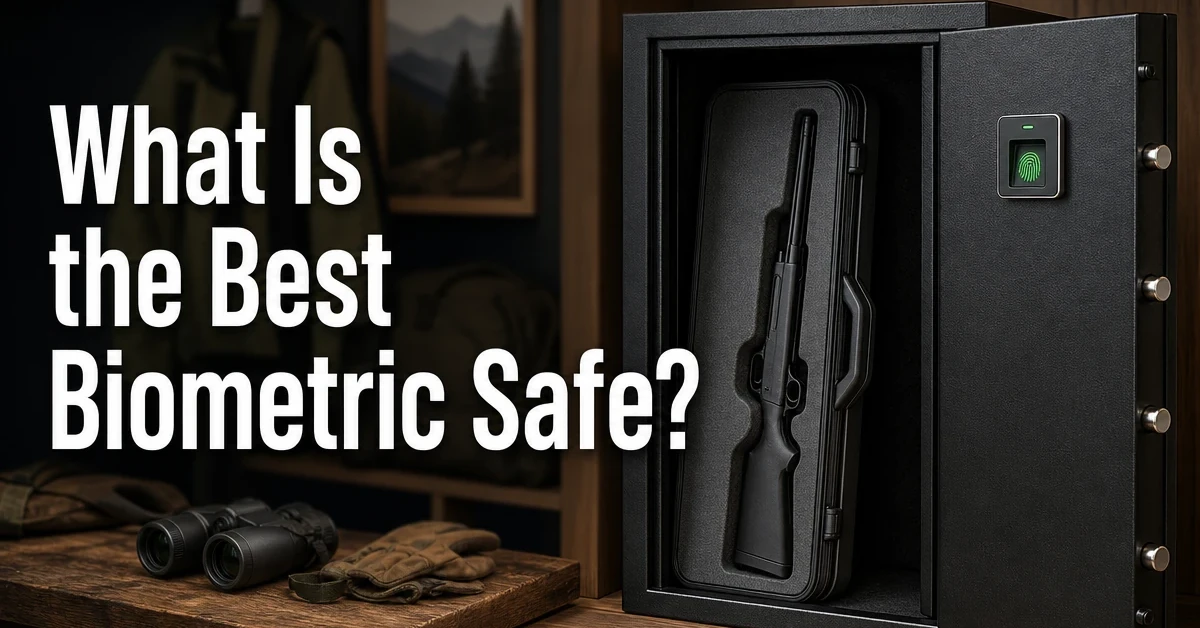

What is the best biometric safe? For most firearm owners, it is a well-built safe with a dependable fingerprint reader, strong pry resistance, backup access, and secure mounting—not simply the fastest scanner. The right choice depends on what you are storing, who must be prevented from accessing it, how quickly authorized access is needed, and what local storage laws require.
What Makes a Biometric Safe Different?
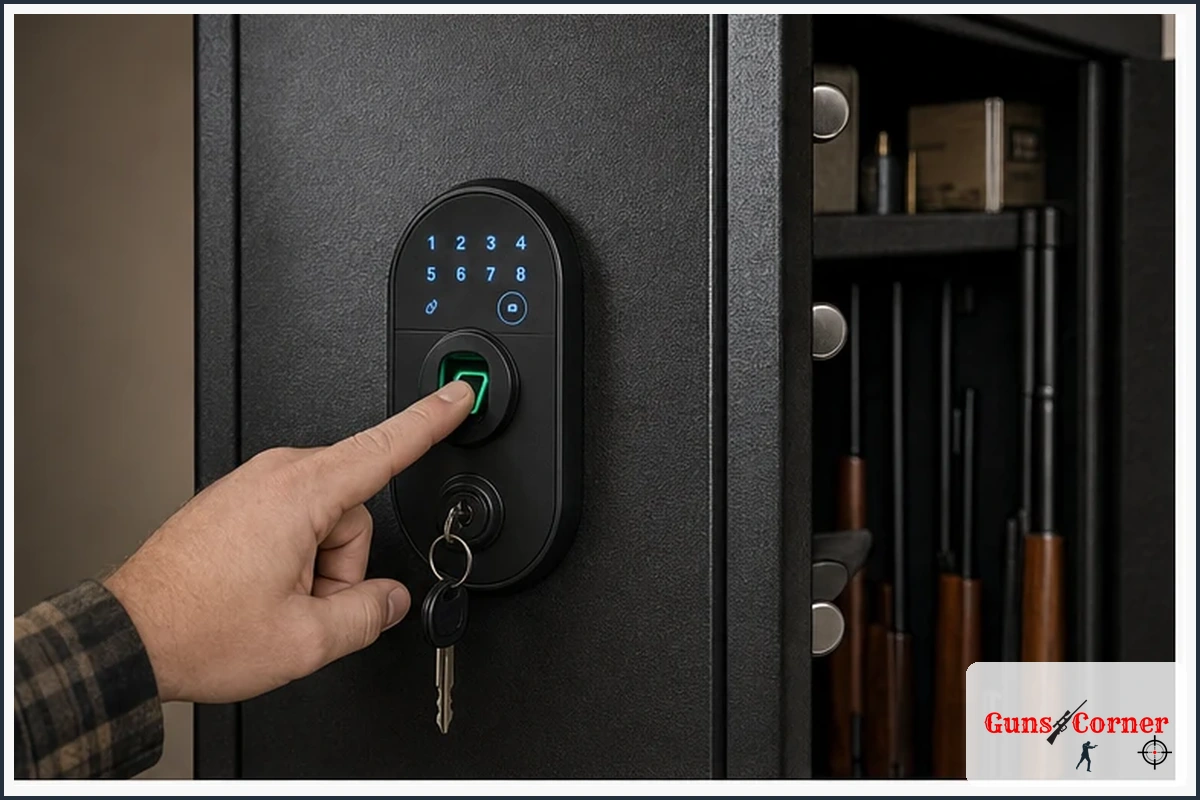
A biometric safe uses a fingerprint reader to verify an authorized user before releasing its lock. Many models also include a keypad, override key, or both. These alternatives matter because fingerprints may not scan consistently when a finger is wet, dirty, injured, cold, or positioned differently from during enrollment.
Biometric access offers convenience, but it does not automatically make a safe highly secure. The steel enclosure, door design, hinge protection, mounting system, lock quality, and resistance to prying are equally important.
Best Biometric Safe by Use Case
| Use case | Important features | Main limitation to consider |
|---|---|---|
| Bedside handgun storage | Consistent reader, interior lighting, quiet or controllable access, secure mounting | Small safes may offer limited pry resistance and capacity |
| Vehicle or travel storage | Compact construction, tether or mounting points, backup entry method | A vehicle is not a substitute for secure storage; laws vary widely |
| Multiple firearms | Larger capacity, reinforced door, reliable locking mechanism, permanent installation | Large safes are heavier, more expensive, and slower to relocate |
| Households with children | Unauthorized-access resistance, tamper alerts, robust construction, secure anchoring | Fast authorized access must not come at the expense of dependable locking |
| Valuables and documents | Interior organization, appropriate fire or water protection if verified, backup access | Many compact handgun safes are not fireproof document safes |
How to Choose the Best Biometric Safe
1. Start with the threat and storage purpose
Decide whether the safe is mainly intended to prevent child access, deter casual theft, provide controlled bedside access, secure a firearm during transport, or protect valuables. A portable lockbox and a permanently anchored home safe serve different purposes.
Do not assume that a small biometric handgun safe provides the same burglary protection as a full-size security safe. Compare the enclosure, door, locking bolts, hinge protection, and mounting method rather than focusing only on fingerprint speed.
2. Evaluate fingerprint-reader reliability
Look for a reader that allows multiple fingerprints and provides clear enrollment instructions. Register more than one finger, and consider registering the same finger in more than one position if the manufacturer permits it.
Test the reader with the conditions you may actually encounter. Wet, dirty, cold, or scraped fingers can reduce recognition reliability. A safe should always have a practical backup entry method, but keys and codes must themselves be secured from unauthorized users.
3. Confirm the backup access method
A physical key, keypad, or secondary biometric method can prevent lockout if the battery is depleted or the reader fails. Check whether the override key is protected from easy discovery and whether the keypad can be used without disabling the biometric function.
A backup method is useful only if authorized users know how to use it and maintain it responsibly. Store spare keys securely rather than taped under furniture or left in an obvious location.
4. Inspect physical security
Important features may include a recessed door, sturdy locking bolts, protected hinges, thick steel components, tamper resistance, and a design that limits pry access. Manufacturer descriptions should be read carefully because “strong” or “secure” is not a standardized burglary-resistance rating by itself.
Choose a safe that can be anchored to an appropriate solid structure when possible. Follow the manufacturer’s mounting instructions, and do not drill into hidden wiring, plumbing, or structural members without knowing what is behind the installation surface.
5. Check capacity and firearm fit
Measure the firearm, optic, magazine, suppressor if legally possessed and stored, and any required locking device before buying. Interior dimensions can be smaller than exterior dimensions, and foam inserts may reduce usable space.
The firearm should not be forced into the safe or positioned where the door, locking mechanism, or trigger area is obstructed. Follow the firearm manufacturer’s unloading and storage instructions.
6. Consider power and maintenance
Confirm the battery type, low-battery warning, battery access, and expected maintenance procedure from the current manual. Replace batteries on a regular schedule rather than waiting for a warning.
Keep the scanner clean according to the manufacturer’s instructions. Avoid liquids, solvents, or modifications that are not approved for the reader or lock.
Biometric Access Versus Keypad or Mechanical Locks
| Lock type | Advantages | Limitations |
|---|---|---|
| Biometric | Quick access without remembering a code or finding a key | Requires power and may misread fingerprints under some conditions |
| Keypad | No fingerprint enrollment and often simple to share with authorized adults | Codes can be observed, forgotten, or poorly stored |
| Mechanical key | Does not depend on batteries or electronics | Keys can be lost, copied, or accessed by unauthorized people |
| Dual or hybrid system | Provides more than one authorized access method | More components require careful maintenance and secure management |
For many households, a biometric safe with a dependable backup method is convenient. Others may prefer a keypad or mechanical lock because it avoids fingerprint-read problems. The safest choice is the one that authorized users can operate correctly while unauthorized people cannot access.
Firearm-Safe Setup and Safety Checklist
- Read the safe and firearm manuals before installation.
- Install fresh batteries and record the replacement date.
- Enroll multiple authorized fingerprints.
- Test the reader repeatedly with the safe empty.
- Test the backup access method and secure its key or code.
- Anchor the safe where practical and legally appropriate.
- Store the firearm according to the manufacturer’s guidance.
- Keep ammunition secured in a manner consistent with local law and household safety needs.
- Recheck access after battery replacement, relocation, or maintenance.
Always follow the four basic firearm-safety rules: treat every firearm as loaded, keep the muzzle pointed in a safe direction, keep your finger outside the trigger guard until ready to shoot, and be certain of the target and what is beyond it. A safe’s lock does not replace safe firearm handling.
Common Biometric Safe Mistakes
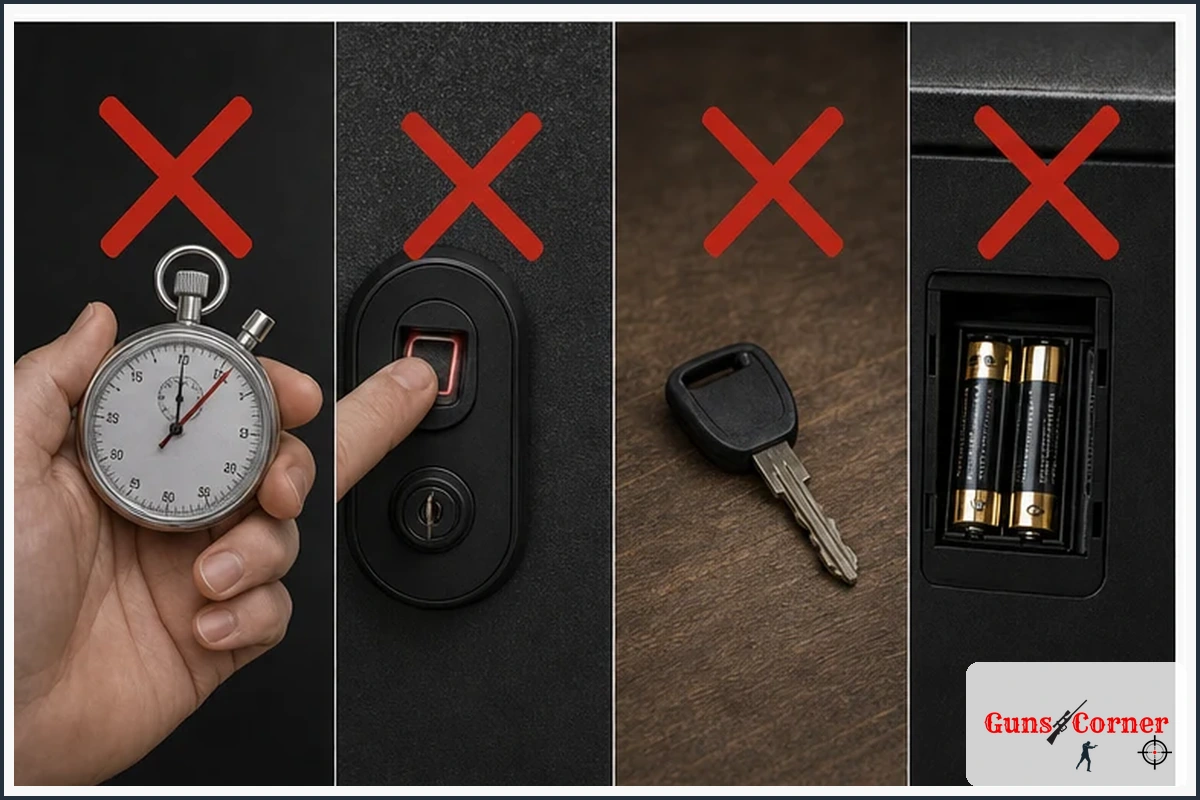
- Choosing a safe based only on advertised opening speed.
- Failing to test fingerprints after enrollment.
- Keeping the override key in an obvious location.
- Ignoring low-battery warnings.
- Leaving a portable safe unsecured when permanent mounting is practical.
- Assuming a compact lockbox is fireproof or burglary-rated without verified documentation.
- Storing more firearms than the interior can safely accommodate.
- Allowing unauthorized people to learn the access code or handle the override key.
- Relying on a biometric lock as a substitute for training and responsible storage.
Legal and Responsible Storage Considerations
Firearm-storage requirements vary by country, state, and local jurisdiction. Some laws address child access prevention, vehicle storage, transportation, or storage after a firearm is not in immediate use. Verify current requirements with the relevant official authority before selecting or installing a safe.
Manufacturer instructions also matter. Do not modify the lock, defeat safety features, or use a safe outside its stated purpose. If you are unsure about installation, storage compliance, or firearm handling, seek qualified instruction from a certified firearms educator or another appropriate professional.
FAQs
1. Are biometric safes reliable?
They can be reliable when properly installed, maintained, and tested, but fingerprint readers are not infallible. Wet, dirty, cold, or injured fingers may not scan correctly, so a secure backup access method is important.
2. Is a biometric safe better than a keypad safe?
Neither is universally better. Biometric access may be convenient for an authorized user, while a keypad avoids fingerprint-reading problems. Compare the entire safe, including construction, mounting, backup entry, and maintenance.
3. Should a biometric safe have a key backup?
A backup key can prevent lockout, but it must be secured from unauthorized users. Some owners prefer a keypad backup or a combination of access methods. Follow the manufacturer’s instructions for managing backup access.
4. Can a biometric safe be used in a vehicle?
Some compact safes are designed for transport, but vehicle-storage laws vary considerably. Check current local requirements, use a secure mounting or tethering method when appropriate, and avoid leaving firearms visible or unnecessarily unattended.
5. Are biometric safes fireproof?
Not automatically. Fire protection depends on the safe’s verified construction and tested rating. A biometric lock alone says nothing about fire resistance.
6. How often should a biometric safe battery be replaced?
Follow the current manufacturer guidance and replace batteries before they are depleted. Test the biometric reader and backup method after replacement.
7. What is the best biometric safe for a household with children?
The best option is one that prevents unauthorized access, can be securely mounted, has dependable physical construction, and is regularly tested. Fast access for an authorized adult should never mean easy access for a child.
Final Answer: What Is the Best Biometric Safe?
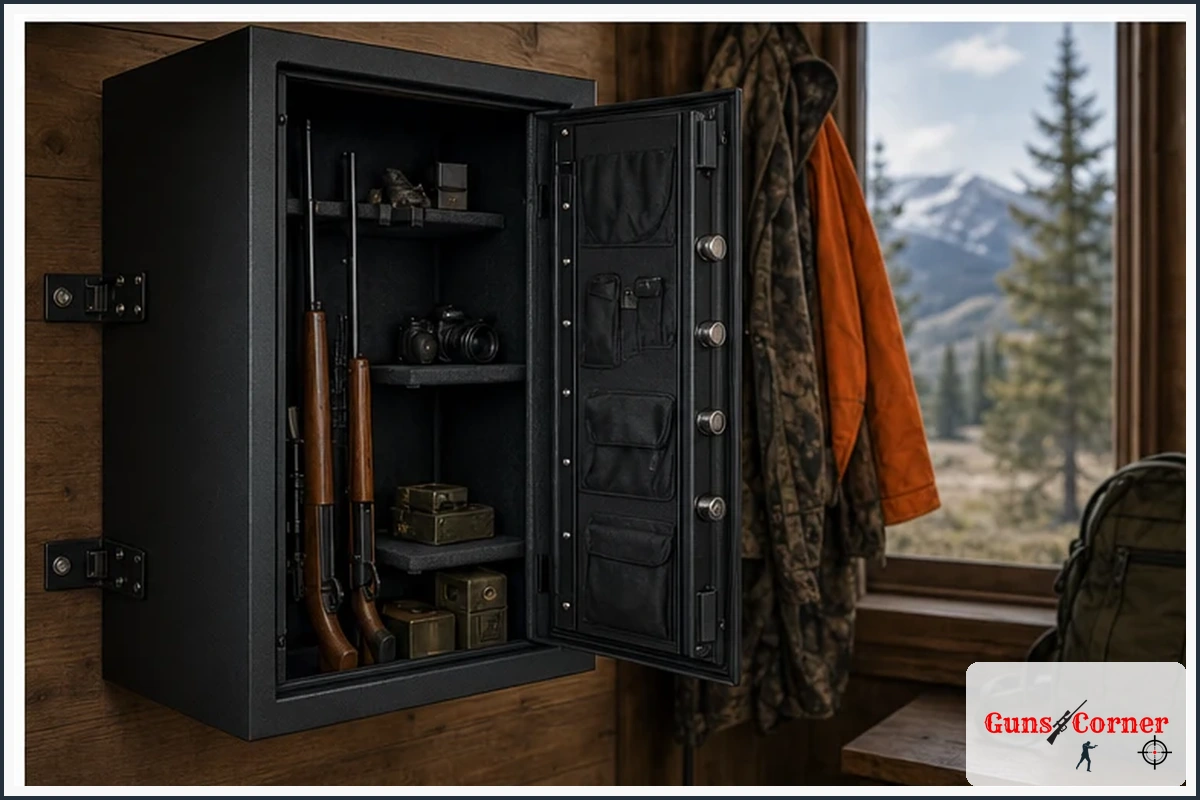
The best biometric safe is a properly sized, securely mountable safe with a dependable fingerprint reader, strong physical construction, protected locking components, and a secure backup access method. Choose based on your storage purpose, household risks, firearm dimensions, maintenance habits, and local law—not advertising speed alone. Practice safe firearm handling, maintain the safe, and verify current storage requirements through official sources.