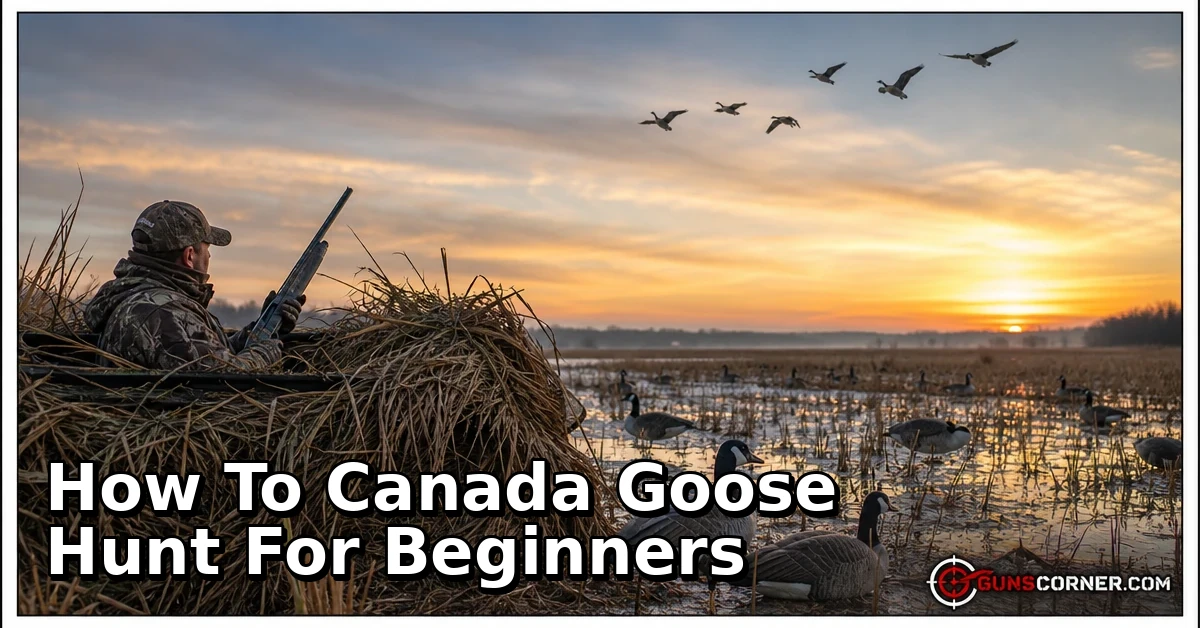

Learning how to Canada goose hunt for beginners involves more than buying decoys and a shotgun. You need current regulations, legal access, species-identification skills, safe firearm handling, careful scouting, suitable concealment, and a realistic retrieval plan. This guide explains the process from preparation through responsible field care without assuming that seasons, limits, equipment, or tactics are universal across Canada.
To learn how to Canada goose hunt for beginners, first confirm federal and provincial rules, obtain the required licences and permissions, and complete appropriate hunter education. Scout legal feeding and resting areas, set up concealment with the wind and safe shooting directions in mind, use a modest decoy spread, and call selectively. Only shoot clearly identified geese within your practiced range and with a safe background and reliable retrieval plan. Success depends on preparation, patience, weather, bird behavior, and local conditions—not guaranteed tactics.
Important Legal and Safety Notice Before You Hunt
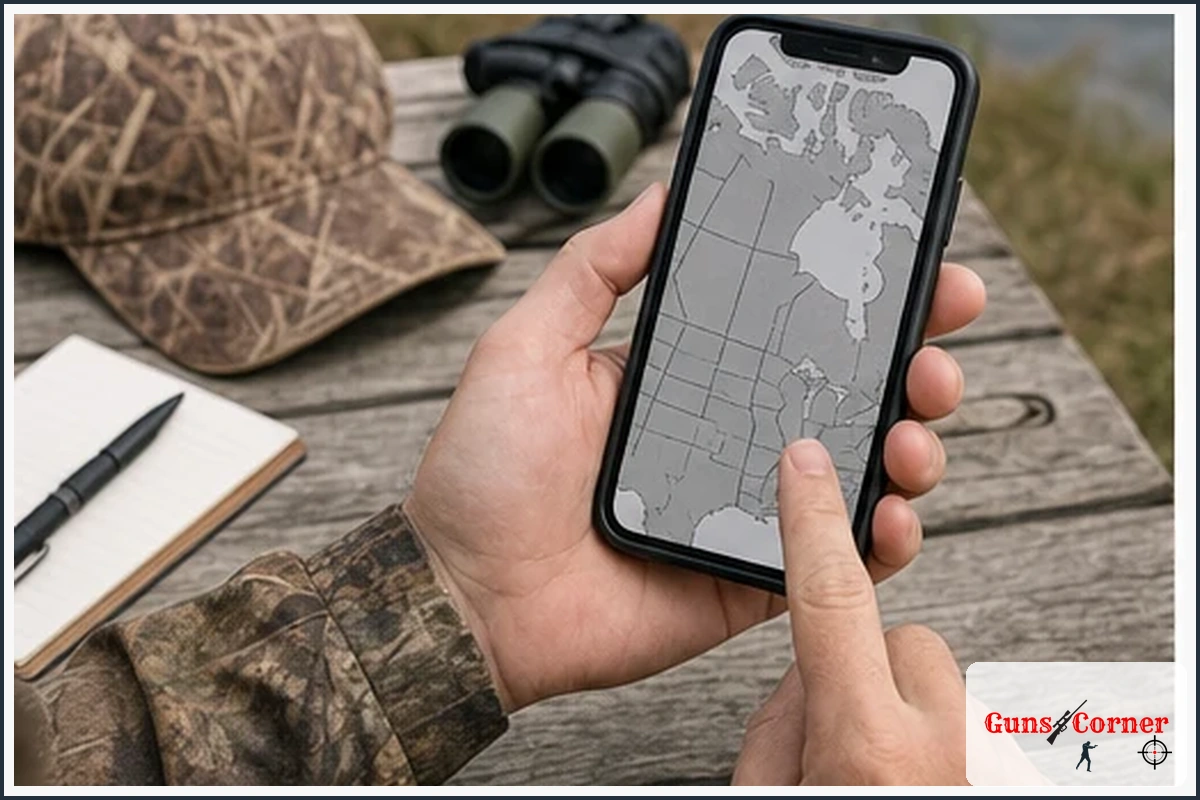
Canadian migratory-bird regulations vary by province, territory, zone, season, species, land type, and hunting method. Before every hunt, verify current rules through Environment and Climate Change Canada and the applicable provincial or territorial wildlife authority.
- Confirm your hunting licence, migratory-bird credentials, permits, tags, and hunter-education requirements.
- Check open seasons, legal shooting hours, bag limits, possession limits, species restrictions, and conservation closures.
- Use only legal firearms, ammunition, and equipment for the jurisdiction.
- Obtain landowner permission and verify public-land boundaries and access conditions.
- Follow rules for non-toxic shot, firearm transport, storage, magazine capacity, and plugged shotguns where applicable.
- Wear required visibility clothing, especially where provincial rules or local conditions require it.
- Identify the bird and confirm a safe background before firing.
- Plan for weather, water, navigation, communication, first aid, and bird retrieval.
Date reviewed: Regulations and closures can change annually. Recheck official sources immediately before hunting.
Canada Goose Hunting for Beginners: What the Hunt Involves
What a typical field or water hunt looks like
A typical hunt begins before legal shooting time. Hunters scout where geese feed, roost, loaf, or travel, then select a legal location that provides concealment and safe shooting directions. They place decoys, prepare a blind or natural hide, keep firearms unloaded until appropriate, and wait for birds to approach within a personally proven range.
Field hunts often focus on agricultural feeding areas, while water hunts use ponds, marshes, rivers, or lakes where hunting is legal. The essential principles are the same: identify the species, stay concealed, work with the wind, communicate clearly, and retrieve every bird promptly.
Canada geese versus similar species and protected birds
Canada geese can vary considerably in size and coloration. Before hunting, study authoritative identification guides for your region and learn to distinguish Canada geese from other goose species, protected birds, and non-target wildlife.
Do not shoot at distant, poorly lit, partially obscured, or mixed flocks when identification is uncertain. If you cannot confidently identify the bird and confirm that it is legal to harvest, do not fire.
Field hunting, water hunting, and guided hunts: which is best for a first attempt?
A guided hunt can simplify access, scouting, equipment, and logistics, but it does not replace learning firearm safety or understanding the law. A field hunt may offer easier visibility and retrieval, while a water hunt can introduce cold, unstable footing, boats, waders, and longer retrieval challenges.
For many beginners, a reputable guide or experienced mentor is the safest introduction. If hunting independently, choose simple terrain, avoid hazardous water, and consider hunting with someone who has demonstrated safe waterfowl practices.
Check Canadian Laws Before Buying Gear
How federal migratory-bird rules and provincial or territorial regulations interact
Canada goose hunting is affected by federal migratory-bird rules and by provincial or territorial requirements. Federal rules may establish broad frameworks for migratory birds, while local authorities regulate licences, zones, access, hunter education, firearms, and additional restrictions.
Never rely on an old regulation booklet, guide advertisement, forum post, or last year’s season dates. Confirm the current rules for the exact place and date you plan to hunt.
Open seasons, bag limits, possession limits, hunt zones, and conservation closures
Season dates and limits may differ between nearby zones. Check whether Canada geese, subspecies, or special populations have separate provisions. Review legal shooting hours, daily bag limits, possession limits, mandatory reporting, and temporary conservation closures.
Write down the relevant rules or keep an official digital copy available, but do not allow phone use to distract from firearm safety or field awareness.
Required licences, stamps, permits, hunter education, and firearm credentials
Depending on your province or territory, you may need a hunting licence, migratory-bird credential, species or wildlife certificate, habitat-related authorization, hunter-education proof, and appropriate firearms documentation. Requirements can differ for residents, non-residents, youth, and guided hunters.
Confirm firearm licensing, transport, storage, and possession requirements through official Canadian firearms guidance and your local hunting authority.
Permission, trespass, baiting, unplugged guns, shooting hours, and retrieval obligations
Obtain clear permission before entering private land, including permission to park, cross property, retrieve birds, use vehicles, and place blinds or decoys. Keep written permission when practical and respect gates, livestock, crops, buildings, and landowner instructions.
Rules concerning baiting, unplugged shotguns, shooting hours, retrieval, and hunting near roads or buildings vary. Follow the exact local requirements and never use a field simply because geese are present there.
How to verify the current rules using official government sources
Start with the Environment and Climate Change Canada migratory-bird hunting information. Then use the official wildlife website for the province or territory where you will hunt. Verify the hunting zone, dates, limits, licence requirements, access rules, firearm provisions, reporting requirements, and closures.
Beginner Canada Goose Hunting Gear
Shotgun, non-toxic ammunition, choke, and patterning
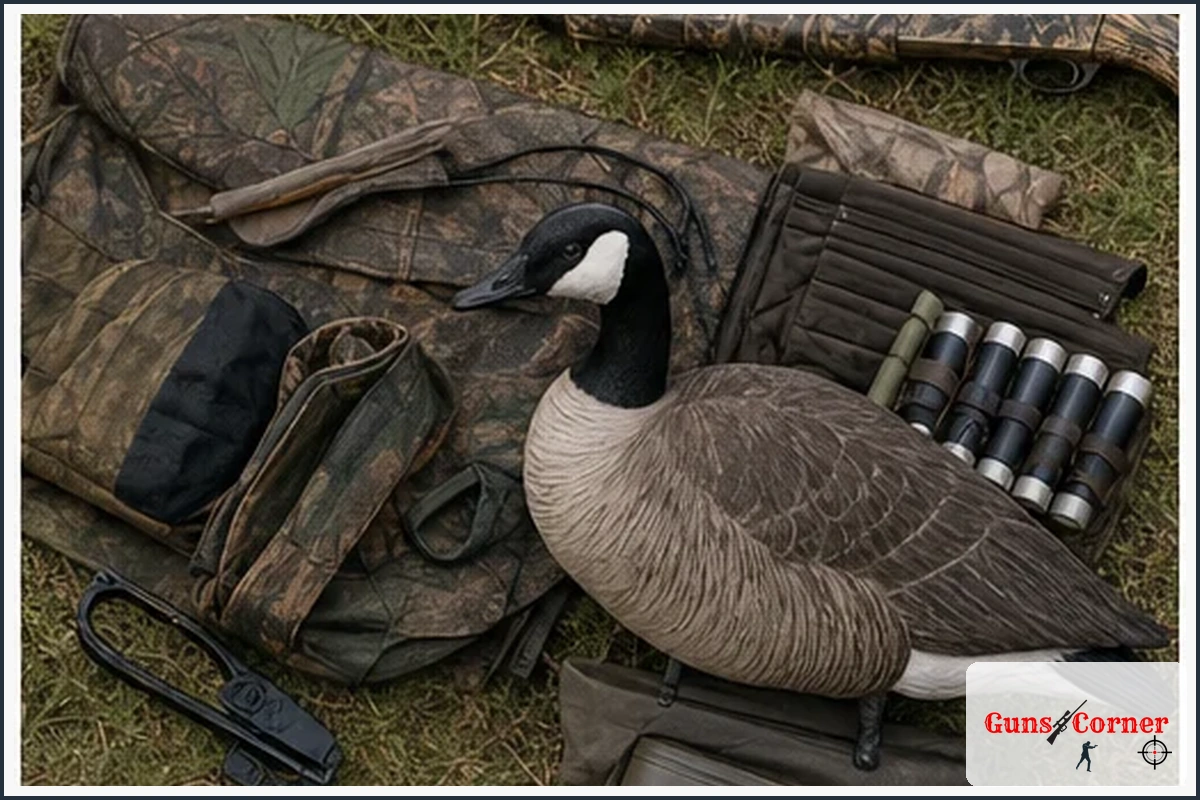
Use a legal shotgun and approved non-toxic ammunition suitable for the hunt and your firearm. Ammunition and choke compatibility must be confirmed through the firearm and ammunition manufacturers and local regulations.
Pattern the shotgun before hunting. Patterning means firing at a suitable target to observe pellet distribution at realistic distances. It helps you understand where the pattern is centered and whether it provides consistent coverage. Do not assume a particular choke, load, or maximum range will work universally.
Blind or natural concealment, camouflage, and layout comfort
Geese notice unnatural shapes and movement. A blind, layout hide, natural vegetation, or terrain feature should conceal the hunter’s outline while still allowing safe visibility and firearm handling.
Choose comfort carefully. A cold, wet, or cramped hunter is more likely to move unnecessarily or lose concentration. Keep all blind materials away from the muzzle and action of the firearm.
Decoys: full-body, shell, floaters, and how to start with a manageable spread
Full-body and shell decoys can work in fields, while floating decoys are designed for water. Start with a manageable spread that you can transport, arrange naturally, and retrieve safely. There is no universal number of decoys that guarantees success.
Place decoys to leave an open landing area and keep shooting lanes clear. The spread should reflect the available space, wind, terrain, local hunting pressure, and the behavior of the geese you observed.
Calls, clothing, waders, eye and ear protection, and waterproof storage
Useful equipment may include a goose call, weatherproof clothing, suitable boots, waders for lawful water hunting, eye and hearing protection, gloves, a headlamp, navigation tools, first aid, water, food, spare batteries, and waterproof storage.
Wear clothing appropriate to the weather rather than relying only on camouflage. Hypothermia, heat stress, poor visibility, and wet footing can create greater risks than a lack of specialized gear.
Dog, boat, or retrieval equipment: when each is useful and when it adds risk
A trained retriever can help recover birds, but a dog does not eliminate the need for safe water planning. Boats, waders, chest-high water, ice, current, mud, and steep banks can add serious hazards.
Do not send a dog or person into unsafe water. Have a recovery plan that uses suitable equipment, flotation, weather awareness, and a safe route back to shore.
What to borrow, rent, or buy first
Beginners can often borrow or rent blinds, decoys, calls, and retrieval equipment from an experienced mentor or guide. Prioritize safety and legal compatibility before buying specialized accessories.
- Acquire or arrange a legal firearm and suitable non-toxic ammunition.
- Use reliable clothing, boots, eye protection, hearing protection, and navigation equipment.
- Borrow decoys and calls until you understand the style of hunting you prefer.
- Invest in training and patterning before expanding your equipment collection.
How to Scout Canada Geese
Locate roosts, feeding fields, loafing water, and travel corridors without disturbing birds
Scout from legal roads, public viewpoints, maps, and permissioned property. Observe where geese feed, rest, drink, and travel, and note the time of day, wind direction, field conditions, and nearby hazards.
A roost is a place where birds rest, often on water or another secure site. Avoid entering or unnecessarily disturbing roost areas. In many situations, it is better to hunt a legal feeding or travel location rather than pressure the birds where they rest.
Ask landowners and record permission clearly
Contact landowners early, identify yourself, explain where you want to hunt, and ask about parking, livestock, crops, gates, retrieval, and cleanup. Record the permission, boundaries, contact information, and any conditions.
Permission to hunt does not automatically include permission to cross neighboring property or retrieve a bird elsewhere. Clarify those details before the hunt.
Read wind, access, crop conditions, water depth, and safe shooting directions
Wind affects how geese approach and where a safe landing area can be placed. Evaluate whether you can enter and leave without crossing the birds’ main flight path or exposing the setup.
In fields, inspect crop height, mud, drainage, vehicles, power lines, buildings, livestock, and nearby roads. On water, assess depth, current, ice, waves, shoreline access, and the distance to a safe retrieval point.
Choose a setup that keeps falling birds and shot away from roads, homes, livestock, and people
Before placing a blind, draw the intended shooting zone in your mind. Identify what lies beyond the birds, not just what is in front of them. Do not hunt if the only available shot direction points toward homes, roads, trails, vehicles, livestock, or people.
Geese can approach from unexpected angles, so safe zones must account for the entire hunting party and changing bird movement.
Build a backup location for changing weather or pressured birds
Have at least one alternate legal location. Wind shifts, changing field use, flooding, ice, hunting pressure, or landowner concerns can make the original setup unsuitable.
A backup plan may involve a different field, a water location, or postponing the hunt. Changing plans is safer than forcing a poor setup.
How to Set Up a Beginner Goose Hunt
Position the blind with concealment, visibility, and a safe shooting zone
Place the blind where its outline blends with the surroundings and where hunters can see approaching birds without excessive movement. Keep firearms pointed in safe directions and ensure blind openings do not cause muzzles to sweep across partners.
Use a full-body safety harness when hunting from an elevated position, although many goose hunts are conducted from ground blinds or natural cover.
Arrange decoys to leave a clear landing area
Create an open area where you want geese to approach, but do not assume birds will land exactly there. Keep the landing area away from roads, buildings, people, livestock, and other hazards.
Place decoys so they look natural from the expected approach and do not block the view of incoming birds.
Use realistic family-group spacing without treating one pattern as universal
Geese often appear in family groups, but spread design should match the season, local bird behavior, available space, wind, and hunting pressure. Avoid treating a fixed pattern or decoy count as a guaranteed formula.
Keep the spread, blind, and shooting lanes compatible with the wind
Set up so the preferred approach gives hunters a safe, controlled angle. If birds consistently circle toward an unsafe direction, do not force a shot. Adjust the setup only when you can do so without disturbing birds or creating new hazards.
Coordinate partners, dog handlers, and calling responsibilities before legal shooting time
Agree on who calls, who watches which direction, who gives the shooting signal, and who handles retrieval. Decide what words mean “hold,” “take,” “reload,” “bird down,” and “stop.” Every hunter should know when firearms must remain unloaded.
Calling and Working Canada Geese
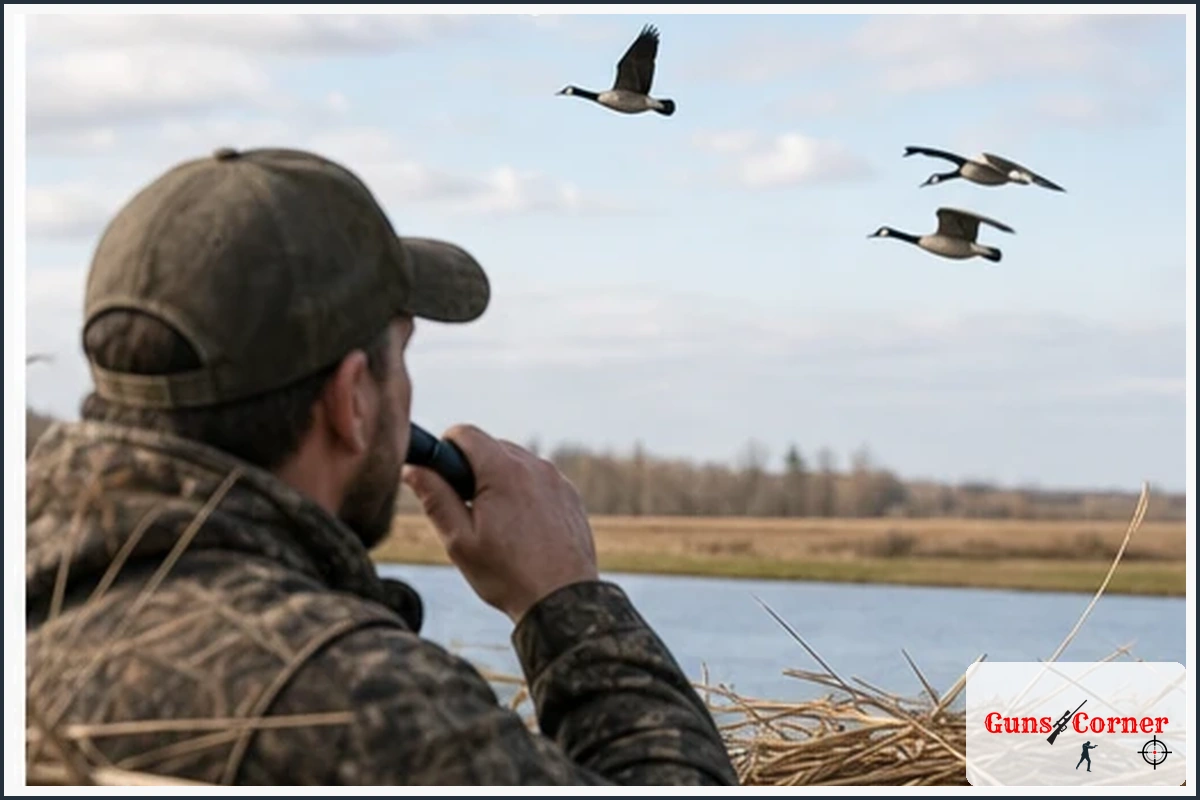
Start with listening, not calling
Watch and listen before using the call. Determine whether geese are already moving toward the area, how far away they are, and whether they are responding to natural sounds or ignoring them.
Learn a basic honk, cluck, moan, and comeback call
Beginners can start with a few basic sounds rather than trying to reproduce every vocalization. Practice away from the hunt so you can operate the call without excessive movement.
The goal is communication, not constant noise. A simple, controlled call is generally more useful than an elaborate sequence the hunter cannot reproduce consistently.
Match volume and cadence to distance, wind, and flock behavior
Use more volume only when distance or wind requires it. As geese approach, reduce calling if they are already committed. Watch body language, wingbeats, direction changes, and whether the birds are losing interest.
When to stop calling
Stop or reduce calling when birds are approaching naturally, when they become wary, or when repeated calling causes them to veer away. Silence can be the correct tactic after the flock has found the spread.
Common beginner calling mistakes
- Calling continuously without watching the birds.
- Using excessive volume at close range.
- Calling at every flock regardless of direction or behavior.
- Moving the head or hands unnecessarily while calling.
- Allowing several hunters to call at once without a plan.
Taking a Safe and Ethical Shot
Confirm species, legality, range, and a safe background before firing
Before firing, confirm that the bird is a legal Canada goose, the season and limit allow harvest, the bird is within your practiced range, and the background is safe. Identify the target and what lies beyond it.
Never shoot toward roads, homes, livestock, people, vehicles, trails, or unclear movement.
Why patterning the shotgun matters more than guessing maximum range
Patterning shows how your particular shotgun, choke, and legal load perform together. It can reveal uneven coverage, a shifted point of aim, or an unsuitable combination.
Do not use a generic distance as a promise of effectiveness. Your practical range depends on the firearm, ammunition, pattern, bird angle, weather, visibility, and skill.
Use only shots at birds within the hunter’s proven effective range
Practice until you can mount and aim the shotgun safely and consistently. Pass on birds that are too distant, moving unpredictably, partly obscured, or outside your ability to recover.
Shoot only when the flock separates enough to identify a single target and avoid unsafe angles
Wait for a clear target and a safe angle. Avoid shooting into a tightly grouped flock when you cannot control which bird you are targeting or where pellets may travel.
Do not shoot at birds on the water, low over hazards, or beyond a safe recovery opportunity unless local rules and conditions clearly permit it
Follow local regulations and your ethical standard, but do not create a recovery problem by shooting where a bird may fall into dangerous water, inaccessible private property, roads, or dense obstacles. A legal shot still needs to be responsible and recoverable.
How to communicate “take,” “hold,” and “reload” in a group
Use a clearly agreed shooting signal. If there is uncertainty, anyone may call “hold” or “stop.” After shooting, announce that the firearm is empty or safe before anyone moves, retrieves, reloads, or changes position.
Retrieval, Dispatch, and Field Care
Make an immediate, safe follow-up plan for every hit bird
Watch the bird’s direction and last location. Keep firearms pointed safely and unloaded as required before anyone begins retrieval. Do not rush into a road, deep water, unstable ice, or private property without legal permission and a safe plan.
Retrieve from water only with suitable equipment, flotation planning, and safe conditions
Cold water, current, mud, waves, and ice can overwhelm even strong swimmers. Use a trained dog, boat, waders, or other equipment only when you understand the risks and have appropriate flotation and communication.
If retrieval is unsafe, stop and seek lawful assistance rather than risking a person’s life.
Verify the bird is dead before handling or transporting it
Handle birds carefully and confirm they are no longer capable of movement before placing them in a game bag or transport container. If you are uncertain, follow official hunter-education guidance or ask an experienced mentor for help.
Tagging, possession, transport, and waste requirements
Follow the exact rules for tagging, possession, transport, reporting, and evidence of sex or species where applicable. Record harvested birds and remain within all possession limits.
Do not leave edible meat to waste. Clean and transport birds according to applicable food-safety and wildlife regulations.
Plucking versus skinning and keeping meat cold
Plucking can preserve the skin for some preparations, while skinning may be simpler for others. Choose a method that fits your intended use and local requirements.
Keep meat protected from dirt, insects, heat, and contamination. For specific storage times and temperatures, follow current public-health or food-safety guidance rather than relying on unsupported general numbers.
Record misses, cripples, and successful retrieves to improve ethically
After the hunt, note the weather, wind, range estimates, shot angles, bird behavior, retrieval problems, and equipment issues. Honest records help you improve shot discipline and reduce the chance of repeating preventable mistakes.
A First Canada Goose Hunt: Step-by-Step Checklist
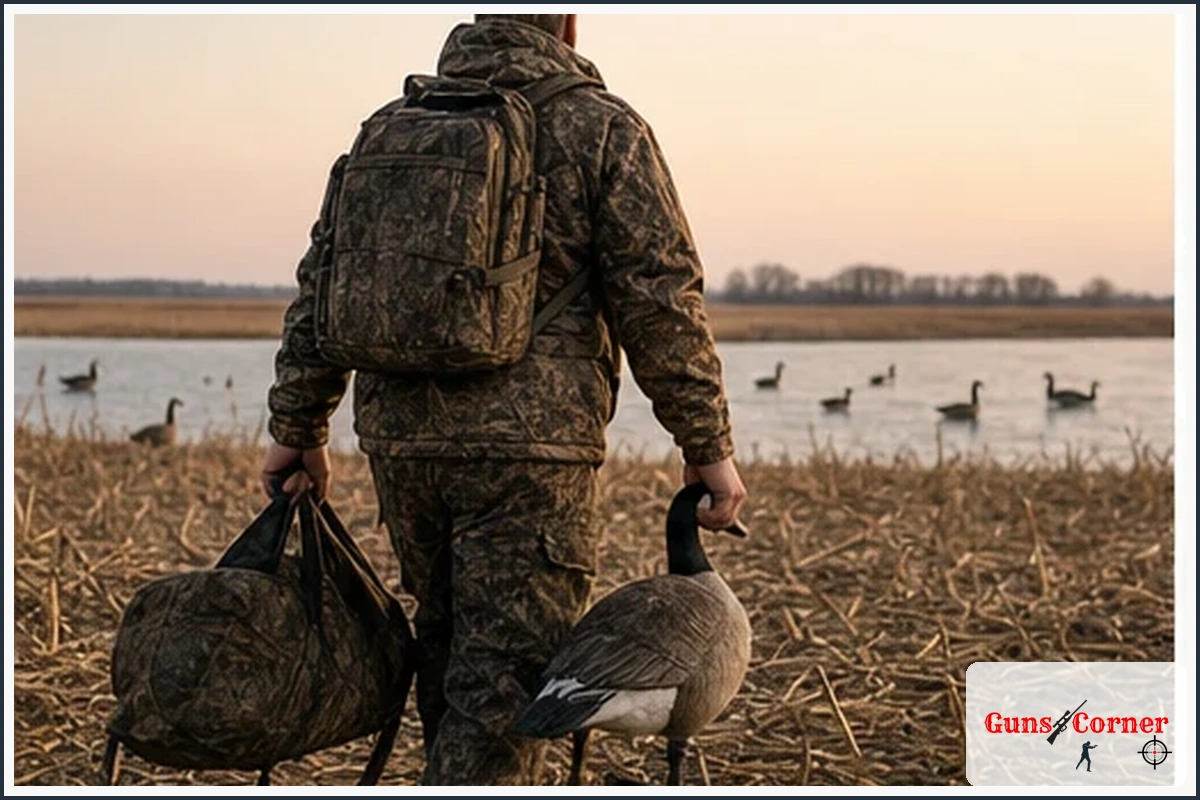
One week before: rules, permission, weather, scouting, and gear test
- Confirm federal, provincial, or territorial regulations for the exact hunting zone.
- Secure written permission or verify public-land access and boundaries.
- Scout feeding areas, resting water, flight routes, hazards, and backup locations.
- Check the forecast, wind direction, water conditions, and access route.
- Inspect the shotgun, legally approved ammunition, choke, calls, decoys, blind, clothing, and retrieval equipment.
- Pattern the shotgun safely and practice mounting, aiming, unloading, and communication.
The evening before: pattern check, clothing, batteries, food, water, and emergency plan
- Confirm that your equipment remains legal for the jurisdiction.
- Pack layered clothing, waterproof storage, food, water, first aid, lights, navigation tools, and charged communication devices.
- Tell a reliable person where you will be and when you expect to return.
- Review the retrieval route and identify hazards such as water, ice, roads, fences, and livestock.
Before shooting time: unloaded firearms, safe zones, decoys, blind, and communications
Arrive early enough to set up without rushing. Keep firearms unloaded while walking, arranging decoys, entering blinds, and moving around partners. Review safe shooting zones, legal shooting time, retrieval responsibilities, and the agreed shooting signal.
During the hunt: observe, identify, call selectively, shoot deliberately, and retrieve promptly
Watch first. Call only when useful, keep movements controlled, and wait for a clear, legal, ethical opportunity. After any shot, maintain firearm control, track the bird, and begin a safe retrieval process as soon as conditions allow.
After the hunt: account for birds, secure firearms, care for meat, and document harvest
Count all harvested birds, confirm tagging and reporting obligations, unload and secure firearms, collect equipment, remove waste, and leave the property as agreed. Cool and transport the meat responsibly and record lessons for the next hunt.
Beginner Mistakes That Reduce Success or Safety
Hunting without current regulations or landowner permission
Old information can be wrong, and visible geese do not mean a location is open to hunting. Verify the rules and permission immediately before the hunt.
Overcalling, oversizing the spread, or setting up where geese do not want to land
More calling and more decoys are not automatically better. Start with what you can arrange naturally and observe how local birds respond.
Using an unpatterned shotgun or unsuitable ammunition
Patterning is an essential preparation step. Confirm that the ammunition is legal, non-toxic where required, and compatible with your firearm and choke.
Ignoring wind, concealment, safe backstops, or a retrieval plan
A setup can look promising but still be unsafe if birds approach over roads, houses, livestock, people, or inaccessible water. Evaluate the entire shooting and recovery area before loading.
Taking marginal shots and losing birds
Passing on a difficult shot is responsible hunting. Wait for a bird within your practiced ability and for conditions that allow a prompt, safe recovery.
Troubleshooting Common Problems
| Problem | Possible Cause | What to Do |
|---|---|---|
| Geese ignore the spread | Incorrect location, poor concealment, excessive pressure, or unsuitable wind | Recheck scouting information, hide movement, adjust only when safe, or use the backup location. |
| Birds circle but do not land | Unnatural decoy placement, visible hunters, calling too much, or an unsafe approach route | Stop calling, remain still, and review the setup after the hunt rather than making rushed changes. |
| Birds approach from an unsafe direction | Wind shift, terrain, nearby hazards, or poor blind placement | Do not shoot. Unload safely and relocate only if the new position is legal and secure. |
| A bird falls into difficult water | Insufficient retrieval planning or changing weather | Do not enter unsafe water. Use suitable equipment or seek lawful assistance. |
| You are unsure whether a bird is legal | Poor visibility, mixed species, or uncertain identification | Do not fire. Wait for a clear identification or end the opportunity. |
| Regulations differ from your notes | Annual changes, zone differences, or a conservation closure | Stop and verify the current official rule before hunting or continuing. |
Ethical Hunting and Conservation
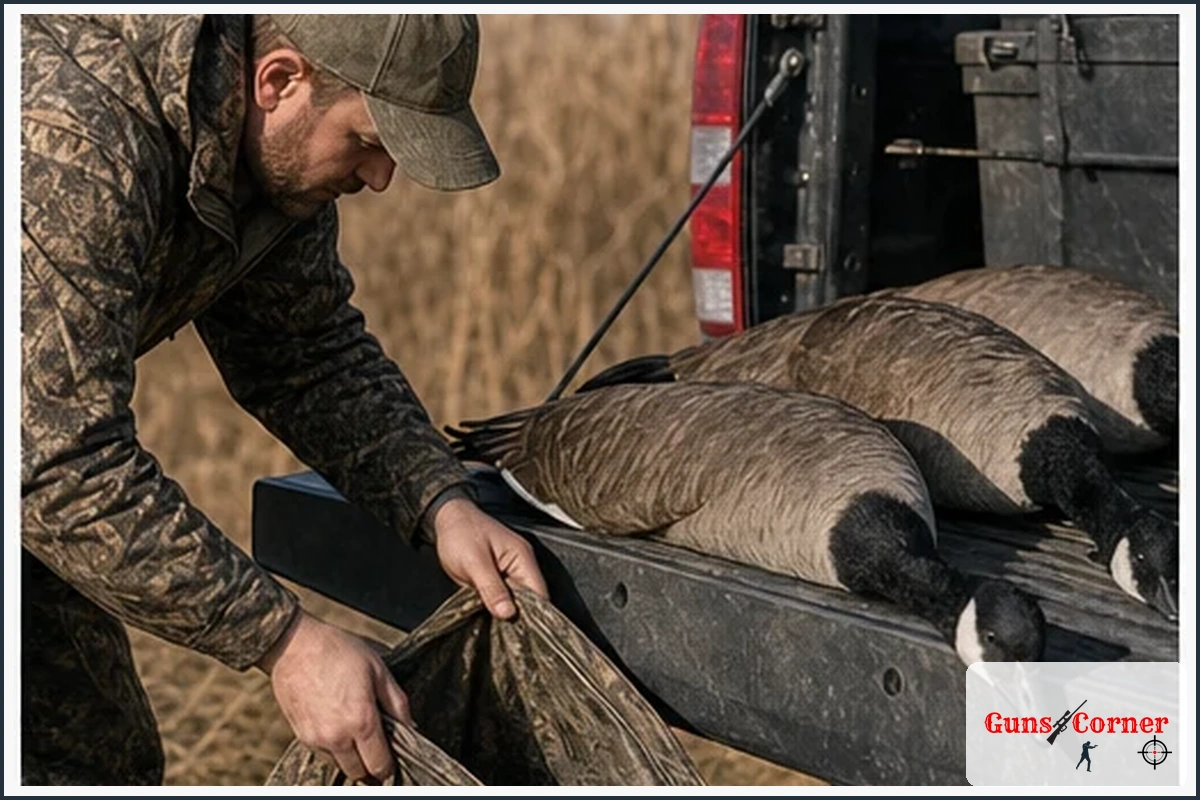
Ethical goose hunting means treating wildlife, landowners, other hunters, and the public with respect. Follow seasons and limits, avoid waste, recover every bird you can safely reach, and pass on uncertain or unsafe shots.
Licences and responsible participation support wildlife management and conservation. Hunters also help protect access by closing gates, avoiding crop and livestock damage, removing shell hulls and other waste, and leaving the property cleaner than they found it.
When a Guide or Experienced Mentor Is Worth It
What a reputable guide should explain before the hunt
A reputable guide should explain the hunting area, legal requirements, expected conditions, included equipment, firearm procedures, shooting zones, retrieval plan, and weather-related risks before the hunt begins.
Questions about licences, included equipment, land access, species, limits, and shot opportunities
- Which licences, permits, and credentials must the client obtain?
- Who verifies current regulations and hunting-zone limits?
- Is land access included, and where will the hunt occur?
- Which goose species may be encountered or harvested?
- Are firearm, ammunition, decoy, blind, dog, or boat arrangements included?
- What happens if weather or unsafe conditions cancel the hunt?
How to evaluate safety practices and honest expectations
Look for clear safety briefings, controlled firearm handling, realistic success expectations, legal retrieval practices, and willingness to pass on unsafe opportunities. Be cautious of anyone promising guaranteed harvests or encouraging questionable shots.
What a guided hunt does not replace: knowing the law and handling a firearm safely
You remain responsible for following the law and handling a firearm safely. Complete recognized hunter education and obtain proper firearms training before hunting.
Recommended Hunting Gear and Tools to Consider
You do not need expensive gear to hunt responsibly. Choose equipment based on local regulations, terrain, weather, water conditions, hunting method, skill level, and budget.
- Legal shotgun, compatible choke, and approved non-toxic ammunition.
- Patterning targets and safe practice facilities.
- Manageable field or water decoys.
- Blind or natural concealment materials.
- Weather-appropriate layers, boots, and legally required visibility clothing.
- Eye and hearing protection.
- Map, compass, GPS, or reliable navigation application.
- First aid kit, water, food, headlamp, spare batteries, and communication device.
- Game bags, gloves, waterproof storage, cooler, and meat-care supplies.
- Suitable retrieval equipment, flotation, or a trained dog where appropriate.
Final Thoughts
Learning how to Canada goose hunt for beginners starts with current regulations, legal access, species identification, firearm safety, careful scouting, and a realistic recovery plan. Keep the first hunt simple, practice before the season, use concealment effectively, call selectively, and take only shots within your proven ability.
Responsible hunting is measured not only by harvest but also by safe decisions, respect for wildlife and landowners, complete retrieval, lawful reporting, and careful use of the meat.
FAQ: Practical Questions New Goose Hunters Ask
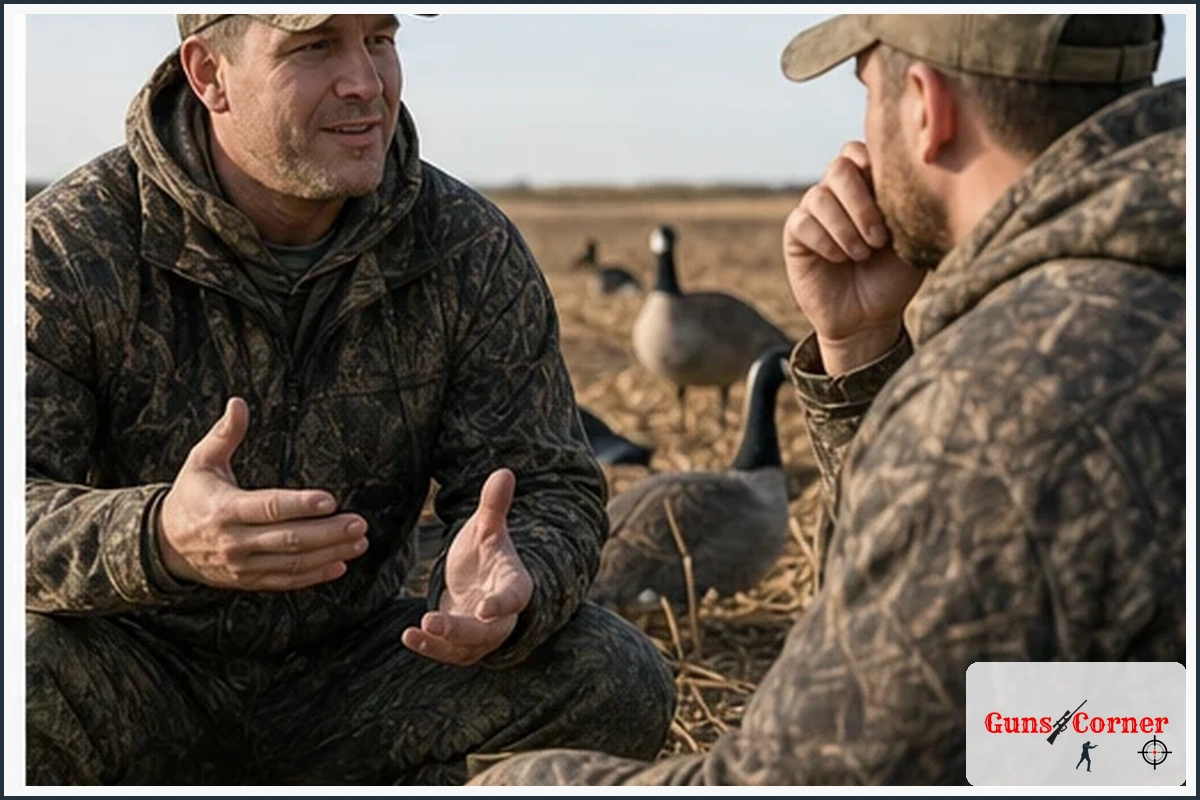
Can I hunt Canada geese without a dog?
Yes, a dog is not always necessary, especially in a dry field with short, accessible retrieval routes. You still need a safe and practical plan for every bird, and you should not shoot where retrieval depends on dangerous water, private property, or inaccessible terrain.
How many decoys does a beginner actually need?
There is no universal number. Begin with a manageable spread that you can transport, conceal, arrange naturally, and retrieve safely. Location, scouting, wind, bird behavior, and concealment usually matter more than simply increasing the number of decoys.
Do I need a goose call to get started?
No. Calling can help, but observation and concealment are more fundamental. Learn a few basic sounds, practice them before hunting, and avoid calling continuously when birds are already approaching or are becoming wary.
What should I do if a goose is wounded but lands on private property?
Do not trespass. Contact the landowner or occupant, explain the situation, and request permission to retrieve the bird. Follow local retrieval and dispatch rules, and do not risk a person’s safety crossing roads, fences, water, or other hazards.
How can I tell whether a field is safe to hunt?
Confirm legal access, inspect the entire shooting area, and identify what lies beyond likely bird approaches. Do not hunt if shots could travel toward roads, homes, livestock, people, vehicles, trails, or neighboring property without a safe backstop.
What should I do if regulations change after I plan the hunt?
Stop and verify the current official rules for the exact zone and date. If the season, limit, access, ammunition, or closure information has changed, follow the new rule even if your equipment and plans are already prepared.