
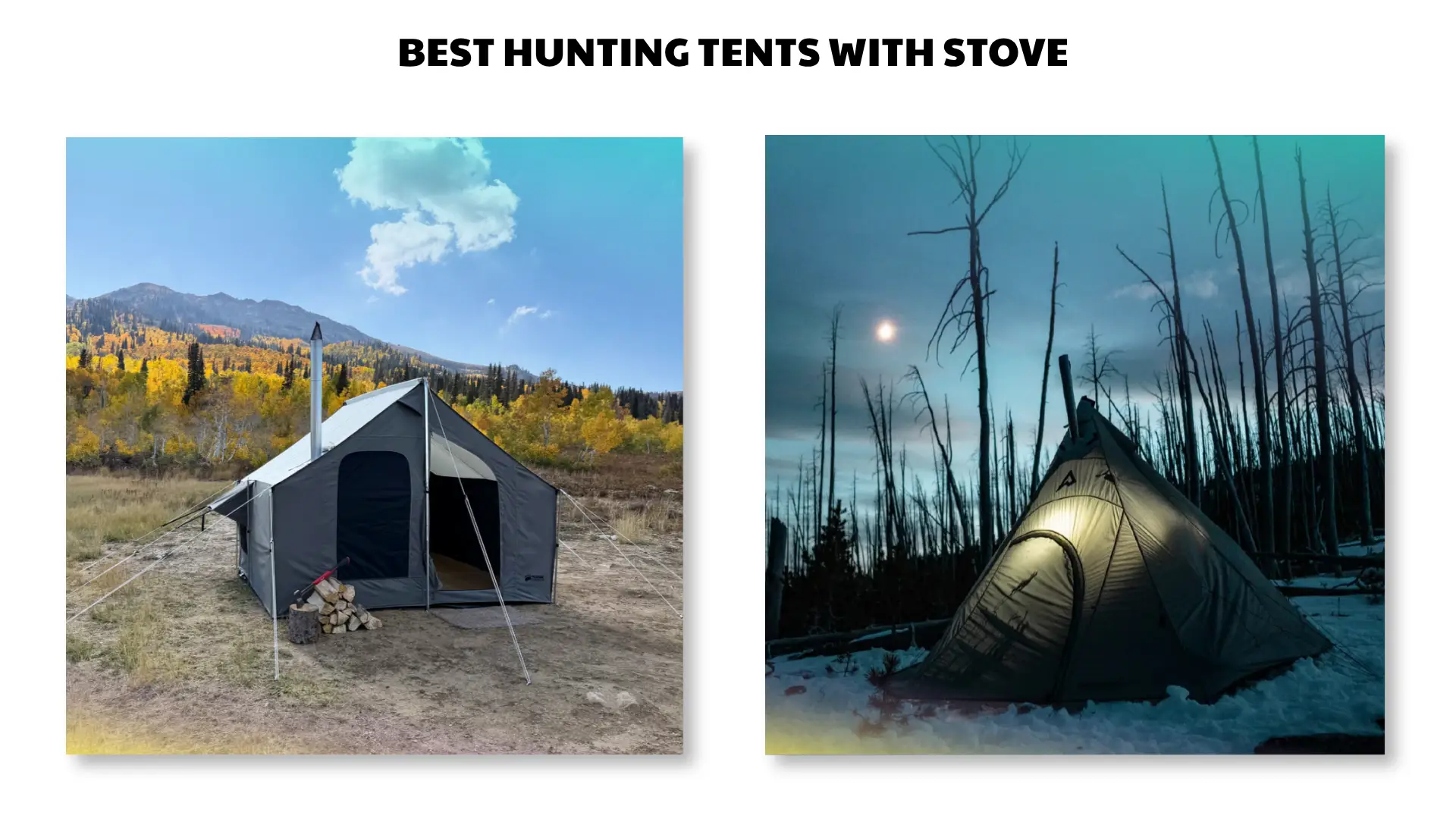

The best hunting tents with stove jacks help cold-weather hunters create a more usable camp for drying damp layers, organizing gear, and warming up between long periods outdoors. The category ranges from lightweight floorless tipis carried into elk country to heavy canvas bell tents designed for vehicle-supported deer camps.
This guide compares nine stove-ready or stove-jack tent listings for different budgets, group sizes, transport methods, and hunting styles. It also explains how to evaluate capacity, fabric, floor design, jack compatibility, ventilation, snow management, stove clearances, and practical camp layout.
A hot tent is not a substitute for a cold-rated sleeping system, emergency equipment, training, weather judgment, or a safe exit plan. Product configurations change, so confirm the current size, fabric, stove-jack option, included components, and manufacturer instructions before ordering or using any shelter.
Critical safety reminder: Any wood-burning or fuel-burning appliance can produce carbon monoxide and create a fire or burn hazard. A stove jack does not make a tent fireproof. Maintain required ventilation and clearances, use a functioning battery-powered carbon-monoxide alarm, keep the exit open and unobstructed, and never leave a burning stove unattended.
Quick Picks
- Best Overall Lightweight Hot Tent: OneTigris Rock Fortress Hot Tent
- Best Canvas Base-Camp Tent: WHITEDUCK Regatta Canvas Bell Tent
- Best Side-Stove Layout: POMOLY STOVEHUT 70 Hot Tent
- Best Budget Backpacking Tipi: PRESELF 3-Person Lightweight Tipi Hot Tent
- Best Premium Bell Tent: Stout Bell Tent Double-Wall Model
Best Hunting Tents with Stove Jacks: Product Comparison Table
Capacity labels normally assume sleeping pads without a stove. For heated hunting use, leave substantial space for stove clearances, the stovepipe, wood, wet boots, packs, and an unobstructed exit.
| Product | Best For | Key Features | Important Notes | Check Details |
|---|---|---|---|---|
| OneTigris Rock Fortress Hot Tent | Best Overall Lightweight Hot Tent | Floorless tipi layout, central pole, stove jack, snow skirt, room for a small group | The advertised capacity assumes no stove and minimal gear; practical heated occupancy is lower. | Check Price |
| WHITEDUCK Regatta Canvas Bell Tent | Best Canvas Base-Camp Tent | Cotton canvas, sewn-in floor, stove-jack option, roof vents, standing room | Heavy and vehicle-dependent; confirm the selected size and treatment include a usable stove jack. | Check Price |
| Stout Bell Tent Double-Wall Model | Best Premium Bell Tent | Bell-tent layout, double-wall option, zippered groundsheet, stove-ready configurations | Premium cost and substantial packed bulk; check that the exact Amazon variant is stove compatible. | Check Price |
| MC Canvas Bell Tent with Stove Jack | Best Value Canvas Bell Tent | Canvas bell design, detachable groundsheet, side ventilation, stove-jack configuration | Variant details differ; inspect jack location, floor arrangement, diameter, and included hardware. | Check Price |
| PRESELF 3-Person Lightweight Tipi Hot Tent | Best Budget Backpacking Tipi | Lightweight tipi, small packed size, single-pole pitch, compact hunting shelter | Some variants require buyer-finished jack preparation; verify before using any stove. | Check Price |
| KingCamp Torino Hot Tent | Best Enclosed Double-Layer Option | Double-layer shelter, integrated floor, snow skirt, stove-jack layout | An enclosed floor demands especially careful stove protection, clearances, and ventilation. | Check Price |
| POMOLY STOVEHUT 70 Hot Tent | Best Side-Stove Layout | 70D-style shelter fabric, side stove area, awning panel, two-pole structure | Compact interior and multiple panels require a careful, fully tensioned pitch. | Check Price |
| PRESELF Freestanding Hot Tent | Best Freestanding Compact Tent | Freestanding dome-style frame, compact footprint, stove-jack panel, low profile | Low walls limit stove and pipe clearance; confirm exact supported stove dimensions. | Check Price |
| Ultralight Tipi Hot Tent with Mesh Inner | Best Modular Solo Shelter | Tipi fly, optional mesh inner, stove-jack panel, solo-oriented layout | The mesh inner and stove may not be intended for simultaneous use; verify the manual. | Check Price |
Best Hunting Tents with Stove Reviews
These comparisons emphasize intended use and limitations. Confirm every current listing against the manufacturer’s manual because stove-jack placement, fabric, floor design, size, treatment, accessories, and supported configurations can differ by variant.
1. OneTigris Rock Fortress Hot Tent
Best Overall Lightweight Hot Tent
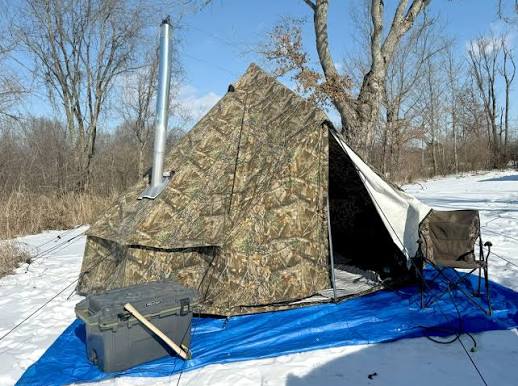
The OneTigris Rock Fortress is a practical middle ground between a solo backpacking shelter and a heavy canvas base-camp tent. Its floorless tipi layout gives hunters room to organize wet boots, packs, and a compact tent stove while keeping packed weight far below a traditional wall tent. The tall center and steep walls also shed precipitation more effectively than a flat-roofed shelter when the pitch is taut.
Key Features
- Tipi-style, single-pole design with a pre-cut stove-jack area.
- Coated ripstop nylon construction and a full perimeter snow or wind skirt.
- Two ventilation points and multiple guy-out locations for a more stable pitch.
- Floorless interior simplifies stove placement and handling muddy or snowy gear.
Pros
- Useful balance of space, packability, and simple setup.
- Tall interior works for changing clothes and managing camp chores.
- Floorless design is practical for snow, boots, and a correctly protected stove area.
Cons
- Center pole occupies usable floor space.
- Advertised person count becomes unrealistic once a stove, wood, and hunting gear are inside.
Field Notes
For two hunters with winter equipment, treat this as a roomy shelter rather than relying on the maximum occupancy label. Practice centering the pole, tensioning every panel, and orienting the stove side away from prevailing wind. Add a manufacturer-approved stove mat and keep sleeping systems well outside the stove and pipe clearance zones.
Safety and Legal Notes
Use only a stove and pipe setup compatible with the jack dimensions and shelter instructions. Maintain continuous ventilation, carry a working battery-powered carbon-monoxide alarm, never leave the stove unattended, and remove accumulating snow from the shelter. Follow the current tent and stove manuals, local fire restrictions, hunting regulations, and land-manager rules.
Best For
Mobile deer or elk camps, pairs carrying shared gear, and hunters who want more usable space than a solo tipi.
2. WHITEDUCK Regatta Canvas Bell Tent
Best Canvas Base-Camp Tent
The WHITEDUCK Regatta is designed for vehicle-accessible hunting camps where comfort, standing room, and long-term livability matter more than pack weight. Cotton canvas is quieter and more breathable than many lightweight synthetics, and the bell shape creates a large open center for cots, storage, and camp chores. It is best viewed as a base-camp shelter rather than a backpacking tent.
Key Features
- Heavy cotton-canvas construction intended for extended camp use.
- Bell-tent shape with a center pole and generous headroom.
- Sewn-in groundsheet, mesh-protected openings, and roof ventilation.
- Selected configurations include a stove jack; buyers must verify the exact variant.
Pros
- Comfortable interior for cots and multi-day hunting gear.
- Canvas manages condensation differently from single-wall nylon.
- More pleasant living space for long late-season base camps.
Cons
- Very heavy, bulky, and slow to dry after wet weather.
- Requires careful transport, site preparation, staking, and storage.
Field Notes
Canvas is well suited to a truck, horse, or established base camp, but it should not be packed wet. Choose a level site with drainage, tension all guylines evenly, and recheck them as the canvas responds to changing moisture. Keep a dedicated clean zone around the stove so bedding and synthetic clothing cannot contact hot metal.
Safety and Legal Notes
A stove-jack option does not make the entire tent fireproof. Confirm the current model’s stove-use instructions, floor protection, pipe support, spark-arrestor requirements, clearances, ventilation, and local fire restrictions before lighting a stove. Follow the current tent and stove manuals, local fire restrictions, hunting regulations, and land-manager rules.
Best For
Vehicle-supported deer camps, family or group camps, and hunters who prioritize standing room and base-camp comfort.
3. Stout Bell Tent Double-Wall Model
Best Premium Bell Tent
The Stout Bell Tent targets hunters who want a refined, spacious canvas-style camp with flexible warm- and cold-weather use. Depending on the selected version, the double-wall layout and removable or zippered floor can make ventilation and stove-area planning easier than in a permanently sealed tent. It is a premium base-camp choice rather than a lightweight shelter.
Key Features
- Bell-tent geometry with tall center height and usable perimeter space.
- Double-wall and zippered-groundsheet options are associated with this product family.
- Large doors and mesh openings support warm-weather ventilation.
- Stove-jack availability varies by configuration and must be confirmed before ordering.
Pros
- Comfortable long-stay layout with room for cots and gear.
- Flexible floor and wall arrangements can simplify seasonal use.
- Appropriate for hunters who value finish and camp livability.
Cons
- High purchase price compared with basic synthetic hot tents.
- Heavy poles and fabric favor vehicle access and multiple-person setup.
Field Notes
Measure the actual footprint, guyline spread, and vehicle cargo space before buying. A nominal sleeping capacity does not account for a stove, cots, wood, drying clothing, and hunting packs. For a heated camp, plan distinct sleeping, stove, and entry lanes so people do not step across hot equipment.
Safety and Legal Notes
Verify that the selected tent, not merely the product family, includes a manufacturer-approved stove jack. Follow all stove and tent instructions, keep a carbon-monoxide alarm active, provide cross-ventilation, and do not depend on fabric treatment as a substitute for safe clearances. Follow the current tent and stove manuals, local fire restrictions, hunting regulations, and land-manager rules.
Best For
Premium vehicle-based hunting camps and users seeking a comfortable multi-season canvas shelter.
4. MC Canvas Bell Tent with Stove Jack
Best Value Canvas Bell Tent
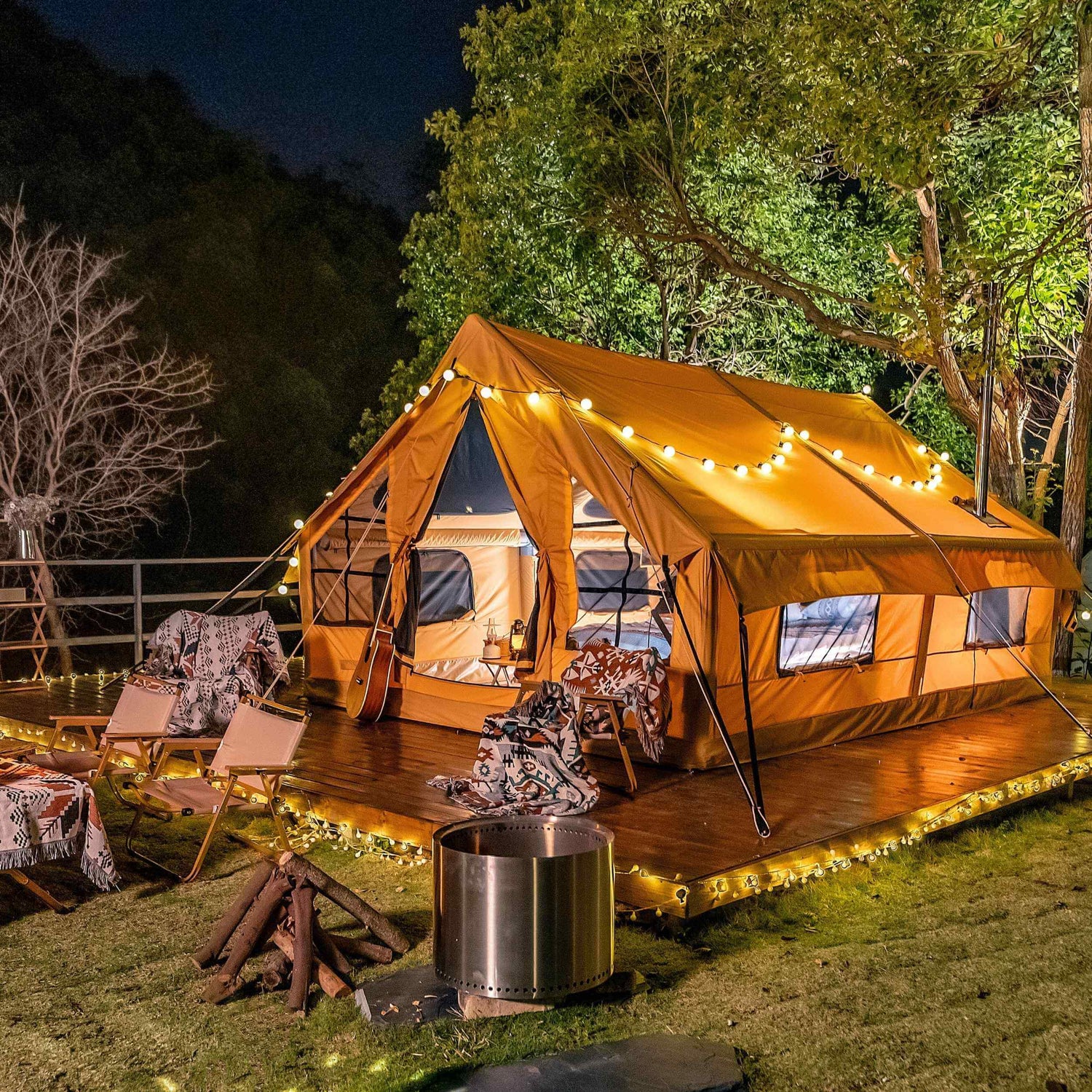
The MC Canvas Bell Tent offers the familiar open bell-tent layout at a more accessible position than many premium canvas shelters. A detachable groundsheet can be helpful when configuring a protected stove zone, while the high center provides room for changing and organizing bulky cold-weather gear.
Key Features
- Canvas bell-tent construction with a central support pole.
- Detachable or separate groundsheet arrangement on the linked configuration.
- Perimeter ventilation and a tall entry improve livability.
- A stove-jack option is listed, but the exact size and location should be verified.
Pros
- Spacious canvas shelter for vehicle-accessible hunting camps.
- Detachable floor can improve cleaning and stove-area planning.
- Good category value for hunters who do not need premium branding.
Cons
- Quality control and included accessories should be inspected immediately.
- Heavy fabric and hardware are unsuitable for normal backpack carry.
Field Notes
Perform a complete backyard pitch while the return window is open. Confirm every stake, rope, pole, zipper, vent, jack cover, and floor connection. If the floor opens near the stove, secure it so no loose edge can drift toward hot metal or create a trip hazard.
Safety and Legal Notes
Do not cut or enlarge a stove jack unless the manufacturer explicitly authorizes the modification. Use compatible pipe protection, a stable stove base, an ember-resistant mat, continuous ventilation, and a working CO alarm. Follow the current tent and stove manuals, local fire restrictions, hunting regulations, and land-manager rules.
Best For
Budget-conscious vehicle campers who want canvas comfort and are willing to inspect and test the full setup.
5. PRESELF 3-Person Lightweight Tipi Hot Tent
Best Budget Backpacking Tipi
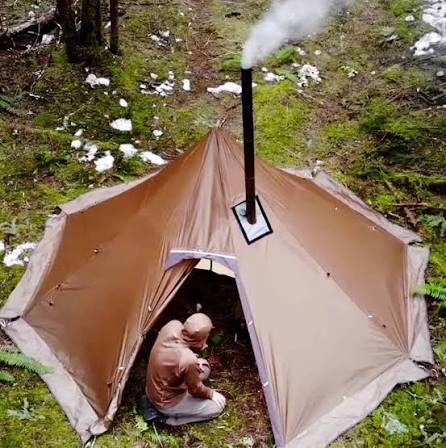
The PRESELF lightweight tipi is aimed at hunters who need a compact shelter for long approaches and cannot carry canvas. It offers enough room for one hunter plus gear, or two people with disciplined packing, while retaining the basic floorless hot-tent layout. Its low price and low mass come with fewer refinements and a greater need for careful inspection.
Key Features
- Lightweight, single-pole tipi form for compact transport.
- Floorless layout that can be pitched over snow or uneven ground.
- Small-group dimensions with practical solo-plus-gear use.
- Stove-jack preparation may vary by listing and should be confirmed before purchase.
Pros
- Affordable entry point for hunters exploring hot-tent camping.
- Much easier to carry than a canvas base-camp shelter.
- Simple geometry can be pitched quickly after practice.
Cons
- Less interior room and weather margin than larger premium shelters.
- Fit, finish, and stove-jack details require close inspection.
Field Notes
Treat the stated three-person capacity as a fair-weather sleeping estimate without a stove. For hunting use, one person with gear or two people without cots is more realistic. Pitch it several times before the trip and mark the pole height and guyline settings that create proper jack-to-pipe alignment.
Safety and Legal Notes
Never improvise stove use through an unfinished, closed, or undersized jack. If the listing or manual does not clearly authorize stove use, contact the manufacturer and use the tent unheated until compatibility is confirmed. Follow the current tent and stove manuals, local fire restrictions, hunting regulations, and land-manager rules.
Best For
Solo hunters, beginners, and budget backpackers who prioritize low carried weight over standing room.
6. KingCamp Torino Hot Tent
Best Enclosed Double-Layer Option
The KingCamp Torino differs from many floorless tipis by offering a more enclosed double-layer layout. That can improve insect control and general comfort, but it also makes stove placement more demanding. Hunters considering this model should prioritize the exact floor opening, jack location, and approved stove arrangement over the advertised sleeping capacity.
Key Features
- Double-layer shelter intended for cooler conditions.
- Integrated floor and perimeter skirt help separate occupants from wet ground.
- Ventilation points and a stove-jack area are part of the hot-tent configuration.
- Compact conical or tipi-style footprint compared with large canvas tents.
Pros
- More enclosed sleeping area than a fully floorless shelter.
- Useful separation from insects, mud, and drafts.
- Reasonable choice for hunters who prefer a conventional tent feel.
Cons
- Floor fabric increases consequences of sparks, embers, and stove instability.
- Usable space shrinks quickly after safe stove clearances are established.
Field Notes
Lay out the stove, mat, pipe, sleeping pad, exit path, and wood storage at home before field use. The door must remain easy to open, and nobody should have to cross the stove zone to leave the tent. Keep the inner wall from sagging toward hot equipment.
Safety and Legal Notes
Use only the manufacturer-approved stove location and floor-protection method. Never place a hot stove directly on a sewn-in floor. Maintain airflow even in severe cold and immediately evacuate if a CO alarm sounds or anyone develops headache, dizziness, nausea, confusion, or unusual sleepiness. Follow the current tent and stove manuals, local fire restrictions, hunting regulations, and land-manager rules.
Best For
Cold-weather campers who prefer an enclosed sleeping zone and are prepared to manage stove clearances carefully.
7. POMOLY STOVEHUT 70 Hot Tent
Best Side-Stove Layout
The POMOLY STOVEHUT 70 uses a shelter-style layout with the stove positioned in a side section rather than at the center of a tipi. This can preserve a cleaner sleeping lane and make firewood access easier, especially for a solo hunter. The broad side panel can also create an awning in suitable weather.
Key Features
- Side stove compartment keeps the heat source away from the main sleeping lane.
- Ripstop-style synthetic fabric and a structured two-pole pitch.
- Large side panel can function as a covered entry or awning.
- Stove-jack panel is integrated into the designated stove side.
Pros
- Logical interior zoning for one person, gear, and a compact stove.
- Awning panel adds sheltered working space when safely deployed.
- More rectangular sleeping area than a center-pole tipi.
Cons
- More stake and panel adjustments than a basic single-pole shelter.
- Wind-driven rain can complicate awning use and stove-side ventilation.
Field Notes
Pitch the stove side with extra attention to guyline tension so the jack cannot sag toward the pipe. Close or lower the awning when wind direction changes. Keep the stove-side storage minimal and never stack firewood where it can block the exit or contact the stove.
Safety and Legal Notes
A side compartment is not a fire barrier. Use the specified pipe routing and clearances, stabilize the stove legs, protect the ground, operate a CO alarm, and never use an open flame or unsuitable fuel-burning device inside the shelter. Follow the current tent and stove manuals, local fire restrictions, hunting regulations, and land-manager rules.
Best For
Solo hunters who want a dedicated stove bay and a sleeping area without a center pole.
8. PRESELF Freestanding Hot Tent
Best Freestanding Compact Tent
This PRESELF freestanding model is useful where rocky, frozen, or constrained ground makes a center-pole tipi awkward. The connected frame establishes the shape before final staking, which can simplify setup for one hunter. The tradeoff is a lower ceiling and less forgiving stove clearance than a tall tipi.
Key Features
- Freestanding or semi-freestanding dome-style pole structure.
- Low-profile shape for compact campsites and reduced exposed surface.
- Integrated stove-jack area on the hot-tent version.
- Small sleeping footprint designed for one or two occupants.
Pros
- Easier initial setup on hard or irregular ground.
- No center pole through the sleeping area.
- Compact shelter for solo camps and short moves.
Cons
- Low roof reduces margin around the pipe and hot surfaces.
- Limited room for bulky hunting gear or two winter sleep systems.
Field Notes
Use a small stove only when it matches the manufacturer’s compatibility guidance. Check that the frame cannot flex or push fabric toward the pipe under wind or snow. Stake and guy out the tent even when it appears freestanding.
Safety and Legal Notes
Freestanding does not mean windproof. Secure every required anchor, keep snow off the roof, monitor pipe clearance continuously, and stop stove use if the frame or fabric deforms. Follow the current tent and stove manuals, local fire restrictions, hunting regulations, and land-manager rules.
Best For
Solo hunters on hard ground who want quick structure and do not need standing height.
9. Ultralight Tipi Hot Tent with Mesh Inner
Best Modular Solo Shelter
This modular tipi combines a lightweight outer shelter with an optional mesh inner for warmer seasons. That flexibility is attractive to hunters who want one compact shelter for early-season insect pressure and colder floorless use. The key limitation is that the mesh insert can reduce or obstruct the approved stove zone, so configurations must not be mixed without explicit manufacturer guidance.
Key Features
- Single-pole tipi fly with a compact packed profile.
- Optional mesh inner for insect protection during non-heated use.
- Stove-jack area intended for the approved floorless configuration.
- Perimeter skirt or ground-level coverage depending on the selected variant.
Pros
- Flexible warm-season and cold-season configurations.
- Light enough for solo mobile hunting camps.
- Simple footprint fits small backcountry sites.
Cons
- Tight stove clearances and limited gear room.
- Configuration details may be confusing across listing variants.
Field Notes
Label and pack the components for the intended trip so the wrong inner or floor is not installed around a stove. For cold use, leave a wide, uncluttered buffer between bedding and the stove. For warm use, remove or fully cover the unused jack according to instructions.
Safety and Legal Notes
Do not assume the mesh inner is heat safe. Use the stove only in the exact configuration approved by the manufacturer, with ventilation, a CO alarm, ground protection, and an unobstructed exit. Follow the current tent and stove manuals, local fire restrictions, hunting regulations, and land-manager rules.
Best For
Solo hunters who want a lightweight shelter that can switch between bug-season and floorless cold-weather use.
How to Choose the Best Hunting Tent with a Stove Jack
Choose the Right Tent Type
Floorless tipis are the standard choice for backcountry hot-tent use. They pack smaller, shed snow with steep walls, and make it easier to create a protected stove zone. Their tradeoffs include condensation, drafts, insects, a center pole, and less usable space near the sloping walls.
Canvas bell tents provide standing height, quiet fabric, cots, and a comfortable long-stay camp. Their weight and packed bulk normally require a truck, trailer, horse, or short carry. Wet canvas must be dried completely before storage.
Freestanding and side-stove shelters remove the center pole from the sleeping lane or place the stove in a designated bay. They can be convenient on hard ground, but lower ceilings and more complex panels require careful pipe clearance and tension.
Match the Shelter to Your Hunting Style
Backpack elk hunters should start with carried weight, packed volume, and the realistic number of people after stove clearances. A compact floorless tipi is usually more practical than canvas. Vehicle-supported deer hunters can prioritize cots, standing room, wet-clothing management, and a protected base-camp layout.
For waterfowl or late-season hunts, plan for mud, wet boots, and high indoor humidity. A stove can help dry gear, but it must not turn the shelter into a congested drying room where clothing hangs near hot surfaces.
Use Realistic Capacity
Reduce the published sleeping capacity when a stove is installed. A six-person tipi may be comfortable for two or three hunters with winter bags, packs, firewood, and a safe walkway. Draw the interior to scale when comparing tents, and include the stove’s required clearance circle rather than only its metal dimensions.
Check the Stove Jack Carefully
Verify jack size, location, shape, material, maximum pipe diameter, and whether the opening is pre-cut. Confirm that the exact selected variant includes the jack; product families often contain both stove-ready and non-stove versions.
The pipe should pass through the center of the approved opening without touching ordinary tent fabric. Never enlarge, relocate, or improvise a jack unless the manufacturer provides written instructions and compatible materials.
Consider Floor Design
A floorless shelter allows a mineral-soil or snow stove zone, but ground protection is still necessary. A sewn-in floor improves cleanliness and insect control but can melt or ignite. Use only the floor opening or protection system specified by the tent and stove manufacturers.
Evaluate Fabric and Weather Resistance
Canvas is heavy, relatively quiet, and breathable, while coated nylon or polyester is light and packable. Published hydrostatic-head numbers can help compare synthetic coatings, but they do not describe seam quality, wind stability, condensation, snow loading, or long-term durability by themselves.
Do not call a tent waterproof, fire-resistant, or four-season unless the manufacturer supports that description for the exact variant. Even a four-season label does not guarantee performance in every storm.
Consider Weight and Transport
Compare total system weight: tent, poles, stakes, ground protection, stove, pipe, spark arrestor, CO alarm, saw or fuel-processing tools, and repair equipment. A light shelter paired with a heavy steel stove may not be a lightweight system.
Plan Ventilation Before Warmth
Required vents must remain open even when temperatures fall. The stove needs combustion air, moisture needs an escape path, and occupants need fresh air. Never seal snow skirts or doors so tightly that ventilation is eliminated.
Check Stove Compatibility
Match stove output to shelter volume and follow the approved pipe diameter, pipe length, jack guard, spark arrestor, stove mat, and clearance instructions. A stove that is too large can overheat the shelter; one that is too small may be run aggressively and produce poor draft or sparks.
Understand Safety and Legal Requirements
Wood-stove use may be restricted by fire bans, seasonal closures, air-quality rules, wilderness regulations, or campground policies. Check current rules with the wildlife agency and land manager shortly before departure. Hunting licenses, tags, legal equipment, blaze-orange requirements, firearm transport and storage rules, and private-land permission remain separate obligations.
Understand the Product’s Limits
A hot tent cannot guarantee warmth, dryness, storm survival, or protection from carbon monoxide. The stove can fail, wood can become wet, the pipe can clog, and weather can exceed the shelter’s design. Carry a sleeping bag and insulated pad adequate for the forecast without relying on the stove.
Important Hunting, Outdoor, Fire, and Carbon-Monoxide Safety Tips
- Use only a tent, stove, pipe, stove jack, and floor-protection combination approved by the relevant manufacturers.
- Maintain required ventilation at all times; never seal the shelter completely to retain heat.
- Carry, test, and correctly position a battery-powered carbon-monoxide alarm.
- Never leave a burning stove unattended or continue sleeping after everyone responsible for the fire is asleep.
- Keep an unobstructed exit that nobody must reach by stepping over the stove, pipe, or firewood.
- Protect the ground or floor with the approved ember-resistant mat and maintain all clearances.
- Keep sleeping bags, clothing, weapons, ammunition, bows, packs, fuel, and firewood away from hot surfaces.
- Use dry, approved fuel and never add gasoline, alcohol, kerosene, plastics, or other accelerants.
- Inspect the pipe, damper, jack, spark arrestor, stove body, legs, and floor protection before every burn.
- Clear snow from the shelter and maintain low-level ventilation around any snow skirt.
- Immediately evacuate to fresh air for a CO alarm, smoke backup, headache, dizziness, nausea, confusion, or unusual sleepiness.
- Follow current fire bans, wood-collection rules, camping restrictions, hunting laws, firearm safety rules, and manufacturer instructions.
- Carry navigation, first aid, water, weather protection, communication tools, a light source, and a trip plan.
- Store firearms securely, keep the muzzle in a safe direction, keep fingers off triggers until ready to fire, and identify the target and what is beyond it.
- Outdoor gear does not replace training, judgment, emergency planning, or professional medical assistance.
Common Mistakes to Avoid
The most serious mistake is treating a stove jack as blanket approval to burn any stove inside the shelter. Compatibility involves pipe diameter, jack material, clearances, stove stability, floor protection, ventilation, and the exact configuration described in the manuals.
- Buying by advertised sleeping capacity instead of heated usable area.
- Assuming the linked size or color includes the stove-jack option.
- Using a stove before completing a full outdoor practice setup.
- Allowing the pipe or ordinary fabric to contact each other.
- Blocking vents or burying the entire skirt to retain heat.
- Operating without a working CO alarm.
- Leaving the stove burning while everyone sleeps.
- Putting a stove directly on a synthetic or sewn-in floor.
- Hanging damp clothing over the stove or pipe.
- Placing the stove between occupants and the only exit.
- Ignoring snow accumulation, wind shifts, loose guylines, or a sagging jack panel.
- Packing canvas wet or storing soot-covered pipe against tent fabric.
- Using a wood stove during a fire ban or where solid-fuel fires are prohibited.
- Relying on the stove instead of a cold-rated sleeping bag and insulated pad.
Troubleshooting Common Problems
| Problem | Possible Cause | What to Do |
|---|---|---|
| Smoke enters the shelter | Cold or blocked pipe, wet wood, poor draft, wind pressure, insufficient combustion air | Ventilate and get occupants outside. Control or extinguish the fire safely, inspect the system, and do not relight until the cause is corrected. |
| CO alarm activates | Incomplete combustion, leaking stove or pipe, blocked exhaust, poor ventilation | Evacuate everyone to fresh air immediately and call emergency services. Do not re-enter or silence the alarm and continue use. |
| Fabric sags toward pipe | Loose guylines, snow load, wind deformation, incorrect pole height | Stop stove use, allow equipment to cool, remove snow, and retension the shelter before relighting. |
| Sparks land on floor or bedding | Door opened carelessly, poor spark control, inadequate mat, bedding too close | Extinguish embers immediately, inspect for damage, enlarge the protected zone, and correct stove operation. |
| Excess condensation | Closed vents, wet gear, high humidity, low airflow, overcrowding | Increase safe ventilation, manage wet gear, reduce occupancy, and keep walls taut. |
| Tent is colder than expected | Thin single wall, stove too small, wet fuel, wind, large shelter volume | Do not overfire the stove. Improve the sleep system, reduce drafts without blocking vents, and use the correct stove only if approved. |
| Stove jack is scorching or deforming | Pipe contact, excessive heat, wrong pipe size, incompatible material | Stop use immediately and let everything cool. Contact the manufacturer; do not patch or relight until the system is approved. |
| Canvas develops mildew | Stored damp, poor airflow, organic debris | Follow the maker’s cleaning process, dry completely, and assess whether fabric strength or treatment has been compromised. |
| Tipi panels flap or collapse inward | Uneven stake radius, weak anchors, loose guylines, poor site orientation | Turn off the stove, reset the pitch in safe conditions, use all required anchors, and move camp if the site is unsuitable. |
When to Get Professional Help
Contact the tent or stove manufacturer when the jack size, pipe routing, stove clearances, floor protection, supported configuration, repair material, or variant compatibility is unclear. Do not rely on an unrelated seller’s photograph or another owner’s modification.
Ask an experienced outfitter or hunting guide for help planning a large canvas camp, severe-weather anchoring, horse packing, or remote winter logistics. Contact the land manager, fire authority, or wildlife agency for current stove, firewood, camping, access, season, tag, and legal-equipment rules.
Seek immediate medical help for suspected carbon-monoxide exposure, serious burns, smoke inhalation, frostbite, or altered mental status. Move affected people into fresh air without entering an unsafe shelter yourself, and follow emergency-dispatch instructions.
Maintenance and Care Tips
- Pitch and inspect the tent at home before every major trip.
- Check the stove jack for cracking, melting, separation, brittleness, and damaged stitching.
- Inspect poles, stakes, guylines, tensioners, zippers, vents, and snow skirts.
- Remove soot and creosote from the pipe, damper, and spark arrestor according to the stove manual.
- Replace warped stove panels, unstable legs, corroded hardware, and damaged pipe sections.
- Keep soot, ash, sharp pipe edges, and stove parts separate from tent fabric during transport.
- Brush off dirt and clean fabric only with products and methods approved by the manufacturer.
- Dry canvas and coated synthetic fabric completely before storage.
- Store the shelter in a cool, dry, pest-resistant location and avoid prolonged heat or chemical exposure.
- Test the CO alarm, replace batteries, and follow the alarm’s service-life or replacement date.
- Restock the first-aid and burn-care supplies you are trained to use.
- Review current fire restrictions and manuals again before each season.
Final Verdict
For most mobile hunters, the OneTigris Rock Fortress offers the most practical balance of floor space, packability, and a conventional tipi hot-tent layout. Hunters building a vehicle-supported base camp should compare the WHITEDUCK Regatta with the premium Stout Bell Tent. Solo backpackers can reduce weight with the PRESELF Lightweight Tipi, while the POMOLY STOVEHUT 70 offers a useful side-stove arrangement.
The best hunting tent with a stove jack is not simply the warmest or largest option. It is the shelter that fits the transport method, realistic heated occupancy, weather, campsite, compatible stove system, and operator’s experience. Verify the exact variant, practice the complete setup, maintain ventilation and clearances, carry a working CO alarm, use a cold-capable sleep system, and follow all current manufacturer and land-management rules.
Frequently Asked Questions
1. What is the best hunting tent with a stove for most hunters?
A medium-size floorless tipi such as the OneTigris Rock Fortress is a versatile starting point for one or two hunters because it balances space, weight, and stove-ready design. Vehicle-based groups may be better served by a canvas bell tent.
2. What does “hot tent” mean?
A hot tent is a shelter designed with a stove-jack opening for a compatible stovepipe. The term does not mean the tent is insulated, fireproof, or safe with every stove.
3. Does a hunting tent with a stove include the stove?
Usually not. Many listings sell only the shelter, pole, stakes, and guylines. Read the package contents carefully and buy only a stove, pipe, mat, and accessories approved for the setup.
4. What is a stove jack?
A stove jack is a heat-tolerant panel or opening through which a compatible stovepipe exits the shelter. Its dimensions, location, and material must match the tent and stove instructions.
5. Is a stove jack fireproof?
Do not treat the entire jack or tent as fireproof. Some jack materials are described as heat resistant or flame retardant, but safe clearances, correct pipe routing, spark control, and supervision are still required.
6. Can I add a stove jack to any tent?
No. Cutting a tent can weaken it, void a warranty, create a fire hazard, and produce an unsafe pipe angle. Use a factory stove-ready shelter or obtain written guidance from the manufacturer.
7. Are hot tents safe?
They can be used more safely when the tent and stove are compatible, ventilation is maintained, clearances are followed, the stove is stable, and a working carbon-monoxide alarm is present. Risk can never be eliminated.
8. Do I need a carbon-monoxide alarm in a hot tent?
Yes. Use a functioning battery-powered alarm suitable for travel, but never rely on it as a substitute for ventilation, inspection, correct stove operation, and immediate evacuation when symptoms or an alarm occur.
9. What are symptoms of carbon-monoxide exposure?
Possible symptoms include headache, dizziness, nausea, weakness, confusion, unusual sleepiness, and poor coordination. Get everyone into fresh air immediately and contact emergency services or poison-control guidance.
10. Can I sleep while a tent stove is burning?
The safer practice is not to leave a burning stove unattended, including while everyone is asleep. Follow the stove and tent manufacturers’ instructions, and never assume a long burn makes overnight operation safe.
11. How much ventilation does a hot tent need?
Keep the required vents open and maintain a source of low-level fresh air plus an upper exhaust path. Follow the manufacturer’s exact guidance and increase ventilation if condensation, smoke, poor draft, or a CO alarm occurs.
12. Should the tent have a floor?
Floorless shelters simplify stove placement and reduce the chance of melting a sewn-in floor. A floored tent can be comfortable, but it requires an approved opening or protection system around the stove.
13. What should go under a tent stove?
Use a stable, manufacturer-approved stove mat or ember-resistant floor protector that extends far enough to catch sparks and hot debris. Do not place a stove directly on nylon, polyester, dry grass, duff, or a sleeping pad.
14. How far should bedding be from the stove?
Use the clearances specified by the stove and tent manufacturers. Keep sleeping bags, pads, clothing, packs, wood, and exits outside every hot-surface and spark zone.
15. Do I need a spark arrestor?
Use one when required by the stove, tent, land manager, or local fire rules. A spark arrestor reduces escaping embers but does not eliminate fire risk and must be inspected for blockage.
16. How do I choose a stovepipe diameter?
Match the stove outlet, pipe, jack, and any flashing or guard exactly. Do not force an oversized pipe through the jack or create a loose gap around an undersized pipe.
17. How high should the stovepipe be?
Follow the stove manufacturer’s guidance for pipe length and termination. The outlet should draft properly and direct heat and sparks away from fabric, but improvised extensions can become unstable.
18. Can I use a propane heater in a stove-jack tent?
A stove jack does not approve other fuel-burning appliances. Use only devices expressly permitted by both manufacturers and never use an unvented heater, cooking stove, grill, or generator as a tent heater.
19. Can I cook on a wood stove inside the tent?
Only when the stove manufacturer permits it and the setup remains stable and supervised. Keep food, grease, loose clothing, and utensils controlled so they cannot fall onto hot surfaces.
20. Can I dry clothing near the stove?
Dry items only at a safe distance where they cannot fall, melt, scorch, or block ventilation. Synthetic fabrics can be damaged quickly and should never hang over the stove or pipe.
21. What size hot tent is best for two hunters?
Select a nominal capacity above the sleeping count. Two hunters with a stove, wood, packs, boots, and winter bedding often need a four- to six-person floorless tipi or a small canvas base-camp tent.
22. Why is advertised capacity misleading in a hot tent?
Capacity ratings generally assume closely spaced sleeping pads without a stove. A heated hunting layout loses substantial area to clearances, firewood, wet gear, and safe walkways.
23. What is the best tent with stove for elk hunting?
Backpack elk hunters usually prioritize a lightweight floorless tipi shared between partners. Horse, truck, or established base camps can justify a larger canvas tent with cots and drying space.
24. What is the best tent with stove for deer camp?
For a vehicle-accessible deer camp, a canvas bell or wall-style tent offers standing room and comfortable long-term use. Mobile public-land hunters may prefer a lighter synthetic tipi.
25. Are hot tents useful for waterfowl hunting?
They can serve as a cold-weather base camp away from the water, but wet gear, mud, and fuel storage need careful management. Never operate a stove in a boat, blind, or unsuitable enclosure.
26. Are hot tents suitable for bow hunting?
Yes, especially for cold backcountry camps. Keep bows, strings, arrows, broadheads, and synthetic accessories away from heat, moisture, and congested stove zones.
27. Are canvas tents better than nylon hot tents?
Canvas is quieter, spacious, and breathable but heavy and slow to dry. Coated nylon is much lighter and packs smaller but is easier to damage with heat and usually has more condensation.
28. Are canvas hot tents waterproof?
Water resistance varies by fabric, treatment, seams, seasoning, and maintenance. Verify the manufacturer’s claims for the exact model and never store canvas wet.
29. Do synthetic hot tents retain heat?
A tent stove can warm the air quickly, but thin synthetic fabric has little insulation and loses heat rapidly after the fire drops. The sleep system must remain adequate without the stove.
30. Can a hot tent replace a cold-rated sleeping bag?
No. Plan for the overnight low as though the stove may fail or go out. Use an appropriate sleeping bag, insulated pad, clothing layers, shelter, and emergency plan.
31. How important is sleeping-pad R-value?
Very important in cold conditions because the ground draws heat from the sleeper. Choose the pad system for expected temperatures rather than depending on warm tent air.
32. How heavy is a hunting tent with a stove?
Ultralight floorless shelters may weigh only a few pounds, while canvas tents can weigh dozens or more than one hundred pounds before the stove. Check the exact size and package contents.
33. Can one person set up a canvas bell tent?
Some experienced users can, but heavy canvas and large guylines are easier and safer with another person. Practice in calm weather and follow the pole and staking sequence.
34. Can one person set up a tipi hot tent?
Often yes. Mark the correct radius, stake the perimeter evenly, insert the pole, and tension all panels. Practice before relying on the shelter in wind or snow.
35. How do I pitch a hot tent in wind?
Choose a protected legal site, orient the strongest or lowest side into prevailing wind, anchor windward points first, use every required guyline, and keep the stove off until the pitch is stable.
36. Can a hot tent handle snow?
Some steep-sided models shed light snow, but no tent should be assumed safe under accumulation. Follow load guidance, keep panels taut, clear snow regularly, and evacuate if poles or fabric deform.
37. Should snow skirts be buried?
In suitable snow, skirts may be weighted or managed as the manufacturer directs. Do not seal the shelter so tightly that required low-level ventilation is lost.
38. How do I reduce condensation?
Maintain ventilation, avoid bringing excess snow or wet clothing inside, control stove output, dry gear carefully, and keep the shelter taut. Canvas can reduce but not eliminate condensation.
39. Why is smoke entering the tent?
Possible causes include a cold or blocked pipe, poor draft, wind pressure, wet fuel, an open stove door, or inadequate intake air. Extinguish or control the fire safely, ventilate, and correct the cause before reuse.
40. What should I do if the CO alarm sounds?
Get everyone and pets into fresh air immediately, call emergency services, and do not re-enter until the cause has been identified and the area is safe. Do not silence the alarm and continue sleeping.
41. Can I use a hot tent during a fire ban?
Rules vary and may prohibit wood stoves, sparks, open flame, or all solid-fuel use. Check current land-manager and local fire restrictions immediately before the trip.
42. Can I collect firewood near camp?
Only where current rules allow it. Many areas restrict collection or require purchased, local, or certified wood. Follow Leave No Trace practices and never cut live vegetation.
43. How should firewood be stored inside?
Keep only a small, dry supply in a stable location outside the stove’s clearance zone and away from the exit. Store the main supply outside and protected from precipitation.
44. Where should the tent door be relative to the stove?
The exit must remain unobstructed and reachable without stepping over the stove, pipe, or wood. Plan the interior before lighting any fire.
45. Can children use a hot tent?
A hot stove, sharp edges, and carbon-monoxide risk require constant capable adult supervision. Many setups are unsuitable for young children or anyone unable to follow strict boundaries.
46. Can a dog sleep in a hot tent?
Only with close supervision. Tails, bedding, leashes, and movement can contact hot surfaces or block exits. Keep pets outside the stove zone and monitor them for CO symptoms too.
47. What clothing is safest near a tent stove?
Wear fitted layers without loose cords or fabric near the stove. Many synthetic garments melt rapidly, so maintain distance and never lean over a hot surface.
48. How should I transport a tent stove?
Let it cool completely, remove ash as permitted, secure sharp pipe sections, and pack soot away from shelter fabric and food. Follow local rules for ash and firewood transport.
49. How do I clean a tent stove and pipe?
Follow the stove manual. Remove soot and creosote, inspect seams and dampers, clear the spark arrestor, and replace warped, cracked, or corroded parts before the next trip.
50. How should I clean a hot tent?
Brush off dry debris, spot clean with products approved for the fabric, rinse only as directed, and dry the shelter completely. Harsh detergents can damage coatings or canvas treatments.
51. How do I store a canvas tent?
Store it completely clean and dry in a ventilated, pest-resistant place. Even a small damp area can lead to mildew, staining, odor, and weakened fabric.
52. How do I store a coated-nylon hot tent?
Dry it fully, loosen tightly knotted guylines, keep sharp stove parts separate, and store away from heat, chemicals, pests, and prolonged compression when practical.
53. When should a stove jack be replaced?
Stop using it if the panel is cracked, brittle, melted, torn, separating from the tent, or no longer holds the pipe clearance. Contact the manufacturer for an approved repair or replacement.
54. Can I patch a hole near the stove jack?
Do not use a normal adhesive patch in a high-heat area unless the manufacturer approves it. Heat-zone repairs need compatible materials and may require professional service or panel replacement.
55. When should I contact the manufacturer or an expert?
Ask for help when jack compatibility, pipe routing, clearances, fabric damage, stove sizing, or floor protection is unclear. Contact the land manager for current fire rules and emergency services for any suspected CO exposure or burn.