
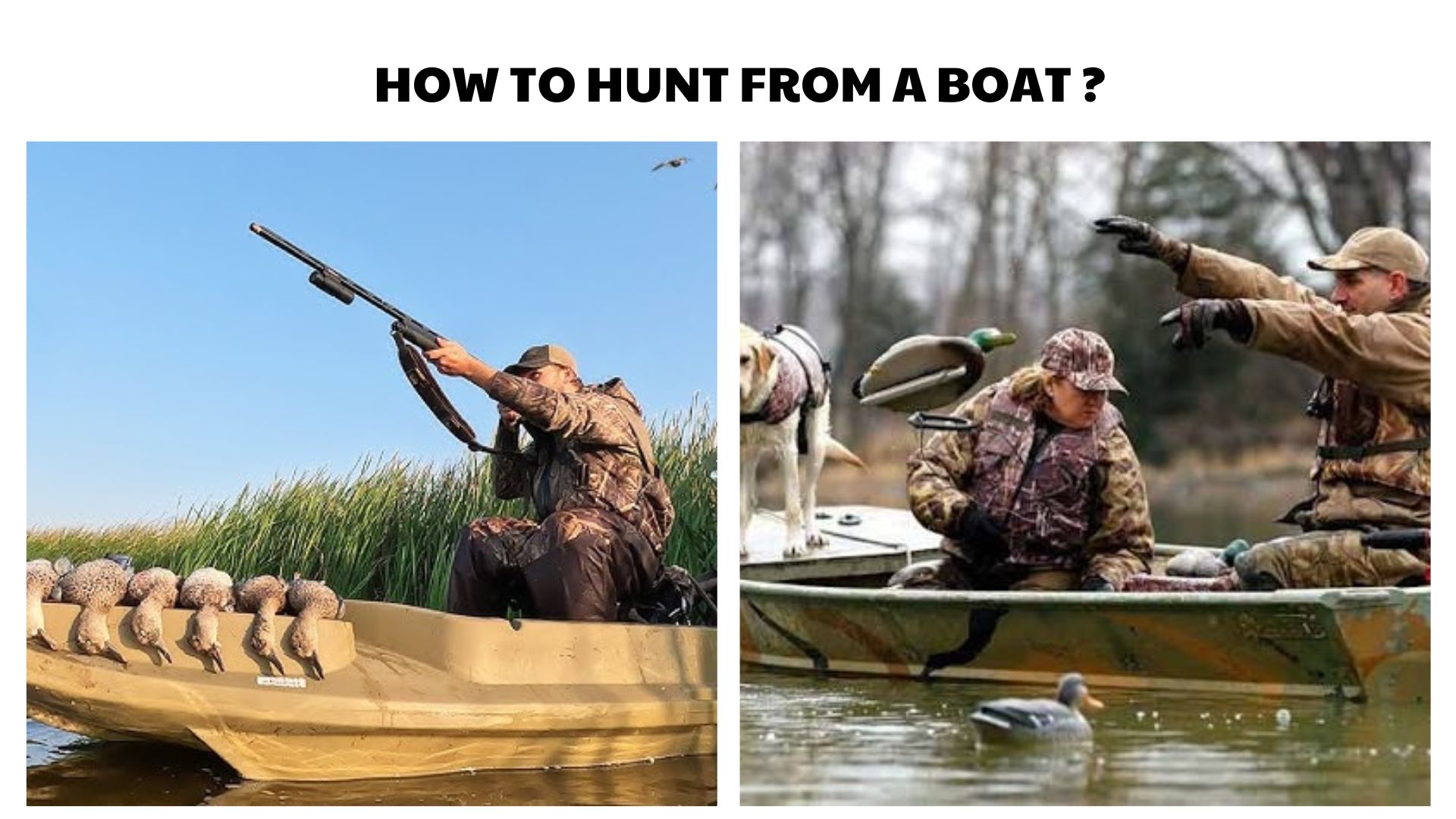

Learning how to hunt from a boat can open access to marshes, rivers, flooded timber, backwaters, coastal bays, and public-water areas that are difficult to reach on foot. For many beginners, boat-based hunting usually means waterfowl hunting, especially ducks and geese, but a boat may also be used as transportation to legal shoreline setups for other game where local laws allow it.
This guide explains the legal checks, boat safety, scouting, setup, gear, shooting discipline, recovery responsibilities, and beginner mistakes you should understand before hunting from any boat. It is written for new hunters who want practical field guidance without unsafe shortcuts, illegal methods, or unrealistic promises.
Quick Answer
To hunt from a boat, first verify your local hunting and boating regulations, get the correct license, permits, tags, stamps, and land or water access permission, then choose a stable boat suited to the water conditions. Scout legal areas for game movement, set up only where hunting is allowed, wear a properly fitted life jacket, control the boat safely, and take only clear, legal, ethical shot opportunities. Boat hunting can be effective, especially for waterfowl, but success depends on weather, scouting, safe boat handling, local regulations, and patient decision-making.
Important Legal and Safety Notice Before You Hunt
Hunting laws vary by country, state, province, county, water body, season, species, weapon type, and land ownership. Before hunting from a boat, check your official wildlife agency and boating authority for current rules. Do not rely on general online advice for season dates, bag limits, legal methods, motorboat rules, public-water boundaries, or access rights.
- Hunting license and permits: Confirm your hunting license, species permit, waterfowl permit, conservation stamp, or other required documents.
- Tags or harvest reporting: Know whether the species requires a tag, check station, online reporting, or harvest record.
- Season and legal hours: Verify open season dates, shooting hours, closed zones, refuge boundaries, and special public-water rules.
- Legal weapons and ammunition: Confirm shotgun, bow, caliber, shell capacity, nontoxic shot, ammunition, and transport rules.
- Boat-specific hunting rules: Some areas restrict shooting from moving boats, motorboats, anchored boats, layout boats, kayaks, or boats under power.
- Public and private access: Public water does not always mean public shoreline. Know property boundaries and do not trespass.
- Visibility clothing: Wear blaze orange or other required visibility gear where required by law or where other hunters may be nearby.
- Firearm or bow handling: Keep the muzzle pointed in a safe direction, control the safety zone, and identify your target and what is beyond it.
- Weather and emergency planning: Check wind, waves, tide, current, fog, lightning, cold water, navigation hazards, and communication options before launching.
What “Hunting From a Boat” Usually Means
Boat hunting can mean several different things. The safest and most common beginner-friendly version is using a boat to reach a legal waterfowl hunting area, then hunting from a stationary boat blind, shoreline cover, flooded timber, or marsh edge. Boats are often used as waterfowl blinds, and flat-bottomed boats, canoes, kayaks, and larger stable boats all have different advantages and risks. Some specialized waterfowl methods, such as layout boats or sneakboxes, are more advanced and require extra caution on open water.
A beginner should not treat the boat like a moving shooting platform. In many places, shooting from a boat under power, chasing game with a motor, or shooting from a moving craft may be illegal or unsafe. The practical goal is to use the boat for legal access, concealment, decoy placement, retrieval, and transportation while keeping the hunt controlled, stationary, and safe.
Best Game Species for Boat-Based Hunting
Boat hunting is most commonly associated with waterfowl because ducks and geese use wetlands, rivers, ponds, marshes, lakes, flooded fields, bays, and coastal water. Migratory waterfowl often move along flyways and use feeding, resting, and roosting areas that may be reachable only by boat.
Depending on your region, a boat may also help hunters access legal areas for deer, hogs, small game, or other species, but that usually means traveling by boat and then hunting from land. Do not assume you can shoot big game from a boat just because you can access the area by water. Always check your local regulations.
Common Boat Hunting Methods
Stationary Boat Blind
A stationary boat blind is a boat hidden with legal natural cover, commercial blind material, or vegetation-like camouflage. The boat is usually anchored or secured in a safe position near a marsh edge, flooded timber, reed line, or shallow-water feeding area. This is one of the most practical methods for beginner waterfowl hunters.
Shoreline Access by Boat
In this method, the boat is mainly transportation. You launch before legal hunting time, travel safely to a legal access point, secure the boat, then hunt from a shoreline blind, natural cover, or approved public-land location. This can be safer than shooting from the boat when the bank provides a more stable setup.
Layout Boat Hunting
Layout boats are low-profile boats often used for diver ducks in open water. They require stable weather, proper tender-boat support, experience, communication, and strong boating judgment. This is not the best first method for a beginner because open-water conditions can change quickly.
Canoe or Kayak Access
Canoes and kayaks can reach shallow backwaters quietly, but they are less stable than wider hunting boats. They are better for access and retrieval than for shooting. Beginners should be especially careful with balance, cold water, gear load, and firearm handling.
River Float Access
Some hunters use a boat to move along a river and access legal areas. Regulations vary widely. Do not shoot across roads, trails, buildings, livestock, other boats, anglers, paddlers, or unclear backgrounds. In many situations, the safer choice is to land, secure the boat, and hunt from a stable position.
Understanding Waterfowl Habitat and Movement
Most beginners searching for how to hunt from a boat are really trying to solve one problem: how to get close enough to water-based game without being seen, heard, or unsafe. Waterfowl use water for feeding, resting, loafing, roosting, and travel. Your boat setup should be based on where birds naturally want to go, not just where it is easy to launch.
- Feeding areas: Shallow marshes, flooded vegetation, agricultural edges, mudflats, and aquatic plant beds may attract ducks.
- Resting water: Open pockets, protected coves, calm backwaters, and low-pressure areas may hold birds during the day.
- Travel routes: Birds often follow shorelines, creek mouths, wind lines, points, and open-water corridors.
- Pressure escape areas: When hunting pressure increases, birds may shift to harder-to-reach water, private refuges, or areas with less boat traffic.
- Wind influence: Waterfowl often prefer to land into the wind, so your boat, decoys, and shooting lanes should account for wind direction.
What You Need Before You Start
| Category | What You Need | Why It Matters |
|---|---|---|
| Legal documents | Hunting license, permits, tags, stamps, HIP number if required, boat registration if required | Boat hunting often combines hunting rules and boating rules, so you must satisfy both. |
| Boat | Stable jon boat, duck boat, canoe, kayak, layout boat, or other legal vessel suited to the water | The boat must match water depth, current, wind, load, and hunting method. |
| Safety gear | Life jackets, throwable flotation device, whistle, lights, anchor, rope, paddle, first aid kit, emergency communication | Boating safety equipment can be required by law and can prevent a minor problem from becoming fatal. |
| Hunting gear | Legal firearm or bow, ammunition, case, optics, calls, decoys, waders, gloves, game strap or game bags | Your gear must be legal, organized, and safe to handle in a wet, unstable environment. |
| Navigation | Map, compass, GPS, hunting app, tide chart, river gauge, local launch information | Fog, darkness, current, and marsh channels can make it easy to get lost. |
| Weather planning | Wind forecast, wave forecast, tide/current information, rain gear, cold-water clothing | Small boats are vulnerable to wind, cold water, storms, and changing visibility. |
| Recovery and meat care | Gloves, cooler, clean bags, legal tagging supplies, retrieval plan | Responsible hunters plan retrieval, reporting, transport, and meat care before the hunt begins. |
How to Hunt From a Boat: Step-by-Step Guide
Step 1: Check Hunting and Boating Laws First
Start with your official wildlife agency, boating agency, and local public-land or refuge rules. Confirm the species, season, bag limit, legal hunting hours, legal method, required licenses, ammunition restrictions, boat access, motor use, retrieval rules, and reporting requirements.
For U.S. waterfowl hunting, hunters may need a state hunting license, Harvest Information Program registration, state waterfowl stamp, and Federal Duck Stamp depending on age and location. Federal Duck Stamp revenue also supports wetland conservation.
Step 2: Decide Whether the Boat Is for Access, Concealment, or Retrieval
Before loading gear, decide the boat’s main purpose. A boat used only for access can be simple and lightly loaded. A boat used as a blind needs better concealment, stable anchoring, safe shooting lanes, and room for hunters to move without tipping. A boat used for retrieval needs safe handling, a clear plan, and attention to current, wind, and other hunters.
Step 3: Choose the Right Boat for the Water
Use a boat that fits the conditions, not just the boat you already own. A wide, flat-bottomed boat may work well in shallow marshes but may be unsafe in big wind or open water. A canoe or kayak may be quiet but can become unstable with decoys, a firearm, a dog, and cold-weather clothing. Larger water requires more freeboard, reliable power, proper lighting, and conservative judgment.
Step 4: Scout Before the Hunt
Scout during legal, non-disruptive times. Look for birds using the area naturally, not just birds flying over. Pay attention to where they land, how they approach, what wind they prefer, where they rest after pressure, and how other hunters access the water.
- Watch from a distance with binoculars.
- Mark legal launch points and safe boat routes.
- Identify shallow hazards, stumps, rocks, sandbars, and changing water levels.
- Note where birds feed, loaf, and travel.
- Avoid disturbing roosting birds unnecessarily.
Step 5: Plan Your Launch and Route
Boat hunting often starts in darkness, cold, fog, or wind. Plan your route before the morning of the hunt. Know the launch location, parking rules, legal access boundaries, travel time, no-wake zones, shallow spots, and emergency exit options.
Tell someone where you are going, who is with you, what boat you are using, where you plan to launch, and when you expect to return. This simple float plan is one of the most overlooked safety steps.
Step 6: Load the Boat Safely
Keep the boat balanced. Heavy decoy bags, batteries, fuel, dog platforms, blind frames, coolers, and firearms can change how a boat handles. Do not overload the boat or block emergency exits. Keep firearms unloaded and cased during transport where required, and keep ammunition organized and dry.
Step 7: Wear a Life Jacket Before You Need It
Do not wait until the boat feels dangerous to put on a life jacket. Cold water, waders, heavy clothing, current, and darkness can make self-rescue difficult. The Safe Boating Campaign emphasizes life jacket wear as a major boating safety message, and U.S. Coast Guard safety messaging repeatedly highlights the importance of wearing personal flotation devices.
Step 8: Set Up With Wind, Background, and Safety in Mind
Choose a setup where game can approach naturally and where your shooting direction is safe. Never shoot toward houses, roads, boat ramps, livestock, people, vehicles, trails, dogs, decoys being retrieved, or other boats. Keep your hunting partners in a defined safe zone and agree on shooting lanes before the hunt begins.
For waterfowl, use the wind to help guide birds toward a safe landing pocket. Birds commonly prefer to land into the wind, so place the boat and decoys to create a natural approach that does not force unsafe shots across the boat or toward other hunters.
Step 9: Conceal the Boat Without Creating Hazards
Good concealment helps, but safety comes first. Brush, blind panels, grass mats, and covers should not block your vision, trap hunters inside, interfere with the motor, cover navigation lights when lights are required, or create a fire hazard near heaters or fuel. Do not cut vegetation or build blinds where it is illegal.
Step 10: Use Decoys and Calling Carefully
For waterfowl, decoys should suggest a safe, relaxed group of birds. You do not need a huge spread as a beginner. A smaller, realistic spread placed in the right location is often better than a large spread in the wrong location.
- Leave a landing pocket where birds can finish.
- Keep decoys clear of your boat path and dog path.
- Use weights and lines suited to depth and current.
- Avoid tangled decoy lines that could trip hunters or foul a propeller.
- Call less when birds are already working naturally.
Step 11: Wait for a Safe, Legal, Ethical Shot Opportunity
Only act when the target is clearly identified, the species is legal, the background is safe, the range is within your practiced ability, and the boat is stable. Do not swing a firearm across another hunter, across the dog, across the motor operator, or toward unknown movement. If the boat rocks, another vessel appears, birds are too far, or the angle is unsafe, pass the shot.
For waterfowl, many regions require nontoxic shot, and lead shot is restricted for waterfowl hunting in the United States, Canada, and the European Union. Always verify the approved shot type for your area before hunting.
Step 12: Retrieve Game Responsibly
Plan retrieval before the first shot. Know who retrieves, when the firearm is unloaded or made safe, how the boat will move, and how you will avoid crossing another hunter’s shooting lane. If using a dog, train for boat entry, cold water, current, and commands before hunting day.
Step 13: Follow Tagging, Reporting, and Transport Rules
After a legal harvest, follow all tagging, possession, species identification, transportation, and reporting rules. For migratory birds, species identification can matter even after the hunt. Keep birds organized and do not mix possession limits or leave required evidence of species or sex where laws require it.
Step 14: Care for Meat and Gear
Keep harvested game clean, cool, and protected. Store gear safely for the ride back. At home, dry the boat, decoy lines, waders, firearm case, and blind material to reduce corrosion, mold, odor, and damage. Review what worked and what should change next time.
Best Time, Place, and Conditions for Boat Hunting
Best Time
For waterfowl, early morning is often productive because birds move from roosting to feeding or resting areas. Late afternoon can also be productive where legal hunting hours allow it. Always check legal shooting hours because they may differ from sunrise and sunset.
Best Place
The best place is a legal area where game already wants to be, boat access is safe, the wind works for your setup, and your shooting direction is clear. Good locations may include marsh points, creek mouths, flooded timber edges, shallow flats, protected coves, or open-water diver routes depending on species and region.
Best Conditions
Mild to moderate wind can help waterfowl movement and create natural decoy motion, but strong wind can make boating dangerous. Fog can hide hunters but can also create navigation risk. Cold fronts may move birds, but cold water increases the danger of falling overboard. Do not let hunting excitement override boating judgment.
Boat Positioning and Shooting Lane Basics
Before the hunt begins, assign each hunter a safe shooting zone. A simple rule is that no one swings past the front corner or side boundary assigned to them. In a boat, this matters because hunters sit close together and may move unexpectedly.
- Keep muzzles pointed outside the boat and away from people.
- Unload or make firearms safe before moving the boat, retrieving decoys, handling dogs, or changing positions.
- Do not stand suddenly in a small boat.
- Do not shoot while the boat is rocking, drifting into danger, or crossing another hunter’s line.
- Do not shoot low across the water where pellets, bullets, or arrows could travel toward unseen people, boats, docks, or buildings.
Public Water, Private Shoreline, and Access Rules
Boat access can be confusing. A river, lake, or marsh may be public water, but the shoreline, bottomland, island, dock, blind site, or adjacent field may be private or separately regulated. Some public areas require permits, reservations, draw blinds, distance rules, or special launch access.
Use official maps, agency apps, boundary signs, posted notices, and local regulations. If you are unsure whether you may anchor, build a blind, retrieve game, cross a bank, or step onto land, ask the wildlife agency or land manager before hunting.
Cold Water, Weather, and Emergency Planning
Many boat hunts happen during colder seasons. Cold water can reduce breathing control, grip strength, mobility, and clear thinking quickly. A hunter who falls overboard wearing waders, heavy clothing, boots, and gear may not be able to self-rescue easily. U.S. Coast Guard safety messaging emphasizes dressing for water temperature, using life jackets, carrying communication devices, and making a float plan.
- Wear a life jacket that fits over hunting clothing.
- Use insulating layers that still allow safe movement.
- Carry a waterproof communication device.
- Bring a whistle, light, and emergency signaling device.
- Keep a dry bag with spare gloves, hat, fire-starting tools, and emergency layers.
- Check wind, waves, tide, current, fog, and lightning risk before launching.
- Turn back early if conditions become unsafe.
Helpful Tips for Better Results
- Scout more than you hunt. Boat hunting rewards hunters who know where birds or game naturally move.
- Keep the first setup simple. A safe, stable shoreline or anchored boat setup is better than an advanced open-water layout hunt.
- Use wind instead of fighting it. Set decoys and the boat so birds approach from a safe direction.
- Reduce boat shine. Dull finishes, legal camouflage, and natural shadows help conceal the boat.
- Practice from realistic positions. Know your safe range and comfort level before hunting.
- Control noise. Clanging decoy weights, loose shells, aluminum boat noise, and dog movement can alert game.
- Have a retrieval plan. Decide how you will recover game before the hunt begins.
- Respect other users. Anglers, paddlers, landowners, and other hunters may share the same water.
- Quit before conditions become dangerous. A safe return matters more than one more pass of birds.
Common Mistakes to Avoid
- Not checking boat-specific hunting laws: Motorboat, anchoring, blind, distance, and public-water rules can be very specific.
- Overloading the boat: Decoys, hunters, dogs, batteries, fuel, and wet gear add weight quickly.
- Ignoring life jackets: A life jacket stored under gear is not helpful during a sudden fall.
- Launching in unsafe weather: Wind, fog, waves, and cold water can turn a simple hunt into an emergency.
- Poor muzzle control: A boat is cramped, so firearm discipline must be constant.
- Setting up with unsafe shooting lanes: Never shoot toward ramps, houses, boats, roads, trails, or other hunters.
- Assuming public water equals public land: Shorelines, islands, and marsh edges may still be private or restricted.
- Using the wrong ammunition: Waterfowl rules often require approved nontoxic shot.
- Not planning retrieval: Wind and current can move birds, decoys, and boats quickly.
- Staying too long: If the wind rises, visibility drops, or the boat takes on water, end the hunt.
Troubleshooting Common Problems
| Problem | Possible Cause | What to Do |
|---|---|---|
| You are not seeing game | Poor scouting, wrong location, hunting pressure, or birds using a different food source | Scout from a distance, watch flight lines, adjust to fresh sign, and move only to legal areas. |
| Birds flare before finishing | Boat shine, poor concealment, unnatural decoy spread, movement, or bad wind setup | Hide the boat better, reduce movement, adjust decoys, and set up with the wind in mind. |
| The boat drifts out of position | Weak anchor, changing wind, current, or poor bottom hold | Use proper anchors, anchor lines, and safe positioning. Do not hunt from an uncontrolled drifting boat. |
| Decoy lines tangle | Too much line, poor storage, current, or rushing setup in the dark | Rig decoys for the correct depth, use organized bags, and practice setup before hunting day. |
| You feel unsafe standing or shooting | Boat too small, unstable load, waves, or poor balance | Sit down, pass the shot, unload if needed, and choose a more stable setup next time. |
| Other hunters are too close | Crowded public water or unclear spacing rules | Do not argue on the water. Move if safe and legal, document concerns, and follow local distance rules. |
| You are unsure about boundaries | Public/private water and shoreline rules are unclear | Do not hunt the questionable area. Check official maps or call the land manager or wildlife agency. |
| Weather changes quickly | Wind shift, fog, storm, cold front, tide, or current change | End the hunt early, secure gear, wear life jackets, and return by the safest route. |
| Game is difficult to retrieve | Current, wind, thick vegetation, deep water, or poor planning | Make the firearm safe, use the boat carefully, use a trained dog only when safe, and follow all retrieval laws. |
| Gear gets wet or damaged | Poor storage, spray, rain, or water in the boat | Use dry bags, waterproof cases, bilge control, and clean and dry all gear after the hunt. |
Ethical Hunting and Conservation
Ethical boat hunting means more than following the minimum law. It means respecting wildlife, other hunters, landowners, boaters, anglers, and the habitat that makes hunting possible.
- Take only legal, clearly identified game.
- Pass on unsafe, rushed, or uncertain shots.
- Practice before the season so your effective range is honest.
- Make every reasonable legal effort to recover harvested game.
- Use harvested meat responsibly and avoid waste.
- Follow season dates, bag limits, possession limits, and reporting rules.
- Do not damage marsh vegetation, docks, blinds, gates, signs, or private property.
- Pack out shells, food wrappers, decoy line, and trash.
- Support conservation through licenses, stamps, habitat programs, and responsible participation.
When to Get More Training or Professional Guidance
Boat hunting combines hunting skill, firearm or bow safety, navigation, weather judgment, and water survival. Beginners should get more training before hunting from a boat if they are unsure about any part of that combination.
- You have not completed hunter education.
- You have little experience handling firearms or bows around other people.
- You are new to boating, anchoring, navigation, or cold-water safety.
- You do not understand your local hunting rules.
- You are unsure whether an area is public, private, tidal, navigable, or restricted.
- You want to hunt open water, big rivers, coastal bays, or layout boats.
- You plan to hunt with a dog from a boat for the first time.
- You need help with legal recovery, tagging, transport, or meat care.
Good sources of help include official hunter education courses, boating safety courses, state or provincial wildlife agencies, certified instructors, experienced ethical mentors, local conservation groups, and reputable hunting clubs.
After the Hunt: Follow-Up, Gear Care, and Learning
A good boat hunt does not end at the ramp. After the hunt, unload firearms safely, secure the boat, check harvested game against legal possession rules, complete any required reporting, and care for meat promptly.
- Dry firearms, cases, decoys, waders, gloves, and boat-blind material.
- Rinse mud, salt, vegetation, and debris from the boat where appropriate.
- Inspect decoy lines, anchors, navigation lights, batteries, and safety gear.
- Record weather, wind, water level, bird movement, pressure, and what you learned.
- Replace used first aid items, damaged lines, wet ammunition boxes, or worn life jacket parts.
- Thank landowners, mentors, or hunting partners who helped.
Recommended Hunting Gear and Tools to Consider
You do not need the most expensive gear to hunt from a boat responsibly. Choose gear based on local laws, species, water conditions, weather, safety needs, skill level, and budget.
- Stable legal hunting boat suited to the water
- Properly fitted life jacket for every person
- Throwable flotation device where required
- Anchor, rope, paddle, push pole, and basic repair kit
- Navigation lights and sound-signaling device where required
- Waterproof headlamp or flashlight
- Map, compass, GPS, or hunting navigation app
- Waterproof phone case, VHF radio, or emergency communication tool
- First aid kit and emergency dry bag
- Legal firearm or bow and safe transport case
- Approved ammunition for your species and location
- Decoys, calls, and decoy weights if waterfowl hunting
- Weather-appropriate clothing and gloves
- Waders or waterproof boots where appropriate
- Cooler, gloves, game strap, and meat care supplies
FAQ: How to Hunt From a Boat
Can you legally hunt from a boat?
Sometimes, but it depends on local law, species, water body, boat type, motor use, and whether the boat is moving or stationary. Always check your official wildlife agency before hunting from a boat.
Is boat hunting mainly for ducks and geese?
Yes, boat hunting is most commonly associated with waterfowl because ducks and geese use water-based habitat. A boat may also be used to access legal land setups for other game, but rules vary.
Can you shoot from a moving boat?
Do not assume so. Many places restrict shooting from a moving boat, motorboat, or boat under power. Even where some boat hunting is legal, shooting from an unstable or moving platform can be unsafe.
Can you hunt from a kayak?
Some hunters use kayaks for legal access or waterfowl hunting, but kayaks are less stable than wider boats. Beginners should use them cautiously, avoid overloading, wear a life jacket, and check local rules.
What is the safest boat for beginner hunting?
A stable, wide boat suited to the water is usually safer than a narrow canoe, kayak, or advanced layout boat. The best boat depends on water depth, wind, current, load, and hunting method.
Do I need a life jacket when hunting from a boat?
You should wear one, and many boating laws require life jackets to be carried or worn in certain situations. Cold water, heavy clothing, waders, and hunting gear make life jackets especially important.
Do I need a boating license or safety course?
Many places require boating education based on age, boat type, motor size, or location. Even when not required, a boating safety course is strongly recommended before hunting from a boat.
What licenses do I need for waterfowl hunting from a boat?
You may need a hunting license, waterfowl permit, state stamp, Federal Duck Stamp, HIP registration, and local access permit depending on your location and age. Check current official regulations.
Do I need nontoxic shot for ducks and geese?
In many areas, yes. Waterfowl hunting commonly requires approved nontoxic shot. Verify the exact approved shot types and ammunition rules for your location.
Can I use a motor to approach birds?
Be very careful. Using a motor to chase, rally, herd, or pursue game may be illegal and unethical. Check local rules and avoid any method that harasses wildlife or creates unsafe conditions.
Can I hunt from an anchored boat?
In some areas, hunting from an anchored boat is legal, especially for waterfowl, but restrictions may apply. Confirm anchoring rules, distance rules, blind rules, motor rules, and public-water access laws.
Can I build a blind on public water?
Some public areas allow temporary blinds, some require permits or reservations, and others prohibit building or cutting vegetation. Always check public-land or refuge rules before building or brushing a blind.
How do I hide a boat for hunting?
Use legal camouflage, natural shadows, low-profile blind material, and background cover. Do not block visibility, navigation lights when required, exits, motor operation, or safe firearm handling.
How many decoys do I need?
Beginners do not need a huge spread. A small, realistic decoy spread in the right location is often more useful than many decoys placed where birds do not want to land.
Where should I place decoys when hunting from a boat?
Place decoys to create a natural landing pocket with safe shooting lanes. Account for wind direction, current, water depth, boat position, and retrieval route.
What wind is best for boat hunting?
Moderate wind can help waterfowl movement and decoy realism, but strong wind can make boating unsafe. Choose conditions your boat and skill level can handle safely.
Is fog good for boat hunting?
Fog can reduce visibility for both birds and hunters, but it can also create serious navigation and shooting-safety risks. Do not hunt if you cannot identify targets, backgrounds, landmarks, or other boats.
Can I hunt alone from a boat?
It is safer to hunt with a trusted partner, especially in cold water or remote areas. If you hunt alone, file a float plan, wear a life jacket, carry communication, and stay conservative.
Should I bring a dog on a boat hunt?
Only bring a dog that is trained for boat entry, water retrieves, commands, cold water, and remaining steady. Use a safe dog platform or plan, and do not let the dog cross unsafe shooting lanes.
How do I keep a firearm safe in a boat?
Keep it unloaded and cased during transport where required, control the muzzle at all times, avoid leaning it where it can fall, and never swing across another person, dog, or unsafe background.
Can I stand up to shoot from a boat?
Only if the boat is stable and the shot is safe. In many small boats, standing suddenly can cause a fall or capsize. If the boat feels unstable, stay seated and pass the shot.
What should I do if the boat starts taking on water?
Stop hunting immediately, put on life jackets if not already worn, use a bilge pump or bailer if safe, reduce weight if appropriate, and return to shore or call for help before the situation worsens.
How do I avoid other hunters on public water?
Launch early, scout alternative spots, respect distance rules, avoid crowding, and move calmly if another group is too close. Do not argue or create unsafe situations on the water.
Can I retrieve game across private shoreline?
Not always. Retrieval laws vary. Some places allow limited retrieval, while others require landowner permission. Check local rules before hunting near private property.
What should I do if a bird falls into strong current?
Make firearms safe, communicate with your partner, and retrieve only if the boat can be handled safely. Do not risk capsizing or entering dangerous water for a retrieve.
What should I wear for boat hunting?
Wear weather-appropriate layers, waterproof outerwear, gloves, a hat, legal visibility clothing if required, and a life jacket. Dress for water temperature, not just air temperature.
Are waders dangerous in a boat?
Waders can add risk if you fall overboard, especially in cold water or current. Wear a life jacket, use a wader belt, avoid overloading, and practice safe entry and exit.
How do I know if a public marsh allows boat hunting?
Check the official area regulations, maps, signs, refuge rules, waterfowl zone rules, and local agency updates. Some areas have special permits, closed zones, or assigned blinds.
Can I hunt near a boat ramp?
Often no, or only with distance restrictions. Boat ramps have public traffic, vehicles, docks, people, and unsafe backgrounds. Check local distance rules and choose safer locations.
How far should I shoot at ducks from a boat?
Only shoot within your practiced, ethical range and with a safe background. Long shots increase the risk of wounding and poor recovery. If unsure, pass.
What is the biggest safety risk when hunting from a boat?
The biggest risks are cold-water immersion, capsizing, poor firearm handling, bad weather, overloading, and unsafe shooting lanes. Boat hunting requires both hunting safety and boating safety.
Can I use a heater in a boat blind?
Use extreme caution. Follow manufacturer instructions, maintain ventilation, keep flame away from blind material and fuel, and carry required fire safety equipment. Do not use unsafe or homemade heating setups.
What should I do after a successful boat hunt?
Make firearms safe, retrieve game legally, tag or report as required, keep meat clean and cool, return safely, dry gear, and record what you learned for the next hunt.
How can beginners improve at boat hunting?
Take hunter education and boating safety courses, hunt with an experienced mentor, scout more, practice safe shooting, learn bird identification, and start with simple protected-water setups.
Is boat hunting worth it for beginners?
Yes, if done legally and safely. Boat hunting can provide access to productive habitat, but beginners should start with calm water, simple setups, good mentorship, and conservative weather decisions.
Final Thoughts
Learning how to hunt from a boat is really learning two skills at once: responsible hunting and safe boating. The best beginners check the law first, choose a stable boat, wear a life jacket, scout carefully, set up with wind and safety in mind, control every firearm movement, and pass on any shot that is not clearly legal and ethical.
A boat can help you reach excellent hunting areas, especially for waterfowl, but it also adds cold-water, weather, navigation, balance, and recovery challenges. Prepare carefully, respect wildlife and other water users, and let safety decide when to launch, when to shoot, and when to head home.