
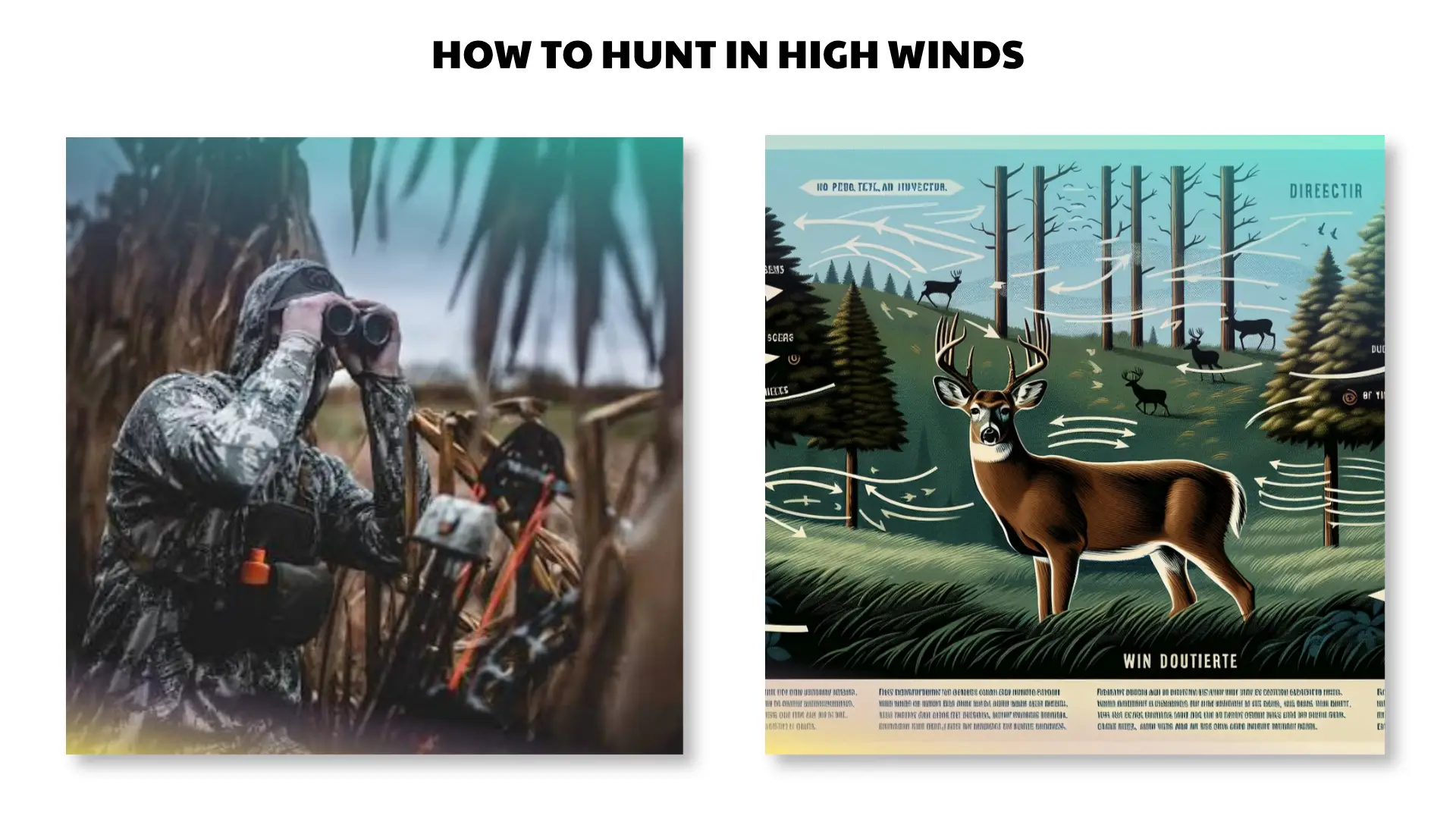

Quick Answer
To hunt in high winds, first confirm that hunting is legal and that the weather is safe enough for the area, terrain, and hunting method. Focus on protected cover, leeward slopes, thick bedding edges, food-to-cover travel routes, and setups where the wind is steady enough to predict scent movement. Avoid exposed ridges, unsafe tree stands, long or uncertain shots, and areas with falling limbs or poor visibility. If you are unsure whether the conditions allow a safe, ethical hunt, postpone the hunt or switch to low-risk scouting from a distance.
Important Legal and Safety Notice Before You Hunt
Hunting regulations vary by country, state, province, county, season, species, land type, and weapon type. Before you hunt in windy conditions, verify all current rules with your official wildlife agency or land manager. Do not rely on general advice for license, tag, season, access, weapon, transport, reporting, or harvest requirements.
- Hunting license and permits: Confirm that your license, permits, stamps, and hunter education requirements are current.
- Tags or harvest reporting: Know whether the species requires a tag, check-in, digital report, physical validation, or other documentation.
- Legal season and legal hours: Confirm the open season, legal shooting hours, and any local closures or emergency weather restrictions.
- Legal weapons and ammunition: Use only equipment allowed for the species, season, land type, and hunting method.
- Public land or private land access: Verify boundaries, parking, access routes, and written permission where required.
- Required clothing or visibility rules: Wear blaze orange or other visibility clothing when required or when it improves safety.
- Safe firearm or bow handling: Keep the muzzle pointed in a safe direction, keep your finger off the trigger until ready to shoot, and identify the target and what is beyond it.
- Weather, navigation, and emergency planning: Check the forecast, tell someone your plan, carry navigation tools, bring first aid, and leave when conditions become unsafe.
What High Wind Changes for Hunters
Wind is not just a scent issue. It changes nearly every part of a hunt. A steady breeze can help a hunter plan a downwind approach, but strong or swirling wind can make animal behavior harder to read and make your own decisions less reliable.
Animal Movement Can Shift
Many game animals avoid the most exposed places during strong wind. They may bed in thicker cover, move along protected draws, use the downwind side of ridges, stay near timber edges, or delay movement until the wind drops. This does not mean all animals stop moving. It means movement may be more concentrated in sheltered locations.
Sound Becomes Less Reliable
Wind can cover small mistakes, such as a quiet step through leaves. It can also make it harder for you to hear animals, other hunters, vehicles, or changing weather. In high wind, use your eyes more than your ears and move slowly enough to keep full awareness of your surroundings.
Scent Can Travel Farther or Swirl
Strong wind may carry scent quickly, but terrain and cover can make that scent swirl. Hills, creek bottoms, saddles, timber edges, clear-cuts, and draws can create unpredictable air movement. A setup that looks good on a map may fail if the local wind is bouncing between features.
Shot Control Gets Harder
High wind can move your body, your weapon, your arrow, or your bullet path. It can also move brush, grass, and the animal itself, making identification and shot timing less certain. Ethical hunting in high wind requires shorter personal limits, extra patience, and a willingness to pass.
Safety Risks Increase
Falling limbs, unstable platforms, downed power lines, sudden temperature drops, blowing dust, reduced visibility, and difficult travel can all turn a hunt into an emergency. No hunting opportunity is worth staying in an unsafe location.
Should You Hunt or Stay Home?
Before planning a hunt in high winds, make a safety decision. Windy conditions are not all the same. A breezy day in open grassland is different from a severe wind warning in steep timber. Your experience, terrain, gear, weapon, access route, and physical condition all matter.
Consider Hunting When
- The forecast shows wind that is strong but not dangerous for your terrain.
- You can hunt from the ground or a stable, protected position.
- You have a safe exit route if the weather worsens.
- You know the area well enough to avoid dead trees, steep exposed slopes, and hazardous crossings.
- You are willing to reduce shot distance and pass uncertain opportunities.
Consider Postponing When
- Official weather alerts warn of damaging winds, severe storms, dangerous cold, wildfire risk, or hazardous travel.
- You planned to use a tree stand that feels unstable or sits near dead limbs.
- You cannot identify targets clearly because of blowing rain, snow, dust, fog, or moving vegetation.
- Your access route crosses flooded creeks, icy slopes, open water, or roads with falling debris.
- You are new to the area and do not have a safe navigation plan.
Understanding Game Behavior in High Winds
The target keyword how to hunt in high winds does not name one species, so the best approach is to understand broad behavior patterns and then adapt them to your local game animal. Always combine general field knowledge with local sign, current regulations, and recent observations.
Deer and Similar Big Game
Deer, elk, and similar big game often use cover and terrain to reduce wind exposure. Look for sheltered bedding areas, downwind ridge points, benches, thick timber edges, creek bottoms, brushy draws, and routes connecting food and security cover. During strong winds, they may choose places where they can smell danger from one direction while watching another.
Turkey and Other Birds
Wind can make calling and hearing difficult. Birds may use lower ground, field edges, timber openings, or sheltered travel routes. Avoid overcalling in heavy wind. Safety around other hunters is especially important because sound direction can be confusing and movement may be harder to see through swaying vegetation.
Hogs and Other Opportunistic Game
Where legal, hogs may still move in wind, especially around food, water, rooting areas, and thick cover. Laws for hog hunting vary widely, so confirm local rules, landowner permission, transport requirements, disease precautions, and meat handling guidance before hunting.
Predators and Small Game
Strong wind can make calling, listening, and safe identification more difficult. In many situations, a lower-wind day is better for learning. If you do hunt, choose clear shooting lanes, known backstops, and close-range opportunities that leave no doubt about the target and background.
Best Places to Hunt in High Winds
In windy weather, location matters more than distance walked. Instead of trying to cover every part of a property, focus on terrain features that reduce wind exposure and still allow animals to feel secure.
Leeward Sides of Ridges
The leeward side is the side protected from the main wind. Big game may use these slopes because the wind is reduced but scent information still moves across the terrain. Be careful: wind can swirl on the leeward side, especially near points, saddles, and steep bowls.
Thick Cover Near Food
Animals may shorten their movement during high winds. Thick bedding cover close to food, water, or travel corridors can be more productive than open feeding areas far from cover. Glass edges slowly before entering because animals may bed closer than expected.
Creek Bottoms and Draws
Draws, creek bottoms, and low benches may block some wind. They can also funnel scent and create tricky air currents. Test wind often with a legal wind checker, milkweed, dust, or natural indicators such as grass and leaves.
Field Corners and Timber Edges
Edges where open food meets cover can be useful when the wind allows a safe approach. Avoid skylining yourself or walking across exposed open areas when the wind is pushing your scent directly into the cover you plan to hunt.
Ground Blinds and Natural Cover
A ground blind can be safer than a tree stand in strong wind if it is anchored, legal, and positioned safely away from falling limbs. Natural cover such as brush, logs, or terrain folds can also work, but make sure your field of view and shot background remain clear.
What You Need Before You Start
You do not need expensive gear to hunt responsibly in high winds. You do need legal equipment, dependable safety items, weather preparation, and a plan that matches your skill level.
- Valid hunting license, permits, tags, and current regulation knowledge
- Legal hunting weapon or method allowed for the species and season
- Hunter orange or required visibility clothing where applicable
- Weather-appropriate layers that block wind while allowing safe movement
- Quiet, stable boots with good traction for wet, icy, or uneven ground
- Map, compass, GPS, or hunting app with offline access
- First aid kit, water, snacks, and emergency communication
- Headlamp or flashlight with extra batteries
- Binoculars or optics for safe observation
- Wind checker or simple natural wind indicators
- Knife, gloves, game bags, cooler, and basic meat care supplies when legally harvesting game
- Full-body safety harness if using an elevated stand in conditions safe enough for stand use
How to Hunt in High Winds: Step-by-Step Guide
Step 1: Check Local Hunting Laws First
Confirm the species, season, legal hours, license, tags, weapon rules, harvest limits, public land rules, private land permission, reporting requirements, and transport rules. High wind does not change your legal responsibilities. If emergency closures, fire restrictions, road closures, or refuge-specific rules apply, obey them.
Step 2: Check the Weather Beyond Wind Speed
Look at gusts, wind direction, temperature, wind chill, precipitation, lightning risk, fire danger, and travel conditions. Gusts matter more than the average wind speed because they can knock down limbs, move your weapon, or make a stand feel unstable. Plan to leave before the worst weather arrives, not after.
Step 3: Choose a Safer Hunting Method
Ground hunting, a well-anchored ground blind, or still-hunting through protected terrain may be safer than using a tree stand in strong wind. If you use a tree stand, inspect the tree, platform, straps, steps, and harness system before the hunt. Do not climb into a stand during dangerous wind, lightning, ice, or when trees are visibly swaying hard.
Step 4: Learn the Animal’s Likely Wind Pattern
Study where the game animal is likely to feed, bed, water, and travel when exposed areas are uncomfortable. For deer and elk, look for sheltered bedding cover, leeward ridges, low benches, and travel corridors near food. For turkeys, think about sheltered openings, low timber, and areas where calls are still audible. For hogs, focus on legal access near food, rooting, wallows, water, and thick cover.
Step 5: Choose a Legal Hunting Area With Safe Access
Use maps to confirm boundaries, parking, roads, trails, private property, closed areas, and legal access points. High wind can make it easier to drift across boundaries without noticing because you may keep your head down or avoid exposed routes. Mark property lines and exit routes before you go.
Step 6: Scout for Fresh Sign in Protected Cover
Look for tracks, trails, droppings, rubs, scrapes, rooting, feathers, dusting areas, feeding sign, beds, and fresh disturbance. In high wind, sign near protected cover can be more useful than old sign in open areas. Avoid walking through the exact bedding or feeding area you plan to hunt unless you are only scouting for a future trip.
Step 7: Plan Your Entry Route Around Wind and Safety
Choose a route that keeps your scent from blowing directly into the animals’ likely location. Also avoid walking under dead trees, crossing unstable slopes, or pushing through thick timber where falling limbs are likely. In high wind, the safest route may not be the shortest route.
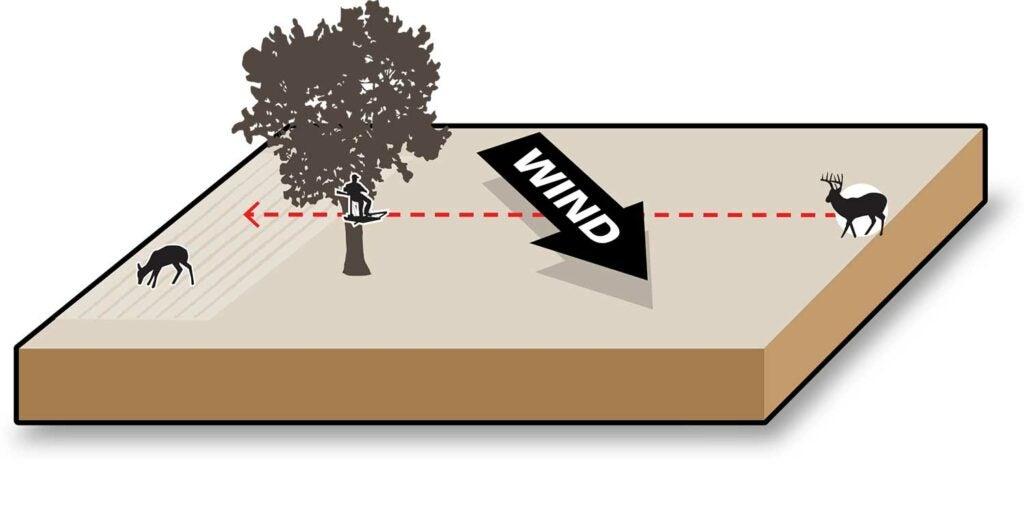
Step 8: Set Up With a Predictable Wind Advantage
Try to set up with the main wind carrying your scent away from the expected travel route. Give yourself a margin for shifting wind. If the wind swirls every few minutes, move to a simpler terrain feature or accept that the setup may not be reliable.
Step 9: Use the Wind to Cover Careful Movement
If you still-hunt, move during gusts and pause when the wind drops. Take a few slow steps, then stop and scan. Do not rush because wind noise also hides the sounds of animals and other hunters. Keep your firearm or bow controlled at all times and never allow branches or brush to push it into an unsafe direction.
Step 10: Glass More Than You Walk
Windy conditions can make animals bed in small pockets of cover. Use binoculars to pick apart edges, shaded areas, brush gaps, benches, and field corners. Glassing also helps you identify animals safely before deciding whether to move closer.
Step 11: Reduce Your Effective Shot Distance
Do not use your calm-weather maximum range as your high-wind range. Wind can affect stability, arrow flight, projectile drift, and your ability to judge animal movement. Only consider a shot when the target is clearly identified, the background is safe, the animal is legal, and the opportunity is within your practiced ability under the actual conditions.
Step 12: Take Only a Safe, Legal, and Ethical Shot Opportunity
Pass if you cannot clearly identify the animal, confirm legality, control your equipment, or see what lies beyond the target. Never shoot toward roads, homes, trails, livestock, vehicles, people, unclear movement, skylines, or areas where the background is unknown. Ethical restraint is part of responsible hunting.
Step 13: Follow Legal Recovery and Reporting Rules
If you legally harvest game, follow your local tagging, recovery, check-in, evidence-of-sex, transport, and harvest reporting rules. Keep the process calm and organized. If wind, darkness, terrain, or property boundaries complicate recovery, follow the law and seek help from a mentor, landowner, conservation officer, or approved tracking resource where legal.
Step 14: Handle the Game Responsibly
Use clean tools, gloves, game bags, and a cooler or other legal meat care method. Keep meat clean, cool, and protected from dirt, insects, and heat. Avoid waste and follow all transport and processing rules. Keep explanations and actions respectful, non-graphic, and focused on responsible use of the harvest.
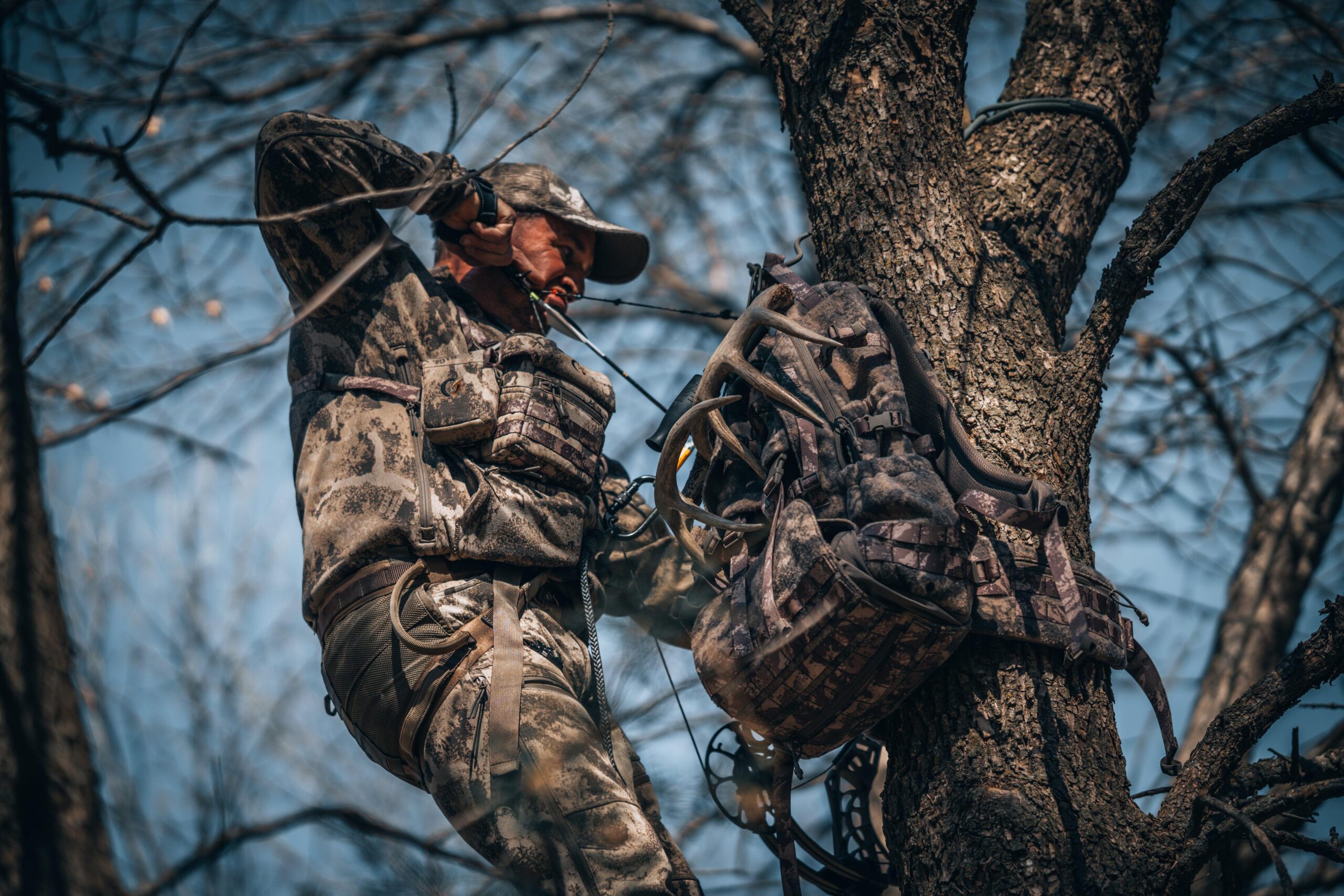
Wind Direction, Thermals, and Terrain
Wind direction is the foundation of a hunting setup, but high winds often make it more complex. A weather app may show the general wind direction for the area, while the actual wind in a draw, saddle, or timber edge may be different.
Main Wind
The main wind is the broad wind direction shown in the forecast. It helps you plan access, parking, and general stand or blind choice. Start with the main wind, but verify it on the ground.
Local Wind
Local wind is what your scent actually does at your position. Terrain, cover, temperature, and openings can bend or swirl it. Check local wind repeatedly, especially after sunrise, when clouds move in, or when the wind speed changes.
Thermals
Thermals are air currents caused by temperature change. In many areas, air may move uphill as the day warms and downhill as it cools. High wind can overpower thermals, but it can also mix with them and create confusing scent movement.
Wind Tunnels
Gaps, saddles, creek bottoms, cuts, and field corners can funnel wind. These places may move scent faster and may also concentrate animal travel. They can be useful, but only if you can set up safely with a clear view and safe background.
Best Time, Place, and Conditions for Windy Hunts
The best windy hunt is one where the weather is safe, the wind is predictable enough to use, and animals still have a reason to move. Local behavior matters, so keep notes from each hunt.
| Condition | What It Can Mean | Practical Strategy |
|---|---|---|
| Steady moderate-to-strong wind | Scent direction may be easier to plan, but animals may avoid exposed areas. | Hunt protected cover, leeward slopes, and travel routes near bedding. |
| Gusty, shifting wind | Scent and shot stability become less reliable. | Choose simple terrain, reduce range, or scout instead of forcing a setup. |
| Wind before a front | Animals may feed or reposition before weather worsens. | Set up near food-to-cover routes if legal and safe. |
| Wind after a front | Movement may improve when conditions settle. | Be ready when wind drops, especially near cover and food. |
| Cold wind | Wind chill can increase risk for hunters and may affect animal energy needs. | Dress in layers, protect hands and face, and avoid long exposed sits. |
| Warm wind | Animals may bed early or move in shaded cover. | Focus on water, shade, and low-pressure cover where legal. |
Ground Hunting in High Winds
Ground hunting can be a good choice in high winds because it avoids the elevated risk of climbing into a tree stand. It still requires discipline. Wind can make you careless because it hides some noise, but animals still detect movement, scent, and unnatural shapes.
- Move only when gusts cover your steps.
- Pause often and scan before taking another step.
- Keep the wind quartering into your face or across your route when possible.
- Use terrain folds, brush edges, and shadows for concealment.
- Avoid skylining yourself on ridges or field edges.
- Keep your firearm or bow pointed safely and controlled in brush.
- Do not shoot at sound, movement, or shapes. Identify the animal clearly.
Tree Stands and Blinds in High Wind
Elevated stands require extra caution during high winds. A tree stand may be useful in normal conditions, but strong wind increases the consequences of poor setup, weak straps, dead limbs, slippery steps, and unstable trees.
Tree Stand Safety
- Use a full-body safety harness from the ground up and back down.
- Inspect straps, cables, ladder sections, platforms, and attachment points.
- Avoid trees with dead limbs, cracks, rot, loose bark, or heavy sway.
- Do not climb during lightning, ice, severe gusts, or when you feel unstable.
- Use a haul line for unloaded equipment where legal and safe.
- Maintain three points of contact while climbing.
- Climb down early if the wind increases beyond your comfort or safety level.
Ground Blind Safety
- Anchor the blind securely before the hunt.
- Place it away from dead trees, hanging limbs, and loose debris.
- Keep windows controlled so fabric does not flap loudly.
- Make sure you have clear, safe shooting lanes and a safe background.
- Use required blaze orange on or near the blind where regulations require it.
Firearm and Bow Safety in High Winds
High wind can make safe handling more difficult. It may push your body, move brush into your equipment, or distract you during a shot decision. Slow down and follow safe handling rules more carefully than usual.
Firearm Safety
- Treat every firearm as if it is loaded.
- Keep the muzzle pointed in a safe direction at all times.
- Keep your finger off the trigger until you are ready to shoot.
- Be certain of your target and what is beyond it.
- Use only legal ammunition appropriate for the season and species.
- Do not rest a firearm on unstable branches, loose blind material, or swaying supports.
- Never shoot at sound, brush movement, or an unidentified shape.
Bowhunting Safety
- Know your personal effective range in real practice, not just ideal conditions.
- Reduce your range in strong or gusty wind.
- Handle broadheads carefully and transport them safely.
- Do not draw on an animal unless you have a safe, legal, ethical opportunity.
- Avoid shots through heavy brush or moving vegetation.
- Use a harness in elevated setups and never climb with a bow in hand.
Shot Discipline in Windy Conditions
Shot discipline means choosing not to shoot unless the opportunity meets legal, safety, and ethical standards. Windy conditions make this judgment harder, so your standards should become stricter, not looser.
- Shorten your personal maximum range.
- Wait for the animal to stop or present a clear opportunity.
- Confirm that wind is not moving your body or weapon beyond control.
- Confirm that the background is safe and visible.
- Pass if brush, grass, rain, snow, dust, or low light blocks identification.
- Pass if the animal is moving too quickly or the angle is uncertain.
- Pass if you feel rushed, cold, unstable, or unsure.
Helpful Tips for Better Results
- Use high wind as a reason to hunt smarter, not farther.
- Focus on protected cover near food, water, bedding, or travel routes.
- Check wind at your exact setup, not only on your phone.
- Move during gusts, then stop and scan when the gust fades.
- Use binoculars to search cover before walking into it.
- Choose a ground setup when tree stand safety is questionable.
- Keep your pack simple but do not remove emergency essentials.
- Dress for wind chill and bring gloves that still allow safe equipment control.
- Tell someone where you are going and when you expect to return.
- Record wind direction, animal sightings, and setup results after each hunt.
Common Mistakes to Avoid
Many windy-day mistakes happen because hunters focus only on scent and forget safety, access, shot control, and animal behavior.
- Hunting without checking current regulations, licenses, tags, or land access rules
- Using a tree stand in unsafe wind or near dead limbs
- Ignoring gusts because the average wind speed seems manageable
- Assuming wind always covers noise well enough to move fast
- Setting up where the wind swirls constantly
- Walking through bedding cover before the hunt begins
- Shooting at movement, sound, or unclear shapes
- Taking calm-weather shots in windy conditions without reducing range
- Forgetting blaze orange or other visibility requirements
- Crossing unclear property boundaries while avoiding exposed routes
- Ignoring cold stress, dehydration, or fatigue
- Failing to plan recovery, reporting, transport, and meat care
Troubleshooting Common Problems
| Problem | Possible Cause | What to Do |
|---|---|---|
| You are not seeing any game | Animals may be using thicker cover, lower terrain, or shorter movement routes. | Scout sheltered bedding edges, leeward slopes, creek bottoms, and food-to-cover trails. |
| Animals keep detecting you | Your scent may be swirling or your movement may be visible in open wind. | Move to simpler terrain, check wind more often, and use cover to break your outline. |
| Your stand feels unsafe | Gusts, tree sway, weak setup, or poor tree choice may be creating risk. | Climb down safely, switch to a ground setup, or end the hunt. |
| You cannot hear animals | Wind noise is masking movement and calls. | Use binoculars, scan slowly, and avoid relying only on sound. |
| Your shooting lane is moving | Grass, limbs, blind fabric, or brush is shifting in the wind. | Wait for a clear lane or pass. Never shoot through uncertain obstruction. |
| The wind keeps changing direction | Terrain, thermals, and gusts are causing swirl. | Move to a more open wind flow, pick a different access route, or scout for another day. |
| You are getting cold quickly | Wind chill, sweat, wet clothing, or poor layering may be reducing body heat. | Add wind-blocking layers, eat and hydrate, avoid long exposure, and leave before cold becomes serious. |
| You are unsure about the law | Rules may differ by species, land type, weapon, or date. | Stop hunting until you confirm rules with the official wildlife agency or land manager. |
| Other hunters are nearby | Wind may reduce sound and visibility, increasing safety concerns. | Wear required visibility clothing, avoid crowding, communicate respectfully, and choose another area if needed. |
| You are nervous about the shot | Wind, distance, movement, or inexperience may be reducing confidence. | Do not shoot. Wait, shorten range, practice more, or hunt with an experienced mentor. |
Public Land Hunting in High Winds
Public land adds access, pressure, boundary, and user-conflict considerations. In windy weather, you may not hear other hunters, hikers, vehicles, or dogs until they are close.
- Check the public land unit rules before the hunt.
- Confirm whether the area is open to the species and method you plan to use.
- Mark boundaries, roads, trails, parking areas, private inholdings, and restricted zones.
- Avoid crowding other hunters, even if wind makes a spot seem more attractive.
- Use required visibility clothing and consider extra visibility when moving.
- Be careful around trail crossings, multi-use areas, livestock, and nearby homes.
- Leave gates, roads, and campsites better than you found them.
Private Land Permission in High Winds
Private land access must be clear, legal, and respectful. Do not assume that permission for one season, species, or method applies to all situations.
- Get permission before entering private land.
- Use written permission where required or recommended.
- Ask about parking, gates, livestock, crop fields, equipment, property lines, and no-go areas.
- Respect landowner concerns about wind damage, fires, roads, and livestock stress.
- Do not cross neighboring property without permission, even for access or recovery.
- Clean up all trash, spent shells, flagging, food wrappers, and blind materials.
Ethical Hunting and Conservation
Ethical hunting is not measured only by whether a hunter harvests game. It is measured by preparation, restraint, respect, legal compliance, and responsible use of wildlife resources.
- Respect wildlife and avoid unnecessary disturbance.
- Obey seasons, bag limits, weapon rules, and access boundaries.
- Practice before the season and know your limits.
- Pass on unsafe, rushed, distant, obstructed, or uncertain shots.
- Use the harvest responsibly and avoid waste.
- Respect landowners, other hunters, hikers, and local communities.
- Support conservation through licenses, habitat work, reporting, and responsible participation.
- Leave the land cleaner than you found it.
When to Get More Training or Professional Guidance
High winds are not ideal conditions for learning basic hunting skills alone. Get more training or hunt with a qualified mentor if you are unsure about safety, laws, equipment, or recovery responsibilities.
- You have never handled a firearm or bow.
- You have not completed hunter education.
- You are unsure about local laws, tags, reporting, or land access.
- You do not understand property boundaries or public land maps.
- You are not confident in safe shooting or shot restraint.
- You are hunting unfamiliar terrain in difficult weather.
- You need help tracking or recovering game legally and ethically.
- You need help with meat care, processing, or transport rules.
Good learning sources include official hunter education courses, state or provincial wildlife agencies, certified instructors, experienced ethical mentors, local conservation organizations, and reputable hunting clubs.
After the Hunt: Follow-Up, Gear Care, and Learning
Windy hunts teach useful lessons even when you do not harvest game. Review what happened while the details are fresh.
- Clean and dry clothing, boots, optics, packs, and legal equipment.
- Inspect stands, blinds, straps, stakes, and safety gear for wind damage.
- Record wind direction, gusts, temperature, animal sightings, and sign.
- Note which terrain features blocked wind and which created swirl.
- Complete any harvest report, tag validation, or legal record required.
- Care for meat responsibly if you harvested game.
- Use your notes to choose safer and more productive setups next time.
Recommended Hunting Gear and Tools to Consider
You do not always need expensive gear to hunt responsibly. Choose gear based on your local laws, hunting method, species, terrain, weather, safety needs, skill level, and budget.
- Legal hunting weapon or method allowed in your area
- Quality boots for your terrain and weather
- Wind-resistant clothing and required visibility gear
- Binoculars or optics for safe observation
- Navigation tools such as a map, compass, GPS, or hunting app
- First aid kit and emergency communication
- Wind checker or simple natural wind indicator
- Headlamp with extra batteries
- Full-body safety harness if using a tree stand
- Game bags, gloves, cooler, and meat care supplies if relevant
FAQ: How to Hunt in High Winds
1. Is it worth hunting in high winds?
It can be worth hunting when the weather is safe, the wind is predictable, and you can focus on protected cover. It is not worth hunting when gusts create unsafe travel, unstable stands, falling limbs, poor visibility, or rushed shot decisions.
2. What wind speed is too high for hunting?
There is no universal number because terrain, tree cover, weapon type, temperature, and personal experience matter. If the wind makes travel unsafe, equipment unstable, target identification unclear, or shot control unreliable, it is too high for that hunt.
3. Do deer move in high winds?
Deer may still move in high winds, but they often change where and how they move. Look for sheltered cover, leeward slopes, creek bottoms, brushy draws, and short travel routes between bedding and food.
4. Where do deer go when it is windy?
Many deer use thick cover, lower terrain, benches, leeward ridge sides, and areas where they can avoid direct wind while still using scent and sight to monitor danger.
5. Should I hunt ridges in high wind?
Exposed ridges can be uncomfortable and unsafe in strong gusts. The protected side of a ridge or a lower bench may be better, but check local wind because ridges can create swirling scent.
6. Is a tree stand safe in high wind?
A tree stand can become unsafe when wind causes tree sway, falling limbs, slippery steps, or unstable shooting conditions. Use a full-body harness in elevated stands and climb down or avoid the stand when conditions feel unsafe.
7. Is a ground blind better in high wind?
A ground blind may be safer than a tree stand if it is legal, anchored, and placed away from falling limbs. Make sure the blind does not flap loudly and that all shooting lanes have safe backgrounds.
8. Does high wind help cover hunter noise?
Wind can cover some small sounds, but it also makes it harder for you to hear animals and other people. Move slowly, pause often, and do not assume wind makes you invisible or silent.
9. How do I use wind direction while hunting?
Try to keep your scent blowing away from where animals are likely to be. Check the wind at your exact setup because terrain and cover can make local wind different from the forecast.
10. What is the best setup for high winds?
A good setup is safe, protected from falling hazards, downwind or crosswind of likely animal travel, and close enough for a controlled ethical shot. Ground setups near sheltered travel routes often work well.
11. Can I bowhunt in high winds?
You can bowhunt in windy conditions only when you can control your bow, identify the target, and keep the shot within your practiced effective range. Strong gusts often require shorter range or passing the shot.
12. Can I rifle hunt in high winds?
Rifle hunting in wind requires safe handling, a stable position, clear target identification, and awareness that wind can affect point of impact. Avoid long or uncertain shots and never shoot without a safe background.
13. Does wind affect bullets and arrows?
Yes. Wind can affect both bullets and arrows, especially at longer distances or in gusts. Ethical hunters reduce range, practice in realistic conditions, and pass when they cannot control the shot.
14. Should I use calls in high wind?
Calls may be less effective because sound can be scattered or masked. Use calling sparingly, focus on good position, and be extra careful because other hunters may also have trouble hearing direction.
15. Does scent control matter in high wind?
Yes. High wind can move scent quickly and unpredictably. Clean clothing and careful scent control may help, but wind direction and setup choice matter more than any product.
16. What clothing is best for windy hunting?
Wear layers that block wind, manage moisture, and allow safe movement. Avoid clothing that flaps loudly or restricts safe firearm or bow handling. Follow visibility clothing laws.
17. Should I still-hunt in high winds?
Still-hunting can work because gusts cover careful movement. Move during gusts, pause often, scan with binoculars, and keep safety first. Do not rush through cover.
18. How do I scout before a windy hunt?
Look for fresh sign in protected terrain: tracks, trails, bedding cover, feeding sign, rubs, scrapes, rooting, droppings, and travel routes between food and security cover.
19. How does wind affect public land hunting?
Wind can reduce your ability to hear other hunters and can push animals into sheltered pockets. Wear required visibility gear, avoid crowded access points, and respect boundaries and other users.
20. Can I hunt private land in high wind?
Yes, with permission and legal compliance. Ask the landowner about safe parking, livestock, gates, property lines, wind damage, and areas to avoid.
21. What if the wind keeps swirling?
Move to simpler terrain, such as a steady edge, flatter cover, or a different side of the ridge. If the wind remains unpredictable, treat the hunt as scouting or come back in better conditions.
22. Should I hunt before or after a windy front?
Both can be productive in some areas. Animals may feed before a front and move again after conditions settle. Safety and local behavior should guide your decision.
23. What signs show animals are using sheltered cover?
Look for fresh tracks, compressed beds, droppings, feeding sign, trails entering thick cover, and repeated travel along protected slopes, draws, or timber edges.
24. How do I stay safe from falling limbs?
Avoid dead trees, leaning trees, old snags, hanging limbs, and thick timber during severe gusts. Choose open or safer ground setups and leave if limbs begin falling nearby.
25. What should I do if I see downed power lines?
Stay far away, do not touch anything near the line, do not drive over it, and contact emergency services or the utility company. Treat every downed line as dangerous.
26. How do I avoid unsafe shots in high wind?
Shorten your range, wait for clear identification, confirm a safe background, and pass if wind, brush, movement, or low light creates doubt.
27. Should beginners hunt in high winds alone?
Beginners should avoid difficult weather alone. Hunt with an experienced ethical mentor, complete hunter education, and choose safer conditions while building skills.
28. What should I do after a successful hunt in high wind?
Follow all tagging, reporting, recovery, transport, and meat care rules. Work carefully, keep meat clean and cool, and leave before weather or darkness creates unnecessary risk.
29. Does high wind change legal hunting hours?
Usually, legal hours are set by regulation and do not change because of wind. However, emergency closures or special land rules may apply, so always check official updates.
30. Can I hunt during a wind advisory or warning?
Legal permission and safe judgment are different. Even if hunting is legally open, official warnings may signal conditions that are unsafe for travel, tree stands, or clear shot decisions. When in doubt, stay out.
31. What is the biggest mistake hunters make in high winds?
The biggest mistake is forcing a hunt when conditions reduce safety or ethical judgment. High wind requires flexibility, restraint, and a willingness to change plans.
32. How can I improve at hunting windy days?
Keep notes on wind direction, terrain, sightings, sign, and failed setups. Over time, you will learn which parts of your hunting area stay protected and which places swirl too much.
Final Thoughts
Learning how to hunt in high winds is less about one secret tactic and more about making careful decisions. Start with legal requirements, weather safety, and land access. Then choose protected cover, plan your wind-aware entry, use safe ground or stand setups, reduce shot distance, and pass on anything uncertain.
High winds can create useful hunting opportunities, but they also increase risk. The responsible hunter respects wildlife, landowners, other people, and personal limits. Hunt legally, scout carefully, practice often, and let safety and ethics decide whether the day is right for hunting or better used for learning.
Read more: How to Hunt Mallards: A Beginner-Friendly Guide