
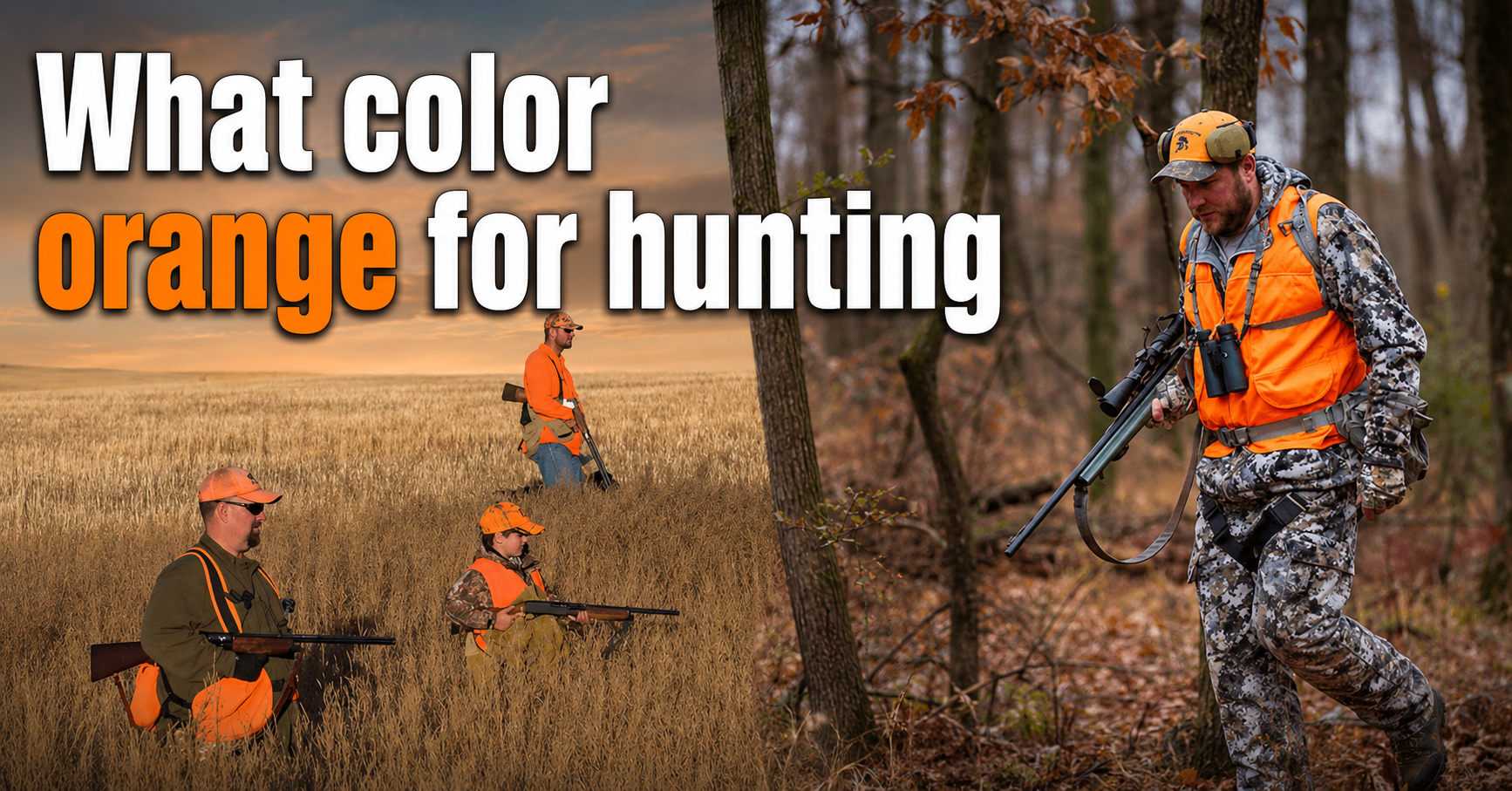

The correct color orange for hunting is generally daylight fluorescent orange, commonly called blaze orange, hunter orange, or safety orange. It is much brighter and more visible than ordinary orange, burnt orange, rust, red-orange, or brown-orange clothing.
However, hunter-orange laws differ by state, species, season, weapon, age, and land type. Some jurisdictions require solid fluorescent orange, while others permit orange camouflage. The safest approach is to wear a bright blaze-orange hat and outer garment visible from every direction, then confirm that they meet the current regulations where you will hunt.
Quick Answer
Choose clothing specifically labeled hunter orange, blaze orange, or daylight fluorescent orange. Do not assume that an ordinary orange sweatshirt, reddish jacket, faded vest, or orange camouflage pattern satisfies the law. Check your wildlife agency’s current rules for the required color, number of garments, amount of visible material, placement, and whether solid or camouflage orange is permitted. When in doubt, a solid blaze-orange hat and full blaze-orange vest or jacket provide greater visibility than the minimum amount alone.
What Hunter Orange Looks Like
| Color or pattern | General suitability | What to verify |
|---|---|---|
| Daylight fluorescent blaze orange | The standard hunting-safety color and the best general choice | Required surface area, garment type, and visibility |
| Solid hunter orange | Usually the easiest option for legal compliance and visibility | Whether a hat, vest, jacket, or multiple garments are required |
| Orange camouflage | Legal in some jurisdictions but prohibited or restricted in others | Required percentage or square inches of actual orange |
| Ordinary fashion orange | May not be sufficiently fluorescent or legally compliant | Whether the product is specifically identified as legal hunter orange |
| Red, rust, burnt orange, or brown-orange | Should not be treated as a substitute for hunter orange | Official color definition in local regulations |
| Fluorescent hunter pink | Accepted as an alternative in some states | Whether pink is legal for the species, season, and location |
Why Ordinary Orange May Not Be Enough
Blaze orange is a fluorescent color designed to stand out against leaves, grass, tree trunks, rocks, and other natural backgrounds. Ordinary orange fabric may appear bright indoors but become difficult to see in shade, thick vegetation, fog, rain, or low light.
Some states define hunter orange precisely. For example, the Maine Department of Inland Fisheries and Wildlife defines it as a daylight fluorescent orange within a specified wavelength, purity, and luminance range. Maine also requires qualifying garments to remain in serviceable condition and visible from all sides.
You do not need to measure a garment’s wavelength yourself. Buy hunting clothing clearly marketed as daylight fluorescent hunter or blaze orange from a reputable source, retain its product information, and compare it with the wording in the current regulations.
Hunter Orange, Blaze Orange, and Safety Orange
In hunting regulations and hunter-education materials, the following terms often refer to the same general high-visibility color:
- Hunter orange
- Blaze orange
- Daylight fluorescent orange
- Fluorescent orange
- Safety orange
- Ten-mile cloth
The names are often used interchangeably, but the official regulation controls. A garment described by a seller as “safety orange” is not automatically legal if it fails to meet the jurisdiction’s required color, surface area, or visibility rules.
How Much Orange Should a Hunter Wear?
There is no nationwide amount that applies to every hunt. Requirements may be expressed as:
- A minimum number of square inches
- A percentage of clothing above the waist
- One or two separate orange garments
- A solid orange hat or cap
- Orange visible on the chest and back
- Orange visible from every direction
- A separate orange panel attached to a ground blind
For example, current Texas Parks and Wildlife Department guidance requires specified hunters on public hunting lands to wear at least 400 square inches of hunter orange, including orange headgear and minimum amounts on both the chest and back. That rule should not be treated as the standard for another state or every type of Texas hunt.
As a practical safety choice, wear more visible orange than the legal minimum when doing so does not conflict with species-specific hunting considerations. A blaze-orange vest or jacket combined with a blaze-orange hat provides visibility at torso and head level.
Does Hunter Orange Have to Be Solid?
It depends on the jurisdiction. Some states accept camouflage patterns containing enough blaze orange, while others require solid fluorescent material.
For example, Alabama’s official hunter-orange guidance states that qualifying orange or fluorescent pink must be solid and visible from any angle under the described requirements. It specifically says that various shades of red and camouflage orange are not legal substitutes.
By contrast, Maine allows certain torso garments that are at least 50% hunter orange during applicable seasons. This difference illustrates why a garment can be legal in one state but inadequate in another.
If you hunt in multiple states, solid blaze orange is generally the simplest and most visible choice. Nevertheless, you must still verify the required surface area and garment placement in each jurisdiction.
Is Fluorescent Pink Legal for Hunting?
Fluorescent hunter pink is legal as an alternative to blaze orange in some states, but not everywhere. Where permitted, the rules may require the same surface area, visibility, and garment placement as orange.
For example, Virginia Department of Wildlife Resources regulations recognize solid blaze orange and solid blaze pink as qualifying blaze colors for specified hunting situations.
Do not assume pink is legal simply because a neighboring state permits it. Check the current regulation for the exact season and hunt.
When Is Blaze Orange Required?
Hunter-orange requirements commonly apply during firearm seasons for deer, elk, bear, moose, or other big game. Depending on the state, they may also apply to:
- Hunters pursuing other species during an open firearm deer season
- Archery hunters whose season overlaps a firearm season
- Muzzleloader hunters
- Crossbow hunters
- Youth hunters and accompanying adults
- Anyone accompanying a licensed hunter
- Hunters on public hunting areas
- People traveling to or from a stand
- Hunters using or sitting near a ground blind
Private property does not automatically create an exemption. Some laws apply on both public and private land, while others establish different requirements according to land ownership or management.
How to Check Your Local Hunter-Orange Law
- Identify the correct jurisdiction. Determine the state, province, country, county, wildlife unit, and public or private property involved.
- Identify the species. Orange requirements can differ for deer, bear, elk, turkey, small game, upland birds, and waterfowl.
- Check the weapon and season. Rules may change between archery, crossbow, muzzleloader, shotgun, and general firearm seasons.
- Check overlapping seasons. An archery hunter may be required to wear orange when a firearm season is open in the same area.
- Read the current regulation booklet. Use the official wildlife agency’s website rather than relying exclusively on an old summary or store display.
- Check public-land rules. A wildlife management area, national forest, refuge, or other managed property may impose additional requirements.
- Review exceptions carefully. An exemption while inside an enclosed blind may not apply when walking to or from it.
- Check again immediately before hunting. Regulations, emergency orders, and property rules can change.
Information in this article was checked on August 17, 2026. Official regulations always override general online guidance.
Where Should Hunter Orange Be Worn?
The most visible locations are the head and upper torso. A person’s torso creates a much larger visible area than a hat alone, while a hat may remain visible above brush that conceals the body.
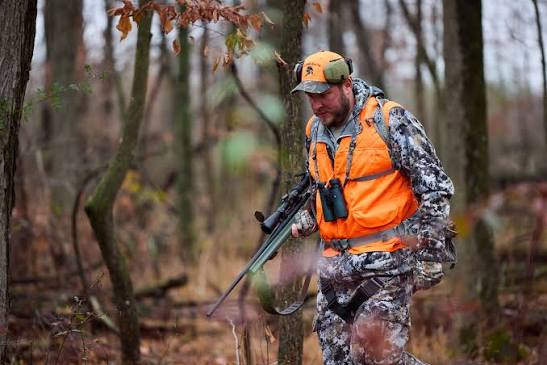
A strong general setup includes:
- A solid blaze-orange hat or cap
- A blaze-orange vest, coat, jacket, or poncho
- Orange visible on the front and back
- Visibility from both sides
- An uncovered outer layer rather than orange hidden beneath a backpack or rain shell
If cold or wet weather requires an additional outer layer, move the blaze-orange garment over that layer or use a legal blaze-orange rain jacket. An orange sweatshirt hidden under a dark waterproof shell provides little safety benefit.
Can a Backpack Cover Required Orange?
Yes. A large backpack can cover most of the orange on a hunter’s back, potentially reducing visibility and legal surface area.
Possible solutions include:
- A blaze-orange backpack cover
- A vest large enough to fit over the pack when practical
- A legal orange panel attached securely to the outside
- A backpack with a substantial integrated blaze-orange section
Make sure the solution remains visible and meets any solid-color or minimum-area requirement. A small orange logo on a dark backpack is unlikely to replace a required orange back panel.
Does a Blaze-Orange Hat Alone Count?
It depends on the law. Some regulations allow a full-size blaze-orange hat as one compliance option, while others require both headgear and a specified amount of torso coverage.
Even when a hat alone is technically sufficient, a full orange vest or jacket can make the hunter easier to recognize from the front, back, and sides. A hat can disappear behind vegetation when the hunter bends, kneels, or sits.
What About Ground Blinds?
A hunter inside a blind may be completely hidden even while wearing the required clothing. Some jurisdictions therefore require a blaze-orange panel or material to be displayed on or near the blind.
Ground-blind rules may specify:
- A minimum square-inch area
- Solid rather than camouflage orange
- Placement at or above shoulder level
- Visibility from 360 degrees
- A maximum distance between the orange marker and blind
Never place orange only on one side of a blind when other hunters may approach from different directions. Check whether blind marking is required in addition to orange worn on your body.
Do Tree-Stand Hunters Need Orange?
Rules vary. Some jurisdictions provide limited exemptions while the hunter is inside an elevated or enclosed stand, but may still require orange during travel to and from the stand.
Do not remove orange automatically after climbing. Hunters can approach from several directions, and vegetation may obscure the stand. Follow the regulation and prioritize visibility whenever possible.
When using a tree stand, also wear a full-body fall-arrest system connected from the ground or before leaving the ground, according to the stand manufacturer’s instructions. Hunter orange does not replace fall protection.
Do Bowhunters Need Blaze Orange?
Sometimes. An archery-only season may provide an exemption, but bowhunters can be required to wear orange when their season overlaps a firearm, muzzleloader, bear, or other specified season.
Check all seasons open in the area, not only the season associated with your tag. Other hunters may be legally using firearms nearby even when you are hunting with a bow.
Should Turkey Hunters Wear Orange?
Turkey-hunting rules often provide different orange requirements because turkeys can see color well and hunters depend heavily on visual concealment. However, turkey hunting presents a serious mistaken-identity risk because hunters use calls and decoys to imitate a game animal.
Where legal and consistent with local hunter-education guidance:
- Wear blaze orange while walking to and from the hunting location.
- Do not wear red, white, or blue clothing that could resemble parts of a wild turkey.
- Carry harvested birds in a blaze-orange bag or mark them visibly.
- Do not stalk turkey sounds.
- Identify the entire bird and what is beyond it before considering a shot.
- Avoid setting up where another hunter could approach from behind the decoy.
Do Waterfowl Hunters Wear Blaze Orange?
Waterfowl hunters are exempt from general orange requirements in many situations, particularly when hunting from a boat, blind, or decoy setup. The exemption is not universal.
Orange may also be required while traveling through land where another firearm season is active. Check the state rules and property regulations for both the waterfowl hunt and the route used to reach it.
Should Hunting Dogs Wear Blaze Orange?
A blaze-orange vest or collar can make a dog easier for hunters and handlers to see in brush, fields, and timber. This is particularly useful during upland hunting and overlapping big-game firearm seasons.
Choose dog gear that:
- Fits without restricting breathing or shoulder movement
- Does not create loose loops that can catch on vegetation
- Remains visible when wet
- Does not rub under the front legs
- Includes identification and current contact details
Orange dog gear does not make it safe to shoot at movement. Every hunter must positively identify the complete target and know what lies beyond it.
How to Choose a Blaze-Orange Garment
| Feature | Why it matters | What to check |
|---|---|---|
| Daylight fluorescence | Improves contrast against natural surroundings | Clearly labeled hunter or blaze orange |
| Solid coverage | Provides stronger visibility and may satisfy solid-color laws | Logos and camouflage do not reduce required coverage |
| Outer-layer fit | Keeps orange visible over insulated or waterproof clothing | Enough room for seasonal layers |
| Front, back, and side visibility | Helps other hunters recognize you from different directions | Large continuous panels rather than narrow strips |
| Weather resistance | Maintains comfort and visibility in rain or snow | Suitable insulation, ventilation, or waterproofing |
| Quiet fabric | Reduces unnecessary clothing noise during movement | Test the fabric while walking and raising a firearm or bow |
| Garment condition | Faded or dirty material may be less visible | Replace badly faded, torn, or stained gear |
You do not need the most expensive hunting garment. Choose one that meets the current law, remains visible, fits over your clothing, and performs reliably in the expected weather.
How to Keep Blaze Orange Visible
- Wear it as the outermost layer.
- Keep mud, blood, leaves, and snow from covering it.
- Use an orange pack cover when a backpack hides your vest.
- Replace badly faded material.
- Do not cover the back panel with a dark rain jacket.
- Check visibility while sitting, kneeling, and using a stand.
- Mark a ground blind when required.
- Wear orange while retrieving game if firearm seasons remain open.
- Add orange to dragging equipment, game carts, and other field gear when helpful.
Common Hunter-Orange Mistakes
Buying a Regular Orange Shirt
An orange fashion shirt may not be fluorescent or meet the legal definition. Select clothing specifically made and labeled for hunter visibility.
Assuming Orange Camouflage Is Always Legal
Camo orange is permitted in some states and prohibited in others. Even where legal, the garment may need a minimum percentage or area of visible orange.
Letting a Backpack Cover the Vest
If the pack covers the orange on your back, you may become difficult to see from behind and could fall below the legal visible area.
Wearing Orange Under an Outer Layer
Hunter orange must generally be visible. A compliant vest underneath a dark jacket does not protect you or necessarily satisfy the law.
Checking Only the Deer Regulations
Requirements can apply to people hunting other species during an open firearm deer, bear, elk, or moose season. Review every overlapping season.
Relying on Last Year’s Rulebook
Wildlife regulations can change. Read the current official publication before each season.
Treating Orange as a Substitute for Target Identification
Not everyone outdoors wears orange. Hunters, landowners, hikers, workers, and animals may be partly or completely concealed. Never shoot at color, sound, movement, or an unidentified shape.
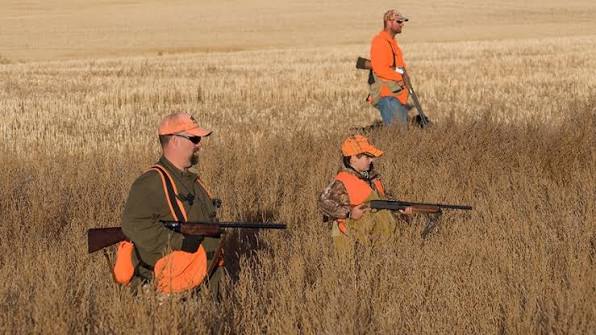
Hunter Orange and Firearm Safety
Blaze orange helps people see one another, but it does not prevent negligent firearm handling. Always follow the four fundamental safety rules:
- Treat every firearm as if it is loaded.
- Keep the muzzle pointed in a safe direction.
- Keep your finger outside the trigger guard until ready to shoot.
- Be certain of the target and what is beyond it.
Orange is an additional safety layer, not permission to shoot toward an uncertain background. Never assume that a patch of brown is game or that an area is safe because no orange is visible.
Final Answer
For anyone asking what color orange for hunting, choose daylight fluorescent blaze orange, also known as hunter orange. Solid blaze orange is generally the safest and most widely accepted style, but the legal amount, placement, garments, patterns, and exceptions vary by jurisdiction. Verify the current official regulations for your species, season, weapon, and land before hunting, and wear enough visible orange to be recognized from every direction.
FAQs
1. What is the official orange color for hunting?
It is generally called daylight fluorescent orange, blaze orange, hunter orange, or safety orange. Some jurisdictions provide a technical color definition, so use garments specifically labeled for hunting.
2. Is blaze orange the same as hunter orange?
Usually, yes. The terms commonly describe the same intense fluorescent hunting-safety color. Always follow the terminology and definition used in the official regulation.
3. Is safety orange the same as blaze orange?
It may refer to a similar color, but a product marketed for another industry is not automatically legal hunting apparel. Verify that it meets the wildlife agency’s requirements.
4. Can I wear a regular orange sweatshirt for hunting?
Only if it meets the legal color, area, placement, and visibility requirements. A regular orange garment may not be sufficiently fluorescent, so dedicated hunter-orange clothing is a safer choice.
5. Is burnt orange legal for hunting?
Do not assume it is. Burnt orange is darker and less visible than fluorescent hunter orange and may fail the legal definition.
6. Is red-orange acceptable as hunter orange?
Not necessarily. Some state regulations specifically reject red or other non-fluorescent shades. Choose clearly labeled blaze or hunter orange.
7. Does hunter orange have to be fluorescent?
Many regulations specifically require daylight fluorescent orange. Check your wildlife agency’s wording rather than relying only on the garment’s appearance.
8. Does hunter orange have to be solid?
That depends on the state. Some require solid material, while others permit camouflage patterns containing a specified amount or percentage of orange.
9. Is orange camouflage legal?
It is legal in some jurisdictions and prohibited in others. Check the current rule for the exact species, season, and location.
10. Is a blaze-orange hat enough?
Sometimes, but many hunts require additional orange on the chest, back, or upper torso. A hat and vest combination generally provides better all-around visibility.
11. How many square inches of orange do I need?
There is no nationwide amount. State requirements can range from a garment or hat rule to several hundred square inches of visible material.
12. How can I measure square inches of hunter orange?
Multiply the width by the height of each qualifying visible panel and add the eligible areas together. Do not count portions hidden by a backpack, jacket, or equipment. Follow the agency’s specific counting rules.
13. Does a logo reduce the legal orange area?
It may. Some states allow a small logo that does not meaningfully reduce visibility, while others specify solid coverage. Check the official regulation.
14. Can a backpack cover my blaze-orange vest?
A backpack can reduce the visible and potentially qualifying orange area. Use an orange pack cover or another approved solution so your back remains visible.
15. Do I need blaze orange on private land?
Possibly. Some requirements apply statewide on both public and private property, while others differ by land type. Landowner status does not guarantee an exemption.
16. Is blaze orange required on public land?
Often, but the details vary. A public hunting area may also have rules beyond the general statewide requirement.
17. Do bowhunters need hunter orange?
They may need it when an archery season overlaps a firearm or other specified season. Review all seasons open in the hunting area.
18. Do muzzleloader hunters need orange?
Many states require it during muzzleloader seasons, but garment requirements and stand exemptions vary. Check the current rule.
19. Do turkey hunters need hunter orange?
Turkey hunters are exempt in many jurisdictions, but orange may be required or recommended while traveling, carrying a harvested bird, or hunting during overlapping seasons.
20. Do waterfowl hunters need hunter orange?
They are exempt in many decoy, blind, or boat-based situations, but orange may still be required while crossing land affected by another firearm season.
21. Can I wear fluorescent pink instead of orange?
Only where fluorescent hunter pink is officially authorized. It is not a legal alternative in every state.
22. Should non-hunters wear blaze orange?
Hikers, landowners, photographers, and other outdoor users may benefit from bright orange or pink clothing during firearm hunting seasons, particularly on shared public land.
23. Should hunting dogs wear blaze orange?
A well-fitted blaze-orange vest or collar can improve a dog’s visibility. It does not replace positive target identification or careful firearm handling.
24. Does blaze orange scare deer?
Deer perceive color differently from humans, but movement, outline, scent, sound, and wind remain important. Do not reduce required visibility based on concerns about the color.
25. Should I wear more orange than the law requires?
Wearing additional blaze orange can improve recognition from different directions. The legal minimum should be treated as a baseline rather than a visibility guarantee.
26. When should blaze-orange clothing be replaced?
Replace it when it becomes badly faded, permanently stained, torn, or unable to remain visible. Follow the garment’s care instructions to preserve its fluorescent color.
27. Does blaze orange need to be the outermost layer?
It generally needs to remain externally visible. A dark coat or rain shell placed over it may defeat both its safety purpose and legal compliance.
28. Does a ground blind need an orange marker?
Some jurisdictions require a specified blaze-orange panel on or near an enclosed ground blind. Check the required area, placement, and visibility.
29. Can I remove blaze orange after climbing into a stand?
Only if the regulation provides a specific exemption. Keeping orange visible may still be the safer choice because other hunters can approach from multiple directions.
30. Where can I find the correct hunter-orange rule?
Use the current hunting-regulation booklet or website published by the state or provincial wildlife agency. Also check any additional rules for the specific public property.
Read more: