
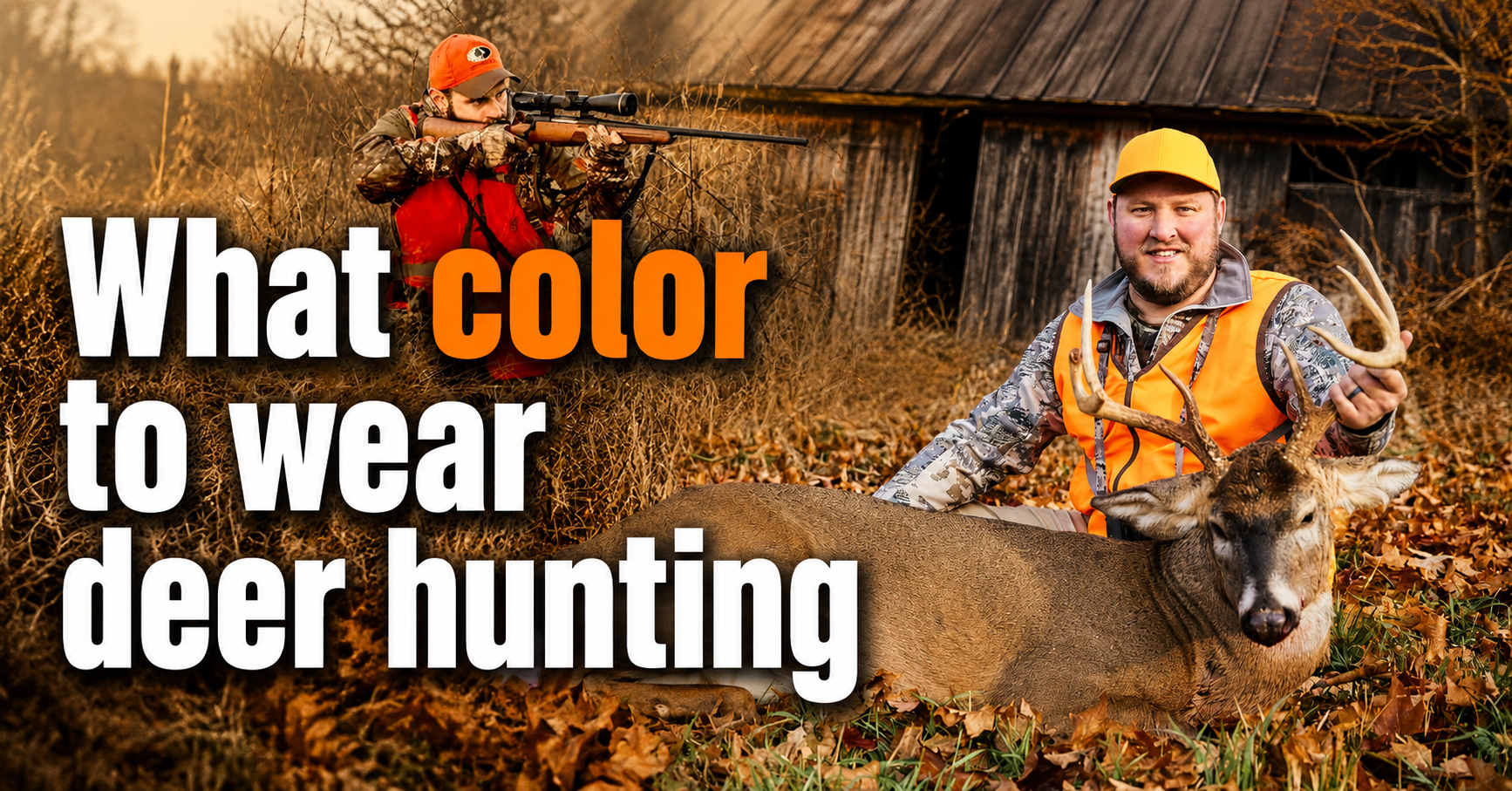

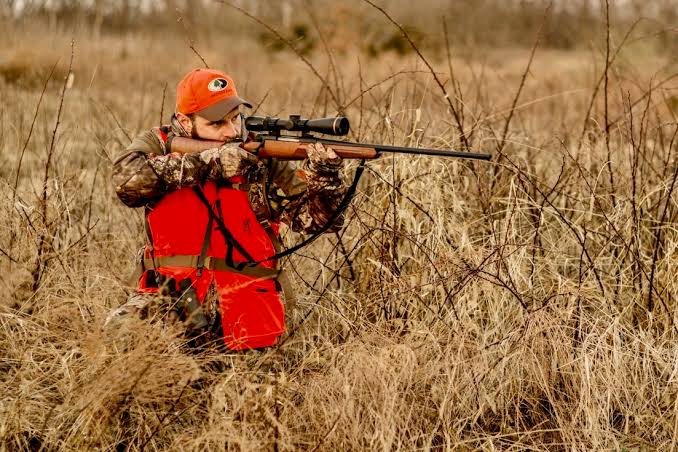
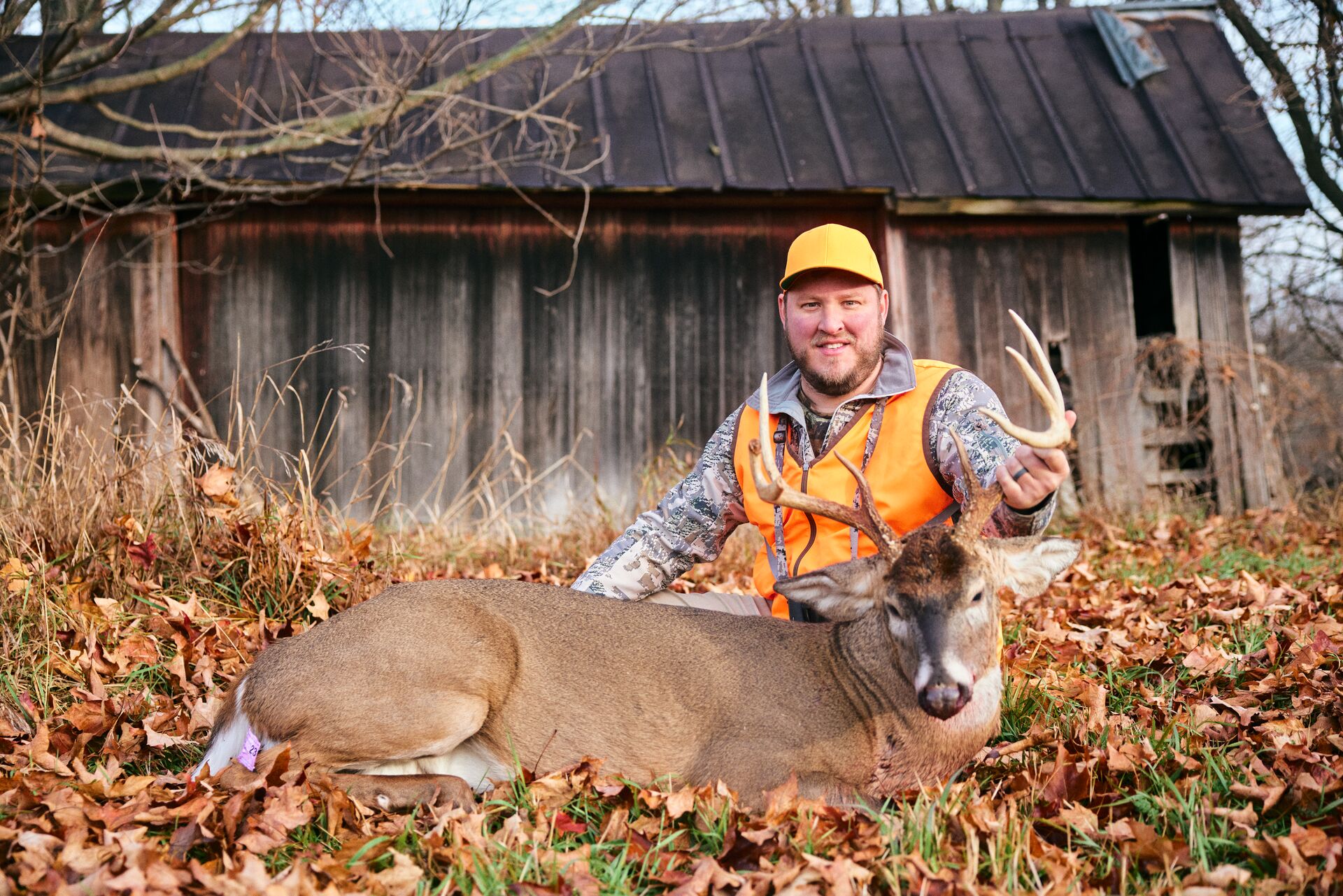
The best color to wear deer hunting is fluorescent hunter orange, also called blaze orange, whenever it is required by law or other hunters may be nearby. Wear a legally compliant orange hat, vest, jacket, or combination over brown, gray, olive, tan, or habitat-appropriate camouflage.
Avoid relying on blue clothing, including blue jeans, because deer are relatively sensitive to short blue wavelengths. Your exact hunter-orange requirement depends on the state, season, hunting method, property, and whether another firearm season overlaps your hunt.
Quick Answer
Wear blaze orange as your visible outer safety layer and use muted brown, gray, olive, or camouflage for the remaining clothing. Blaze pink may also be legal in some jurisdictions. Avoid blue as a dominant outer color, and do not wear an all-white, tan, or brown outfit that could make another hunter mistake part of you for a game animal. Official hunting regulations always override general clothing advice.
Best Deer Hunting Colors at a Glance
| Color or pattern | Recommended use | Important consideration |
|---|---|---|
| Blaze orange | Hat, vest, jacket, or other legally required outer garment | Highly visible to people and required during many deer seasons |
| Fluorescent pink | Alternative safety color where expressly permitted | Not accepted in every jurisdiction |
| Brown, gray, olive, and muted green | Base layers, pants, gloves, and camouflage patterns | Blend with many woodland environments but do not provide human visibility |
| Tan and khaki | Dry grass, open timber, and early-season terrain | Combine with required hunter orange; avoid looking like an animal-colored silhouette |
| White and light gray | Snow camouflage where useful and legal | Keep hunter orange visible and avoid exposed white during non-snow conditions |
| Blue | Generally avoid as a dominant outer color | Deer are relatively sensitive to blue wavelengths |
| Black | Small areas or inside a dark ground blind | A large solid-black outline may contrast strongly with natural vegetation |
| Camouflage | Breaking up the hunter’s shape | Optional in many situations and never a substitute for legally required orange |
Why Blaze Orange Is the First Choice
Blaze orange is intended to make a hunter clearly visible and identifiable as a person. According to the International Hunter Education Association standards, wearing hunter orange helps other hunters see and identify a person, reducing the risk of hunting-related shooting incidents.
Hunter-orange rules vary considerably. Depending on the jurisdiction, regulations may specify:
- A minimum number of square inches
- A solid fluorescent color rather than ordinary orange
- A hat, vest, coat, or combination of garments
- Visibility from every direction
- Requirements for companions or supervising adults
- Orange displayed on a ground blind
- Additional rules on public land or wildlife management areas
- Requirements for archery hunters during overlapping firearm seasons
For example, some jurisdictions accept patterned fluorescent material, while others state that camouflage orange does not qualify. Some accept fluorescent pink as an alternative, while others require orange specifically. Check the current hunting digest from the wildlife agency responsible for the exact property you will hunt.
Can Deer See Hunter Orange?
Deer can detect objects that are orange, but they do not experience the color in the same way that people do. It is more accurate to say that blaze orange has less color contrast for deer than it has for humans—not that orange becomes invisible.
Research on white-tailed deer vision indicates that deer have two main classes of cone photoreceptors, while most people have three. This dichromatic system gives deer relatively strong sensitivity in short blue wavelengths and middle wavelengths around the green portion of the spectrum.
A Penn State Deer-Forest Study explanation of deer vision notes that deer are particularly sensitive to blue and blue-green light, especially during low-light conditions. Their vision is well adapted to detecting movement near dawn and dusk.
Blaze orange therefore remains an effective compromise: it is conspicuous to human hunters but usually has less chromatic contrast to deer than blue. Nevertheless, a deer can still detect your outline, movement, brightness, and contrast against the background.
Colors to Wear Under Hunter Orange
Choose base layers and secondary garments that match the general brightness and structure of the surrounding habitat.
Hardwood Forests
Muted brown, bark gray, olive, and dull green work well in mixed hardwoods. A pattern containing both light and dark areas can help break up a human outline among tree trunks, branches, and shadows.
Evergreen Cover
Olive, dark green, gray, and brown can suit cedar, pine, spruce, or thick evergreen cover. Avoid becoming one solid dark shape by using a pattern with several tones.
Dry Grass and Agricultural Edges
Tan, khaki, muted brown, dull green, and gray can match dry vegetation. Keep the required blaze-orange garment fully visible rather than covering it with vegetation or a backpack.
Snow Conditions
White, light gray, and broken snow patterns can reduce contrast with the background. Continue wearing blaze orange or fluorescent pink as required. Do not allow a white hood or snow cover to conceal required safety clothing.
Inside a Ground Blind
Dark gray, brown, or black clothing may reduce contrast inside a dark blind. Keep your face and hands away from bright window openings when possible. If regulations require orange on the blind or on your body, display it exactly as directed.
Should You Avoid Blue When Deer Hunting?
Blue is generally the least useful dominant color for concealment from deer. Their short-wavelength sensitivity can make some blue materials appear more conspicuous than muted earth tones.
This does not mean that wearing blue jeans automatically ruins a hunt. Distance, movement, background contrast, wind, noise, and the deer’s level of alertness all affect detection. However, when choosing between otherwise similar clothing, brown, gray, olive, or camouflage is usually a more practical option than bright blue denim.
Should You Wear Red, Pink, White, or Black?
Red
Deer do not perceive red as people do, but an ordinary red garment is not necessarily a legal substitute for hunter orange. Wear only the fluorescent safety color specified by the applicable regulations.
Fluorescent Pink
Several states allow blaze or fluorescent pink for certain hunts. Maryland, New York, Wisconsin, and Illinois are examples of jurisdictions with fluorescent-pink provisions, but their garment and coverage rules differ. Never assume pink is legal without checking the current local regulations.
White
White can flash conspicuously when you move and may resemble parts of a deer to another person at a distance. Avoid exposed white in ordinary woodland conditions. Snow camouflage is an exception, but it should always be combined with the legally required high-visibility clothing.
Black
Black may be useful inside a dark blind, but a solid-black outfit can form a strong silhouette outdoors. Dark gray, brown, olive, or a broken pattern usually offers more adaptable concealment.
Do You Need Camouflage for Deer Hunting?
Full camouflage is not always necessary. Muted solid colors can work when the hunter remains still, uses cover, avoids being silhouetted, and pays attention to wind direction.
Camouflage is most useful when it breaks up recognizable features such as:
- The round shape of the head
- The straight line of the shoulders
- The outline of the arms and torso
- Bright hands and facial skin
- Large solid blocks of one shade
A pattern should resemble the scale and contrast of the habitat. Fine, detailed camouflage may look like one solid color at a distance. Larger shapes and contrasting light and dark areas can be more effective at breaking up an outline.
Camouflage cannot compensate for obvious movement, an exposed skyline position, unsafe behavior, or failure to wear legally required fluorescent clothing.
Does Hunter-Orange Camouflage Count?
Only if the applicable regulations say it does. Some states accept patterned fluorescent orange when a required percentage of the garment remains fluorescent. Other states require solid orange or expressly state that camouflage orange is insufficient.
For example, the Missouri Department of Conservation states that camouflage orange does not satisfy its hunter-orange rule. In contrast, New York permits certain patterned fluorescent garments when the pattern meets its fluorescent-color percentage and coverage requirements.
Read the actual wording for your season instead of relying on a product label that says “hunter orange.”
What Color to Wear During Different Deer Seasons
Firearm Deer Season
Use blaze orange or another fluorescent safety color permitted by law. A hat and vest or coat is a common arrangement, but it may not meet every jurisdiction’s required coverage.
Archery Season
Earth tones or camouflage may be permitted when no firearm season is open. However, archery hunters may still need fluorescent clothing during overlapping firearm, muzzleloader, youth, bear, or other big-game seasons.
Wearing some blaze orange while entering, leaving, or recovering a deer can improve visibility even when the law does not require it.
Muzzleloader Season
Do not assume muzzleloader rules match archery rules. Many jurisdictions treat muzzleloader seasons as firearm seasons for fluorescent-clothing requirements.
Public-Land Hunting
Visibility is especially important where multiple hunters may use the same property. A wildlife management area, national wildlife refuge, state forest, or other public property may impose requirements beyond the general state rule.
Private-Land Hunting
Private ownership does not automatically eliminate hunter-orange requirements. State law may apply to private land, and the landowner or outfitter may establish additional safety rules.
Visibility While Walking and Recovering Deer
Keep blaze orange visible while walking to a stand, leaving after dark, following a blood trail, field dressing, or carrying game. Do not cover it completely with a camouflage backpack, rain jacket, safety harness, or harvested animal.
When transporting or carrying a deer, use an orange covering or flag if required or recommended locally. Never place antlers on your head or shoulders, and do not carry an uncovered deer in a way that creates an animal-like silhouette.
If tracking continues onto another property, obtain the required permission before crossing the boundary. Follow any special regulations concerning tracking dogs, weapons, night recovery, and hunter orange.
Clothing Checklist for a Deer Hunt
Required or Safety-Critical Clothing
- Legally compliant fluorescent-orange or fluorescent-pink garment
- Required fluorescent hat or cap
- Weather-appropriate boots with reliable traction
- Clothing suitable for expected temperatures and precipitation
- Fall-arrest harness when using an elevated stand
Useful Concealment Clothing
- Brown, gray, olive, tan, or habitat-matched layers
- Gloves that reduce hand movement and contrast
- A face covering or face paint used without obstructing vision
- A quiet outer layer that allows safe movement
- A pattern with enough contrast to break up the body’s outline
Optional Items
- Orange backpack panel or rain cover
- Orange flag for game recovery
- Blaze-orange replacement vest stored in the vehicle
- Snow camouflage for appropriate conditions
- UV-reducing or fragrance-free laundry products
You do not need the most expensive equipment to hunt responsibly. Choose gear based on the species, terrain, weather, local regulations, fit, safety, reliability, maintenance requirements, and your actual experience.
What About UV-Brightening Laundry Detergent?
Deer eyes do not filter ultraviolet light in exactly the same way as human eyes, and deer are sensitive to short wavelengths. Some hunters therefore avoid detergents containing optical brighteners that can make fabric appear brighter.
However, field detection is affected by many variables, and claims that a particular detergent will make a hunter “glow” to deer are often overstated. A fragrance-free detergent without optical brighteners is a reasonable optional choice, but controlling movement, wind exposure, noise, and silhouette is more important than relying on a specialized laundry product.
Common Clothing Mistakes
- Wearing ordinary orange: A muted orange shirt may not satisfy a fluorescent hunter-orange rule.
- Assuming a hat is always enough: Some jurisdictions require substantial coverage on the chest and back.
- Covering orange with a backpack: Required material may need to remain visible from every direction.
- Using orange camouflage without checking: Some states do not accept patterned hunter orange.
- Wearing blue jeans as the main outer garment: Blue may contrast more strongly to deer than earth tones.
- Matching color but ignoring movement: Deer can detect sudden movement regardless of camouflage quality.
- Using the wrong habitat pattern: A very dark woodland pattern may create a solid silhouette in dry grass or snow.
- Forgetting overlapping seasons: An archery hunter may need orange when a firearm season is open in the same area.
- Wearing animal-colored clothing without orange: White, tan, and brown clothing can reduce visibility to other hunters.
- Following last year’s rules: Fluorescent-clothing regulations can change between seasons.
How to Verify the Current Color Requirements
- Identify the state, province, or country where you will hunt.
- Confirm the exact deer season and legal hunting method.
- Read the current official hunting regulation booklet.
- Check for overlapping firearm, youth, bear, elk, or muzzleloader seasons.
- Review property-specific rules for refuges, wildlife areas, forests, and private leases.
- Confirm requirements for companions, mentors, tracking assistants, dogs, and ground blinds.
- Contact the wildlife agency or conservation officer if the wording remains unclear.
The U.S. Fish and Wildlife Service advises hunters on national wildlife refuges to follow current state, federal, and refuge-specific regulations. A refuge permit or brochure may impose additional clothing requirements.
Final Answer
When deciding what color to wear deer hunting, begin with legally compliant blaze orange or fluorescent pink where permitted. Combine it with muted brown, gray, olive, tan, or habitat-matched camouflage, and avoid blue as your dominant outer color. Camouflage can help break up your outline, but remaining still and using background cover matter more than owning a particular pattern. Check the current wildlife-agency regulations for your exact season and property before every hunt.
FAQs
1. What is the best color to wear deer hunting?
Blaze orange is the best safety color and is legally required for many deer hunts. Use brown, gray, olive, tan, or camouflage for the remaining clothing.
2. Can deer see blaze orange?
Deer can detect an orange object, but blaze orange does not have the same vivid color contrast for them that it has for humans. Movement, brightness, and outline remain visible.
3. Why do deer hunters wear orange?
Hunter orange helps other people recognize a hunter and distinguish that person from a deer or the background. Its primary purpose is human safety.
4. Is blaze orange required in every state?
No. Rules vary by state, season, hunting method, property type, and overlapping seasons. Always consult the current official hunting regulations.
5. How much blaze orange should I wear?
Wear at least the amount and type required by the applicable rule. Depending on the jurisdiction, this may be a hat, a vest, a coat, a specified surface area, or clothing visible from all directions.
6. Is a blaze-orange hat enough?
Not everywhere. Some states require both a hat and an upper-body garment, while others specify a minimum number of square inches.
7. Can I wear fluorescent pink instead of orange?
Only where fluorescent pink is expressly accepted. The required garment, coverage, and visibility rules may still apply.
8. Can deer see fluorescent pink?
Deer do not perceive pink as people do, but they can still detect the garment’s brightness, outline, and movement. Its legal status is more important than assuming it is invisible.
9. Should I avoid blue jeans while deer hunting?
Blue jeans are not automatically hunt-ending, but deer are relatively sensitive to blue wavelengths. Brown, gray, olive, or camouflage pants are usually a better concealment choice.
10. Can deer see red clothing?
Deer perceive long-wavelength colors differently from humans, but red clothing is not necessarily a legal substitute for fluorescent orange. Follow the color named in the regulation.
11. Is black a good deer hunting color?
Black may work inside a dark ground blind, but a solid-black outfit can create a strong outdoor silhouette. Mixed dark gray, brown, olive, or patterned clothing is generally more adaptable.
12. Should deer hunters avoid white?
Avoid exposed white in normal woodland conditions because it can flash when you move and may resemble part of a deer to another hunter. White snow camouflage should be combined with required high-visibility clothing.
13. Do I need camouflage to hunt deer?
No. Muted solid colors can work when you control movement, remain against background cover, and use the wind properly. Camouflage mainly helps break up the human outline.
14. Is orange camouflage legal?
It depends on the jurisdiction. Some rules accept patterned fluorescent material, while others require solid orange or reject camouflage orange.
15. Should bowhunters wear blaze orange?
Bowhunters should wear it when required and consider it while moving or hunting near other people. Orange may become mandatory when an archery season overlaps a firearm season.
16. Do muzzleloader hunters need orange?
Often, but not universally. Many agencies apply firearm-season fluorescent-clothing rules to muzzleloader hunters.
17. Do I need orange on private property?
Possibly. State clothing laws can apply on private land, and landowners or outfitters may impose additional requirements.
18. Do ground blinds need hunter orange?
Some jurisdictions and public properties require fluorescent material on ground blinds. Check how much material is needed and whether it must be visible from every direction.
19. What color should I wear in a tree stand?
Wear required hunter orange with brown, gray, olive, or a woodland pattern underneath. Choose a pattern that breaks up your outline against the tree rather than one that matches only the ground.
20. What color should I wear for early-season deer hunting?
Muted green, olive, gray, and brown generally suit early foliage. Use lightweight materials and add legally required fluorescent clothing.
21. What color should I wear for late-season deer hunting?
Gray, brown, tan, muted olive, and patterns resembling leafless timber or dry vegetation can work. Use snow colors only when the ground and background are predominantly snowy.
22. Should I wear orange while tracking a deer?
Yes when required, and it is a sensible safety measure whenever other hunters may be present. Tracking may cross into a different property or season-specific area with additional rules.
23. Should a hunting companion wear blaze orange?
Many jurisdictions require companions, mentors, or assistants to follow the same fluorescent-clothing rules as the hunter. Even when not required, visible clothing is a strong safety practice.
24. Should a deer-tracking dog wear orange?
A blaze-orange dog vest or collar can make the dog more visible to hunters. Confirm that the item fits safely and does not snag easily in dense vegetation.
25. Does camouflage hide movement from deer?
No. Camouflage can reduce recognition of your outline, but sudden head, hand, or body movement can still alert deer.
26. Does laundry detergent affect hunting clothing color?
Optical brighteners may change how fabric reflects short wavelengths, but their field importance is often exaggerated. A fragrance-free, non-brightening detergent is optional; movement and wind control remain more consequential.
27. Can I cover my orange vest with a backpack?
Do not cover required fluorescent material if it must remain visible from the back or all directions. Use an orange backpack panel or rain cover when necessary.
28. What color rain gear should deer hunters wear?
Choose legally compliant blaze-orange rainwear during seasons that require it. Otherwise, select quiet brown, gray, olive, or camouflage material and carry a separate orange vest if conditions change.
Read more: