
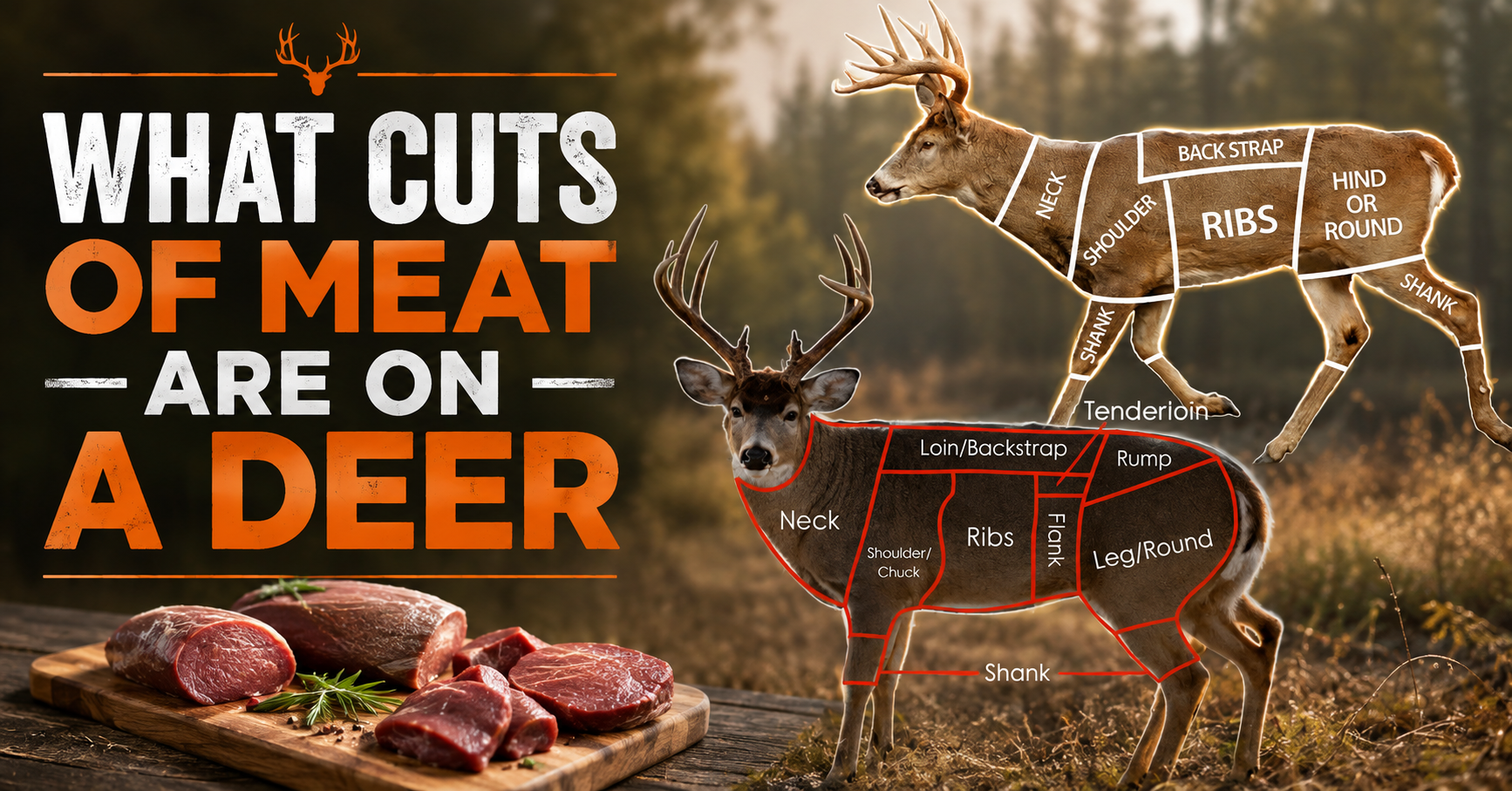

The primary cuts of meat on a deer are the backstraps, tenderloins, hindquarters, shoulders, neck, ribs, flank, brisket, and shanks. Hunters can also save edible organs such as the heart, liver, kidneys, and tongue when local health guidance permits.
Each section has a different level of tenderness. Backstraps and tenderloins are naturally tender, while the neck, shoulders, and shanks contain more connective tissue and benefit from slow cooking. The hindquarters contain several individual muscles that can become steaks, roasts, jerky, stew meat, or ground venison.
Quick Answer
A deer provides two backstraps, two tenderloins, two front shoulders, two hindquarters, neck meat, ribs, flank and abdominal meat, brisket, four shanks, and assorted trim. The hindquarters can be separated into top round, bottom round, eye of round, sirloin tip, rump, and other smaller muscles. Ground venison, sausage, stew cubes, and jerky are processing choices rather than anatomical cuts.
Deer Meat Cuts at a Glance
| Deer cut | Location | Tenderness | Common uses |
|---|---|---|---|
| Backstrap or loin | Along both sides of the spine | Very tender | Medallions, steaks, roasts, grilling |
| Tenderloin | Inside the body cavity beneath the spine | Most tender | Whole searing, medallions, quick cooking |
| Top round | Inside of the hindquarter | Moderately tender | Steaks, roasts, jerky |
| Bottom round | Outside and rear of the hindquarter | Moderately firm | Roasts, jerky, sliced venison |
| Eye of round | Long muscle within the hindquarter | Lean and firm | Small roasts, cured meat, jerky |
| Sirloin tip or knuckle | Front portion of the hindquarter | Moderately tender | Steaks, roasts, stir-fries |
| Rump or sirloin | Upper rear near the pelvis | Moderately tender | Roasts, steaks, kebabs |
| Shoulder | Front quarter | Firm with connective tissue | Braising, pulled venison, stew, grinding |
| Neck | Between the head and shoulders | Tough but flavorful | Pot roast, braising, soup, tacos |
| Shank | Lower portion of each leg | Very connective | Osso buco-style dishes, braising, stock |
| Ribs | Chest and rib cage | Variable | Slow roasting, smoking, braising, trimming |
| Flank and abdominal trim | Thin muscles around the abdomen | Thin and firm | Grinding, sausage, fajita-style strips |
| Brisket | Lower chest | Firm | Slow cooking, corning, grinding |
| Trim | Around larger muscles and bones | Variable | Ground venison, sausage, stew, jerky |
Backstrap or Venison Loin
The backstraps are the long muscles running along the outside of the spine from the shoulder area toward the pelvis. A deer has one backstrap on each side.
Backstrap is sometimes called loin, strip loin, or venison loin. It is usually cut into:
- Whole loin roasts
- Thick steaks
- Medallions
- Butterflied steaks
- Small roasts for searing
Because the back muscles perform less strenuous work than the legs and shoulders, the backstrap is relatively tender. It is normally better suited to roasting, grilling, pan-searing, or other shorter cooking methods than prolonged stewing.
Tenderloin
The tenderloins are two small muscles located inside the body cavity, along the underside of the spine near the rear of the rib cage. They are separate from the much larger backstraps.
Tenderloins are generally considered the most tender meat on a deer. Their small size makes them easy to overcook, so they are commonly kept whole or divided into thick medallions.
The tenderloins are exposed during field dressing and can dry out or become contaminated if the carcass is handled poorly. Remove visible dirt, hair, digestive material, or damaged tissue and keep the meat cold.
Hindquarter Cuts
The hindquarters contain the largest concentration of usable muscle on a deer. Rather than cutting the entire leg into generic “deer steaks,” a careful butcher can follow the natural seams and separate the individual muscles.
Top Round
The top round is a large muscle on the inside of the hind leg. It is one of the more versatile hindquarter cuts and can become steaks, a roast, jerky strips, or thin slices for sandwiches and stir-fries.
Bottom Round
The bottom round sits toward the outside and rear of the hindquarter. It is lean and somewhat firmer than the top round. It works well as a roast, jerky, cured venison, or thinly sliced cooked meat.
Eye of Round
The eye of round is a long, narrow, cylindrical muscle associated with the bottom round. Its even shape makes it useful for small roasts, jerky, smoking, curing, or thin slicing.
Sirloin Tip or Knuckle
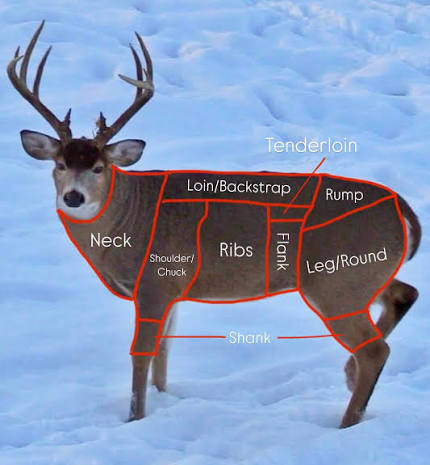
The sirloin tip, sometimes called the knuckle, is a group of muscles at the front of the hindquarter near the knee. It can be separated into smaller steaks, cubed for kebabs, sliced for stir-fries, or kept as a roast.
Rump and Sirloin
The rump and sirloin area lies near the pelvis and upper end of the hindquarter. Butchering terminology varies, so some processors combine these muscles with the top round or label them as rump roasts.
Smaller Hindquarter Muscles
A hindquarter also contains smaller seam-separated muscles. Depending on their size and condition, these may become individual steaks, stew meat, jerky, or grinding trim.
Front Shoulder Cuts
Unlike domestic beef, a deer’s front shoulder is not attached to the rib cage by a large joint. It can generally be removed by cutting through the connective tissue between the shoulder blade and chest.
The shoulder performs substantial work and contains multiple muscle groups, silver skin, and connective tissue. Common processing choices include:
- A bone-in shoulder roast
- Boneless shoulder roasts
- Braising pieces
- Stew meat
- Pulled venison
- Ground venison
- Sausage trim
A patient butcher may separate individual shoulder muscles, but many processors place most of the front quarters into the grind pile. Keeping a shoulder whole for slow cooking can provide a useful alternative to ground meat.
Venison Neck
The neck is easy to overlook because it contains numerous small muscles and a substantial amount of connective tissue. It can nevertheless provide flavorful meat.
The neck may be processed as:
- A whole bone-in neck roast
- A boneless rolled roast
- Braising chunks
- Stew meat
- Ground venison
- Meat for soup, chili, tacos, or sandwiches
Slow, moist heat helps convert the neck’s collagen into gelatin, producing a tender texture. Trying to cook thick neck steaks quickly usually produces a tougher result.
Shanks
A deer has four shanks: one on the lower portion of each leg. Shanks contain tendons, fascia, and connective tissue surrounding the bones.
They are often discarded or sent directly to the grinder, but whole or cross-cut shanks are excellent for long braises. With sufficient time and moisture, the connective tissue softens and enriches the cooking liquid.
Shanks are commonly used for:
- Osso buco-style preparations
- Slow-braised whole shanks
- Soup and stock
- Shredded venison
- Stew
Ribs, Brisket, and Flank
Venison Ribs
Deer ribs carry less fat and meat than pork or beef ribs, but they can still be saved. They may be left as a rack, cut into smaller sections, smoked, roasted, or braised.
Rib meat is thin and can dry out quickly. On smaller deer or badly damaged carcasses, trimming the rib meat for grinding may be more practical.
Brisket
The brisket is located on the lower chest. It is smaller and leaner than beef brisket and benefits from slow, moist cooking. It may also be cured, added to stew, or ground.
Flank and Abdominal Meat
Thin muscles around the abdomen can be saved for grinding, sausage, jerky, stir-fries, or fajita-style dishes. Carefully remove any tissue contaminated during field dressing.
Other Usable Venison Trim
Small pieces removed from the neck, ribs, shoulders, pelvis, and larger muscle groups can become valuable trim. Separate clean meat from fat, glands, heavy connective tissue, bloodshot tissue, and contamination.
Trim is commonly used for:
- Ground venison
- Burgers
- Meatballs
- Chili
- Sausage
- Snack sticks
- Jerky
- Stew meat
Ground venison is not a distinct part of the deer. Its quality depends on which trimmings are included, how thoroughly damaged tissue is removed, and whether the meat stays cold and clean during processing.
Are the Heart, Liver, Kidneys, and Tongue Cuts of Venison?
These are edible organs or offal rather than standard skeletal-muscle cuts.
Heart
The heart is a dense working muscle. After the valves, vessels, fat, and connective tissue are trimmed, it can be sliced, grilled, braised, or used in stews.
Liver
Deer liver can be prepared similarly to other liver, but its suitability depends on the animal’s health and local contaminant advisories. Do not save an organ that looks abnormal, contains unusual spots or growths, or comes from an animal that appeared sick.
Kidneys
Kidneys require careful trimming and cleaning. Local health guidance should determine whether organs are appropriate for consumption in the harvest area.
Tongue
The tongue can be simmered until tender, peeled, and sliced. Harvesting it may be impractical if the head must remain intact for chronic wasting disease testing or proof-of-sex requirements.
Which Cuts Are Most Tender?
| Tenderness category | Examples | Suitable cooking approach |
|---|---|---|
| Most tender | Tenderloin and backstrap | Searing, grilling, roasting, or other relatively quick methods |
| Moderately tender | Top round, sirloin tip, rump, and selected shoulder muscles | Steaks, roasts, kebabs, or controlled slow cooking |
| Firm | Bottom round, eye of round, flank, and brisket | Roasting, jerky, curing, thin slicing, or braising |
| Connective and tough | Neck, shanks, and much of the shoulder | Long braising, stewing, slow cooking, or grinding |
Tenderness also depends on the deer’s age, handling after harvest, cooling, shot damage, trimming, aging conditions, freezing, slicing direction, and cooking method.
Common Processor Options
A commercial processor may ask how much of the deer you want made into steaks, roasts, burger, sausage, or jerky. These are finished products rather than specific anatomical cuts.
| Processor term | What it usually means |
|---|---|
| Steaks | Backstrap medallions or sliced hindquarter muscles |
| Roasts | Whole muscle groups from the hindquarters, shoulders, or neck |
| Cube steaks | Thin slices mechanically tenderized by the processor |
| Stew meat | Trimmed cubes from firmer muscle groups |
| Ground venison | Clean trim and selected muscles passed through a grinder |
| Sausage | Ground venison mixed with seasonings and sometimes added fat |
| Jerky | Whole-muscle strips or a processed ground-meat product |
Suggested Deer Processing Plan
A practical whole-deer order might include:
- Keep both tenderloins whole.
- Keep the backstraps whole or divide them into meal-sized roasts.
- Save selected top rounds and sirloin tips for steaks.
- Use eye of round and bottom round for roasts or jerky.
- Keep one or both shoulders for braising.
- Save the neck as a whole roast or braising meat.
- Keep the shanks whole or cross-cut them for slow cooking.
- Turn clean rib, flank, and miscellaneous trim into ground venison or sausage.
This approach provides more variety than converting the entire deer into steaks and burger. Ask the processor whether your deer will be handled individually or combined with meat from other animals.
How Shot Placement Affects the Available Cuts
Projectile or broadhead damage can reduce the amount of usable meat. A shot through the front shoulder may damage shoulder roasts and surrounding trim. A wound extending into the back can affect a backstrap, while a rear impact may damage hindquarter muscles.
Trim generously around the wound channel. Remove visibly damaged, bloodshot, contaminated, bone-fragmented, or foul-smelling tissue. If lead ammunition was used, remember that fragments can travel beyond the visibly damaged area and may be too small to see.
Do not use a desire to preserve a particular cut as a reason to attempt an unsafe or low-probability shot. A hunter must identify the animal, understand what lies beyond it, and take only a safe, legal, ethical shot that offers a high likelihood of a humane harvest.
Basic Venison Handling and Food Safety
Good cuts begin with safe field care. Penn State Extension’s field-to-table venison guidance recommends clean tools, careful field dressing, contamination control, and prompt cooling.
- Wear disposable gloves while field dressing and processing.
- Use clean knives and clean them between contaminated and meat-contact tasks.
- Avoid puncturing the stomach, intestines, or bladder.
- Remove visible hair, dirt, feces, digestive material, and damaged tissue.
- Cool the carcass promptly and keep the meat below 40°F.
- Keep raw venison separate from ready-to-eat food.
- Use a food thermometer rather than judging doneness by color.
- Label packages with the cut and freezing date.
The USDA venison roasting guidance recommends cooking intact venison roasts and other whole-muscle cuts to at least 145°F, followed by a three-minute rest. Ground venison and uncooked venison sausage should reach at least 160°F.
Chronic Wasting Disease Precautions
Chronic wasting disease affects deer, elk, moose, and related species. No infections in people have been reported, but scientists continue to study the potential risk.
The CDC’s current CWD guidance advises hunters in affected areas to:
- Follow state wildlife and health-department recommendations.
- Avoid shooting, handling, or eating animals that look sick or behave abnormally.
- Wear rubber or latex gloves while handling the carcass.
- Minimize contact with the brain, spinal cord, eyes, spleen, and lymph nodes.
- Use tools dedicated to processing game rather than kitchen knives.
- Strongly consider testing before eating meat from a CWD area.
- Ask a commercial processor to keep the animal separate from other deer.
- Never eat meat from an animal that tests positive for CWD.
Carcass-transport, testing, disposal, and baiting rules vary by jurisdiction and can change. Check the current wildlife-agency regulations before moving a whole deer or high-risk carcass parts across county or state boundaries.
Common Deer Processing Mistakes
- Confusing tenderloin with backstrap: They are separate muscles in different locations.
- Grinding every front-quarter cut: Shoulders and necks can make excellent braised dishes.
- Discarding the shanks: Connective tissue makes them valuable for long, moist cooking.
- Cutting hindquarters across every muscle: Following natural seams produces cleaner, more useful cuts.
- Leaving too much deer fat: Visible fat can develop strong flavors during storage.
- Allowing meat to become warm: Keep venison cold during cutting, wrapping, and transport.
- Using dirty tools: A contaminated knife can spread bacteria across otherwise clean meat.
- Keeping bloodshot tissue: Remove extensively bruised, fragmented, or contaminated meat.
- Overcooking tender cuts: Backstrap and tenderloin can become dry when cooked like shoulder or neck.
- Cooking tough cuts too quickly: Neck and shanks need time for connective tissue to soften.
- Ignoring CWD requirements: Testing and carcass rules may apply in the harvest area.
- Using untested canning methods: Venison is a low-acid food and requires a validated pressure-canning process.
Final Answer
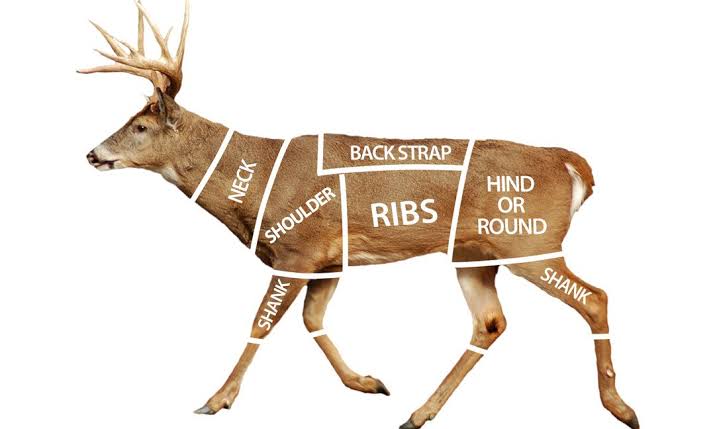
The main cuts of meat on a deer are the backstraps, tenderloins, hindquarters, shoulders, neck, ribs, flank, brisket, and four shanks. Hindquarters can be separated into top round, bottom round, eye of round, sirloin tip, rump, and smaller muscles. Tender cuts are suitable for steaks and roasts, while shoulders, necks, and shanks perform best with slow, moist cooking. Safe handling, rapid cooling, proper trimming, and current CWD guidance are as important as the way the deer is cut.
FAQs
1. What are the main cuts of meat from a deer?
The main cuts are backstrap, tenderloin, hindquarters, shoulders, neck, ribs, brisket, flank, shanks, and trim.
2. What is the best cut of meat on a deer?
“Best” depends on the intended dish. Tenderloin is normally the most tender, backstrap is highly versatile, and neck or shank may be best for a rich braised meal.
3. What is the most tender deer meat?
The tenderloin is generally the most tender muscle, followed by the backstrap and selected hindquarter muscles.
4. Is backstrap the same as tenderloin?
No. Backstraps run along the outside of the spine, while the smaller tenderloins sit inside the body cavity beneath the spine.
5. What is deer backstrap called at a butcher shop?
It may be labeled venison loin, loin roast, loin steak, backstrap, or medallions, depending on how it is cut.
6. How many backstraps does a deer have?
A deer has two backstraps, with one running along each side of the spine.
7. How many tenderloins does a deer have?
A deer has two tenderloins inside the body cavity.
8. What cuts come from a deer hindquarter?
Common hindquarter cuts include top round, bottom round, eye of round, sirloin tip or knuckle, rump or sirloin, and several smaller seam-separated muscles.
9. Which deer cuts make the best steaks?
Backstrap, tenderloin, top round, sirloin tip, and selected rump muscles can make good steaks when properly trimmed and sliced across the grain.
10. Which deer cuts make the best roasts?
Top round, bottom round, eye of round, sirloin tip, shoulder, neck, and whole backstrap can become roasts, although they require different cooking methods.
11. What part of a deer is used for burger?
Ground venison commonly comes from shoulder, neck, rib, flank, and miscellaneous clean trim. Any sound muscle can be ground if desired.
12. What cuts of deer are used for jerky?
Eye of round, bottom round, top round, and other lean hindquarter muscles are popular because they produce long, even slices. Clean trim can be used for ground jerky.
13. What deer meat is best for stew?
Shoulder, neck, shank meat, brisket, and firmer hindquarter trim work well because longer cooking can soften their connective tissue.
14. Can you eat deer shoulder meat?
Yes. It can be braised whole, separated into individual muscles, cubed for stew, shredded after slow cooking, or ground.
15. Can you eat deer neck meat?
Yes. Deer neck is particularly suitable for pot roast, soup, stew, tacos, or other dishes using long, moist cooking.
16. Are deer shanks worth keeping?
Yes. They contain substantial connective tissue that becomes tender and gelatinous during a long braise.
17. Are deer ribs worth saving?
They can be. Larger deer may provide useful rib racks, while the thin rib meat on a smaller animal may be more practical for grinding or braising.
18. Does a deer have brisket?
Yes. The brisket is on the lower chest, although it is smaller and leaner than beef brisket.
19. Can you eat deer heart?
Yes, if the organ appears healthy and has been handled safely. Remove the vessels, valves, fat, and connective tissue before cooking.
20. Can you eat deer liver?
Deer liver may be edible, but local contaminant and disease guidance should be checked. Do not consume an abnormal-looking organ or any part of a sick animal.
21. How much meat comes from one deer?
The amount varies widely with the deer’s live and field-dressed weight, age, body condition, shot damage, boning method, and how aggressively fat and connective tissue are removed.
22. Why did I receive less meat from the processor than expected?
Hide, bones, organs, fat, connective tissue, glands, damaged tissue, contamination, and moisture loss are removed. A small deer or an animal with significant shot damage will produce less packaged meat.
23. Should venison be aged before cutting?
Controlled aging may improve tenderness, but only when temperature, cleanliness, carcass condition, and time are carefully managed. Warm-weather or contaminated carcasses should be processed sooner.
24. Should I process a deer myself or use a butcher?
Home processing offers control over cuts and cleanliness but requires suitable tools, cold storage, time, and food-safety knowledge. A reputable game processor is often better for beginners without an appropriate workspace.
25. What temperature should venison be cooked to?
USDA guidance supports at least 145°F with a three-minute rest for intact whole-muscle venison cuts. Ground venison and uncooked venison sausage should reach at least 160°F.
26. Should deer meat be tested for CWD before processing?
Testing recommendations depend on the harvest area. In a CWD-affected area, strongly consider testing before eating the meat and keep the carcass identifiable and separate while awaiting results.
27. Can I eat a deer that tests positive for CWD?
No. The CDC advises hunters not to eat meat from an animal that tests positive for chronic wasting disease.
28. Is ground venison a specific cut?
No. It is a processed product made from clean trim or selected muscle cuts.
29. What is silver skin on deer meat?
Silver skin is tough connective tissue covering or separating some muscles. It does not soften during quick cooking and is normally removed from steaks and roasts.
30. Should deer fat be removed?
Most visible fat is commonly trimmed because it can develop strong flavors and affect freezer quality. Do not confuse soft fat with useful connective tissue needed in a braised shank or neck.
Read more: