
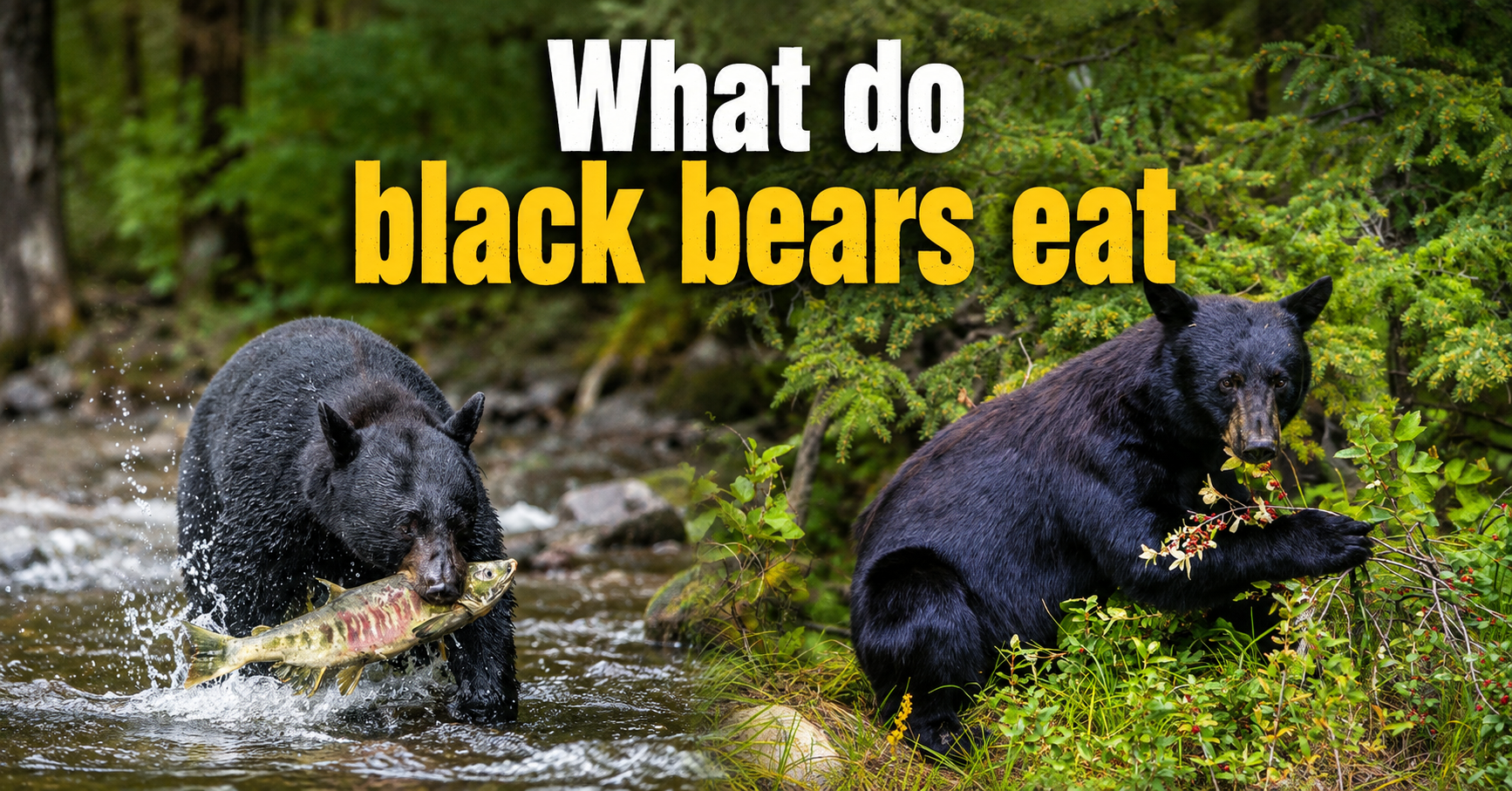

Black bears eat an unusually broad range of foods, but their diet is dominated by plants, fruits, nuts, and insects rather than large animals. What is available changes throughout the year, so bears continually adjust their feeding locations and behavior.
Understanding what black bears eat can help wildlife watchers avoid conflicts and help hunters interpret seasonal sign more responsibly. Local habitat, weather, food production, human activity, and hunting pressure all influence where an individual bear feeds, so no single food source guarantees a sighting.
Quick Answer
Black bears are omnivores that eat both plant and animal matter. Their common natural foods include grasses, sedges, leafy plants, roots, berries, fruits, acorns, beechnuts, insects, larvae, carrion, eggs, fish, and occasionally young mammals such as deer fawns. Their diet changes seasonally: green vegetation is important in spring, berries and insects become prominent in summer, and calorie-rich nuts and fruits are especially valuable in fall. Black bears may also consume crops, garbage, birdseed, pet food, and other human-associated foods, but people should never feed or intentionally attract them.
Black Bear Diet at a Glance
| Food Category | Examples | When It Is Often Important | Important Qualification |
|---|---|---|---|
| Green vegetation | Grasses, sedges, clover, forbs, leaves, buds, and shoots | Spring and early summer | Availability depends on elevation, latitude, and plant growth |
| Soft mast | Blueberries, blackberries, raspberries, cherries, grapes, and other fleshy fruits | Summer through fall | Timing and crop size vary substantially by region and year |
| Hard mast | Acorns, beechnuts, hickory nuts, and hazelnuts | Late summer and fall | Poor mast production can cause bears to travel farther for food |
| Invertebrates | Ants, beetles, grubs, wasps, bees, larvae, and other insects | Spring through fall | Bears may tear apart rotten logs or insect nests to reach them |
| Animal matter | Carrion, eggs, small mammals, birds, reptiles, fish, fawns, and young elk | Opportunistically throughout the active season | Meat usually forms a smaller portion of the diet than plant foods |
| Agricultural food | Corn, grain, orchard fruit, and other crops | When locally available | Entering private property requires permission, and crop damage can create conflict |
| Human-associated food | Garbage, birdseed, pet food, livestock feed, compost, and unattended camp food | Whenever bears can access it | These foods can cause dangerous food conditioning and should be secured |
Are Black Bears Mostly Meat Eaters?
No. Although black bears belong to the biological order Carnivora and are capable predators, most of their diet commonly consists of plant material and insects. The exact proportion varies by ecosystem and season.
The National Park Service’s American black bear profile identifies berries, fruits, sedges, and insects as major foods. Regional research may produce different percentages because bears living in coastal Alaska, Florida wetlands, Appalachian forests, and agricultural landscapes do not encounter the same menu.
Black bears nevertheless take advantage of animal protein when it is easy to obtain. They may scavenge carcasses, raid nests, consume insects, catch fish, or prey on vulnerable young animals. Describing them as plant-dependent omnivores is more accurate than calling them strict vegetarians or primarily active predators.
What Black Bears Eat in Each Season
Spring: Green Growth, Insects, and Carrion
Food may be relatively limited when bears first leave their dens. They commonly seek newly emerging vegetation such as grasses, sedges, clover, skunk cabbage, buds, shoots, bulbs, and other tender plants.
Spring bears may also find insects, larvae, overwintered nuts, and animals that died during winter. Carrion can provide concentrated calories when fresh vegetation is still limited.
Black bears sometimes prey on deer fawns, elk calves, or other young ungulates during the short period when these animals are especially vulnerable. This behavior occurs opportunistically and does not mean adult deer are a black bear’s primary food.
Summer: Berries, Fruits, and Insects
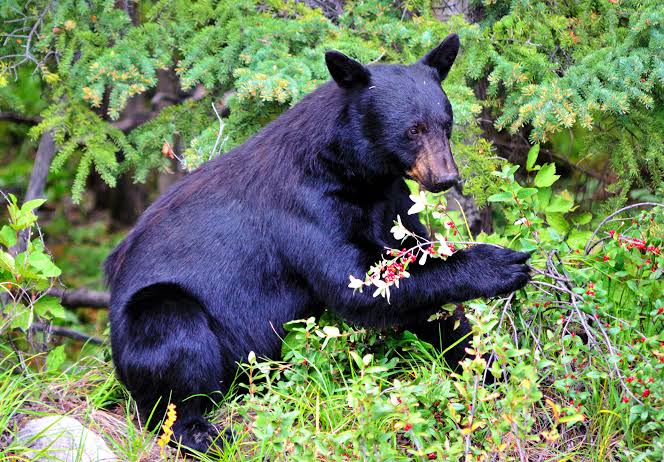
As summer progresses, black bears generally gain access to more soft mast. Soft mast is the wildlife-management term for fleshy fruits such as blackberries, blueberries, raspberries, cherries, serviceberries, grapes, and other locally available fruits.
Bears also continue eating green vegetation, ants, beetles, wasps, grubs, larvae, eggs, and small animals. A rotten log torn open by a bear may indicate that it was searching for insects rather than building a bed or sharpening its claws.
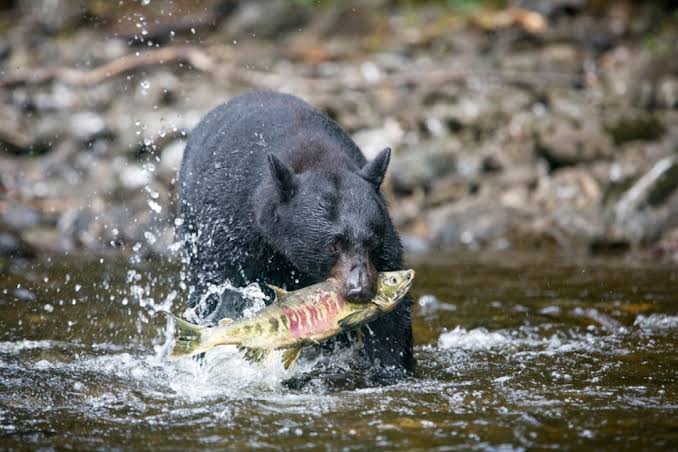
In areas with fish runs, some black bears eat salmon or other fish. Fish can be locally important, but many inland bears have little or no access to them.
Fall: Acorns, Nuts, and Other Calorie-Dense Foods
Fall is a critical feeding period because bears need to accumulate fat before winter denning. Their appetite and feeding activity increase during a phase commonly called hyperphagia.
Acorns, beechnuts, hickory nuts, hazelnuts, pine seeds, late berries, and fruits can become highly valuable. Wildlife managers collectively call acorns, beechnuts, and similar foods hard mast.
When natural mast crops are abundant, bears may concentrate near productive oak, beech, or nut-producing forests. When those crops fail, bears may travel farther and become more likely to investigate orchards, agricultural fields, garbage, bird feeders, and other human-associated food sources.
Winter: Little or No Feeding During Denning
Most black bears eat little or nothing while denned. They rely on stored body fat during this period. Denning duration varies with climate, food availability, reproductive status, and individual behavior.
Bears in warmer regions may den for shorter periods, remain intermittently active, or leave a den during mild weather. Therefore, people should not assume every black bear is inactive throughout winter.
Plant Foods Black Bears Commonly Eat
The specific species differ across North America, but commonly used plant-food categories include:
- Grasses and sedges
- Clover and other forbs
- Fresh leaves, shoots, and buds
- Roots, bulbs, and tubers
- Tree sap and inner bark in some circumstances
- Blueberries, huckleberries, blackberries, and raspberries
- Wild cherries, grapes, serviceberries, and other fruits
- Acorns, beechnuts, hazelnuts, and hickory nuts
- Pine seeds and other locally available seeds
- Corn, grain, orchard fruit, and other crops where accessible
Black bears often select foods that offer the greatest nutritional return for the effort required. A ripe berry patch or heavy acorn crop may therefore influence bear movement more strongly than a widely distributed but less calorie-dense plant.
Animal Foods Black Bears May Eat
Animal matter contributes protein and concentrated energy, although its overall importance varies. Black bears may consume:
- Ants, bees, wasps, beetles, and other insects
- Grubs, caterpillars, and insect larvae
- Honeycomb, honey, bees, and bee larvae
- Bird eggs and nestlings
- Fish where they are accessible
- Rodents and other small mammals
- Reptiles and amphibians
- Deer fawns, elk calves, or other vulnerable young animals
- Carcasses of deer, livestock, fish, or other animals
Fresh carcasses deserve caution. A bear may remain nearby and defend a valuable food source. Do not approach a carcass, investigate circling scavenger birds at close range, or assume the area is safe because the bear is not immediately visible.
Do Black Bears Really Eat Honey?
Yes, but honey is only part of what attracts a bear to a beehive. A bear may also consume bees, larvae, pupae, and portions of the honeycomb. The insects and developing larvae provide protein, while the honey supplies concentrated carbohydrates.
Apiaries in bear country may require properly installed and maintained electric fencing or other wildlife-agency-recommended protection. Property owners should consult local bear-management guidance rather than waiting for a bear to discover the hives.
How Diet Changes by Region
Eastern Hardwood Forests
Bears in the Appalachians and other eastern forests commonly rely on berries during summer and acorns, beechnuts, and hickory nuts during fall. Mast production can vary sharply from one year or location to another.
Pacific and Alaskan Coastal Areas
Coastal bears may eat salmon, intertidal organisms, shoreline plants, berries, and other locally abundant foods. Fish can be important in some watersheds but absent from the diet of bears without access to productive streams.
Western Mountains
Western black bears may use grasses, forbs, roots, berries, insects, pine seeds, carrion, and young ungulates. Elevation causes food availability to progress at different times, allowing bears to follow seasonal plant growth.
Southern Forests and Wetlands
Southern bears may eat berries, palmetto fruits, acorns, vegetation, insects, and wetland foods. Warmer climates can also affect denning duration and the timing of seasonal feeding.
Agricultural Landscapes
Where forests border farms, black bears may eat corn, grain, orchard fruit, livestock feed, or other crops. These calorie-rich foods can affect movement but may also create property damage and human-wildlife conflict.
Why Human Food Is Dangerous for Bears
Black bears can eat garbage, pet food, birdseed, compost, cooking grease, livestock feed, camp food, and many scented household items. The problem is not whether their digestive systems can process a particular item. The larger danger is behavioral.
A bear that repeatedly receives food around people may become food-conditioned. It can begin approaching homes, campsites, vehicles, or people while searching for another reward. This creates a risk for residents, visitors, pets, and the bear.
The National Park Service food-storage guidance advises packing out scraps and securing food, garbage, and scented items. At home, follow these practices:
- Use bear-resistant garbage containers where recommended.
- Keep pet food and livestock feed inside secure structures.
- Remove bird feeders when bears are active or follow local wildlife-agency guidance.
- Clean grills and store grease securely.
- Harvest ripe fruit and remove fallen fruit around homes.
- Secure compost according to local bear-management recommendations.
- Never intentionally feed or approach a black bear.
How Diet Information Helps with Responsible Scouting
Hunters and wildlife observers can use seasonal food knowledge to understand habitat, but food availability should be treated as one clue rather than a guaranteed pattern.
| Food or Habitat Clue | Sign to Observe | Responsible Interpretation |
|---|---|---|
| Emerging spring vegetation | Tracks, cropped plants, or scat near wet openings | Bears may visit temporarily while fresh growth remains nutritious |
| Berry patches | Broken stems, flattened vegetation, tracks, or seed-filled scat | Use binoculars and avoid surprising a feeding bear in dense cover |
| Rotten logs and insect nests | Logs pulled apart, claw marks, or disturbed soil | The bear may have been searching for ants or larvae |
| Productive oak or beech areas | Fresh tracks, scat, turned leaves, or feeding sign | Hard mast may attract several wildlife species, not only bears |
| Agricultural fields | Tracks, damaged plants, scat, or trails at field edges | Obtain landowner permission and follow crop-damage and hunting laws |
| Animal carcass | Scavenger birds, tracks, disturbed remains, or strong odor | Leave the area; a bear may be nearby or defending the food source |
Weather, human disturbance, hunting pressure, food competition, and individual behavior can change when a bear uses a feeding area. Avoid crowding an active food source or creating new attractants to obtain photographs or hunting opportunities.
Baiting, Feeding, and Legal Considerations
Black bear baiting and wildlife-feeding rules vary widely. Some jurisdictions permit regulated bear baiting under detailed restrictions, while others prohibit bait, feeding, scents, or substances intended to attract bears. Rules may also differ on public land, private land, protected areas, and wildlife-management units.
Before hunting or placing any attractant, check:
- The current state or provincial hunting regulations
- Species-specific black bear rules
- Bait definitions and prohibited ingredients
- Bait-site registration or identification requirements
- Required distance from roads, trails, homes, waterways, or property boundaries
- Landowner-permission requirements
- Public-land and federal-land restrictions
- Rules concerning cameras, dogs, electronic equipment, and retrieval
- Emergency disease-management or fire-related closures
General online information does not override the current regulation booklet or an official agency order. Never use garbage, unsafe substances, or food known to harm bears or other wildlife.
Black Bear Safety Around Feeding Areas
Food sources can concentrate bears and increase the likelihood of close encounters. Stay alert near berry patches, orchards, salmon streams, agricultural fields, carcasses, garbage sites, and other concentrated foods.
- Make enough noise to avoid surprising a bear where visibility is limited.
- Never approach a bear to photograph it or inspect what it is eating.
- Give cubs substantial space; an adult may be nearby.
- Keep dogs controlled according to local rules.
- Do not run from a black bear.
- If a bear is aware of you but not behaving aggressively, speak calmly and back away slowly while giving it an escape route.
- Carry bear spray where legal and appropriate, keep it accessible, and learn how to use it before entering bear country.
- If a black bear physically attacks, current National Park Service bear-attack guidance advises fighting back rather than playing dead.
Because black and brown bear guidance can differ, learn which species live in the area and follow the specific instructions of the responsible park or wildlife agency.
Common Misunderstandings About the Black Bear Diet
Myth: Black Bears Mainly Hunt Large Animals
Black bears can prey on animals, but plant matter, fruit, nuts, and insects generally make up most of their diet.
Myth: Bears Only Eat Honey from Beehives
They may eat honey, but they also consume bees, larvae, and honeycomb.
Myth: A Good Acorn Crop Guarantees Bears Will Be Present
Acorns can influence bear movement, but competition, disturbance, weather, alternative foods, and individual behavior also matter.
Myth: Leaving Food Helps Bears Survive
Human food can condition bears to seek rewards near people, increasing conflict and the risk that wildlife officials must take management action.
Myth: Bears Are Inactive All Winter
Many black bears remain in dens for extended periods, but denning behavior varies. Some may become active during winter, especially in warmer climates.
What Not to Do
- Do not intentionally feed a black bear.
- Do not leave garbage, food scraps, pet food, birdseed, or scented items accessible.
- Do not approach a feeding bear, cub, carcass, or active bait site.
- Do not assume a bear has left merely because it is temporarily out of sight.
- Do not trespass while following tracks or investigating feeding sign.
- Do not place bait without verifying every applicable regulation.
- Do not use seasonal food information as a guarantee of bear movement.
- Do not shoot at sound, movement, or an animal that has not been positively identified.
- Do not let hunting activity interfere with safe food storage or camp cleanliness.
- Do not rely on ordinary cloth or food containers to stop a determined bear.
Final Answer
What do black bears eat? They are flexible omnivores whose natural diet consists mainly of vegetation, berries, fruits, nuts, and insects, supplemented by carrion, eggs, fish, small animals, and occasionally young deer or elk. Green plants are especially important in spring, berries and insects become prominent in summer, and calorie-rich hard mast is valuable during fall hyperphagia. Regional habitat and annual food production can substantially change the menu. Hunters and residents should never feed bears and must verify local baiting, feeding, food-storage, and hunting regulations with the responsible wildlife agency.
FAQs
1. Are black bears carnivores, herbivores, or omnivores?
Black bears are omnivores. They can digest plant and animal matter, although plants, fruits, nuts, and insects commonly dominate their diet.
2. What is a black bear’s favorite food?
There is no universal favorite. Bears generally focus on the most nutritious and abundant foods available, such as berries in summer or acorns and beechnuts in fall.
3. Do black bears eat deer?
Yes, but deer are not usually their primary food. Black bears may prey on vulnerable fawns, scavenge deer carcasses, or occasionally take other accessible deer.
4. Do black bears eat elk or moose?
They may prey opportunistically on newborn calves or scavenge carcasses. Healthy adult elk and moose are not routine prey for most black bears.
5. Do black bears eat fish?
Yes, where fish are accessible. Salmon can be locally important in some coastal and northern ecosystems, while many inland bears rarely encounter catchable fish.
6. Do black bears eat insects?
Yes. Ants, grubs, beetles, wasps, bees, and other insects can provide important protein. Bears often tear apart logs or dig into nests to reach insects and larvae.
7. Do black bears eat honey?
Yes. They may also eat the bees, larvae, pupae, and honeycomb found inside a hive.
8. Do black bears eat bird eggs?
They can raid accessible nests and consume eggs or nestlings. These foods are opportunistic additions rather than the main diet in most areas.
9. Do black bears eat snakes?
A black bear may consume reptiles or amphibians when encountered, but snakes are not usually a major food source.
10. What berries do black bears eat?
Depending on the region, they may eat blueberries, huckleberries, blackberries, raspberries, serviceberries, cherries, grapes, and many other wild fruits.
11. What nuts do black bears eat?
Common hard-mast foods include acorns, beechnuts, hickory nuts, and hazelnuts. Pine seeds may also be important in some western habitats.
12. Do black bears eat corn?
Yes. Bears may enter cornfields or consume stored corn and livestock feed. Accessing private agricultural land requires permission, and deliberately using corn as bait may be restricted or prohibited.
13. Do black bears eat pumpkins or garden produce?
They may eat pumpkins, melons, fruit, sweet corn, and other garden crops. Harvest ripe produce promptly and follow local recommendations for protecting gardens.
14. Do black bears eat birdseed?
Yes. Birdseed contains calorie-rich seeds and grains and is a common residential attractant. Wildlife agencies often recommend removing feeders when bears are active.
15. Do black bears eat dog or cat food?
Yes. Pet food is highly attractive and should never be left outside in bear country. Feed pets indoors and secure stored food.
16. Do black bears eat garbage?
They will eat accessible garbage and investigate containers that smell like food. Secure trash in a bear-resistant container or locked structure according to local guidance.
17. Why do black bears eat so much in fall?
They enter hyperphagia, a period of increased feeding that helps them accumulate body fat before winter denning. Nuts, fruits, and other calorie-dense foods become especially valuable.
18. Do black bears eat during hibernation?
Most eat little or nothing while denned and rely on stored fat. Denning duration and winter activity vary with climate, reproductive status, food availability, and the individual bear.
19. What do black bear cubs eat?
Young cubs initially depend on their mother’s milk. As they grow and follow her, they begin learning to eat vegetation, fruits, insects, nuts, and other available foods.
20. Will black bears eat livestock?
Black bears may occasionally kill or scavenge livestock, poultry, or other domestic animals. Secure feed, carcasses, coops, and livestock areas using measures recommended by the local wildlife agency.
21. Do black bears eat people?
Humans are not a normal black bear food source. Serious predatory incidents are uncommon, but black bears remain powerful wild animals. Follow official bear-safety guidance and fight back if a black bear physically attacks.
22. How far will a black bear travel for food?
There is no single distance. Travel depends on sex, age, habitat, season, population density, disturbance, and how widely food is distributed.
23. Does a poor acorn crop change bear movement?
It can. When hard mast is scarce, bears may travel farther or shift toward berries, crops, orchards, garbage, and other available foods. The response varies by region and individual.
24. Is it legal to feed or bait black bears?
Rules vary by jurisdiction and land ownership. Some places allow regulated hunting over bait, while others prohibit baiting or intentional feeding. Verify the current official regulations before placing anything intended to attract a bear.
25. What should I do if a black bear is eating in my yard?
Remain indoors or at a safe distance, keep people and pets away, and allow the bear an escape route. After it leaves, remove or secure the attractant and contact the local wildlife agency if the bear repeatedly returns or behaves aggressively.
Read more: