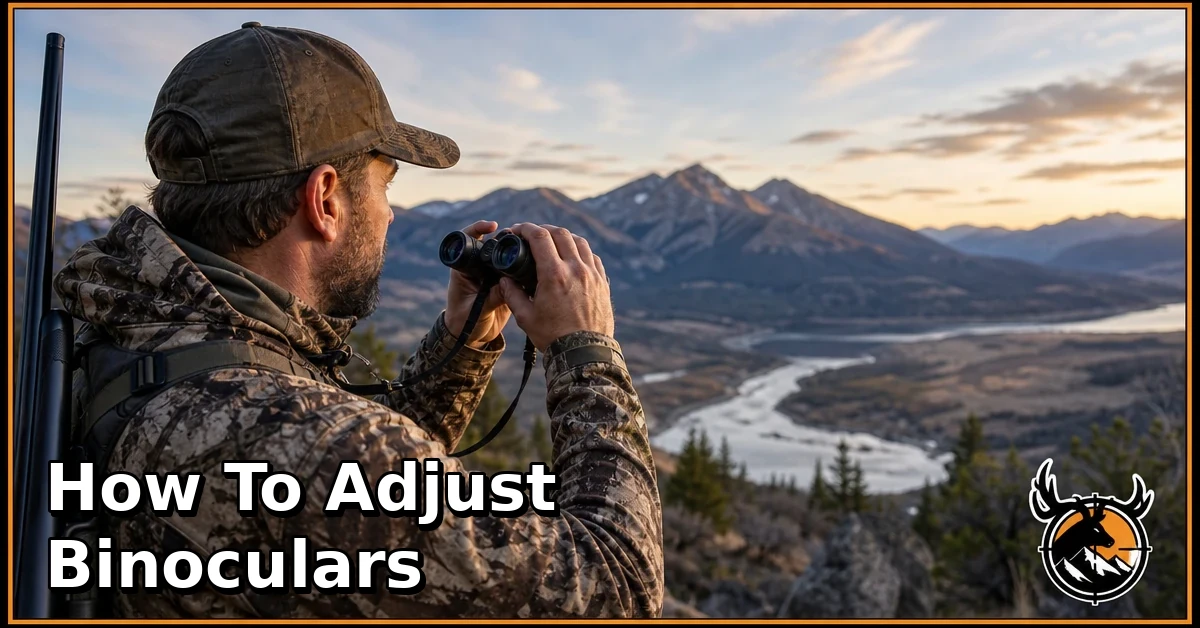

Learning how to adjust binoculars correctly helps hunters identify game, read animal sign, scout terrain, and observe safely without eye strain. Proper adjustment is quick once you understand the eyecups, interpupillary distance, center focus, and diopter. This guide explains the process step by step and shows how to use binoculars responsibly during scouting and hunting.
To adjust binoculars, set the eyecups for your eyes, adjust the distance between the barrels until you see one circular image, cover the diopter side, focus the uncovered side, then fine-tune the diopter for your other eye. Practice these adjustments before entering the field. During hunting, use binoculars to observe and identify game without pointing a firearm or bow at anything you have not positively identified.
Important Legal and Safety Notice Before You Hunt
Binocular adjustment is generally universal, but hunting laws are not. Before hunting, check your official wildlife agency for current license, permit, tag, season, legal-hours, weapon, bag-limit, reporting, transport, and land-access requirements.
- Complete a hunter education course, especially if you are new to hunting.
- Use binoculars for observation, never as a substitute for positively identifying a legal target.
- Keep firearms unloaded when appropriate, pointed in a safe direction, and handled according to manufacturer and hunter-education guidance.
- With a bow, keep broadheads protected and never draw toward people, roads, buildings, livestock, or uncertain movement.
- Identify your target and what lies beyond it before taking any shot.
- Wear required visibility clothing, plan navigation and weather precautions, and carry water, first aid, and communication equipment.
- Verify boundaries and obtain permission before hunting private land.
Why Proper Binocular Adjustment Matters in Hunting
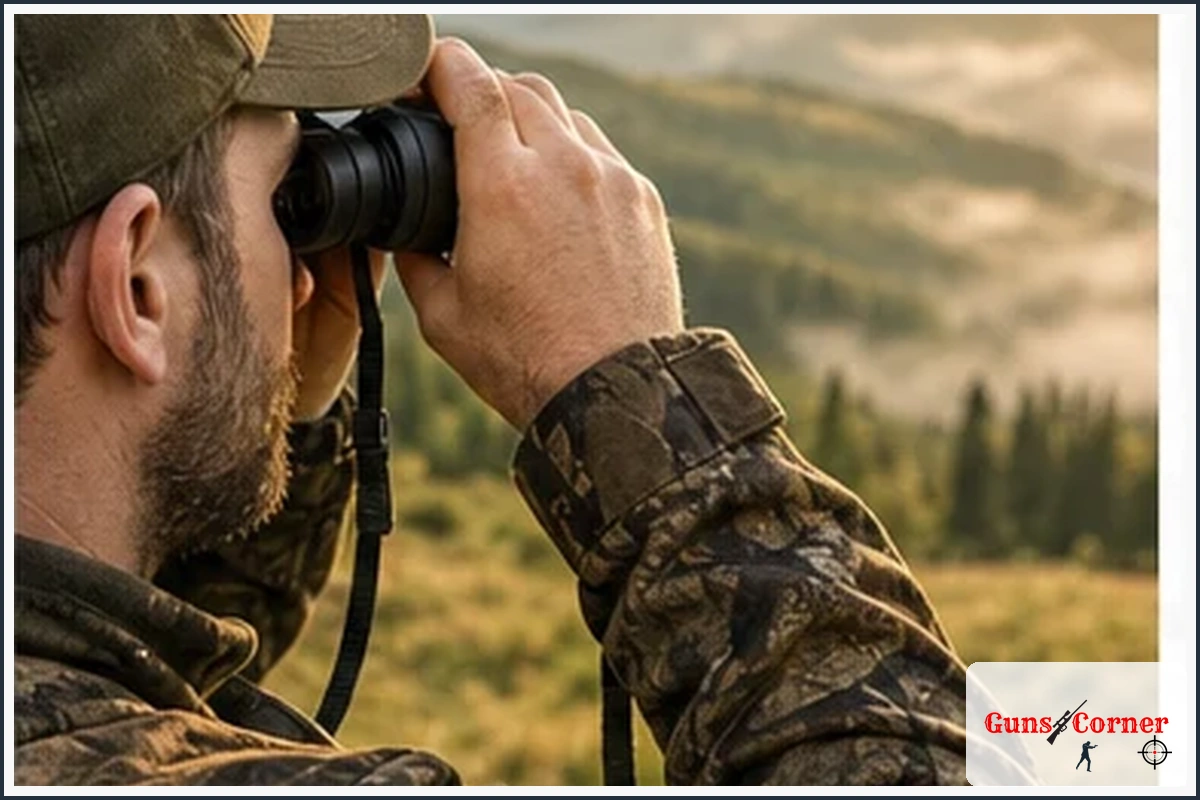
Incorrectly adjusted binoculars can produce a blurry image, eye fatigue, headaches, or a distracting double image. A good setup allows you to scan longer, judge terrain more accurately, and recognize important details such as animal movement, tracks, antlers, feathers, or body shape.
Binoculars should support ethical decisions, not rush them. If you cannot clearly identify an animal, its legal status, or the background behind it, do not take a shot.
Understand the Main Binocular Controls
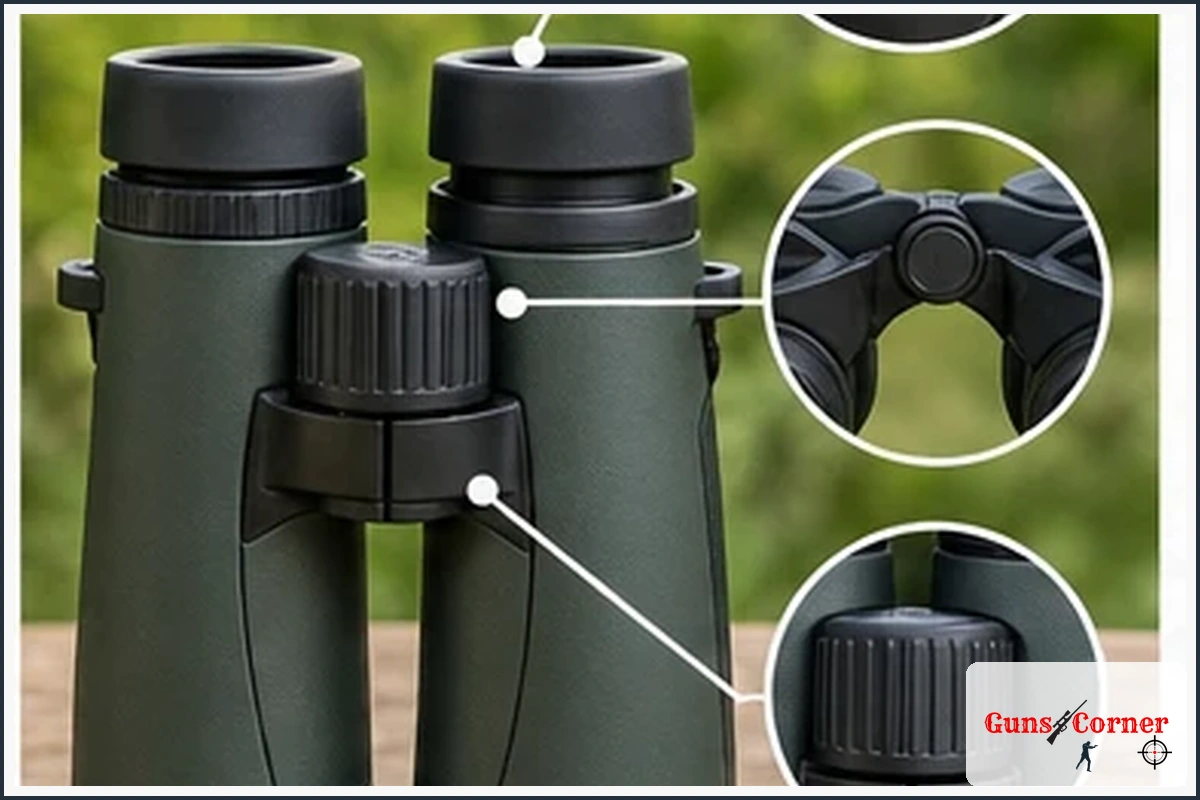
- Eyecups: Adjustable rings that position your eyes correctly behind the lenses.
- Interpupillary adjustment: The hinge that changes the distance between the two optical barrels.
- Center focus wheel: The main wheel that focuses both barrels together.
- Diopter adjustment: A separate control that compensates for differences between your eyes.
- Objective lenses: The larger front lenses that gather light.
- Eye lenses: The smaller lenses closest to your eyes.
How to Adjust Binoculars Step by Step
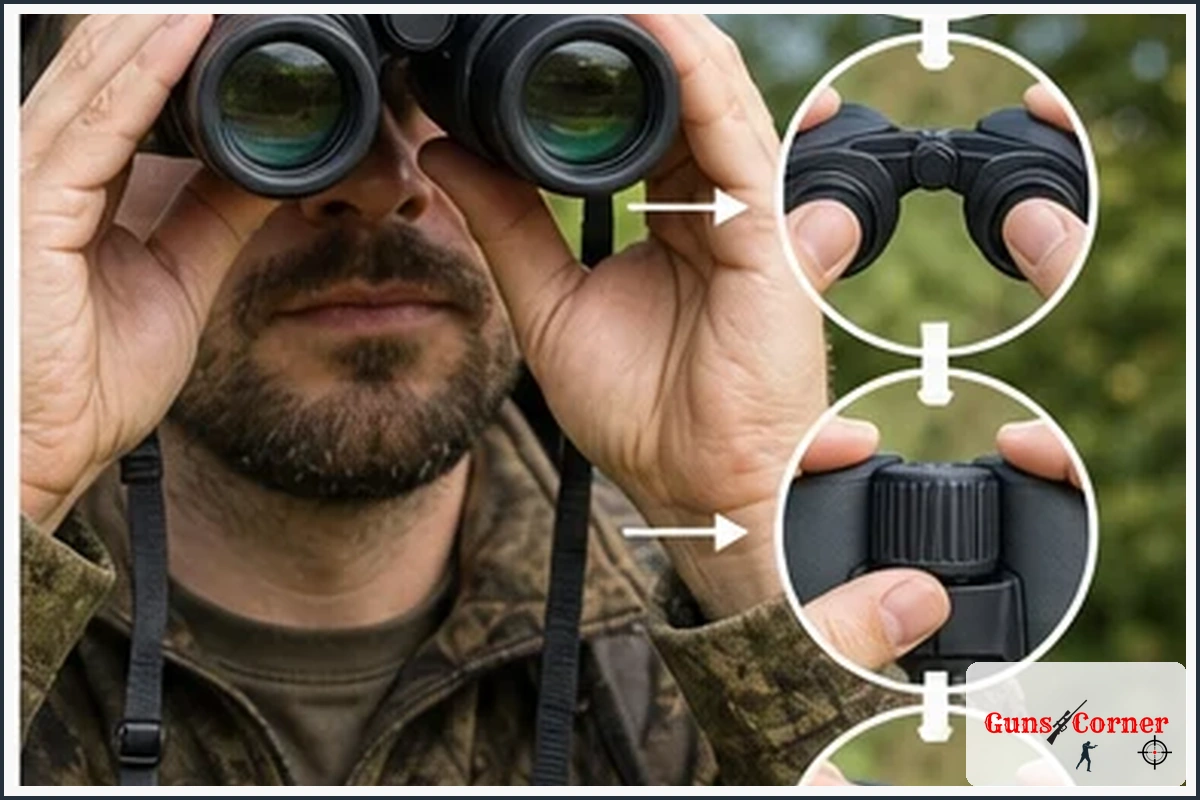
Step 1: Inspect and Prepare the Binoculars
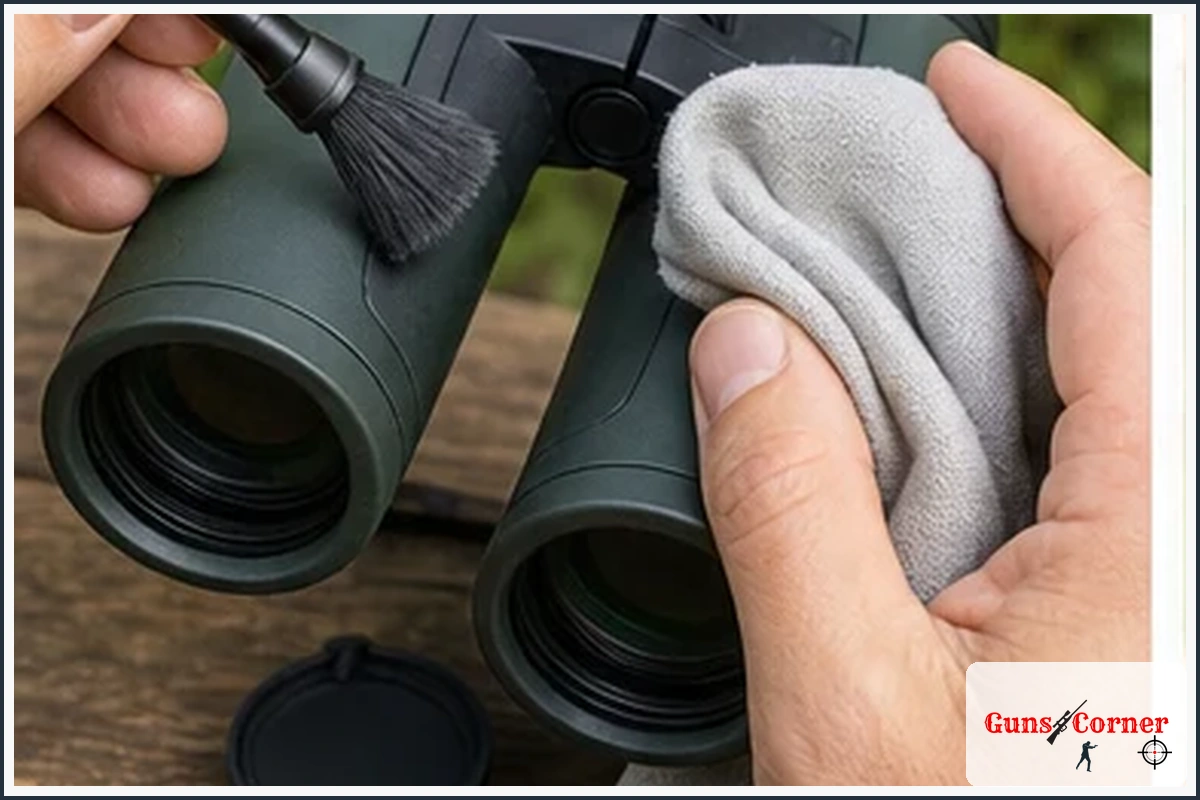
Remove the lens covers and check that the lenses are clean. If needed, use a lens brush or microfiber cloth. Avoid wiping grit across the glass, and do not use household cleaners unless the manufacturer specifically approves them.
Set the binoculars to their widest hinge position before beginning. Choose a stable object at a safe distance, such as a tree trunk, sign, or rock. When scouting, never use binoculars to look directly at the sun.
Step 2: Set the Eyecups
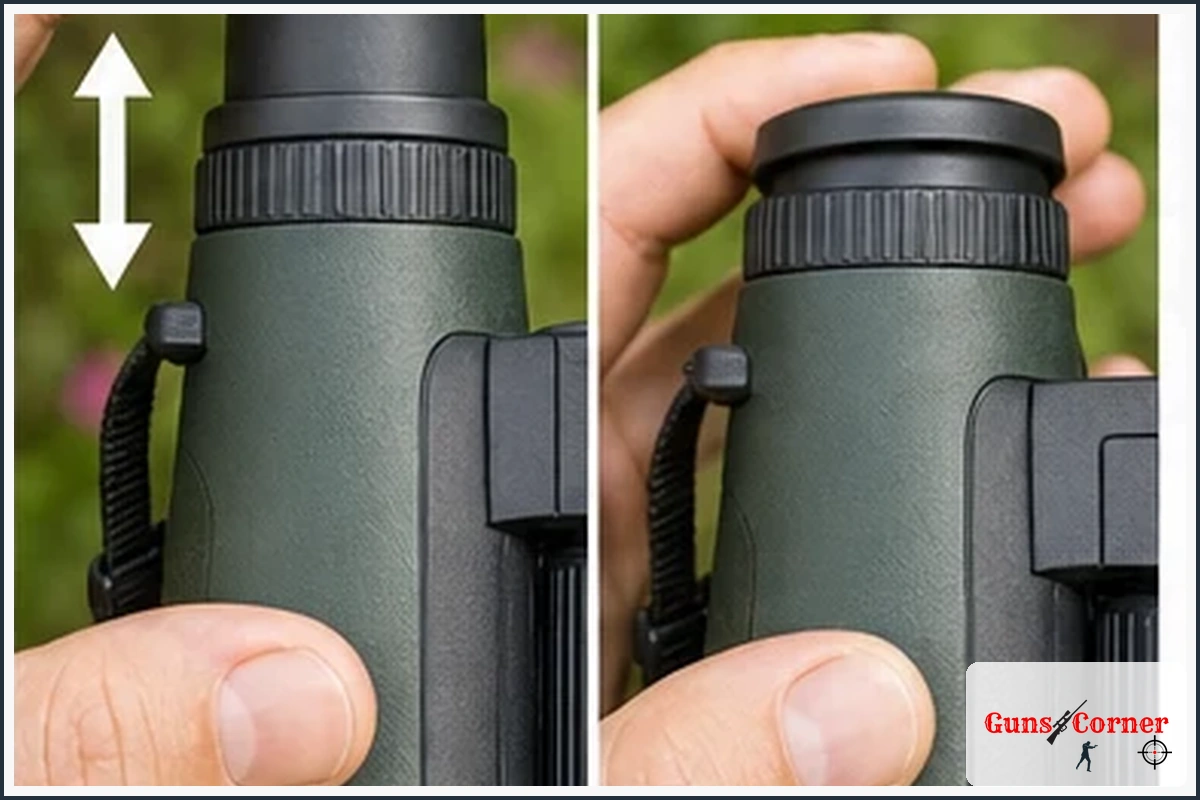
If you do not wear glasses, extend the eyecups if they are comfortable. This helps position your eyes at the correct distance from the lenses.
If you wear glasses, fold or twist the eyecups down according to the binocular design. Keep your glasses in place and adjust until you see the full field of view without dark edges.
Some eyecups have several positions. Test each position and choose the one that provides a complete image without forcing your eyes against the binoculars.
Step 3: Adjust the Distance Between the Barrels
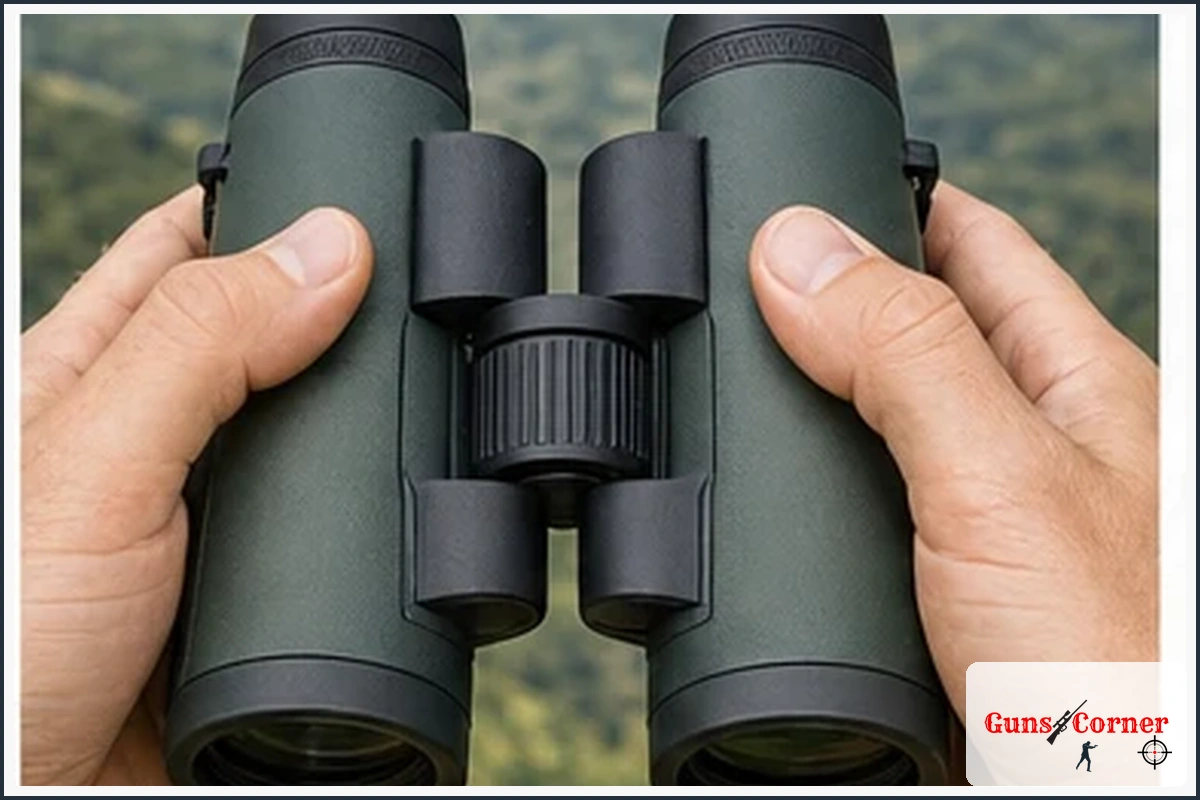
Hold the binoculars normally and look through both eyepieces. Move the two barrels closer together or farther apart until the two separate images merge into one circular image.
The correct setting is personal. Markings on the hinge can help you return to your preferred position, but the single-image test is more important than the number.
Step 4: Set the Center Focus
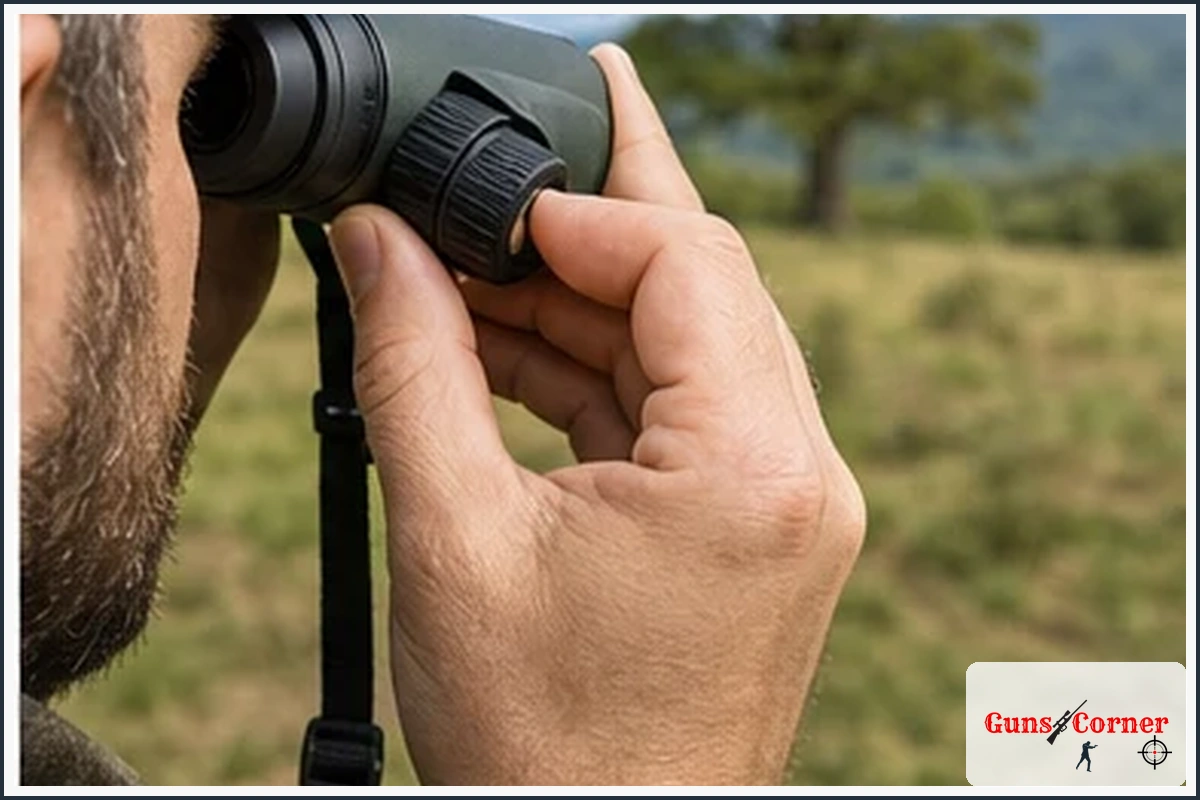
Choose a detailed, stationary object at a moderate distance. Close or cover the eye used with the diopter adjustment, without pressing hard against the lens.
Using only the center focus wheel, sharpen the image seen through the uncovered side. Focus slowly until fine details appear clear.
Step 5: Set the Diopter
Now cover the eye that was just focused and uncover the other eye. Do not change the center focus wheel.
Use the diopter ring to sharpen the image for the second eye. Turn it gradually in both directions until the details are as clear as possible.
Uncover both eyes and check the image. If necessary, make a small final adjustment to the center focus wheel. Once the image is sharp for both eyes, note the diopter setting so you can repeat it later.
Step 6: Check the Adjustment at Different Distances
Look at objects both near and far. The binoculars should remain comfortable and produce a single image. The center focus wheel will still be needed when the viewing distance changes; the diopter normally should not need repeated adjustment unless it was moved.
Step 7: Practice Before the Hunt
Practice raising the binoculars, finding the image, adjusting focus, and lowering them without excessive movement. Do this from a seated position, standing position, and your planned blind or stand.
Practice also includes safe handling. Keep binoculars on a strap or harness that does not interfere with firearm or bow control, climbing, or a safety harness.
Using Adjusted Binoculars for Scouting
Binoculars are valuable before and during a hunt. Use them to inspect habitat, locate game trails, evaluate feeding or bedding areas from a distance, and observe animals without unnecessarily disturbing them.
- Study maps before entering the area and confirm legal access.
- Use binoculars from a stable position when possible.
- Scan slowly from near ground level to higher terrain rather than moving randomly.
- Look for movement, shape, contrast, tracks, trails, and changes in vegetation.
- Check likely travel routes, water sources, edges, openings, and cover while respecting local regulations.
- Avoid excessive glassing that could disturb wildlife or interfere with other hunters.
Choosing a Stable Glassing Position
A stable position makes binoculars easier to use and reduces eye fatigue. Sit against a tree, rest your elbows on your knees, or use a stable support that does not create unsafe movement around your weapon.
On public land, remain aware of other hunters and visitors. Do not assume movement in cover is game. On private land, stay within the permission granted and respect buildings, livestock, roads, and property boundaries.
Best Conditions for Using Binoculars in the Field
Early and late daylight can make binocular adjustment especially important because glare, shadows, and low contrast make details harder to see. Cloud cover may provide comfortable viewing, while rain, fog, snow, and heat shimmer can reduce clarity.
Keep lenses protected from moisture and condensation. If binoculars move from a cold vehicle into warm air, allow them to acclimate gradually instead of immediately wiping fog from the glass.
Wind direction still matters when scouting. Binoculars help you observe from a distance, but they do not eliminate the need to control scent, noise, and movement during an approach or hunting setup.
Helpful Tips for Better Results
- Set your binoculars at home before the season begins.
- Record your preferred diopter and hinge settings.
- Use both eyes when possible to reduce fatigue.
- Keep a lens cloth in a protected pocket.
- Use a binocular harness if a neck strap swings or interferes with movement.
- Scan in short sessions and rest your eyes periodically.
- Use a tripod adapter only if it is compatible and does not create unsafe field handling.
- Never use binoculars to justify an uncertain shot.
Common Mistakes to Avoid
- Adjusting the diopter while repeatedly changing the center focus wheel.
- Forgetting to set the eyecups for glasses or no glasses.
- Leaving the barrels too wide or too narrow, causing a double image.
- Pressing the binoculars tightly against the eyes.
- Wiping dirty lenses with clothing or paper products.
- Trying to identify an animal through brush when the view is not clear.
- Ignoring safe backstops and nearby people while glassing or preparing to shoot.
- Moving into another hunter’s area without checking maps, boundaries, or local etiquette.
- Assuming binoculars can replace scouting, practice, or knowledge of local regulations.
Troubleshooting Common Problems
| Problem | Possible Cause | What to Do |
|---|---|---|
| The image looks doubled | The barrels are not set to the correct eye spacing | Move the barrels until both images merge into one circular view. |
| One side is sharp but the other is blurry | The diopter is not set correctly | Cover the sharp side and adjust the diopter on the other side without changing center focus. |
| The full image is not visible | Eyecups or eye position are incorrect | Adjust the eyecups and reposition your eyes until the field of view is complete. |
| Your eyes become tired quickly | Incorrect focus, excessive pressure, or long uninterrupted viewing | Refocus, relax your grip, adjust the eyecups, and take regular breaks. |
| The image remains unclear | Dirty lenses, fog, heat shimmer, or damaged optics | Clean carefully, allow condensation to clear, and have damaged binoculars inspected. |
| You cannot identify movement | Too much cover, distance, glare, or poor light | Change your viewing angle or position legally, wait for better visibility, and do not take an uncertain shot. |
| The binoculars keep losing their setting | Loose controls, accidental contact, or worn equipment | Check the manufacturer guidance and have the binoculars serviced if the problem continues. |
Ethical Hunting and Conservation
Properly adjusted binoculars can reduce unnecessary movement and help hunters make better decisions. Use them to observe wildlife respectfully and avoid disturbing animals before the hunt.
- Follow all seasons, limits, license requirements, and reporting rules.
- Respect private property, public land users, and other hunters.
- Pass on any shot when identification, background, distance, or conditions are uncertain.
- Use only legal hunting equipment and methods.
- Recover and care for legally harvested game responsibly.
- Remove litter and avoid damaging habitat.
- Support conservation through lawful participation, license fees, and responsible behavior.
When to Get More Training or Professional Guidance
Seek additional instruction if you are unfamiliar with firearms, bows, tree stands, navigation, game recovery, or local regulations. Official hunter education courses, certified instructors, wildlife agencies, experienced ethical mentors, and conservation organizations can help you build safe field habits.
If you cannot confidently identify game, understand the legal requirements, or control your equipment safely, continue practicing and do not hunt alone until you are prepared.
After the Hunt: Gear Care and Learning
Wipe moisture and dirt from binoculars with appropriate lens-care materials, then store them in a dry, protected case. Avoid leaving them in extreme heat or cold for long periods.
Review your outing while details are fresh. Record weather, visibility, habitat, animal sign, access conditions, and what worked or failed. Keep required harvest records and reports current, and handle any game according to local transport and meat-care rules.
Recommended Hunting Gear and Tools to Consider
You do not need expensive equipment to hunt responsibly. Choose gear based on local laws, terrain, weather, hunting method, skill level, and safety needs.
- Binoculars suited to your terrain and viewing distances
- Protective lens covers and a microfiber cloth
- Binocular harness or secure strap
- Map, compass, GPS, or approved navigation app
- Weather-appropriate clothing and required visibility gear
- First aid kit, water, food, and emergency communication
- Legal firearm or bow, maintained and used according to training and manufacturer guidance
- Game bags, gloves, cooler, and meat-care supplies when applicable
Final Thoughts
Knowing how to adjust binoculars makes scouting more comfortable and helps you observe wildlife responsibly. Set the eyecups, merge the images, focus one side, adjust the diopter, and practice before entering the field. Combine clear optics with legal preparation, safe equipment handling, careful identification, patience, and respect for wildlife. No binocular adjustment can replace sound judgment or an ethical decision to pass on an unsafe opportunity.
Frequently Asked Questions
How often should I adjust my binoculars?
Set them when you first use them, then check them if the diopter, hinge, or eyecups move. You may need to refocus whenever viewing distance changes.
What is the diopter adjustment?
The diopter compensates for differences between your eyes so both sides of the binoculars produce a sharp image.
Which eye should use the diopter?
Most binoculars place the diopter on the right side, but designs vary. Use the eye corresponding to the adjustable eyepiece on your model.
Should I adjust binoculars with my glasses on?
Yes, if you normally wear glasses while hunting. Set the eyecups for glasses and complete the focus process while wearing them.
Why do I see two images?
The barrels are probably not aligned with your eyes. Adjust the hinge until the two images merge into one.
Should the eyecups be up or down?
People without glasses often prefer extended eyecups, while glasses wearers usually fold or twist them down. Comfort and a full field of view are the best tests.
Can binoculars identify a legal animal?
They can help you observe details, but identification depends on distance, light, cover, species, and local rules. Never shoot if identification is uncertain.
How far should I focus when adjusting binoculars?
Use a detailed stationary object at a moderate distance, then test the binoculars on both nearer and farther objects.
Can I use binoculars for low-light hunting?
Binoculars may improve observation in available light, but they do not make illegal hunting hours legal. Follow local regulations and never use them to look directly at the sun.
Do binoculars replace a spotting scope?
No. Binoculars are generally convenient for scanning and tracking movement, while a spotting scope may provide more detail at longer distances. Use equipment appropriate to your terrain and legal activity.
Are higher magnification binoculars always better for hunting?
No. Higher magnification can make movement and hand shake more noticeable. Choose a balanced model that is comfortable and practical for your terrain.
Why is my image blurry after adjusting the center wheel?
The diopter may still be incorrect, or the lenses may be dirty or fogged. Reset the process carefully and inspect the optics.
Why do my eyes hurt when using binoculars?
Eye strain can result from poor focus, incorrect eye spacing, excessive pressure, or prolonged viewing. Relax your grip, reset the adjustment, and take breaks.
How do I clean hunting binoculars?
Remove loose particles with a lens brush or air blower, then use a clean microfiber cloth designed for optics. Follow the manufacturer’s instructions.
Can I use my binoculars in rain?
Only if they are designed for wet conditions. Keep lenses covered when possible, dry the exterior afterward, and avoid storing them while damp.
How do I prevent binoculars from fogging?
Protect them from sudden temperature changes, keep them covered, and allow condensation to clear naturally rather than rubbing wet lenses aggressively.
Are binocular harnesses useful for hunting?
A harness can keep binoculars secure and reduce swinging during movement. Choose one that does not interfere with firearm, bow, climbing, or safety-harness use.
How do I use binoculars from a tree stand?
Remain secured with a full-body safety harness, keep both hands controlled, and avoid leaning or twisting dangerously. Binocular use should never compromise stand safety.
Can I use binoculars while carrying a firearm?
Yes, but handle the firearm according to hunter-education principles. Keep the muzzle in a safe direction, follow local transport rules, and do not let binocular use distract you from firearm safety.
Can I glass from public land?
Usually, if you remain within legal boundaries and follow land-specific rules. Confirm access, parking, closures, boundaries, and restrictions before entering.
Can I glass from private land?
Only with the landowner’s permission or other valid legal access. Respect property lines, buildings, livestock, gates, and any conditions attached to permission.
What should I look for while scouting with binoculars?
Look for movement, game trails, tracks, feeding areas, bedding cover, water, travel corridors, and changes in vegetation. Do not rely on one sign alone.
Can binoculars help with animal tracks?
They can help you inspect tracks or sign from a distance, especially across open terrain. Close inspection may still be necessary, provided access is legal and disturbance is minimized.
How important is wind direction when using binoculars?
Wind direction matters because observation does not eliminate scent concerns. Plan approaches and setups so your scent and movement are less likely to alert wildlife.
What should I do if another hunter is nearby?
Unload or control your equipment as appropriate, communicate clearly, maintain distance, and avoid moving into the other hunter’s line of fire or setup.
What if I cannot tell whether movement is an animal?
Wait, improve your viewing angle only when safe and legal, or leave the area. Never shoot at sound, movement, color, or an unclear shape.
Do binoculars improve hunting success?
They can improve observation and scouting, but success is never guaranteed. Weather, animal behavior, habitat, pressure, skill, regulations, and ethical choices all matter.
Should I practice with binoculars before hunting season?
Yes. Practice focusing, scanning, finding objects quickly, and carrying the binoculars safely from realistic field positions.
How do I store binoculars after a hunt?
Dry the exterior, clean the lenses properly, replace the covers, and store them in a cool, dry, protected location.
Can I use binoculars to judge an animal before a shot?
Yes, they can assist with identification and observation. The final decision must still meet all legal, safety, distance, and ethical requirements.
What should I do if my binoculars are damaged?
Stop using them if the damage affects vision or alignment. Follow the manufacturer’s service guidance instead of attempting unsafe repairs.
Do I need expensive binoculars for hunting?
No. Reliable adjustment, clear optics, durability, weather suitability, and comfortable handling are more important than price alone.
What legal rules should I check before using binoculars while hunting?
Check current rules for seasons, legal hours, species, tags, weapon use, access, protected areas, reporting, and any restrictions on electronic or optical equipment.
What should I do after a successful hunt?
Follow local tagging, reporting, transport, recovery, and meat-care requirements. Handle the harvest respectfully and keep all required records.
Where can beginners learn more about safe hunting?
Start with an official hunter education course, your wildlife agency, certified instructors, reputable conservation groups, and experienced ethical mentors.
Read more: