
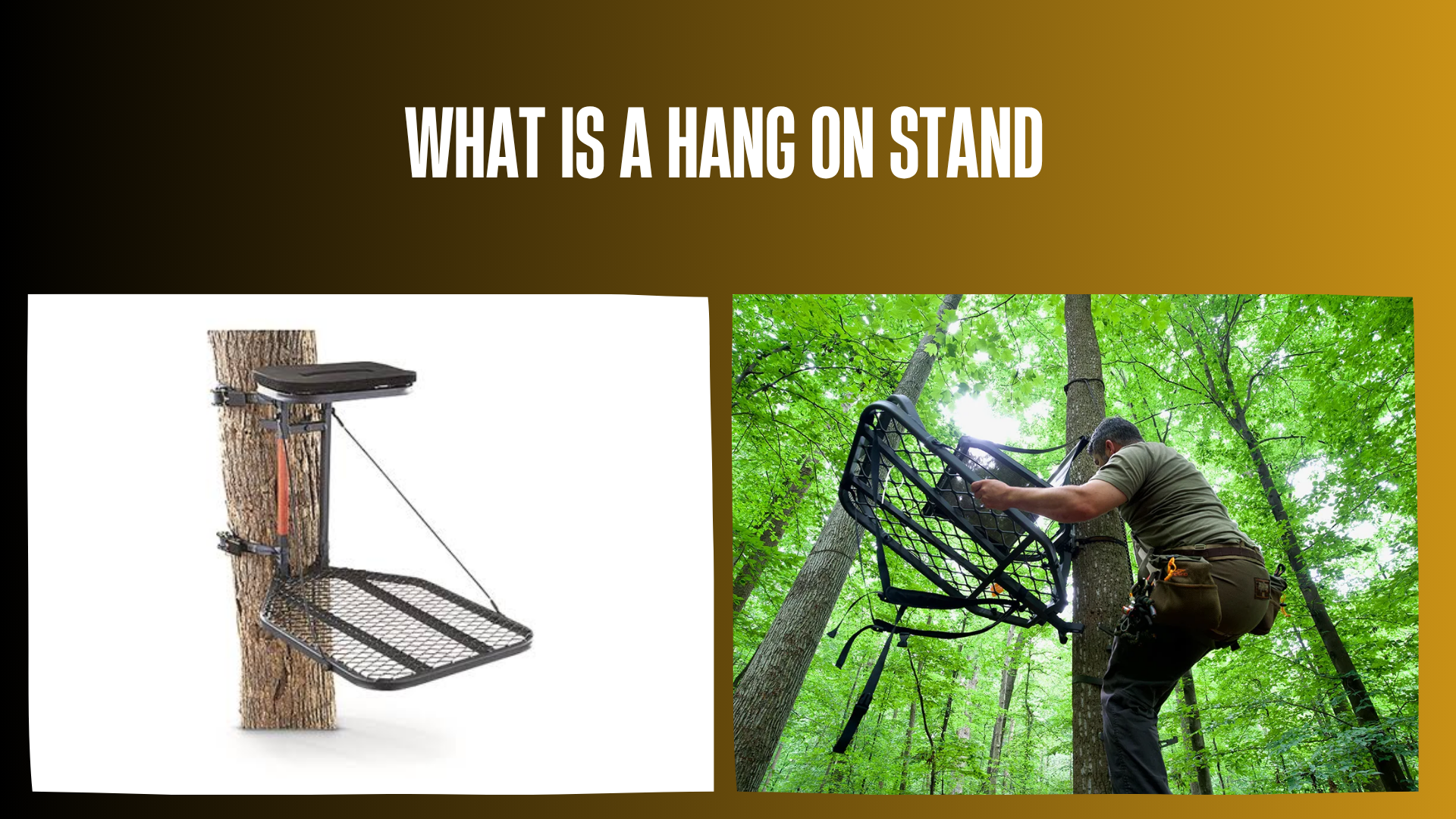

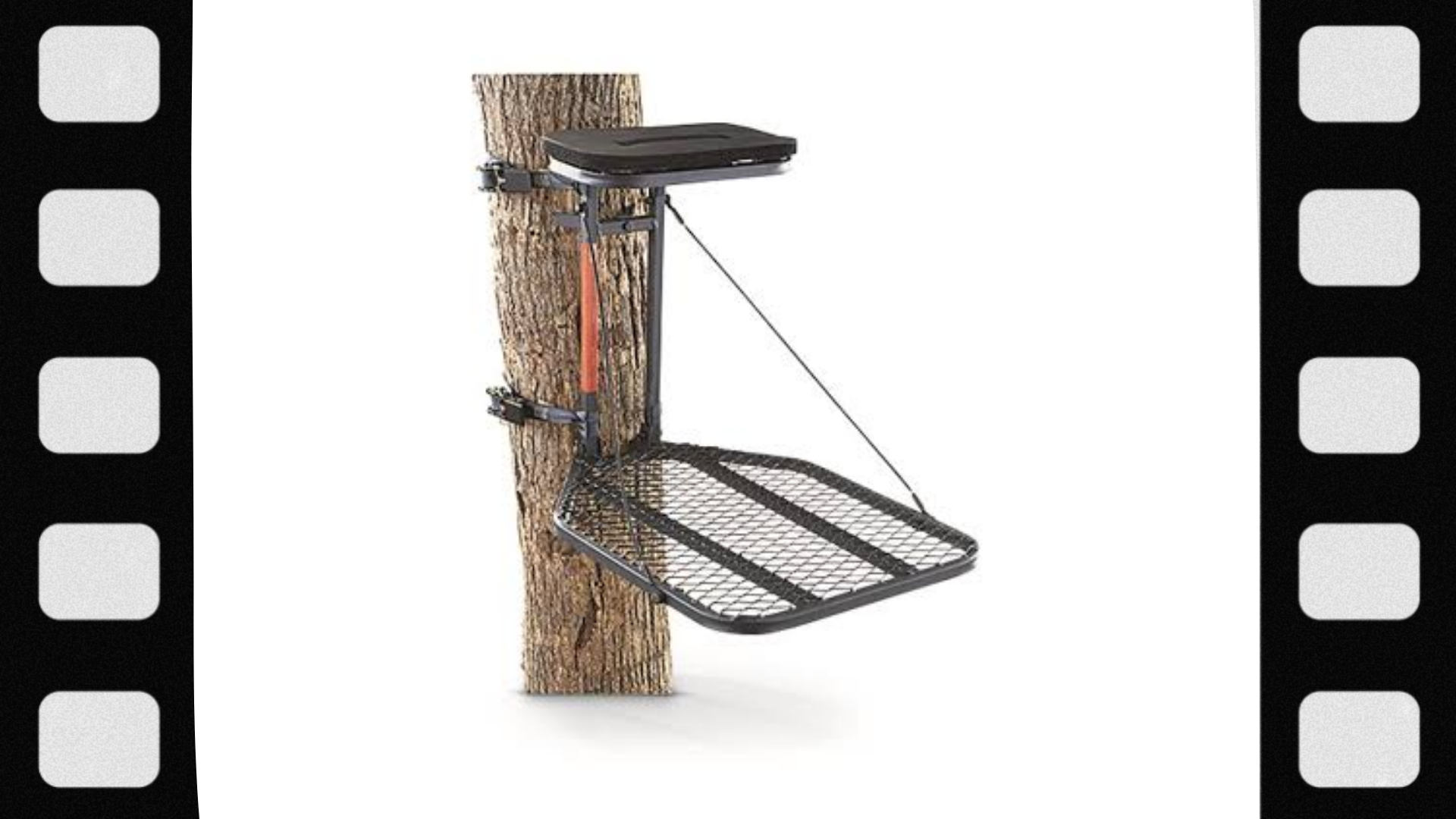
If you are comparing equipment for deer hunting, you may be wondering what is a hang on stand and how it differs from a ladder stand, climbing stand, or tree saddle. A hang-on stand is a compact elevated hunting platform with a seat that attaches directly to a suitable tree. It is also commonly called a hang-on tree stand, fixed-position stand, or lock-on stand.
Unlike a ladder stand, a hang-on stand does not have an integrated ladder. Hunters normally use a separate manufacturer-approved climbing system, such as climbing sticks, to reach the platform. That versatility can make hang-on stands useful in many wooded hunting locations, but installation, climbing, and transferring onto the platform create serious fall hazards. Proper fall-arrest equipment and manufacturer instructions are therefore essential.
Quick Answer: What Is a Hang On Stand?
A hang-on stand is a portable elevated hunting stand consisting primarily of a platform and seat that are secured to a tree with the attachment system specified by the manufacturer. The hunter reaches it using a separate climbing aid rather than an integrated ladder or self-climbing mechanism. Hang-on stands are commonly used for deer and other legal tree-stand hunting where permitted. Because the hunter must climb, install or access the stand, and transfer onto an elevated platform, a properly fitted full-body fall-arrest system should be used according to its instructions from the time the hunter leaves the ground until returning to the ground.
Important Hang-On Stand Safety Notice
Falls are the central safety concern with any elevated tree stand. The most important safety principle is to remain properly connected to an approved fall-arrest system while climbing, entering the stand, hunting, leaving the stand, and performing elevated installation or removal work.
A hang-on stand should be used only with compatible equipment and according to the stand manufacturer’s instructions. Hunters should also follow the instructions for their full-body harness, lifeline, lineman’s-style belt, climbing system, and other safety equipment.
Tree-stand and public-land rules vary by jurisdiction and property. Some areas restrict the type of stand, attachment method, tree damage, installation period, or use of permanent equipment. Check the current regulations of the wildlife or land-management authority before installing a stand.
How Does a Hang-On Tree Stand Work?
A hang-on stand is secured to a suitable tree using the attachment components specified by its manufacturer. Once correctly installed, the platform provides an elevated place to stand and usually includes a seat for waiting.
The basic system involves several separate components:
| Component | Purpose | What to Check |
|---|---|---|
| Hang-on stand | Provides the elevated platform and seat | Condition, compatibility, attachment points, manufacturer limits |
| Climbing aid | Provides access to and from the platform | Secure installation, condition, compatibility, safe transition |
| Full-body fall-arrest system | Helps protect the hunter if a fall occurs | Fit, condition, correct attachment, manufacturer instructions |
| Lifeline or safety line system | Can provide continuous connection during ascent and descent | Correct installation and compatibility with the harness |
| Lineman’s-style belt or rope | Supports appropriate hands-free positioning during certain installation tasks | Correct use with a compatible full-body harness |
| Haul line | Allows unloaded equipment to be raised after the hunter is secured | Condition and safe placement away from climbing equipment |
The climbing system and stand are separate. This is one of the defining differences between a hang-on stand and several other types of elevated hunting platforms.
Why Do Hunters Use Hang-On Stands?
Hang-on stands are valued primarily for their placement flexibility. Because the climbing aid is separate, a suitable stand can often be positioned in trees where another portable stand design may be less practical, provided the tree meets the manufacturer’s requirements.
Common reasons hunters choose them include:
- Compact design
- Potential portability
- Flexible placement in suitable trees
- Ability to leave an approved setup in a planned location where legal and permitted
- Use in wooded deer-hunting areas
- A relatively unobtrusive elevated position
- Compatibility with different approved climbing systems, depending on the equipment
These advantages do not make a hang-on stand appropriate for every hunter. Physical ability, training, comfort with heights, tree availability, land rules, and the amount of equipment required should all influence the decision.
Hang-On Stand vs. Ladder Stand
| Feature | Hang-On Stand | Ladder Stand |
|---|---|---|
| Platform | Attaches directly to tree | Supported as part of a ladder-and-platform system |
| Climbing method | Separate climbing aid | Integrated ladder |
| Portability | Often relatively compact | Typically bulkier |
| Installation | Requires careful elevated installation procedures | Often requires multiple people for safe setup |
| Tree requirements | Must meet stand manufacturer’s specifications | Requires a suitable installation location and support tree |
| Fall protection | Required as part of responsible elevated-stand use | Required as part of responsible elevated-stand use |
A ladder stand may feel more familiar to some beginners because the climbing system is built into the stand. However, ladder stands also present fall hazards and require proper installation and fall protection.
Hang-On Stand vs. Climbing Stand
A climbing stand uses movable upper and lower sections that allow the hunter to ascend a suitable tree with the stand itself. A hang-on stand remains secured at the hunting position and requires a separate climbing aid.
Climbing stands generally require relatively straight trees that meet the manufacturer’s requirements and typically cannot negotiate limbs during the climb. Hang-on systems may provide greater placement flexibility because climbing aids and the platform are separate.
Both types require fall protection and careful inspection before use.
Hang-On Stand vs. Tree Saddle
A tree saddle is a different elevated hunting system in which the hunter is supported by a saddle-style harness and tether while positioned against the tree. A small platform or steps may provide foot support.
A hang-on stand instead provides a conventional platform and seat attached to the tree. Some hunters prefer the familiar seating and platform arrangement of a hang-on stand, while others prefer the mobility or positioning possibilities of a saddle.
Neither system eliminates fall risk. Hunters should receive appropriate instruction and use all equipment according to its manufacturer.
What Kind of Tree Is Suitable for a Hang-On Stand?
The correct tree is determined primarily by the stand manufacturer’s instructions. In general, the tree should be living, structurally sound, and within the diameter and shape limits specified for the equipment.
Before climbing, inspect the tree and surrounding area for hazards such as:
- Dead or damaged trunks
- Rot or obvious disease
- Loose bark
- Dead overhead limbs
- Storm damage
- Unstable surrounding trees
- Unsafe lean
- Diameter outside the manufacturer’s approved range
Never assume that a tree is safe merely because another hunter has previously used it.
How High Should a Hang-On Stand Be?
There is no universal correct height. The appropriate position depends on the stand manufacturer’s instructions, tree structure, terrain, visibility, hunter comfort, climbing system, and local rules.
Higher is not automatically better. Increasing elevation can increase the consequences of a fall and may make installation, entry, exit, and equipment handling more difficult.
A hunter should never climb beyond the limits of the equipment or personal ability simply to gain additional elevation.
How Do You Reach a Hang-On Stand?
Hang-on stands require a separate climbing aid. Common commercial systems include climbing sticks and other manufacturer-approved climbing devices.
The climbing aid should be installed according to its instructions and should allow a controlled transition to the stand. Hunter-education guidance commonly emphasizes arranging the climbing system so the hunter can climb above the platform and step down onto its center rather than making an awkward lateral or upward transfer.
Maintain three points of contact when appropriate to the climbing system and remain attached to the approved fall-protection system throughout the climb and transition.
Why Is the Transition Onto a Hang-On Stand Important?
The transition between the climbing aid and the stand is a critical moment because the hunter is moving between two separate elevated pieces of equipment.
Before placing full body weight onto the stand, confirm that it has been installed and secured according to the manufacturer’s directions. Maintain the required fall-protection connection throughout the transition.
Do not jump, stretch across a large gap, or rely on a tree limb for support.
What Fall Protection Should You Use?
A properly fitted full-body fall-arrest system designed for tree-stand use is a fundamental part of elevated hunting safety. A simple waist belt or improvised rope is not an appropriate substitute.
Depending on the task and system, fall-protection equipment may include:
- A full-body harness
- A compatible tether
- A tree strap
- A lifeline or tree-stand safety line
- A lineman’s-style belt or rope used with the harness for appropriate tasks
- A suspension-relief device
Practice using the equipment at ground level before hunting. Know how to adjust the harness and understand what to do after a fall, including the manufacturer’s instructions for suspension relief and self-rescue.
What Does “Stay Connected” Mean in Tree-Stand Safety?
“Stay connected” means maintaining the appropriate fall-protection connection from the time you leave the ground until you return safely to the ground.
A hunter should not wait until reaching the platform before attaching fall protection. Climbing and transitioning onto or off the platform are themselves elevated activities.
A properly installed lifeline system can help maintain connection during ascent and descent when used with compatible equipment and according to instructions.
Can You Install a Hang-On Stand Alone?
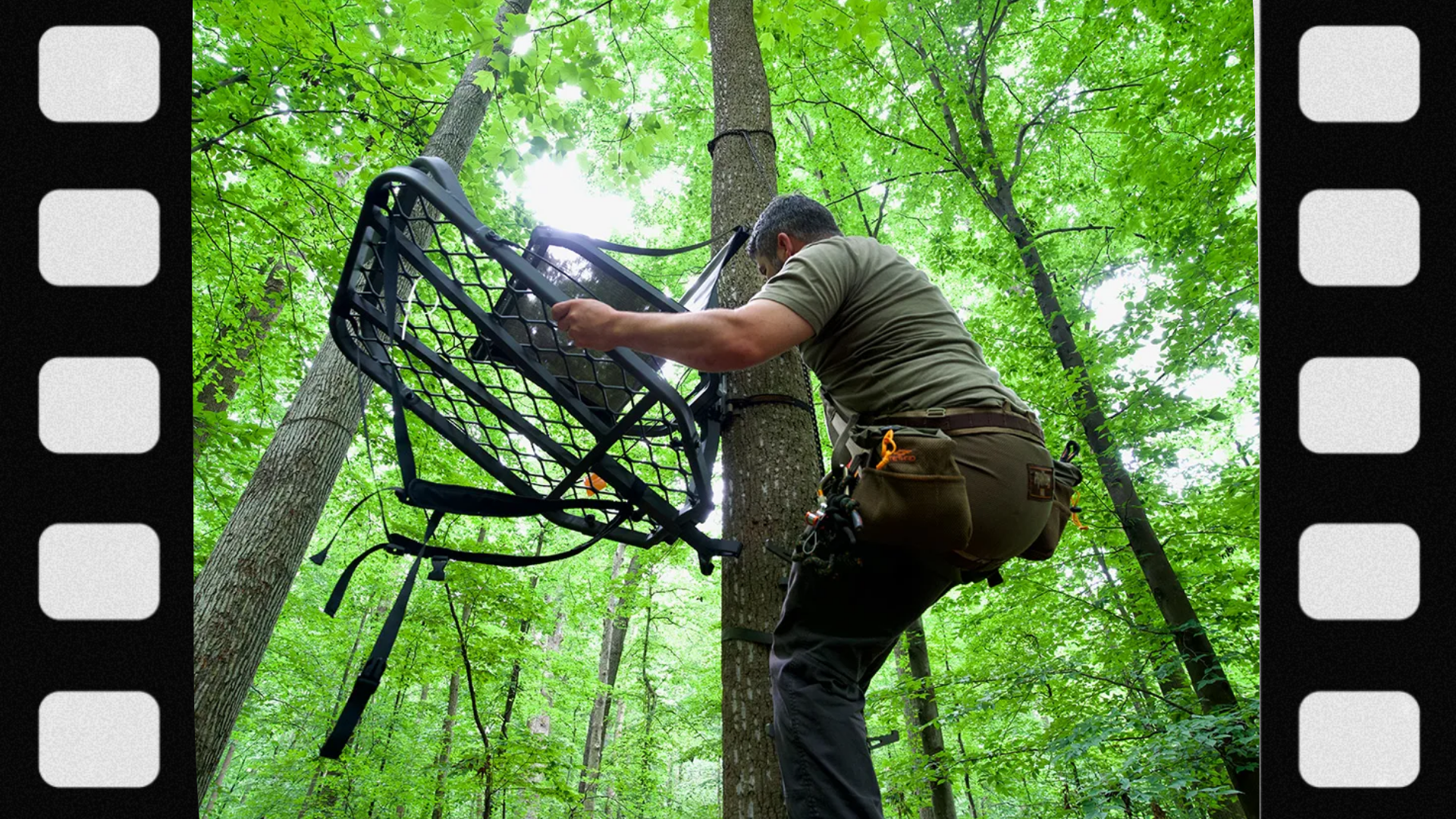
Installation can be one of the highest-risk parts of using a hang-on stand because the hunter may be handling equipment while elevated. Manufacturer directions should determine the installation procedure.
Beginners should practice with the equipment at ground level first and consider learning from an experienced, safety-focused instructor. Having another responsible person present can also provide assistance in an emergency.
Do not improvise an installation technique simply because it appears faster or easier.
Should You Carry the Stand While Climbing?
Follow the manufacturer’s installation method. Hunter-education guidance emphasizes using haul lines to raise and lower equipment rather than climbing while carrying equipment in the hands.
Firearms, bows, backpacks, and other hunting equipment should generally be raised only after the hunter has reached the stand and is securely connected. Firearms should be unloaded before being raised or lowered, with the muzzle controlled and the action handled according to safe firearm practices.
Firearm Safety in a Hang-On Stand
Elevation does not change the basic rules of firearm safety:
- Treat every firearm as if it is loaded.
- Keep the muzzle pointed in a safe direction.
- Keep your finger outside the trigger guard until ready to shoot.
- Be certain of the target and what is beyond it.
Never climb with a loaded firearm. Use a haul line or another manufacturer- and hunter-education-approved method to raise and lower unloaded equipment after you are securely positioned.
Do not assume that shooting downward automatically provides a safe backstop. Terrain, roads, buildings, livestock, other hunters, and people may still be beyond the target.
Can You Bowhunt From a Hang-On Stand?
Hang-on stands are commonly associated with bowhunting, but hunters should practice from an elevated position under safe, controlled conditions before hunting.
Elevation changes body position and shooting geometry. Maintain stable footing, stay connected to the fall-arrest system, and avoid leaning beyond the platform or stretching into an unstable position to create a shot opportunity.
Never compromise fall protection for a better shooting angle.
Can You Use a Crossbow From a Hang-On Stand?
A crossbow may be used from an elevated stand where legal, provided the stand and available space allow the equipment to be handled safely.
Follow the crossbow manufacturer’s instructions for loading, unloading, cocking, and decocking. Be aware of limb clearance and other parts of the stand or tree that could interfere with the crossbow.
Never dry-fire a crossbow.
Advantages of a Hang-On Stand
A hang-on stand can offer several practical advantages:
- Placement flexibility: Separate climbing equipment may allow use in suitable trees that do not work well with some climbing stands.
- Compact design: Many hang-on systems are designed with portability in mind.
- Low visual profile: A relatively small platform and seat may be easier to position among natural cover.
- Planned setups: Where legal and permitted, a stand may sometimes be installed before the hunt and accessed later.
- Different hunting styles: Hang-on stands can be used by bowhunters and firearm hunters where legal and appropriate.
Limitations of Hang-On Stands
Hang-on stands also have important disadvantages:
- They require separate climbing equipment.
- Installation at height introduces significant fall risk.
- Transitions between the climbing aid and platform require care.
- Platforms may be smaller than those on some ladder stands.
- The entire system can involve several separate pieces of equipment.
- Setup requires more skill than simply sitting in a ground blind.
- Some public or private properties restrict stand attachment or how long equipment can remain in place.
A hunter who is uncomfortable with heights should not feel pressured to use an elevated stand. Ground hunting methods may be more appropriate.
How to Inspect a Hang-On Stand Before Use
Inspect the complete system before every use, following manufacturer instructions. Pay particular attention to components that carry or secure weight.
Check for:
- Damaged or worn straps
- Corrosion
- Cracked or damaged welds
- Bent components
- Loose hardware
- Damaged cables or chains
- Missing components
- Damaged climbing aids
- Harness or lifeline wear
- Tree damage or deterioration
Do not use equipment that is damaged, incomplete, recalled, modified outside manufacturer instructions, or otherwise questionable.
Should You Leave a Hang-On Stand Outside All Season?
That depends on manufacturer guidance, property permission, environmental exposure, and local regulations. Outdoor exposure can degrade straps, hardware, cables, and other components over time.
A stand that was secure weeks earlier should not automatically be assumed safe today. Inspect the tree, stand, attachment system, climbing equipment, and safety line before use.
Also verify whether leaving equipment unattended or attached to trees is allowed on the property. Rules differ substantially among public lands and jurisdictions.
Can You Put a Hang-On Stand on Public Land?
Possibly, but there is no universal rule. Public-land regulations may control whether tree stands can be installed, what attachment systems are allowed, when stands can be placed or removed, whether identifying information is required, and whether equipment can remain overnight.
Some land-management rules also prohibit methods that damage trees.
Check the current regulations for the exact wildlife area, state forest, national forest, refuge, or other property before installing equipment. Do not assume rules from another property apply.
Does a Hang-On Stand Damage a Tree?
Properly used commercial attachment systems are generally intended to secure a stand without the improvised use of nails or similar penetrating fasteners. However, specific land managers may regulate attachment methods, and equipment can still affect bark or trees if used incorrectly.
Do not drive nails, bolts, spikes, or other objects into trees unless the property owner and applicable regulations expressly allow the method and the stand manufacturer supports it. On many managed lands, tree-damaging methods are restricted or prohibited.
How Do You Choose a Hang-On Stand?
Choose equipment based on safety, compatibility, hunting conditions, and your ability rather than simply selecting the lightest or largest platform.
Important considerations include:
- Manufacturer weight rating
- Compatible tree-size range
- Platform size
- Seat design
- Overall system weight
- Attachment system
- Climbing-system compatibility
- Ease of inspection
- Packability
- Weather resistance
- Manufacturer instructions and replacement-part support
The manufacturer’s rated capacity must account for the hunter and all equipment carried onto the stand.
Common Hang-On Stand Mistakes
Climbing Before Attaching Fall Protection
Fall protection should cover the climb and transition, not just the time spent sitting on the platform.
Using an Unhealthy Tree
A stand can be properly assembled yet still be unsafe if attached to a damaged or unsuitable tree.
Making an Awkward Step Onto the Platform
The climbing system should allow a controlled transition consistent with its manufacturer’s instructions.
Carrying Equipment in Your Hands While Climbing
Use an appropriate haul line for unloaded hunting equipment instead of compromising climbing control.
Ignoring Weight Limits
Remember that rated capacity includes the hunter and equipment.
Failing to Reinspect a Stand
Weather, animals, tree growth, corrosion, and material deterioration can change the condition of a setup.
Improvising Repairs
Do not substitute unapproved straps, hardware, ropes, or homemade components for manufacturer-specified equipment.
What Not to Do With a Hang-On Stand
- Do not climb without appropriate fall protection.
- Do not use a dead, damaged, or unsuitable tree.
- Do not exceed manufacturer weight limits.
- Do not climb with a loaded firearm.
- Do not carry bulky hunting equipment in your hands while climbing.
- Do not rely on branches as climbing aids.
- Do not use damaged straps, cables, hardware, or climbing equipment.
- Do not make homemade modifications that conflict with manufacturer instructions.
- Do not lean outside the platform to force a difficult shot.
- Do not leave a stand on public land without checking current rules.
- Do not assume another hunter’s stand is safe to use.
- Do not continue climbing in dangerous wind, ice, storms, darkness without adequate visibility, or other conditions you cannot manage safely.
Beginner Hang-On Stand Safety Checklist
- Read the stand manufacturer’s instructions.
- Read the climbing-system instructions.
- Use a properly fitted full-body fall-arrest system.
- Practice with the equipment at ground level.
- Inspect the tree before climbing.
- Inspect all straps, hardware, cables, and climbing aids.
- Stay properly connected from the ground up and back down.
- Maintain appropriate points of contact while climbing.
- Use a haul line for unloaded hunting equipment.
- Keep the firearm unloaded while raising or lowering it.
- Stay within the manufacturer’s total weight limit.
- Tell someone where you are hunting and when you expect to return.
- Carry a communication device when practical.
- Know how to use the harness suspension-relief system.
- Verify property and public-land rules before installation.
FAQs
1. What is a hang on stand?
A hang-on stand is a portable elevated hunting platform and seat that attaches to a suitable tree and is accessed using a separate climbing aid.
2. Is a hang-on stand the same as a lock-on stand?
The terms are commonly used for the same general category of fixed-position portable tree stand.
3. Does a hang-on stand have a ladder?
Normally, no integrated ladder is included as part of the stand itself. A separate compatible climbing system is required.
4. What do you use to climb to a hang-on stand?
Hunters commonly use commercial climbing sticks or another manufacturer-approved climbing aid appropriate for the stand and tree.
5. Do you need a harness in a hang-on stand?
A properly fitted full-body fall-arrest system is a fundamental safety component for elevated tree-stand use.
6. When should you attach your safety harness?
Fall protection should be established before leaving the ground and maintained appropriately throughout the climb, hunt, transition, and descent.
7. What is a tree-stand lifeline?
A lifeline or safety-line system is designed to work with compatible fall-arrest equipment so a hunter can remain connected during climbing and descent.
8. What is a lineman’s belt used for?
A compatible lineman’s-style system can help a hunter maintain connection and positioning around a tree during certain installation and climbing tasks. It must be used according to the fall-arrest equipment manufacturer’s instructions.
9. Is a hang-on stand safer than a climbing stand?
Both involve fall hazards. Safe use depends on correct equipment, installation, inspection, fall protection, training, and following manufacturer instructions.
10. Is a hang-on stand safer than a ladder stand?
No elevated stand should be assumed safe simply because of its design. Each type presents different installation, climbing, and transition hazards.
11. Can beginners use hang-on stands?
Yes, but beginners should receive appropriate instruction, practice at ground level, and become fully comfortable with the stand, climbing system, and fall-arrest equipment before hunting at height.
12. Are hang-on stands portable?
Many are designed to be portable, although portability varies considerably with the stand, climbing equipment, safety equipment, and other gear.
13. Can you leave a hang-on stand in a tree?
Possibly, depending on manufacturer guidance, landowner permission, and local or public-land regulations. It still requires inspection before each use.
14. Can you use a hang-on stand on public land?
Rules vary. Some public properties allow portable stands subject to restrictions, while others regulate attachment methods, installation periods, or unattended equipment.
15. Can you use a hang-on stand on private property?
Generally only with the landowner’s permission and in compliance with applicable laws and property rules.
16. Can you bowhunt from a hang-on stand?
Yes, where legal. Hunters should practice elevated shooting safely and remain connected to their fall-arrest system.
17. Can you rifle hunt from a hang-on stand?
Where the firearm, season, location, and hunting method are legal, a hang-on stand may be used for firearm hunting. Standard firearm safety rules still apply.
18. Can you use a crossbow from a hang-on stand?
Yes where legal and where sufficient clearance exists for safe operation. Follow both stand and crossbow manufacturer instructions.
19. How high should a hang-on stand be?
There is no universal ideal height. Follow equipment instructions and choose a position appropriate for the tree, terrain, visibility, climbing system, and your ability.
20. Can you install a hang-on stand by yourself?
Some equipment is designed for individual use, but installation at height is hazardous. Follow the manufacturer’s method, use proper fall protection, and seek qualified instruction if you are inexperienced.
21. Should you climb with your bow or firearm?
Do not climb while carrying a loaded firearm. Hunter-education guidance commonly recommends using a haul line to raise or lower unloaded equipment after the hunter is securely positioned.
22. How often should you inspect a hang-on stand?
Inspect the stand and safety system before use and follow all manufacturer inspection and replacement schedules.
23. Can straps deteriorate outdoors?
Yes. Weather, ultraviolet exposure, abrasion, moisture, animals, and time can affect equipment. Replace components when required by their manufacturer or when damage is found.
24. Can you use a dead tree for a hang-on stand?
No. Select a healthy, structurally sound tree that meets the stand manufacturer’s specifications.
25. Can you use tree branches as steps?
Do not rely on branches as climbing aids. Branches may break and are not a substitute for an approved climbing system.
26. Is a hang-on stand good for deer hunting?
Hang-on stands are commonly used for deer hunting because they can provide a compact elevated position in suitable wooded locations. Their usefulness depends on terrain, trees, regulations, and hunter preference.
27. What is the biggest disadvantage of a hang-on stand?
The need to install and access separate equipment at height creates significant fall-management demands compared with hunting from ground level.
28. What happens if you fall while wearing a harness?
A correctly used full-body fall-arrest system is designed to arrest a fall, but suspension can itself become dangerous. Hunters should understand suspension relief and self-rescue procedures before climbing.
29. Do hang-on stands damage trees?
Effects depend on the attachment system and how it is used. Land-management rules may prohibit penetrating fasteners or other tree-damaging methods, so check current regulations.
30. What should you check before using someone else’s hang-on stand?
The safest approach is not to assume an unfamiliar stand is secure. Permission, tree condition, stand condition, attachment hardware, climbing equipment, and fall-protection provisions all require evaluation before use.
Final Answer
So, what is a hang on stand? It is a compact elevated hunting platform and seat that attaches directly to a suitable tree and is reached using a separate climbing system. It is commonly called a hang-on, lock-on, or fixed-position tree stand.
Its main advantage is placement flexibility, but that flexibility comes with serious responsibilities. Installation, climbing, and the transition onto and off the platform expose hunters to fall hazards. Use a properly fitted full-body fall-arrest system, remain appropriately connected from the time you leave the ground until you return, inspect every component, stay within manufacturer limits, and use an appropriate haul line for unloaded equipment.
Before installing a hang-on stand, read the manufacturer’s instructions and verify current rules for the exact property. Public-land and private-land requirements can differ, particularly regarding tree attachment, equipment placement, stand removal, and methods that may damage trees. Safe equipment and careful preparation matter more than gaining extra height or reaching a particular hunting location.
Read more: