
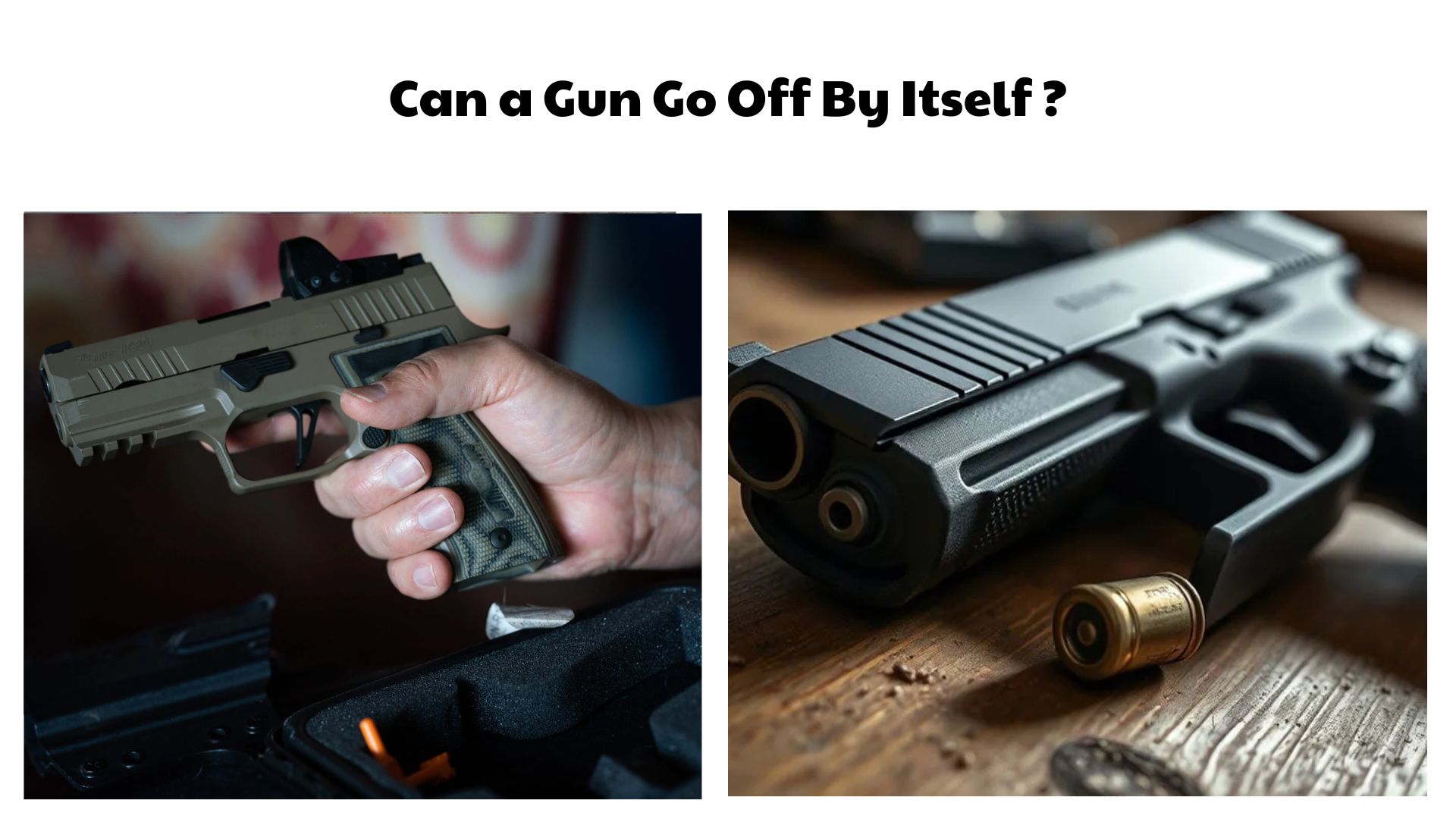

There is a long-standing public concern about whether firearms can fire without being touched. This question often comes up in discussions among new gun owners, casual users, and even experienced shooters who want to better understand how modern firearms behave under different conditions. The idea of a gun “going off by itself” tends to create fear because it suggests a loss of control over a potentially dangerous tool.
This topic is especially important for gun owners, beginners, and home defense users because it directly relates to safe handling and confidence. For someone new to firearms, uncertainty about mechanical behavior can lead to hesitation or misuse. For home defense users, understanding how and when a firearm can discharge is essential for safe storage and responsible readiness.
A common fear is that guns can randomly discharge on their own without any trigger input or human action. This belief is often reinforced by misunderstandings, media reports, or anecdotal stories that do not explain the full mechanical context. In reality, modern firearms are engineered with multiple layers of safety systems specifically designed to prevent unintended firing under normal conditions.
Today’s firearms include features such as trigger safeties, firing pin blocks, and drop safety mechanisms. These systems work together to ensure that a gun does not discharge unless a deliberate trigger pull occurs. While no mechanical device is completely free from risk, spontaneous firing without cause is extremely rare in properly functioning and well-maintained firearms.
This guide will break down the topic in a clear and practical way. We will look at how firearm mechanical function works, what drop safety actually means, and the difference between accidental and negligent discharge. We will also examine real-world causes of unintended firearm discharges, helping separate myth from reality and giving a more accurate understanding of how firearms behave in real conditions.
Can a Gun Go Off By Itself ?

Basic Answer Explained
Under normal operating conditions, firearms require a deliberate trigger action to fire. This is a fundamental design principle across virtually all modern handguns, rifles, and shotguns. The firing sequence is mechanically controlled, meaning the trigger must initiate a chain of internal movements before a round can discharge.
Modern guns are specifically engineered to prevent spontaneous discharge. Manufacturers build in multiple safety mechanisms that block the firing process unless the trigger is intentionally pressed. These systems are tested under strict safety standards, including drop tests and durability testing, to ensure the firearm does not fire unintentionally in normal use.
Because of these engineering safeguards, the idea of a gun “going off by itself” is extremely rare in properly maintained firearms. When a firearm is in good condition and handled correctly, spontaneous discharge without any external cause is not something that occurs in normal circumstances.
Mechanical Failures vs Normal Function
Although rare, mechanical failures can occur in any machine, and firearms are no exception. Internal components such as the sear or firing pin assembly can malfunction under specific conditions. For example, if a sear becomes worn or damaged, it may not properly hold the firing mechanism in place.
In very rare cases, manufacturing defects can also lead to unintended behavior. These situations are uncommon due to strict quality control standards in modern firearm production, but they are not impossible. When they do occur, they are typically identified during testing or early use rather than routine handling.
This is why regular maintenance and inspection are important. Checking for wear, ensuring proper lubrication, and following manufacturer guidelines helps reduce the already low risk of mechanical malfunction. A well-maintained firearm is significantly less likely to experience any internal issue that could affect safety.
What Most People Think vs Reality
A common misconception is that firearms can randomly discharge without any trigger input. This belief is often fueled by misunderstandings, incomplete information, or stories that do not fully explain the circumstances behind an incident.
In reality, most firearm-related incidents that appear to involve “spontaneous” discharge are actually caused by human handling errors. These may include improper trigger discipline, unsafe storage practices, or failure to recognize that a firearm is loaded.
When examined closely, the vast majority of these cases involve some form of human interaction with the trigger or firearm mechanism. True spontaneous firing without mechanical cause or user involvement is extremely uncommon. Understanding this distinction is essential for developing proper safety awareness and responsible firearm handling habits.
Accidental Discharge vs Negligent Discharge
Understanding the difference between an accidental discharge and a negligent discharge is essential for anyone who owns or handles firearms. These two terms are often used interchangeably in casual conversation, but in firearms safety and training contexts, they describe very different situations. Clarifying this distinction helps improve safety awareness and reduces confusion when analyzing firearm incidents.
What Is an Accidental Discharge (AD)?
An accidental discharge (AD) refers to a firearm firing unintentionally due to a mechanical malfunction rather than user input. In this case, the trigger is not deliberately pressed, and the firing occurs because something inside the firearm fails to function as intended.
Examples of mechanical causes include firing pin failure, where the firing mechanism behaves unpredictably, or a slamfire, where a round ignites unexpectedly during chambering. Another rare example is a drop malfunction, where a firearm discharges due to internal failure when subjected to impact.
It is important to emphasize that accidental discharges are rare in modern firearms. Most contemporary weapons are built with multiple safety systems designed to prevent exactly this type of failure. When they do occur, they are typically associated with damaged, poorly maintained, or defective components.
What Is a Negligent Discharge (ND)?
A negligent discharge (ND), on the other hand, occurs when a firearm is fired unintentionally due to human error. In this case, the mechanical system is functioning correctly, but the user makes a mistake that results in the trigger being activated.
Negligent discharges are the most common cause of unintended firearm firing incidents. Unlike mechanical failures, these situations are directly related to handling practices and discipline.
Common examples include placing a finger on the trigger before being ready to shoot, improperly holstering a firearm, or failing to recognize that a round is still chambered. In all of these cases, the firearm itself is not malfunctioning—the issue lies in how it is being handled.
Why the Distinction Matters
The difference between accidental and negligent discharge is not just technical—it has important safety and legal implications. From a safety perspective, understanding the root cause of an incident helps prevent it from happening again. Mechanical issues require inspection and repair, while negligent discharges require better training and discipline.
From a legal standpoint, negligent discharges are often treated more seriously because they involve user responsibility. This is why firearm training programs place strong emphasis on safe handling practices, trigger discipline, and situational awareness.
Ultimately, most firearm safety education focuses on preventing negligent discharges, since they represent the majority of real-world incidents involving unintended firearm discharge.
Can a Gun Go Off If Dropped?
Modern Drop Safety Systems
Modern firearms are designed with multiple safety systems specifically intended to prevent discharge if the weapon is dropped. One of the most important features is the firing pin block, which physically prevents the firing pin from moving forward unless the trigger is pulled.
Many modern striker-fired pistols also include internal safety mechanisms that keep the firing system locked in place unless a deliberate trigger press occurs. These systems are engineered to meet strict safety and drop-test standards set by manufacturers and industry regulations.
As a result, modern firearms are built with a high level of resistance to accidental discharge from impact. These engineering safeguards significantly reduce the risk of a gun firing simply due to being dropped.
Real-World Risk Level
In practical terms, the likelihood of a modern firearm discharging when dropped is extremely low. Extensive testing and safety standards ensure that properly manufactured and maintained firearms will not fire under normal drop conditions.
However, older firearms may not include the same level of safety engineering. Designs that predate modern safety standards can be more vulnerable because they lack features such as firing pin blocks or drop safeties. This makes them comparatively higher risk in impact scenarios.
Even so, it is important to note that catastrophic failure from dropping a firearm is still uncommon. Most modern designs are highly reliable in preventing this type of event.
When Drop Discharge Can Still Happen
Although extremely rare, there are certain conditions under which a firearm could discharge if dropped. One possibility is a severe mechanical failure, such as a broken or damaged internal component that compromises the safety system.
Another rare scenario involves an extremely uncommon manufacturing defect that bypasses normal quality control checks. These situations are highly unlikely but cannot be considered impossible in mechanical systems.
Improper maintenance or unauthorized modifications can also increase risk. Altering internal safety components or neglecting wear and damage over time may reduce the firearm’s ability to function safely under impact conditions.
Overall, while modern firearms are designed to be drop-safe, maintaining proper condition and avoiding unnecessary modifications are key factors in ensuring continued reliability and safety.
What Actually Causes a Gun to Fire Unexpectedly?
When a firearm discharges in a situation that seems “unexpected,” the cause is almost never random. In real-world cases, there is usually a clear trigger event—either mechanical or human-related. Understanding these causes is essential for safe handling and helps correct the misconception that firearms can fire without reason.
Trigger Interaction (Most Common Cause)
The most frequent reason a firearm fires unexpectedly is direct or indirect interaction with the trigger. Even when a shooter does not intend to fire, the trigger mechanism must still be activated in some way for discharge to occur.
Accidental trigger presses often happen during handling, especially when a user is unfamiliar with proper grip discipline or becomes distracted. A finger entering the trigger guard too early or slipping during movement can easily result in an unintended shot.
Holstering mistakes are another common cause. If clothing, holster material, or an object enters the trigger guard during reholstering, it can press the trigger without the user realizing it. This is why proper holster design and careful technique are critical for safe carry.
In high-stress situations, such as self-defense encounters, a startle response can also lead to unintended trigger engagement. Under adrenaline, fine motor control decreases, and users may unintentionally apply pressure to the trigger while reacting quickly.
Chambered Round Awareness
Another major factor is lack of awareness regarding a chambered round. A firearm can still be loaded even if the magazine has been removed, depending on its design and how it was previously handled.
One common scenario involves forgetting that a round is still in the chamber. If a user assumes the firearm is unloaded without properly verifying it, they may handle it carelessly, increasing the risk of an unintended discharge.
This misunderstanding often occurs during storage, transport, or cleaning. It highlights the importance of always performing a full safety check rather than relying on assumptions about the firearm’s condition.
Improper Storage or Handling
Improper storage is another significant contributor to unintended firearm discharge incidents. A loaded firearm left unsecured creates an environment where accidental handling or unauthorized access can lead to dangerous outcomes.
Unsafe storage environments, such as leaving a firearm in easily accessible areas or without proper locking mechanisms, increase the likelihood of improper interaction. This is especially concerning in homes with children or untrained individuals.
A lack of basic safety discipline is often at the root of these issues. Simple habits such as failing to check the firearm before handling, neglecting storage protocols, or ignoring safety rules can significantly increase risk.
In most cases, unexpected firearm discharge is not the result of mechanical failure but rather a breakdown in safe handling practices.
Role of Firearm Safety Mechanisms
Modern firearms are equipped with multiple safety systems designed to reduce the risk of unintended discharge. These mechanisms act as safeguards, but they are not substitutes for proper handling and training. Understanding how they work helps clarify what they can and cannot prevent.
Trigger Safeties
Trigger safeties are one of the most common safety features in modern firearms, particularly in striker-fired pistols. These systems are designed to prevent the firearm from firing unless the trigger is fully and deliberately pressed.
The mechanism typically includes a small lever or integrated safety within the trigger itself. This design ensures that partial pressure or accidental contact does not engage the firing system. Only a complete, intentional trigger pull will allow the firearm to discharge.
While highly effective, trigger safeties still require responsible handling. They are not designed to prevent all user-related mistakes, especially if the trigger is intentionally or carelessly engaged.
Internal Safeties
Internal safeties provide another layer of protection within the firearm’s mechanism. These systems are hidden inside the gun and operate automatically without user input.
One of the most important internal features is the firing pin block, which physically prevents the firing pin from moving forward unless the trigger is pressed. This ensures that even if the firearm is dropped or jolted, the firing mechanism remains inactive.
Drop safeties also play a key role by preventing internal components from shifting into a firing position due to impact. These systems are designed to meet strict safety standards and significantly reduce the likelihood of accidental discharge caused by mechanical movement alone.
Manual Safeties
Manual safeties are external switches or levers that allow the user to physically block the firing mechanism. When engaged, they prevent the firearm from discharging even if the trigger is pulled.
These safeties provide an additional layer of control, especially for users who prefer a more traditional safety system. However, they are not present on all firearm designs, particularly many modern striker-fired pistols that rely on internal safety systems instead.
It is important to understand that manual safeties are not a replacement for safe handling practices. They can reduce risk, but they do not eliminate the need for proper trigger discipline, awareness, and responsible storage.
In all cases, firearm safety systems are designed to support safe use—not to replace user responsibility.
“`html id=”m4v8qp”
Are Modern Guns “Safe”?
The question of whether modern guns are “safe” is best answered by understanding how firearm engineering has evolved over time. Modern firearms are significantly safer than older designs due to advancements in mechanical engineering, stricter manufacturing standards, and extensive testing procedures. However, safety in firearms is never absolute—it is a combination of design and user behavior.
Engineering Improvements in Modern Firearms
One of the most important developments in modern firearms is the introduction of standardized drop testing. Manufacturers now test firearms under controlled conditions to ensure they do not discharge when dropped or subjected to impact. These tests are part of industry safety expectations and are a key factor in modern firearm design.
Another major improvement is the use of redundant safety systems. Instead of relying on a single mechanism, modern firearms often include multiple layers of protection such as trigger safeties, firing pin blocks, and internal drop safeties. If one system fails or is bypassed unintentionally, others are designed to prevent discharge.
Manufacturing tolerances have also improved significantly. Modern machining techniques allow for more precise construction of firearm components, reducing the likelihood of mechanical inconsistencies. This results in more predictable and reliable performance under a wide range of conditions.
Together, these improvements make modern firearms far more controlled and predictable than earlier generations of weapons. However, these advancements do not eliminate risk entirely—they reduce it to very low levels under normal conditions.
Limitations of Mechanical Safety
Despite significant engineering progress, no firearm can be considered completely risk-free. All mechanical systems have limitations, and firearms are no exception. Even the most advanced safety systems are designed to reduce risk, not eliminate it entirely.
A critical factor in firearm safety is user behavior. Most safety incidents are not caused by mechanical failure but by improper handling, lack of training, or failure to follow basic safety rules. This means that even the safest firearm can become dangerous if used carelessly.
In practice, mechanical safety systems are only one part of overall firearm safety. The user’s discipline, awareness, and training play a far greater role in preventing accidents than the firearm’s internal mechanisms alone.
Real-World Firearm Incidents Explained
Cleaning and Maintenance Accidents
One of the most common real-world causes of firearm incidents occurs during cleaning or maintenance. In these situations, users may accidentally discharge a firearm because they fail to properly verify that it is unloaded.
Even experienced gun owners can make mistakes if they become complacent or distracted during maintenance routines. A round left in the chamber or magazine can lead to an unintended discharge if the trigger is pulled during disassembly or cleaning.
These incidents highlight the importance of treating every firearm as if it is loaded until a thorough safety check confirms otherwise. Proper cleaning procedures and discipline are essential to preventing these avoidable accidents.
Handling Under Stress
Firearm incidents can also occur in high-stress situations, such as law enforcement encounters or self-defense scenarios. In these environments, adrenaline and urgency can significantly affect fine motor control and decision-making.
Under stress, individuals may unintentionally violate trigger discipline or mishandle a firearm due to rapid movement and heightened emotional response. Even trained professionals are not immune to these effects.
This is why consistent training is critical. Repeated practice helps build muscle memory, allowing safe handling habits to remain effective even under pressure.
Storage-Related Incidents
Improper storage is another factor that contributes to real-world firearm incidents. When firearms are left unsecured, there is an increased risk of unauthorized access, particularly in homes with children or untrained individuals.
Unauthorized access can lead to accidental discharge if someone handles the firearm without understanding its status or safety rules. This type of incident is preventable with proper storage practices.
Other storage-related issues include leaving firearms loaded in accessible locations or failing to use secure storage systems such as safes or lockboxes. These oversights significantly increase the risk of unintended use or discharge.
How to Prevent a Gun from “Going Off Unexpectedly”
Fundamental Gun Safety Rules
The most effective way to prevent unintended firearm discharge is by consistently following fundamental safety rules. These rules form the foundation of responsible firearm handling and are taught in every basic firearms safety course.
The first rule is to always treat every firearm as if it is loaded. This mindset prevents careless handling and reinforces constant awareness. Even if a firearm is believed to be unloaded, it should still be handled with caution.
Another critical rule is to keep your finger off the trigger until you are ready to shoot. This simple habit is one of the most effective ways to prevent negligent discharges. Proper trigger discipline ensures that the firearm will not fire unless intentionally activated.
It is also essential to never point a firearm at anything you are not willing to destroy. This rule reinforces safe muzzle direction and reduces the risk of harm in case of accidental discharge.
Proper Storage Practices
Safe storage is another key factor in preventing unintended firearm incidents. Firearms should always be stored in locked containers or safes when not in use. This helps prevent unauthorized access and reduces the risk of accidental handling.
Ammunition should be stored separately from firearms whenever possible. This adds an additional layer of safety by ensuring that even if a firearm is accessed, it is less likely to be immediately functional.
Preventing unauthorized access is especially important in households with children or visitors. Secure storage systems such as biometric safes or keyed lockboxes provide reliable protection and help maintain control over firearms at all times.
Regular Maintenance and Inspection
Regular maintenance and inspection are also important for ensuring long-term firearm safety. Checking for signs of wear, damage, or malfunction helps identify potential issues before they become serious problems.
Components such as springs, firing pins, and safety mechanisms should be inspected periodically to ensure they are functioning correctly. Any signs of damage or irregularity should be addressed promptly.
In some cases, professional servicing may be necessary. Gunsmiths can perform detailed inspections and repairs that go beyond basic user maintenance, helping ensure that the firearm remains safe and reliable over time.
By combining proper handling, secure storage, and regular maintenance, the risk of a firearm “going off unexpectedly” can be reduced to an extremely low level in real-world conditions.
Myths About Guns Firing by Themselves
“Guns randomly go off”
One of the most common myths about firearms is the belief that guns can randomly go off without any cause. In modern firearms, this is not true under normal operating conditions. Firearms are mechanical systems that require a specific sequence of actions to fire, with the trigger playing the central role in initiating that process.
Modern designs include multiple safety mechanisms specifically built to prevent unintended discharge. When properly maintained and handled, a firearm will not fire without a mechanical or user-driven input. The idea of random firing is largely based on misunderstanding or misinterpretation of real-world incidents.
“Safety guarantees no discharge”
Another widespread misconception is that a safety mechanism completely guarantees that a firearm cannot fire. While safety systems are extremely important, they are not absolute guarantees.
Safety features such as trigger safeties, internal blocks, and manual safeties are designed to reduce risk, not eliminate it entirely. They help prevent accidental discharge under normal conditions, but they do not replace the need for responsible handling and discipline.
Even with advanced safety systems, improper handling, negligence, or misuse can still lead to unintended discharge. This is why training and consistent safety habits remain essential components of firearm ownership.
“Drop equals guaranteed firing”
A common belief is that if a gun is dropped, it will automatically fire. This is largely based on outdated firearm designs and misconceptions about modern engineering standards.
In reality, modern firearms are designed with drop safety mechanisms that make accidental discharge from impact extremely unlikely. Features such as firing pin blocks and internal safeties prevent the firing mechanism from activating unless the trigger is deliberately engaged.
While no mechanical system is completely immune to failure, modern drop safety testing has made this type of incident exceptionally rare in properly manufactured and maintained firearms.
Expert Insight Summary
A clear understanding of firearm behavior shows that guns do not fire without a mechanical action or human input. Every discharge requires a chain of mechanical events that is normally initiated by pulling the trigger. Without this input, the firing sequence does not occur under standard operating conditions.
True spontaneous discharge is extremely rare in modern firearms. When it does appear to happen, it is usually the result of specific mechanical failures, improper maintenance, or user-related factors rather than random behavior of the firearm itself.
Most real-world firearm incidents are caused by handling errors rather than unpredictable malfunctions. This includes improper trigger discipline, unsafe storage, or failure to follow basic safety protocols. In other words, human behavior is the most significant factor in firearm safety outcomes.
Because of this, safety depends more on user behavior than on mechanical systems alone. While modern firearms are designed with multiple layers of protection, they cannot compensate for unsafe handling practices or lack of training.
Training and discipline remain the strongest safety tools available. Consistent practice, proper education, and adherence to safety rules significantly reduce the likelihood of accidents and ensure responsible firearm use.
Conclusion
A firearm cannot realistically “go off by itself” under normal conditions. Modern firearms are engineered systems that require deliberate input to function, with multiple safety mechanisms designed to prevent unintended firing.
Today’s firearms include features such as trigger safeties, internal blocks, and drop protection systems that significantly reduce the risk of accidental discharge. These advancements make modern guns far safer and more predictable than older designs.
However, despite these improvements, human error remains the primary risk factor in firearm incidents. Improper handling, lack of awareness, or failure to follow safety rules are the most common causes of unintended discharge situations.
For this reason, responsible handling and proper storage are essential components of firearm safety. Mechanical systems can reduce risk, but they cannot replace safe behavior and consistent discipline.
Final takeaway: firearms are mechanical tools designed with safety in mind, but their safe use ultimately depends on the user—not just the design.
Frequently Asked Questions (FAQ)
1. Can a gun really go off by itself?
In modern firearms, a gun does not “go off by itself” under normal conditions. A firing sequence requires mechanical activation, usually through a trigger pull. Modern designs include multiple safety systems that prevent discharge unless a deliberate action occurs. When a gun fires unexpectedly, there is almost always a mechanical failure or, more commonly, human involvement.
2. What is the most common cause of an unexpected gun discharge?
The most common cause is negligent handling, particularly unintentional trigger contact. This can happen during holstering, drawing, or handling under stress. Mechanical failures are significantly rarer compared to user-related mistakes.
3. What is the difference between accidental and negligent discharge?
An accidental discharge involves a mechanical failure within the firearm, such as a broken firing pin. A negligent discharge occurs when the user unintentionally pulls or activates the trigger. The majority of real-world incidents are negligent, not accidental.
4. Can dropping a gun make it fire?
Modern firearms are designed with drop safety systems that prevent discharge when dropped. While older firearms may have had higher risk, modern designs make this extremely unlikely under normal conditions.
5. What is a drop safety system?
A drop safety system is a mechanical feature that prevents the firing mechanism from engaging if the firearm experiences sudden impact. It typically includes internal blocks that stop the firing pin from moving unless the trigger is pulled.
6. Are modern guns completely safe?
No firearm is completely risk-free. Modern guns are very safe when used correctly, but safety depends heavily on proper handling, storage, and user discipline.
7. Why do people think guns can fire randomly?
This belief often comes from misunderstandings of firearm mechanics or misreported incidents. In reality, most cases involve human error or improper handling rather than spontaneous firing.
8. Can a gun fire without pulling the trigger?
Under normal conditions, no. Firearms are designed so that the trigger must be engaged to initiate firing. Exceptions are extremely rare and usually involve mechanical failure or severe damage.
9. What is a slamfire?
A slamfire is an unintended discharge that occurs when a round ignites as it is chambered. It is rare and typically associated with specific firearm types or defective ammunition.
10. How important is maintenance in preventing firearm issues?
Proper maintenance is essential. Wear, dirt, or damage can increase the risk of malfunction. Regular inspection ensures that safety systems function correctly.
11. Can a safety switch fail?
While rare, any mechanical component can fail. However, modern firearms use multiple safety systems, so a single failure is unlikely to result in discharge.
12. What is a negligent discharge?
A negligent discharge occurs when a firearm fires due to user error, such as placing a finger on the trigger unintentionally. It is preventable with proper training and discipline.
13. Are revolvers safer than pistols?
Revolvers have longer trigger pulls and simpler mechanics, which some users consider safer. However, safety ultimately depends on handling, not firearm type.
14. Do striker-fired pistols have safeties?
Yes, most striker-fired pistols include internal safeties and trigger safeties that prevent discharge unless the trigger is intentionally pulled.
15. What is a firing pin block?
A firing pin block is a safety mechanism that physically prevents the firing pin from moving forward unless the trigger is pressed.
16. Can heat or environment cause a gun to fire?
Under normal conditions, no. Firearms are not designed to discharge due to heat or environmental exposure alone.
17. What happens if a gun is dropped while loaded?
Modern firearms are designed to remain safe when dropped, even if loaded. However, safe handling practices should always be followed.
18. Is trigger discipline important?
Yes, trigger discipline is one of the most critical safety rules. Keeping the finger off the trigger until ready to fire prevents most negligent discharges.
19. Can clothing cause a gun to fire?
Improper holstering or clothing getting into the trigger guard can unintentionally press the trigger, leading to discharge. Proper holsters prevent this risk.
20. Are older guns more dangerous?
Older firearms may lack modern safety features, making them more susceptible to certain types of mechanical issues or drop-related risks.
21. Can ammunition cause a gun to fire unexpectedly?
Faulty ammunition can sometimes cause rare issues like slamfires, but this is uncommon in modern, quality-controlled ammunition.
22. What is the safest way to store a firearm?
The safest method is to store firearms unloaded in a locked container or safe, with ammunition stored separately.
23. Can a gun fire if it is disassembled?
No, a properly disassembled firearm cannot fire because the firing mechanism is not fully assembled.
24. Do manual safeties make guns safer?
Manual safeties add an additional layer of protection but do not replace proper handling and trigger discipline.
25. What is the biggest cause of firearm accidents?
Human error is the leading cause, especially improper trigger handling and failure to follow basic safety rules.
26. Can stress cause accidental discharge?
Yes, stress can reduce motor control and awareness, increasing the risk of negligent discharge under pressure.
27. Are training and experience important?
Absolutely. Training builds safe habits and reduces the risk of handling mistakes in real situations.
28. Can a gun fire if it is not cocked?
It depends on the firearm type, but most modern guns require the firing mechanism to be in a ready state and the trigger to be pulled.
29. What is the role of user behavior in firearm safety?
User behavior is the most important factor in firearm safety. Mechanical systems reduce risk, but safe handling prevents incidents.
30. Can a gun fire while cleaning it?
Yes, if it is not properly cleared and checked. This is a common cause of accidental or negligent discharge.
31. What is the safest mindset when handling firearms?
Always assume the firearm is loaded and treat it with caution at all times.
32. Can modifications affect firearm safety?
Yes, improper modifications can compromise safety systems and increase risk of malfunction.
33. Do modern guns require less caution?
No, modern guns are safer but still require strict safety discipline and responsible handling.
34. Can a gun fire if the trigger is barely touched?
Yes, even slight pressure on the trigger can cause discharge if safety protocols are not followed.
35. Why is holster quality important?
A proper holster protects the trigger and prevents accidental contact during carry or movement.
36. What is the safest trigger system?
There is no single “safest” system; safety depends more on training and handling than trigger design.
37. Can a gun fire underwater or in extreme conditions?
Firearms are not designed to function safely in such conditions, and performance is unpredictable.
38. Is it safe to rely on safeties alone?
No, safeties are backup systems and should never replace proper handling habits.
39. What is the safest way to carry a firearm?
Safe carry involves a proper holster, trigger protection, and consistent awareness of firearm status.
40. Can children accidentally fire a gun?
Yes, if a firearm is not securely stored, unauthorized access can lead to dangerous situations.
41. How often should firearms be inspected?
Regular inspection is recommended, especially if the firearm is frequently used or stored long-term.
42. Can dust or dirt cause a gun to fire?
Dirt typically causes malfunctions rather than spontaneous firing, but maintenance is still important.
43. What is the safest way to transport a firearm?
Firearms should be unloaded, secured in a case, and stored according to local regulations during transport.
44. Do professional shooters experience accidental discharges?
Yes, even trained professionals can experience negligent discharges, which highlights the importance of constant discipline.
45. Can a gun fire without a magazine?
If a round is chambered, yes. Firearms can still fire without a magazine depending on their design.
46. What is the role of education in firearm safety?
Education is essential for understanding mechanics, safety rules, and responsible handling practices.
47. Can recoil cause accidental discharge?
Recoil itself does not cause firing, but improper handling during recoil recovery can lead to mistakes.
48. Are accidents more common with new shooters?
Yes, beginners are more likely to make handling mistakes due to lack of experience.
49. Can a gun “cook off” from heat?
In extreme conditions, ammunition can ignite from heat, but this is rare and not typical in normal environments.
50. What is the most important firearm safety rule?
The most important rule is to always treat every firearm as if it is loaded, regardless of situation.
Read more: