
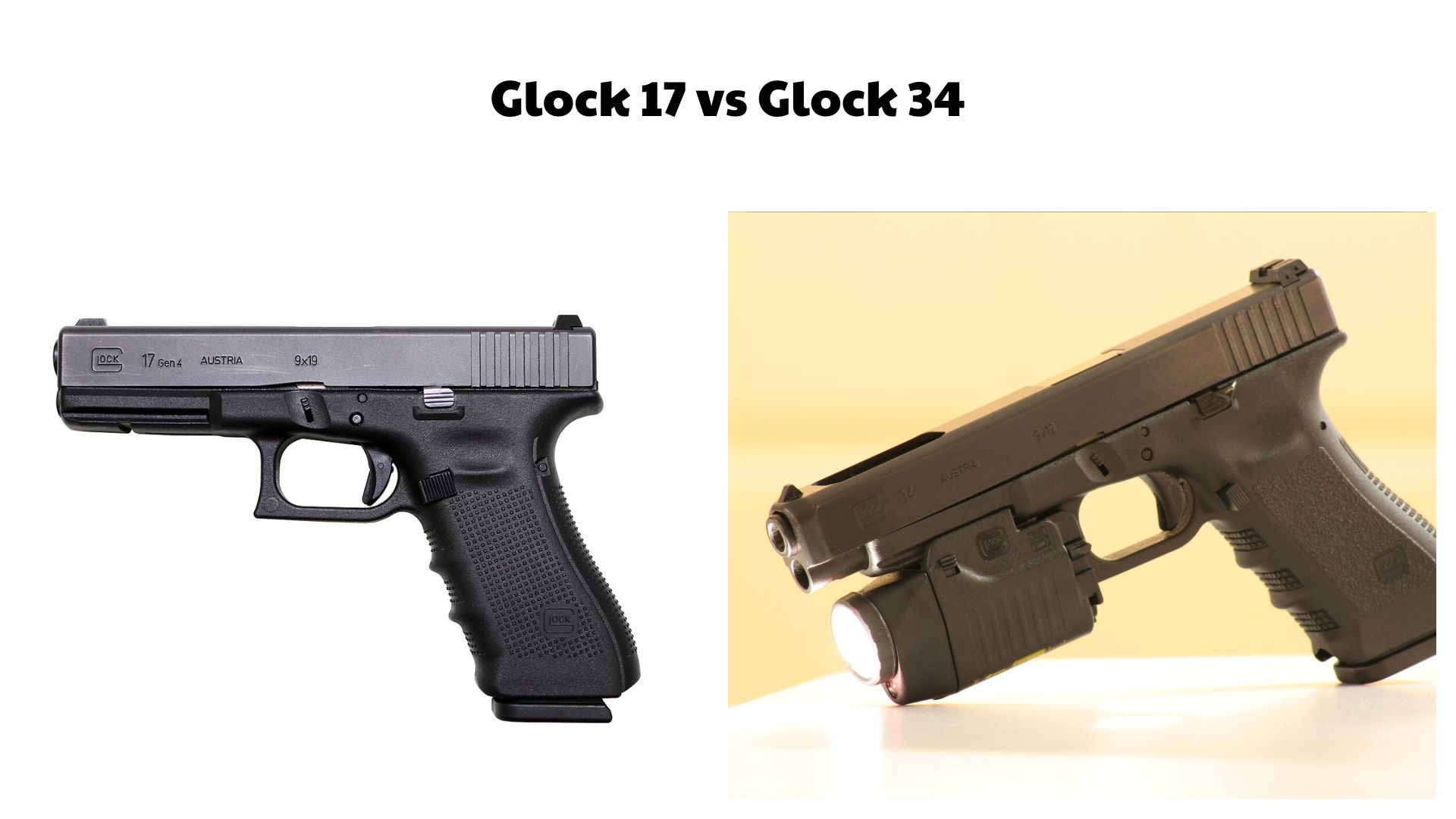

When discussing full-size 9mm pistols, few handgun comparisons are as common as the Glock 17 versus the Glock 34. Both firearms are built on Glock’s legendary polymer-framed platform, both chamber the widely trusted 9x19mm cartridge, and both have earned reputations for reliability, durability, and simplicity. However, despite their similarities, these two pistols are designed with different priorities in mind. The Glock 17 is widely regarded as the standard-duty handgun that excels in versatility, while the Glock 34 was specifically engineered to enhance competitive shooting performance through a longer slide, extended barrel, and improved sight radius.
Because they share the same frame size and many interchangeable components, shooters often debate which model offers the better overall shooting experience. Some users prioritize portability and all-around practicality, while others want maximum accuracy and recoil control for range or match environments. This is exactly why the Glock 17 and Glock 34 are frequently compared by firearm enthusiasts, law enforcement officers, and first-time handgun buyers alike.
The Glock 17 is often viewed as the “do-it-all” option. It is compact enough for some concealed carry applications, large enough for duty use, and reliable enough for home defense. In contrast, the Glock 34 takes the same trusted foundation and optimizes it for speed, precision, and competition shooting. The longer barrel and slide provide advantages in muzzle stability and target acquisition, making it one of the most popular handguns in USPSA and IDPA competition shooting.
This comparison guide is designed for:
- First-time handgun buyers
- Home defense users
- Competitive shooters
- Law enforcement professionals
- Range enthusiasts
Overview of the Glock 17
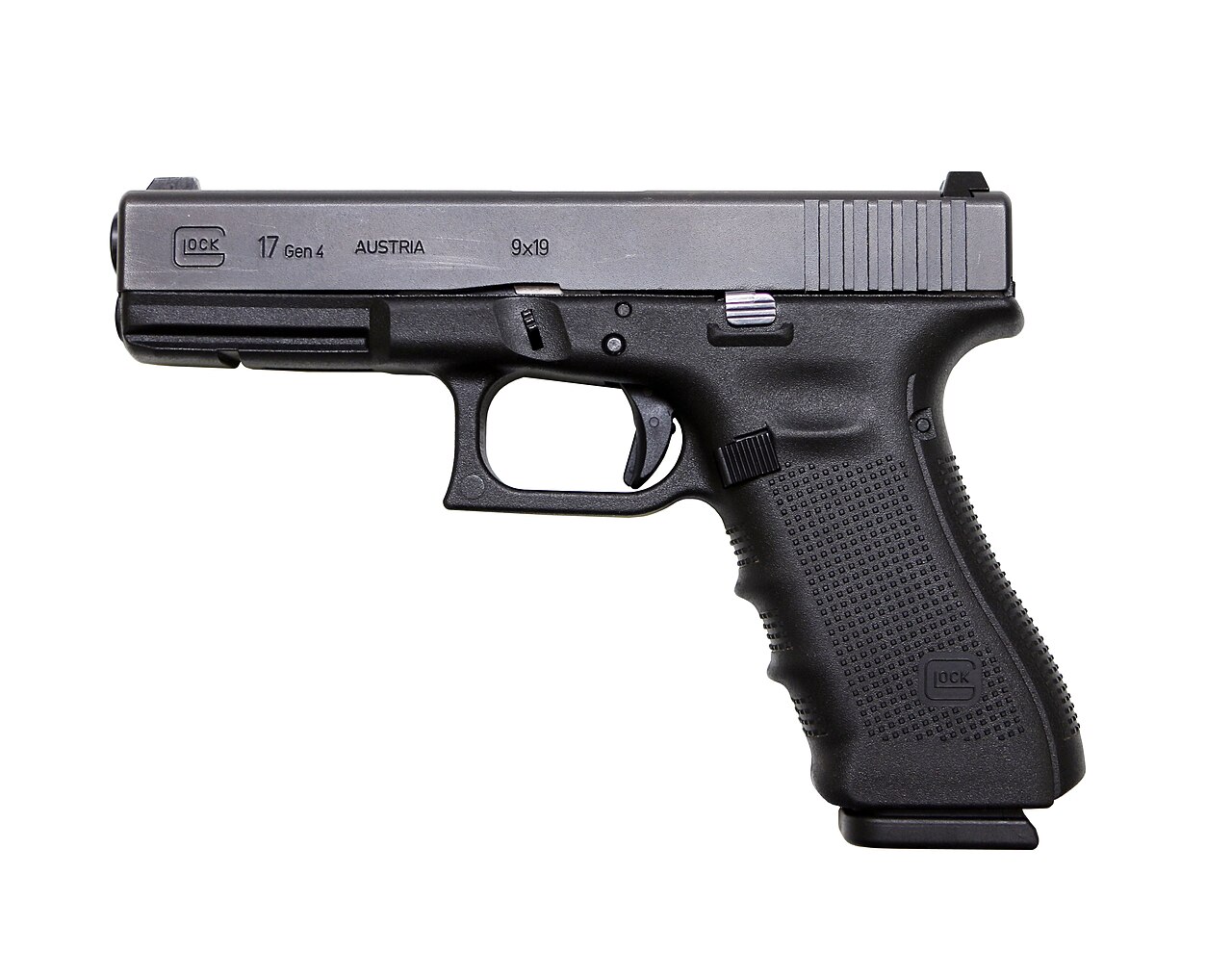
History and Development of the Glock 17
The Glock 17 was introduced in the early 1980s by Austrian manufacturer Glock. Originally developed to meet military contract requirements, the Glock 17 revolutionized the handgun market with its lightweight polymer frame, striker-fired action, and high-capacity magazine design.
At a time when steel-framed pistols dominated the industry, the Glock 17 introduced a modern approach focused on simplicity, durability, and reliability. Its polymer construction reduced overall weight while maintaining excellent structural strength. The pistol also featured Glock’s Safe Action trigger system, which combined multiple passive safeties into a streamlined design without external manual safeties.
Over the decades, the Glock 17 became one of the most widely adopted duty pistols in the world. Numerous military organizations, police departments, and civilian shooters embraced the platform because of its consistent performance, low maintenance requirements, and reputation for functioning reliably under harsh conditions.
Glock 17 Key Specifications
Barrel Length
The Glock 17 features a 4.49-inch barrel, offering an excellent balance between accuracy, recoil management, and maneuverability.
Overall Length
The pistol has an overall length of approximately 8.03 inches, making it a full-size handgun suitable for duty and defensive applications.
Weight
Unloaded, the Glock 17 weighs roughly 25 ounces. Its lightweight polymer frame helps reduce fatigue during extended carry or long range sessions.
Magazine Capacity
The standard Glock 17 magazine holds 17 rounds of 9mm ammunition, though the pistol is compatible with larger Glock magazines as well.
Trigger System
The Glock 17 utilizes Glock’s striker-fired Safe Action trigger system, known for its consistent trigger pull and straightforward operation.
Intended Purpose and Real-World Applications
Duty Carry
The Glock 17 has long been trusted by law enforcement agencies because of its reliability, simplicity, and large magazine capacity.
Home Defense
Its full-size frame, manageable recoil, and accessory rail compatibility make it one of the most popular home defense pistols available.
Concealed Carry
Although larger than compact handguns, many users still successfully conceal carry the Glock 17 with proper holsters and clothing choices.
Range Use
The Glock 17 is highly popular for recreational shooting and training thanks to its soft recoil, affordable ammunition, and dependable reliability.
Why the Glock 17 Became One of the Most Popular Pistols in the World
The Glock 17 became globally successful because it combined simplicity, durability, reliability, and affordability into a single platform. Unlike many traditional handguns with complicated controls, the Glock 17 offers a streamlined manual of arms that is easy for beginners to learn and efficient for experienced shooters under stress.
Another major factor behind its popularity is the enormous aftermarket support available for Glock pistols. Owners can customize nearly every component, including triggers, sights, barrels, slides, and optics. This flexibility allows the Glock 17 to adapt to competition, tactical, defensive, and recreational shooting roles.
Its legendary reliability further solidified its reputation. Whether exposed to mud, dust, heavy firing schedules, or harsh environments, the Glock 17 consistently demonstrated exceptional dependability, making it a benchmark for modern striker-fired pistols.
Overview of the Glock 34
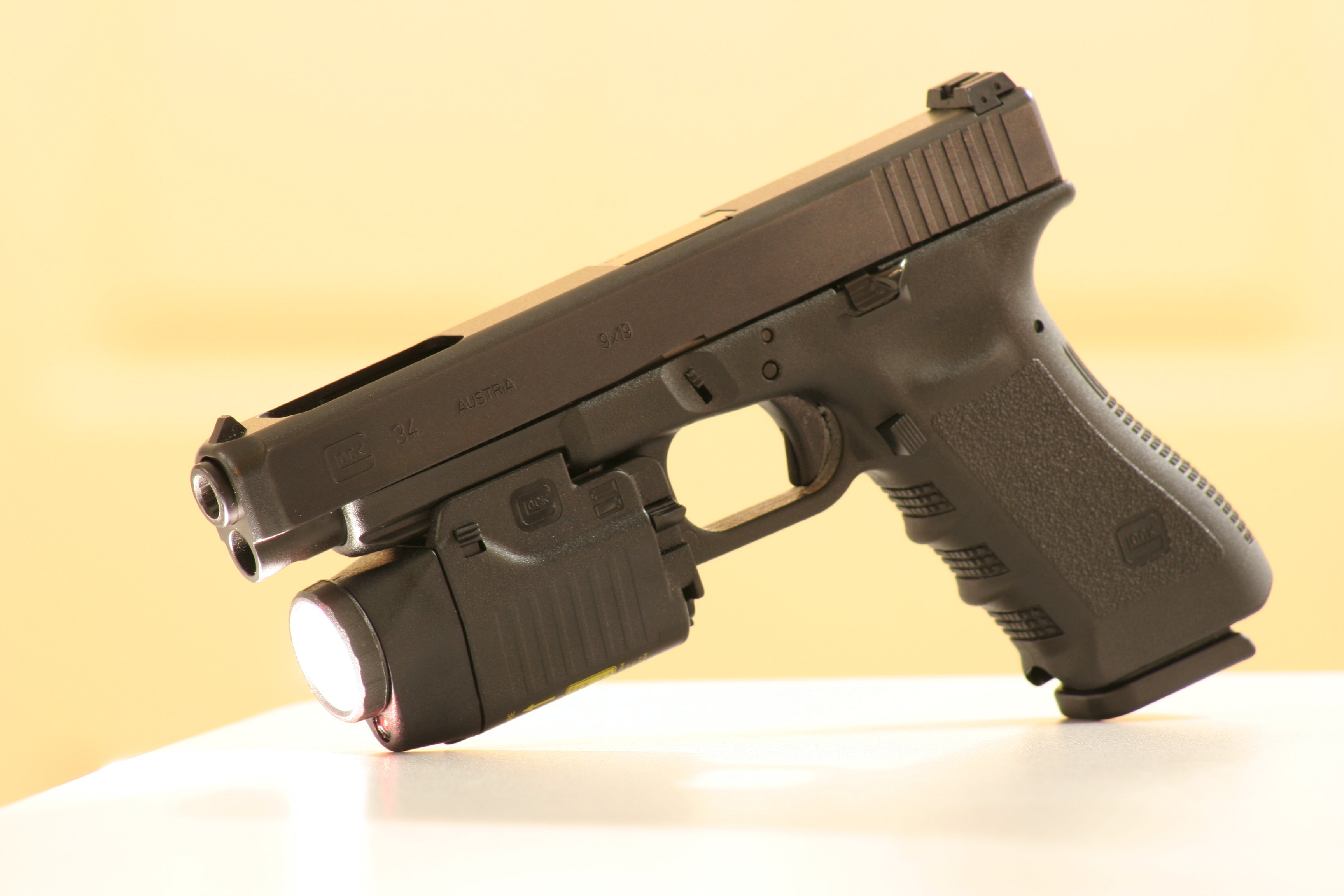
History and Purpose Behind the Glock 34
The Glock 34 was developed as a competition-oriented version of the Glock 17. While both pistols share the same frame and internal operating system, the Glock 34 was specifically engineered to improve precision shooting and competitive performance.
Glock designed the Glock 34 primarily for practical shooting sports such as USPSA, IPSC, and IDPA competitions. Competitive shooters wanted a handgun with a longer sight radius, softer recoil characteristics, and enhanced target acquisition without sacrificing Glock’s legendary reliability.
To accomplish this, the Glock 34 received an extended barrel and longer slide. Glock also incorporated competition-friendly features such as a lighter trigger connector and enlarged controls. These upgrades allowed shooters to engage targets more quickly and maintain greater control during rapid fire strings.
Glock 34 Key Specifications
Extended Barrel
The Glock 34 uses a 5.31-inch barrel, significantly longer than the Glock 17 barrel. This contributes to improved velocity and enhanced practical accuracy.
Longer Slide
Its longer slide increases sight radius and helps stabilize muzzle movement during firing.
Sight Radius
The extended sight radius allows shooters to align sights more precisely, especially during long-range shots or rapid target transitions.
Weight
The Glock 34 is slightly heavier than the Glock 17 because of its longer barrel and slide assembly.
Trigger Pull
Many Glock 34 models feature a lighter factory trigger connector, resulting in a smoother and lighter trigger pull compared to the standard Glock 17 configuration.
Competition-Focused Features
Longer Sight Radius
The longer sight radius improves aiming precision and helps shooters detect alignment errors more easily.
Enhanced Accuracy
The extended barrel and increased sight radius contribute to better accuracy potential, particularly at greater distances.
Reduced Muzzle Rise
The additional slide length and weight reduce muzzle flip, allowing faster follow-up shots during rapid fire.
Extended Controls
Many Glock 34 variants include enlarged controls that improve reload speed and weapon manipulation during competition use.
Why Competitive Shooters Prefer the Glock 34
Competitive shooters often favor the Glock 34 because it offers measurable advantages during timed shooting events. The pistol’s longer barrel and slide improve recoil control, while the extended sight radius enhances precision and target transitions.
The Glock 34 also maintains Glock’s excellent reliability and massive aftermarket support. Shooters can easily customize triggers, optics, compensators, magazine wells, and other accessories to optimize competition performance.
For many practical shooting competitors, the Glock 34 represents one of the best balances between speed, precision, durability, and reliability available in a factory handgun.
Glock 17 vs Glock 34 – Key Differences
Barrel Length Comparison
Glock 17: 4.49-Inch Barrel
The Glock 17 uses a 4.49-inch barrel that balances portability, accuracy, and recoil control for general-purpose shooting.
Glock 34: 5.31-Inch Barrel
The Glock 34’s 5.31-inch barrel improves velocity, sight radius, and practical shooting precision.
Impact on Velocity and Accuracy
The longer barrel of the Glock 34 can slightly increase bullet velocity and improve accuracy potential, especially at extended distances.
Slide Length and Overall Size
The Glock 34 features a noticeably longer slide and greater overall length than the Glock 17. This larger footprint improves balance and recoil control but makes concealment more difficult.
Weight Comparison
The Glock 34 is slightly heavier because of its longer barrel and slide. This additional weight helps reduce felt recoil and muzzle rise during rapid shooting.
Sight Radius Differences
One of the biggest advantages of the Glock 34 is its extended sight radius. The increased distance between the front and rear sights helps shooters align sights more accurately.
Trigger Pull and Factory Connector Differences
Many Glock 34 models include a lighter factory trigger connector than the Glock 17, providing a smoother trigger pull designed to benefit competition shooters.
Recoil and Muzzle Flip
The Glock 34 generally produces softer recoil characteristics because of its longer slide and improved weight distribution. This allows quicker follow-up shots and better muzzle control.
Magazine Compatibility
Both pistols share the same magazine compatibility. Glock 17 magazines function perfectly in the Glock 34, including extended-capacity magazines.
Ergonomics and Grip Feel
Since both pistols use nearly identical frames, the grip ergonomics feel extremely similar. Shooters familiar with one model will immediately feel comfortable handling the other.
MOS and Optics Compatibility
Modern MOS versions of both pistols allow direct mounting of red dot optics, which has become increasingly popular for competition and defensive shooting applications.
Holster Compatibility Differences
Because of the Glock 34’s longer slide, not all Glock 17 holsters will accommodate it properly. However, many Glock 34 holsters can also fit the Glock 17.
Glock 17 vs Glock 34 Specifications Table
Side-by-Side Specs Comparison
| Feature | Glock 17 | Glock 34 |
|---|---|---|
| Caliber | 9x19mm | 9x19mm |
| Capacity | 17+1 | 17+1 |
| Barrel Length | 4.49 inches | 5.31 inches |
| Weight | Approx. 25 oz | Approx. 26 oz |
| Height | 5.47 inches | 5.47 inches |
| Width | 1.34 inches | 1.34 inches |
| Trigger Pull | Standard Glock Trigger | Lighter Factory Connector |
| Sight Radius | Shorter | Longer |
| Intended Use | Duty / Defense / General Use | Competition / Precision Shooting |
Accuracy Comparison
Does the Glock 34 Shoot More Accurately?
The Glock 34 is widely considered more accurate than the Glock 17, particularly in competitive and long-range shooting scenarios. While both pistols are mechanically reliable and capable of impressive precision, the Glock 34 benefits from a longer barrel and extended sight radius that help shooters maintain tighter shot groups.
The additional barrel length of the Glock 34 can slightly increase bullet velocity and improve consistency with certain ammunition types. More importantly, the pistol’s longer slide provides better balance and stability during firing, allowing shooters to maintain better control throughout each shot cycle.
For experienced shooters, these advantages become especially noticeable during rapid target transitions or precision shooting at extended distances. However, for defensive shooting distances inside 15 yards, the practical accuracy difference between the Glock 17 and Glock 34 is often minimal.
How Sight Radius Affects Precision
Sight radius refers to the distance between the front and rear sights on a handgun. The Glock 34 features a noticeably longer sight radius than the Glock 17, which helps reduce aiming errors and improve sight alignment consistency.
A longer sight radius allows shooters to detect even minor sight misalignment more easily. This becomes especially important during precision shooting, competition stages, or longer-range engagements where small aiming mistakes can significantly affect accuracy.
The Glock 17 still offers excellent practical accuracy, but the Glock 34 gives shooters a slight edge when maximum precision is required.
Real-World Accuracy at Different Distances
At close defensive distances of 5 to 10 yards, both pistols perform extremely well and are capable of producing fast, accurate hits. Most shooters will notice very little practical difference between the two models at these ranges.
As distances increase to 15, 25, or even 50 yards, the Glock 34 begins to demonstrate clearer advantages. Its longer barrel and sight radius help shooters maintain tighter shot groupings and more consistent target acquisition.
Competitive shooters and experienced range users often report that the Glock 34 feels easier to shoot accurately during extended sessions because of its smoother recoil impulse and enhanced balance.
Range Testing and Performance Observations
During range testing, the Glock 17 consistently proves itself as a reliable and highly accurate duty-style handgun. Its balanced dimensions and predictable recoil make it extremely versatile for defensive shooting, range practice, and tactical applications.
The Glock 34, however, often delivers superior performance during rapid-fire drills and precision exercises. Shooters frequently experience faster split times, improved recoil recovery, and greater confidence when engaging distant targets.
For casual shooters, both pistols provide excellent accuracy. For competitive shooters seeking every possible advantage, the Glock 34 typically stands out as the stronger performer.
Recoil and Shooting Experience
Which Glock Has Less Felt Recoil?
Although both pistols chamber the same 9mm cartridge, the Glock 34 generally produces slightly less felt recoil than the Glock 17. The longer slide and added forward weight help distribute recoil forces more effectively during firing.
This softer recoil impulse allows the Glock 34 to return to target faster after each shot. While the difference is not dramatic, experienced shooters can often feel the smoother shooting characteristics immediately.
The Glock 17 still offers very manageable recoil and remains one of the easiest full-size handguns to control, especially for newer shooters.
Follow-Up Shot Speed Comparison
One of the major advantages of the Glock 34 is its ability to support faster follow-up shots. The pistol’s additional weight and reduced muzzle movement allow shooters to reacquire sights more quickly between shots.
This characteristic becomes particularly valuable in competitive shooting environments where fractions of a second matter. Faster recoil recovery can improve stage times and increase overall shooting efficiency.
The Glock 17 also performs very well during rapid fire, but the Glock 34 generally provides a slight edge in split times and shooting rhythm.
Muzzle Control During Rapid Fire
The Glock 34 excels in muzzle control because of its longer slide and enhanced balance. During rapid firing sequences, the pistol tends to track flatter and return to the target more consistently.
This reduced muzzle rise allows shooters to maintain better visual focus on sights or optics throughout the recoil cycle. Competitive shooters especially appreciate this characteristic during transitions between multiple targets.
The Glock 17 remains highly controllable, but its shorter slide can produce slightly more noticeable muzzle movement during aggressive rapid-fire drills.
Shooting Comfort for Beginners
Both pistols are beginner-friendly, but each offers different advantages. The Glock 17 is often considered the better starting point because of its balanced size, lighter weight, and versatility across multiple shooting roles.
The Glock 34 may feel easier to shoot accurately because of its softer recoil and longer sight radius, but its larger overall dimensions can feel less manageable for shooters with smaller hands or limited handgun experience.
Ultimately, beginners who prioritize versatility may prefer the Glock 17, while those focused primarily on range shooting or competition may appreciate the smoother shooting experience of the Glock 34.
Concealed Carry Comparison
Is the Glock 17 Good for Concealed Carry?
Although the Glock 17 is classified as a full-size handgun, many users still successfully conceal carry it with the proper setup. High-quality holsters, sturdy belts, and appropriate clothing choices can make carrying the Glock 17 surprisingly manageable.
Its relatively slim profile for a double-stack pistol also helps reduce printing compared to some other full-size handguns. However, the Glock 17 is still larger than compact or subcompact carry pistols, which can make daily concealment more challenging for some users.
Why the Glock 34 Is Harder to Conceal
The Glock 34’s longer slide and barrel make it noticeably more difficult to conceal than the Glock 17. The additional length can create discomfort when sitting, bending, or moving throughout the day.
Concealing the longer slide also requires more careful holster positioning and wardrobe considerations. For many users, the Glock 34 is simply too large for practical everyday concealed carry.
While some experienced carriers do conceal the Glock 34 successfully, it is generally considered more suitable for range, competition, or tactical applications rather than daily concealed carry.
Comfort While Carrying
Comfort is a major factor in concealed carry selection. The Glock 17 already pushes the limits of what many shooters consider comfortable for all-day carry, while the Glock 34 extends those dimensions even further.
The longer barrel of the Glock 34 may dig into the body during seated positions or extended movement. By comparison, the Glock 17 offers a slightly better balance between shootability and carry comfort.
Appendix Carry vs OWB Carry
Appendix carry is generally more manageable with the Glock 17 than with the Glock 34. The shorter slide length reduces pressure against the body while seated and improves overall comfort during daily movement.
Outside-the-waistband (OWB) carry is where the Glock 34 becomes more practical. OWB holsters accommodate the longer slide more comfortably and are commonly used in competitive or tactical environments.
Printing and Everyday Carry Concerns
Printing occurs when the outline of a firearm becomes visible through clothing. Because both pistols use full-size frames, they can be challenging to conceal effectively without proper clothing and holster setups.
The Glock 34’s extended slide and barrel increase the likelihood of printing and discomfort during everyday activities. The Glock 17 remains easier to conceal overall, though still larger than many dedicated carry pistols.
Home Defense Performance
Why the Glock 17 Excels for Home Defense
The Glock 17 is widely regarded as one of the best home defense pistols available. Its combination of reliability, manageable recoil, high magazine capacity, and accessory compatibility makes it extremely effective in defensive situations.
The pistol’s full-size grip allows excellent control under stress, while its balanced dimensions make it easier to maneuver indoors compared to larger competition-oriented handguns.
The Glock 17 also offers excellent compatibility with weapon-mounted lights and defensive optics, further enhancing its effectiveness for home protection.
Advantages of the Glock 34 for Tactical Use
The Glock 34 offers several tactical advantages, especially for shooters prioritizing precision and recoil control. Its longer sight radius and softer shooting characteristics can improve shot placement and rapid target engagement.
For users who primarily intend to use the pistol in static defensive roles or range-based tactical training, the Glock 34 performs exceptionally well.
However, its larger dimensions may reduce maneuverability in confined indoor spaces compared to the Glock 17.
Weapon Light Compatibility
Both the Glock 17 and Glock 34 feature accessory rails that support popular weapon-mounted lights and lasers. This compatibility is critical for low-light home defense scenarios.
Many users pair these pistols with tactical lights to improve target identification and enhance defensive readiness during nighttime emergencies.
Reliability Under Stress
Both pistols maintain Glock’s legendary reliability reputation. They are designed to function consistently under adverse conditions, including dirt, moisture, heavy firing schedules, and stressful defensive environments.
Law enforcement agencies and military units around the world continue to trust Glock pistols because of their proven durability and dependable performance under pressure.
Competition Shooting Comparison
USPSA and IDPA Performance
The Glock 34 has become one of the most dominant pistols in USPSA and IDPA competition shooting. Its longer barrel, improved sight radius, and softer recoil characteristics provide measurable advantages during timed stages.
Competitive shooters often favor the Glock 34 because it supports faster transitions, more accurate follow-up shots, and improved recoil management.
The Glock 17 still performs extremely well in competition environments, but the Glock 34 was specifically engineered to maximize practical shooting performance.
Why the Glock 34 Dominates Competitive Shooting
The Glock 34 dominates competitive shooting because it combines reliability, speed, accuracy, and customization potential into one platform. Its longer slide helps reduce muzzle rise, while the lighter trigger connector improves trigger responsiveness.
These features allow shooters to engage targets more quickly and maintain consistent accuracy throughout demanding stages.
Faster Target Acquisition
The Glock 34’s extended sight radius helps shooters align sights faster and transition smoothly between targets. This becomes especially valuable during dynamic competition stages that require speed and precision simultaneously.
Trigger Advantages in Competition
Many Glock 34 models include a lighter factory trigger connector that provides a smoother trigger pull than the standard Glock 17 configuration. This lighter trigger can improve shot consistency and reduce shooter fatigue during long competitions.
Is the Glock 17 Still Viable for Matches?
Despite the Glock 34’s competition advantages, the Glock 17 remains highly capable in practical shooting matches. Many shooters still compete successfully with the Glock 17 because of its excellent reliability, balanced handling, and familiarity.
For shooters who want one pistol capable of both defensive and competition use, the Glock 17 remains an excellent option.
Duty Use and Law Enforcement Applications
Why Many Agencies Use the Glock 17
The Glock 17 has long been one of the most widely adopted law enforcement handguns in the world. Agencies trust it because of its reliability, high magazine capacity, ease of maintenance, and proven track record in real-world service.
Its balanced size makes it practical for duty holsters while still offering excellent control and accuracy during stressful encounters.
Tactical Teams and the Glock 34
Some tactical teams and specialized units favor the Glock 34 because of its enhanced accuracy and reduced recoil characteristics. The longer sight radius and smoother shooting behavior can benefit precision-oriented tactical roles.
However, the Glock 17 remains more common for general duty applications because of its greater versatility and slightly more compact dimensions.
Reliability and Durability Comparison
Both pistols deliver outstanding reliability and durability. Glock handguns are well known for their ability to function in harsh environments with minimal maintenance.
Whether exposed to heavy training schedules, extreme temperatures, or adverse field conditions, both the Glock 17 and Glock 34 consistently demonstrate exceptional durability.
Ease of Maintenance
One of Glock’s greatest strengths is its simple internal design. Both pistols are extremely easy to field strip, clean, and maintain.
The shared operating system and interchangeable components also simplify maintenance for agencies and civilian owners alike.
Glock 17 vs Glock 34 for Beginners
Which Model Is Easier to Learn With?
For most new shooters, the Glock 17 is generally considered the better starting point. Its balanced dimensions, manageable recoil, and versatile design make it easier to adapt to multiple shooting applications.
The Glock 34 may offer slightly softer recoil and improved accuracy potential, but its larger size can feel intimidating or cumbersome for some beginners.
Ease of Handling and Control
Both pistols are highly controllable thanks to their full-size frames and 9mm chambering. However, the Glock 34’s additional weight and longer slide can provide slightly smoother recoil characteristics during rapid fire.
The Glock 17 offers a more balanced feel overall and may be easier for beginners to manipulate during general training and defensive drills.
Cost Considerations for New Shooters
The Glock 17 is typically less expensive than the Glock 34, making it more attractive for budget-conscious first-time buyers.
New shooters should also consider additional costs such as holsters, magazines, ammunition, optics, and training when choosing between these pistols.
Training and Skill Development
Both pistols are excellent platforms for developing shooting fundamentals. Their consistent trigger systems and manageable recoil help shooters build proper grip, sight alignment, trigger control, and recoil management skills.
The Glock 17 is often viewed as the more versatile training platform, while the Glock 34 excels in precision and competition-oriented skill development.
Aftermarket Parts and Customization
Shared Glock Components and Compatibility
One of the biggest advantages of both pistols is their extensive aftermarket support. Since the Glock 17 and Glock 34 share many components, owners can access a massive selection of compatible upgrades and accessories.
Slides, Triggers, and Barrels
Shooters can customize nearly every aspect of these pistols, including match-grade barrels, upgraded triggers, lightweight slides, recoil systems, and compensators.
These upgrades allow users to tailor the pistol for competition, defensive use, or enhanced range performance.
Red Dot and Optic Upgrades
MOS variants of both pistols support direct mounting of red dot optics. Optics have become increasingly popular because they improve target acquisition speed and shooting precision.
Competition Modifications
Competitive shooters often install upgraded triggers, magwells, extended controls, compensators, and recoil systems to maximize performance.
The Glock 34 is particularly popular for advanced competition builds because of its longer slide and competition-oriented design.
Holsters and Accessories
Both pistols benefit from massive holster and accessory availability. Users can choose from concealed carry holsters, tactical rigs, competition setups, weapon lights, magazine carriers, and countless other accessories.
Pros and Cons of the Glock 17
Main Advantages
Better Versatility
The Glock 17 performs exceptionally well across multiple roles, including home defense, duty use, range shooting, and even some concealed carry applications.
Easier Carry
Compared to the Glock 34, the Glock 17 is easier to carry and conceal because of its shorter slide and overall dimensions.
Proven Reliability
The Glock 17 has earned a worldwide reputation for reliability under harsh conditions and demanding use.
Lower Cost
The Glock 17 is generally more affordable than the Glock 34, making it attractive for first-time buyers and budget-conscious shooters.
Main Disadvantages
Shorter Sight Radius
The Glock 17’s shorter sight radius provides slightly less precision potential compared to the Glock 34 during long-range or competition shooting.
Slightly Less Competition-Focused
While highly capable, the Glock 17 was designed as a general-purpose duty pistol rather than a specialized competition handgun.
Pros and Cons of the Glock 34
Main Advantages
Superior Accuracy Potential
The Glock 34 is widely recognized for its excellent accuracy potential. Its longer barrel and extended sight radius help shooters maintain tighter shot groupings, especially at medium and long distances.
The increased slide length also improves balance and stability during firing, allowing more precise shot placement under rapid-fire conditions. For shooters focused on precision shooting or competition performance, the Glock 34 provides a clear advantage over many standard full-size pistols.
Better for Competition
The Glock 34 was specifically engineered with competitive shooting in mind. Features such as its lighter factory trigger connector, longer slide, and improved recoil characteristics make it one of the most popular handguns in USPSA, IPSC, and IDPA competitions.
Competitive shooters appreciate the pistol’s ability to deliver fast follow-up shots, rapid target transitions, and consistent performance throughout demanding shooting stages.
Softer Shooting Feel
Because of its additional slide length and forward weight distribution, the Glock 34 generally produces a softer shooting experience compared to the Glock 17.
The reduced muzzle rise and smoother recoil impulse allow shooters to recover sights faster between shots. This makes the pistol feel more stable during rapid firing sequences and long range sessions.
Longer Sight Radius
The Glock 34’s longer sight radius is one of its biggest strengths. The additional distance between the front and rear sights helps reduce alignment errors and improve overall shooting precision.
This advantage becomes particularly noticeable during long-distance shooting or competition scenarios where accuracy and speed are equally important.
Main Disadvantages
Harder to Conceal
One of the biggest drawbacks of the Glock 34 is its large overall size. The longer barrel and slide make concealed carry significantly more challenging compared to the Glock 17 or smaller Glock models.
Many users find the extended slide uncomfortable during seated positions or daily movement, especially when using appendix carry setups.
Larger Overall Footprint
The Glock 34’s extended dimensions increase its overall footprint, making it less practical for some defensive or everyday carry applications.
While the larger size benefits recoil control and precision shooting, it can reduce maneuverability in confined spaces and make transportation less convenient.
More Specialized Role
Unlike the Glock 17, which serves as an excellent all-purpose handgun, the Glock 34 is more specialized toward competition and precision shooting roles.
Although it still performs well for home defense and tactical use, many shooters view the Glock 34 primarily as a range or competition pistol rather than a universal do-everything handgun.
Similarities Between the Glock 17 and Glock 34
Same Caliber and Magazine Compatibility
Both the Glock 17 and Glock 34 are chambered in 9x19mm and share identical magazine compatibility. Standard 17-round Glock magazines function perfectly in both pistols, along with higher-capacity extended magazines.
This compatibility allows shooters to interchange magazines freely between the two models without modification.
Shared Glock Safe Action System
Both pistols utilize Glock’s Safe Action trigger system, which incorporates multiple passive safety mechanisms into a simple striker-fired design.
This system provides a consistent trigger pull for every shot while eliminating the need for external manual safeties. The consistent trigger behavior contributes to easier training and improved shooting familiarity.
Polymer Frame Construction
The Glock 17 and Glock 34 both use lightweight polymer frames that offer excellent durability and corrosion resistance.
This polymer construction helps reduce overall weight while maintaining structural strength under heavy use and adverse environmental conditions.
Reliability and Durability
Reliability is one of the defining characteristics of both pistols. Glock handguns are known worldwide for their ability to function consistently under harsh conditions, including dirt, mud, moisture, and heavy firing schedules.
Both the Glock 17 and Glock 34 have earned reputations for long service life and dependable operation in military, law enforcement, competition, and civilian environments.
Interchangeable Internal Parts
Many internal components between the Glock 17 and Glock 34 are interchangeable. This simplifies maintenance, customization, and parts replacement for owners and armorers.
The shared platform also contributes to Glock’s enormous aftermarket ecosystem, allowing shooters to customize both pistols extensively with compatible accessories and upgrades.
Real User Opinions and Community Feedback
What Competitive Shooters Say
Competitive shooters overwhelmingly praise the Glock 34 for its balance, recoil control, and shooting speed. Many users report faster split times, smoother recoil recovery, and improved target transitions compared to the Glock 17.
The longer sight radius and softer shooting characteristics make the Glock 34 especially popular among USPSA and IDPA competitors looking for every possible performance advantage.
What Concealed Carriers Prefer
Concealed carriers generally lean toward the Glock 17 over the Glock 34 because of its shorter slide and improved carry comfort.
While some experienced users successfully conceal carry the Glock 34, most everyday carriers prefer the slightly more compact dimensions of the Glock 17 for practical daily use.
Common Opinions From Glock Owners
Many Glock owners describe the Glock 17 as the ideal all-around handgun because it balances reliability, accuracy, capacity, and versatility.
The Glock 34 is often viewed as the superior range and competition pistol, offering enhanced shooting characteristics without sacrificing Glock’s proven dependability.
Owners who prioritize versatility usually favor the Glock 17, while shooters focused on performance and precision often prefer the Glock 34.
Reddit and Shooter Community Insights
Online firearm communities frequently compare these two pistols. Reddit users and forum discussions commonly describe the Glock 17 as the “jack-of-all-trades” option and the Glock 34 as the “performance-focused” model.
Many experienced shooters recommend the Glock 17 for users wanting one handgun capable of handling home defense, range use, and occasional concealed carry. The Glock 34 is consistently recommended for competition shooters or enthusiasts who prioritize recoil control and accuracy above concealability.
Glock 17 vs Glock 34 – Which One Should You Buy?
Best Choice for Home Defense
For most users, the Glock 17 is the better home defense option. Its balanced size, high magazine capacity, manageable recoil, and excellent reliability make it highly effective for defensive use.
The Glock 34 also performs extremely well for home defense, but its larger dimensions provide fewer practical advantages in confined indoor environments.
Best Choice for Competition
The Glock 34 is clearly the stronger choice for competitive shooting. Its longer barrel, extended sight radius, softer recoil characteristics, and competition-oriented trigger setup provide measurable performance benefits during matches.
Shooters focused on USPSA, IPSC, or IDPA competition will typically gain more advantages from the Glock 34 platform.
Best Choice for Everyday Carry
The Glock 17 is generally the better option for everyday carry because it is easier to conceal and more comfortable to carry throughout the day.
While still considered large for concealed carry, the Glock 17 remains noticeably more practical than the longer and heavier Glock 34.
Best Choice for Beginners
For first-time handgun buyers, the Glock 17 is often the better starting point because of its versatility and balanced handling characteristics.
New shooters can use the Glock 17 effectively for training, home defense, range practice, and even limited competition shooting without feeling restricted to a specialized role.
Best All-Around Glock
The Glock 17 is widely considered the better all-around handgun because it performs exceptionally well across multiple categories. It balances shootability, reliability, carry comfort, and defensive practicality more effectively than the more specialized Glock 34.
However, shooters primarily focused on range performance and competition may still consider the Glock 34 the superior choice for their specific needs.
Final Verdict
Who Should Choose the Glock 17
The Glock 17 is ideal for shooters seeking a versatile, dependable, and practical full-size handgun. It excels in home defense, duty use, recreational shooting, and general-purpose ownership.
First-time buyers, law enforcement professionals, and users wanting one handgun for multiple roles will likely find the Glock 17 to be the better overall fit.
Who Should Choose the Glock 34
The Glock 34 is best suited for shooters who prioritize precision, recoil control, and competition performance. Its longer barrel, enhanced balance, and softer shooting characteristics make it exceptionally effective for range work and practical shooting sports.
Competitive shooters and enthusiasts focused on maximizing shooting performance will often benefit more from the Glock 34 platform.
Overall Winner Based on Intended Use
There is no universal winner between the Glock 17 and Glock 34 because each pistol excels in different areas.
The Glock 17 stands out as the better all-purpose handgun because of its versatility, practicality, and balanced design. Meanwhile, the Glock 34 delivers superior performance for competition and precision shooting applications.
Ultimately, the best choice depends entirely on the shooter’s intended use, experience level, and personal preferences.
Frequently Asked Questions About Glock 17 vs Glock 34
1. What is the main difference between the Glock 17 and Glock 34?
The primary difference between the Glock 17 and Glock 34 is size and intended purpose. The Glock 17 is a full-size duty pistol designed for versatility, while the Glock 34 is a competition-oriented handgun built for improved accuracy and recoil control.
The Glock 34 features a longer barrel and slide, which increase sight radius and reduce muzzle rise during rapid fire. These enhancements make it especially popular among competition shooters. The Glock 17, on the other hand, offers a more balanced design that works well for home defense, duty carry, training, and even some concealed carry applications.
2. Is the Glock 34 more accurate than the Glock 17?
Yes, the Glock 34 is generally considered more accurate, especially at longer distances. Its longer barrel and increased sight radius help shooters align sights more precisely and maintain tighter shot groupings.
However, both pistols are highly accurate for defensive shooting distances. Most casual shooters may not notice a major difference at close range, but experienced shooters often benefit from the Glock 34’s enhanced precision during competition or long-distance shooting.
3. Can the Glock 34 be used for home defense?
Absolutely. The Glock 34 is highly reliable and performs very well as a home defense handgun. Its soft recoil, high capacity, and excellent accuracy make it extremely capable in defensive scenarios.
That said, some users prefer the Glock 17 for home defense because its slightly shorter size improves maneuverability inside confined indoor spaces.
4. Is the Glock 17 easier to conceal than the Glock 34?
Yes, the Glock 17 is easier to conceal because it has a shorter slide and barrel. While both pistols are considered full-size handguns, the Glock 34’s extended dimensions make concealed carry more challenging.
Many users can comfortably conceal the Glock 17 with the right holster and clothing setup, while the Glock 34 is generally considered more difficult for everyday concealed carry.
5. Which Glock is better for competition shooting?
The Glock 34 is widely regarded as the better competition handgun. It was specifically designed for practical shooting sports such as USPSA and IDPA.
Its longer sight radius, softer recoil impulse, and lighter trigger connector provide measurable advantages during timed stages and rapid-fire shooting drills.
6. Do the Glock 17 and Glock 34 use the same magazines?
Yes, both pistols use the same 9mm double-stack Glock magazines. Standard 17-round magazines function perfectly in both firearms, along with extended-capacity magazines.
This magazine compatibility is one reason many Glock owners appreciate the platform, especially users who own multiple Glock pistols.
7. Which pistol has less recoil?
The Glock 34 generally produces slightly less felt recoil because of its longer slide and additional forward weight.
This improved weight distribution helps reduce muzzle rise and allows faster follow-up shots. However, the Glock 17 still offers very manageable recoil and remains easy to control for most shooters.
8. Is the Glock 17 good for beginners?
Yes, the Glock 17 is one of the best beginner-friendly full-size handguns available. Its simple controls, reliable operation, manageable recoil, and versatility make it ideal for new shooters.
Many firearm instructors recommend the Glock 17 because it helps beginners build strong shooting fundamentals while remaining practical for long-term ownership.
9. Why do competitive shooters prefer the Glock 34?
Competitive shooters often prefer the Glock 34 because it offers improved recoil management, faster target acquisition, and enhanced shooting precision.
The pistol’s longer slide and barrel provide smoother recoil characteristics, while the extended sight radius improves accuracy during rapid transitions between targets.
10. Is the Glock 34 worth the extra money?
For competition shooters and range enthusiasts, the Glock 34 is often worth the additional cost because of its performance advantages.
However, users seeking a more versatile all-purpose handgun may find the Glock 17 to be the better overall value.
11. Can you carry a Glock 34 concealed?
Yes, some experienced users successfully conceal carry the Glock 34, but it is more difficult than carrying the Glock 17.
Its longer slide can create discomfort during sitting or movement, especially with appendix carry setups. Most shooters consider the Glock 34 more suitable for competition and range use than everyday concealed carry.
12. Which Glock is better for law enforcement?
The Glock 17 is more commonly used by law enforcement agencies because of its versatility and balanced dimensions.
While some specialized tactical teams may use the Glock 34, the Glock 17 remains the standard choice for duty applications worldwide.
13. Does the Glock 34 shoot flatter than the Glock 17?
Yes, the Glock 34 typically shoots flatter because of its longer slide and improved weight distribution.
This flatter shooting behavior reduces muzzle rise during rapid fire and allows shooters to recover sights faster between shots.
14. Are Glock 17 and Glock 34 parts interchangeable?
Many internal parts are interchangeable between the Glock 17 and Glock 34 because they share the same platform design.
This compatibility simplifies maintenance and customization while also expanding aftermarket upgrade options.
15. Which Glock is better for range shooting?
Both pistols perform extremely well at the range, but the Glock 34 generally provides a smoother and more precise shooting experience.
Its softer recoil and enhanced accuracy make it especially enjoyable during extended range sessions.
16. Does the Glock 34 have a better trigger?
Many Glock 34 models include a lighter factory trigger connector than the Glock 17, resulting in a slightly smoother trigger pull.
This lighter trigger setup is intended to benefit competition shooters and improve shooting speed and consistency.
17. Which Glock is more versatile?
The Glock 17 is generally considered more versatile because it performs well in home defense, duty use, training, recreational shooting, and even some concealed carry situations.
The Glock 34 is more specialized toward competition and precision shooting roles.
18. Is the Glock 17 still good for competition?
Yes, the Glock 17 remains highly capable for practical shooting competitions. Many shooters compete successfully with it in USPSA and IDPA matches.
However, the Glock 34 offers several performance advantages specifically designed for competition shooting.
19. Which pistol is easier to maintain?
Both pistols are equally easy to maintain because they use Glock’s simple internal design and shared operating system.
Field stripping, cleaning, and replacing parts are straightforward processes for both firearms.
20. Which Glock is better for home defense and range use combined?
The Glock 17 is usually the better combination gun for home defense and range use because of its versatility and manageable size.
It delivers excellent reliability and accuracy while remaining more practical than the larger Glock 34.
21. Is the Glock 34 too large for everyday carry?
For many users, yes. The Glock 34’s longer slide and barrel make it less practical for everyday concealed carry compared to the Glock 17 or smaller Glock models.
Some experienced carriers still use it successfully, but it generally requires more careful holster and clothing selection.
22. Which Glock has a longer sight radius?
The Glock 34 has a significantly longer sight radius than the Glock 17 because of its extended slide and barrel.
This longer sight radius helps improve aiming precision and target tracking during rapid fire.
23. Can beginners handle the Glock 34 effectively?
Yes, beginners can handle the Glock 34 effectively, especially because of its soft recoil and stable shooting characteristics.
However, some new shooters may find the Glock 17 more balanced and versatile for learning multiple shooting applications.
24. Which Glock feels better during rapid fire?
Most shooters report that the Glock 34 feels smoother and more controllable during rapid fire.
Its longer slide and increased forward weight reduce muzzle flip and improve recoil recovery.
25. Is the Glock 17 lighter than the Glock 34?
Yes, the Glock 17 is slightly lighter because it has a shorter slide and barrel.
The weight difference is not massive, but it can affect carry comfort and handling preferences.
26. Does the Glock 34 fit Glock 17 holsters?
Not always. Because of the Glock 34’s longer slide, many Glock 17 holsters are too short.
However, some open-ended holsters designed for the Glock 34 can accommodate both pistols.
27. Which Glock is more comfortable for all-day carry?
The Glock 17 is generally more comfortable for all-day carry because of its shorter overall dimensions.
The Glock 34’s longer barrel may press against the body more during sitting or movement.
28. Which Glock is better for tactical training?
Both pistols perform very well in tactical training environments.
The Glock 17 offers better maneuverability and versatility, while the Glock 34 provides enhanced precision and recoil control.
29. Are both pistols optics-ready?
Modern MOS variants of both pistols are optics-ready and allow direct mounting of red dot sights.
Optics have become increasingly popular for both defensive and competition shooting applications.
30. Which Glock is more popular overall?
The Glock 17 is more popular overall because of its broader range of applications and widespread law enforcement adoption.
The Glock 34 remains extremely popular within the competition shooting community.
31. Is the Glock 34 harder to maneuver indoors?
Yes, the longer slide of the Glock 34 can make maneuvering slightly more difficult in confined spaces.
This is one reason many users prefer the Glock 17 for defensive use inside homes or buildings.
32. Which Glock is better for precision shooting?
The Glock 34 is generally superior for precision shooting because of its longer barrel and extended sight radius.
These features improve consistency and accuracy during long-range shooting sessions.
33. Which pistol has better aftermarket support?
Both pistols benefit from enormous aftermarket support, including triggers, barrels, optics, slides, and holsters.
Because they share many components, customization options are nearly endless for both models.
34. Is the Glock 17 more practical for first-time owners?
Yes, many first-time owners choose the Glock 17 because it balances defensive capability, reliability, affordability, and versatility.
It works well for training, home defense, and recreational shooting without being overly specialized.
35. Which Glock is better for fast follow-up shots?
The Glock 34 generally performs better for fast follow-up shots because its longer slide reduces muzzle movement.
This allows shooters to reacquire sights more quickly between shots.
36. Does the Glock 34 have higher bullet velocity?
Yes, the Glock 34’s longer barrel can slightly increase bullet velocity compared to the Glock 17.
The difference is usually modest but may improve consistency with certain ammunition types.
37. Which Glock is easier to transport?
The Glock 17 is slightly easier to transport because of its shorter overall length.
Its more compact dimensions make it easier to store and carry in smaller cases or bags.
38. Are both pistols equally reliable?
Yes, both pistols maintain Glock’s legendary reliability reputation.
They are trusted worldwide for their ability to function consistently under harsh conditions and heavy use.
39. Which Glock is more beginner-friendly for competition?
The Glock 34 is often preferred for beginner competition shooters because its softer recoil and longer sight radius help improve shooting confidence and consistency.
However, the Glock 17 can still perform extremely well in entry-level competitions.
40. Which Glock has better recoil control?
The Glock 34 generally offers superior recoil control because of its extended slide and increased forward weight.
This design helps reduce muzzle rise during rapid firing sequences.
41. Is the Glock 17 easier to draw from a holster?
Many shooters find the Glock 17 slightly easier to draw because of its shorter slide and reduced overall length.
The difference is small but can matter during concealed carry or defensive training.
42. Which Glock is better for one-gun ownership?
The Glock 17 is usually considered the better “one-gun” solution because it performs well across multiple roles.
It balances defensive practicality, range performance, and reliability more effectively for general ownership.
43. Does the Glock 34 require more maintenance?
No, both pistols require similar maintenance procedures and cleaning schedules.
Their shared operating systems make upkeep equally simple and straightforward.
44. Which pistol is better for advanced shooters?
Advanced shooters often prefer the Glock 34 because its competition-oriented features provide greater performance potential.
Experienced shooters can fully take advantage of its recoil control and enhanced precision.
45. Which Glock is better for defensive shooting classes?
The Glock 17 is often preferred for defensive shooting classes because it is more versatile and practical for real-world defensive scenarios.
However, the Glock 34 still performs extremely well in training environments focused on accuracy and speed.
46. Is the Glock 34 suitable for duty carry?
Yes, the Glock 34 can be used for duty carry, especially by specialized tactical units.
However, the Glock 17 is more commonly used for standard law enforcement duty roles because of its balanced dimensions.
47. Which Glock is easier to shoot accurately under stress?
Many shooters find the Glock 34 easier to shoot accurately under stress because its softer recoil and longer sight radius improve shot control.
Still, the Glock 17 remains highly accurate and dependable during defensive shooting situations.
48. Which Glock offers better value?
The Glock 17 often provides better overall value because it costs slightly less while remaining highly versatile.
The Glock 34 delivers better performance for competition shooters but may not offer additional benefits for all users.
49. Which Glock is more comfortable for long range sessions?
The Glock 34 is generally more comfortable during long range sessions because of its softer recoil characteristics and enhanced balance.
Many shooters experience less fatigue and better consistency during extended shooting with the Glock 34.
50. Which Glock should most people choose?
For most shooters, the Glock 17 is the better overall choice because it combines reliability, versatility, manageable size, and excellent performance across multiple applications.
The Glock 34 is the better option for users focused primarily on competition shooting, precision shooting, and range performance.
51. Can the Glock 17 and Glock 34 use the same aftermarket accessories?
Yes, many aftermarket accessories such as triggers, sights, magazines, and internal components are compatible between the Glock 17 and Glock 34.
This compatibility gives owners tremendous flexibility when customizing either pistol for defensive, tactical, or competition use.
52. Which Glock is better for accuracy at 50 yards?
The Glock 34 generally performs better at 50 yards because of its longer sight radius and enhanced stability during firing.
Shooters often find it easier to maintain tighter groups at extended distances with the Glock 34 compared to the Glock 17.
53. Is the Glock 34 only for competition shooters?
No, the Glock 34 is not limited to competition use. While it was designed with competitive shooting in mind, it also performs exceptionally well for range shooting, tactical training, and home defense.
However, its larger dimensions make it less practical for concealed carry and general-purpose use compared to the Glock 17.
54. Which Glock is more balanced overall?
The Glock 17 is generally considered the more balanced overall handgun because it successfully combines shootability, portability, defensive practicality, and versatility.
The Glock 34 emphasizes performance and precision, while the Glock 17 offers a more adaptable all-purpose design.
55. Should I buy the Glock 17 or Glock 34 first?
For most first-time Glock buyers, the Glock 17 is the smarter first purchase because of its versatility and broader range of applications.
Shooters specifically interested in competition or advanced range performance may prefer starting with the Glock 34 instead.
Read more: